Find it. Control it. Prove it. Keep it current.

Find and Control Every AI Agent. Sign the Evidence.

AxiReady finds every AI system and agent in use. AxiSentinel controls them, Always On or On Demand, and evaluates them continuously against 220+ frameworks and 940+ obligations in 66+ jurisdictions. A qualified AxiLayer AI auditor signs every finding, so the evidence stays current between audits. Headquartered in Roswell, Georgia, built for enterprises, government agencies and 44 industries.

Scroll
220+
Regulatory Frameworks
940+
Obligations Encoded
66+
Jurisdictions
43
Countries on 6 Continents
44
Industries Covered
10
Service Lines
Dec 2027
EU High-Risk Deadline
€35M
Max fine, prohibited practices

Secure AI. Protected customers.

What is appropriate today may not be appropriate next month. AI threats change daily, and your controls must keep pace. AxiLayer AI works hand in hand with your security team to find, control and evidence your AI. AxiSentinel holds the live controls, gate, hold, contain, stop, and we sign the evidence that they worked, so your AI stays under control and your customers stay protected.

Before and after

Before deployment: threat assessment, access review, authorized adversarial testing and approval gates. After deployment: live controls, drift and spike detection, threat containment and stop built in, and a re-test after every model, data or vendor change.

Risk you understand

For every AI system we show what could go wrong, how exposed you are, what would trigger it, who owns it and how fast you would know. Risk is accepted only by documented decision, never by default.

Your requirements, nothing left out

Every engagement starts from your governance, your data, your vendors and your sector rules, so the controls we test are the ones that matter to you.

Within the law, every market

Testing only under your written authorization, mapped to the EU AI Act, DORA, NYDFS, NIST, ISO/IEC 27090, ETSI EN 304 223 and MAS, with findings signed by a qualified AxiLayer AI auditor.

97%of organizations with AI-related breaches had no AI access controls (IBM, 2025)
63%of breached organizations had no AI governance policy or were still writing one (IBM, 2025)
USD 670Kadded to the average breach cost by shadow AI (IBM, 2025)
DeepfakesU.S. FinCEN has alerted banks to fraud schemes using deepfake media (Nov 2024)

One AI incident can reach thousands of customers in minutes. We work alongside your CISO, security operations, risk, compliance and internal audit teams. AxiSentinel works with your security stack, adds live controls for AI systems and agents, and records what each control approved, held, contained or stopped, so you hold signed evidence that the controls work.

AI Security and Audit Duties Are Now Written Into Law

Lawmakers are moving from guidance to mandates, and the mandate is a third-party audit.

From 1 Jan 2028

Illinois SB 315

Annual third-party audits of large frontier AI developers, with 72-hour incident reporting.

From 1 Jan 2029

California SB 1119

Third-party audits for large companion-chatbot operators, alongside risk assessments and parental controls.

Enacted 2026

California AB 1405

A state registry of AI auditors, with independence standards for the profession.

In force since 2023

NYC Local Law 144

Annual bias audits of automated hiring tools before they are used on candidates.

We prepare organizations for these duties, with every finding signed by a qualified AxiLayer AI auditor. Talk to our team →

Ten Service Lines.
One Platform.

Ten lines, one platform, one ending: a finding signed by a qualified AxiLayer AI auditor. Auditing is one of the ten, not the whole firm. The tenth, Family Safety Assurance, protects the AI children meet on every device.

View All Services →
01

Discovery and Risk Assessment

AxiReady finds every AI system, agent and tool server in use, then scores each one. Systematic identification, classification, and mitigation of AI-related risks. Comprehensive risk matrices, impact assessments, and remediation roadmaps aligned with NIST AI RMF.

Learn More
02

Algorithm Assurance

Rigorous evaluation of algorithmic fairness, transparency, and performance. Testing for bias, accuracy validation, and explainability assessment to ensure responsible AI deployment.

Learn More
03

AI Validation and Verification

Validation and verification services ensuring AI systems perform as intended. Model validation, output verification, and continuous performance monitoring across production environments.

Learn More
04

Live Controls and Continuous Monitoring

AxiSentinel gates tools, holds high-impact actions, contains threats and stops agents, Always On or On Demand, and records every decision. Real-time alerts, periodic re-assessments and regulatory update tracking keep the Compliance Passport current.

Learn More
05

AI System Auditing

One of ten lines, and the one the law names. Audits against the EU AI Act, NIST AI RMF, and ISO/IEC standards, covering algorithm evaluation, data governance, and technical conformity verification, signed by a qualified AxiLayer AI auditor.

Learn More
06

Compliance Readiness

Compliance readiness, evidence review and signed findings for the EU AI Act, ISO/IEC 42001, ISO/IEC 23894 and sector frameworks.

Learn More
07

Regulatory Consulting

Strategic guidance on AI governance, compliance strategy, and regulatory readiness. Expert advisory services for policy development, framework selection, and implementation planning.

Learn More
08

Documentation Services

Comprehensive documentation support including audit reports, compliance matrices, risk registers, and executive summaries for board presentations and regulatory submissions.

Learn More
09

Public Sector AI Policy

Policy development for counties, cities, utilities and state agencies, delivered as an adoption-ready document and machine-checkable obligations, with a signed Procurement Readiness Review.

Learn More
10

Family Safety Assurance

Security and signed evidence for the AI children meet on every device, from chatbots and age signals to cloned-voice scams.

Learn More
For AI Vendors

Selling AI to Regulated Buyers?

Give them signed evidence, not a vendor summary.

How AI vendors use AxiLayer AI →

A Rigorous,
Evidence-Based Approach

Every AxiLayer AI engagement follows a structured method mapped to the rules and standards that apply, delivering actionable, defensible results.

01

Scope & Framework Alignment

Define assessment boundaries, applicable regulatory frameworks, and evidence collection methodology tailored to your AI system's risk classification.

02

Technical Audit & Testing

Algorithm evaluation, model and agent testing, data governance review, and cybersecurity assessment using standardized testing protocols, mapped to the OWASP Top 10 for Agentic Applications where agents are in scope.

03

Risk Classification & Gap Analysis

Systematic risk matrix development, compliance gap identification, and prioritized remediation roadmaps with clear timelines and accountabilities.

04

Attestation & Reporting

Signed assessment reports and the Compliance Passport, detailed audit reports with evidence documentation, and regulatory submission support.

Deep Expertise Across
Regulated Sectors

Government

Government & Public Sector

FedRAMP-aligned AI compliance and algorithmic accountability frameworks for federal and state agencies.

Explore
Finance

Financial Services & Fintech

Global AI assurance for capital markets, asset management, insurance, payments, and digital lending.

Explore
Banking

Banking & Credit Institutions

Continuous model assurance across CBUAE, EU, UK, US, and Asia-Pacific prudential regimes.

Explore
Data Center

Data Center & Large-Load Development

Signed evidence on data center siting, rate design, water use, and tax incentive compliance across state and municipal jurisdictions.

Explore
Healthcare

Healthcare & Life Sciences

Global AI assurance for health systems, payers, medical device makers, and pharma across FDA, EU AI Act & MDR, MHRA, and APAC regimes.

Explore
Technology

Technology & Enterprise

Global assurance for AI providers, SaaS platforms, and enterprise deployers, EU AI Act & GPAI duties, US state laws, and ISO/IEC 42001.

Explore
Defense

Defense & Intelligence

AI assurance and TEVV for defense programs, DoD Responsible AI, CMMC 2.0, NATO, JSP 936, and allied & GCC requirements.

Explore
Infrastructure

Infrastructure & Smart Cities

AI assurance for grid, water, transport, and smart-city programs, EU AI Act Annex III, NIS2, NERC, FAA, and SOCI.

Explore
Aviation

Aviation & Aeronautics

AI assurance for flight-control, air traffic management, predictive maintenance, airport security and UAM/eVTOL systems, ICAO guidance, EASA's AI Concept Paper, EU AI Act Annex I, FAA Part 108 and CAAC certification regimes.

Explore
Hospitality, Travel & Tourism

Hospitality, Travel & Tourism

AI assurance for dynamic pricing and revenue management, booking platforms, biometric check-in and border systems, guest chatbots and review moderation: EU AI Act, DSA, GDPR, California's algorithmic pricing law and the FTC fees rule.

Explore
Retail & E-commerce

Retail & E-commerce

AI assurance for personalized and dynamic pricing, marketplace ranking and recommendations, fake-review detection, loss-prevention facial recognition and AI shopping agents: EU AI Act, DSA, GDPR, the UK DMCC Act, the FTC reviews rule and state surveillance-pricing laws.

Explore
Online Platforms & Social Media

Online Platforms & Social Media

AI assurance for recommender systems, content moderation, age assurance, ad targeting and synthetic-content labeling: the EU Digital Services Act and AI Act, the UK Online Safety Act, the TAKE IT DOWN Act, COPPA and the new age-assurance laws worldwide.

Explore
Pharmaceuticals & Biotech

Pharmaceuticals & Biotech

AI assurance for drug discovery, clinical trials, GxP manufacturing and quality, pharmacovigilance and regulatory writing: EU AI Act, draft EU GMP Annex 22, FDA's AI credibility framework, the FDA and EMA good AI practice principles and Part 11.

Explore
Manufacturing & Industrial AI

Manufacturing & Industrial AI

AI assurance for visual inspection, predictive maintenance, process control, cobots and AMRs, worker-safety vision and OT security: EU AI Act, Machinery Regulation, Product Liability Directive, Cyber Resilience Act, NIS2 and CBAM.

Explore
Real Estate & Housing

Real Estate & Housing

AI assurance for automated valuation models, tenant screening, algorithmic rent pricing, mortgage underwriting, property ad targeting and leasing chatbots: EU AI Act, Fair Housing Act, FCRA, the federal AVM rule and state rent-algorithm laws.

Explore
Maritime, Ports & Logistics

Maritime, Ports & Logistics

AI assurance for autonomous navigation, voyage and emissions optimization, terminal automation, customs risk scoring, warehouse robotics and last-mile routing: EU AI Act, IMO MASS Code, Coast Guard cyber rule, NIS2, EU ETS and FuelEU Maritime.

Explore
Biometrics & Digital Identity

Biometrics & Digital Identity

AI assurance for face, voice and fingerprint recognition, liveness and injection-attack detection, KYC onboarding, age estimation and digital identity wallets: EU AI Act, eIDAS 2.0, GDPR, AMLR, Illinois BIPA, Texas CUBI and NIST SP 800-63-4.

Explore
Customer Service & Contact Centers

Customer Service & Contact Centers

AI assurance for customer service chatbots, voice bots, agent-assist, call analytics, agent QA scoring and outbound AI calling: EU AI Act disclosure and emotion-recognition rules, GDPR, the TCPA, state bot-disclosure laws and the UK Consumer Duty.

Explore
Gaming, Gambling & Betting

Gaming, Gambling & Betting

AI assurance for player-risk and harm detection, bonus and offer personalization, self-exclusion and age checks, AML monitoring, odds and integrity models and loot boxes: EU AI Act, UK Gambling Commission rules, EU AMLR, US state AI rules and the FTC.

Explore
Advertising, Media & Publishing

Advertising, Media & Publishing

AI assurance for generative creative, synthetic voices and likeness, ad targeting and brand safety, measurement models and AI-written news: EU AI Act labeling, DSA ad rules, EU political advertising rules, copyright provenance and FTC review rules.

Explore
Public Safety, Law Enforcement & Border

Public Safety, Law Enforcement & Border

AI assurance for facial recognition searches, AI-drafted police reports, emergency call triage, risk assessment instruments and border screening: EU AI Act prohibitions and high-risk rules, the Law Enforcement Directive, OMB M-25-21 and state police AI laws.

Explore
Agriculture & AgriFood Tech

Agriculture & AgriFood Tech

AI assurance for autonomous tractors and farm robots, spray drones, crop and livestock AI, agronomic recommendations, deforestation-free supply chains and farm credit: EU AI Act, Machinery Regulation, EUDR, EU Data Act, CAP monitoring and FAA drone rules.

Explore
Mining & Natural Resources

Mining & Natural Resources

AI assurance for autonomous haulage and drilling, collision avoidance, fatigue monitoring, resource estimation, tailings early warning, methane detection and mineral traceability: EU AI Act, Machinery Regulation, GISTM, JORC and NI 43-101, and battery due diligence.

Explore
Construction & Built Environment

Construction & Built Environment

AI assurance for generative design and code checking, BIM and the golden thread, site-safety vision, autonomous machinery and robots, estimating and scheduling: EU AI Act, Machinery Regulation, Construction Products Regulation, EPBD and the UK Building Safety Act.

Explore
Space & Satellite

Space & Satellite

AI assurance for collision avoidance and conjunction assessment, on-board autonomy, Earth observation analytics sold as evidence, satellite networks and the ground segment: EU AI Act, the proposed EU Space Act, NIS2, FCC debris rules and export controls.

Explore
Consumer IoT & Smart Home

Consumer IoT & Smart Home

AI assurance for voice assistants, smart cameras and doorbells, connected appliances, robot vacuums and AI toys: recordings, face detection, firmware updates and child safety, under the Cyber Resilience Act, EU Data Act, EU AI Act, GDPR, UK PSTI and COPPA.

Explore
Sports, Fitness & Wearables

Sports, Fitness & Wearables

AI assurance for smartwatch and fitness-tracker health metrics, wellness apps, connected gym equipment, athlete performance and scouting AI, and officiating technology: EU AI Act, EU MDR, GDPR, the EU Data Act, FDA wellness policy and FTC health-data rules.

Explore
Professional Services & Accounting

Professional Services & Accounting

AI assurance for audit analytics and journal-entry testing, generative AI in workpapers, tax research and preparation AI, consulting deliverables and recruitment screening: PCAOB QC 1000, ISQM 1, the IESBA Code, Section 7216, the EU AI Act and NYC Local Law 144.

Explore
Food & Beverage Manufacturing

Food & Beverage Manufacturing

AI assurance for food-contact coatings, formulation and migration-compliance models, production-vision inspection, and natural rubber and latex processing, evaluated against FDA food-contact rules, the EU food-contact materials regime, and ISO and AI governance standards.

Explore
Industrial Coatings, Resins & Rubber Manufacturing

Industrial Coatings, Resins & Rubber Manufacturing

AI assurance for coating and resin formulation models, REACH and SVHC declaration AI, vision-based defect detection, and natural rubber and latex processing, evaluated against REACH, ECHA, ISO and AI governance standards.

Explore
Robotics

Robotics & Physical AI

Safety and compliance assurance for industrial, collaborative and humanoid robots, ISO 10218, the EU Machinery Regulation and FCC Covered List obligations.

Explore
Autonomous Vehicles

Autonomous Vehicles & Mobility

Type-approval and safety-case assurance for automated driving systems, the UNECE GTR on Automated Driving Systems, ISO/PAS 8800 and evolving US and APAC AV regimes.

Explore
Quantum Computing

Quantum Computing & Post-Quantum Security

Migration and readiness assurance for the post-quantum transition, NIST FIPS 203/204/205, CNSA 2.0 and the 2026 quantum executive orders.

Explore
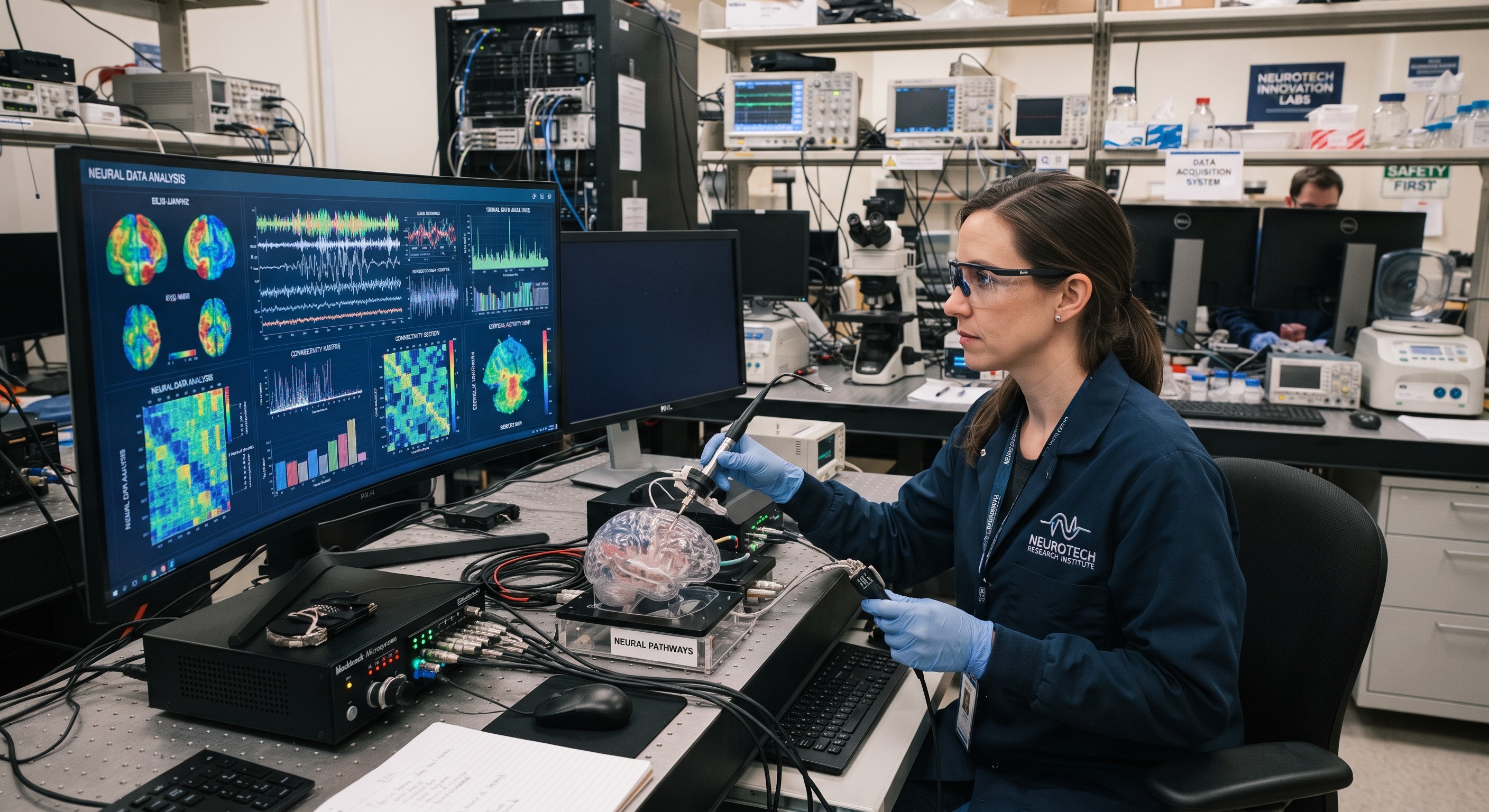
Neurotechnology

Neurotechnology & Neural Data

Evidence for the fastest-moving US privacy category, Colorado and California neural-data law, with more states enacting through 2026.

Explore
Insurance

Insurance & Underwriting

Continuous evidence for underwriting and claims AI against the NAIC Model Bulletin, already adopted in 27 states, DC and Puerto Rico.

Explore
Energy & Grid

Energy & Grid Infrastructure

Assurance for AI infrastructure claims and grid-operator compliance under FERC’s 2026 large-load interconnection rulemaking.

Explore
Synthetic Media

Synthetic Media & Deepfake Governance

Takedown and disclosure evidence for content platforms and generative-media tools under the federal TAKE IT DOWN Act’s 48-hour clock.

Explore
AI Companion Chatbots

AI Companion Chatbots & Youth Digital Safety

Disclosure, crisis-referral, and minor-safety evidence for companion and character AI products across twelve state laws.

Explore
AI Employment Decisioning

AI Employment & Workforce Decisioning

Bias-audit, notice, and recordkeeping evidence for hiring, promotion, and termination models across a multi-jurisdiction patchwork.

Explore
Algorithmic Pricing

Algorithmic & Surveillance Pricing

Disclosure and data-source evidence for retail, hospitality, and property-management pricing algorithms across thirteen-plus cities.

Explore
AI in Education

AI in Education & Academic Governance

Policy-mandate evidence for districts and institutions, from Idaho and Ohio's binding requirements to the EU AI Act's 2027 education deadline.

Explore
Elections and Political Advertising AI

Elections and Political Advertising AI

Deepfake disclosure, labeling, and ban compliance evidence across more than 30 states and the EU’s binding Article 50 disclosure regime.

Explore
AI in the Legal Profession and Courts

AI in the Legal Profession and Courts

Court-filing and professional-responsibility evidence, from Florida’s binding citation-verification rule to Quebec’s new judicial AI guidance.

Explore
Telecommunications AI Robocalls

Telecommunications AI Robocalls

TCPA compliance evidence for AI-generated and cloned voice calls, evaluated under the FCC’s binding 2024 ruling and China’s mandatory labeling law.

Explore
Family Safety Assurance

Family Safety Assurance

Child-safety, age-assurance and AI fraud rules, evaluated for the AI on every device a family uses.

Explore

Resources & Research

All Resources →

The 2026 AI Compliance Checklist for High-Risk Systems

A comprehensive checklist covering all EU AI Act high-risk system requirements and documentation obligations.

Download · PDF · 24 pages

Compliance ROI Calculator: Quantifying the Cost of Non-Compliance

Calculate potential fines, reputational costs, and operational savings from proactive AI compliance investments.

Interactive Tool · Web

ISO/IEC 42001: Building an AI Management System

Step-by-step guidance for establishing, implementing, and continually improving an AI management system.

Download · PDF · 48 pages

Rigorous. Signed.
Trusted.

AxiLayer AI Inc. is the AI control and assurance company: one platform and ten service lines, worldwide. Established in January 2026 and headquartered in Roswell, Georgia, we find every AI system and agent, control what each agent may do, contain any threat, and sign the evidence that the controls worked.

Our mission is to keep companies and their customers safe as AI agents take on real work, with every conclusion signed by a qualified AxiLayer AI auditor who did not build the system. Compliance with the EU AI Act, NIST AI RMF and ISO/IEC standards comes from the same evidence.

Objective by Design

Fees never depend on the result. Findings reflect the evidence.

Technical Rigor

Current expertise in AI/ML technologies and standards.

Global Reach

Regulatory coverage across six continents.

Accountability

A signed Compliance Passport that regulators, buyers and boards can verify.

Meet Our Leadership

Mapped Across All
Leading Frameworks

EU AI Act
European Union
Artificial Intelligence Act
NIST AI RMF
AI Risk Management
Framework 1.0
ISO/IEC 42001
AI Management
System Standard
ISO/IEC 23894
AI Risk
Management
ISO/IEC 27001
Information Security
Management
FedRAMP
Federal Risk &
Authorization Program

How an Engagement Works

From the first inventory to a signed Compliance Passport, on one platform. Every engagement is scoped to your AI systems and agents, their risk classification, and the frameworks that apply, following a documented method.

01

Free Scoping Call

We review the AI systems and agents you run, their risk classification, the frameworks that apply and the service lines you need, at no charge.

02

Discovery with AxiReady™

Every AI system, agent, tool server and identity in use, including shadow AI, in one inventory with a readiness score and the gaps to close.

03

Live Controls with AxiSentinel™

Gates, holds, threat containment and stop switched on, Always On or On Demand, in your cloud, your data center or air-gapped. Every decision is recorded as evidence.

04

Testing and Evidence Closure

Algorithm assurance, validation and verification, authorized adversarial testing, and verified corrective action for every gap found.

05

Signed Compliance Passport

A qualified AxiLayer AI auditor signs the findings and the Compliance Passport. Regulators, buyers and boards re-verify it free, and it stays current between audits.

Engagement Output
A clear path from first inventory to signed evidence.

Each stage produces evidence your board, procurement teams, regulators, insurers or accredited reviewers can evaluate and re-verify.

  • Scope memo
  • AI inventory and readiness score
  • Control decisions recorded as evidence
  • Signed findings and Compliance Passport
Schedule a Scoping Call

Put Every AI System Under Control
Starting Today

Schedule a complimentary consultation with our AI assurance team. We'll find what you run, show you the live controls, identify the frameworks that apply, and outline a clear route to signed evidence.

Free initial AI inventory and readiness scoping
Response within one business day
Confidential and no obligation
300 Colonial Center Pkwy, Roswell GA · (943) 243-0151
Request a Consultation

Please use your company email. We respond only to requests sent from a company, government or institution email address. Requests from personal email accounts, such as Gmail or Yahoo, will not receive a reply.

Who We Are

Meet our
US Leaders

Meet the founders leading AxiLayer AI in the United States with technical depth, financial discipline, governance experience, and practical leadership for regulated organizations.

The Team Behind
AxiLayer AI

Every engagement with AxiLayer AI is ultimately a relationship with our leadership team and the professionals they lead. We bring complementary expertise in deep technical architecture, rigorous financial governance, and strategic leadership while working in partnership to deliver consistent, credible outcomes.

Executive Leadership
Founding Partner & Chief Executive Officer
Ovi Pinzaru

Technology executive with 15+ years at IBM and Hewlett Packard Enterprise. Architect of AxiLayer AI's technical audit methodology.

View Full Profile →
Founding Partner & Chief Financial Officer / COO
Anisa Kimmig

Financial strategist and operations executive overseeing business operations, financial governance, and consistent delivery at AxiLayer AI.

View Full Profile →
Founding Technical Director
Alexander Kimmig

Leads AxiLayer AI's technical methodology for advanced AI assessment, frontier-model evaluation, and multi-agent system assurance.

View Full Profile →

Regulatory Coverage Across Six Continents

AxiLayer AI is headquartered in Roswell, Georgia, with a regional partner based in Hong Kong. Our regulatory map spans 66+ government jurisdictions in 43 countries across six continents. We also track 201 AI audit mandates across 81 countries and 8 regions.

🌎
North America
Roswell, Georgia HQ. U.S. federal, state and city rules, plus Canada, Ontario and Quebec.
🌎
Latin America
Chile, Ecuador and Peru, with a Latin America data center overlay.
🌍
Europe
EU, United Kingdom, Ireland, Germany, Italy and Poland.
🌍
Middle East
UAE including Abu Dhabi, Dubai and DIFC, plus Saudi Arabia, Qatar, Israel and the GCC.
🌍
Africa
South Africa, Nigeria, Kenya, Rwanda and Egypt.
🌏
Asia-Pacific
Hong Kong SAR, Singapore, Japan, South Korea, Thailand, Australia, India and more. Regional partner based in Hong Kong.
Explore Asia Pacific

Grow With AxiLayer AI

We are the AI control and assurance company. If you want to help secure AI systems, from entry level to experienced auditors, we would like to hear from you.

View Open Positions
Who We Are

About AxiLayer AI™

The AI control and assurance company. We find and control every AI agent, and a qualified AxiLayer AI auditor signs the evidence, mapped to the EU AI Act, ISO/IEC 42001 and NIST AI RMF.

Built on Expertise.
Grounded in Principle.

AxiLayer AI was established by professionals with extensive, hands-on experience in AI systems architecture, machine learning engineering, and enterprise technology governance. Our founding team brings decades of combined expertise building, deploying, and evaluating AI systems across industries, and recognized, long before regulators codified it, that the field urgently needed an AI assurance company with genuine technical credibility.

Founding Partner and CEO Ovi Pinzaru brings over 15 years of enterprise technology leadership at IBM (Director of Enterprise Architecture) and Hewlett Packard Enterprise (Global People Leader, IT Infrastructure). His career spans Fortune 500 client engagement, enterprise AI governance, and the design of MLOps and LLMOps ecosystems at global scale. That hands-on engineering foundation, combined with Anisa Kimmig's expertise in financial governance and enterprise operations, is what AxiLayer AI brings to every engagement.

AxiLayer AI's leadership depth also includes Alexander Kimmig, Founding Technical Director.

Alex leads the technical methodology behind AxiLayer AI's assessment work, with particular focus on multi-agent architectures, LLM-based agents, tool-using systems, algorithm assurance, and frontier-model evaluation. His empirical research on intent-action divergence in frontier agents and his ConsensusMD work on cross-verification directly reinforce AxiLayer AI's core conviction: assessment produces stronger, more defensible outcomes than single-actor self-attestation.

AxiLayer AI, Inc. is incorporated as a Delaware Corporation, headquartered at 300 Colonial Center Parkway, Roswell, Georgia. Our fees never depend on the result. AxiSentinel acts on each agent. Your authorized people confirm the decisions that matter. A qualified AxiLayer AI auditor who did not build the system signs the result.

"To establish trust and transparency in artificial intelligence systems through rigorous control, auditing and assessment, enabling organizations worldwide to deploy AI with confidence, accountability, and regulatory assurance."
Our Mission
10
Service Lines
6
Continents Mapped
100%
Commitment

What AxiLayer AI Stands For

AxiSentinel acts on each agent. Your authorized people confirm the decisions that matter. A qualified AxiLayer AI auditor who did not build the system signs the result. Our software, including AxiSentinel, exists to find, control and evidence AI.

That is how our signed findings are built for regulators, procurement officers and boards of directors: every finding links to its evidence, and anyone you choose can re-verify it.

Standing

We maintain strict objectivity in every engagement. A qualified AxiLayer AI auditor signs every finding, and our fees never depend on the result. Every finding we produce reflects the evidence, nothing else.

Technical Depth

Our leadership team has built and evaluated AI systems from the ground up. We apply the same forensic rigor to algorithmic assessment that financial auditors apply to balance sheets, understanding not just what frameworks require, but how AI systems actually fail in production environments.

Institutional Standards

AxiLayer AI maps its work to the rules and standards each system must meet, including the EU AI Act, NIST AI RMF and ISO/IEC 42001. Our method, documentation and quality processes are built for the compliance duties of enterprises and government agencies.

DelawareCorporation, headquartered in Roswell, Georgia
CAGE 20JV1SAM.gov registered for U.S. government work
220+Regulatory frameworks encoded
940+Obligations encoded
66+Government jurisdictions in the regulatory map
43Countries on six continents
44Industries covered
LiveAvailable for cloud, on-premises and air-gapped deployment

Six Continents, One Evidence Base

A single controls-and-evidence model, mapped to the rules that apply where you operate. A sample of what we cover on each continent:

North America

EU-grade evidence for U.S. federal, state and city rules and Canadian directives

OMB M-25-21NIST AI RMFNYC LL 144Texas TRAIGAColorado SB 26-189OSFI E-23
Europe

The world's most detailed AI rulebook, plus privacy, cyber and product law

EU AI ActGDPRDORACyber Resilience ActUK DUAACoE AI Convention
Asia

Fast-moving AI laws from Seoul to Hanoi

Korea AI Basic ActVietnam AI LawTaiwan AI Basic ActChina labeling rulesIndia IT RulesSingapore AI Verify
South America

Risk-based AI laws arriving country by country

Peru AI regulationBrazil PL 2338Chile AI billColombia CONPES 4144LGPD
Africa and the Middle East

Gulf financial-center rules and continental strategies

DIFC Regulation 10Qatar QCB AI GuidelineSaudi SDAIAAU AI StrategyKenya and Nigeria strategies
Oceania

Government AI policy and automated decision transparency

Australia AI Policy v2.0Privacy Act ADM rulesNZ Public Service AI Framework

AI Assurance Is Becoming a Profession

Governments now measure the AI assurance market and build the profession around it. The UK government's own study shows how fast it is growing. Source

524firms supplying AI assurance in the UK alone, 84 of them specialised
GBP 1.01bngross value added by the UK AI assurance market
GBP 6.53bnpotential UK market size by 2035 if growth continues

The Expertise Behind
Every Engagement

AxiLayer AI is led by three experienced founders, combining deep AI engineering expertise, financial governance and strategic leadership to deliver the technical credibility and discipline that enterprises and government agencies require.

Meet Our Team
Founding Partner & CEO
Ovi Pinzaru

Technology executive with 15+ years at IBM and Hewlett Packard Enterprise. Architect of AxiLayer AI's technical audit methodology.

Founding Partner & CFO/COO
Anisa Kimmig

Financial strategist and operations executive ensuring every AxiLayer AI engagement is delivered to the highest professional standard.

Founding Technical Director
Alexander Kimmig

Leads AxiLayer AI's technical methodology for advanced AI assessment, frontier-model evaluation, and multi-agent system assurance.

Who We Are

Our Mission &
Values

Why AxiLayer AI exists, the principles behind every engagement, and why organizations on six continents need an AI assurance partner with continuous, signed evidence behind every finding.

Why AxiLayer AI Exists

To establish trust and transparency in artificial intelligence systems through rigorous control, auditing and assessment, enabling organizations worldwide to deploy AI with confidence, accountability, and regulatory assurance.

Our Vision

A world where every AI system that affects people carries current, signed and verifiable evidence that it does what it claims, in every market where it operates.

220+Regulatory frameworks
940+Obligations encoded
66+Government jurisdictions
43Countries
6Continents
44Industries
10Service lines

Standing

Fees never depend on the result. A qualified AxiLayer AI auditor who did not build the system signs the result. This is non-negotiable.

Integrity

Every finding we produce reflects the evidence, nothing else. We do not adjust conclusions to accommodate client preferences or commercial relationships. Our findings and Compliance Passports must be trusted to be valuable.

Excellence

We apply the highest standards of professional competence to every engagement. Our methodology is rigorous, our documentation is thorough, and our deliverables are actionable.

Transparency

Every finding links to the evidence behind it. Every record is signed, time-stamped and re-verifiable by regulators, buyers and boards, so trust never depends on taking our word for it.

Accountability

A qualified AxiLayer AI auditor reviews and signs every finding. Automation accelerates the work; it never finalizes it. A named professional stands behind every result.

Continuous Vigilance

AI systems change every day, so assurance cannot be a once-a-year snapshot. Our evidence stays current between audits, Always On or On Demand, configured to how each client operates.

AI Adoption Has Outpaced Trust

Organizations are deploying AI faster than people are willing to trust it, and regulators everywhere are responding. Trust is no longer earned by promises. It is earned by evidence. That gap is exactly what AxiLayer AI was built to close.

46%

of people worldwide are willing to trust AI systems, across 48,000 people in 47 countries.

KPMG and University of Melbourne, 2025
70%

believe AI regulation is required; only 43% think today's laws are adequate.

KPMG and University of Melbourne, 2025
362

documented AI incidents in 2025, up from 233 the year before.

Stanford AI Index 2026
75%

of the world's economies will be covered by AI regulation by 2030.

Gartner, Feb 2026

Nine Reasons to Work With Us

AxiLayer AI combines standing, continuous technology and signed human judgment in a single accountable partner. Here is what that means for you.

01

By Design

Fees never depend on the result. AxiSentinel acts on each agent. Your authorized people confirm the decisions that matter. A qualified AxiLayer AI auditor who did not build the system signs the result.

02

Continuous, Not Point-in-Time

AxiSentinel keeps evidence current between audits, Always On or On Demand. Findings reflect how your AI behaves today, not how it behaved on audit day.

03

Find, Control, Sign on One Chain

AxiReady finds every AI system in use, including the tools teams adopted on their own. AxiSentinel controls it. A qualified AxiLayer AI auditor signs the result. One unbroken evidence chain from discovery to Compliance Passport.

04

Human-Signed, Machine-Verified

Every record links to the one before it, and every finding is signed by a qualified AxiLayer AI auditor and delivered as a Compliance Passport anyone can re-verify.

05

A Global Regulatory Map

220+ frameworks encoded and 940+ obligations across 66+ government jurisdictions in 43 countries on six continents, from the EU AI Act and NIST AI RMF to DIFC Regulation 10, Singapore, China, India and U.S. state law. One engagement covers every regime that applies. We also track 201 AI audit mandates across 81 countries and 8 regions.

06

Deploys Wherever Your Data Must Stay

Inside your own cloud tenant or data center, in the Azure region you choose, or fully air-gapped, so data residency rules are met without slowing assurance down.

07

Delivered as a Service

AxiSentinel runs in your cloud tenant, your data center or fully air-gapped, delivered as a service by AxiLayer AI. Your authorized people confirm the decisions that matter.

08

Ready for Government

SAM.gov registered with CAGE code 20JV1, with air-gapped deployment options and procurement-ready documentation for agencies.

09

Leadership Led Throughout

Our founding leadership, with decades of technical, financial and governance experience including 15+ years at IBM and Hewlett Packard Enterprise, stays directly involved in every engagement.

Our Values Are Becoming Global Requirements

Each principle we hold is now echoed in law, standards or professional rules somewhere in the world. That is why we hold them without exception.

01StandingOutside assessment is written into law
NYC Local Law 144Bias audits by an outside auditor Source
California SB 53Frontier frameworks address third-party evaluation Source
02IntegrityThe audit profession is setting AI standards
IIA AI Auditing FrameworkUpdated September 2024 Source
ISACA AAIAAdvanced AI audit credential, May 2025 Source
ISO/IEC 42006Competence rules for AI management system auditors Source
03TransparencyDisclosure duties are spreading
EU AI Act Articles 13 and 50Instructions for use and AI content transparency Source
UK ATRSMandatory algorithm records for central government Source
China and India labeling rulesLabels and provenance metadata on AI content Source
04AccountabilityLaws now ask for a named person
OMB M-25-21Chief AI Officers in U.S. federal agencies Source
Korea AI Basic ActDomestic representative for foreign AI firms Source
DIFC Regulation 10Autonomous Systems Officer for high-risk processing Source
05Continuous VigilanceMonitoring after launch is mandatory
EU AI Act Article 72Post-market monitoring for high-risk AI Source
DORAIncident reports at 4 hours, 72 hours and 1 month Source
UN Regulation 185In-service monitoring for automated driving Source
06ExcellenceAssurance itself is being professionalised
UK assurance roadmapProfession, code of ethics and skills framework Source
UK AI assurance consortiumLed by BCS with UKAS, BSI and NPL, June 2026 Source
IAPP AIGPAI governance professional credential, 2024 Source

What We Promise Every Client

  • We never take a success fee or any payment tied to our findings.
  • Work we drafted or implemented is signed only by an auditor who did not do that work.
  • We sign every finding, and every signature names the professional responsible.
  • We tell you what the evidence shows, plainly, even when it is not what you hoped.
  • We keep your data where your rules require it to stay.
  • We give you evidence that regulators, buyers and boards can verify without us.
  • We disclose any potential conflict before an engagement begins.

Built for Those Who Must Prove It

Enterprises

Regulated companies deploying AI in credit, hiring, health, insurance and operations.

Government Agencies

Federal, state, city and international public bodies adopting AI under procurement and policy rules.

AI Vendors

Companies selling AI into regulated buyers who need evidence, not a vendor summary.

Boards and Investors

Directors and investors who need decision-grade evidence of AI risk, compliance and accountability.

Work With Us

Evidence You Can Verify. A Partner You Can Trust.

Talk to our leadership about your AI systems, your obligations and the markets you operate in. Free consultation, no obligation.

Sources: KPMG and the University of Melbourne, Trust, attitudes and use of AI: A global study 2025; Stanford HAI, AI Index Report 2026; Gartner press release, 17 February 2026. Figures as published by each source.

AxiReady™
What We Do · AI Discovery and Exposure

Find Every AI Agent. See What It Can Reach.

AxiReady™ is where every engagement starts. It finds every AI system, agent, tool server and credential in use, including the ones nobody approved, shows what each can reach and who owns it, and delivers a signed 48-Hour Readiness Report.

Discovery is step one. Everything AxiReady finds, AxiSentinel can control and a qualified AxiLayer AI auditor can prove.

48 hours
to a signed readiness report, reviewed by a qualified AxiLayer AI auditor
Read-only
AxiReady finds and reports. It never changes your systems.
5 kinds
AI systems, agents, tool servers, identities and containers
30+ sources
identity, cloud, code, network and AI platforms

Three Layers, One Engagement

Three layers, one engagement: find what exists, take control of it, and sign the evidence.

01 · Find

AxiReady™

Finds every AI system, agent, tool server and credential in use, and reports the gaps in 48 hours. Where every engagement starts.

02 · Secure

AxiSentinel™

Gates, holds, contains threats and stops, and records every decision as continuous, evidence-backed compliance.

03 · Prove

AxiLayer AI™

The AI control and assurance company behind both. Ten service lines, with signed evidence from a qualified AxiLayer AI auditor.

AI agent security

You cannot secure the AI you cannot see

Shadow AI was linked to one in five breaches in IBM’s 2025 study and added about USD 670,000 to the average breach cost. AxiReady gives your security team the AI inventory it needs first: every AI system, tool and connection in use, including the ones teams adopted on their own.

An inventory your security team can use
AI systems, owners, data flows and connections, ready for threat assessment and access reviews.
What regulators ask for first
MAS, NYDFS and the European supervisors all start from knowing what AI is in use and who is accountable.
A clean handoff to monitoring
Whatever you carry forward moves into AxiSentinel for continuous evidence, with findings signed by a qualified AxiLayer AI auditor.

Explore AI Agent Security

How It Works

From first connection to a signed report

AxiReady answers the first question every security and compliance program asks: what AI do we actually have, and what can it reach? Here is how an engagement runs.

Step 1
Connect, Read-Only
We connect to your identity, cloud, code, network and AI platforms with read-only access. A short Agent Exposure Check focuses the work.
Step 2
Find Everything
AxiReady finds AI systems, agents, tool servers, identities and AI-serving containers, including embedded vendor AI and tools teams adopted on their own.
Step 3
Map the Exposure
Each agent is tied to its owner, its identity, its tools and what it can reach. Shared credentials are flagged, and every agent is scored.
Step 4
Classify Against the Law
Each system is mapped to the risk tiers and frameworks that apply to it, so you know what matters first.
Step 5
Report and Sign
You receive the 48-Hour Readiness Report, the AI bill of materials and the first controls to switch on, signed by a qualified AxiLayer AI auditor who did not prepare the report.
Step 6
Hand Off to Control
Whatever you carry forward moves into AxiSentinel™, which gates, holds, contains and stops, with the evidence intact.
Every AI governance program eventually asks the same first question: what AI do we actually have. Most organizations cannot answer it without a project.

The coverage gap

Governance frameworks, RegDef packages, and continuous monitoring all assume the organization already knows which AI systems exist. Most don't, and that gap is exactly where shadow AI, embedded vendor features, and orphaned pilots accumulate unnoticed.

Who this page is for

  • CISOs and security teams who need to see every AI agent and credential
  • CIOs building an AI inventory for the first time
  • Compliance and legal teams preparing an EU AI Act or Colorado SB 26-189 filing
  • Boards and audit committees asking for a defensible AI system count
  • M&A due-diligence teams assessing a target's AI footprint
Global Coverage

Every rule that presumes an inventory already exists

No jurisdiction regulates "AI discovery" as its own category. Instead, a growing set of registration, record-keeping, and certification rules all quietly assume an organization already knows what it operates. AxiReady builds the inventory those rules depend on.

European Union
EU AI Act, Article 71 EU Database
Applies Dec 2027 Binding

Providers of high-risk and Annex III systems register in the EU database; public-authority deployers submit their own section.

  • Providers: submit Annex VIII Sections A and B.
  • Public-authority deployers: submit Annex VIII Section C.
  • Public access: registered entries become publicly accessible and machine-readable.
AxiReady coverage: builds the internal inventory a registration entry depends on.
United States
Colorado SB 26-189 (replaces SB 24-205)
Applies Jan 2027 Binding

Developers and deployers of covered automated decision-making technology must maintain records and documentation on the systems in scope.

  • Record-keeping: documentation duties for systems affecting consequential decisions.
  • Consequential decisions: employment, housing, financial services, and similar categories.
AxiReady coverage: establishes the baseline inventory the record-keeping duty assumes already exists.
United States
2026 State AI Law Patchwork
Growing Context

A fast-growing set of state laws layers classification and disclosure duties on top of whatever AI a company already operates, with binding force and scope varying state by state.

  • Uneven maturity: some states bind record-keeping directly; most emphasize consumer disclosure instead.
AxiReady coverage: findings map to the specific frameworks a client operates under, updated as state rules mature.
Global Standards
NIST AI RMF, Map Function
Voluntary Widely Adopted

The framework's Map function requires establishing context and categorizing AI systems before risk can be measured or managed at all.

  • Categorization first: risk cannot be measured for a system that hasn't been identified.
AxiReady coverage: delivers the categorized inventory the Map function calls for.
Global Standards
ISO/IEC 42001
Live Binding for Certification

Certification bodies expect organizations pursuing the AI management system standard to identify where AI is used as a documented first step.

  • Documented scope: the identification step is evidence an auditor will ask to see.
AxiReady coverage: produces the documented scope an ISO/IEC 42001 audit expects.
Everywhere Else
No Formal Registration Duty Yet
Watch Item

Most jurisdictions have no binding AI-inventory law today. That is changing quickly, and an inventory built now does not need to be rebuilt when a formal duty arrives.

AxiReady coverage: builds ahead of the requirement, not in response to it.
Where AxiReady Gets Used

The same first question, asked in every industry

AI adoption ranges from 9% to 85% depending on the sector, but the governance question is identical everywhere: what exists, who owns it, and what applies to it. Different teams reach that starting point for different reasons; the findings are the same either way.

Aerospace & Defense 85%·Financial Services 78%·Technology 74%·Healthcare 64%·Manufacturing 38%·Government 29%
AI adoption rate by sector. Source: AIStackHub operator survey, Q4 2025 to Q1 2026 (800+ companies, 12 sectors). Figures are research, not AxiReady findings.
Healthcare
Ambient documentation and diagnostic-support tools reach clinical workflows department by department, in the sector with the fastest-growing AI use of any tracked.
Financial services
Fraud detection and trading tools sit inside a sector already near four-in-five AI adoption, layered onto legacy systems no single inventory tracks.
Defense and aerospace
The highest AI adoption of any sector tracked, running inside programs where export-control and clearance boundaries make an accurate inventory non-negotiable.
Government and public sector
Lower overall adoption than the private sector, but growing steadily, inside a sector where the EU AI Act already classifies law-enforcement, justice, and migration systems as high-risk by default.
Critical infrastructure
Systems used to manage or operate energy, water, or grid infrastructure fall inside a dedicated EU AI Act high-risk category, whether or not they were procured as "AI."
Manufacturing
Predictive-maintenance and quality-control tools deployed at the operations-technology layer, often outside the visibility of a central IT-led inventory.
Technology and SaaS
The sector with the second-highest adoption rate, where a vendor's routine feature update can introduce a new embedded AI system overnight.
Coding agents
Find the agents developers run on their own machines and the tool servers those agents use.
MCP and tool server review
List every tool server, plugin and skill so each can be vetted before it is approved.
Credential cleanup
Find agents that share credentials or run under the wrong identity.
Pre-deployment check
See what a new agent can reach before it goes live.
Incident readiness
Know which agents exist and who owns them, so you can contain the right one fast.
AI platform rollout
See what is really in use after a rollout of ChatGPT Enterprise, Claude or Gemini.
Shadow AI surfacing
Employee-adopted tools embedded in daily workflows outside IT's visibility.
Embedded vendor AI features
A procured product ships a new AI feature in a routine update, with no new procurement review triggered.
M&A due diligence
Mapping a target company's AI footprint before it becomes the buyer's liability.
EU AI Act Article 71 registration prep
Building the internal list a registration entry requires before the filing itself.
Colorado SB 26-189 record-keeping prep
Establishing the baseline inventory the record-keeping duty already assumes exists.
Board and audit-committee reporting
A defensible AI system count in place of an estimate.
Vendor risk review
Classifying AI embedded in SaaS already under vendor-risk review for other reasons.
AxiSentinel™ onboarding scoping
Identifying which discovered systems warrant continuous monitoring, and which don't.
Mobile apps and connected devices
Finds the AI inside apps, watches, TVs, cars and home robots, ready for Family Safety Assurance.
Where AxiReady Looks

Connected to the tools you already run

AxiReady reads from the platforms where AI actually shows up, with read-only access. Each one links to more detail.

See All Integrations

After Discovery

What happens after AxiReady finds it

AxiReady finds and reports. Then AxiSentinel™ and our security services act: gate, hold, contain and stop. Here is what each finding leads to.

Unapproved tool server: Vet it
Review the publisher, permissions and data reach, then approve, limit or block. MCP and AI Supply Chain Security
Overscoped credential: Narrow it
Give each agent its own identity and only the access it needs. Non-Human Identity Security
Agents talking to agents: Govern it
Control what agents can ask of each other. Agent-to-Agent Security
Untested agent: Test it
Attack it the way an adversary would, then test again after each fix. AI Red Teaming and Agent Penetration Testing
Agent that goes wrong: Contain it
Contain one agent, or stop the system with the kill switch, and prove how fast. Threat Containment and Kill-Switch Readiness
No incident plan: Prepare it
Rehearse who responds, and how, before an agent incident happens. AI Incident Response Readiness
Shadow AI spread: Assess it
Measure the exposure and decide what stays, what is limited and what goes. Shadow AI and AI Exposure Assessment
Runaway AI spend: Control it
See what each agent costs and set limits, with a signed monthly statement. AI Cost and Usage Control

One partner, ten service lines

Control of AI agents comes first. Auditing is one of ten service lines we provide, alongside everything else you need to run AI safely.

Discovery and Risk Assessment Algorithm Assurance AI Validation and Verification Live Controls and Continuous Monitoring AI System Auditing Compliance Readiness Regulatory Consulting Documentation Services Public Sector AI Policy Family Safety Assurance

See All Security Services

Why the Boundary Matters

Discovery without implementation

AxiReady tells you what exists and where the gaps are. It does not build, remediate or configure the AI systems it finds, the same rule that governs AxiLayer AI's assurance work: the auditor who signs did not build the system under review.

This boundary also shapes where AxiReady and AxiSentinel sit in the market. AxiSentinel is the control plane: it gates every tool an agent can call, holds high-impact actions for an authorized person, contains threats and stops agents, Always On or On Demand, in your cloud, your data center or air-gapped. What it does not do is build or operate the AI systems it controls, so a qualified AxiLayer AI auditor can sign the evidence that the controls worked, and anyone can re-verify it.

Who We Are

Governance &
Standards

How AxiLayer AI runs every engagement, and who stands behind every signed result.

Clear Rules, Plainly Stated

AxiLayer AI, Inc. is the AI control and assurance company: a Delaware corporation, established in January 2026 and headquartered at 300 Colonial Center Parkway, Roswell, Georgia 30076. It is registered on SAM.gov under CAGE code 20JV1.

AxiSentinel acts on each agent. Your authorized people confirm the decisions that matter. A qualified AxiLayer AI auditor who did not build the system signs the result.

  • Fees never depend on the result. Findings are reported as found.
  • Conflict check on every engagement. It covers the people and the work before anything starts.
  • A person signs. Software gathers evidence; a qualified AxiLayer AI auditor makes the call.
  • Evidence you can re-verify. Results can be checked later by you, a regulator or another auditor.
  • Your data stays where you require. Cloud, on premises or air-gapped.

The Rules and Standards We Map To

Law. EU AI Act, as amended in 2026, and the U.S. federal, state and sector rules that apply to each system.
Risk. NIST AI RMF 1.0, NIST AI 600-1 and ISO/IEC 23894.
Management systems. ISO/IEC 42001 readiness, and ISO/IEC 27001 controls for client data.
Agent security. OWASP Top 10 for Agentic Applications and MITRE ATLAS.
What We Do

Our Services

Ten service lines today, one platform for every AI you run: find and control every AI agent, and sign the evidence.

01

Discovery and Risk Assessment

AxiReady finds every AI system, agent and tool server in use, then scores each one. Systematic identification, classification, and mitigation of AI-related risks.

Learn More
02

Algorithm Assurance

Rigorous evaluation of algorithmic fairness, transparency, and performance metrics. Bias audits under NYC Local Law 144.

Learn More
03

AI Validation and Verification

V&V services ensuring AI systems perform as intended across all environments.

Learn More
04

Live Controls and Continuous Monitoring

AxiSentinel gates tools, holds high-impact actions, contains threats and stops agents, and records every decision.

Learn More
05

AI System Auditing

Audits against the EU AI Act, NIST AI RMF, and ISO/IEC standards.

Learn More
06

Compliance Readiness

Readiness review and signed findings for the EU AI Act, ISO/IEC 42001 and sector rules.

Learn More
07

Regulatory Consulting

Strategic guidance on AI governance, compliance strategy, and regulatory readiness.

Learn More
08

Documentation Services

Comprehensive documentation support including audit reports and compliance matrices.

Learn More
09

Public Sector AI Policy

Policy development for counties, cities, utilities and state agencies, delivered as an adoption-ready document and machine-checkable obligations, with a signed Procurement Readiness Review.

Learn More
10

Family Safety Assurance

Security and signed evidence for the AI children meet on every device, from chatbots and age signals to cloned-voice scams.

Learn More

Always On is the simplest place to start: AxiReady discovery in 48 hours, AxiSentinel controls on the systems that matter most, and a qualified AxiLayer AI auditor who signs each month. Point-in-time audits are available as an add-on or a first step. Platform subscription metered by systems and usage, plus assessment projects priced individually. Request a briefing for a scoped proposal.

Request a Consultation

Eight Security Services

01

AI Red Teaming and Agent Penetration Testing

Authorized attacks on your agents and tools, so you fix weaknesses first.

Learn More
02

MCP and AI Supply Chain Security

Every tool server, plugin and skill vetted and approved before an agent uses it.

Learn More
03

Non-Human Identity Security

A named identity for every agent, with overscoped or stale credentials flagged.

Learn More
04

Threat Containment and Kill-Switch Readiness

Contain one agent or stop the system, with a timed drill that proves how fast.

Learn More
05

Shadow AI and AI Exposure Assessment

Find the AI teams adopted on their own, and what it can reach.

Learn More
06

Agent-to-Agent Security

Control what agents ask of each other, and record it.

Learn More
07

AI Incident Response Readiness

Plans, drills and clocks for incidents that involve AI agents.

Learn More
08

AI Cost and Usage Control

See what each agent uses and costs, and set limits.

Learn More

Signed Evidence Is a Sales Asset

When your AI makes or informs decisions for hospitals, insurers, banks or employers, your buyers will ask one question before they sign or renew: who, other than the vendor, has verified this system? AxiLayer AI answers it. We assess your AI products against the rules that apply in every market you sell into, and issue a signed Compliance Passport backed by a signed, re-verifiable evidence chain your buyers can check directly.

Answer the Procurement Question Once

Self-attestation opens a negotiation. Evidence closes it, and travels with every deal. When hospitals or enterprise teams validate the signals your AI provides, they need evidence about those signals: accuracy, drift, and whether the product stays within its stated purpose.

Evidence Your Clients Can File

Signed evidence packs for EU insurers and banks under DORA, hospital procurement files, and board-ready summaries.

One Engagement, Every Market

The EU, the UK, the US, the Gulf, Africa, Latin America and Asia Pacific assessed together across 66+ jurisdictions in 43 countries, with in-region deployment where data residency rules require it. We also track 201 AI audit mandates across 81 countries and 8 regions.

Fees never depend on the result. A qualified AxiLayer AI auditor who did not build the system signs the result. Any relationship with a vendor or partner is disclosed and checked before work starts.

Services · 05

AI System Auditing

AI audits powered by AxiSentinel™: continuous machine evidence, qualified human judgement, and coverage of 220+ frameworks and 940+ obligations across 66+ jurisdictions in 43 countries on six continents. We also track 201 AI audit mandates across 81 countries and 8 regions.

What Is an AI System Audit?

An AI system audit is a structured evaluation of an artificial intelligence system against defined compliance requirements, technical standards, or regulatory frameworks. AxiLayer AI conducts these audits through a qualified AxiLayer AI auditor who did not build the system, with fees that never depend on the outcome.

Our audit methodology is modeled on internationally recognized assurance engagement standards, applying the same rigor to AI systems that financial auditors apply to financial statements. Every audit produces a formal audit report with findings, evidence documentation, and signed conclusions suitable for regulatory submission and board-level review.

What Our Audits Cover

  • Algorithm evaluation, architecture review, model documentation, training data assessment, and output analysis
  • Data governance assessment, data quality, provenance, bias evaluation, and data protection compliance
  • Model validation, performance benchmarking, robustness testing, and accuracy verification
  • Documentation review, technical documentation, user instructions, and risk management documentation
  • Technical conformity verification against EU AI Act Annex IV requirements
  • Cybersecurity and adversarial robustness assessment
  • Human oversight and monitoring controls evaluation
  • Post-market surveillance plan review

Applicable Frameworks

  • EU AI Act, High-risk AI system conformity assessment (Articles 9 to 15, Annex IV)
  • NIST AI RMF 1.0, GOVERN, MAP, MEASURE, MANAGE function assessment
  • ISO/IEC 42001, AI Management System audit and readiness
  • ISO/IEC 23894, AI risk management process evaluation
  • Sector-specific, HIPAA, SOX, FedRAMP, CMMC alignment assessments

Audit Deliverables

  • Formal Audit Report with findings, evidence, and compliance determination
  • Non-Conformities Register with remediation guidance and timelines
  • Compliance Matrix mapping system attributes to regulatory requirements
  • Executive Summary suitable for board presentation and regulatory submission
  • signed Compliance Passport on successful audit completion

Why AI Audits Are Now Required

Around the world, AI audits have moved from voluntary good practice to written requirements. Four examples set the pace.

EU AI Act, Article 43 and Annex IV

Every high-risk AI system needs a conformity assessment before it reaches the EU market, backed by a technical documentation file covering design, data governance, risk management, human oversight and logging.

Source

NYC Local Law 144

Employers using automated employment decision tools in New York City must commission an annual bias audit by an outside auditor and publish a summary of the results.

Source

DIFC Regulation 10

Systems processing personal data in the Dubai International Financial Centre must meet audit and certification requirements, with general certification guidance expected in 2026.

Source

IIA AI Auditing Framework

The Institute of Internal Auditors updated its AI Auditing Framework in September 2024, extending audit expectations to generative AI across governance, management and assurance.

Source

What We Offer

Audit engagements we deliver today, to start with, on their own or combined with AxiReady discovery and AxiSentinel continuous evidence. If it runs on AI, we can audit it: tell us what you run and we will scope it.

01

EU AI Act Conformity Audit

Annex IV technical documentation review and an audit file built for the Article 43 conformity route, so high-risk systems are ready for internal control or notified body review.

02

ISO/IEC 42001 AI Management System Audit

Gap and pre-certification audits of your AI management system, clause by clause and control by control, with a roadmap to certification.

03

NIST AI RMF Audit

Assessment across Govern, Map, Measure and Manage, including the Generative AI Profile, with a scored profile and target state.

04

Bias and Fairness Audits

Bias audits for hiring, lending, insurance and public services, meeting NYC Local Law 144, California's FEHA automated decision rules, Illinois HB 3773, Colorado SB 26-189 and EU AI Act obligations.

05

Model Risk Audit

Audits of credit, fraud, pricing and capital models against SR 26-2 in the U.S. (which replaced SR 11-7 in April 2026), Canada's OSFI E-23 and the PRA's SS1/23 model risk principles in the UK.

06

Generative and Agentic AI Audit

Audits of chatbots, copilots and AI agents for grounding, data leakage, prompt injection, excessive agency and human oversight.

07

Public Sector and Defense AI Audit

Audits against OMB AI policy, DoD Directive 3000.09, CMMC 2.0 and agency AI use policies, including air-gapped and restricted environments.

08

Continuous Audit with AxiSentinel

Audit evidence collected every day, not once a year, with the Compliance Passport status kept current.

Audits That Cover Every Market You Operate In

One engagement, mapped across 220+ encoded frameworks and 940+ obligations in 66+ government jurisdictions in 43 countries on six continents. We also track 201 AI audit mandates across 81 countries and 8 regions.

European Union

EU AI Act conformity assessment and technical documentation, GDPR, DORA ICT third-party audit rights, NIS2.

United Kingdom

PRA SS1/23 model risk management, FCA consumer duty, ICO AI and data protection guidance.

United States

NYC Local Law 144 bias audits, Colorado SB 26-189 (2027), California CPPA and FEHA rules, Texas TRAIGA, SR 26-2, HIPAA, CMMC 2.0, OMB AI policy.

Middle East

DIFC Regulation 10, Saudi SDAIA AI risk framework, Dubai AI Seal, UAE and Qatar data protection laws.

Asia-Pacific

Singapore AI Verify, MAS guidance and the agentic AI framework, Korea and Taiwan AI Basic Acts, Vietnam's Law on AI, Japan's AI Promotion Act, China's algorithm filing, labeling and personal information compliance audits, China's AI agent Implementation Opinions, MAS SAFR safeguards for AI agents in finance, India's DPDP Rules.

Africa and Latin America

African Union Continental AI Strategy, Kenya and Nigeria national AI strategies, Peru's AI regulation, Brazil's and Chile's AI bills, and data protection laws across both regions.

Our Audit Process

01

Scoping & Risk Classification

Confirm the systems in scope, their risk class in each jurisdiction, and the frameworks the audit must cover.

02

Evidence Collection

AxiReady inventories the AI estate and AxiSentinel captures live evidence, so fieldwork starts with facts, not questionnaires.

03

Testing & Fieldwork

Documentation review, control testing, model and data testing, and interviews with the people who build and run the system.

04

Findings & Auditor Sign-Off

Every finding is reviewed and signed by a qualified AxiLayer AI auditor, with non-conformities and remediation guidance.

05

Compliance Passport and Monitoring

A signed Compliance Passport on success, kept current through continuous monitoring.

Sources: EU AI Act Article 43 and Annex IV; New York City Local Law 144; Mayer Brown on DIFC Regulation 10 (January 2026); The IIA AI Auditing Framework (September 2024 update).

Enforcement Is Already Here

EUR 35M or 7%

Maximum EU AI Act fine for prohibited AI practices, enforceable since 2 August 2025.

Source
17 vs 1

Possible NYC Local Law 144 violations found by New York State auditors, against one found by the city, across the same 32 companies (December 2025).

Source
KRW 30M

Fines available under Korea's AI Basic Act, in force since 22 January 2026, after a grace period of at least one year.

Source
988

Generative AI services filed with China's Cyberspace Administration by 30 June 2026.

Source

Global AI Audit Regulation Map

The laws, regulations and standards our audits are mapped to, verified as of October 2026. Open a region to see what applies and when.

European Union10

AI Act, prohibited practices (Article 5)

Every system screened against the banned practices; penalties up to EUR 35M or 7% of turnover. Source

In force2 Feb 2025

AI Act, general-purpose AI duties and Code of Practice

Model documentation, training content summaries and, for systemic-risk models, safety and security evidence. Source

In force2 Aug 2025

AI Act, Article 50 transparency

Disclosure of AI interaction and labeling of synthetic content. Source

In force2 Aug 2026

AI Omnibus, Regulation (EU) 2026/1744

Annex III high-risk duties from 2 Dec 2027; AI in regulated products from 2 Aug 2028. Source

In force27 Jul 2026

EN 18286, AI quality management standard

First harmonized standard for the AI Act, covering the Article 17 quality management system. Source

In forceCited 14 Oct 2026

Cyber Resilience Act

Vulnerability and incident reporting now; full application 11 Dec 2027. Source

In force11 Sep 2026

Product Liability Directive (EU) 2024/2853

Software and AI are products; audit evidence becomes defense evidence. Source

Adopted9 Dec 2026

Machinery Regulation (EU) 2023/1230

Safety components with self-evolving machine learning need third-party conformity assessment. Source

Adopted20 Jan 2027

EIOPA Opinion on AI governance

Fairness, explainability, oversight and cybersecurity for insurance AI. Source

Guidance6 Aug 2025

ECB Guide to Internal Models, machine learning section

Machine learning models must be explainable and justify their complexity. Source

Guidance28 Jul 2025
United Kingdom5

Data (Use and Access) Act 2025, section 80

New automated decision-making rules and safeguards replace UK GDPR Article 22. Source

In force5 Feb 2026

ETSI EN 304 223, Securing AI

13 security principles across five lifecycle phases, built on the UK AI Cyber Security Code of Practice. Source

Published16 Jan 2026

ICO AI and biometrics strategy

Planned statutory code on AI and automated decisions; scrutiny of recruitment tools. Source

Guidance5 Jun 2025

FCA AI Live Testing

Second cohort of firms testing AI with the regulator through 2026. Source

ProgramApr 2026

UK AI bill

No AI bill in the King's Speech; sector regulators lead. Source

PendingMay 2026
United States, Federal5

OMB M-25-21 and M-25-22

Pre-deployment testing, impact assessments and monitoring for high-impact AI; AI contract terms from 30 Sep 2025. Source

In force3 Apr 2025

SR 26-2 model risk guidance (Fed, OCC, FDIC)

Replaces SR 11-7: conceptual soundness, outcomes analysis and ongoing monitoring. Source

In force17 Apr 2026

Executive Order 14365

National AI policy framework and a DOJ AI Litigation Task Force reviewing state AI laws. Source

In force11 Dec 2025

America's AI Action Plan

Federal AI testing and evaluation infrastructure and a revised NIST AI RMF. Source

Policy23 Jul 2025

FDA AI-enabled device software guidance

Lifecycle performance validation and post-market monitoring for AI medical devices. Source

Draft6 Jan 2025
United States, States and Cities8

NYC Local Law 144

Annual bias audit by an outside auditor and a published summary; state audit of enforcement in Dec 2025. Source

In forceJul 2023

California CPPA rules on ADMT, risk assessments and cybersecurity audits

ADMT duties from 1 Jan 2027; risk assessments by 31 Dec 2027; audit certifications from 1 Apr 2028. Source

In force1 Jan 2026

California FEHA automated decision rules

Anti-bias testing weighed in discrimination claims; four years of records. Source

In force1 Oct 2025

California SB 53 and AB 2013

Frontier AI frameworks, incident reports and training data disclosures. Source

In force1 Jan 2026

Texas TRAIGA (HB 149)

Bans intentionally discriminatory AI; NIST AI RMF alignment is a defense. Source

In force1 Jan 2026

Illinois HB 3773

No discriminatory AI in employment decisions; notice to workers. Source

In force1 Jan 2026

Colorado SB 26-189

Notice, adverse decision explanations, human review and three years of records. Source

Adopted1 Jan 2027

NAIC Model Bulletin on AI

Written AI program, internal audit and vendor oversight, adopted across more than 20 U.S. jurisdictions. Source

AdoptedSince Dec 2023
Canada4

OSFI Guideline E-23

Model inventory, risk rating and lifecycle validation, including AI and machine learning. Source

Adopted1 May 2027

Directive on Automated Decision-Making

Amended: stronger testing, monitoring and Algorithmic Impact Assessment duties. Source

In force24 Jun 2025

Ontario Enhancing Digital Security and Trust Act

Public sector AI duties to be set by regulation. Source

In force29 Jan 2025

Bill C-36

Transparency for significant automated decisions about individuals. Source

Tabled15 Jun 2026
Asia-Pacific12

China: Algorithm, Deep Synthesis and Generative AI rules

Algorithm filing, security assessments and anti-discrimination duties. Source

In force2022 to 2023

China: AI content labeling measures and GB 45438-2025

Visible labels and metadata labels on AI-generated content. Source

In force1 Sep 2025

China: Cybersecurity Law AI provision

First AI article in national law: ethics and safety oversight. Source

In force1 Jan 2026

South Korea AI Basic Act

High-impact AI risk management plans, explanations, human oversight and five-year records. Source

In force22 Jan 2026

Taiwan AI Basic Act

High-risk AI warnings and remedy mechanisms. Source

In force14 Jan 2026

Vietnam Law on AI

Conformity assessment before deployment for high-risk AI. Source

In force1 Mar 2026

Japan AI Promotion Act and AI Basic Plan

National AI framework; AI Guidelines for Business call for bias and risk checks. Source

In force1 Sep 2025

India IT Rules amendment and DPDP Rules

Synthetic content labels; DPDP core duties from 13 May 2027. Source

In force20 Feb 2026

Singapore Model AI Governance Framework for Agentic AI

Risk bounding, human accountability and baseline testing for AI agents. Source

Guidance22 Jan 2026

MAS Guidelines on AI Risk Management

AI inventory, materiality assessment and lifecycle controls for financial institutions. Source

GuidanceFinal 7 Oct 2026

Hong Kong PCPD AI framework and HKMA GenAI sandbox

Risk assessment, testing and periodic internal AI audits. Source

Guidance2024 to 2026

Australia Guidance for AI Adoption and Privacy Act ADM rules

Six governance practices; automated decision transparency from 10 Dec 2026. Source

Guidance10 Dec 2026
Middle East4

DIFC Regulation 10

Register of autonomous systems; certification regime anticipated in 2026. Source

In force2023

Qatar Central Bank AI Guideline

Prior approval of AI systems, risk management and an AI register. Source

In force5 Sep 2024

Saudi SDAIA draft Responsible AI Policy

Consultation on a policy that includes AI testing requirements. Source

DraftApr 2026

UAE AI Charter and Federal Authority for AI and Data

Fairness and oversight principles; new federal authority to set standards. Source

GuidanceJun 2026
Africa4

African Union Continental AI Strategy

Calls for legal frameworks against AI bias and misuse across member states. Source

PolicyJul 2024

Kenya National AI Strategy 2025 to 2030

Ethics, equity and inclusion pillar. Source

Policy27 Mar 2025

Nigeria National AI Strategy

National AI direction alongside the Nigeria Data Protection Act. Source

Policy19 Sep 2025

South Africa national AI policy

Draft withdrawn in April 2026; revised framework expected. Source

Pending2026
Latin America4

Brazil PL 2338/2023

Passed by the Senate; under review in the Chamber of Deputies. Source

PendingDec 2024

Peru Supreme Decree 115-2025-PCM

High-risk uses, bias prevention, human oversight and three-year records, phased by sector. Source

Adopted9 Sep 2025

Chile AI bill 16.821-19

Risk tiers, risk management and post-market monitoring; now in the Senate. Source

PendingOct 2025

Colombia CONPES 4144 and AI bill

National AI policy and a risk-based bill with impact assessments. Source

PendingFeb 2025
Global3

Council of Europe AI Convention

Ratified by the EU; enters into force after five ratifications. Source

Adopted15 May 2026

ISO/IEC 42001, 42005 and 42006

AI management system, impact assessment and requirements for AIMS auditors. Source

Published2023 to 2025

ISO/IEC 27090, AI agent security

Guidance on security threats to AI systems. Source

Under publicationOct 2026

Audit Use Cases by Industry

Common AI uses in scope, and the rules that apply to each one.

IndustryTypical AI useRules that trigger an audit
Banking and LendingCredit scoring, fraud and AML modelsEU AI Act Annex III, SR 26-2, OSFI E-23, ECB internal models guide, MAS guidelines
InsuranceLife and health pricing, claims triageEU AI Act Annex III, NAIC Model Bulletin, Colorado Regulation 10-1-1, EIOPA Opinion
EmploymentScreening, ranking, promotion, monitoringNYC Local Law 144, California FEHA rules, Illinois HB 3773, EU AI Act Annex III, Korea AI Basic Act
HealthcareImaging, triage, clinical decision supportFDA guidance, EU MDR and AI Act (2 Aug 2028), IMDRF GMLP, Korea AI Basic Act
Public SectorBenefits eligibility, fraud detection, case triageOMB M-25-21, EU AI Act Article 27, Canada's Directive on Automated Decision-Making
Critical InfrastructureGrid, water, transport and telecom controlEU AI Act Annex III, NIS2, Cyber Resilience Act, Korea AI Basic Act
Automotive and RoboticsDriver assistance, automated driving, cobotsUN Regulation 185 on automated driving, ISO/PAS 8800, EU Machinery Regulation
Generative AI and ChatbotsAssistants, copilots, content generationEU AI Act Article 50, China labeling measures, India IT Rules, California SB 53 and SB 243
Biometrics and IdentityFace matching, liveness, categorizationEU AI Act Article 5 and Annex III, China deep synthesis rules, Korea AI Basic Act
EducationAdmissions, grading, proctoringEU AI Act Annex III, Peru's AI regulation, Vietnam's Law on AI

Status labels: In force means obligations apply now; Adopted means enacted with a future start date; Draft or Pending means not yet final; Guidance means supervisory or voluntary expectations. Dates reflect public sources reviewed in October 2026; confirm against official texts before relying on them.

The Platform Behind This Service

Audits Powered by AxiSentinel™, The AI Control and Assurance Platform

Behind every AxiLayer AI audit engagement sits AxiSentinel™, our own compliance platform. Rather than reconstructing what an AI system did from screenshots and self-attested logs, AxiSentinel intercepts inference events as they happen and evaluates them against the specific regulatory framework that applies, so when our auditors open your file, they are reviewing evidence, not starting from scratch.

The effect on an audit is direct: broader coverage (every event, not a sample), evidence that is timestamped and tamper-evident from the moment it is captured, and a shorter engagement because the evidence base already exists on day one.

01
Continuous Evaluation

AxiSentinel captures a tamper-evident record of every monitored AI decision and evaluate it against the applicable framework. A threshold breach raises a Provisional Alert, a flag for human review, nothing more.

02
Qualified Human Review

A qualified AxiLayer AI auditor examines the underlying evidence, validates or overrides the alert, and applies a cryptographic signature. This is the step where a machine flag becomes an audit finding.

03
Compliance Passport Issued

The signed finding is committed to AxiLayer's cryptographic evidence chain and issued as a Compliance Passport, tamper-evident, traceable, and suitable for regulatory submission and board-level review.

The audit opinion is always a human one. AxiSentinel gathers, evaluates, and evidences; it never issues a finding or a Compliance Passport on its own authority. Every determination in your audit report carries the cryptographic signature of a named, accountable AxiLayer AI auditor, which is precisely what makes it defensible to a regulator, a court, or an Inspector General.

What the Platform Adds to an Audit

Population testing, not sampling

Traditional audits test a sample and infer. AxiSentinel intercepts every AI inference event, so conformity conclusions rest on the full population of decisions rather than a statistical extract.

Evidence that survives challenge

Every audit record is linked into a signed, tamper-evident evidence chain. Evidence is tamper-evident from capture, not assembled retrospectively for the audit file.

Human oversight, measured

Our proprietary human-oversight measure quantifies actual human oversight of AI decisions as a composite score, direct evidence for EU AI Act Article 14 and equivalent oversight obligations.

Regulation encoded as logic

RegDef packages translate 940+ obligations across 220+ frameworks, EU AI Act, NIST AI RMF, ISO/IEC 42001 and 23894, Colorado ADMT Act, NYC Local Law 144, SR 26-2, HIPAA, NERC CIP-013, ISO 10218 and more, into machine-executable detection logic that updates as regulations change.

Audits in air-gapped environments

AxiSentinel generates continuous audit evidence in disconnected and air-gapped facilities with no external network connectivity.

Status that stays current

The Compliance Passport keeps a live status, CURRENT, UNDER REVIEW or WITHDRAWN, that anyone can check free, so the record reflects the system as it is today, not as it was on audit day.

AxiSentinel is built and owned by AxiLayer AI, and a qualified AxiLayer AI auditor who did not build the system under review signs every finding.

Services · 02

Algorithm Assurance

Rigorous evaluation of algorithmic fairness, transparency, explainability, and performance to ensure responsible AI deployment, across 220+ frameworks and 940+ obligations in 66+ jurisdictions in 43 countries on six continents. We also track 201 AI audit mandates across 81 countries and 8 regions.

Ensuring Algorithms Operate as Intended

Algorithmic assurance addresses one of the most technically complex challenges in AI compliance: demonstrating that an algorithm is fair, transparent, accurate, and free from harmful bias. AxiLayer AI's algorithm assurance services combine statistical analysis, model interpretability techniques, and regulatory framework requirements to deliver comprehensive algorithmic evaluation.

Our team applies current best practices in algorithmic fairness research alongside regulatory requirements under the EU AI Act's non-discrimination provisions, NIST AI RMF bias testing protocols, NYC Local Law 144 third-party bias audit requirements, and sector-specific requirements in healthcare, financial services, and government AI applications.

Evaluation Areas

  • Bias detection, statistical analysis of model outputs across protected demographic categories
  • Fairness metrics, disparate impact analysis, equalized odds, calibration assessment
  • Explainability evaluation, SHAP, LIME, and attention mechanism analysis for interpretability
  • Accuracy and performance validation, precision, recall, F1, AUC-ROC benchmarking
  • Robustness testing, adversarial examples, distributional shift, and edge case evaluation
  • Transparency documentation, model card development and algorithmic impact assessment

NYC Local Law 144, Bias Audits

AxiLayer AI, Inc. prepares and carries out bias audit work for NYC Local Law 144. The law requires an auditor with no financial interest in the audited tool, and we check eligibility for each engagement before work starts. No DCWP pre-approval is required or available.

Our LL 144 bias audit methodology includes statistical analysis of selection rates and scoring distributions across demographic categories for automated employment decision tools (AEDTs), consistent with the requirements of the law and its implementing rules.

Why Algorithm Assurance Matters Now

Fairness and explainability have moved from research topics to legal tests on several continents. Four developments set the pace.

EU AI Act Article 4a, 2026

The AI Omnibus created a legal basis to process special categories of personal data for bias detection and correction, only where strictly necessary and under strict safeguards on access, security and deletion.

Source

California Employment AI Rules

Since 1 October 2025, the quality, efficacy, recency and scope of anti-bias testing can be weighed in discrimination claims, automated decision records must be kept four years, and vendors can share liability.

Source

EU Court of Justice, C-203/22

In February 2025 the Court held that people subject to automated decisions are owed a meaningful explanation of the procedure and principles actually applied, not just the algorithm itself.

Source

IEEE 7003-2024 Algorithmic Bias Standard

Published in January 2025, it calls for a documented bias profile across the full lifecycle, early stakeholder identification and continuous monitoring for data and concept drift.

Source

What We Offer

Eight algorithm assurance services, delivered on their own or combined with AxiReady discovery and AxiSentinel continuous evidence.

01

Bias and Fairness Audit

Group and intersectional fairness testing across protected characteristics, with disparate impact, equalized odds, calibration and impact ratio analysis.

02

Employment AI Bias Audits

NYC Local Law 144 audits plus testing for California's FEHA automated decision rules, Illinois, Colorado SB 26-189 and EU AI Act employment use cases.

03

Credit, Lending and Insurance Fairness

Fair lending and insurance unfair discrimination testing, including searches for less discriminatory alternative models.

04

Explainability Assessment

SHAP, LIME and counterfactual explanations tested for whether they give people a meaningful, accurate account of the decision, as GDPR and the CJEU now expect.

05

Generative AI and LLM Bias Evaluation

Stereotype, representational and allocation harm testing for chatbots, copilots and agents, across languages and user groups.

06

Robustness and Performance Validation

Accuracy, subgroup performance gaps, adversarial and edge case testing, and distribution shift analysis.

07

Training Data and Representativeness Review

Dataset quality and representativeness review under EU AI Act Article 10, with Article 4a safeguards for any special category data used to de-bias.

08

Continuous Fairness Monitoring

AxiSentinel tracks fairness and performance metrics in production and keeps an IEEE 7003-style bias profile current between audits.

Metrics and Methods We Apply

The tests are chosen for each system, its decision and the law that governs it.

Demographic parityDisparate impact (four-fifths rule)Impact ratios (LL 144)Equalized oddsEqual opportunityPredictive parityCalibration within groupsCounterfactual fairnessIntersectional analysisSHAPLIMECounterfactual explanationsPopulation stability indexAdversarial robustnessPrecision, recall, F1, AUC-ROC

Algorithm Assurance for Every Market You Operate In

Fairness and explanation rules mapped across 220+ encoded frameworks and 940+ obligations in 66+ government jurisdictions in 43 countries on six continents. We also track 201 AI audit mandates across 81 countries and 8 regions.

European Union

AI Act Articles 10 and 4a, GDPR Article 22 and the C-203/22 explanation standard, EU equal treatment law.

United Kingdom

Equality Act 2010, ICO guidance on AI and fairness, Data (Use and Access) Act automated decision safeguards, FCA consumer duty.

North America

NYC Local Law 144, California FEHA automated decision rules, Illinois Human Rights Act AI amendments, Colorado SB 26-189, U.S. fair lending law, Canada.

Middle East

DIFC Regulation 10, Saudi SDAIA AI ethics principles on fairness, UAE AI ethics guidelines, regional data protection laws.

Asia-Pacific

Singapore AI Verify and MAS FEAT principles, Korea and Taiwan AI Basic Acts, China's algorithm recommendation and generative AI rules, Japan's AI Guidelines for Business, India's DPDP Rules, Hong Kong's PCPD AI framework, Australia's automated decision transparency rules.

Africa and Latin America

Automated decision rights under Brazil's LGPD, South Africa's POPIA and Kenya's Data Protection Act, plus Peru's AI regulation, Brazil's and Chile's AI bills, and the African Union Continental AI Strategy.

Our Assurance Process

01

Scope and Stakeholders

Define the decision, the people affected and the legal tests that apply in each market.

02

Data Review

Check training and production data for representativeness, proxies and label bias.

03

Testing

Run fairness, explainability, robustness and performance tests on the live model.

04

Findings and Mitigation

Quantify disparities and test less discriminatory alternatives before sign-off.

05

Sign-Off and Monitoring

A qualified AxiLayer AI auditor signs the result; AxiSentinel keeps watching.

What You Receive

Bias Audit Report

Full findings, plus a publishable summary where the law requires one.

Fairness Metrics Pack

Every metric by group and intersection, with thresholds explained.

Explainability Report

How the model decides, and whether explanations hold up.

Model Card and Impact Assessment

Transparency documentation ready for regulators and buyers.

Mitigation Plan

Prioritized fixes, with the effect of each on fairness and accuracy.

Bias Profile

A living record of bias decisions across the lifecycle.

Sources: DLA Piper on the AI Omnibus and Article 4a (2026); McDermott Will & Schulte on California's FEHA automated decision rules (October 2025); Court of Justice of the EU press release on Case C-203/22 (February 2025); DLA Piper on IEEE 7003-2024 (January 2025).

Before Any Fairness Test

Practices Some Laws Now Ban Outright

We first confirm a system does not fall into a banned category. If it does, no fairness score can fix it.

European Union

AI Act Article 5, since 2 Feb 2025

  • Social scoring
  • Exploiting vulnerabilities of age, disability or social situation
  • Emotion recognition in workplaces and schools
  • Biometric categorization to infer race, politics, religion or sexual orientation
  • Untargeted scraping of facial images
  • Predicting crime from profiling alone

Fines up to EUR 35M or 7% of worldwide turnover. Source

Texas

TRAIGA, since 1 Jan 2026

  • AI developed or used with intent to unlawfully discriminate
  • Government social scoring
  • AI that manipulates people toward self-harm

Disparate impact alone does not prove intent, so testing evidence matters. Source

China

Algorithm Recommendation Provisions (2022) and Generative AI Measures (2023)

  • Unreasonable differential treatment of users in prices and trading conditions
  • Discrimination in algorithm design and data selection for generative AI

Algorithm filing and security assessments apply. Source

Illinois

HB 3773, since 1 Jan 2026

  • Discriminatory effects of AI in employment decisions
  • Using zip codes as a proxy for protected classes

Employers must also give notice when AI is used. Source

Fairness and Explanation Rules Worldwide

What each market expects from bias testing and explanations, verified as of October 2026.

MarketRuleWhat it means for testing
European UnionAI Act Articles 10 and 4aBias examination of training data; special category data may be used to de-bias under strict safeguards. Source
European UnionGDPR Article 22 and CJEU C-203/22Explanations must describe the procedure and principles actually applied to the person. Source
European UnionEIOPA Opinion and ECB internal models guide (2025)Fairness, bias and explainability expectations for insurance and banking models. Source
United KingdomEquality Act 2010 and Data (Use and Access) Act, s.80New automated decision safeguards from 5 Feb 2026, on top of equality law. Source
New York CityLocal Law 144Annual bias audit with impact ratios and a public summary; enforcement under review after a Dec 2025 state audit. Source
CaliforniaFEHA automated decision rules and CPPA ADMT rulesAnti-bias testing weighed in claims since 1 Oct 2025; ADMT notices and risk assessments from 2027. Source
ColoradoSB 26-189Notice, explanation of adverse decisions and human review from 1 Jan 2027. Source
United StatesNAIC Model Bulletin and Colorado Regulation 10-1-1Unfair discrimination controls for insurers; Colorado extended to auto and health insurers on 15 Oct 2025. Source
CanadaDirective on Automated Decision-MakingAlgorithmic Impact Assessment with testing and monitoring for bias, amended 24 Jun 2025. Source
ChinaGenerative AI Measures and algorithm rulesAnti-discrimination in design and data; ban on unreasonable differential treatment. Source
South KoreaAI Basic ActExplanations of outcomes for high-impact AI in hiring, health and biometrics. Source
JapanAI Guidelines for Business v1.1Checks for biased outputs and undetected bias across the lifecycle. Source
SingaporeMAS FEAT principles and final AI risk guidelinesFairness, testing and validation within lifecycle controls. Source
Hong KongPCPD AI frameworkFairness in data preparation and periodic internal AI audits. Source
IndiaDPDP Rules 2025Significant data fiduciaries must check algorithmic software does not put rights at risk, from 13 May 2027. Source
PeruSupreme Decree 115-2025-PCMBias prevention for high-risk uses in hiring, credit, health and education. Source
BrazilLGPD Article 20 and PL 2338/2023Right to review automated decisions; AI bill pending in the Chamber. Source
AfricaPOPIA, Kenya Data Protection Act, Nigeria Data Protection ActRights over decisions based solely on automated processing. Source

Where Bias Hides: Use Cases We Test

Twelve decisions where unfair outcomes most often appear, and the first test we run on each.

01

Hiring and Promotion

Impact ratios, intersectional selection rates

02

Credit and Lending

Disparate impact, less discriminatory alternatives

03

Insurance Pricing and Claims

Proxy discrimination, outcome testing

04

Healthcare Triage and Diagnosis

Subgroup accuracy and calibration

05

Tenant Screening

Adverse action fairness, data proxies

06

Education and Proctoring

Error-rate gaps across student groups

07

Public Benefits and Fraud Detection

False positive rates by group

08

Face and Identity Verification

Demographic error differentials

09

Ads and Personalized Pricing

Delivery skew, differential pricing

10

Chatbots and Copilots

Stereotype and representational harm

11

Content Moderation

Over- and under-enforcement by language

12

Workforce Monitoring and Scheduling

Disparate effects on shifts and pay

Status and dates reflect public sources reviewed in October 2026; confirm against official texts before relying on them.

Services · 01

Discovery and Risk Assessment

Know every AI risk you carry, where it sits, how severe it is and what controls it, with a living risk register and signed evidence aligned to the EU AI Act, NIST AI RMF and ISO/IEC 23894.

Structured AI Risk Management

AI risk assessment is the foundation of every compliance program. AxiLayer AI's risk assessment services provide organizations with a comprehensive, documented understanding of their AI system's risks across technical, operational, legal, and ethical dimensions, aligned with the leading global risk management frameworks.

Risk Assessment Components

  • Risk classification, EU AI Act risk tier determination (unacceptable, high, limited, minimal)
  • Risk identification, systematic enumeration of technical, operational, legal, and ethical risks
  • Impact assessment, severity and likelihood analysis across stakeholder groups
  • Control evaluation, assessment of existing risk mitigation measures and their effectiveness
  • Gap analysis, identification of unmitigated risks and compliance gaps
  • Remediation roadmap, prioritized action plans with timelines and accountabilities
  • Risk register development, documented, maintainable risk tracking framework

Frameworks Applied

  • NIST AI RMF 1.0, GOVERN, MAP, MEASURE, MANAGE functions applied to AI risk
  • EU AI Act Articles 9 to 15, High-risk system risk management requirements
  • ISO/IEC 23894, AI risk management process standard
  • ISO 31000, General risk management principles adapted for AI contexts
  • ISO/IEC 42005:2025, AI system impact assessment
  • NIST AI 600-1, Generative AI Profile
  • EU AI Act Article 27, Fundamental rights impact assessment
1,700+

distinct AI risks catalogued across 74 frameworks in the MIT AI Risk Repository (December 2025). No organization can track them by hand. AxiLayer AI maps the ones that apply to you.

MIT AI Risk Repository

Why AI Risk Assessment Is Now Required

Risk assessment has moved from good practice to legal obligation. These four requirements define what regulators and buyers now expect.

EU AI Act, Article 9

Providers of high-risk AI must run a documented risk management system across the whole lifecycle: identify, estimate, evaluate and treat risks, then test that the controls work.

Source

EU AI Act, Article 27

Public bodies, providers of public services, and deployers of credit-scoring and life or health insurance AI must complete a fundamental rights impact assessment before first use and report it to the regulator.

Source

ISO/IEC 42005:2025

Published in May 2025, the international standard for AI system impact assessment sets how organizations should assess effects on individuals, groups and society.

Source

NIST AI 600-1

NIST's Generative AI Profile names 12 risk categories unique to or amplified by generative AI, from confabulation to information security and harmful bias.

Source

What We Offer

Eight risk engagements, delivered on their own or combined with our other assessment services, AxiReady and AxiSentinel.

01

AI Risk Classification & Scoping

EU AI Act tier determination (prohibited, high-risk, limited, minimal), Annex III and general-purpose AI checks, and U.S. state and sector mapping for every system, with AxiReady finding the systems you did not know you had.

02

Enterprise AI Risk Assessment

A full risk assessment across your AI portfolio using the NIST AI RMF Map and Measure functions and the ISO/IEC 23894 process, prioritized by business impact.

03

Fundamental Rights Impact Assessment

The EU AI Act Article 27 assessment for public bodies, public service providers, lenders and insurers, ready to submit and combinable with your GDPR data protection impact assessment.

04

AI System Impact Assessment

Impact assessments following ISO/IEC 42005:2025, documenting effects on people, groups and society across the system's lifecycle.

05

Generative AI & LLM Risk Assessment

Assessment against the 12 NIST AI 600-1 risk categories for chatbots, copilots and LLM applications, including data leakage, confabulation and content risks.

06

Agentic AI Risk Assessment

Autonomy, tool access, permissions, escalation paths and oversight-gap scoring for AI agents that act on your behalf.

07

Vendor AI Risk Review

Risk review of AI you buy, with a Procurement Readiness Review and evidence for third-party registers such as DORA Article 28.

08

Continuous Risk Monitoring with AxiSentinel

Your risk register kept live: drift, anomalies, new regulations and control failures surface as they happen, Always On or On Demand.

Eight Dimensions of AI Risk We Assess

Technical Performance

Accuracy, robustness, drift and reliability under real operating conditions.

Bias & Fundamental Rights

Discrimination, unequal error rates and effects on protected groups.

Privacy & Data Protection

Personal data use, data minimization, leakage and cross-border transfer.

Security & Adversarial

Poisoning, evasion, prompt injection, model theft and misuse.

Safety & Physical Harm

Robotics, autonomous vehicles, medical and infrastructure systems that can hurt people.

Legal & Regulatory

Obligations across 220+ frameworks and 940+ obligations in 66+ jurisdictions in 43 countries, and the fines attached. We also track 201 AI audit mandates across 81 countries and 8 regions.

Operational & Third-Party

Vendor dependence, concentration, change control and business continuity.

Reputational & Societal

Trust, transparency, misinformation and wider societal effects.

Our Risk Assessment Method

Built on the ISO 31000 and ISO/IEC 23894 risk process, with a signed result at the end.

01

Context & Inventory

Map every AI system, its purpose, users and affected people, using AxiReady discovery where needed.

02

Risk Identification

Enumerate risks against the obligations that apply, drawn from 220+ encoded frameworks and 940+ obligations.

03

Analysis & Scoring

Score likelihood and severity for each stakeholder group, with a clear rationale for every rating.

04

Control Evaluation & Treatment

Test whether existing controls work, then set treatments, owners and deadlines for what remains.

05

Sign-Off & Reporting

A qualified AxiLayer AI auditor signs the assessment; leadership receives a board-ready summary.

06

Monitor & Review

AxiSentinel keeps the risk picture current as systems, data and regulations change.

What You Receive
  • Risk classification memo for each AI system
  • Living AI risk register, ready to maintain
  • Fundamental rights or ISO/IEC 42005 impact assessment
  • Risk heat map and board-ready summary
  • Control gap analysis and 30, 60, 90 and 180-day roadmap
  • Signed Compliance Passport for the assessment

Who Needs It Most

Banking & Lending

Credit-scoring AI is high-risk under the EU AI Act and triggers a fundamental rights impact assessment.

Insurance

Life and health insurance pricing and risk assessment AI is high-risk and needs an Article 27 assessment.

Public Sector

Public bodies deploying high-risk AI must assess fundamental rights impact before first use.

Healthcare

Clinical and administrative AI where safety, bias and data protection risks meet.

Employment & HR

Hiring and workforce AI, high-risk in the EU and regulated across U.S. states and cities.

Critical Infrastructure

AI in energy, water, transport and telecom, where failures carry physical consequences.

Why AxiLayer AI for Risk Assessment

Ratings Tied to Evidence

Our fees never depend on the result, so every risk rating reflects the evidence alone.

A Register That Stays Alive

AxiSentinel keeps your risk register current between assessments instead of letting it age on a shelf.

Every Regime, One Assessment

220+ frameworks and 940+ obligations across 66+ jurisdictions in 43 countries, so one engagement covers the EU, U.S., Gulf and Asia-Pacific rules that apply. We also track 201 AI audit mandates across 81 countries and 8 regions.

Signed, Defensible Results

A qualified AxiLayer AI auditor signs every assessment, re-verifiable by regulators, buyers and boards.

Sources: European Commission AI Act Service Desk, Article 27; EU AI Act Article 9; ISO/IEC 42005:2025 (May 2025); NIST AI 600-1 Generative AI Profile; MIT AI Risk Repository, December 2025 update.

How the World Tiers AI Risk

Risk classification is the first decision in every assessment, and each market draws the lines differently. We classify every system under each regime that applies.

European UnionAI Act
ProhibitedHighTransparencyMinimal
Annex III high-risk duties from 2 Dec 2027 In force Source
South KoreaAI Basic Act
High-impactGenerative AI
Risk management plan, explanations, five-year records In force Source
VietnamLaw on AI
HighMediumLow
Conformity assessment before deployment for high-risk AI In force Source
TaiwanAI Basic Act
High-risk
Categories to be defined by sector regulators In force Source
PeruSupreme Decree 115-2025-PCM
High-risk uses
Health, education, hiring, credit, critical infrastructure Adopted Source
CanadaDirective on Automated Decision-Making
Impact levels I to IV
Algorithmic Impact Assessment sets the controls required In force Source
United StatesOMB M-25-21
High-impact AI
Pre-deployment testing and impact assessment for agencies In force Source
CaliforniaCPPA regulations
Significant-risk processing
Risk assessment before processing; existing processing by 31 Dec 2027 In force Source
ChileAI bill 16.821-19
UnacceptableHighLimited
Risk management, data governance, post-market monitoring Pending Source
BrazilPL 2338/2023
ExcessiveHigh
Pending in the Chamber of Deputies Pending Source

From Risk Register to Heat Map

Every assessment ends with a scored, signed picture of where your AI risk sits. An illustrative example:

Impact
E
A
C
B
D
Likelihood
  • ABias in a credit-scoring model
  • BPrompt injection in a customer chatbot
  • CTraining data leakage
  • DModel drift after a vendor update
  • EAI agent exceeding its permissions

Global Risk Obligations Timeline

The dates that shape AI risk programs from 2025 to 2028.

2 Feb 2025
EU AI Act prohibited practices apply Source
2 Aug 2025
EU general-purpose AI duties and penalties apply Source
15 Oct 2025
Colorado insurance AI governance extends to auto and health insurers Source
1 Jan 2026
California CPPA regulations, SB 53 and Texas TRAIGA take effect Source
22 Jan 2026
Korea AI Basic Act in force; Singapore agentic AI framework launched Source
1 Mar 2026
Vietnam Law on AI in force Source
17 Apr 2026
SR 26-2 replaces SR 11-7 for U.S. model risk Source
2 Aug 2026
EU AI Act Article 50 transparency applies Source
11 Sep 2026
EU Cyber Resilience Act reporting duties begin Source
9 Dec 2026
EU Product Liability Directive transposition deadline Source
10 Dec 2026
Australia automated decision transparency applies Source
1 Jan 2027
California ADMT duties and Colorado SB 26-189 apply Source
20 Jan 2027
EU Machinery Regulation applies Source
1 May 2027
OSFI Guideline E-23 takes effect in Canada Source
13 May 2027
India DPDP core obligations apply Source
2 Dec 2027
EU AI Act Annex III high-risk obligations apply Source
31 Dec 2027
California risk assessments for existing processing due Source
2 Aug 2028
EU AI Act duties for AI in regulated products apply Source

Emerging Risks We Track

Agentic AI

AI agents that plan and act need bounded permissions and tested escalation paths.

Singapore Model AI Governance Framework for Agentic AI (Jan 2026); OWASP Top 10 for Agentic Applications (Dec 2025)
Source

Frontier and Generative AI

Model-level risk now carries public frameworks and incident reporting duties.

California SB 53: incidents within 15 days, or 24 hours if imminent; EU GPAI Code of Practice
Source

AI Agent Security

Attacks on models and data are now regulated cyber risks.

EU Cyber Resilience Act reporting (Sep 2026); ETSI EN 304 223 (Jan 2026); ISO/IEC 27090 (Oct 2026); NIST Cyber AI Profile draft
Source

Liability and Litigation

Who pays when AI fails is being rewritten.

EU Product Liability Directive covers software and AI (Dec 2026); U.S. federal and state AI law conflict under EO 14365
Source

The heat map is an illustrative example, not client data. Status and dates reflect public sources reviewed in October 2026; confirm against official texts before relying on them.

Services · 06

Compliance Readiness

Compliance readiness, evidence review and signed findings for AI systems preparing for regulatory, procurement, and governance review, across 220+ frameworks and 940+ obligations in 66+ jurisdictions in 43 countries on six continents. We also track 201 AI audit mandates across 81 countries and 8 regions.

AI Compliance Readiness

Compliance readiness work requires clear scope, recognized authority, and appropriate accreditation or notification where a law or standard requires it. AxiLayer AI provides evidence-based readiness assessments, review reports and signed findings that help organizations prepare for regulatory submission, enterprise procurement, and public accountability.

AxiLayer AI does not represent its work as accredited certification, notified-body approval, CE marking authorization, or a regulatory guarantee.

Readiness Programs

  • EU AI Act high-risk system readiness review, evidence and technical documentation review aligned to Article 43 conformity assessment pathways
  • ISO/IEC 42001 AI management system readiness review, Stage 1 and Stage 2 preparation support before accredited certification
  • NIST AI RMF implementation attestation, documented framework implementation verification
  • ISO/IEC 23894 risk management readiness review
  • Sector-specific compliance readiness, healthcare AI, financial services AI, government AI
  • Annual readiness surveillance, periodic review to maintain evidence and governance posture

The Readiness Process

  • Stage 1, Documentation review and readiness assessment
  • Stage 2, On-site or remote technical assessment and evidence collection
  • Stage 3, Non-conformity resolution and corrective action verification
  • Stage 4, readiness report or signed findings, as applicable
  • Surveillance, Periodic review to maintain readiness status

Why Readiness Matters Now

AI rules are moving from guidance to dated obligations on every continent. Four developments set the pace.

EU AI Act AI Omnibus

The 2026 AI Omnibus set firm dates: Article 50 transparency from 2 August 2026, Annex III high-risk obligations from 2 December 2027, and AI in regulated products from 2 August 2028. The readiness window is open now.

Source

ISO/IEC 42006, Published July 2025

The new standard for bodies that audit and certify ISO/IEC 42001 sets defined auditor competence in data science, AI ethics and system validation. Certification audits are now deeper, so preparation matters more.

Source

Korea AI Basic Act, In Force

Since 22 January 2026, developers and deployers of high-impact and generative AI in Korea need risk assessment and transparency measures, and foreign firms without a Korean office must name a local representative.

Source

Colorado SB 26-189

Colorado's replacement AI law takes effect 1 January 2027, with documentation, consumer notice, adverse decision explanations, human review and three years of compliance records across seven consequential domains.

Source

What We Offer

Eight readiness engagements, delivered on their own or combined with AxiReady discovery and AxiSentinel continuous evidence.

01

EU AI Act Readiness Review

Risk classification, Annex IV technical documentation review and Article 43 pathway mapping, timed to the 2 December 2027 and 2 August 2028 deadlines, plus Article 50 transparency checks.

02

ISO/IEC 42001 Pre-Certification Readiness

Gap assessment, internal audit, Statement of Applicability review and Stage 1 and Stage 2 preparation, built to the auditor expectations in ISO/IEC 42006.

03

NIST AI RMF Implementation Attestation

Documented verification of Govern, Map, Measure and Manage, including the Generative AI Profile, with a signed attestation of what is in place today.

04

ISO/IEC 23894 Risk Management Readiness

Review of AI risk identification, analysis, treatment and monitoring processes against ISO/IEC 23894 and ISO 31000 principles.

05

Compliance Passport

A signed Compliance Passport, backed by a re-verifiable evidence chain, naming scope, frameworks, result and date.

06

Procurement and Vendor Readiness Packs

Evidence packs that answer enterprise AI questionnaires, government AI procurement requirements and RFP compliance sections, so sales cycles do not stall on governance.

07

Sector Readiness Programs

Healthcare, financial services, insurance, government, defense and critical infrastructure, mapped to sector rules such as HIPAA, SR 26-2 (which replaced SR 11-7 in April 2026), Canada's OSFI E-23 and CMMC 2.0.

08

Continuous Readiness with AxiSentinel

Evidence refreshed every day by AxiSentinel, so readiness status stays current between reviews and is visible in the Live Compliance Passport status.

Global Readiness Calendar

Key AI compliance dates our readiness programs are built around.

1 Sep 2025

China

AI-generated content labeling measures

In force
1 Jan 2026

Texas, Illinois, California

TRAIGA (HB 149), Illinois AI in employment law, California CPPA regulations

In force
14 Jan 2026

Taiwan

AI Basic Act

In force
22 Jan 2026

South Korea

AI Basic Act

In force
5 Feb 2026

United Kingdom

Data (Use and Access) Act, automated decision-making provisions

In force
20 Feb 2026

India

IT Rules amendment on synthetic content

In force
1 Mar 2026

Vietnam

Law on Artificial Intelligence

In force
2 Aug 2026

European Union

AI Act Article 50 transparency obligations

In force
10 Dec 2026

Australia

Privacy Act automated decision transparency (APP 1.7 to 1.9)

1 Jan 2027

Colorado and California

SB 26-189 and California ADMT duties

1 Mar 2027

Vietnam

Full compliance deadline

1 May 2027

Canada

OSFI Guideline E-23 on model risk

2 Dec 2027

European Union

AI Act Annex III high-risk obligations

2 Aug 2028

European Union

AI Act high-risk rules for AI in regulated products

Readiness Across Every Market You Operate In

One readiness program, mapped across 220+ encoded frameworks and 940+ obligations in 66+ government jurisdictions in 43 countries on six continents. We also track 201 AI audit mandates across 81 countries and 8 regions.

European Union

AI Act readiness for providers and deployers, Annex IV documentation, GDPR, DORA and NIS2 alignment, Italy's Law 132/2025.

United Kingdom

Data (Use and Access) Act automated decision rules, ICO AI guidance, PRA SS1/23 model risk, FCA consumer duty.

North America

Colorado SB 26-189, Texas TRAIGA, California ADMT, NYC Local Law 144, NIST AI RMF, OMB AI policy, Canada's OSFI E-23.

Middle East

DIFC Regulation 10, Saudi SDAIA AI ethics and risk framework, UAE and Qatar data protection laws, Dubai AI Seal readiness.

Asia-Pacific

Korea and Taiwan AI Basic Acts, Japan's AI Promotion Act, China's labeling measures, Vietnam's AI law, Singapore AI Verify, India and Australia.

Africa and Latin America

National data protection laws and emerging AI rules across South Africa, Nigeria, Kenya, Brazil, Chile and beyond.

What You Receive

Readiness Scorecard

Framework by framework status, scored and dated.

Gap and Non-Conformity Register

Every gap with owner, priority and remediation guidance.

Evidence Pack

Organized technical documentation and records, ready for review.

Signed Findings and Compliance Passport

Signed by a qualified AxiLayer AI auditor, with scope, frameworks, result and date.

Board and Executive Summary

A clear view of readiness, risk and next steps for leadership.

Surveillance Plan

The schedule and evidence needed to keep readiness current.

How It Is Used

Regulatory Submissions

Organized evidence for regulators, supervisors and notified body review.

Procurement and RFPs

Proof of AI governance that buyers and contracting officers can verify.

Board and Investor Assurance

Evidence for boards, auditors, insurers and investors.

Accredited Certification

A prepared path into ISO/IEC 42001 certification with an accredited certifier.

Sources: Gibson Dunn on the EU AI Act Omnibus agreement; Chartered Quality Institute on ISO/IEC 42006 (July 2025); CASRAI guide to Korea's AI Basic Act; Greenberg Traurig on Colorado SB 26-189; Airia global AI effective-date timeline. Dates as published at the time of writing; confirm against official texts before relying on them.

From Readiness to Recognized Certification

Where AxiLayer AI fits on the path to certification, and where an accredited certifier or notified body takes over.

01

Readiness Review

AxiLayer AI

Gap assessment, evidence and remediation against ISO/IEC 42001, the EU AI Act and local law.

02

Signed Findings and Compliance Passport

AxiLayer AI

Signed by a qualified AxiLayer AI auditor, naming scope, frameworks, result and date.

03

ISO/IEC 42001 certification by an accredited certifier

An accredited certifier

Certifiers are accredited against ISO/IEC 17021-1 and ISO/IEC 42006. UKAS granted the first 42001 accreditation on 15 Jan 2026; ANAB followed on 10 Mar 2026. Source

04

EU AI Act Conformity Assessment

The provider, or a notified body where required

Most Annex III systems use internal control (Annex VI); some biometric systems need a notified body (Annex VII). Annex III duties apply from 2 Dec 2027. Source

AxiLayer AI prepares clients for steps 3 and 4. It is not a notified body and does not issue accredited certification.

EU AI Act Standards Status Board

Harmonized standards give a presumption of conformity only once cited in the Official Journal. EN 18286 was cited on 14 October 2026. The others are not cited yet, so readiness work maps to the drafts.

StandardDraftingEnquiryApprovedCited in OJ
EN 18286Quality management system (Article 17)
Cited in the Official Journal on 14 Oct 2026 Source
prEN 18228Risk management
Public enquiry Source
prEN 18229-1Logging
Public enquiry Source
prEN 18282Cybersecurity for AI
Public enquiry Source
prEN 18283Bias
Drafting Source
Common specificationsArticle 41 fallback
None adopted as of mid-2026 Source

Assurance Schemes Around the World

The main certification and assurance schemes, and what each one actually covers.

Live: UKAS from Jan 2026, ANAB from Mar 2026

ISO/IEC 42001 accredited certification

Accredited certifiers

AI management system Source

Annex III from 2 Dec 2027

EU AI Act conformity assessment

Providers and notified bodies

High-risk AI requirements Source

Launched Nov 2024

HITRUST AI Security Certification

HITRUST

AI agent security controls Source

Launched Oct 2025

CSA STAR for AI

Cloud Security Alliance

AI Controls Matrix and ISO/IEC 42001 Source

Live

AI Verify

Singapore IMDA

AI testing toolkit; Singapore leads ISO/IEC 42119-8 on GenAI testing Source

Live since 2025

Dubai AI Seal

Dubai Centre for AI

Verifies AI companies, not individual systems Source

In force 1 Mar 2026

Vietnam high-risk AI assessment

Government of Vietnam

High-risk AI before deployment Source

In force Sep and Nov 2025

China TC260 standards

TC260

GenAI security basic requirements; content labeling Source

Proposal, Apr 2026

Japan AISI conformity model

Japan AI Safety Institute

Layered model: 42001, machine and personnel evaluation Source

Roadmap Sep 2025; consortium Jun 2026

UK AI assurance

DSIT and a BCS-led consortium

Profession, code of ethics, skills framework Source

Status and dates reflect public sources reviewed in October 2026; confirm against official texts before relying on them.

Services · 07

Regulatory Consulting

Strategic guidance on AI governance, compliance strategy, and regulatory readiness for enterprise and government organizations, across 220+ frameworks and 940+ obligations in 66+ jurisdictions in 43 countries on six continents. We also track 201 AI audit mandates across 81 countries and 8 regions.

Expert Regulatory Advisory Services

Navigating the global AI regulatory landscape requires deep expertise in multiple jurisdictions, frameworks, and sector-specific requirements. AxiLayer AI's regulatory consulting services provide organizations with the strategic guidance they need to build compliance programs that are both technically sound and operationally sustainable.

Consulting Engagements

  • Compliance strategy development, framework selection, roadmap planning, and governance design
  • AI governance program design, policies, procedures, roles, and accountability structures
  • Regulatory readiness assessment, gap analysis against target compliance state
  • Policy development, AI use policies, ethics guidelines, and acceptable use frameworks
  • Board and executive advisory, AI governance briefings and regulatory update reporting
  • Procurement compliance support, AI vendor assessment frameworks and contract requirements
  • Training and capability building, AI compliance training for legal, technical, and operational teams

Why AI Governance Advice Matters Now

AI governance has become a global, dated obligation. Four developments shape what organizations must have in place.

EU AI Omnibus, In Force 27 July 2026

Regulation (EU) 2026/1744 confirmed the new high-risk dates of 2 December 2027 and 2 August 2028 and requires providers and deployers to take measures that support AI literacy among their staff.

Source

U.S. Federal AI Policy, OMB M-25-21 and M-25-22

Federal agencies need Chief AI Officers, AI governance boards, impact assessments and human oversight for high-impact AI, and AI contracts that cover data use, monitoring and portability.

Source

Council of Europe AI Convention

The first binding international AI treaty, covering human rights, democracy and the rule of law, moved closer to entry into force when the European Union ratified it on 15 May 2026.

Source

G7 Hiroshima AI Process Reporting

In May 2026 the OECD launched version 2.0 of the Hiroshima AI Process reporting framework, streamlined so small and medium-sized organizations can report on their AI governance too.

Source

What We Offer

Eight advisory services, delivered on their own or combined with AxiReady discovery and AxiSentinel continuous evidence.

01

AI Governance Program Design

Governance charter, operating model, roles, RACI and accountability, built on ISO/IEC 42001 and ISO/IEC 38507 so the program is ready for audit from day one.

02

Multi-Jurisdiction Compliance Strategy

A regulatory applicability map for every market you operate in, drawn from 220+ encoded frameworks and 940+ obligations, with a prioritized, dated roadmap.

03

AI Policy Suite

AI use, generative AI, acceptable use, ethics, data, procurement and incident response policies, written for your organization and your regulators.

04

AI Inventory and Risk Classification

AxiReady discovers the AI in use across the organization, including shadow AI, and classifies each system by risk under each applicable law.

05

Board and Executive Advisory

Board briefings, AI risk appetite statements, quarterly regulatory horizon reports and decision support for directors and executive teams.

06

Public Sector AI Advisory

Support for Chief AI Officers, governance boards, use case inventories and impact assessments for federal, state, local and international government bodies.

07

AI Procurement and Vendor Governance

Vendor assessment frameworks, due diligence questionnaires and contract clauses for data use, monitoring, audit rights and exit, aligned to OMB M-25-22 and DORA.

08

AI Literacy and Training

Role-based training for boards, legal, compliance, technical and operational teams, built to meet the EU AI Act literacy duty and similar rules worldwide.

Advisory for Every Market You Operate In

One advisory team, mapped across 220+ encoded frameworks and 940+ obligations in 66+ government jurisdictions in 43 countries on six continents. We also track 201 AI audit mandates across 81 countries and 8 regions.

European Union

AI Act roles and obligations, Omnibus timeline, AI literacy, GDPR impact assessments, DORA third-party risk, Council of Europe AI Convention.

United Kingdom

Regulator-led AI principles, ICO AI and data protection guidance, PRA SS1/23 model risk, FCA consumer duty, Data (Use and Access) Act.

North America

OMB M-25-21 and M-25-22, NIST AI RMF, Colorado, Texas and California AI laws, NYC Local Law 144, Canada's OSFI E-23.

Middle East

DIFC Regulation 10, Saudi SDAIA AI ethics and risk framework, UAE national AI strategy and data laws, Qatar data protection law.

Asia-Pacific

Korea and Taiwan AI Basic Acts, Japan's AI Promotion Act and government AI guideline, China's AI rules, Vietnam's AI law, Singapore's Model AI Governance Frameworks including agentic AI, India's AI Governance Guidelines, Australia's Guidance for AI Adoption.

Africa and Latin America

African Union Continental AI Strategy, Kenya and Nigeria national AI strategies, Rwanda's civil service AI training, data protection laws across Africa, Brazil's and Chile's AI bills, Peru's AI regulation and Colombia's national AI policy.

How We Engage

Advisory Sprint

A focused engagement on one question: which laws apply, where the gaps are, and what to do first.

Program Build

End-to-end design of your AI governance program, policies, inventory and roadmap.

Fractional AI Governance Office

Ongoing senior support for your Chief AI Officer, governance board and compliance team.

Board Advisory Retainer

Regular briefings and horizon reports so directors stay ahead of AI regulation.

Our Consulting Method

01

Discover

AxiReady inventories the AI estate and the data, vendors and decisions it touches.

02

Map

Each system is mapped to the laws, standards and sector rules that apply in each market.

03

Design

Governance structure, policies, controls and roles, sized to your organization.

04

Implement

Controls embedded in workflows, teams trained and evidence collection switched on. Work we implement is signed only by an auditor who did not do that work.

05

Sustain

AxiSentinel monitors continuously and regulatory updates keep the program current.

What You Receive

Regulatory Applicability Map

Which laws and standards apply, where, and from when.

Governance Charter and RACI

Clear roles, decision rights and escalation paths.

AI Policy Suite

Approved, ready to publish policies and procedures.

Compliance Roadmap

Prioritized actions with owners and dates.

Board Briefing Pack

A concise view of AI risk, obligations and progress.

Training Materials

Role-based content and records of completion.

Sources: White & Case on the EU AI Omnibus entering into force; Hunton on OMB M-25-21 and M-25-22 (April 2025); Fix the AI Gap on the EU ratification of the Council of Europe AI Convention (May 2026); OECD on the Hiroshima AI Process reporting framework 2.0 (May 2026).

Who Must Name an AI Lead

A growing number of rules require a named person to own AI. We help define the role, its authority and its reporting line.

Chief AI Officer
U.S. federal agenciesIn force

Named within 60 days under OMB M-25-21, with AI governance boards at CFO Act agencies within 90 days. Source

Domestic Representative
South KoreaIn force

Foreign AI businesses above set revenue or user thresholds must appoint one under the AI Basic Act. Source

Autonomous Systems Officer
Dubai International Financial CentrePending

Required under Regulation 10 for high-risk processing once certification requirements are set. Source

Accountable Official
Australian Government agenciesIn force

Required by the Policy for the responsible use of AI in government, version 2.0, from 15 Dec 2025. Source

Ministry Chief AI Officer
Japanese government ministriesIn force

Required by the government guideline on generative AI procurement and use, version 2.0 (12 Jun 2026). Source

AI Delegate
Spanish public bodiesDraft

Proposed for every public body in the draft Organic Law approved by the Council of Ministers on 26 May 2026. Source

Guidance Library: What Regulators Have Published

The guidance documents our advice is built on, in the order they arrived.

European Union
4 Feb 2025Guidelines on prohibited AI practices Source
6 Feb 2025Guidelines on the AI system definition Source
May 2025AI literacy questions and answers Source
10 Jul 2025General-Purpose AI Code of Practice Source
18 Jul 2025Guidelines for general-purpose AI providers Source
26 Sep 2025Draft serious incident guidance and template Source
19 May 2026Draft high-risk classification guidelines Source
27 Jul 2026AI Omnibus enters into force Source
Rest of the World
10 Feb 2025UK: AI Playbook for Government Source
28 Mar 2025Japan: AI Guidelines for Business v1.1 Source
3 Sep 2025UK: Trusted AI assurance roadmap Source
21 Oct 2025Australia: Guidance for AI Adoption Source
5 Nov 2025India: AI Governance Guidelines Source
11 Dec 2025U.S.: OMB M-26-04 on unbiased AI in federal LLM purchases Source
22 Jan 2026Singapore: Model AI Governance Framework for Agentic AI Source
May 2026OECD: Hiroshima AI Process reporting framework 2.0 Source
Board and Executive Advisory

Six Questions Every Board Should Ask About AI

  1. Do we know every AI system we use, buy or embed?Inventories are now required of U.S. agencies, Australian agencies and many U.S. states, and are the first step under the EU AI Act.
  2. Which systems are high-risk or high-impact, and in which markets?The EU, Korea, Vietnam, Canada and U.S. federal rules each draw the line differently.
  3. Who is accountable, and does the law make us name them?Chief AI Officers, accountable officials and local representatives are now legal roles in several markets.
  4. Are our AI claims to customers and investors accurate?The SEC settled AI-washing cases with two advisers in March 2024 (USD 400,000 combined) and charged a public company in January 2025. Source
  5. Are AI risks inside our material controls declaration?The UK Corporate Governance Code's Provision 29 applies to financial years from 1 January 2026. Source
  6. Is management overseeing AI use?ESMA states the management body is responsible for AI use in investment services; ISO/IEC 38507 sets out board-level AI governance. Source

Also see: SEC, Jan 2025 ISO/IEC 38507

Status and dates reflect public sources reviewed in October 2026; confirm against official texts before relying on them.

Services · 04

Live Controls and Continuous Monitoring

Configurable compliance surveillance, Always On or scheduled, run on our AxiSentinel™ platform, so your AI systems keep their evidence current as regulations and systems change.

Maintaining Compliance Over Time

AI compliance is not a one-time event, it is an ongoing obligation. AI systems change through retraining and updates, regulatory requirements evolve, and new risks emerge from deployment in real-world environments. AxiLayer AI's continuous monitoring services provide organizations with the oversight infrastructure to keep evidence current and respond proactively to compliance changes, delivered on AxiSentinel™, our own platform, which runs on the cadence you configure and is always paired with qualified human review.

Monitoring Services

  • Post-market surveillance, ongoing performance monitoring aligned with EU AI Act Article 72
  • Regulatory change tracking, real-time monitoring of regulatory developments and guidance updates
  • Periodic re-assessment, scheduled compliance reviews at defined intervals
  • Incident monitoring, review of AI system incidents and adverse event reporting
  • Model drift detection, statistical monitoring for performance degradation and distributional shift
  • Annual review support, documentation and audit preparation for annual compliance cycles
  • Live controls, AxiSentinel gates tools, holds high-impact actions, contains threats and stops agents, and records every decision
The Platform Behind This Service

Continuous Monitoring Runs on AxiSentinel™: Configurable, Always On or On Demand

AxiLayer AI does not resell someone else's monitoring stack. This service is delivered on AxiSentinel™, our own compliance platform, configured to evaluate client AI systems on whatever cadence you choose, Always On for continuous coverage or scheduled and On Demand, against the frameworks that actually apply to them, and surface what a qualified AxiLayer AI auditor needs to see, the moment it matters. It runs across any major cloud provider, on-premises, or in-region to meet data residency and localization rules worldwide, including the EU's GDPR, China's PIPL, and similar regulations across the Gulf, APAC, Latin America, and beyond. Every cloud, no interference, fully protected, configured to each client's needs: see every deployment option.

Most compliance tooling shows you a snapshot. Run it continuously, and the gap between something changed in your AI system and someone qualified knows about it shrinks from a quarterly review cycle to real time; run it on a schedule that fits your organization, and the same signed evidence is there whenever you check.

01
Continuous Evaluation

AxiSentinel agents evaluate your AI systems against the applicable regulatory framework on the cadence you configure, from continuous to On Demand. A threshold breach generates a Provisional Alert, not a finding, a flag for human review.

02
Qualified Human Review

A qualified AxiLayer AI auditor reviews the underlying evidence, validates or overrides the alert, and applies a cryptographic signature. This is the step where a flag becomes a signed finding.

03
Compliance Passport Issued

Once signed, the finding is committed to AxiLayer's cryptographic evidence chain and a Compliance Passport is issued, tamper-evident, traceable, and structured for regulatory review.

Monitoring does not mean unsupervised. Nothing AxiSentinel flags becomes a compliance finding until a qualified AxiLayer AI auditor signs it. The machine never issues or withdraws a Compliance Passport on its own, approval sits with a named, accountable human being, and every signature is recorded in the evidence chain. That is the difference between a monitoring dashboard and an assurance service.

Why AxiSentinel Rather Than a Monitoring Dashboard

Configurable, not quarterly

Run it Always On or on your own schedule. Every inference event you monitor is evaluated in full, no sampling, no gaps, and no waiting for the next review window to discover a system drifted out of conformity months ago.

Human approval on every finding

Provisional Alerts are machine-generated; findings and Compliance Passports are signed by a qualified AxiLayer AI auditor. Oversight is architectural, not a policy promise.

Evidence, not assertions

Each alert carries the specific regulatory citation it was evaluated against, the system it came from, and a full evidence trail, linked into a signed, tamper-evident evidence chain.

Regulation-encoded, self-updating

Our RegDef architecture encodes regulatory obligations as machine-executable detection logic. When a regulation changes, the RegDef package updates, deployed agents do not have to be rebuilt.

Human Oversight Gap detection

AxiSentinel continuously measures how much genuine human oversight your AI decisions actually receive, quantified as a composite score, the evidence regulators increasingly ask for.

Runs where your systems run

In any major cloud, in your data center or fully air-gapped, with gates, holds, containment and stop built in.

Always On
Or On Demand, as you configure
Live
Passport status, checked free
Every
Monitored decision recorded as evidence
220+
Frameworks and 940+ obligations encoded

AxiSentinel is live and deployable across cloud, on-premises and air-gapped environments; monitoring engagements are scoped and staffed by AxiLayer's assessment team.

Illustrative monitoring view

Signals We Watch

Each signal is tied to the rule that makes it matter. A breach raises a Provisional Alert for a qualified AxiLayer AI auditor, never an automatic finding.

Accuracy and performance driftNormal
Declared accuracy against live outcomes
EU AI Act Art. 15 and 72; SR 26-2 ongoing monitoring
Fairness driftReview
Impact ratios and error-rate gaps by group
NYC LL 144; California FEHA rules; EIOPA Opinion
Data distribution shiftNormal
Population stability across inputs
EU AI Act Art. 10 and 72; OSFI E-23
Model or vendor version changeNormal
New model behind the same endpoint
California CPPA 45-day material change review; FDA change control plans
Prompt injection and jailbreak attemptsReview
Attack rate against GenAI systems
OWASP LLM Top 10; ETSI EN 304 223; Cyber Resilience Act
Grounding and hallucination rateNormal
Unsupported answers in GenAI outputs
NIST AI 600-1; EU AI Act Art. 50
Agent permission changesNormal
New tools, credentials or destinations
Singapore agentic AI framework; OWASP Agentic Top 10
Human oversight gapNormal
How much real human review decisions receive
EU AI Act Art. 14 and 26; OMB M-25-21

What Regulators Expect After Go-Live

Monitoring and reporting duties that apply once an AI system is in use, and the clock each one runs on.

RuleDutyClock
EU AI Act, Art. 72Post-market monitoring plan for high-risk AI; Commission guidance and template due by 2 Sep 2027 SourceContinuous
EU AI Act, Art. 26Deployers monitor operation and keep logs for at least six months SourceContinuous
EU AI Act, Art. 73Serious incident reports Source2, 10 or 15 days
EU AI Act, Art. 55Serious incidents from GPAI models with systemic risk SourceWithout undue delay
DORAMajor ICT incident reporting for EU financial entities Source4 h, 72 h, 1 month
Cyber Resilience ActExploited vulnerabilities and severe incidents, from 11 Sep 2026 Source24 h, 72 h
OMB M-25-21Ongoing monitoring of high-impact AI in U.S. federal agencies SourceContinuous
SR 26-2Ongoing monitoring as a core part of U.S. bank model validation SourceOngoing
OSFI E-23Model monitoring across the lifecycle, including AI, from 1 May 2027 SourceOngoing
California CPPARisk assessment review every three years, or within 45 days of a material change Source3 years / 45 days
NYC Local Law 144Bias audit no more than one year old before each use SourceAnnual
ISO/IEC 42001Surveillance audits every calendar year; recertification every three years SourceAnnual
UN Regulation 185In-service monitoring and reporting for automated driving systems SourceContinuous
Korea AI Basic ActLifecycle risk management for high-impact AI, with five-year records SourceOngoing

Monitoring by Industry

BankingCredit and fraud model drift, AML alert rates, challenger model gaps
InsurancePricing outcome disparities, claims triage accuracy, vendor model changes
HealthcareSubgroup accuracy, post-market performance, change control triggers
EmploymentSelection rate impact ratios, annual bias audit refresh
Public SectorHigh-impact AI monitoring, inventory changes, appeal rates
Generative AIGrounding, prompt injection, data leakage, content labeling
Automotive and RoboticsIn-service safety events, scenario coverage, field data
Critical InfrastructureAnomaly rates, failover behavior, cyber incident signals

The signal view is illustrative, not client data. Status and dates reflect public sources reviewed in October 2026; confirm against official texts before relying on them.

Services · 03

AI Validation and
Verification

Validation and verification that proves your AI performs as claimed, stays robust under pressure, resists attack, and keeps performing after every change, with signed evidence regulators and buyers can rely on.

V&V for AI Systems

Validation confirms that an AI system meets its intended use requirements; verification confirms it was built correctly against its specifications. AxiLayer AI provides V&V services that give organizations and their stakeholders confidence that AI systems perform as claimed across their intended deployment environments.

V&V Services

  • Model validation, testing against documented performance requirements and benchmarks
  • Output verification, systematic checking of AI system outputs against ground truth and acceptance criteria
  • Edge case and boundary testing, evaluation of system behavior at operational limits
  • Integration verification, testing of AI system behavior within its full operational context
  • Regression testing, verification that system changes do not degrade compliance or performance
  • Acceptance testing, formal test execution for procurement and deployment authorization

Why V&V Matters Now

Regulators, standards bodies and buyers have moved from asking whether AI works to asking for proof. Four developments define the bar every AI system is now measured against.

EU AI Act, Article 15

High-risk AI must declare its accuracy levels and metrics, stay resilient to errors and feedback loops, and resist data poisoning, model poisoning and adversarial examples, throughout its lifecycle.

Source

NIST AI 100-2 E2025

NIST's March 2025 taxonomy of adversarial machine learning attacks and mitigations sets the vocabulary security and assurance teams now test against.

Source

FDA Change Control Plans

FDA's final guidance (December 2024) lets AI-enabled devices change after clearance only under a predetermined, validated change control plan.

Source

OWASP LLM Top 10, 2025

Prompt injection, sensitive information disclosure, excessive agency and the other 2025 risks define how generative and agentic AI must be tested.

Source

What We Offer

Eight V&V engagements, delivered on their own or combined with our other assessment services, AxiReady and AxiSentinel.

01

Pre-Deployment Validation

Full V&V of a new AI system against its intended use, acceptance criteria and every applicable framework before it goes live.

02

Model Validation

Validation separate from the developer for credit, fraud, pricing and risk models, built for model risk management and supervisory review.

03

Generative AI & LLM Red-Team Validation

Prompt injection, jailbreak, data leakage, hallucination and output safety testing for chatbots, copilots and LLM applications.

04

Agentic AI Validation

Tool permissions, excessive agency, multi-step reliability and human escalation testing for autonomous AI agents.

05

Change-Control Re-Validation

Targeted re-validation after model updates, retraining or vendor version changes, including FDA change control plans.

06

Procurement Acceptance Testing

Formal acceptance testing for agencies and enterprises buying AI, so the system is proven before contract sign-off.

07

Continuous Validation with AxiSentinel

Agreed checks re-run automatically as data drifts and models change, Always On or On Demand, with every result signed.

08

AI Inventory and Scoping with AxiReady

Discovery of every AI system in use, including tools adopted without approval, so validation covers what is actually running.

What We Test

Eight dimensions, scoped to your system's risk and intended use.

01

Accuracy & Performance

Metrics matched to intended use, tested on held-out and real-world data, with declared accuracy levels verified against what the system actually delivers.

02

Robustness & Reliability

Distribution shift, noisy and incomplete inputs, edge cases and operational limits, aligned with ISO/IEC 24029 robustness methods.

03

Fairness & Bias

Outcome and error-rate disparities across protected groups and proxies, aligned with ISO/IEC TR 24027 and bias-audit rules such as NYC Local Law 144.

04

Security & Adversarial Resilience

Evasion, poisoning, extraction and privacy attacks mapped to NIST AI 100-2 E2025 and MITRE ATLAS, with red-team evidence.

05

Generative AI & LLMs

Hallucination and grounding, prompt injection and jailbreak resistance, sensitive data leakage and output safety, mapped to the OWASP LLM Top 10.

06

Agentic AI

Tool use, permissions and excessive agency, multi-step task reliability, escalation paths and human oversight gaps in autonomous agents.

07

Data Quality & Lineage

Training, validation and test data relevance, representativeness and provenance, as EU AI Act Article 10 requires for high-risk systems.

08

Human Oversight & Explainability

Whether people can understand, monitor, override and stop the system in practice, as EU AI Act Article 14 requires.

Standards and Frameworks We Map To

Every test is traceable to the obligation it evidences, drawn from 220+ frameworks encoded and 940+ obligations across 66+ jurisdictions in 43 countries. We also track 201 AI audit mandates across 81 countries and 8 regions.

EU AI Act Art. 9, 10, 14, 15NIST AI RMF (Measure)NIST AI 100-2 E2025ISO/IEC 42001ISO/IEC 25059 (AI quality model)ISO/IEC TS 4213 (classification performance)ISO/IEC 24029-2 (robustness)ISO/IEC TR 24027 (bias)IEEE 1012-2024 (V&V)SR 26-2 model risk guidance (replaced SR 11-7, 2026)OSFI E-23ISO/PAS 8800ETSI EN 304 223OWASP Agentic Top 10FDA PCCP guidanceDoDD 3000.09 and DoD TEVVSingapore AI VerifyOWASP LLM Top 10 (2025)MITRE ATLASNYC Local Law 144

How a V&V Engagement Works

01

Intended Use & Acceptance Criteria

We agree what the system is for, who it affects, and the measurable criteria that define success, before any test runs.

02

Risk-Based Test Plan

Rigor scales with consequence, in the spirit of IEEE 1012 integrity levels: higher-risk systems get deeper, broader testing.

03

Test Execution

Separate test data, adversarial red-teaming and boundary testing run by AxiLayer AI, not by the team that built the system.

04

Integration & Oversight Verification

We verify behavior in the full operating context, including interfaces, human review steps and fallback procedures.

05

Signed V&V Report

Findings are reviewed and signed by a qualified AxiLayer AI auditor and delivered as a re-verifiable Compliance Passport.

06

Continuous Re-Validation

AxiSentinel re-runs the agreed checks after every model change and as data drifts, Always On or On Demand, so validation never goes stale.

What You Receive
  • V&V plan with acceptance criteria
  • Test evidence pack, mapped to each framework
  • Signed V&V report and Compliance Passport
  • Residual risk register and remediation roadmap
  • Regression baseline for future model changes
  • Procurement and regulator-ready summary

Where V&V Is Required

Banking & Credit

Model validation separate from the developer, in line with SR 26-2, the April 2026 guidance that replaced SR 11-7, for credit, fraud and AML models.

Healthcare & Life Sciences

Clinical AI performance, subgroup accuracy and change control evidence for FDA and EU MDR pathways.

Defense & National Security

TEVV evidence for autonomy and decision support, including air-gapped test environments.

Government Procurement

Formal acceptance testing before an agency authorizes an AI tool for deployment.

Insurance

Pricing and underwriting model validation against fairness and unfair discrimination rules.

Employment & HR

Bias audits and performance validation for hiring and workforce decision tools.

Why AxiLayer AI for V&V

Separation of Builder and Tester

The team testing your system did not build it, and a qualified AxiLayer AI auditor who did not build it signs the result.

Validation That Stays Current

AxiSentinel turns a one-time validation into a living record, re-checked after every change.

Tested Where Your Data Lives

In your environment, in your Azure region, or fully air-gapped.

Signed, Re-Verifiable Evidence

A qualified AxiLayer AI auditor signs every finding; anyone can re-verify the result.

Sources: European Commission AI Act Service Desk, Article 15; NIST, AI 100-2 E2025 (March 2025); FDA final PCCP guidance for AI-enabled device software functions (December 2024); OWASP Top 10 for LLM Applications (2025); ISO/IEC and IEEE standards as named.

Sector Validation Requirements

Select a sector to see the rules that set its validation bar, and what we test against them.

Healthcare

FDA AI-enabled device software functions guidance

Lifecycle performance validation and post-market monitoring in marketing submissions. Source

Draft, 6 Jan 2025

Good Machine Learning Practice and transparency principles

Representative data, lifecycle approach, monitoring of deployed models, clear user information. Source

FDA, Health Canada, MHRA

IMDRF GMLP N88

Internationalizes the ten good machine learning practice principles. Source

Final, 29 Jan 2025

MDCG 2025-6

One combined MDR or IVDR and AI Act assessment, with accuracy, robustness and cybersecurity metrics; high-risk device duties from 2 Aug 2028. Source

Jun 2025

WHO guidance on large multimodal models

Post-release auditing and impact assessment by third parties for models deployed at scale. Source

Jan 2024
What we validateSubgroup accuracy, dataset representativeness, change-control re-validation and clinical workflow integration.
Banking and Markets

SR 26-2, revised model risk guidance

Replaces SR 11-7: conceptual soundness, outcomes analysis and ongoing monitoring, scaled to risk. Source

Fed, OCC, FDIC, 17 Apr 2026

ECB Guide to Internal Models

Machine learning models must be explainable and their performance must justify their complexity. Source

28 Jul 2025

OSFI Guideline E-23

Lifecycle validation and monitoring of AI and machine learning models. Source

Effective 1 May 2027

MAS Guidelines on AI Risk Management

Materiality assessment and lifecycle testing and validation controls. Source

Final, 7 Oct 2026

HKMA GenAI Sandbox

27 use cases from 20 banks, including AI checks on AI outputs. Source

Second cohort, Oct 2025

IOSCO AI Supervisory Toolkit

Governance, third-party risk and record-keeping for AI in capital markets. Source

25 May 2026
What we validateConceptual soundness, back-testing and outcomes analysis, benchmark challenger models and ongoing performance monitoring.
Insurance

NAIC Model Bulletin on AI

Written AI program, lifecycle risk controls, internal audit and vendor oversight. Source

Adopted across 20+ U.S. jurisdictions

Colorado Regulation 10-1-1

Governance for life, private auto and health insurers; quantitative testing rule still to come. Source

Extended 15 Oct 2025

EIOPA Opinion on AI governance

Data governance, fairness, explainability, oversight and cybersecurity for insurance AI. Source

6 Aug 2025
What we validatePricing and underwriting model validation, proxy and outcome testing, and vendor model verification.
Automotive and Machinery

ISO/PAS 8800:2024

Safety assurance for AI elements in road vehicle systems. Source

12 Dec 2024

UN Regulation 185 and GTR 26 on automated driving

Audited safety management system, safety case, simulation, track and real-world testing, in-service monitoring. Source

Adopted 24 Jun 2026

EU Machinery Regulation

Safety components with self-evolving machine learning need third-party conformity assessment. Source

Applies 20 Jan 2027
What we validateScenario coverage, simulation-to-real correlation, safety case evidence and in-service performance monitoring.
Aviation

EASA AI Concept Paper, Issue 2

Learning assurance, explainability and human and AI teaming for Level 1 and 2 AI. Source

6 Mar 2024

EASA NPA 2025-07, AI trustworthiness

First proposed aviation rules for AI, aligned with AI Act high-risk requirements. Source

Consultation from 10 Nov 2025

FAA Roadmap for AI Safety Assurance

Separates learned from learning AI and assures each project step by step. Source

2024
What we validateLearning assurance evidence, data management, generalization testing and operational design domain checks.
Defense and Government

DoD Directive 3000.09

Rigorous hardware and software V&V and realistic operational test and evaluation for autonomy. Source

25 Jan 2023

NATO revised AI Strategy

Principles of Responsible Use, including generative AI and adversarial threats. Source

10 Jul 2024

OMB M-25-21 and M-25-22

Pre-deployment testing for high-impact AI and testable contract terms for AI purchases. Source

3 Apr 2025

Canada Directive on Automated Decision-Making

Stronger testing and monitoring duties for federal automated decisions. Source

Amended 24 Jun 2025
What we validateTEVV in air-gapped settings, acceptance testing before authorization, and red-team evidence.
Generative and Agentic AI

OWASP Top 10 for LLM Applications

Prompt injection, system prompt leakage, vector and embedding weaknesses and more. Source

2025 edition

OWASP Top 10 for Agentic Applications

Security risks specific to autonomous AI agents. Source

9 Dec 2025

Singapore Model AI Governance Framework for Agentic AI

Risk bounding, human accountability and baseline testing for agents. Source

22 Jan 2026

Global AI Assurance Pilot

Real-world GenAI testing by 16 testers and 17 deployers, with a Testing Starter Kit. Source

Results 29 May 2025

California SB 53

Frontier AI frameworks that address third-party evaluation and incident reporting. Source

In force 1 Jan 2026
What we validateRed-teaming, grounding and hallucination rates, tool-permission tests, multi-step reliability and escalation checks.

Testing Standards Timeline

The standards and guidance our test plans draw on, by year of publication.

2023
ISO/IEC 5338AI system lifecycle processesSource
ISO/IEC 24029-2Formal methods for neural network robustnessSource
ISO/IEC 25059Quality model for AI systemsSource
DoDD 3000.09Autonomy in weapon systemsSource
2024
ISO/IEC TS 8200Controllability of automated AI systemsSource
NIST AI 600-1Generative AI ProfileSource
ISO/IEC TS 12791Treatment of unwanted biasSource
ISO/PAS 8800Road vehicles safety and AISource
2025
IMDRF GMLP N88Good machine learning practiceSource
NIST AI 100-2 E2025Adversarial machine learning taxonomySource
ISO/IEC 42005 and 42006Impact assessment; AIMS audit bodiesSource
CSA AI Controls Matrix243 controls across 18 domainsSource
OWASP Agentic Top 10Agentic application risksSource
NIST Cyber AI ProfileInitial draftSource
2026
ETSI EN 304 223Baseline security for AISource
SR 26-2U.S. model risk guidanceSource
UN Regulation 185Automated driving systemsSource
EN 18286AI Act quality managementSource
ISO/IEC 27090AI agent security, under publicationSource

Validation Rules by Region

European UnionAI Act Article 15 accuracy, robustness and cybersecurity; MDCG 2025-6; Machinery Regulation; Cyber Resilience Act.
United KingdomETSI EN 304 223; PRA SS1/23 model validation; FCA AI Live Testing.
North AmericaSR 26-2; OSFI E-23; FDA device guidance; OMB M-25-21; California SB 53; Canada's Directive on Automated Decision-Making.
Asia-PacificVietnam conformity assessment; Korea high-impact AI; Singapore AI Verify and agentic framework; HKMA sandbox; China security assessments and filing.
Middle EastQatar Central Bank prior approval; Saudi draft Responsible AI Policy testing; DIFC Regulation 10 certification regime.
Africa and Latin AmericaPeru's high-risk AI rules; Chile's and Brazil's AI bills; African Union Continental AI Strategy.

Status and dates reflect public sources reviewed in October 2026; confirm against official texts before relying on them.

Services · 08

Documentation Services

Comprehensive documentation support for AI compliance programs, regulatory submissions, and board-level reporting, across 220+ frameworks and 940+ obligations in 66+ jurisdictions in 43 countries on six continents. We also track 201 AI audit mandates across 81 countries and 8 regions.

Professional Compliance Documentation

Comprehensive, well-organized documentation is the foundation of any defensible AI compliance program. AxiLayer AI's documentation services produce the technical, legal, and executive-level documents that organizations need to demonstrate compliance to regulators, procurement teams, board members, and the public.

Documentation Deliverables

  • Technical documentation packages, EU AI Act Annex IV-compliant technical documentation
  • Audit reports, formal audit findings with evidence documentation and compliance determinations
  • Compliance matrices, mapping of system attributes to specific regulatory requirements
  • Risk registers, documented AI risk inventories with mitigation status
  • Model cards, standardized documentation of AI model attributes, performance, and limitations
  • Executive summaries, board-ready compliance status reports and regulatory briefings
  • Regulatory submission packages, documentation prepared to regulatory submission standards
  • Post-market surveillance reports, EU AI Act Article 72-compliant ongoing monitoring documentation

Why Documentation Matters Now

Regulators now publish templates, deadlines and retention periods for AI documentation. Four developments set the pace.

EU Training Data Summaries

The European Commission published the mandatory template on 24 July 2025. General-purpose AI providers must publish a summary of training content, with models already on the market due by 2 August 2027.

Source

EU AI Omnibus Documentation Relief

SMEs and the new small mid-cap category, under 750 employees, get simplified technical documentation templates that notified bodies must accept. Simpler, but still required.

Source

California AB 2013, In Force

Since 1 January 2026, developers of generative AI systems released or updated since 2022 must publish a high-level summary of their training data, its sources, volume and treatment.

Source

ISO/IEC 42005, Published May 2025

The new international standard on AI system impact assessment sets out when to assess, how to document it, and how records feed the ISO/IEC 42001 management system.

Source

What We Offer

Eight documentation services, delivered on their own or alongside our audits, assessments and AxiSentinel continuous evidence.

01

EU AI Act Technical Documentation

Annex IV technical files built to Article 11, using the simplified templates where SMEs and small mid-caps qualify, with a retention plan to match Article 18.

02

GPAI Model Documentation

Article 53 model documentation and public training content summaries on the Commission template, plus California AB 2013 disclosures.

03

AI Impact Assessments

Impact assessments to ISO/IEC 42005, EU AI Act fundamental rights impact assessments, GDPR DPIAs and Canada's Algorithmic Impact Assessment.

04

Compliance Matrices and Crosswalks

One control, mapped once, shown against every framework that needs it, drawn from 220+ encoded frameworks and 940+ obligations.

05

Model Cards, System Cards and Datasheets

Clear, standard documentation of purpose, data, performance, limitations and intended use for every model and dataset.

06

Audit-Ready Evidence Files and Logs

Signed, re-verifiable evidence and logging records, organized for auditors, regulators and litigation holds, with retention schedules by jurisdiction.

07

Board, Regulator and Investor Reporting

Executive summaries, regulatory submissions, public sector AI use case inventories and Hiroshima AI Process reports.

08

Post-Market Monitoring and Incident Reports

Article 72 monitoring plans and reports, and serious incident reporting packs, kept current by AxiSentinel.

How Long Records Must Be Kept

Retention rules differ by market. We build every documentation set to the longest period that applies to you.

10 years

EU AI Act Article 18: technical documentation, quality system and conformity records for high-risk AI

Source
6 months+

EU AI Act Article 19: minimum retention for automatically generated high-risk AI logs

Source
4 years

California FEHA rules: automated decision system records, data and testing results

Source
3 years

Colorado SB 26-189: compliance records for developers and deployers, from 2027

Source

Templates and Standards We Write To

EU AI Act Annex IVArticle 53 GPAI templateFundamental rights impact assessmentISO/IEC 42001 documented informationISO/IEC 42005ISO/IEC 23894NIST AI RMFModel cardsDatasheets for datasetsIEEE 7003 bias profileUK Algorithmic Transparency Recording StandardCanada Algorithmic Impact AssessmentOMB AI use case inventoryGDPR DPIALL 144 published summary

Documentation for Every Market You Operate In

One documentation set, mapped across 220+ encoded frameworks and 940+ obligations in 66+ government jurisdictions in 43 countries on six continents. We also track 201 AI audit mandates across 81 countries and 8 regions.

European Union

Annex IV technical files, Article 53 GPAI documentation, fundamental rights impact assessments, Articles 72 and 73 monitoring and incidents, GDPR records.

United Kingdom

UK GDPR DPIAs and accountability records, the Algorithmic Transparency Recording Standard for public bodies, PRA SS1/23 model inventories.

North America

California AB 2013 and SB 53, FEHA records, Colorado SB 26-189, NYC LL 144 summaries, OMB use case inventories, Canada's Directive on Automated Decision-Making.

Middle East

DIFC Regulation 10 records, Saudi SDAIA framework documentation, UAE and Qatar data protection records.

Asia-Pacific

China's algorithm filing and AI content labeling records, Korea's five-year records for high-impact AI, Vietnam's technical files and logs, Singapore AI Verify reports, Japan, India's synthetic content metadata and DPDP Rules, Australia's government AI transparency statements.

Africa and Latin America

Impact assessments under South Africa's POPIA, Kenya's Data Protection Act and Brazil's LGPD, Peru's three-year AI records, Chile's draft technical documentation duties, plus emerging AI rules across both regions.

Our Documentation Process

01

Inventory and Scope

Identify each system, its role, and the documents every applicable law requires.

02

Evidence Capture

AxiReady and AxiSentinel pull facts from the live system, not from memory.

03

Drafting to Template

Documents written to the official templates and standards for each market.

04

Review and Sign-Off

Checked and signed by a qualified AxiLayer AI auditor who did not draft the documents.

05

Versioning and Upkeep

Version-controlled and refreshed as systems, data and rules change.

Sources: WilmerHale on the EU training content summary template (July 2025); Orrick on the AI Omnibus (May 2026); Crowell on California AB 2013; CASRAI on ISO/IEC 42005 (May 2025); EU AI Act Articles 18 and 19; McDermott Will & Schulte on California's FEHA automated decision rules; Greenberg Traurig on Colorado SB 26-189.

Registers, Filings and Public Records Worldwide

Documentation no longer stays in a drawer. These are the registers and filings where your AI documentation may end up in public.

European Union

EU database for high-risk AI

Providers register under Articles 49 and 71; public-authority deployers must register and may not use an unregistered system. Most entries are public. Source

China

Algorithm filing

A security self-assessment report, service agreement, data annotation rules, a keyword list of 10,000 or more and a test question set. 988 generative AI services were filed by 30 Jun 2026. Source

United States

Federal AI use case inventory

Published every year; the 2025 inventory listed 3,611 use cases from 56 agencies, 445 of them high-impact. Source

United Kingdom

Algorithmic Transparency Recording Standard

Mandatory records for central government departments and arm's-length bodies serving the public. Source

Canada

Algorithmic Impact Assessments and AI Register

Assessments published on the Open Government Portal; a federal AI Register launched in November 2025. Source

Netherlands

Algorithm Register

1,579 published algorithm descriptions from 531 public organizations as of October 2026. Source

Australia

AI transparency statements

Agencies keep use-case registers and publish transparency statements, updated every year. Source

California

Frontier and training data disclosures

SB 53 transparency reports and frontier AI frameworks; AB 2013 training data summaries, both from 1 Jan 2026. Source

South Korea

High-impact AI records

Safety and reliability documentation kept for five years under the AI Basic Act Enforcement Decree. Source

Vietnam

High-risk technical files and logs

Providers keep documentation and logs and must justify their risk classification. Source

India

Synthetic content provenance

Labels plus embedded provenance metadata on synthetic content, from 20 Feb 2026. Source

New York State

State agency AI inventory

A public inventory of state agency AI systems under the LOADinG Act. Source

Incident Reporting Clocks

When something goes wrong, documentation has to be ready within these windows. Bars use a log scale.

India IT RulesTakedown of unlawful synthetic content Source
3 hours
EU Cyber Resilience ActEarly warning of exploited vulnerability or severe incident Source
24 hours
California SB 53Critical safety incident with imminent risk Source
24 hours
EU AI Act, Article 73Widespread infringement or critical infrastructure incident Source
2 days
EU Cyber Resilience ActFull incident notification Source
72 hours
EU AI Act, Article 73Serious incident involving a death Source
10 days
EU AI Act, Article 73Other serious incidents Source
15 days
California SB 53Other critical safety incidents Source
15 days
Changed in 2026The AI Omnibus removed the planned implementing act for an EU post-market monitoring plan template. The Commission will instead publish guidance with a voluntary template by 2 Sep 2027, and registration is simplified for systems that Article 6(3) treats as not high-risk. Source

Article 73 deadlines are set in the AI Act; the Commission guidance and template remain in draft. Status and dates reflect public sources reviewed in October 2026; confirm against official texts before relying on them.

Industries

Sectors We Serve

Built for the most regulated industries deploying AI systems globally.

Government

Government & Public Sector

Compliance evidence and algorithmic accountability for federal and state agencies.

Explore
Finance

Financial Services & Fintech

Global AI assurance for capital markets, asset management, insurance, payments and digital lending.

Explore
Banking

Banking & Credit Institutions

Continuous model assurance across CBUAE, EU, UK, US, APAC and global prudential regimes.

Explore
Data Center

Data Center & Large-Load Development

Signed evidence on data center siting, rate design, water use, and tax incentive compliance across state and municipal jurisdictions.

Explore
Healthcare

Healthcare & Life Sciences

Global AI assurance for health systems, payers, device makers and pharma, FDA, EU AI Act & MDR, MHRA, SFDA and APAC regimes.

Explore
Technology

Technology & Enterprise

Global assurance for AI providers, SaaS and enterprise deployers, EU AI Act & GPAI, US state laws, APAC and ISO/IEC 42001.

Explore
Defense

Defense & Intelligence

AI assurance and TEVV for defense, DoD Responsible AI, CMMC 2.0, NATO, JSP 936 and allied & GCC programs.

Explore
Infrastructure

Infrastructure & Smart Cities

AI assurance for grid, water, transport and smart cities, EU AI Act Annex III, NIS2, NERC, FAA, SOCI and GCC programs.

Explore
Aviation

Aviation & Aeronautics

AI assurance for flight-control, air traffic management, predictive maintenance, airport security and UAM/eVTOL systems, ICAO guidance, EASA's AI Concept Paper, EU AI Act Annex I, FAA Part 108 and CAAC certification regimes.

Explore
Hospitality, Travel & Tourism

Hospitality, Travel & Tourism

AI assurance for dynamic pricing and revenue management, booking platforms, biometric check-in and border systems, guest chatbots and review moderation: EU AI Act, DSA, GDPR, California's algorithmic pricing law and the FTC fees rule.

Explore
Retail & E-commerce

Retail & E-commerce

AI assurance for personalized and dynamic pricing, marketplace ranking and recommendations, fake-review detection, loss-prevention facial recognition and AI shopping agents: EU AI Act, DSA, GDPR, the UK DMCC Act, the FTC reviews rule and state surveillance-pricing laws.

Explore
Online Platforms & Social Media

Online Platforms & Social Media

AI assurance for recommender systems, content moderation, age assurance, ad targeting and synthetic-content labeling: the EU Digital Services Act and AI Act, the UK Online Safety Act, the TAKE IT DOWN Act, COPPA and the new age-assurance laws worldwide.

Explore
Pharmaceuticals & Biotech

Pharmaceuticals & Biotech

AI assurance for drug discovery, clinical trials, GxP manufacturing and quality, pharmacovigilance and regulatory writing: EU AI Act, draft EU GMP Annex 22, FDA's AI credibility framework, the FDA and EMA good AI practice principles and Part 11.

Explore
Manufacturing & Industrial AI

Manufacturing & Industrial AI

AI assurance for visual inspection, predictive maintenance, process control, cobots and AMRs, worker-safety vision and OT security: EU AI Act, Machinery Regulation, Product Liability Directive, Cyber Resilience Act, NIS2 and CBAM.

Explore
Real Estate & Housing

Real Estate & Housing

AI assurance for automated valuation models, tenant screening, algorithmic rent pricing, mortgage underwriting, property ad targeting and leasing chatbots: EU AI Act, Fair Housing Act, FCRA, the federal AVM rule and state rent-algorithm laws.

Explore
Maritime, Ports & Logistics

Maritime, Ports & Logistics

AI assurance for autonomous navigation, voyage and emissions optimization, terminal automation, customs risk scoring, warehouse robotics and last-mile routing: EU AI Act, IMO MASS Code, Coast Guard cyber rule, NIS2, EU ETS and FuelEU Maritime.

Explore
Biometrics & Digital Identity

Biometrics & Digital Identity

AI assurance for face, voice and fingerprint recognition, liveness and injection-attack detection, KYC onboarding, age estimation and digital identity wallets: EU AI Act, eIDAS 2.0, GDPR, AMLR, Illinois BIPA, Texas CUBI and NIST SP 800-63-4.

Explore
Customer Service & Contact Centers

Customer Service & Contact Centers

AI assurance for customer service chatbots, voice bots, agent-assist, call analytics, agent QA scoring and outbound AI calling: EU AI Act disclosure and emotion-recognition rules, GDPR, the TCPA, state bot-disclosure laws and the UK Consumer Duty.

Explore
Gaming, Gambling & Betting

Gaming, Gambling & Betting

AI assurance for player-risk and harm detection, bonus and offer personalization, self-exclusion and age checks, AML monitoring, odds and integrity models and loot boxes: EU AI Act, UK Gambling Commission rules, EU AMLR, US state AI rules and the FTC.

Explore
Advertising, Media & Publishing

Advertising, Media & Publishing

AI assurance for generative creative, synthetic voices and likeness, ad targeting and brand safety, measurement models and AI-written news: EU AI Act labeling, DSA ad rules, EU political advertising rules, copyright provenance and FTC review rules.

Explore
Public Safety, Law Enforcement & Border

Public Safety, Law Enforcement & Border

AI assurance for facial recognition searches, AI-drafted police reports, emergency call triage, risk assessment instruments and border screening: EU AI Act prohibitions and high-risk rules, the Law Enforcement Directive, OMB M-25-21 and state police AI laws.

Explore
Agriculture & AgriFood Tech

Agriculture & AgriFood Tech

AI assurance for autonomous tractors and farm robots, spray drones, crop and livestock AI, agronomic recommendations, deforestation-free supply chains and farm credit: EU AI Act, Machinery Regulation, EUDR, EU Data Act, CAP monitoring and FAA drone rules.

Explore
Mining & Natural Resources

Mining & Natural Resources

AI assurance for autonomous haulage and drilling, collision avoidance, fatigue monitoring, resource estimation, tailings early warning, methane detection and mineral traceability: EU AI Act, Machinery Regulation, GISTM, JORC and NI 43-101, and battery due diligence.

Explore
Construction & Built Environment

Construction & Built Environment

AI assurance for generative design and code checking, BIM and the golden thread, site-safety vision, autonomous machinery and robots, estimating and scheduling: EU AI Act, Machinery Regulation, Construction Products Regulation, EPBD and the UK Building Safety Act.

Explore
Space & Satellite

Space & Satellite

AI assurance for collision avoidance and conjunction assessment, on-board autonomy, Earth observation analytics sold as evidence, satellite networks and the ground segment: EU AI Act, the proposed EU Space Act, NIS2, FCC debris rules and export controls.

Explore
Consumer IoT & Smart Home

Consumer IoT & Smart Home

AI assurance for voice assistants, smart cameras and doorbells, connected appliances, robot vacuums and AI toys: recordings, face detection, firmware updates and child safety, under the Cyber Resilience Act, EU Data Act, EU AI Act, GDPR, UK PSTI and COPPA.

Explore
Sports, Fitness & Wearables

Sports, Fitness & Wearables

AI assurance for smartwatch and fitness-tracker health metrics, wellness apps, connected gym equipment, athlete performance and scouting AI, and officiating technology: EU AI Act, EU MDR, GDPR, the EU Data Act, FDA wellness policy and FTC health-data rules.

Explore
Professional Services & Accounting

Professional Services & Accounting

AI assurance for audit analytics and journal-entry testing, generative AI in workpapers, tax research and preparation AI, consulting deliverables and recruitment screening: PCAOB QC 1000, ISQM 1, the IESBA Code, Section 7216, the EU AI Act and NYC Local Law 144.

Explore
Food & Beverage Manufacturing

Food & Beverage Manufacturing

AI assurance for food-contact coatings, formulation and migration-compliance models, production-vision inspection, and natural rubber and latex processing, evaluated against FDA food-contact rules, the EU food-contact materials regime, and ISO and AI governance standards.

Explore
Industrial Coatings, Resins & Rubber Manufacturing

Industrial Coatings, Resins & Rubber Manufacturing

AI assurance for coating and resin formulation models, REACH and SVHC declaration AI, vision-based defect detection, and natural rubber and latex processing, evaluated against REACH, ECHA, ISO and AI governance standards.

Explore
Robotics

Robotics & Physical AI

Safety and compliance assurance for industrial, collaborative and humanoid robots, ISO 10218, the EU Machinery Regulation and FCC Covered List obligations.

Explore
Autonomous Vehicles

Autonomous Vehicles & Mobility

Type-approval and safety-case assurance for automated driving systems, the UNECE GTR on Automated Driving Systems, ISO/PAS 8800 and evolving US and APAC AV regimes.

Explore
Quantum Computing

Quantum Computing & Post-Quantum Security

Migration and readiness assurance for the post-quantum transition, NIST FIPS 203/204/205, CNSA 2.0 and the 2026 quantum executive orders.

Explore
Neurotechnology

Neurotechnology & Neural Data

Evidence for the fastest-moving US privacy category, Colorado and California neural-data law, with more states enacting through 2026.

Explore
Insurance

Insurance & Underwriting

Continuous evidence for underwriting and claims AI against the NAIC Model Bulletin, already adopted in 27 states, DC and Puerto Rico.

Explore
Energy & Grid

Energy & Grid Infrastructure

Assurance for AI infrastructure claims and grid-operator compliance under FERC’s 2026 large-load interconnection rulemaking.

Explore
Synthetic Media

Synthetic Media & Deepfake Governance

Takedown and disclosure evidence for content platforms and generative-media tools under the federal TAKE IT DOWN Act’s 48-hour clock.

Explore
AI Companion Chatbots

AI Companion Chatbots & Youth Digital Safety

Disclosure, crisis-referral, and minor-safety evidence for companion and character AI products across twelve state laws.

Explore
AI Employment Decisioning

AI Employment & Workforce Decisioning

Bias-audit, notice, and recordkeeping evidence for hiring, promotion, and termination models across a multi-jurisdiction patchwork.

Explore
Algorithmic Pricing

Algorithmic & Surveillance Pricing

Disclosure and data-source evidence for retail, hospitality, and property-management pricing algorithms across thirteen-plus cities.

Explore
AI in Education

AI in Education & Academic Governance

Policy-mandate evidence for districts and institutions, from Idaho and Ohio's binding requirements to the EU AI Act's 2027 education deadline.

Explore
Elections and Political Advertising AI

Elections and Political Advertising AI

Deepfake disclosure, labeling, and ban compliance evidence across more than 30 states and the EU’s binding Article 50 disclosure regime.

Explore
AI in the Legal Profession and Courts

AI in the Legal Profession and Courts

Court-filing and professional-responsibility evidence, from Florida’s binding citation-verification rule to Quebec’s new judicial AI guidance.

Explore
Telecommunications AI Robocalls

Telecommunications AI Robocalls

TCPA compliance evidence for AI-generated and cloned voice calls, evaluated under the FCC’s binding 2024 ruling and China’s mandatory labeling law.

Explore
Family Safety Assurance

Family Safety Assurance

Child-safety, age-assurance and AI fraud rules, evaluated for the AI on every device a family uses.

Explore
Industries · Global Government & Public Sector

Sovereign AI, Accountable to Every Citizen

Governments are now the largest single class of high-risk AI deployer on earth, benefits determination, taxation, immigration, policing, licensing, courts, health and citizen service are all being automated at once. AxiLayer AI and the AxiSentinel™ platform give public bodies in the UAE and wider GCC, the European Union, Asia-Pacific, North America and beyond the one thing an annual audit cannot: Always On evidence that each system is still compliant today, in the jurisdiction it actually operates in. Since 19 October 2026, the GSA AI clause GSAR 552.239-7001 has applied to federal LLM acquisitions.

66+
Government jurisdictions in 43 countries
220+
Regulatory frameworks and 940+ obligations encoded into AxiSentinel
Configurable
Continuous or scheduled monitoring, your choice
Air-gap
Sovereign, on-premise and restricted deployment
The Public Sector Problem

A citizen decision is made every second. An audit happens once a year.

Public-sector AI is unlike commercial AI in three ways that break the traditional assurance model. First, the decisions are non-optional, a citizen cannot shop elsewhere for a benefits determination, a visa outcome or a tax assessment. Second, the accountability chain runs to parliaments, auditors-general, ombudsmen and courts, all of whom require durable evidence rather than a consultant's opinion. Third, government AI is now being retrained, fine-tuned and re-prompted continuously, which means the system that passed a point-in-time review in January is materially not the system running in July.

A conventional audit produces a snapshot with a shelf-life measured in weeks. Regulators in every major market have moved decisively toward continuous obligations instead: post-market monitoring and logging under the EU AI Act, ongoing performance monitoring and periodic reassessment under Saudi Arabia's national AI Risk Management Framework, continuous monitoring and review under the CBUAE's AI guidance for licensed financial institutions, and lifecycle risk management under Korea's AI Framework Act. The obligation is continuous. The assurance has to be continuous too.

AxiSentinel monitors a government AI system against the framework that actually binds it, generates a Provisional Alert the moment a threshold is breached, and holds that alert as a finding until a qualified AxiLayer AI auditor signs it off. Nothing is finalized autonomously.

What a public body gets that it cannot get from an annual review

  • Evidence, not assertion. A cryptographic evidence chain that a legislative committee, auditor-general or supervisory authority can verify directly, tamper-evident and time-ordered.
  • Human oversight gap detection. Most oversight regimes require a human to be meaningfully in the loop. AxiSentinel detects where that oversight has quietly become rubber-stamping, which is the failure mode that regulators and courts actually find.
  • Jurisdictional accuracy. A single AI system used across the UAE, the EU and Asia-Pacific faces different classification, documentation and transparency duties in each. The monitoring is scoped per jurisdiction, not averaged.
  • Sovereignty by design. AxiSentinel is designed to run inside the agency's own environment, sovereign cloud, on-premise, disconnected or restricted, so monitored data never has to leave the national boundary.
  • Procurement-grade status. Compliance Passport status, CURRENT, UNDER REVIEW or WITHDRAWN, lets a contracting authority or vendor registry check a supplier's AI system at any time, free.
  • Who decides and who signs. Fees never depend on the result. AxiSentinel acts on each agent. Your authorized people confirm the decisions that matter. A qualified AxiLayer AI auditor who did not build the system signs the result.

Federal Vendor Profile

Registered in SAM.gov for all award types, CAGE 20JV1, UEI CB76ENDLMUC9. Full capability profile, NAICS and PSC codes, and the one-page capability statement for contracting officers.

Government Profile

Working With Government

AxiLayer AI is built to work with national, federal, emirate, state, provincial and municipal bodies, plus the system integrators and prime contractors that deliver AI into them.

Contact Us
Region 1 · United Arab Emirates & the GCC

The Gulf regulates AI through procurement, licensing and data law, not a single AI act

There is no horizontal AI statute in the UAE or the wider GCC equivalent to the EU AI Act. That does not mean there is no obligation, it means the obligation binds through different instruments. In the UAE it arrives through federal data protection law, emirate-level authorities, free-zone rulebooks and sector licensing. In Saudi Arabia it binds through SDAIA policy and public-sector procurement. In Qatar it binds through central bank licensing. For a public body or a vendor selling into one, the practical consequence is that compliance is multi-regulator by default, and the evidence a regulator asks for differs by emirate and by free zone.

United Arab Emirates · Federal
National AI Strategy 2031 & the UAE AI Charter
Policy & PrinciplesPDPL Binding

The UAE is the most institutionally advanced AI state in the region and has deliberately chosen a layered, pro-innovation model over a single statute.

  • UAE Charter for the Development & Use of AI (2024), twelve principles covering safety, algorithmic bias mitigation, privacy, transparency, human oversight, governance and accountability. Non-binding, but the reference point procurement teams and sector regulators use to approve or reject a deployment.
  • National AI System seated in government from January 2026, an advisory member of the Cabinet, the Ministerial Development Council and the boards of federal entities. A world first, and a signal that AI assurance in the UAE is a governance question, not an IT question.
  • Federal Decree-Law No. 45 of 2021 (PDPL), automated processing, profiling, cross-border transfer and data-subject rights, overseen by the UAE Data Office.
  • UAE AI Office and UAE Council for AI & Blockchain, federal policy and coordination; Minister of State for AI portfolio.
  • UAE Artificial Intelligence and Data Authority, approved 14 June 2026, consolidating the AI Office, the UAE Data Office and the digital government function of the telecommunications regulator into a single federal body.
  • Federal Decree-Law No. 26 of 2025 on Child Digital Safety, in effect since 1 January 2026 with full compliance required by 1 January 2027, and the UAE's published International Stance on AI Policy extend the charter into enforceable and diplomatic terrain.
AxiSentinel coverage: charter-principle mapping · PDPL automated-decision evidence · federal procurement documentation packs
UAE · Abu Dhabi
AIATC and the Abu Dhabi Government AI Programme
Emirate Law

Abu Dhabi has built a dedicated institutional owner for AI, which makes it the most audit-ready emirate for public-sector AI.

  • Law No. 3 of 2024 established the Abu Dhabi Artificial Intelligence and Advanced Technology Council (AIATC) to regulate and coordinate AI initiatives across the emirate.
  • Abu Dhabi Government Digital Strategy 2025 to 2027, an explicitly AI-native government program, with assurance expectations attached to funded initiatives.
  • Sector licensing as the binding layer, Department of Health Abu Dhabi AI licensing conditions are already the sharpest example of AI obligations binding through a license rather than a statute.
  • ADGM Office of Data Protection and the ADGM data protection regulations govern AI processing inside the financial free zone.
AxiSentinel coverage: AIATC-aligned risk registers · DoH licensing evidence · ADGM data-protection monitoring
UAE · Dubai
Dubai AI Strategy, the Dubai AI Seal & sector policies
Programme & SealSectoral

Dubai runs the most commercially active AI-governance apparatus in the region, and increasingly ties market access to a verification mark.

  • Dubai AI Seal, a verification program introduced by the Dubai Centre for Artificial Intelligence to accelerate the emirate's AI industry by distinguishing credible providers. A verification mark is exactly the kind of claim that needs continuous substantiation.
  • Dubai Universal Blueprint for AI and the Dubai AI Strategy, AI embedded across government service delivery, with an AI Chief in every government entity.
  • Sector-specific instruments, the AI Policy in Healthcare and rules regulating autonomous vehicles are binding within Dubai but, critically, do not apply inside free zones such as the DIFC.
  • Digital Dubai / Dubai Digital Authority ethical AI self-assessment and AI principles & guidelines.
AxiSentinel coverage: Dubai AI Seal substantiation · healthcare AI policy monitoring · autonomous-systems evidence
UAE · DIFC Free Zone
DIFC Regulation 10, autonomous & semi-autonomous systems
Full Enforcement Jan 2026

The single most consequential AI-specific rulebook in the Middle East, and the one most often missed because it applies only inside the free zone.

  • DIFC Data Protection Law No. 5 of 2020, Regulation 10, a dedicated regime for processing personal data by autonomous and semi-autonomous systems, with full enforcement from January 2026.
  • Obligations run to transparency, human accountability, ethical-use commitments and demonstrable governance over autonomous processing, a materially higher evidentiary bar than the federal PDPL.
  • Supervised by the DIFC Commissioner of Data Protection, separate from the federal UAE Data Office. An entity operating both onshore and in DIFC is subject to two regulators with two evidence formats.
  • Agentic AI is squarely in scope: an autonomous agent taking action on personal data is the paradigm case Regulation 10 was written for.
AxiSentinel coverage: Regulation 10 autonomous-system logging · agentic AI governance monitoring · dual-regulator evidence split
Kingdom of Saudi Arabia
SDAIA: AI Risk Management Framework & Responsible AI Policy
RMF Launched Jul 2026PDPL Enforced

Saudi Arabia has moved furthest in the region from principles to operational machinery, and it centralises through a single authority, which makes it the most tractable GCC market to certify against.

  • National AI Risk Management Framework, launched 14 July 2026, a unified methodology across four phases: defining context and scope, identifying and assessing risk, treating risk, and continuous monitoring and review. Phase four is a continuous-assurance requirement in all but name.
  • Draft Responsible AI Policy, consulted on the Istitlaa platform (3 April, 3 May 2026), covering governance, testing, data protection, cybersecurity, content moderation, non-discrimination, performance monitoring and registration, and applying to government bodies, the private sector, non-profits and individuals.
  • SDAIA AI Ethics Principles and Deepfake Guidelines; 2026 declared the Year of AI by the Council of Ministers.
  • PDPL in active enforcement since the grace period closed, with penalties reaching SAR 5 million and doubling for repeat breaches, plus strict residency for sensitive data.
  • National Cybersecurity Authority controls and the copyright regime's AI-training-data exception (in force 1 August 2026) complete the stack.
AxiSentinel coverage: SDAIA RMF four-phase evidence · registration dossiers · PDPL residency and transfer monitoring
Qatar · Bahrain · Oman · Kuwait
The rest of the Gulf: binding where it counts
Qatar QCB BindingBahrain Gov Binding

Smaller GCC states run leaner governance models, but each has at least one instrument that genuinely binds, and knowing which one is the whole game.

  • Qatar, the National AI Strategy plus the Qatar Central Bank's AI Guidelines for licensed financial firms, which stand as the only legally binding AI-specific sectoral instrument across the four smaller GCC states. A general AI-regulation debate was tabled and deferred in the Shura Council in May 2026, with the agenda broadening into digital sovereignty, data residency and public-sector transformation.
  • Bahrain, the General Policy for the Use of AI (v1.0, May 2025) is the first comprehensive binding policy for government entities; the Central Bank of Bahrain has issued notices on AI in open banking; the EDB maintains an AI Ethics Pledge. The 2018 data protection law's biometric prior-authorization regime captures most AI systems touching biometrics.
  • Oman, the National AI Policy (in force 9 April 2025 via MTCIT) requires governance standards, regular assessments, documentation and compliance reports on request. PDPL Executive Regulations reached full implementation on 5 February 2026 (appointed DPOs, documented consent trails), and Royal Decree 50/2026 established an AI Special Zone in Muscat on 30 April 2026 with incentives under the special-economic-zone framework.
  • Kuwait, CITRA-led national AI direction and data protection regulations; obligations arrive through telecoms and government-procurement channels.
AxiSentinel coverage: QCB guideline monitoring · Bahrain government-policy evidence · Oman assessment & reporting packs
Why this matters commercially: because GCC AI rules bind through procurement, licensing and data law rather than a horizontal act, a vendor cannot ship one compliance posture across the region. Saudi Arabia binds through procurement and SDAIA registration; Abu Dhabi binds through sector licensing; DIFC binds through Regulation 10; Qatar binds through central-bank licensing. The absence of a unified GCC standard is precisely why a jurisdiction-scoped assurance layer has commercial value here.
Region 2 · European Union & Europe

The EU AI Act timeline moved in July 2026. The public-sector duties did not go away.

The AI Omnibus entered into force on 27 July 2026 (published in the Official Journal on 24 July 2026) after a compressed passage: proposed 19 November 2025, provisional political agreement 7 May 2026, European Parliament approval 16 June 2026 by 423 votes to 57, Council sign-off 29 June 2026. It deferred the high-risk conformity deadlines, and left the transparency and AI-literacy duties exactly where they were. Any public body that paused its program on the assumption that 2 August 2026 was a single cliff edge has the timeline wrong in both directions.

The post-Omnibus EU AI Act timeline

In force, 2 February 2025
Prohibited practices & Article 4 AI literacy
Unchanged by the Omnibus. Social scoring by public authorities, untargeted facial-image scraping and real-time remote biometric identification in public spaces for law enforcement (subject to narrow exceptions) are prohibited. The AI-literacy duty on providers and deployers stands.
In force, 2 August 2025
GPAI obligations, governance architecture & penalties
General-purpose AI model obligations, the AI Office and AI Board, national competent authority designation and the penalty regime.
Live now, 2 August 2026
Article 50 transparency obligations apply
Disclosure that a person is interacting with an AI system, marking of synthetic content, deepfake and emotion-recognition disclosure. Article 50(2) does not apply to systems already on the market at this date. For government, this is the duty that bites first: citizen-facing chatbots, translation, triage and content-generation systems all fall in scope.
2 December 2026
Legacy-system transparency & new prohibitions
Article 50(2) extends to systems already on the market, and the new prohibited practices apply, including the Omnibus's newly added Article 5 prohibition on AI systems used to create non-consensual intimate imagery and CSAM.
2 December 2027, deferred from 2 Aug 2026
Annex III standalone high-risk obligations
A sixteen-month deferral. This is the band that covers essential public services and benefits, law enforcement, migration and border control, and administration of justice. Risk management, data governance, technical documentation, logging, human oversight, accuracy and robustness, conformity assessment and Article 49 registration all land here.
2 August 2027
Member State regulatory sandboxes & Annex I delegated acts
Each Member State must have at least one national AI regulatory sandbox operational; Commission delegated acts on Annex I sectoral rules are due.
2 August 2028, deferred from 2 Aug 2027
Annex I product-embedded high-risk AI
AI embedded in regulated products, medical devices, machinery, vehicles, assessed through existing sectoral conformity routes.
19 October 2026 · United States
GSA AI clause applies to federal LLM acquisitions
GSAR 552.239-7001 requires safeguards for government data, 72-hour incident notice and logged access, flowing down to subcontractors.

The duties written specifically for public bodies

  • Article 27, Fundamental Rights Impact Assessment. Mandatory for bodies governed by public law and private entities providing public services when deploying Annex III high-risk AI. It must describe the deployment process, categories of persons affected, specific risks of harm, the human oversight measures in place and the governance arrangements if risks materialise. It is not a one-off document, it must be updated when any element changes.
  • Article 49, EU database registration. Public authority deployers of Annex III high-risk systems register in the EU database, making the deployment publicly visible and permanently attributable.
  • Article 26, deployer obligations. Use in accordance with instructions, assign competent human oversight, ensure input-data relevance, retain logs for at least six months, inform affected persons, and cooperate with authorities.
  • Article 14, human oversight. The oversight must be effective, not nominal. Detecting the drift from real oversight to rubber-stamping is one of AxiSentinel's core functions.
  • Article 6 classification and the Commission's classification guidelines, the mandated guidance on high-risk classification, which determines whether a given government use case is in the Annex III band at all.
  • Grandfathering caveat. Systems already on the EU market before the new deadlines are largely carved out of full high-risk compliance unless later substantially modified, and the modification threshold has not been defined. For a continuously retrained government model, that is an unquantified live risk, and a strong argument for keeping a monitored record of every material change.

Penalty exposure

Prohibited-practice breaches reach the higher of €35 million or 7% of worldwide annual turnover; most other provider and deployer breaches reach €15 million or 3%. Public bodies are not exempt from the enforcement architecture, and Member States set their own regime for public authorities.

Penalty Calculator

Beyond the AI Act

  • GDPR Article 22, solely automated decisions with legal or significant effect, plus DPIA duties under Article 35.
  • NIS2, cybersecurity obligations for public administration entities operating AI infrastructure.
  • Cyber Resilience Act and the Data Act, product security and data access duties that reach AI components.
  • Council of Europe Framework Convention on AI, Human Rights, Democracy and the Rule of Law, the first binding international AI treaty, with public-sector obligations at its core and signatories beyond Europe.
  • CEN-CENELEC JTC 21, the harmonized standards that will define what "state of the art" means in practice for conformity assessment.
  • eIDAS 2, the accessibility acquis and the European Interoperability Framework for cross-border public AI services.

Member-state divergence is real

Spain's AESIA is the first dedicated national AI supervisory agency in the EU. Italy legislated its own national AI law in 2025 alongside the Act. Germany routes market surveillance through the Bundesnetzagentur. France's CNIL has issued its own AI recommendations. The Netherlands runs algorithm oversight through the Autoriteit Persoonsgegevens and expects an impact assessment for human rights and algorithms. The Act is uniform; the supervisor, the evidence format and the enforcement appetite are not.

Region 3 · Asia-Pacific

Two binding regimes, three promotion regimes, and one very large enforcement gap

Asia-Pacific is not one market. Korea and China now run binding, enforceable AI regimes. Japan, Australia and India have chosen promotion-oriented or principle-based frameworks, though India has layered binding deepfake-labeling rules on top. Singapore has the most mature toolkit in the world for testing AI systems without a statute at all. For a government or a vendor operating regionally, the practical result is that the same AI system can be subject to a mandatory impact assessment in Seoul, a mandatory content label in Shanghai, a voluntary standard in Canberra and a testing framework in Singapore, simultaneously.

Republic of Korea
AI Framework Act (AI Basic Act)
In force 22 Jan 2026

The world's second comprehensive AI statute after the EU AI Act, consolidating nineteen separate bills, and the fastest-moving compliance deadline in Asia.

  • Impact assessments for high-impact AI, explicitly including AI used in public services, energy, healthcare, hiring, lending and criminal-justice-adjacent decisions.
  • Notification duties, users must be told they are interacting with AI, and AI-generated content must be identified.
  • Risk-management systems, human oversight, documentation and transparency about training data and system operation.
  • Extraterritorial reach with a domestic-representative requirement for entities without a Korean address. A foreign vendor selling AI to a Korean agency is in scope.
  • MSIT enforcement decrees are being finalized; a grace period suspends fines, and Korea's own human rights commission has warned the decree's lack of clarity may leave gaps. The grace period is a window to build evidence, not a reason to wait.
AxiSentinel coverage: high-impact impact assessments · AI & AI-content notification evidence · human-oversight logs
People's Republic of China
Generative AI measures, algorithm filings & mandatory content labeling
GB 45438-2025 in force

China regulates AI through registration and labeling rather than conformity assessment, a fundamentally different evidence model, and one with real teeth.

  • Measures for Labeling AI-Generated Synthetic Content plus the mandatory national standard GB 45438-2025, effective 1 September 2025. Explicit visible labels are required for chatbots, AI writing, synthetic voice, face generation and swap, and immersive scene creation; implicit labels such as watermarks and metadata are acceptable elsewhere. Platforms carry watchdog duties.
  • Interim Measures for the Management of Generative AI Services, security assessment and filing before public-facing release.
  • Algorithm and deep-synthesis filing with the Cyberspace Administration of China; TC260 security standards and the "AI Plus" national plan.
  • Non-compliance carries investigations, fines, business suspension and permit revocation.
AxiSentinel coverage: synthetic-content labeling verification · filing-consistency monitoring · drift against filed algorithm description
Singapore
Model AI Governance Framework, AI Verify & Digital Government
Framework & Testing

No AI statute, and yet the most operationally credible AI-testing ecosystem in the world, which is why Singapore is the reference implementation for evidence-based assurance.

  • Model AI Governance Framework and the Model AI Governance Framework for Generative AI, nine dimensions from accountability and data through testing and assurance to content provenance and AI for public good.
  • AI Verify and the AI Verify Foundation, a testing framework and toolkit that turns governance principles into executable tests. AxiSentinel's evidence model is built for exactly this kind of measurable, repeatable verification.
  • Digital Government Blueprint and GovTech engineering standards; IMDA as the policy owner.
  • PDPA advisory guidelines on the use of personal data in AI recommendation and decision systems.
AxiSentinel coverage: AI Verify-aligned test evidence · GenAI framework dimensions · PDPA AI advisory monitoring
Japan
AI Promotion Act & AI Guidelines for Business
Innovation-first, no penalties

Japan legislated deliberately light: the Act sets principles, institutions and coordination rather than compliance obligations, and the government's stated aim is to be the most AI-friendly country in the world.

  • Act on Promotion of Research, Development and Utilization of AI-Related Technologies, enacted 28 May 2025, in full force 1 September 2025. No detailed obligations and no penalties; it creates the AI Strategic Headquarters and mandates an AI Basic Plan.
  • AI Guidelines for Business Ver. 1.2, issued 31 March 2026 by METI and MIC, and the practical governance yardstick Japanese agencies and their vendors are measured against.
  • Draft revised AI Basic Plan published 26 June 2026, adding a new principle of "Challenge and Learn".
  • Digital Agency procurement and government-use guidance; APPI for personal data in AI.
AxiSentinel coverage: AI Guidelines for Business v1.2 mapping · voluntary-commitment substantiation · APPI evidence
India
India AI Governance Guidelines, the seven sutras & the 2026 synthetic-content rules
GuidelinesIT Rules binding

India has paired a principle-based national framework with binding, technically specific deepfake rules, a combination that catches most government citizen-facing AI.

  • India AI Governance Guidelines, released by MeitY in November 2025 and launched in full at the AI Impact Summit in February 2026. Anchored in seven sutras: trust, people-first governance, innovation over restraint, fairness and equity, accountability, understandability by design, and safety, resilience and sustainability.
  • New institutions, the AI Governance Group, the Technology & Policy Expert Committee and the India AI Safety Institute.
  • IT (Intermediary Guidelines) Amendment Rules, 2026, notified 20 February 2026, targeting "synthetically generated information". Prominent labeling or embedded metadata is mandatory, visible for at least 10% of content duration or display area, with due-diligence and traceability duties on significant social media intermediaries.
  • Digital Personal Data Protection Act 2023 and its rules; the IndiaAI Mission for public-sector capacity.
AxiSentinel coverage: seven-sutra governance mapping · synthetic-content label verification · DPDP evidence
Australia & New Zealand
Technology-neutral regulation and a new safety institute
Guardrails shelved

Australia reversed course, and understanding why matters: obligations did not disappear, they were pushed back into existing law, where they are harder to see and no easier to satisfy.

  • No AI Act. Ten mandatory guardrails for high-risk AI were proposed in September 2024, then dropped in the December 2025 National AI Plan in favour of technology-neutral regulation using existing privacy, consumer, anti-discrimination and sectoral law.
  • Australian AI Safety Institute, operational in early 2026 with A$29.9 million in funding, to test systems and recommend targeted reforms.
  • Voluntary AI Safety Standard and the DTA's Policy for the Responsible Use of AI in Government (version 2.0, effective 15 December 2025), including a mandatory AI impact assessment, an accountable officer per use case, an internal register and a published agency-level AI transparency statement.
  • New Zealand, the Algorithm Charter for Aotearoa New Zealand and the public service AI framework; obligations run through the Privacy Act and public-law review.
AxiSentinel coverage: AI transparency statement evidence · Voluntary Safety Standard substantiation · Algorithm Charter records
Hong Kong SAR · Taiwan · ASEAN
The rest of Asia-Pacific
Mixed

The second tier of APAC markets is where most regional AI programs actually get deployed, and where coverage gaps most often appear.

  • Hong Kong SAR, the PCPD's AI model personal data protection framework and checklist, OGCIO ethical AI guidance for government, and sector rules from the HKMA and SFC.
  • Taiwan, the AI Basic Act framework and MODA guidance; sectoral financial rules from the FSC.
  • Malaysia, the National AI Office (NAIO) and the National Guidelines on AI Governance & Ethics.
  • Indonesia, the national AI strategy and roadmap, ministerial AI ethics circular and the PDP Law.
  • Thailand, ETDA’s draft AI Act published 2 July 2026 (public hearing closed 14 Aug 2026), a four-tier framework administered by a new AI Governance Center; not yet in force.
  • Vietnam, AI provisions in the Law on Digital Technology Industry.
  • Philippines, the National AI Strategy and DTI/CAIR program; ASEAN Guide on AI Governance and Ethics as the regional baseline.
AxiSentinel coverage: PCPD framework evidence · ASEAN guide mapping · per-market gap analysis
AxiLayer AI covers Asia-Pacific country by country, including framework status and regional market structure. See the Asia-Pacific page →
Region 4 · Americas, UK, Africa & Multilateral

Everywhere else that binds a government AI system

United States · Federal
Executive order framework, OMB policy & NIST
EO 14365 active

The federal posture shifted from safety-first to adoption-first, and then to actively contesting state regulation, but the government's own AI use remains governed.

  • EO 14179 (January 2025) replaced EO 14110, reorienting federal AI policy toward removing barriers to American AI leadership.
  • EO 14365, "Ensuring a National Policy Framework for AI", signed 11 December 2025. A DOJ AI Litigation Task Force began challenging state AI laws in federal court from 10 January 2026; Commerce published a review of burdensome state laws in March 2026; the FTC was directed to address state-mandated bias mitigation; $42 billion in BEAD broadband funding was made conditional. Critically for public bodies, state government procurement and use of AI is carved out of the preemption push, and because preemption normally flows from statute rather than executive order, the practical effect is guidance to federal agencies rather than displacement of state law.
  • OMB M-25-21 and M-25-22, federal agency AI governance, chief AI officers, high-impact AI use-case inventories, minimum risk-management practices, and AI acquisition requirements for vendors.
  • NIST AI RMF 1.0 plus the Generative AI Profile (NIST AI 600-1), the de facto US evidence vocabulary, and a statutory safe harbour in Texas.
  • FedRAMP authorization for AI cloud deployment, CMMC 2.0 for AI handling controlled unclassified information, and Section 508 accessibility for AI-powered government interfaces.
AxiLayer AI: SAM.gov registered for all award types · CAGE 20JV1 · UEI CB76ENDLMUC9
United States · States
State AI laws, and the ground still moving
Texas & California in force

State law is where US government AI obligations actually bite, and 2026 delivered both a major new regime and a major repeal.

  • Texas, TRAIGA (HB 149), effective 1 January 2026. Focused primarily on government agency use of AI, intent-based rather than impact-based for private actors, with substantial compliance with the NIST AI RMF as an enforcement safe harbour. Disparate impact alone does not establish intent.
  • California, SB 53 (Transparency in Frontier AI Act) and AB 2013 (training-data disclosure), both effective 1 January 2026. SB 53 requires frontier developers above the 1026 FLOP threshold to publish risk frameworks, report critical safety incidents and protect whistleblowers, with enhanced duties above $500 million revenue.
  • Colorado, reversed. SB 24-205 was delayed to 30 June 2026, then repealed outright by SB 26-189 on 14 May 2026 before ever taking effect, replaced by a narrower automated-decision-making-technology law effective 1 January 2027.
  • NYC Local Law 144, annual third-party bias audit for automated employment decision tools, including for public employers in scope.
  • In the first half of 2026 alone, states enacted 109 AI laws and 28 data center laws, with no comprehensive federal AI statute. Counsel's consistent advice: build to the most stringent applicable state requirement rather than waiting for litigation to resolve.
AxiSentinel coverage: NIST AI RMF safe-harbour evidence · LL144 bias-audit inputs · multi-state obligation reconciliation
United Kingdom
Pro-innovation framework with a mandatory transparency standard
ATRS mandatory for departments

The UK has no AI act, but it does have the most concrete public-sector AI transparency obligation in the Anglosphere.

  • Algorithmic Transparency Recording Standard (ATRS), mandatory since 6 February 2024 for central government departments, requiring published records of algorithmic tools used in decisions affecting the public.
  • DSIT as policy owner, the AI Security Institute for frontier evaluation, and a sector-regulator model in which the ICO, CMA, FCA, Ofcom and MHRA apply AI to their own remits.
  • UK GDPR and the Data (Use and Access) Act for automated decision-making; the Procurement Act 2023 for AI supplier duties; the Public Sector Equality Duty for algorithmic discrimination.
AxiSentinel coverage: ATRS record generation · equality-duty bias evidence · procurement supplier assurance
Canada · Latin America · Africa
Emerging and impact-assessment regimes
Canada AIA binding

Government-specific obligations often arrive before general AI law, Canada is the clearest example anywhere.

  • Canada, the Directive on Automated Decision-Making and its mandatory Algorithmic Impact Assessment bind federal institutions today, with obligations scaling by impact level. AIDA lapsed with prorogation; Quebec's Law 25 and provincial regimes add automated-decision duties.
  • Brazil, PL 2338/2023, the risk-based AI bill approved by the Senate, alongside LGPD automated-decision rights and ANPD supervision.
  • Chile, Peru, Colombia and Mexico, national AI policies and bills at varying maturity; Peru enacted an AI law with implementing regulation.
  • African Union Continental AI Strategy, plus national strategies and data protection regimes in Nigeria, Kenya, Egypt, South Africa, Rwanda, Ghana and Morocco, increasingly the binding layer for donor-funded and sovereign digital-government AI.
AxiSentinel coverage: AIA impact-level evidence · LGPD automated-decision records · continental strategy alignment
Multilateral & Standards
The treaties and standards that travel across all of the above
Cross-border

Standards are the interoperability layer. A single well-built evidence base can satisfy several regimes at once, which is the entire economic argument for continuous assurance.

  • Council of Europe Framework Convention on AI, the first legally binding international AI treaty, open to non-European signatories.
  • OECD AI Principles and the OECD AI Incidents Monitor; UNESCO Recommendation on the Ethics of AI with its Readiness Assessment Methodology used by governments directly.
  • G7 Hiroshima AI Process code of conduct and reporting framework; UN General Assembly Resolution A/RES/79/325 (adopted 27 August 2025), establishing an Independent International Scientific Panel on AI and a Global Dialogue on AI Governance, international cooperation machinery, not a domestic-deployment rule, but the clearest sign multilateral AI governance is consolidating; and the Global Digital Compact.
  • ISO/IEC 42001 (AI management systems), ISO/IEC 42005 (AI system impact assessment), ISO/IEC 23894 (AI risk management), ISO/IEC 42006:2025 (requirements for bodies auditing and certifying AI management systems) and ISO/IEC 17020/17065 for inspection and product certification.
  • NIST AI RMF and the emerging NIST control overlays for AI, which are becoming the shared technical vocabulary well beyond the United States.
Coverage

Government AI use cases we cover

These are the deployment classes that regulators in the EU, Korea, Saudi Arabia, the UAE, Canada and the United States have specifically identified as high-risk, high-impact or subject to mandatory assessment. AxiSentinel is configured per use case, not shipped as one fixed pipeline.

Benefits & entitlement determination
Eligibility, means-testing, sanctions and overpayment detection. Annex III essential-services high-risk; Canada AIA Level III-IV.
Taxation & revenue
Risk scoring, audit selection, fraud detection and automated assessment. Prime territory for automated-decision challenge.
Immigration, visas & border
Application triage, risk assessment, biometric matching. Annex III migration and border-control band.
Policing & criminal justice
Predictive deployment, risk assessment, evidence triage, recidivism scoring. Annex III law-enforcement band with prohibited-practice adjacency.
Courts & administration of justice
Case triage, sentencing support, legal research. Annex III justice band; explainability is the binding constraint.
Child, family & social services
Risk-of-harm scoring and caseload prioritization. The highest-scrutiny public AI category in every jurisdiction.
Public health & hospital systems
Triage, diagnostic support, resource allocation in state-run health systems. Overlaps medical-device conformity regimes.
Education & admissions
Admissions scoring, proctoring, attainment prediction. Annex III education band.
Employment & public-sector hiring
CV screening, ranking, promotion. Annex III employment band; NYC LL144 bias-audit territory.
Licensing, permitting & inspection
Automated approvals and risk-based inspection targeting; the fastest-growing category of municipal AI.
Procurement & contract automation
Bid evaluation, supplier risk, spend analytics. Directly implicates fairness and challenge rights.
Citizen-service chatbots & translation
Article 50 transparency live now; Korea notification duties; China labeling; India synthetic-content rules.
National ID & biometrics
Facial recognition, liveness, deduplication. Prohibited-practice boundaries and biometric prior-authorization regimes.
Emergency services & 911/999 triage
Call classification, dispatch optimization, resource prediction. Annex III critical-services band.
Smart city, transport & utilities
Traffic management, transit optimization, grid and water control. Annex III critical-infrastructure band.
Agentic AI in government workflows
Autonomous agents taking action across case-management systems. DIFC Regulation 10's paradigm case; largely unaddressed by point-in-time audit.
Defence-adjacent & national security AI
Air-gapped and restricted deployment, CMMC 2.0 for CUI, sovereign data boundaries.
Sovereign wealth & state-owned enterprise AI
Investment analytics and portfolio AI inside SWFs and SOEs, government accountability with financial-sector rules attached.
Municipal and utility AI use policy
NIST AI RMF risk tiers and a vendor procurement checklist, encoded as obligations a new tool is checked against.
Auditable AI Decisions

AI-assisted decisions an Inspector General can follow

Agencies now use AI to draft analyses of alternatives, score proposals and prepare acquisition and benefits decisions. Federal policy treats AI that is a principal basis for decisions with significant effects as high-impact, with testing, impact assessment and human oversight expected before use.

  • Decision readiness reviewBefore sign-off, objectives, options, constraints, assumptions and risks are confirmed as recorded and supported by evidence.
  • Source selection and analysis of alternativesEvidence that AI-assisted evaluations follow the stated criteria and treat every offeror and option consistently.
  • Human oversight evidenceProof that a named official reviewed and approved each AI-assisted recommendation, in line with OMB M-25-21.
  • Refresh reviewsWhen costs, schedules or requirements change, the affected decisions are flagged and reviewed again, with the history kept.
A qualified AxiLayer AI auditor reviews and signs every decision record before it counts.
AI agent security

AI agent security for government and public sector

Agencies now use AI in benefits, case handling, translation and citizen services, and every new system widens the surface adversaries probe. AxiLayer AI works hand in hand with your security team to test, monitor and evidence that these AI systems stay secure, under your written authorization.

Threats we assess

Prompt injection in citizen services
Crafted messages or documents push an assistant to reveal records or give wrong guidance.
Sensitive data leakage
Personal and case data exposed through AI outputs, logs or vendor retention.
Model risk
Vendor models and plug-ins that change without notice inside an authorized system boundary.

Security rules and standards to plan for

OMB M-25-21, United States (April 2025)
Federal agency AI use, with minimum risk management practices and ongoing monitoring for high-impact AI.
FedRAMP and NIST SP 800-53
AI services inside federal systems must fit the authorization boundary and its security controls.
EU AI Act and NIS2
High-risk public-sector AI must resist attacks from 2 December 2027; NIS2 covers central government entities.

Explore AI Agent Security Request a Discovery and Risk Assessment

Status as of 28 October 2026. General information, not legal advice. Certifications, CE marking and regulated assessments named here are issued by the bodies the law designates.

Deliverables

The documents a supervisor, a court or a public accounts committee actually asks for

JurisdictionInstrumentWhat AxiLayer AI produces
European UnionAI Act Art. 27 & Art. 49Fundamental Rights Impact Assessment pack, kept current as the deployment changes; Article 49 EU-database registration dossier; Annex IV technical documentation set; Article 26 deployer evidence and six-month log retention.
Saudi ArabiaSDAIA National AI RMFFour-phase risk register mapped to context/scope, identification & assessment, treatment and continuous monitoring; draft Responsible AI Policy registration and testing evidence.
UAE, DIFCDP Law Regulation 10Autonomous and semi-autonomous processing records, human accountability evidence and ethical-use substantiation for the Commissioner of Data Protection.
UAE, Federal / Abu Dhabi / DubaiAI Charter, PDPL, AIATC, Dubai AI SealCharter-principle conformance mapping, PDPL automated-processing evidence, AIATC-aligned risk registers, and substantiation for Dubai AI Seal claims.
Republic of KoreaAI Framework ActHigh-impact AI impact assessment, AI and AI-content notification evidence, risk-management-system documentation and domestic-representative support pack.
United States, FederalOMB M-25-21/22, NIST AI RMFHigh-impact use-case inventory entries, minimum-practice evidence, NIST AI RMF profile and GenAI Profile mapping, FedRAMP and CMMC 2.0 alignment artefacts.
United States, StatesTRAIGA, LL144, ADMT lawsNIST AI RMF safe-harbour evidence for Texas, third-party bias-audit inputs for NYC Local Law 144, and reconciled multi-state obligation matrices.
CanadaDirective on ADMAlgorithmic Impact Assessment at the assessed impact level, with the ongoing monitoring and peer-review evidence the Directive requires.
United KingdomATRSAlgorithmic Transparency Recording Standard records for central government departments, plus Public Sector Equality Duty bias evidence.
ChinaGB 45438-2025, CAC filingsSynthetic-content label verification (explicit and implicit), and monitoring for divergence between live behavior and the filed algorithm description.
IndiaIT Amendment Rules 2026, DPDPSynthetic-content labeling and metadata verification against the 10% visibility threshold, traceability records, and seven-sutra governance mapping.
Australia & NZDTA policy, Algorithm CharterAI transparency statement evidence, accountable-official reporting packs and Algorithm Charter records.
Cross-borderISO/IEC 42001, 42005, 23894AI management system readiness assessment, AI system impact assessments and AI risk management documentation reusable across multiple regimes.
AxiLayer AI is the AI control and assurance company. Its fees never depend on the outcome, and a qualified AxiLayer AI auditor signs every finding. Readiness assessments are described as such.
AI Policy for Counties, Cities and Utilities

The policy layer below the national regime

Above, national and supranational AI law. Below it, a county, a city, a special district or a utility still needs its own AI use and governance policy: who approves a new tool, what obligations apply by risk tier, and what a vendor has to show before a purchase order is signed. AxiLayer AI writes that policy, encodes it as machine-checkable obligations mapped to NIST AI RMF and ISO/IEC 42001, and reviews the tools a department wants to buy against it.

Industries · Global Financial Services & Fintech

Every Model in the Estate, Inside Its Approved Envelope. Every Day.

Credit scoring, insurance pricing, fraud detection, market surveillance, robo-advice, claims automation and KYC are now the most heavily regulated AI use cases on earth, and the regulators supervising them changed their expectations materially in 2026. AxiLayer AI and AxiSentinel™ give financial institutions and fintechs in the UAE and GCC, the European Union, Asia-Pacific, the UK and North America continuous evidence that every model in the estate is still within its approved envelope. In October 2026 alone, MAS, the HKMA and the FSB all finalized AI guidance within eight days.

30+
Financial regulators in the coverage map
Feb 2026
CBUAE AI guidance for licensed financial institutions
Apr 2026
US SR 26-2 replaces SR 11-7 for model risk
Dec 2027
EU AI Act Annex III high-risk deadline, post-Omnibus
Configurable
Configurable monitoring between formal validations
What Changed in 2026

Four supervisory shifts that reset the model governance baseline

2026 was not an incremental year for AI supervision in finance. Four things happened in quick succession, and together they moved the burden of proof from documentation to demonstrable, ongoing control.

23 February 2026 · United Arab Emirates
CBUAE issues AI and machine learning guidance for licensed financial institutions
"Consumer Protection and Responsible Adoption and Use of Artificial Intelligence and Machine Learning by Licensed Financial Institutions in the U.A.E." Ten sections spanning governance and accountability, fairness and non-discrimination, transparency and explainability, data quality, privacy and security, continuous monitoring and review, human oversight and consumer protection, integration with existing frameworks, outsourcing and third-party risk, and ethical collaboration. It applies across banks, insurers, exchange houses, finance companies and payment service providers, and it supplements rather than replaces the CBUAE Model Management Standards and Model Management Guidance of 2022.
17 April 2026 · United States
SR 26-2 supersedes SR 11-7, and carves generative AI out of scope
Issued jointly by the Federal Reserve, OCC and FDIC as SR 26-2, OCC Bulletin 2026-13 and FDIC FIL-15-2026, replacing SR 11-7 (2011), SR 21-8, OCC Bulletin 2011-12 and the FDIC's 2017 adoption. Annual revalidation is out; risk-based oversight tied to model materiality is in. Effective challenge no longer depends on org-chart separation between developers and validators. Most consequentially, generative and agentic AI are explicitly excluded from scope as "novel and rapidly evolving", with a request for information planned, and the agencies state that existing risk management principles still govern what falls outside. That is a governance obligation without a rulebook, which is precisely where assurance earns its place.
27 July 2026 · European Union
The AI Omnibus enters into force
Annex III standalone high-risk obligations, which cover creditworthiness assessment and credit scoring of natural persons, and risk assessment and pricing for life and health insurance, deferred from 2 August 2026 to 2 December 2027. Annex I product-embedded AI moved to 2 August 2028. Article 50 transparency duties went live on 2 August 2026 regardless, with legacy-system transparency and the new prohibitions following on 2 December 2026. Systems already on the market are grandfathered unless substantially modified, a threshold regulators have not defined, and a live risk for any continuously retrained credit or fraud model.
31 July 2026 · European Union
EBA, EIOPA and ESMA issue a joint statement on frontier AI
The three European Supervisory Authorities called for a cross-sectoral, risk-based and consistent supervisory approach to ICT risks arising from frontier AI models, organized around prevention, detection and management, drawing on the Commission's Action Plan on Cybersecurity and AI and work by the ESRB, ENISA and the SSM. It follows the EBA's AI Act mapping letter of 21 November 2025 and the European Parliament's resolution on AI in the financial sector of 25 November 2025.
Late 2025 to 2026 · Asia-Pacific
Singapore finalizes, Hong Kong issues ART, India drafts, Korea legislates
MAS finalized its Guidelines on AI Risk Management on 7 October 2026, applying from 7 October 2027, and the HKMA issued its ART Framework on 15 October 2026. The RBI published draft Guidance on Regulatory Principles for Model Risk Management on 24 June 2026, extending from credit models to enterprise-wide models with explicit override, suspend and deactivate, "kill-switch", mechanisms, and is weighing a comprehensive AI framework for banks and NBFCs. Korea's AI Framework Act took effect on 22 January 2026, layered over the FSC's 2021 guidelines for AI in the financial sector.
15 October 2026 · Global
FSB publishes sound practices for AI adoption
The Financial Stability Board issued 12 non-binding practices for responsible AI adoption, including human-approval triggers for agentic AI.
The pattern across all five is the same: supervisors stopped asking whether you documented the model and started asking whether you can show it is still behaving as approved, today, in production, with evidence.

The gap SR 26-2 opened

US model risk guidance now formally excludes generative and agentic AI while stating that existing risk management principles, materiality, ongoing monitoring, effective challenge, still apply. Institutions must therefore govern their fastest-growing, least-understood AI class with no prescriptive standard to point at. Continuous evidence is a defensible answer to a supervisory question that has no rulebook.

Who this page is for

  • Capital markets, brokerage and market-making firms
  • Asset, wealth and fund management
  • Insurance, reinsurance and InsurTech
  • Payments, PSPs, acquirers and card schemes
  • Digital lenders, BNPL and embedded finance
  • Crypto, digital assets and tokenisation platforms
  • RegTech, KYC/AML and fraud vendors
  • Exchange houses, remittance and money service businesses

Retail, commercial and investment banks, and the prudential and credit rules that govern them, are covered on the dedicated banking page.

Go to Banking
Global Coverage

Every financial regulator that touches an AI model, by region

A single credit-decisioning or fraud model deployed across a multinational group can be simultaneously an Annex III high-risk system in the EU, a material model under SR 26-2 in the US, an AI system requiring board accountability under CBUAE guidance in the UAE, and subject to a Risk Materiality Assessment under proposed MAS guidelines in Singapore. Each regime wants different evidence in a different format. This is the coverage map.

United Arab Emirates & GCC
CBUAE, DFSA, FSRA, SCA, VARA, SAMA, QCB, CBB
CBUAE Guidance Feb 2026QCB Binding

The Gulf now has the densest set of AI-specific financial-sector expectations outside the EU, spread across a federal regulator, two financial free zones and a virtual-asset authority.

  • CBUAE AI & ML Guidance (23 February 2026), documented AI governance frameworks proportionate to size, AI risk integrated into enterprise-wide risk management, direct board and senior management accountability for AI outcomes, security-by-design and privacy-by-design, annual bias testing on representative data, audit rights with immediate cessation capability, a comprehensive AI model inventory, stress testing, redundancy and incident response, plus regular reporting on AI performance and risk. Non-binding in form, supervisory in effect, expect it in supervisory dialogue and assessments.
  • CBUAE Model Management Standards & Model Management Guidance (2022), one of the first comprehensive enterprise-wide model risk management frameworks in the Middle East. The 2026 AI guidance sits on top of it, not instead of it.
  • CBUAE Consumer Protection Regulation & Standards, outsourcing requirements, Open Finance Regulation and the Financial Infrastructure Transformation program.
  • DFSA (DIFC) and FSRA (ADGM), free-zone conduct, technology and outsourcing rules, plus DIFC Data Protection Regulation 10 on autonomous and semi-autonomous systems at full enforcement from January 2026.
  • SCA for securities and commodities, VARA for Dubai virtual assets, and AML/CFT under Federal Decree-Law No. 20 of 2018.
  • Saudi Arabia, SAMA cyber security framework, open banking framework and outsourcing rules, layered under SDAIA's national AI Risk Management Framework (July 2026) and PDPL enforcement. Qatar, QCB AI Guidelines, the only legally binding AI-specific sectoral instrument among the smaller GCC states. Bahrain, CBB notices on AI in open banking.
AxiSentinel coverage: CBUAE ten-section evidence · AI model inventory · annual bias testing · audit-right substantiation
European Union
AI Act, DORA, the ESAs and the sectoral acquis
Art 50 live · Annex III Dec 2027

The EBA's own conclusion is the one to internalise: the AI Act does not stand alongside existing financial regulation, it sits on top of and between it, as an additional layer over frameworks already in place.

  • AI Act Annex III, Category 5(b), AI used to evaluate creditworthiness or establish credit scores of natural persons is high-risk. Life and health insurance risk assessment and pricing are also captured. Obligations apply from 2 December 2027 following the AI Omnibus deferral.
  • EBA AI Act mapping (21 November 2025), the EBA analyzed the interaction with CRR/CRD, DORA, PSD2, CCD2, MCD and the EBA Guidelines, and found that deployer duties to monitor operations, keep logs and report incidents complement existing requirements. Institutions do not need a new quality management framework from scratch, they need to demonstrate the mapping.
  • DORA (applying since 17 January 2025), ICT risk management, incident reporting, digital operational resilience testing, and the critical third-party provider oversight regime that pulls major cloud and AI SaaS providers inside the supervisory perimeter. An AI system inventory feeding Annex III classification becomes an engineering deliverable, not a policy document.
  • CCD2 Article 18(3), where the creditworthiness assessment involves automated processing, consumers have the right to human intervention, to a meaningful, comprehensible explanation of the assessment and of the automated processing used (including the main variables, logic and risks involved), and to request a review of the decision. A model can pass conformity assessment and still fail supervisory expectations if the explanation is technically accurate but unintelligible to the rejected applicant.
  • ESAs joint statement on frontier AI (31 July 2026); EIOPA AI governance work for insurers; ESMA expectations on AI in investment services and market abuse surveillance; MiCA for crypto-asset service providers; PSD2/PSD3 and PSR; AMLR/AMLA; GDPR Article 22; Solvency II and IFRS 9 model governance.
  • Commission high-risk classification guidelines, mandated to clarify which use cases fall in the Annex III band at all, which is the first question any EU institution must answer.
AxiSentinel coverage: Annex III classification evidence · Annex IV documentation · DORA-aligned logging · CCD2 explanation quality testing
Singapore & Hong Kong SAR
MAS, HKMA, SFC, the operational leaders
MAS Guidelines finalizingFEAT & Veritas

Singapore and Hong Kong lead the world in turning AI governance principles into testable controls, which makes them the best proxy for where every other regulator is heading.

  • MAS Guidelines on AI Risk Management, finalized 7 October 2026, applying to all financial institutions from 7 October 2027, with full lifecycle expectations from 7 October 2028. Board and senior management accountability, a dedicated cross-functional committee where AI risk exposure is material, an accurate inventory of all AI use cases, a Risk Materiality Assessment weighing impact, complexity and reliance, and lifecycle controls across data management, fairness, transparency, explainability, human oversight, third-party risk, model evaluation, monitoring and change management, applied proportionately. AI tools are in scope: governance cannot be delegated to a vendor.
  • MAS FEAT Principles (Fairness, Ethics, Accountability, Transparency) and the Veritas Toolkit; the Information Paper on AI Model Risk Management (December 2024); Project MindForge for generative AI risk, hallucination, prompt injection and data leakage; TRM Guidelines and the Outsourcing Notice.
  • HKMA, the circular on generative AI in customer-facing applications, Supervisory Policy Manual modules on technology and model risk, and the GenA.I. Sandbox++ whose cross-sector application window ran to 30 June 2026. The durable lesson is the sandbox discipline itself: define the use case, data boundary, success measures, risk hypotheses, customer safeguards, technical evidence, issue handling and stop conditions before live experimentation.
  • SFC, circular on the use of generative AI language models by licensed corporations; PCPD AI personal-data framework.
AxiSentinel coverage: AI use-case inventory · Risk Materiality Assessment inputs · FEAT/Veritas fairness evidence · GenAI guardrail monitoring
India, Japan, Korea, Australia & wider APAC
RBI, SEBI, IRDAI, FSA, FSC, APRA, ASIC & ASEAN regulators
RBI MRM draft Jun 2026APRA CPS 230 in force

The rest of Asia-Pacific is where the largest volume of new AI deployment is happening, and where obligations are arriving fastest.

  • India, RBI: the FREE-AI committee report (August 2025) set out seven sutras and twenty-six recommendations; draft Guidance on Regulatory Principles for Model Risk Management (24 June 2026) shifts from credit-risk models to enterprise-wide models, stresses human oversight where AI influences important decisions, and requires mechanisms to override, suspend or deactivate a model. A comprehensive AI framework for banks and NBFCs is under consideration covering customer data for training, storage and localisation, AI platforms, model safeguards, decision controls and regulatory reporting. SEBI AI/ML circulars and its 2025 consultation; IRDAI for insurers; DPDP Act 2023.
  • Japan, FSA: discussion-paper work on AI in finance, sitting on the AI Promotion Act and AI Guidelines for Business Ver. 1.2 (31 March 2026).
  • Korea, FSC: Guidelines for AI in the Financial Sector (2021, subsequently updated), now layered under the AI Framework Act in force 22 January 2026 with high-impact impact assessments and labeling duties; Credit Information Act and MyData.
  • Australia, APRA: CPS 230 operational risk management (from 1 July 2025), CPS 234 information security and CPG 235 data risk. ASIC REP 798 on AI governance in financial services found licensee governance lagging adoption. No AI Act; the Australian AI Safety Institute became operational in early 2026.
  • China, PBOC and NFRA supervision, algorithm and generative-AI filings with the CAC, GB 45438-2025 content labeling, and credit-reporting rules restricting model inputs. Taiwan FSC core principles for AI in the financial industry. Bank Negara Malaysia RMiT and AI discussion work; Bank of Thailand, OJK Indonesia, BSP Philippines, SBV Vietnam.
AxiSentinel coverage: kill-switch and override evidence · CPS 230 operational-risk artefacts · per-market inventory and reporting packs
United States
SR 26-2, SEC, FINRA, CFPB, NYDFS & the NAIC
SR 26-2 from Apr 2026

US supervision of AI in finance is now split: model risk has a new, lighter, materiality-driven framework, while conduct and fair-lending enforcement remain squarely in place.

  • SR 26-2 / OCC 2026-13 / FDIC FIL-15-2026, six high-level principles scaling with materiality; four risk drivers (inherent risk, exposure, purpose, use); a narrower model definition excluding simple arithmetic and deterministic rule-based processes; effective challenge decoupled from reporting lines; expressly non-binding in form. Most relevant to institutions above roughly $30 billion in assets, and with generative and agentic AI out of scope pending a request for information.
  • CFPB, adverse-action notice requirements for AI-driven credit decisions; specific, accurate reasons are required regardless of model complexity. ECOA/Regulation B, FCRA and UDAAP remain the binding fair-lending perimeter.
  • SEC, disclosure, conflicts and AI-washing enforcement; FINRA guidance on generative AI in member firms; supervisory and recordkeeping duties that apply unchanged to AI-assisted communications.
  • NYDFS, industry guidance on AI-related cybersecurity risk and Insurance Circular Letter No. 7 on AI in underwriting and pricing, which requires quantitative and qualitative testing for unfair discrimination.
  • NAIC Model Bulletin on the Use of AI Systems by Insurers, adopted across a large majority of states, plus Colorado's quantitative-testing regulation under SB 21-169, the most prescriptive bias-testing regime in US insurance.
  • State AI and ADMT laws, Texas TRAIGA and California SB 53/AB 2013 effective 1 January 2026; Colorado's AI Act repealed and replaced by a narrower ADMT law effective 1 January 2027.
AxiSentinel coverage: materiality-tiered model monitoring · adverse-action reason testing · NAIC/Circular 7 bias evidence · GenAI governance outside SR 26-2
UK, Switzerland, Canada & global standard setters
FCA, PRA, FINMA, OSFI, FSB, IOSCO, BCBS & IAIS
PRA SS1/23 in force

The UK and Switzerland regulate AI in finance through model risk and governance rules rather than AI statutes, and the global standard setters increasingly define what "good" looks like everywhere.

  • UK, PRA SS1/23 model risk management principles for banks (in force since 17 May 2024) covering model identification, governance, development and validation, and model use; the FCA and Bank of England's AI approach and joint AI survey work; the Consumer Duty as the sharpest AI-outcomes test in the world for retail products; SM&CR individual accountability; operational resilience and the critical third parties regime.
  • Switzerland, FINMA guidance on governance and risk management when using artificial intelligence, addressing accountability, robustness, transparency, explainability and review.
  • Canada, OSFI Guideline E-23 on model risk management, extended beyond credit to enterprise-wide model use and coming into effect 1 May 2027, alongside B-13 technology and cyber risk and FCAC conduct expectations.
  • Global, the FSB report on the financial stability implications of AI; the IOSCO report on AI in capital markets; BCBS 239 risk data aggregation and Basel operational-resilience principles; the IAIS application paper on the supervision of AI in insurance; FATF expectations where AI drives AML/CFT decisioning.
AxiSentinel coverage: SS1/23 model tiering evidence · Consumer Duty outcome monitoring · E-23 readiness · BCBS 239 lineage
Coverage

Financial services & fintech AI use cases we cover

Each use case below carries a specific classification, a specific evidence expectation and a specific supervisor in each market. AxiSentinel is configured per use case and per jurisdiction rather than shipped as one fixed pipeline.

Credit scoring & creditworthiness
EU Annex III 5(b) high-risk; CCD2 explanation rights; ECOA/Reg B and FCRA adverse action; CBUAE fairness testing.
Alternative & thin-file underwriting
Non-traditional data, cash-flow and behavioral models. Highest proxy-discrimination exposure of any fintech use case.
BNPL & embedded lending
Instant decisioning at point of sale, under CCD2 in the EU and consumer-credit regimes elsewhere.
Insurance pricing & underwriting
EU Annex III for life and health; NAIC Model Bulletin; NYDFS Circular Letter 7; Colorado SB 21-169 quantitative testing.
Claims automation & fraud triage
Automated denial and referral decisions, the fastest-growing source of insurance conduct complaints globally.
Payment fraud & transaction monitoring
False-positive burden is a consumer-outcome issue, not just a model-performance one. DORA logging and PSD2/PSD3 duties attach.
AML/CFT & sanctions screening
SR 21-8 was folded into SR 26-2; FATF expectations, CBUAE AML rules and tuning-decision evidence all apply.
KYC, onboarding & identity
Biometric matching, liveness and document AI. Biometric prior-authorization regimes and synthetic-identity risk converge here.
Robo-advice & digital wealth
Suitability, best interest and Consumer Duty outcomes; SEC and ESMA expectations on AI in investment services.
Algorithmic trading & execution
Market abuse surveillance, kill-switch and pre-trade controls; IOSCO capital-markets AI findings.
Market surveillance & conduct monitoring
AI supervising AI. Requires validation of the surveillance layer itself.
Collections & forbearance
Vulnerability identification and treatment selection, the sharpest Consumer Duty and consumer-protection test in retail finance.
Pricing personalisation & retention
Price optimization and price walking; fairness and UDAAP exposure regardless of any AI-specific rule.
Customer-facing chatbots & copilots
EU Article 50 transparency live now; HKMA GenAI circular; Korea notification duties; hallucination and mis-selling risk.
Generative AI in advice & documentation
Explicitly outside SR 26-2 scope while still governed by existing principles. Project MindForge risk taxonomy applies.
Agentic AI in operations & treasury
Autonomous agents executing transactions and reconciliations. DIFC Regulation 10's paradigm case; RBI kill-switch expectations.
Crypto, digital assets & tokenisation
MiCA, VARA, SCA and ADGM regimes; AI-driven risk scoring and blockchain analytics.
Third-party & vendor AI
DORA critical third-party oversight, MAS non-delegable governance, CBUAE audit rights with immediate cessation capability.
Auditable AI Decisions

AI-assisted financial decisions you can explain and defend

Fintechs, asset managers and payment firms use AI to support lending, investment and fraud decisions. Each one needs a clear rationale, consistent treatment of customers and a named approver.

  • Decision recordsObjectives, options, assumptions and risks recorded for every AI-assisted decision.
  • Traceable rationaleEach recommendation linked to the data, models and policies behind it.
  • Fairness checksOutcomes compared across customer groups and recorded as testable items.
  • Sign-off and refreshA named officer approves, and decisions are reviewed again when markets, data or rules change.
A qualified AxiLayer AI auditor reviews and signs every decision record before it counts.
AI agent security

What supervisors now expect for AI agent security

In 2026, financial supervisors moved from general AI principles to specific cybersecurity expectations for AI. These are the signals to plan for, as of 28 October 2026.

NYDFS, United States (21 May 2026)
Industry letters on frontier AI cyber risks under Part 500: update risk assessments, remediate vulnerabilities faster, review AI-generated code and test incident response more often.
European Supervisory Authorities (July 2026)
Joint statement under DORA: governance for AI-assisted cyber incidents without delay, updated risk appetite, faster patching and supply-chain standards.
European Central Bank (7 July 2026)
Significant banks asked for AI cyber action plans by 31 October 2026, including assurance from ICT third-party providers.
MAS, Singapore (7 October 2026)
AI Risk Management Guidelines, in effect from 7 October 2027: board accountability, AI inventory, lifecycle controls including cybersecurity, and AI assurance.
FinCEN, United States
Alert on fraud using deepfake media, with red flags for synthetic identities, voice and video.
EU AI Act, Article 15
High-risk AI, including credit scoring and life and health insurance pricing, must resist data poisoning, adversarial inputs and confidentiality attacks, from 2 December 2027.

Explore AI Agent Security Request a Discovery and Risk Assessment

Service line 10Fraud signals at the moment money moves, designed with privacy first. See Family Safety Assurance.
Industries · Global Banking

Model Risk Has a New Rulebook. Your Evidence Should Be Continuous.

SR 26-2 replaced SR 11-7 on 17 April 2026, MAS finalized its AI Risk Management Guidelines on 7 October 2026 and the HKMA issued its ART Framework on 15 October 2026. AxiLayer AI and AxiSentinel™ extend a bank's existing three-lines-of-defense model into Always On, evidence, across the CBUAE, the ECB and EBA, the PRA, the Federal Reserve, MAS, HKMA, the RBI, APRA and every other prudential supervisor that now asks about AI.

SR 26-2
New US model risk framework, 17 April 2026
2 Dec 2027
EU high-risk deadline for credit scoring AI
7 Oct 2027
MAS AI Risk Management Guidelines apply to all Singapore financial institutions
Jun 2026
RBI draft enterprise-wide model risk guidance
Configurable
Monitoring between validation cycles
The Banking Problem

Model risk management was built for models that hold still

A bank's model risk framework assumes a development-validation-approval-revalidation cycle measured in quarters. It assumes a documented model with a stable specification, a defined input space and a validator who can reproduce its output. Almost none of that holds for the AI a bank is now deploying at scale.

A fraud model retrained nightly on fresh label feedback is a different model every morning. A large language model behind a relationship manager's assistant has no stable specification and an unbounded input space. An agentic workflow reconciling exceptions takes actions rather than producing scores. And in the United States, the framework that governed all of this for fifteen years was replaced in April 2026 by guidance that is shorter, materiality-driven, expressly non-binding, and which puts generative and agentic AI outside its scope entirely while stating that existing risk management principles still apply.

Banks now face an obligation to govern their fastest-growing AI class with no prescriptive standard to point at, and to govern their existing models continuously rather than annually. Both problems have the same answer: Always On evidence.

Where the existing framework breaks

  • Revalidation cadence. SR 26-2 removed annual revalidation in favour of risk-based oversight tied to materiality. That is more flexible and considerably harder to evidence, a bank must now justify its cadence rather than point to a calendar.
  • Model definition drift. SR 26-2 narrowed the definition to exclude simple arithmetic, spreadsheets and deterministic rule-based processes, and added "complex" while requiring statistical, economic or financial theory. Several AI tools now sit in an ambiguous band: not a model under the definition, plainly a risk in practice.
  • Effective challenge without separation. The new guidance decouples validation quality from the validator's place in the org chart, accuracy, expertise and authority to drive change matter, reporting lines do not. External challenge becomes more valuable, not less.
  • The model perimeter. Foundation models, vendor decisioning engines and AI features embedded in core banking platforms are governed by DORA's critical third-party regime in the EU, CBUAE outsourcing and audit-right expectations in the UAE, PRA SS1/23's third-party model provisions in the UK, and MAS's rule that governance cannot be delegated to a vendor.
  • Explainability as a consumer right. CCD2 Article 18(3) gives EU consumers a right to human intervention and to an explanation of the creditworthiness assessment including its logic and risks. US adverse-action rules require specific, accurate reasons. A model can pass validation and still fail here.
  • Human oversight becoming nominal. Every regime requires meaningful human involvement in AI-driven credit, collections and AML decisions. What supervisors and courts actually find is rubber-stamping at volume.

What we give the second and third line

AxiSentinel does not replace model risk management or internal audit. It gives both a continuous evidence feed, a live model inventory, materiality-tiered monitoring, drift and fairness alerting, and a tamper-evident record an examiner can verify without taking the bank's word for it.

The AxiSentinel™ Platform

Institution types covered

  • Global systemically important banks and domestic SIBs
  • Retail and commercial banks
  • Investment banks and broker-dealer arms
  • Private banks and wealth divisions
  • Islamic banks and Shari'ah-compliant institutions
  • Building societies, credit unions and mutuals
  • NBFCs, finance companies and captives
  • Digital and challenger banks
  • Exchange houses and money service businesses
  • Development, policy and central banks
Global Coverage

Model risk and AI expectations, supervisor by supervisor

JurisdictionPrimary instrumentWhat the supervisor expects a bank to be able to show
UAE, CBUAEAI & ML Guidance (23 Feb 2026); Model Management Standards & Guidance (2022)A documented AI governance framework proportionate to size; AI risk inside enterprise-wide risk management; direct board and senior management accountability for AI outcomes; a comprehensive AI model inventory aligned to the 2022 MMS; annual bias testing on representative training data; security- and privacy-by-design; stress testing, redundancy and incident response; audit rights with immediate cessation capability; continuous monitoring and review; and regular, audit-ready reporting on AI performance and risk.
UAE, DIFC / ADGMDIFC DP Law Reg. 10; DFSA and FSRA rulebooksRecords of processing by autonomous and semi-autonomous systems, human accountability and ethical-use evidence for the DIFC Commissioner (full enforcement from January 2026), plus free-zone technology, outsourcing and conduct obligations.
Saudi Arabia, SAMA / SDAIASAMA frameworks; SDAIA National AI RMF (14 Jul 2026)Cyber security and outsourcing framework compliance, open banking obligations, and a four-phase AI risk register, context and scope, identification and assessment, treatment, and continuous monitoring and review, plus PDPL residency and transfer controls.
Qatar / Bahrain / OmanQCB AI Guidelines; CBB notices; Oman National AI PolicyQatar's QCB guidelines bind licensed financial firms directly. Bahrain's CBB has issued AI notices for open banking. Oman requires governance standards, regular assessments, documentation and compliance reports on request.
European UnionAI Act Annex III 5(b); DORA; CRR/CRD; CCD2; EBA GuidelinesAnnex III classification for creditworthiness and credit scoring of natural persons (obligations from 2 December 2027), Annex IV technical documentation, logging and post-market monitoring, DORA ICT risk management and incident reporting, critical third-party provider mapping, and CCD2 Article 18(3) explanation, human-intervention and review rights. The EBA's mapping confirms these complement rather than duplicate existing CRD, CRR and PSD2 duties, but the mapping itself must be demonstrable.
United KingdomPRA SS1/23; FCA Consumer Duty; operational resilienceModel identification and a complete inventory, model risk governance with board-level ownership, development and validation standards including for models, and evidence that AI-driven retail outcomes satisfy the Consumer Duty, the sharpest outcomes test applied to banking AI anywhere.
United StatesSR 26-2 / OCC 2026-13 / FDIC FIL-15-2026 (17 Apr 2026)Six high-level principles scaled to materiality across four risk drivers, inherent risk, exposure, purpose and use; effective challenge evidenced by expertise and authority rather than reporting lines; risk-based rather than annual revalidation. Generative and agentic AI are out of scope pending a request for information, and must be governed under the bank's existing risk management principles. Fair lending under ECOA/Reg B and FCRA, and CFPB adverse-action specificity, are unaffected.
CanadaOSFI E-23; B-13Enterprise-wide model risk management extending beyond credit models, effective 1 May 2027, with technology and cyber risk obligations under B-13 and FCAC conduct expectations.
SingaporeMAS Guidelines on AI Risk Management (final 7 Oct 2026); FEAT; TRMBoard and senior management accountability, a cross-functional AI committee where exposure is material, an accurate inventory of all AI use cases, a Risk Materiality Assessment weighing impact, complexity and reliance, and lifecycle controls across data, fairness, transparency, explainability, human oversight, third-party risk, evaluation, monitoring and change management. Finalized on 7 Oct 2026, with core expectations applying from 7 Oct 2027 and full lifecycle expectations from 7 Oct 2028.
Hong Kong SARHKMA ART Framework (15 Oct 2026); SPM; GenA.I. Sandbox++Governance over generative AI in customer-facing applications, model risk and technology risk expectations under the Supervisory Policy Manual, and sandbox-grade discipline, defined use case, data boundary, success measures, risk hypotheses, customer safeguards, technical evidence, issue handling and stop conditions before live deployment.
IndiaRBI FREE-AI (Aug 2025); draft MRM guidance (24 Jun 2026)Enterprise-wide model governance rather than credit-model-only, human oversight where AI models influence important decisions, and mechanisms to override, suspend or deactivate a model, explicit kill-switch arrangements. A broader AI framework for banks and NBFCs is under consideration covering training data, localisation, platforms, decision controls and regulatory reporting.
Korea & JapanKorea AI Framework Act (22 Jan 2026); FSC guidelines; Japan FSA & AI Guidelines v1.2Korea: high-impact AI impact assessments, AI and AI-content notification, risk management systems, human oversight and documentation, with extraterritorial reach and a domestic representative requirement. Japan: governance against AI Guidelines for Business Ver. 1.2 and FSA supervisory dialogue, without prescriptive penalties.
AustraliaAPRA CPS 230, CPS 234, CPG 235; ASIC REP 798Operational risk management including critical operations and material service providers (from 1 July 2025), information security controls, data risk management, and licensee governance over AI that keeps pace with adoption, the specific gap ASIC identified.
Global standardsBCBS 239; Basel operational resilience; FSB; IOSCO; FATFRisk data aggregation and lineage sufficient to trace an AI decision to its inputs, operational resilience for AI-dependent critical operations, financial-stability considerations for concentrated model and provider dependence, and AML/CFT expectations where AI drives screening and tuning decisions.
Descriptions summarize supervisory expectations for orientation. They are not legal advice, and some instruments referenced are drafts at the date of writing, the RBI model risk guidance in particular. AxiLayer AI tracks each to final form.
Regional Detail

What each region actually asks a bank to produce

UAE, Guidance, board-level
Central Bank of the UAE

The CBUAE's February 2026 AI and machine learning guidance is the most complete AI expectation set issued by a Gulf prudential supervisor. It applies across banks, finance companies, insurers, exchange houses and other licensed financial institutions, and it is explicit that responsibility sits with the board and senior management, not with the technology function and not with the vendor.

  • Documented AI governance framework, proportionate to size and complexity
  • AI risk integrated into enterprise-wide risk management rather than run beside it
  • A comprehensive AI model inventory, aligned to the 2022 Model Management Standards and Guidance
  • Annual bias testing on representative training data, with results retained
  • Security- and privacy-by-design; stress testing, redundancy and incident response for AI systems
  • Arrangements with audit rights and the ability to cease use immediately
  • Continuous monitoring and periodic review, with regular reporting to the board

Read against the 2022 MMS, which already required model identification, tiering, validation, ongoing monitoring and an annual model risk report, the practical effect is that AI systems must be brought inside a framework UAE banks have been running for four years, and monitored continuously. That is precisely what AxiSentinel is designed to produce.

EU, Binding, phased
The EU Stack: AI Act, DORA, CRR/CRD, CCD2

An EU bank faces four instruments at once, and the EBA's November 2025 mapping letter confirmed they are meant to interlock rather than stack. That is only helpful to a bank that can evidence the mapping.

  • AI Act Annex III 5(b), creditworthiness evaluation and credit scoring of natural persons is high-risk. Following the AI Omnibus, in force 27 July 2026, Annex III obligations apply from 2 December 2027. Fraud detection is expressly carved out of the credit limb; anti-money-laundering use is not automatically high-risk but attracts the same governance in practice.
  • Article 50 transparency, live since 2 August 2026. A customer interacting with a bank's chatbot must know it is an AI system, and synthetic content must be machine-readably marked.
  • Article 4 AI literacy, in force since 2 February 2025 for every provider and deployer, including staff and contractors operating AI on the bank's behalf.
  • DORA, ICT risk management, resilience testing, incident classification and reporting, and the register of information for ICT arrangements. Where a model provider becomes a critical third-party provider, the CTPP oversight regime applies at EU level.
  • CCD2, from 20 November 2026 in national law, Article 18(3) gives the consumer the right to human intervention, a meaningful explanation of the assessment and the automated processing used including the logic and risks involved, and the right to request a review of the decision. Article 22 SAFE lending and Article 35 forbearance duties sit alongside.
  • GDPR Article 22, solely automated credit decisions with legal or similarly significant effect require a lawful basis, meaningful information about the logic, and a route to human review. The SCHUFA ruling put credit scoring squarely inside this.
UK, Supervisory statement
PRA SS1/23 and the Consumer Duty

The UK has no AI statute and does not need one. PRA SS1/23 sets five principles, model identification and inventory, governance, development and implementation, third-party validation, and model risk mitigants, and applies them to any model the bank relies on, including models it did not build. The FCA's Consumer Duty then tests whether the outcome was good, which no amount of documentation can substitute for.

  • A complete inventory covering vendor and embedded AI, not only internally developed models
  • Board-approved model risk appetite with clear ownership
  • Validation proportionate to model tier, including for models
  • Consumer Duty outcome monitoring on AI-influenced pricing, lending, arrears and collections
  • Operational resilience for important business services that depend on AI
  • Senior Managers and Certification Regime accountability mapped to AI decisions
US, Principles, non-binding
SR 26-2 and the post-SR 11-7 world

On 17 April 2026 the Federal Reserve, OCC and FDIC replaced fifteen years of prescriptive model risk guidance with six principles, and made the whole thing expressly non-binding. For sophisticated banks this is an opportunity; for anyone with thin evidence it is exposure, because the burden of justifying the chosen approach has moved onto the bank.

  • Materiality assessed across four drivers: inherent risk, exposure, purpose and use
  • Model definition narrowed, simple arithmetic, spreadsheets and deterministic rule-based processes are excluded; "complex" added; statistical, economic or financial theory required
  • Effective challenge redefined around accuracy, expertise and authority to drive change, not organizational separation
  • Annual revalidation removed in favour of risk-based oversight, which the bank must now defend
  • Generative and agentic AI expressly out of scope pending a request for information, but existing risk management principles still apply to them
  • Fair lending (ECOA/Reg B), FCRA and adverse-action specificity are untouched and remain the sharpest litigation risk

Note on sources: some commentary circulating in early 2026 claimed a clarification extending the old SR 11-7 to all machine learning and agentic systems. That is inconsistent with the agencies' own published position, and we do not rely on it.

Asia Pacific, Fastest moving
MAS, HKMA, RBI, APRA and the region

Asia Pacific is where the most operationally specific AI expectations for banks have emerged, largely because the supervisors wrote them after watching deployment rather than before.

  • MAS, a Risk Materiality Assessment for every AI use case, weighing impact, complexity and reliance; an accurate inventory of all AI use; a cross-functional AI oversight forum where exposure is material; and lifecycle controls including ongoing monitoring and change management. Finalized on 7 October 2026, applying from 7 October 2027, with full lifecycle expectations from 7 October 2028.
  • HKMA, the ART Framework (Accountability, Resilience, Trust) of 15 October 2026 superseding the 2019 principles, with generative AI in customer-facing applications governed under the Supervisory Policy Manual, with the GenA.I. Sandbox++ giving banks a supervised route to prove controls before scale.
  • RBI, draft guidance of 24 June 2026 extends model risk management enterprise-wide, requires human oversight where models influence important decisions, and mandates the ability to override, suspend or deactivate a model.
  • APRA, CPS 230 operational risk, critical operations and material service provider management from 1 July 2025; CPS 234 information security; CPG 235 data risk.
  • Korea, the AI Framework Act from 22 January 2026, with high-impact impact assessments, human oversight, documentation, extraterritorial reach and a domestic representative requirement.
  • Japan, FSA supervisory dialogue against the AI Guidelines for Business Ver. 1.2, principle-based and without prescriptive penalties.
  • Malaysia, Indonesia, Thailand, Philippines, Vietnam, BNM, OJK, BOT, BSP and SBV governance, outsourcing, cloud and data expectations that increasingly name AI directly.
Cross-cutting, AML/CFT
Financial crime: where AI meets a binding regime

AML and sanctions is the one banking domain where AI is already ubiquitous, already examined, and already the subject of enforcement. Supervisors do not object to machine learning in screening and monitoring; they object to a bank that cannot explain a threshold, evidence a tuning decision, or show that model changes were governed.

  • Model tuning and threshold changes documented, approved and reproducible
  • Above- and below-the-line testing evidence retained across versions
  • Sanctions screening fuzzy-matching logic explainable to an examiner
  • Alert triage automation with demonstrably meaningful human review, not volume rubber-stamping
  • Transaction monitoring coverage mapped to the institution's own risk assessment
  • FATF, EU AMLR/AMLA, UAE AML federal decree, MAS 626/824, FinCEN and OFAC expectations reconciled in one control set
Use Cases

Twenty banking AI systems we audit and monitor

Each entry below is a system class we have built assessment criteria for, the regulatory hooks, the failure modes, the evidence a supervisor or validator will ask for, and the continuous controls AxiSentinel applies between reviews.

Retail credit scoring & decisioning
Application scorecards, gradient-boosted decisioning and alternative-data models. EU Annex III 5(b) high-risk; CCD2 Art 18(3) explanation; ECOA/Reg B and FCRA in the US; proxy-discrimination testing across protected characteristics.
Behavioral & account-level scoring
Limit management, pre-approval and re-pricing engines. Reviewed for cohort fairness, vintage stability, and whether re-pricing decisions are explainable to the customer who receives them.
SME & commercial credit
Cash-flow-based underwriting and financial-spreading automation. Reviewed for override governance, sector-concentration bias, and reliance on unvalidated third-party data.
IFRS 9 / CECL provisioning
PD, LGD and EAD models and macroeconomic overlays. Reviewed for validation quality, expert-judgement documentation, and materiality-tier consistency under SR 26-2 and PRA SS1/23.
Capital & IRB models
Internal ratings-based models under CRR/CRD and PRA rules. Reviewed for lineage under BCBS 239, change governance, and evidence supporting the chosen revalidation cadence.
Stress testing & ICAAP
Scenario generation, projection models and reverse stress testing. Reviewed for assumption traceability and reproducibility by a party.
Collections & arrears prioritization
Propensity-to-pay and treatment-allocation models. High Consumer Duty exposure, reviewed for vulnerable-customer identification, forbearance triggers and CCD2 Article 35 alignment.
Fraud detection & scoring
Card, payment and application fraud models retrained on rapid label feedback. Carved out of the EU credit high-risk limb, but reviewed for false-positive burden on customers and drift between validation cycles.
Transaction monitoring
AML scenario and machine-learning monitoring. Reviewed for tuning documentation, above/below-the-line evidence, coverage mapping to the risk assessment, and alert-quality trending.
Sanctions & PEP screening
Fuzzy-matching and entity resolution. Reviewed for threshold justification, list-update currency, and explainability of a match or non-match to an examiner.
KYC, onboarding & biometrics
Document verification, liveness detection and face matching. Reviewed for demographic performance differentials, spoof resistance and fallback routes for customers the system fails.
AML alert triage automation
Auto-closure and risk-ranking of alerts. Reviewed for meaningful human review at volume, the specific control supervisors find weakest.
GenAI relationship-manager assistants
Retrieval-augmented drafting for client correspondence and briefing notes. Reviewed for grounding, hallucination rate, disclosure under EU AI Act Article 50, and record-keeping of what was sent.
Customer-facing chatbots
Service and sales assistants. Reviewed for AI disclosure, mis-selling and advice-boundary risk, complaint handling, and escalation to a human on distress signals.
Agentic operations & reconciliation
Autonomous exception handling, payment investigation and back-office workflows. Reviewed for action boundaries, reversibility, dual control on financial effect, and kill-switch capability of the kind the RBI draft requires.
Treasury, ALM & trading models
Pricing, XVA, hedging and execution-algorithm oversight. Reviewed for model-change governance, market-abuse surveillance interaction and concentration in shared vendor models.
Open banking & open finance
Affordability and categorization models built on shared account data. Reviewed for consent scope, data minimization, and reliance on enrichment the bank cannot validate.
& foundation models
Vendor decisioning engines, core-banking AI features and hosted LLMs. Reviewed against DORA third-party requirements, CBUAE audit-right and cessation expectations, PRA SS1/23 third-party provisions and MAS non-delegation.
Marketing, pricing & next-best-action
Targeting and personalisation with fair-treatment implications. Reviewed for differential pricing effects, exclusion of protected groups from offers, and Consumer Duty fair-value evidence.
Internal audit & assurance analytics
AI used by the third line itself. Reviewed for standing, sampling validity, and the circularity risk of auditing AI with AI.
Auditable AI Decisions

AI-assisted credit and risk decisions with a full record

Banks use AI to support credit, pricing, capital and model decisions. Supervisors expect each bank to govern these models under its own model risk practices, and every AI-assisted decision needs a rationale that holds up in an examination.

  • Decision recordsObjectives, options, constraints, assumptions and risks recorded for every AI-assisted decision.
  • Traceable rationaleEach recommendation linked to the data and models it used, so adverse action reasons stay accurate.
  • Fairness and stability checksBias checks and sensitivity recorded as explicit, testable items.
  • Sign-off and refreshA named officer approves, and decisions are reviewed again when data, models or policy change.
A qualified AxiLayer AI auditor reviews and signs every decision record before it counts.
AI agent security

What supervisors now expect for AI agent security

In 2026, financial supervisors moved from general AI principles to specific cybersecurity expectations for AI. These are the signals to plan for, as of 28 October 2026.

NYDFS, United States (21 May 2026)
Industry letters on frontier AI cyber risks under Part 500: update risk assessments, remediate vulnerabilities faster, review AI-generated code and test incident response more often.
European Supervisory Authorities (July 2026)
Joint statement under DORA: governance for AI-assisted cyber incidents without delay, updated risk appetite, faster patching and supply-chain standards.
European Central Bank (7 July 2026)
Significant banks asked for AI cyber action plans by 31 October 2026, including assurance from ICT third-party providers.
MAS, Singapore (7 October 2026)
AI Risk Management Guidelines, in effect from 7 October 2027: board accountability, AI inventory, lifecycle controls including cybersecurity, and AI assurance.
FinCEN, United States
Alert on fraud using deepfake media, with red flags for synthetic identities, voice and video.
EU AI Act, Article 15
High-risk AI, including credit scoring and life and health insurance pricing, must resist data poisoning, adversarial inputs and confidentiality attacks, from 2 December 2027.

Explore AI Agent Security Request a Discovery and Risk Assessment

Engagement

What a bank receives

DeliverableContents
Model Estate DiscoveryReconciled inventory of AI and model assets including vendor, embedded and shadow deployments, with owner, tier proposal, jurisdictional classification and evidence status per asset.
Multi-Jurisdiction Gap AssessmentControl-by-control gap analysis against every regime the institution is exposed to, deduplicated so a single control satisfies several supervisors where the requirements genuinely coincide.
Materiality & Tiering ReportProposed tiers with rationale mapped to SR 26-2 drivers, CBUAE MMS tiers, MAS materiality factors and PRA SS1/23 principles, ready for model risk committee approval.
EU High-Risk Readiness PackAnnex III classification opinion, Annex IV technical documentation gap list, logging and post-market monitoring design, and fundamental rights impact assessment scoping ahead of 2 December 2027.
Consumer Outcome TestingFairness, explainability and vulnerable-customer testing structured for FCA Consumer Duty, CCD2 and fair-lending evidence, with reproducible methodology.
AML/CFT Model ReviewTuning and threshold documentation review, above/below-the-line evidence assessment, coverage mapping and alert-quality analysis.
Model AssuranceVendor and foundation-model assessment, contractual audit-right and cessation review, DORA register support and concentration analysis.
GenAI & Agentic Control DesignControl set for the classes SR 26-2 leaves out of scope, grounding, disclosure, action boundaries, reversibility, dual control and kill-switch verification.
Continuous Monitoring DeploymentAxiSentinel instrumentation with materiality-tiered thresholds, Provisional Alert routing to the second line, and auditor sign-off workflow.
Validation SupportExternal effective challenge on tiered models, delivered to a standard consistent with SR 26-2's expertise-and-authority test rather than an org-chart test.
Board & Committee ReportingQuarterly model risk and AI risk reporting packs, plus the annual model risk report format UAE institutions require under the MMS.
Examination ReadinessEvidence packs organized by supervisor and by request type, with the cryptographic chain available for verification.
Remediation RoadmapSequenced, costed remediation plan ordered by regulatory deadline and residual risk, with owner and evidence target per item.
Service line 10Fraud signals at the moment money moves, designed with privacy first. See Family Safety Assurance.
Industries · Global Healthcare & Life Sciences

1,600+ AI Devices Authorized. Every One Needs Ongoing Proof.

Diagnostic imaging, sepsis prediction, ambient clinical documentation, prior authorization, drug discovery and patient-facing chatbots now operate under the densest overlap of device law, data law, AI statutes and accreditation standards of any industry, and the bodies behind all four changed their expectations materially across 2025 and 2026. AxiLayer AI and AxiSentinel™ give health systems, payers, device and SaMD makers, pharma and health-AI vendors in the UAE and GCC, the European Union, Asia-Pacific, the UK and North America continuous evidence that every model touching a patient is still safe, fair and within its approved envelope. The FDA has now authorized more than 1,600 AI-enabled medical devices, and California’s AB 1979 and SB 503 set new rules for clinical AI from 1 January 2027.

1,600+
AI-enabled medical devices FDA has authorized, as of September 2026
71%
US hospitals using EHR-integrated predictive AI in 2024
Jan 2026
Korea’s AI Framework Act classes healthcare AI as high-impact
Aug 2028
EU AI Act deadline for MDR/IVDR-embedded AI, post-Omnibus
Configurable
Configurable monitoring between validations and inspections
What Changed in 2026

Five regulatory moves that ended the pilot era for clinical AI

Across late 2025 and 2026, healthcare regulators, legislatures and accreditors converged on the same demand from different directions: not proof that an algorithm was validated once, but proof that someone is watching it now that it is treating patients.

17 September 2025 · United States
The Joint Commission and CHAI publish “Responsible Use of AI in Healthcare”
The accreditor of roughly 80% of US hospitals, jointly with the Coalition for Health AI, issued its first guidance on responsible health-AI use: AI governance structures and policies, patient privacy and transparency, data security, ongoing quality monitoring, voluntary blinded reporting of AI safety events, risk and bias assessment, and workforce education, with implementation playbooks, followed by its Responsible Use of AI in Healthcare certification launched on 1 June 2026. This is the quiet watershed of the list: AI governance in US hospitals stopped being purely a regulatory question and became an accreditation question, with survey-visit exposure attached.
1 January 2026 · United States
State statutes reach the bedside: TRAIGA’s healthcare disclosure duty joins a 109-law patchwork
Texas’s TRAIGA now requires healthcare providers to disclose the use of AI in treatment to patients no later than the point of care. It lands on top of California’s SB 1120 (from 1 January 2025), under which utilization-review AI cannot be the sole basis for denying care on medical-necessity grounds, a licensed physician must make that determination, and AB 3030, which requires disclaimers and a human contact route on generative-AI clinical communications; Illinois’s Wellness and Oversight for Psychological Resources Act (1 August 2025) prohibiting AI-delivered therapy without licensed-professional oversight; and Nevada’s AI mental-health restrictions (June 2025). With 109 US state AI laws enacted in the first half of 2026 alone and 2026 sessions targeting prior-authorization AI, multi-state providers and payers now face a compliance matrix no annual review can track.
22 January 2026 · Republic of Korea
The first horizontal AI statute in force anywhere classes healthcare AI as high-impact
Korea’s AI Framework Act took effect with healthcare named among its high-impact domains: documented risk management plans, human-oversight protocols, explanation materials describing how the AI reached its conclusion, and records retained for five years. It layers over the Digital Medical Products Act, phased in from 24 January 2025 and extended to digital medical and health support devices on 24 January 2026, and MFDS Notice 2026-6’s IMDRF-aligned software rules, and the MFDS chairs the IMDRF working group on AI medical devices, so Korea’s posture travels.
10 March 2026 · Singapore
MOH and HSA launch AIHGle 2.0, lifecycle governance from design to retirement
The refreshed Artificial Intelligence in Healthcare Guidelines extend the 2021 framework to continuous-learning AI, generative AI and direct-to-consumer applications, and formalise documented responsibilities between developers, deployers and users across design, development, deployment, monitoring and retirement. Layered on the HSA’s binding lifecycle regulation of AI as a medical device, AIHGle 2.0 is the clearest statement yet from any regulator that post-deployment monitoring is a named, assignable obligation, and it is maintained as a living document.
27 July 2026 · European Union
The AI Omnibus resets the AI Act clock for medical AI, without pausing anything else
The Omnibus deferred Annex I obligations for MDR/IVDR-embedded AI to 2 August 2028 and standalone Annex III health uses, emergency triage and dispatch, healthcare access and eligibility, to 2 December 2027, while Article 50 transparency went live on 2 August 2026 and the new prohibitions and legacy-system transparency follow on 2 December 2026. Systems already on the market are grandfathered unless substantially modified, a threshold regulators have not defined, and a live question for any adaptive or periodically retrained clinical model. The machinery underneath kept moving: MDCG 2025-6 (19 June 2025) mapped the dual MDR/IVDR-plus-AI-Act conformity route, the EHDS Regulation (EU) 2025/327 has been in force since 26 March 2025 with staged application from 2027, and MedTech Europe warned on 1 August 2025 that notified-body capacity, around 51 MDR and 19 IVDR designations, is the binding constraint.
30 September 2026 · California
Clinical AI laws signed
AB 1979 requires a licensed clinician’s independent judgment over clinical decision support, and SB 503 requires bias mitigation, documentation and monitoring for clinical AI, both from 1 January 2027.
6 October 2026 · United Kingdom
MHRA opens AI Airlock Phase 3
The regulatory sandbox for AI as a medical device opened its third phase for applications, with the current review wave closing 31 October 2026.
The pattern across all five is the same: healthcare regulators stopped asking whether the algorithm was validated before deployment and started asking who is watching it now that it is treating patients, at this site, on this population, today.

The gap the approval stamp cannot close

The FDA has authorized more than 1,600 AI-enabled devices, overwhelmingly via the 510(k) pathway on retrospective and often single-site data, and its lifecycle-management guidance for AI devices, drafted in January 2025, remains unfinalized. Meanwhile most clinical AI, EHR-embedded deterioration scores, ambient scribes, generative assistants, never passes through device review at all. Performance at your site, on your population, after the vendor’s next update is nobody’s approval and everybody’s liability. That is a monitoring problem, not a documentation problem.

Who this page is for

  • Health systems, hospitals & academic medical centers
  • Payers, health insurers & claims administrators
  • Telehealth & virtual-care providers
  • Medical device & SaMD manufacturers
  • Pharma, biotech & CROs
  • Digital health & health-AI vendors
  • Imaging & diagnostics groups
  • EHR & health-IT vendors

Health-AI vendors preparing for procurement and health-system due diligence are covered in depth on the dedicated vendor assessment page.

Go to Vendor Assessments
Global Coverage

Every regulator that touches a clinical model, by region

A single deterioration model or triage chatbot deployed across a multinational provider group can simultaneously be an FDA-regulated device function in the US, an Annex I high-risk system under the EU AI Act, a high-impact system under Korea’s AI Framework Act, and subject to the DoH Abu Dhabi AI policy, while the data feeding it answers to HIPAA, GDPR, the EHDS and Gulf residency rules. Each regime wants different evidence in a different format. This is the coverage map.

United Arab Emirates & GCC
DoH Abu Dhabi, DHA, MoHAP, SFDA, SDAIA & the health data platforms
DoH Policy binding in effectSFDA MDS-G010

The Gulf pairs the region’s earliest health-AI rulebook with the world’s densest live deployment surface, emirate-scale health information exchanges running AI across entire populations.

  • DoH Abu Dhabi Policy on the Use of AI in the Healthcare Sector (2018), the region’s first health-AI framework, applying to all DoH-licensed providers, Abu Dhabi-based pharmaceutical manufacturers, insurers, researchers and every end-user of Abu Dhabi patient data in AI endeavours, built on six principles: transparency, user assistance, safety and security, privacy, ethics and accountability. Policy in form, binding in supervisory effect, with DoH standards updated through 2025 to sharpen transparency and explainability expectations.
  • DoH 2025 to 26 program, a Declaration on AI Governance Principles for Healthcare shaped with international health authorities at Abu Dhabi Global Health Week (April 2025); the HealthX incubator with startAD offering successful applicants access to the DoH regulatory sandbox and de-identified UAE data; MoUs on AI, genomics and diagnostics signed at GITEX Global 2025.
  • Malaffi and Riayati, Abu Dhabi’s health information exchange (operated by M42’s Abu Dhabi Health Data Services) and the national platform under MoHAP. Emirate-wide AI radiology screening with Philips, the Med42 clinical LLM, and an AI-powered Population Health Intelligence platform unveiled with Microsoft at GITEX Global 2025 make Abu Dhabi a live laboratory, and a live monitoring obligation.
  • Dubai, DHA Policy for the Use of AI in Healthcare (August 2021), plus Dubai Health Authority licensing and the DIFC’s Data Protection Regulation 10 on autonomous systems at full enforcement from January 2026 for free-zone-based digital health firms.
  • Saudi Arabia, SFDA MDS-G010, the Guidance on AI and Machine Learning technologies based Medical Devices (version 1.0, 29 November 2022) with binding components for marketing authorization, aligned to FDA and IMDRF practice; layered under SDAIA’s national AI Risk Management Framework (July 2026), PDPL enforcement and the NPHIES/Seha digital-health build-out.
  • Federal layer and wider Gulf, UAE Federal Law No. 2 of 2019 on ICT in health fields with health-data residency requirements and the PDPL (Federal Decree-Law No. 45 of 2021); Qatar’s MOPH digital-health program and Bahrain’s NHRA licensing for AI-using providers.
AxiSentinel coverage: DoH six-principle evidence · SFDA lifecycle files · health-data residency by architecture · sandbox-ready monitoring
United States
FDA, HHS, ASTP/ONC, OCR, the states & the Joint Commission
1,600+ AI devices authorizedLifecycle guidance still draft

US health AI answers to a device regulator, a privacy enforcer, an EHR certification program, fifty legislatures and an accreditor, and in 2025 to 26 all five moved.

  • FDA devices, the Predetermined Change Control Plan final guidance (December 2024) lets makers pre-authorize defined model updates; the draft AI-Enabled Device Software Functions: Lifecycle Management guidance (7 January 2025) sets total-product-lifecycle and marketing-submission expectations but remains draft as of October 2026; the AI-enabled device list passed 1,600 authorizations by September 2026, roughly three-quarters in radiology, almost all via 510(k).
  • FDA Clinical Decision Support Software guidance, finalized 6 January 2026 (re-issued 29 January 2026, town hall 11 March 2026), setting the device/non-device boundary for CDS software: tools a clinician can independently review stay outside device regulation, distinct from the broader lifecycle-management guidance above, which remains draft.
  • FDA generative-AI discussion paper, Considerations for the Regulation of Generative AI-Enabled Medical Devices (18 August 2026), explicitly not draft or final guidance, opening the regulatory conversation on GenAI-specific device functions with comments open through 19 October 2026.
  • FDA drugs and biologics, the draft guidance Considerations for the Use of AI to Support Regulatory Decision-Making (7 January 2025) establishes a risk-based credibility-assessment framework built on context of use, the reference point for every pharma AI submission; agency-side, FDA stood up an AI council and deployed its Elsa generative-AI tool agency-wide in June 2025, with CDRH working through generative-AI-enabled device policy in 2026.
  • HHS and ASTP/ONC, the HTI-1 rule’s decision support intervention transparency requires certified EHRs to expose 31 source attributes for predictive DSIs and maintain intervention risk management, in force since 1 January 2025, the closest thing EHR-embedded AI has to a rulebook; an HHS AI strategy followed in late 2025.
  • OCR and HIPAA, the HIPAA Security Rule NPRM (6 January 2025) would drag AI pipelines into asset inventories and risk analysis but sits unfinalized, with the regulatory agenda pointing to 2027; HIPAA itself applies to every PHI-touching model today.
  • The states, California SB 1120 and AB 3030 (1 January 2025), Illinois’s AI-therapy prohibition (1 August 2025), Nevada (June 2025), Texas TRAIGA’s provider disclosure duty (1 January 2026), and a 2026 wave of prior-authorization AI bills.
  • The Joint Commission & CHAI, Responsible Use of AI in Healthcare (17 September 2025) with playbooks and a certification launched 1 June 2026: governance, monitoring, bias assessment and AI-event reporting as accreditation-grade expectations.
AxiSentinel coverage: PCCP envelope monitoring · HTI-1 attribute evidence · state disclosure compliance · accreditation-ready governance packs
European Union
AI Act, MDR/IVDR, EHDS, EMA & the MDCG
Art 50 live · EHDS in forceAnnex I Aug 2028

Medical AI in Europe is a dual-conformity problem: the same system must satisfy the MDR or IVDR and the AI Act, assessed by notified bodies that are already the system’s scarcest resource.

  • AI Act × MDR/IVDR, AI safety components of devices under notified-body conformity assessment are Annex I high-risk, with obligations applying from 2 August 2028 post-Omnibus; standalone Annex III health uses, emergency triage and dispatch, access and eligibility to healthcare, apply from 2 December 2027; Article 50 transparency for patient-facing chatbots and generated content has applied since 2 August 2026. Penalties reach €35M or 7% for prohibited practices and €15M or 3% for most provider and deployer breaches.
  • MDCG 2025-6 (19 June 2025), the Medical Device Coordination Group’s FAQ on the AI Act and MDR/IVDR interplay: combined conformity assessments, shared technical documentation, and the expectation that AI Act evidence rides the existing device file rather than duplicating it.
  • EHDS, Regulation (EU) 2025/327, in force 26 March 2025 with staged application from 2027 to 2031, a legal pathway for secondary use of health data in AI training and validation, with duties for data holders and users that make provenance and logging first-class evidence.
  • EMA, the reflection paper on AI in the medicinal product lifecycle (9 September 2024) and the joint HMA/EMA AI workplan to 2028 (updated 7 May 2025): risk-based expectations for AI across discovery, trials, manufacturing and pharmacovigilance.
  • Notified-body capacity, around 51 MDR and 19 IVDR designations carrying the entire re-certification load plus the AI Act; MedTech Europe’s 1 August 2025 position warned capacity is the binding constraint, and the Commission’s December 2025 MDR/IVDR simplification package responds. Manufacturers who arrive with monitoring evidence in order move faster through a queue that will not.
  • The data layer, GDPR Articles 9 and 22 on health data and automated decisions, member-state health laws, and the Apply AI Strategy (8 October 2025) naming healthcare a flagship adoption sector.
AxiSentinel coverage: dual-conformity evidence · Annex IV documentation · EHDS provenance logging · substantial-modification watch
United Kingdom, Canada & Australia
MHRA, Health Canada & TGA, the pragmatic reformers
GB PMS regs in forceAI Airlock

Three regulators reforming device law for AI without an AI act: sandbox-driven in the UK, guidance-led in Canada, framework-review-led in Australia.

  • MHRA AI Airlock, the regulatory sandbox for AI as a medical device, piloted from May 2024, with a second phase running to April 2026 and a £3.6M expansion announced 8 April 2026, testing exactly the hard cases: adaptive models, LLM-based clinical tools and post-market evidence.
  • GB Post-Market Surveillance Regulations, in force 16 June 2025, tightening incident reporting and ongoing surveillance for all devices including AIaMD; the first plank of the UK’s staged device-law reform.
  • Draft Medical Devices (Amendment) Regulations 2026, WTO-notified 8 May 2026: international reliance routes recognizing approvals from comparable regulators and a UK version of predetermined change control plans for AI devices.
  • MHRA guidance on ambient voice technologies (29 July 2026), when AI scribes and ambient documentation qualify as medical devices, and what deployers owe when they do; among the first scribe-specific regulatory instruments anywhere.
  • Health Canada, final pre-market guidance for machine-learning-enabled medical devices (5 February 2025), including transparency expectations and PCCP-style change management, jointly rooted in the FDA/Health Canada/MHRA guiding principles (GMLP 2021; transparency, 13 June 2024).
  • Australia, TGA, the outcomes report of its AI review (25 July 2025) with 14 findings: the framework is largely adequate, but adaptive-AI guidance is an urgent priority, digital scribes received dedicated guidance in August 2025, and digital mental-health tools face an urgent regulatory review.
AxiSentinel coverage: PMS-grade incident evidence · UK PCCP readiness · scribe device-boundary monitoring · adaptive-model change logs
Asia-Pacific
MOH/HSA Singapore, NMPA, MFDS, PMDA/MHLW & CDSCO
Korea high-impact Jan 2026AIHGle 2.0 Mar 2026

Asia-Pacific holds both the strictest binding classification of health AI (Korea) and the most operationally specific lifecycle guidance (Singapore), with the region’s largest device markets accelerating approvals underneath.

  • Singapore, AIHGle 2.0 (10 March 2026), co-issued by MOH and HSA: lifecycle governance from design to retirement, continuous-learning and generative AI, direct-to-consumer applications, and formalised developer-deployer-user responsibilities, on top of the HSA’s binding SaMD lifecycle regulation.
  • China, NMPA, 126 Class III AI medical devices approved by December 2024, built on the AI medical software classification guidance (July 2021) and technical review guidelines (March 2022); Announcement No. 63 of 2025 orders whole-lifecycle regulatory optimization for high-end devices and puts large medical models under active classification study.
  • Korea, AI Framework Act (22 January 2026) classing healthcare AI high-impact; the Digital Medical Products Act phased in from 24 January 2025 and 24 January 2026 with pre-approved change-management plans for algorithm updates; MFDS Notice 2026-6 aligning software definitions to IMDRF, and the MFDS chairs the IMDRF AI working group.
  • Japan, the light-touch AI Promotion Act (June 2025); the DASH for SaMD strategy with a one-stop PMDA consultation desk, two-step approvals and a trial priority-review pathway targeting six-month SaMD reviews (notification of 4 August 2025); nearly 100 AI-enabled SaMD already approved and reimbursed.
  • India, CDSCO’s draft guidance on medical device software (21 October 2025) applying the Medical Device Rules 2017 to SiMD and SaMD including AI, with a post-market surveillance focus; ICMR’s Ethical Guidelines for AI in Biomedical Research and Healthcare (2023) as the soft-law layer.
AxiSentinel coverage: high-impact documentation packs · AIHGle lifecycle evidence · change-plan monitoring · per-market approval inventories
Global Standard Setters
WHO, IMDRF, ISO/IEC & the GMLP axis
Harmonization layer

No treaty governs health AI, but a recognizable global baseline now exists, and every national regulator on this page cites some part of it.

  • WHO, Ethics and Governance of Artificial Intelligence for Health (2021) and its guidance on large multi-modal models (18 January 2024), plus Regulatory Considerations on AI for Health (19 October 2023): transparency, risk management, external validation and post-deployment monitoring as the global floor.
  • IMDRF, the AI/ML working group’s key terms and definitions (2022) and Good Machine Learning Practice guiding principles finalized as N88 (29 January 2025), the vocabulary Saudi, Korean, Singaporean and Indian rules now borrow.
  • FDA / Health Canada / MHRA, the joint GMLP principles (2021) and transparency guiding principles for MLMDs (13 June 2024): the trilateral template for lifecycle and disclosure expectations.
  • ISO/IEC, ISO/IEC 42001 AI management systems, with ISO/IEC 42006:2025 governing the bodies that audit them; ISO 14971 risk management applied to ML devices via AAMI/BS 34971; IEC 62304 software lifecycle underneath.
  • Why it matters commercially, a monitoring architecture aligned to WHO, IMDRF and ISO/IEC vocabulary produces evidence every national regulator recognizes, instead of one bespoke pack per market.
AxiSentinel coverage: GMLP-aligned lifecycle evidence · ISO/IEC 42001 artefacts · WHO-consistent monitoring records · one evidence chain, many regulators
Coverage

Healthcare & life sciences AI use cases we cover

Each use case below carries a specific classification, a specific evidence expectation and a specific supervisor, or accreditor, in each market. AxiSentinel is configured per use case and per jurisdiction rather than shipped as one fixed pipeline.

Clinical decision support
FDA’s final Clinical Decision Support Software guidance (January 2026) sets the device boundary; HTI-1’s 31 source attributes for predictive DSIs; high-impact under Korea’s Act.
Diagnostic imaging AI
Roughly three-quarters of the FDA’s 1,451 authorizations; dual MDR-plus-AI-Act conformity in the EU; NMPA Class III in China.
Ambient documentation & AI scribes
MHRA ambient voice technology guidance (29 July 2026); TGA scribes guidance (August 2025); AB 3030 disclaimer duties.
Sepsis & deterioration prediction
EHR-embedded and usually never FDA-reviewed, site-level validation and drift monitoring fall entirely on the deployer.
Triage & symptom checkers
Emergency triage and dispatch is Annex III high-risk in the EU from December 2027; Article 50 transparency applies now.
Utilization review & prior authorization
California SB 1120’s physician-decision rule; a 2026 wave of state prior-authorization AI statutes; payer conduct exposure.
Payer claims automation
Automated denials are the fastest-growing source of health-coverage complaints; denial audit trails and TRAIGA-style disclosure apply.
Drug discovery & pharma AI
FDA’s risk-based credibility framework (draft, January 2025); EMA reflection paper across the medicinal product lifecycle.
Clinical trial AI
Patient selection, endpoints and synthetic arms under the FDA context-of-use framework and the HMA/EMA AI workplan; GCP unchanged.
Digital pathology
IVDR conformity plus the AI Act from August 2028, through a notified-body base of roughly 19 IVDR designations.
Remote monitoring & wearables
Device-boundary questions plus GB post-market surveillance regulations (in force 16 June 2025) and FDA lifecycle expectations.
Patient-facing chatbots
EU Article 50 transparency live since 2 August 2026; AIHGle 2.0 direct-to-consumer provisions; TRAIGA disclosure at point of care.
Mental-health AI
Illinois’s AI-therapy prohibition (1 August 2025), Nevada restrictions, and the TGA’s urgent review of digital mental-health tools.
Revenue cycle & coding AI
Automated coding and claim generation carry HIPAA plus false-claims exposure, accuracy drift is a billing-integrity issue.
Population health & risk stratification
The classic health-equity failure mode, proxy bias in cost-based risk scores, now testable under CHAI and EU expectations.
Genomics & precision medicine
EHDS secondary-use rules, consent and residency constraints, and Gulf genomics programs with emirate-scale data platforms.
Surgical robotics & intra-operative AI
Product-embedded Annex I AI with the highest severity class; PMDA and NMPA priority pathways; IEC 62304 underneath.
Hospital operations & staffing AI
Bed flow, scheduling and acuity models, rarely regulated as devices, squarely inside accreditation-grade governance expectations.
EHR-embedded predictive models
Running in 71% of US hospitals; HTI-1 transparency attributes; vendor-supplied does not mean vendor-governed.
Medication safety & pharmacy AI
Dosing, interaction and adverse-event models at the CDS device boundary; alert-fatigue monitoring is the evidence regulators ask for.
Auditable AI Decisions

AI-assisted clinical and operational decisions, with a record

Hospitals and health systems use AI to support care pathways, capacity planning and technology purchases. Each recommendation that shapes patient care needs a clear rationale, a named approver and a review when evidence changes.

  • Decision recordsClinical objectives, options, constraints, assumptions and risks recorded for every AI-assisted recommendation.
  • Evidence traceabilityEach conclusion linked to the clinical evidence, data sources and models behind it.
  • Fairness checksBias checks recorded as explicit, testable items across the patient groups a decision affects.
  • Clinician sign-off and refreshA named clinician or leader approves, and decisions are reviewed again when guidance or outcomes change.
A qualified AxiLayer AI auditor reviews and signs every decision record before it counts.
AI agent security

AI agent security for healthcare and life sciences

Clinical AI handles the most sensitive data there is, and a manipulated or leaking system can harm patients and trust at once. AxiLayer AI works hand in hand with your security team to test, monitor and evidence that these AI systems stay secure, under your written authorization.

Threats we assess

Patient data leakage
Protected health information exposed through clinical assistants, transcripts or vendor logs.
Manipulated clinical models
Poisoned data or adversarial inputs that change a diagnostic or triage result.
Connected device compromise
AI-enabled devices reached through networks, updates or third-party software.

Security rules and standards to plan for

HIPAA Security Rule, United States
In force today; a major update was proposed in January 2025, with the final rule now targeted for July 2027.
FDA section 524B cyber devices
Security controls, vulnerability plans and a software bill of materials for connected devices, with final premarket expectations published June 2025.
EU AI Act and NIS2
AI in medical devices must meet Article 15 security from 2 August 2028; health providers are covered by NIS2.

Explore AI Agent Security Request a Discovery and Risk Assessment

Status as of 28 October 2026. General information, not legal advice. Certifications, CE marking and regulated assessments named here are issued by the bodies the law designates.

Industries · Global Defense & National Security

Fielded Fast. Proven Safe. Ready for Oversight.

Autonomy, ISR, battle management, cyber defense and generative staff assistants are being fielded faster than any defense ministry can test them, while acquisition rules, alliance principles and multilateral norms all now demand evidence of human judgment, tested envelopes and controlled technology. AxiLayer AI and AxiSentinel™ give primes, defense-tech vendors and government programs across the United States, NATO and the European Union, the United Kingdom, the UAE and GCC, and Asia-Pacific continuous TEVV and compliance evidence, including fully air-gapped and restricted deployment. This is an assurance and compliance practice: we evaluate and evidence AI systems; we do not develop weapons. The CCW Review Conference on autonomous weapons meets in Geneva from 16 to 20 November 2026.

10 Nov 2025
CMMC Phase 1 live in new US defense contracts
58
States endorsing the Political Declaration on military AI (as of Nov 2024)
5% by 2035
NATO defense-spending pledge, The Hague, June 2025
5 Sep 2026
UN expert group adopts consensus autonomous-weapons report for the November CCW Review Conference
Air-gapped
Restricted deployment
What Changed in 2026

The eighteen months that gave defense AI budgets, contract clauses and a deadline

Between May 2025 and November 2026, defense AI governance moved on three fronts at once: acquisition rules made cyber and AI evidence a condition of contract, alliance and national budgets made autonomy the fastest-growing spend line, and the multilateral track set an explicit deadline. Each front asks for the same thing, proof.

13 to 16 May 2025 · United States & the Gulf
Export controls are reshaped, and the US-UAE AI Acceleration Partnership is signed
On 13 May 2025 the Bureau of Industry and Security rescinded the AI Diffusion Rule two days before its compliance date, replacing the three-tier framework with guidance on advanced-computing ICs and diversion prevention. On 16 May 2025 Washington and Abu Dhabi established the US-UAE AI Acceleration Partnership, a day after unveiling the planned 5GW UAE-US AI campus in Abu Dhabi. In November 2025, Commerce authorized exports to the UAE's G42 and Saudi Arabia's Humain of up to 35,000 Nvidia GB300-class chips each, conditioned on rigorous security and reporting requirements. The compliance model has shifted from tiered denial to security-conditioned approval: demonstrable, ongoing evidence of controlled access is now the operating condition of the license itself, and ITAR and EAR licensing still governs most defense AI transfers to the region.
24 to 25 June 2025 · NATO & Europe
The Hague summit commits Allies to 5% of GDP by 2035, and the money is already moving
All Allies except Spain committed to 5% of GDP by 2035, 3.5% for core defense plus 1.5% for resilience, infrastructure and innovation, with a review in 2029. It lands on top of NATO's revised AI Strategy of 10 July 2024, which directs an Alliance-wide AI testing, evaluation, verification and validation (TEV&V) landscape built on DIANA-affiliated test centers, and the Data and AI Review Board's responsible-AI certification work. On the EU side, the White Paper for European Defence Readiness 2030 (19 March 2025) and the ReArm Europe plan mobilise up to €800 billion, with AI, quantum, cyber and electronic warfare named among seven priority capability areas. The European Defence Agency reported EU-27 defense spending of €418 billion in 2025, up 20%, with €454 billion projected for 2026.
14 August 2025, January 2026 · United States
The Pentagon becomes the Department of War and rewires its AI enterprise
On 14 August 2025 the Deputy Secretary of Defense realigned the CDAO under the Under Secretary of Defense for Research and Engineering; in September 2025 the department adopted the Department of War designation; and in January 2026 it issued an Artificial Intelligence Strategy built around seven Pace-Setting Projects, launched GenAI.mil to bring secure large language models to roughly three million personnel, and placed DIU and the Strategic Capabilities Office under the CTO. The FY2026 NDAA (P.L. 119-60, signed 18 December 2025) carries nearly triple the AI provisions of its predecessor, and the FY2026 budget includes a $13.4 billion dedicated AI and autonomy line, the first year it is tracked standalone. Through all of it, DoD Directive 3000.09 (25 January 2023) remains the binding rule: autonomous and semi-autonomous weapon systems must allow commanders and operators to exercise appropriate levels of human judgment over the use of force.
10 November 2025 · United States
CMMC becomes a contract clause, then pauses at Phase 1
The 48 CFR acquisition rule (published 10 September 2025) took effect on 10 November 2025, putting DFARS 252.204-7021 into new solicitations: Phase 1 requires CMMC Level 1 and Level 2 self-assessments in SPRS as a pre-award condition, with continuous-compliance affirmation, on top of the 32 CFR program rule in force since 16 December 2024 and the long-standing DFARS 252.204-7012. On 13 July 2026 the Department of War paused the move to Phases 2 to 4 while a CMMC Reform Task Force reviews the program, but Phase 1 remains fully in force and NIST SP 800-171 is being enforced through self-assessments and government-led checks in the interim. Any contractor whose AI pipeline touches CUI needs that evidence current regardless of which phase ultimately applies.
4 February, 20 November 2026 · The multilateral track
REAIM 3 adopts a Plan of Action as the UN's autonomous-weapons deadline arrives
The third REAIM summit (A Coruña, Spain, 4 to 5 February 2026) produced a Plan of Action, following Seoul 2024's Blueprint for Action, though with the United States no longer actively engaged, having voted against the 6 November 2025 First Committee resolution on AI in the military domain. The CCW GGE on LAWS adopted its final report by consensus on 5 September 2026 for the Seventh CCW Review Conference, 16 to 20 November 2026 in Geneva, the forum the UN Secretary-General and ICRC president, in a renewed joint statement of 25 August 2026, call the clearest path to a legally binding instrument by the end of 2026. Behind it sits UNGA Resolution 79/62 (2 December 2024), adopted 166 to 3 with 15 abstentions, and a 42-state declaration of readiness to negotiate. Binding or not, the direction of evidence expectations is unambiguous.
8 July 2026 · NATO
Ankara Summit Declaration
Allies built on the 5% spending pledge with procurement deals, a Front Door to Industry, and a secure warfighting cloud and AI models named as next priorities.
13 July 2026 · United States
CMMC Phase 2 suspended for review
Phase 2, due 10 November 2026, was suspended pending a 60-day review; Phase 1 requirements continue in new contracts.
Acquisition, alliance and multilateral tracks are converging on the same three questions: can you evidence that a human exercised judgment, that the system stayed inside its tested envelope, and that controlled technology stayed controlled? Those are assurance questions, and they are answerable only with continuous records.

The assurance gap

Adoption is outrunning the capacity to test it. GAO found federal AI use cases nearly doubled from 571 in 2023 to 1,110 in 2024, while its reviews of the DoD AI workforce (GAO-24-105645) echo the National Security Commission on AI's finding that the talent deficit, above all in test and evaluation, is among the greatest impediments to AI readiness. NATO's Alliance-wide TEV&V landscape is still being assembled. And the Replicator dispute, thousands of systems declared fielded in August 2025, hundreds counted by the Congressional Research Service, shows what happens when capability claims outrun evidence. That gap is precisely what a continuous evidence chain closes.

Who this page is for

  • Prime contractors and systems integrators
  • Defence-tech and autonomy startups
  • C2, ISR and battle-management software vendors
  • Drone and uncrewed-systems manufacturers
  • Defense agencies and ministries
  • Intelligence community programs
  • Allied and GCC defense buyers
  • Exporters of dual-use, export-controlled AI

Everything here is defensive: testing, evaluation, governance and compliance of AI already in or entering service. AxiLayer AI does not design, develop or advise on weapons.

Federal Vendor Profile

CAGE 20JV1 · UEI CB76ENDLMUC9 · SAM.gov active for all award types. AxiSentinel is designed to run in disconnected and restricted environments.

Government Profile
Global Coverage

Every framework that touches a defense AI system, by region

A single autonomy stack can simultaneously face a 3000.09 senior review in the United States, NATO's Principles of Responsible Use in a coalition deployment, JSP 936 in a UK program, an Article 36 legal review before fielding, ITAR licensing on export and a sovereign air-gap requirement in the Gulf. Each regime wants different evidence in a different format. This is the coverage map.

United States
Department of War / DoD, CDAO, and the acquisition rulebook
CMMC Phase 1 liveDoDD 3000.09 binding

The world's largest defense AI buyer now runs an AI-first innovation enterprise on one side and a contract-clause compliance regime on the other. Vendors must satisfy both.

  • DoD Directive 3000.09 (25 January 2023), autonomous and semi-autonomous weapon systems must be designed to allow appropriate levels of human judgment over the use of force, with rigorous verification and validation and senior-level review before formal development and again before fielding for covered systems. Still the operative policy in 2026.
  • Responsible AI, the DoD AI Ethical Principles (February 2020) and the RAI Strategy and Implementation Pathway (June 2022) with the CDAO's RAI Toolkit; the CDAO realigned under USD(R&E) on 14 August 2025, followed by the January 2026 Department of War AI Strategy, seven Pace-Setting Projects and GenAI.mil.
  • CMMC 2.0, 32 CFR program rule effective 16 December 2024; 48 CFR acquisition rule effective 10 November 2025; DFARS 252.204-7012 and -7021; Phase 1 self-assessments in SPRS as a pre-award condition; Phases 2 to 4 paused 13 July 2026 pending the CMMC Reform Task Force, with NIST SP 800-171 enforced meanwhile (Revision 3 published May 2024, assessments still tied to Revision 2).
  • FedRAMP and DoD Impact Levels, IL4/IL5 for CUI-hosting cloud AI, IL6 for classified; air-gapped enclaves for the programs that never touch shared infrastructure at all.
  • FY2026 NDAA (P.L. 119-60, 18 December 2025), nearly triple the AI provisions of FY2025, a Title XV AI subtitle, prohibitions on covered foreign-adversary AI systems, and AI pilot programs; a $13.4 billion dedicated AI and autonomy budget line.
  • Autonomy at scale, Replicator 1 fielding declared achieved August 2025 (CRS counted hundreds fielded with thousands on contract); Replicator 2 counter-sUAS first award 11 January 2026.
AxiSentinel coverage: 3000.09 human-judgment evidence · CUI-safe monitoring for CMMC · TEVV evidence chain · IL-aligned air-gapped deployment
NATO & European Union
NATO AI Strategy, DIANA, the AI Act boundary and the EDF
AI Strategy rev. Jul 2024ReArm €800B

NATO sets the responsible-use baseline for 32 Allies; the EU funds the industrial base while its AI Act draws a military exclusion line that is narrower than most vendors assume.

  • NATO AI Strategy (2021, revised 10 July 2024), six Principles of Responsible Use: lawfulness, responsibility and accountability, explainability and traceability, reliability, governability, and bias mitigation, extended in 2024 to generative AI and AI-enabled disinformation.
  • Alliance-wide TEV&V landscape, the revised strategy directs its build-out on DIANA-affiliated test centers, with the Data and AI Review Board developing a responsible-AI certification standard (work under way since February 2023) and the NATO Innovation Fund backing dual-use deep tech.
  • The Hague summit (24 to 25 June 2025), 5% of GDP by 2035 (3.5% core + 1.5% resilience and innovation), review in 2029: the procurement forcing function for AI-enabled capability across the Alliance.
  • EU AI Act Article 2(3), systems placed on the market or used exclusively for military, defense or national-security purposes are excluded, but dual-use systems and civilian-security uses fall in scope, with penalties up to €35M or 7% of turnover; the AI Omnibus (in force 27 July 2026) moved Annex III obligations to 2 December 2027. Classifying which side of the line each system sits on is now a documented, defensible exercise.
  • European Defence Readiness 2030, White Paper of 19 March 2025 and ReArm Europe: up to €800 billion including the €150 billion SAFE instrument, with AI, quantum, cyber and electronic warfare among seven priority capability areas; the European Defence Fund financing collaborative AI R&D; EDA-reported EU-27 spending of €418 billion in 2025 rising to a projected €454 billion in 2026.
  • National frameworks, France's ministerial defense AI ethics committee and its dedicated defense AI agency AMIAD (2024); Germany's emphasis on meaningful human control in the GGE debates.
AxiSentinel coverage: PRU-aligned traceability · TEVV artefacts for DIANA-style test regimes · Article 2(3) boundary classification · coalition interoperability evidence
United Kingdom
MOD, JSP 936, Dstl and the AI Security Institute
JSP 936 Nov 2024

The UK is the first ally to turn defense AI ethics into a numbered directive with auditable "musts", which makes it the clearest preview of where allied assurance expectations are heading.

  • JSP 936 Part 1: Dependable AI in Defence (Directive, 13 November 2024), governance, development and assurance duties across the full AI lifecycle, spanning quality, safety and security; analysis counts 151 "must" and 121 "should" requirements. Part 2 guidance remains in development, suppliers must evidence compliance against the directive now.
  • Defence AI Strategy (June 2022) and the Ambitious, Safe and Responsible policy, five ethical principles (human-centricity, responsibility, understanding, bias and harm mitigation, reliability) overseen with advice from the MOD's AI ethics advisory panel.
  • Dstl and the Defence AI Centre, the research and experimentation backbone for testing AI-enabled capability, including AUKUS trial participation.
  • AI Security Institute, the UK's frontier-model evaluation body (renamed from AI Safety Institute in February 2025), whose national-security-focused evaluations increasingly inform defense-relevant model assurance.
  • International posture, a Political Declaration endorser and CCW participant favouring non-binding measures; Article 36 legal reviews of new weapons, means and methods remain a standing UK obligation.
AxiSentinel coverage: JSP 936 "must" evidence mapping · lifecycle assurance artefacts · human-oversight and reliability records for MOD programs
United Arab Emirates & GCC
EDGE, Tawazun, GAMI, SAMI, and the US technology-transfer perimeter
US-UAE Partnership May 2025GAMI 50% by 2030

The Gulf is building sovereign defense AI at speed, and every step of it runs through US export-control and security-assurance conditions. Localisation plus tech transfer equals a compliance-evidence market.

  • US-UAE AI Acceleration Partnership (16 May 2025), framework commitments on protection of US technology, alongside the 5GW UAE-US AI campus in Abu Dhabi; November 2025 Commerce approvals for G42 (up to 35,000 Nvidia GB300-class chips) conditioned on rigorous security and reporting, continuous evidence of controlled access is the license's operating condition.
  • EDGE Group, 42 new systems unveiled at Dubai Airshow in November 2025; the EDGE-Anduril joint venture (announced November 2025) to design and produce autonomous systems in the UAE, beginning with the Omen autonomous air vehicle, 50 confirmed for UAE acquisition.
  • Tawazun Council, defense acquisition and the Tawazun Economic Program (offsets and localisation), the Al Selmiyyah defense industrial free zone, and 2025 localisation projects with MBDA including AI-enabled systems.
  • Saudi Arabia, GAMI reports military-spending localisation of 24.89% at end-2024 against the 50%-by-2030 Vision 2030 target; SAMI launched SAMI Autonomous Company (February 2026) and is collaborating with NVIDIA on an AI defense lab in Riyadh; SDAIA's national AI Risk Management Framework (July 2026) supplies the horizontal governance layer.
  • Qatar, Barzan Holdings as the defense-technology acquisition and investment arm.
  • The compliance burden, ITAR and EAR licensing on defense AI transfers, security-conditioned chip approvals, offset obligations with AI content, and sovereign, air-gapped deployment requirements for classified and national workloads.
AxiSentinel coverage: sovereign in-country deployment · export-control boundary evidence · localisation and offset compliance artefacts · air-gapped operation
Asia-Pacific
AUKUS Pillar 2, Japan MOD, Korea's Defense AI Center, India's iDEX
AUKUS Pillar 2 trialsKorea AI Act Jan 2026

The Indo-Pacific is institutionalising military AI four different ways at once: trilateral interoperability, formal ethics directives, dedicated R&D centers and startup pipelines.

  • Australia & AUKUS Pillar 2, the first trilateral AI and autonomy trial (Upavon, UK, 2023) demonstrated collaborative swarming with live in-flight model retraining and AI-model interchange between the three nations; Exercise Autonomous Warrior 2024 ran roughly 30 capabilities at scale; a trilateral algorithm now improves P-8 anti-submarine information sharing. Model interchange between allies is an assurance problem before it is an engineering one.
  • Japan, the Ministry of Defense's first Basic Policy on AI utilization (2 July 2024), followed in June 2025 by responsible-AI guidelines for defense R&D that prohibit development of fully autonomous lethal systems and mandate legal, policy and technical review of high-risk projects; the 2026 defense white paper elevates AI and cyber.
  • Republic of Korea, the Defense AI Center (April 2024, Agency for Defense Development, ~110 staff) under Defense Innovation 4.0, focused on manned-unmanned teaming and battlefield awareness; the AI Framework Act in force 22 January 2026 adds a national high-impact regime around it.
  • India, iDEX has awarded roughly 650 contracts (~US$344 million) across 50+ technology categories; DISC-14 and ADITI 4.0 (launched 2026) put 107 problem statements to industry, with autonomous swarms and defense AI among ADITI's 30 strategic technologies.
  • Israel and Singapore, both Political Declaration endorsers with active defense AI programs and export markets that inherit end-user assurance expectations.
AxiSentinel coverage: coalition model-interchange evidence · human-oversight records for Japan/Korea regimes · per-market TEVV packs for export programs
International Norms & Export Controls
Political Declaration, REAIM, UN GGE and GA, Article 36, ITAR/EAR, Wassenaar
58 endorsing statesCCW RevCon Nov 2026

None of this layer is a contract clause, yet it defines what "responsible" means in every allied procurement, and export-control law makes parts of it very binding indeed.

  • Political Declaration on Responsible Military Use of AI and Autonomy, launched February 2023 at REAIM The Hague, now endorsed by 58 states; ten measures including auditable methodologies, rigorous testing and assurance across the lifecycle, and safeguards against unintended behavior, effectively an international TEVV expectation.
  • REAIM summits, The Hague (February 2023), Seoul (September 2024, Blueprint for Action), A Coruña (4 to 5 February 2026, Plan of Action), with the GC REAIM commission's "Responsible by Design" report (September 2025) translating declarations into practice.
  • UN General Assembly, first LAWS resolution December 2023 (152 to 4 to 11); Resolution 79/62 (2 December 2024) adopted 166 to 3 to 15; informal consultations in New York, 12 to 13 May 2025, with 96 states participating.
  • CCW GGE on LAWS, final report adopted by consensus on 5 September 2026 for the Seventh Review Conference, 16 to 20 November 2026; the UN Secretary-General and ICRC renewed their call for a legally binding instrument by end-2026 on 25 August 2026.
  • Article 36, Additional Protocol I, the standing legal-review obligation for new weapons, means and methods of warfare: the point where TEVV evidence meets international humanitarian law.
  • Export controls, ITAR and the USML for defense articles; EAR and the CCL for dual-use AI and compute; the Wassenaar Arrangement's dual-use lists; the AI Diffusion Rule rescinded 13 May 2025 in favour of guidance plus security-conditioned approvals, with model-weight controls still under active policy debate.
AxiSentinel coverage: Declaration-measure evidence mapping · Article 36 review support records · export-boundary and end-user assurance documentation
Coverage

Defence & national-security AI use cases we cover

Each use case below carries a specific governing instrument, a specific evidence expectation and a specific review gate. AxiSentinel is configured per use case and per program, in your environment, rather than shipped as one fixed pipeline.

ISR & sensor fusion
NATO PRU traceability and reliability; CUI/classified data handling under CMMC and Impact Levels; drift monitoring across sensor modalities.
Targeting-support & decision aids
DoDD 3000.09 appropriate human judgment; documented human-in-the-loop evidence; IHL proportionality and distinction support records.
Autonomous & uncrewed systems (air/land/sea)
3000.09 senior review; JSP 936 lifecycle assurance; Article 36 legal review; tested operating envelope with field-drift evidence.
Swarming & collaborative autonomy
AUKUS-style model interchange and in-flight retraining demand provenance and revalidation evidence per model version.
C2 & battle-management AI
NATO interoperability and governability principles; coalition releasability; explainability records for command decisions.
Electronic warfare & spectrum AI
Adaptive behavior outside test conditions is the core risk; envelope monitoring and anomaly reporting are the evidence.
Cyber defense AI
CMMC and NIST SP 800-171/172 alignment; FY2026 NDAA cyber provisions; autonomous-response oversight evidence.
Logistics & predictive maintenance
The most-fielded defense AI class; drift and data-quality monitoring keep low-risk systems from silently becoming operational dependencies.
Intelligence analysis & OSINT AI
Source provenance, confidence calibration and analytic-tradecraft standards; IC-grade audit trails at classification.
GenAI & LLM staff assistants
GenAI.mil-class deployments; hallucination, leakage and prompt-injection guardrails with CUI-safe logging.
Wargaming & simulation AI
Validity evidence for synthetic adversaries; documented limits so simulation outputs are not over-trusted in planning.
Training & synthetic data
Data provenance and poisoning defense; JSP 936 data-quality duties; evidence that synthetic distributions match operational reality.
Space domain awareness
Sensor-fusion AI for tracking and conjunction warning; performance-envelope evidence for high-consequence, low-signal decisions.
Base security & force protection
Biometric and surveillance AI; civilian-security uses can fall inside the EU AI Act despite the Article 2(3) military exclusion.
Counter-UAS
Replicator 2's focus; engagement-decision oversight, false-target rates and rules-of-engagement conformance evidence.
Personnel & readiness analytics
Fairness and privacy obligations survive the military exclusion; bias-testing evidence for selection and readiness models.
Procurement & supply-chain risk AI
FY2026 NDAA foreign-adversary AI prohibitions; provenance screening of models and components entering the supply chain.
Dual-use, export-controlled models
ITAR/EAR boundary classification; end-user and end-use assurance; security-conditioned approval evidence for GCC transfers.
Mission planning & course-of-action tools
Decision-support with command accountability; explainability and override records aligned to PRU governability.
Test ranges & digital twins
The TEVV infrastructure itself needs assurance: twin-fidelity evidence and test-to-field traceability for every certified envelope.
Acquisition trade studies & milestone decisions
Auditable decision packages for ground vehicle and subsystem trade-offs, replacing spreadsheets and slides as the system of record.
Digital engineering & MBSE assurance
Evidence that decision data traces cleanly through the SysML v2 digital thread as programs migrate their model-based systems engineering baseline.
Program office decision documentation
Assumption, bias and risk registers that survive staff rotation, with full lineage across milestone and refresh-cycle reviews.
Auditable AI Decisions

Trade studies and acquisition decisions, traceable from model to signature

Defense programs are adopting agentic AI that works across digital engineering data, from system models to digital twins, and turns complex engineering and acquisition questions into recommendations. The faster those decisions move, the more each one needs a record that holds up in review.

  • Trade study assuranceOptions, criteria, weights and assumptions recorded as explicit items, with a clear view of what would change the result.
  • Digital engineering traceabilityEvery conclusion linked back to the system models, test data and requirements it relied on.
  • Long-running decision programsDecisions reviewed again on a set cycle and whenever evidence or assumptions change, with every version preserved.
  • Human control over AI agentsEvidence that agents stay within their assigned tasks and that an accountable official signs every decision.
A qualified AxiLayer AI auditor reviews and signs every decision record before it counts.
AI agent security

AI agent security for defense and intelligence

Defense AI is a priority target: adversaries want to poison mission data, steal models and fool sensors. AxiLayer AI works hand in hand with your security team to test, monitor and evidence that these AI systems stay secure, under your written authorization.

Threats we assess

Data poisoning of mission data
Tampered training or reference data quietly changes what a model recognizes.
Model theft and data exfiltration
Model weights, controlled unclassified information and training data taken through compromised pipelines.
Adversarial evasion
Inputs designed to make detection and classification models miss what matters.

Security rules and standards to plan for

CMMC, United States
Phase 1 in contracts since 10 November 2025; Phase 2 from 10 November 2026 adds Level 2 assessments, performed by authorized C3PAOs.
NSA, CISA and FBI: AI Data Security (May 2025)
Protect data across the AI lifecycle: provenance, integrity, access and poisoning defenses.
MITRE ATLAS
A knowledge base of real adversary tactics against AI, used to plan tests and controls.

Explore AI Agent Security Request a Discovery and Risk Assessment

Status as of 28 October 2026. General information, not legal advice. Certifications, CE marking and regulated assessments named here are issued by the bodies the law designates.

Beyond Fielded Systems

Assurance for the decision itself, not only the system it produces

Everything above assumes a system has already been built and fielded. Acquisition and engineering decisions upstream of that point, the trade studies, milestone reviews and refresh-cycle revisions that decide what gets built, carry the same evidentiary burden and are usually the least auditable step in the program. GAO found that major weapon-system milestone reviews can consume roughly 5,600 staff days of documentation per program, routed through as many as 56 organizations across eight review layers (GAO-15-192), while the program managers who live through it credit only about 10 percent of that paperwork with adding real value. What survives is rarely the rationale, it is the slide deck; the assumptions, weights and bias checks behind a recommendation are almost never versioned, and when the engineer who made the call rotates out, so does the reasoning.

AxiSentinel™'s signed, tamper-evident evidence extends to this layer: objectives, options, constraints, assumptions, risks and bias checks become versioned, testable records instead of prose, built to interoperate with the Digital Engineering ecosystem the Army is migrating toward SysML v2 under transition guidance from the Office of the Under Secretary of War for Research and Engineering.

01

Versioned decision records

Objectives, options, constraints, assumptions, risks, bias checks and evidence as versioned, owned, testable records, not slide text, so a recommendation can be checked years after the fact.

02

Digital engineering bridge

Import and export through the OMG Systems Modeling API and SysML v2 textual notation, with trace links from requirements and parts to the objectives and constraints they feed.

03

Governed agentic workflow

Elicitation, planning, evidence retrieval, challenge and document-validation agents operate under human approval gates at framing, weights, evaluation and sign-off, never autonomously.

04

Repeatable evaluation

Scoring and uncertainty analysis run outside the AI model, so replaying the same inputs always produces the same ranking.

05

Flip analysis

For every result, the smallest change in a weight, score or assumption that would overturn the top-ranked option, so reviewers see which inputs actually matter.

06

Point-in-time and long-horizon programs

A single trade study or a multi-episode program revisited across refresh cycles, each episode inheriting prior state with full lineage of what changed and why.

07

Signed, replayable Decision Packages

Recommendation, rationale, flip table, assumptions register, risk register, bias-check results and dissent, packaged and signed the same way AxiSentinel signs monitoring evidence.

08

Bias checks as executable tests

Anchoring, confirmation, sunk cost, availability, groupthink and post-hoc weight manipulation each run as a pass or fail procedure before a package can be signed.

This is evidence and decision infrastructure, the same assurance architecture AxiSentinel applies to fielded systems, applied upstream to the decisions that select and fund them. It carries the same limit as the rest of this page: AxiLayer AI evaluates and evidences, it does not design, develop or advise on weapons, and no decision is finalized without a qualified human signing it off.
Industries · Global Technology & Enterprise

The Companies That Build AI Are Now the Most Regulated by It

The companies that build AI are now the companies most regulated by it. GPAI and foundation-model providers, SaaS platforms embedding AI features, systems integrators and the enterprises deploying all of the above face provider duties in the EU, four new US state laws that took effect on a single day, Asia-Pacific's first comprehensive AI statute, and a mandatory labeling regime in China, nearly all of it arriving between February 2025 and August 2026. AxiLayer AI and AxiSentinel™ give technology companies and enterprise AI programs in the UAE and GCC, the European Union, the United States, Asia-Pacific and the UK continuous evidence of what every model, feature and agent in the estate actually did, mapped to the regime that governs it.

2 Aug 2026
EU AI Office GPAI enforcement & fining powers live
1 Jan 2026
Texas TRAIGA, California SB 53 & AB 2013, Illinois HB 3773 in effect
109
US state AI laws enacted in the first half of 2026 alone
Dec 2027
EU AI Act Annex III high-risk deadline, post-Omnibus
1 Jan 2028
Illinois SB 315: annual third-party audits of large frontier AI developers
What Changed in 2026

Five regulatory shifts that redrew the map for AI builders and buyers

Between December 2025 and August 2026, the world's three largest technology markets each crossed a line: from principles to enforcement in the EU, from a proposed federal moratorium to a live state-law patchwork in the US, and from filings to mandatory labeling in China, while Korea gave Asia-Pacific its first comprehensive AI statute and agentic AI outran every framework written for it.

11 December 2025 to 1 January 2026 · United States
Four state AI laws take effect in three weeks, as Washington moves to sue the states
On 11 December 2025 the White House signed the executive order "Ensuring a National Policy Framework for Artificial Intelligence", directing the Attorney General to stand up an AI Litigation Task Force within 30 days to challenge state AI laws, conditioning BEAD broadband funds on the absence of "onerous" state AI rules, and ordering Commerce to list challengeable statutes by 11 March 2026, five months after the Senate voted 99 to 1 to strip a proposed ten-year state-law moratorium from the July 2025 reconciliation bill. Three weeks later, on 1 January 2026, Texas TRAIGA (intent-based prohibitions, exclusive Attorney General enforcement, penalties to $200,000 per uncurable violation), California SB 53 (frontier developers above 10²⁶ FLOP; large frontier developers above $500M revenue must publish safety frameworks and transparency reports, report critical incidents within 15 days, at up to $1M per violation) and California AB 2013 (training-data disclosures for every generative AI system released since 1 January 2022 and offered to Californians) and Illinois HB 3773 all took effect. State laws remain fully enforceable while the preemption litigation runs, 109 new state AI laws were enacted in the first half of 2026 alone.
22 January 2026 · Republic of Korea
The AI Framework Act takes effect, Asia-Pacific's first comprehensive AI statute
Extraterritorial by design, the Act imposes high-impact AI duties (risk management plans, meaningful explanation including a training-data summary, human oversight, documentation), advance notice plus output labeling for generative AI, with human-recognizable labels mandatory for deepfakes, a safety-report threshold at 10²⁶ FLOP of cumulative compute, and a domestic-representative requirement for foreign providers above KRW 1 trillion group revenue, KRW 10 billion AI revenue or one million daily Korean users. MSIT is running a grace period of at least a year for fact-finding and fines, serious-harm cases excepted. The same day, at Davos, Singapore's IMDA published the Model AI Governance Framework for Agentic AI, the first dedicated governance framework for AI agents anywhere.
27 July 2026 · European Union
The AI Omnibus enters into force
Annex III standalone high-risk obligations, which capture employment and worker-management AI, biometric features and critical-infrastructure systems that technology vendors ship every day, deferred from 2 August 2026 to 2 December 2027, with the timing now expressly tied to the availability of harmonized standards that CEN-CENELEC had already pushed beyond the original schedule. Annex I product-embedded AI moved to 2 August 2028. Article 50 transparency duties went live on 2 August 2026 regardless, with legacy-system transparency and the new prohibitions following on 2 December 2026, and registration duties were simplified. Systems already on the market are grandfathered unless substantially modified, a threshold regulators have not defined, and a live risk for any SaaS product on a continuous release cycle.
2 August 2026 · European Union
GPAI enforcement powers activate at the AI Office
GPAI provider obligations have applied since 2 August 2025, technical documentation, a copyright policy, and a public training-content summary on the AI Office template, plus evaluation, incident-reporting and cybersecurity duties for systemic-risk models above 10²⁵ FLOP. From 2 August 2026 the Commission can compel documentation, evaluate models directly, order corrective measures or market withdrawal, and fine up to €15M or 3% of global turnover under Article 101. The GPAI Code of Practice (10 July 2025), transparency, copyright, and safety-and-security chapters, signed by most major model providers, buys signatories enforcement focused on Code adherence and mitigation when fines are fixed. Models placed on the market before 2 August 2025 have until 2 August 2027.
Late 2025 to 2026 · Global
Agentic AI ships faster than any framework written to govern it
Gartner predicted in June 2025 that over 40% of agentic AI projects will be cancelled by end-2027 on cost, unclear value and inadequate risk controls, then predicted in May 2026 that by 2027, 40% of enterprises will demote or decommission autonomous agents over governance gaps identified only after production incidents, against its 2026 finding that just 17% of organizations have deployed agents while more than 60% expect to within two years. Singapore's agentic framework (22 January 2026) and Japan's AI Guidelines for Business Ver 1.2 (31 March 2026), which added AI-agent and physical-AI definitions with human judgment as a design principle, are the closest things to guidance. No binding statute yet addresses cascading actions or multi-agent coordination.
6 July 2026 · Illinois
SB 315 makes third-party audits of frontier AI mandatory
The AI Safety Measures Act takes effect 1 January 2027 and requires annual third-party audits of large frontier developers from 1 January 2028, with 72-hour incident reports.
September 2026 · California
An AI audit framework enters state law
SB 813 sets up AI verification organizations and AB 1405 creates a state registry of AI auditors.
The pattern across all five is the same: obligations now attach to what a system is and does in production, provider or deployer, high-risk or not, labeled or not, substantially modified or not, and every one of those classifications is a question of evidence, not of policy.

The gap agentic AI opened

Enterprises deployed autonomous agents years before any regulator wrote a rulebook for them. Every statute on this page was drafted for models that answer; agents act, they execute transactions, chain tools and modify systems at a speed no human review cycle matches. Add the provider-versus-deployer trap, fine-tune a model or substantially modify a system and you may inherit the full provider obligation set, and defensible governance for an acting system is continuous observation of what it actually did, with a qualified human between detection and finding.

Who this page is for

  • AI platform & foundation-model providers
  • SaaS companies embedding AI features
  • Startups building on hyperscaler & model APIs
  • Systems integrators & technology consultancies
  • Fortune 500 & Global 2000 enterprise deployers
  • CIO, CTO & Chief AI Officer functions
  • HR-tech & productivity software vendors
  • Agentic AI & autonomous-workflow builders

Vendors selling AI into regulated buyers, and the enterprises assessing them, are covered in depth on the vendor assessment page.

Global Coverage

Every regime that touches an AI product or an AI estate, by region

A single AI feature shipped globally can be a GPAI-derived system under the EU AI Act, a generative AI service requiring output labeling in China and advance notice in Korea, a training-data disclosure obligation in California, and an autonomous system under DIFC Regulation 10, with the provider-or-deployer question answered differently in each market. This is the coverage map.

United Arab Emirates & GCC
UAE AI Office, DIFC, ADGM, SDAIA & Qatar MCIT
DIFC Reg 10 enforced Jan 2026SDAIA RMF Jul 2026

The Gulf regulates enterprise AI through national strategies, charters, free-zone rules and procurement rather than an AI act, and it is simultaneously the fastest-growing sovereign compute market on earth, which makes deployment architecture a compliance question in its own right.

  • UAE Charter for the Development and Use of AI (2024), twelve principles including algorithmic-bias mitigation, transparency, human oversight and accountability, under the National AI Strategy 2031 and the UAE's dedicated AI ministry and AI & Advanced Technology Council structures.
  • Dubai Universal Blueprint for AI, the Crown Prince's annual delivery plan under Agenda D33: 22 Chief AI Officers appointed across government, the Dubai AI Seal certifying trusted AI companies, and Dubai AI Week, positioning Dubai explicitly as a global hub for AI governance and legislation.
  • DIFC Data Protection Regulation 10, the first Middle East rules for autonomous and semi-autonomous systems, at full enforcement from January 2026; ADGM data protection and tech-focused regulation; UAE PDPL (Federal Decree-Law 45 of 2021).
  • Saudi Arabia, SDAIA: the AI Adoption Framework (Version 2, May 2025) made a mandatory baseline for public-sector adoption in November 2025, the national AI Risk Management Framework (July 2026), PDPL enforcement, generative AI guidelines for government and public, and 2026 declared the Year of AI.
  • Qatar, MCIT's Principles and Guidelines for Ethical AI (2025) over the National AI Strategy's 2026 to 27 full-deployment phase, NCSA secure-adoption guidelines, and Digital Agenda 2030.
  • Sovereign compute as enterprise demand, Stargate UAE's 1 GW Abu Dhabi cluster (first 200 MW phase commissioned February 2026) under the US-UAE AI Acceleration Partnership is pulling frontier capacity, and every enterprise workload that follows it, into the region, inside a cryptographically tracked assurance regime.
AxiSentinel coverage: DIFC Reg 10 autonomous-system evidence · SDAIA RMF alignment · Charter principle mapping · in-country deployment, including air-gapped
European Union
The AI Act's provider, GPAI and deployer stack, plus the digital acquis
GPAI enforcement 2 Aug 2026Annex III Dec 2027

For technology companies the AI Act is three regimes in one, GPAI provider duties already enforceable, high-risk provider duties arriving December 2027, and deployer duties for every enterprise using AI, sitting on a data, cyber and platform acquis that binds regardless.

  • GPAI obligations (since 2 August 2025), Article 53 technical documentation, copyright policy and the public training-content summary on the AI Office template; Article 55 systemic-risk duties above 10²⁵ FLOP. The Code of Practice (10 July 2025) is the practical compliance route; AI Office enforcement and €15M/3% fining powers live from 2 August 2026; legacy models compliant by 2 August 2027.
  • Article 4 AI literacy (since 2 February 2025) for providers and deployers alike, with supervision from 2 August 2026; Article 50 transparency, chatbot disclosure and machine-readable marking of synthetic content, live since 2 August 2026.
  • Annex III high-risk provider duties from 2 December 2027 post-Omnibus, tied to harmonized standards availability after the CEN-CENELEC delay; Article 26 deployer duties, oversight, input-data quality, log retention, worker notification, on the same clock; Annex I embedded AI 2 August 2028. Penalties to €35M/7% for prohibited practices, €15M/3% for most provider and deployer breaches.
  • Downstream role traps, fine-tuning a GPAI model can make you its provider for the modification; substantial modification of a high-risk system, or rebranding it, transfers the full provider obligation set (Article 25) and breaks grandfathering.
  • Data Act (applies 12 September 2025), connected-product data access, cloud switching with egress fees abolished by 12 January 2027; Cyber Resilience Act, vulnerability and incident reporting from 11 September 2026, full obligations 11 December 2027 with CE marking for products with digital elements.
  • DSA recommender transparency and systemic-risk assessments for very large platforms, DMA gatekeeper duties, and GDPR Article 22 on automated decisions, all AI-relevant, all already enforced.
AxiSentinel coverage: GPAI documentation evidence · Article 50 marking checks · role-classification records · substantial-modification threshold monitoring
United States
Federal deregulation vs. a 109-law state patchwork
4 state laws 1 Jan 2026Preemption contested

Federal policy pushes acceleration, EO 14179 (January 2025), America's AI Action Plan (23 July 2025, 90+ actions), and the AI Safety Institute reborn as the pro-innovation CAISI (June 2025), while the states legislate faster than Washington can sue them.

  • California SB 53 (1 January 2026), frontier developers above 10²⁶ FLOP publish safety frameworks, transparency reports and 15-day critical-incident reports, $1M per violation; AB 2013 (same day), public training-data disclosures for generative AI, already under constitutional challenge by one developer while others simply complied.
  • California SB 942 (AI Transparency Act), operative 2 August 2026, after AB 853 (signed 13 October 2025) pushed back the original 1 January 2026 date; amended in September 2026 by SB 1000 and AB 2713, which revise the detection-tool duty and add provenance duties for large platforms; covered generative AI providers must offer AI-content disclosure tools and manifest/latent disclosure options, with large platforms and capture-device makers phasing in through 2027 to 2028.
  • Texas TRAIGA (1 January 2026), intent-based prohibitions on manipulation, discrimination and rights infringement, a DIR-run 36-month sandbox, an AI Council, local-ordinance preemption, and AG-only enforcement with penalties to $200,000 per uncurable violation.
  • Employment AI, Illinois HB 3773 (1 January 2026) bars discriminatory AI in employment decisions and zip-code proxies with notice duties; NYC Local Law 144 bias audits, a December 2025 State Comptroller audit called enforcement "ineffective", and stricter enforcement is now expected; Colorado's ADMT law (SB 26-189, signed 14 May 2026) repealed and replaced the Colorado AI Act with narrower notice, adverse-action and record-keeping duties from 1 January 2027.
  • New York RAISE Act, signed 19 December 2025, amended 27 March 2026 to a $500M-revenue trigger with DFS oversight, effective 1 January 2027: safety protocols, incident reporting and penalties to $3M for frontier developers.
  • The preemption fight, Executive Order 14365 (11 December 2025) and its AI Litigation Task Force, which intervened in xAI v. Weiser against Colorado's original AI Act, BEAD funding conditions and FCC/FTC workstreams, with express carve-outs for child-safety and data-center laws; commentators doubt preemption without a federal AI statute, and every state law stays enforceable meanwhile.
  • NIST AI RMF and its Generative AI Profile, voluntary, but the de facto enterprise baseline cited in state statutes (TRAIGA's safe harbour among them), procurement and insurance underwriting alike.
AxiSentinel coverage: per-state obligation tracking · SB 53 incident-report evidence · HB 3773/LL 144 bias testing · NIST AI RMF-aligned artefacts
China
CAC, MIIT & the filing-plus-labeling regime
Labeling live 1 Sep 2025AI law drafting

China governs AI through layered, binding measures enforced by the CAC rather than a single act, and market access runs through filings. For any technology company serving Chinese users, labeling conformance is now a technical specification, not a principle.

  • Interim Measures for Generative AI Services (15 August 2023), security assessment and algorithm filing before launch for services with public-opinion attributes or social-mobilisation capacity, content and training-data duties, and provider responsibility for outputs.
  • Algorithm recommendation provisions (2022) and deep synthesis provisions (2023), the filing registry and synthetic-media rules the newer measures build on.
  • AI content labeling Measures + GB 45438-2025 (in force 1 September 2025), explicit user-visible labels and implicit machine-readable metadata (provider code, content ID) across text, image, audio, video and virtual scenes, with platform verification duties; the metadata schema does not map one-to-one onto C2PA or EU Article 50 marking, so multi-market providers need per-regime conformance.
  • "AI Plus" initiative, the State Council opinion of 26 August 2025 (Guo Fa [2025] No. 11) driving AI integration across six sectors by 2027 and economy-wide by 2030, now written into the 15th Five-Year Plan recommendations: a state-directed enterprise adoption wave.
  • Comprehensive AI law, the State Council's 2026 legislative work plan commits for the first time to "accelerate" comprehensive AI legislation, though no unified draft is yet before the NPC Standing Committee; PIPL, the Data Security Law and CSL apply throughout.
AxiSentinel coverage: GB 45438-2025 label conformance monitoring · filing-evidence packs · in-country deployment · per-market content-marking tests
Rest of Asia-Pacific
Korea, Japan, Singapore, India, Australia & Taiwan
Korea in force 22 Jan 2026Soft law elsewhere

Asia-Pacific now spans the full spectrum, from Korea's binding, extraterritorial statute to Singapore's world-leading testing toolkits, and it is where the largest volume of new enterprise AI deployment is happening.

  • Korea, AI Framework Act (22 January 2026), high-impact AI duties, advance notice and generative-output labeling, domestic representatives for large foreign providers, a 10²⁶ FLOP safety threshold, fines to KRW 30 million, and a minimum one-year enforcement grace period from MSIT.
  • Japan, the AI Promotion Act (enacted 28 May 2025; strategy headquarters from 1 September 2025) promotes rather than penalises, backed by the Cabinet's AI Basic Plan (23 December 2025) and the AI Guidelines for Business Ver 1.2 (31 March 2026) covering AI agents, physical AI and attacks on AI systems.
  • Singapore, the Model AI Governance Framework for Generative AI (May 2024) and for Agentic AI (22 January 2026), with AI Verify, Project Moonshot red-teaming and the Global AI Assurance Sandbox turning principles into executable tests, the best proxy for where enterprise assurance expectations are heading.
  • India, DPDP Rules (notified 14 November 2025) phasing in to 2027 with annual third-party audits for Significant Data Fiduciaries, and the IndiaAI Governance Guidelines (5 November 2025): seven sutras, six pillars, an AI Safety Institute, and an explicit decision not to legislate a separate AI law yet.
  • Australia, the December 2025 National AI Plan shelved the proposed mandatory guardrails in favour of existing law, the Voluntary AI Safety Standard and Guidance for AI Adoption (October 2025); the Australian AI Safety Institute launched in early 2026; mandatory AI requirements for Commonwealth agencies apply from 15 June 2026 and ADM transparency duties from 10 December 2026.
  • Taiwan, the AI Basic Act, in force 14 January 2026: a principles-based framework law with a risk-classification framework delegated to MODA, private-sector obligations to follow in implementing rules.
AxiSentinel coverage: Korea labeling & high-impact evidence · AI Verify-style test artefacts · DPDP audit support · per-market inventory packs
United Kingdom & Global Standards
DSIT, the AI Security Institute, ISO/IEC & treaty-level frameworks
No UK AI actISO/IEC 42006:2025

The UK stayed statute-free and built an assurance market instead, and the ISO/IEC 42000 series is quietly becoming the common denominator every other regime maps onto, which makes it the closest thing enterprise AI has to a global passport.

  • UK pro-innovation approach, no comprehensive AI bill materialised through 2026; existing regulators apply existing law, with the government favouring AI Growth Zones and sandbox powers over a statute. The AI Safety Institute became the AI Security Institute on 14 February 2025, pivoting to national-security and misuse evaluation.
  • DSIT Trusted AI Assurance Roadmap (September 2025), a £1.01bn UK assurance market (2024) projected toward £18.8bn by 2035, an £11M innovation fund, and a professionalisation pathway for AI auditors; AI Management Essentials is the self-assessment tool headed for government procurement.
  • ISO/IEC 42001:2023, the certifiable AI management system standard, now held by the major cloud and model providers (AWS from November 2024, Google from December 2024, Anthropic from January 2025, Microsoft across its Copilot services in 2025) and cascading into enterprise procurement as a flow-down requirement.
  • ISO/IEC 42005:2025 (May 2025), AI system impact assessment guidance; ISO/IEC 42006:2025, requirements for bodies auditing and certifying AI management systems, professionalising the audit market itself; both interlock with SOC 2 reporting that enterprise buyers already demand.
  • OECD AI Principles (updated 2024) and the Council of Europe Framework Convention on AI, the first binding international AI treaty, open for signature since 5 September 2024 and signed by the EU, UK and US, setting the direction of travel for everything above.
AxiSentinel coverage: ISO/IEC 42001 operational evidence · 42005 impact-assessment inputs · AIME-aligned records · assurance-roadmap-ready artefacts
Coverage

Technology & enterprise AI use cases we cover

Each use case below carries a specific role classification, a specific evidence expectation and a specific regulator in each market. AxiSentinel is configured per use case and per jurisdiction rather than shipped as one fixed pipeline.

GPAI & foundation model provision
EU Articles 53/55, Code of Practice and training-data template; AI Office enforcement from 2 Aug 2026; Korea's 10²⁶ FLOP threshold; California SB 53.
Fine-tuned models & the provider trap
Fine-tuning or substantial modification can transfer full provider duties, EU Article 25, SB 53's compute counting, and the Omnibus grandfathering threshold.
Embedded AI features in SaaS
Role classification per feature, per market; Article 50 disclosure; Korea advance notice; continuous release cycles vs. "substantial modification".
Enterprise copilots & productivity AI
Article 4 literacy duties since Feb 2025; Article 26 deployer obligations; worker notification; data-leakage and confidentiality exposure.
Agentic AI & autonomous workflows
Singapore's MGF for Agentic AI is the only dedicated framework; DIFC Regulation 10's paradigm case; Gartner's 40% governance-gap predictions.
AI coding assistants & the SDLC
Cyber Resilience Act secure-development and vulnerability-reporting duties; provenance of generated code; license and IP contamination.
Hiring & HR AI
Illinois HB 3773, NYC Local Law 144 bias audits, Colorado ADMT from 2027, EU Annex III employment category from Dec 2027.
Algorithmic management & workforce monitoring
EU prohibition on emotion recognition at work; GDPR; works-council and worker-notification duties across the EU, Korea and US states.
Customer service chatbots
Article 50 disclosure live since Aug 2026; Korea advance notice; consumer-protection and misrepresentation exposure in every market.
Recommender & personalisation systems
DSA recommender transparency and systemic-risk assessments; China's algorithm filing registry; dark-pattern and minor-protection rules.
Ad-tech & marketing AI
FTC deception enforcement, DSA profiling limits, GDPR consent, AI-specific rules stack on advertising law, not instead of it.
Content generation & synthetic media labeling
EU Article 50(2) machine-readable marking, China's GB 45438-2025 explicit and implicit labels, Korea's human-recognizable deepfake labels, California SB 942 as amended by SB 1000 and AB 2713, and India's labels-plus-metadata rule of 20 Feb 2026, five incompatible schemas.
Biometric & identity features
EU prohibitions extending 2 Dec 2026; Illinois BIPA; TRAIGA's government biometric ban; DIFC and PDPL sensitive-data rules.
Safety-critical embedded AI
EU Annex I product-embedded deadline 2 Aug 2028; sectoral product law meanwhile; CRA conformity assessment and CE marking.
AI in cybersecurity products
CRA reporting from 11 Sep 2026; CAISI national-security evaluations; dual-use export controls on model weights.
Data & RAG pipelines
AB 2013 training-data disclosure, EU training-content summaries, Data Act access rights, DPDP and PIPL localisation, lineage is the evidence.
Model marketplaces & APIs
Along-the-value-chain duties: upstream documentation flow-down, downstream modifier obligations, and Korea's domestic-representative rules.
On-device & edge AI
Data Act connected-product data rights from Sep 2025; Annex I timelines; update-driven modification of grandfathered systems.
Shadow AI & unsanctioned tools
The estate you do not know you run, Article 4 literacy, deployer liability and data-leakage exposure attach whether or not IT approved the tool.
AI procurement & vendor risk
ISO/IEC 42001 flow-down clauses, UK AIME in procurement, MAS-style non-delegable governance, buying AI does not outsource the obligation.
Auditable AI Decisions

AI agents that recommend and decide, with a record you can show

Technology companies are deploying AI agents that plan work, compare options and make recommendations inside products and operations. Customers, auditors and regulators increasingly ask how those decisions were reached and who approved them.

  • Decision recordsObjectives, options, constraints, assumptions and risks recorded for each agent-assisted decision.
  • TraceabilityEach recommendation linked to the data, tools and models the agent used.
  • Human controlEvidence that agents stay within their assigned scope and that people approve high-impact actions.
  • Reproducible results and refreshThe same inputs give the same answer, and decisions are reviewed again when models change.
A qualified AxiLayer AI auditor reviews and signs every decision record before it counts.
AI agent security

AI agent security for technology companies

AI products ship fast and connect to everything, so security gaps travel to every customer at once. AxiLayer AI works hand in hand with your security team to test, monitor and evidence that these AI systems stay secure, under your written authorization.

Threats we assess

Prompt injection and unsafe output handling
Inputs that hijack an AI feature, and outputs passed unchecked into code, queries or actions.
Software and model supply chain
Open models, libraries and plug-ins that bring weaknesses or tampering with them.
Abuse and unbounded use
Automated misuse that exhausts capacity, budgets or safety limits.

Security rules and standards to plan for

EU Cyber Resilience Act
Reporting of exploited vulnerabilities since 11 September 2026; main product obligations from 11 December 2027.
EU AI Act
General-purpose models with systemic risk must ensure adequate cybersecurity since 2 August 2025; high-risk AI must meet Article 15.
OWASP and ETSI EN 304 223
The OWASP Top 10 lists for LLM and agentic applications, and the ETSI baseline for securing AI models and systems.

Explore AI Agent Security Request a Discovery and Risk Assessment

Status as of 28 October 2026. General information, not legal advice. Certifications, CE marking and regulated assessments named here are issued by the bodies the law designates.

Industries · Global Infrastructure & Smart Cities

Critical Systems Now Run on AI. Prove They Stay Safe.

Grid dispatch, water treatment, traffic control, rail signaling, air traffic operations and city-scale platforms are no longer piloting AI, they are running on it. In 2025 and 2026 the regulators of physical systems caught up: the EU fixed a hard high-risk deadline for critical-infrastructure AI, Korea put energy, water and transport under statutory high-impact duties, US grid authorities began writing mandatory rules for AI-scale loads, and autonomous transport moved from trial permits to commercial exemptions. AxiLayer AI and AxiSentinel™ give operators across the UAE and GCC, the European Union, the UK, North America and Asia-Pacific continuous evidence that the AI now touching their control loops is still behaving as designed.

2 Dec 2027
EU AI Act Annex III critical-infrastructure deadline, post-Omnibus
485→950 TWh
IEA data-center electricity demand, 2025 to 2030
22 Jan 2026
Korea's AI Framework Act, energy, water and transport are high-impact
€10M / 2%
NIS2 maximum fine for essential entities, now being enforced
Configurable
Configurable monitoring between inspections, audits and incidents
What Changed in 2026

Five dated shifts that moved infrastructure AI from policy to obligation

Infrastructure regulators spent a decade treating AI as an efficiency program. Between late 2025 and mid-2026 they reclassified it as a safety component, in statute, in reliability standards and in permit conditions. Five developments define the new baseline.

3 December 2025 · United States, Australia, UK & allied agencies
First joint government guidance on AI inside operational technology
CISA and the Australian Signals Directorate's ACSC, with the NSA, FBI, UK NCSC and partner agencies from Canada, Germany, the Netherlands and New Zealand, published Principles for the Secure Integration of Artificial Intelligence in Operational Technology, four principles for critical-infrastructure owners deploying machine learning, large language models and AI agents in control environments, including keeping AI out of standing attack paths into OT. It landed weeks after ENISA's Threat Landscape 2025 (October 2025) found 18.2% of observed threats targeting OT systems, documented ICS-specific malware and poisoned-model supply-chain attacks, and assessed that state-aligned intrusion sets pre-positioned in energy infrastructure will persist through 2026.
22 January 2026 · Republic of Korea
The AI Framework Act names infrastructure in the statute itself
Korea's AI Framework Act and its Enforcement Decree took effect on 22 January 2026, and its high-impact categories are not generic: they expressly include AI used in the supply of energy under the Energy Act, in the production of drinking water under the Drinking Water Management Act, in the safe management and operation of nuclear materials and facilities, and in transport. High-impact deployers owe impact assessments, a documented risk-management system with human oversight, user notification and, for foreign operators, a domestic representative. A one-year grace period applies to administrative fines, except where serious social harm is involved. It is the first statute anywhere to bind AI in water and energy supply by name.
15 May, 31 July 2026 · Global
Autonomous transport crossed from trials into commercial regulation
In eleven weeks, three transport modes changed regime. The UK's automated passenger services permit scheme commenced on 15 May 2026 under the Automated Vehicles Act 2024, allowing pilots without a safety driver ahead of the full framework in 2027. The IMO adopted the first MASS Code for autonomous ships by resolution MSC.595(111) at MSC 111 (13 to 22 May 2026), taking effect 1 July 2026. UNECE WP.29 approved the first global technical regulation on automated driving systems in June 2026, safety management systems, safety-case validation and continuous in-service monitoring, with ADS performance required to match or exceed a competent human driver. And on 30 to 31 July 2026 NHTSA granted the first-ever commercial robotaxi exemption and opened interim deployment guidance for comment, building on its April 2025 AV Framework. The context is scale: Waymo now runs roughly 500,000 paid rides a week across 10 US cities, and Baidu's Apollo Go about 350,000 across 27 cities worldwide.
16 July 2026 · United States
FERC orders mandatory reliability standards for AI-scale loads
In Docket RD26-7-000, FERC directed NERC to file mandatory reliability standards governing the integration of computational loads, AI data centers included, by 31 December 2026, with registry criteria to bring these facilities directly under the reliability framework and a Phase II work plan due 1 March 2027. The trigger was empirical: NERC's 2026 State of Reliability documented 2025 events in which about 1,800 MW (February) and 1,300 MW (June) of data-center load disconnected within moments of transmission faults, and its Large Load Task Force escalated from a Level 2 alert (September 2025) to a Level 3 alert with essential actions. DOE had already launched Speed to Power on 18 September 2025 and, on 23 October 2025, used its rarely invoked Section 403 authority to direct FERC to accelerate large-load interconnection. The load side of AI is now a regulated reliability issue.
27 July 2026 · European Union
The AI Omnibus resets the critical-infrastructure clock, and narrows the gateway
Regulation (EU) 2026/1744, in force 27 July 2026, deferred the Annex III standalone high-risk obligations, including point 2, AI safety components in the management and operation of critical digital infrastructure, road traffic, and the supply of water, gas, heating and electricity, from 2 August 2026 to a fixed 2 December 2027, with Annex I product-embedded AI moving to 2 August 2028. Article 50 transparency went live on 2 August 2026 regardless; legacy-system transparency and the new prohibitions follow on 2 December 2026. Systems already in service are grandfathered unless substantially modified, undefined, and a live question for every continuously retrained dispatch or traffic model. The Commission's draft classification guidelines of 19 May 2026 narrowed the gateway: point 2 bites only where the AI is a genuine safety component and the deployer is a designated critical entity under the CER Directive, with cybersecurity-only AI and mere optimization or user-assistance functions excluded. Classification evidence is now the first deliverable.
The direction across all five is identical: regulators stopped treating infrastructure AI as an innovation program and started treating it as a safety component, and safety components require continuous, evidenced control, not annual paperwork.

The gap that is specific to this sector

AI has moved from dashboards into control loops. A mispriced loan is financial and reversible; a mis-dispatched feeder, a mistimed signal phase or a wrong coagulant dose is physical, immediate and sometimes irreversible. Yet most infrastructure operators cannot today produce an inventory of which models actually influence physical actuation, let alone evidence that each one is still inside its safety envelope. Every regime on this page, Annex III, Korea's high-impact duties, NERC's new standards, the ADS regulations, converges on exactly that evidence.

Who this page is for

  • Transmission & distribution utilities
  • IPPs & renewables operators
  • Water & wastewater utilities
  • Transport authorities & network operators
  • Airports & air navigation service providers
  • Rail & metro operators
  • Ports & logistics hubs
  • Telecom & data-center operators
  • Smart-city programs & municipal authorities
  • AV & robotaxi operators
Global Coverage

Every regime that touches AI in physical systems, by region

A single dispatch, traffic or treatment model deployed by a multinational operator can be simultaneously an Annex III safety component in the EU, a high-impact system under Korea's AI Framework Act, part of a SOCI-regulated asset in Australia and inside the perimeter of NERC's new computational-load standards in the US, while the entity running it answers to NIS2, the CER Directive and a national cyber agency. Each regime wants different evidence in a different format. This is the coverage map.

United Arab Emirates & GCC
Dubai AI Seal, DEWA, ADNOC, Masdar, SDAIA, NEOM & TASMU
Dubai AI Seal liveSDAIA RMF Jul 2026

The Gulf is not merely regulating AI in infrastructure, it is building the world's largest sovereign AI-infrastructure program while standing up the region's first AI trust certifications, and it expects suppliers to arrive with evidence.

  • Dubai AI Seal (launched May 2025), the Dubai Centre for Artificial Intelligence's certification for trusted AI companies under the Dubai Universal Blueprint for AI: six tiers from E to S, each seal carrying a unique serial number, with certification a prerequisite for participation in government-led AI initiatives. 325 companies had applied by 15 May 2025; the first Tier S seals went to e& and IBM.
  • DEWA, positioning itself as the world's first AI-native utility: the Rammas assistant has handled over 13 million enquiries since 2017, and agentic AI now runs live operational workflows from its Al Shera'a headquarters, AI inside a monopoly utility's customer and grid operations, not beside them.
  • ADNOC & AIQ ENERGYai, the first-of-its-kind agentic AI for energy operations announced in November 2024, with a US$340 million rollout mandate across more than 28 producing fields after trial completion in January 2025, task-trained agents on seismic, subsurface and process monitoring.
  • Masdar, financial close on the world's first gigascale round-the-clock clean-power project: 1 GW of solar paired with 19 GWh of battery storage for EWEC, part of over US$30 billion in 2025 commitments aimed squarely at AI and data-center load.
  • Stargate UAE & the 5GW campus, the UAE-US AI campus unveiled 15 May 2025 in Abu Dhabi is the largest AI-infrastructure deployment outside the US; the 1GW Stargate UAE cluster (G42, OpenAI, Oracle, NVIDIA, SoftBank, Cisco) followed on 22 May 2025, with the first 200 MW due in Q3 2026.
  • Saudi Arabia & Qatar, SDAIA's national AI Risk Management Framework (July 2026) and Smart C national smart-city platform; NEOM's Oxagon hosting a US$5 billion, 1.5 GW DataVolt AI data center; HUMAIN (PIF) targeting 1.9 GW of AI compute by 2030; Qatar's TASMU smart-city program spanning transport, logistics, environment, healthcare and sport.
AxiSentinel coverage: Dubai AI Seal & SDAIA RMF evidence · sovereign and air-gapped deployment · agentic-AI operations monitoring
European Union
AI Act Annex III pt 2, NIS2, CER, CRA & the Grids Package
NIS2 enforcing nowAnnex III Dec 2027

The EU now regulates infrastructure AI from four directions at once: AI-specific classification, cyber resilience of the entity, physical resilience of the asset, and product security of every device with digital elements. The four regimes interlock by design.

  • AI Act Annex III, point 2, AI safety components in the management and operation of critical digital infrastructure, road traffic, and the supply of water, gas, heating and electricity are high-risk, with obligations applying from 2 December 2027 post-Omnibus. The Commission's draft classification guidelines (19 May 2026) confine the category to genuine safety components deployed by CER-designated critical entities, excluding cybersecurity-only and pure-optimization AI. Penalties reach €35M or 7% of turnover for prohibited practices and €15M or 3% for most provider and deployer breaches.
  • NIS2, transposition was due 17 October 2024; roughly 160,000 entities are in scope, on 8 July 2026 the Commission referred Ireland, Spain, France and the Netherlands to the Court of Justice for incomplete transposition and asked for financial penalties. Essential entities face up to €10M or 2% of global turnover (important entities €7M or 1.4%), with personal management liability under Article 20 and 24-hour early-warning / 72-hour incident notification, duties that attach to AI-driven operations exactly as to any other system.
  • CER Directive, member states had to identify their critical entities by 17 July 2026, and designated entities have ten months to comply. Designation now does double duty: it is also the gateway condition for Annex III point 2 classification.
  • Cyber Resilience Act (Regulation (EU) 2024/2847), reporting of actively exploited vulnerabilities and severe incidents from 11 September 2026; full obligations including CE marking from 11 December 2027, capturing the smart meters, sensors and controllers that feed infrastructure AI.
  • European Grids Package (10 December 2025), permitting acceleration and EU-wide planning against an estimated €730 billion distribution and €477 billion transmission investment need by 2040, driven in part by data-center load.
  • AI Continent Action Plan (9 April 2025), up to five AI gigafactories of 100,000+ GPUs backed by a €20 billion InvestAI fund, and the Apply AI Strategy (8 October 2025) naming energy and mobility among its flagship adoption sectors.
AxiSentinel coverage: Annex III pt 2 classification & Annex IV documentation · NIS2 incident-reporting evidence · CER resilience artefacts
United States
FERC & NERC, DOE, TSA, EPA, FAA, NHTSA, DHS & CISA
FERC order Jul 2026

Federal AI-specific policy softened in 2025, the sector regulators did not. Grid, pipeline, water and transport authorities all tightened through 2025 to 26, and the grid regulator now writes rules for AI's own electricity demand.

  • DHS & CISA, the DHS Roles and Responsibilities Framework for AI in Critical Infrastructure (14 November 2024) survives as published guidance, but the advisory board behind it was terminated in 2025; the operational center of gravity moved to CISA, whose AI data-security guidance (May 2025) and joint Principles for the Secure Integration of AI in OT (3 December 2025) are now the reference documents.
  • FERC & NERC, FERC's 16 July 2026 order (RD26-7-000) requires mandatory reliability standards for computational loads by 31 December 2026 and a Phase II plan by 1 March 2027, after NERC documented 2025 events shedding roughly 1,800 MW and 1,300 MW of data-center load and escalated to a Level 3 alert. NERC CIP remains the binding grid cyber baseline for any AI touching bulk-power operations. Separately, on 18 June 2026 FERC issued Section 206 show-cause orders to all six RTOs/ISOs (PJM, MISO, SPP, CAISO, ISO-NE, NYISO, dockets EL26-67 through EL26-72) directing each to justify or reform its large-load interconnection rules covering AI data-center applications, cost allocation, co-location and flexible-load service.
  • DOE, Executive Order 14262 on grid reliability (April 2025); the 7 July 2025 resource-adequacy report warning blackout risk could rise up to 100-fold by 2030; the Speed to Power initiative (18 September 2025); and the rare Section 403 directive to FERC (23 October 2025) on large-load interconnection.
  • TSA, Security Directive Pipeline-2021-01G effective 16 January 2026 and 2021-02F (May 2025), plus five freight/passenger rail directives: IT/OT segmentation, continuous monitoring and CISA incident reporting, all of which apply to AI-driven SCADA analytics. The November 2024 rulemaking to make these permanent is pending as a final rule.
  • EPA / AWIA, SDWA Section 1433 risk-and-resilience recertification on a rolling cycle (systems over 100,000 residents by 31 March 2025; 50,000 to 99,999 by 31 December 2025; 3,301 to 49,999 by 30 June 2026), covering automated and AI-assisted systems, against an enforcement alert, updated 24 July 2025, finding over 70% of inspected systems non-compliant.
  • FAA & NHTSA, the FAA's Roadmap for AI Safety Assurance (July 2024) sets the incremental, phased path for aviation AI; NHTSA's AV Framework (24 April 2025) led to the first-ever commercial robotaxi exemption and interim deployment guidance on 30 to 31 July 2026, with FMVSS amendments proposed for vehicles without manual controls.
AxiSentinel coverage: NERC CIP-aligned monitoring evidence · TSA/EPA assessment artefacts · AV framework and exemption reporting support
United Kingdom
NCSC, DSIT, DfT, Ofgem & NESO
CS&R Bill in ParliamentAV pilots May 2026

The UK regulates AI in infrastructure through cyber resilience law, transport statute and grid policy rather than an AI act, and its cyber agency has been the bluntest in the world about what AI does to critical-infrastructure risk.

  • NCSC, more than 200 incidents affecting UK critical national infrastructure were managed in the year to May 2026, three-quarters linked to hostile states; the NCSC warns that by 2028 attackers will likely use AI-enabled capabilities to exploit legacy technology at scale across CNI. The Cyber Assessment Framework, the AI Cyber Security Code of Practice (January 2025) and the joint secure-AI-in-OT guidance are the expected controls.
  • Cyber Security and Resilience Bill, introduced 12 November 2025, second reading completed 6 January 2026: managed service providers and data centers come into scope, incident reporting broadens, and the Secretary of State gains powers of direction in national-security incidents. Data centers were already designated critical national infrastructure in September 2024.
  • Automated Vehicles Act 2024 (Royal Assent 20 May 2024), the automated passenger services permit scheme commenced 15 May 2026, enabling driverless taxi and bus pilots from spring 2026, with the statement of safety principles under consultation and the full framework targeted for the second half of 2027.
  • AI Growth Zones, five zones designated between January 2025 and January 2026 (Culham, the North East, North Wales, South Wales and Lanarkshire), collectively unlocking a reported £28.2 billion of private investment, with zone data centers treated as nationally significant infrastructure under the Delivering AI Growth Zones policy (13 November 2025).
  • Ofgem & NESO, the National Energy System Operator reports roughly 140 proposed data centers seeking around 50 GW of grid connections; connections-queue reform now prioritizes ready projects, the UK's version of the AI-load problem FERC is regulating.
AxiSentinel coverage: CAF-aligned AI evidence · AV Act safety-case support · CNI incident and resilience artefacts
Asia-Pacific
Korea, Singapore, Japan, Australia, China & India
K-Act in force Jan 2026

Asia-Pacific hosts both the strictest AI-in-infrastructure statute in force anywhere and the most mature OT security regimes, a combination that makes per-market evidence packs unavoidable for regional operators.

  • Korea, AI Framework Act (22 January 2026), high-impact categories name energy supply, drinking-water production, nuclear facility operation and transport in the statute; impact assessments, documented risk management, human oversight and user notification are owed now, with a one-year grace period on administrative fines except in cases of serious social harm.
  • Singapore, Smart Nation 2.0 (October 2024) puts digital resilience first among its goals; the CSA's updated Operational Technology Cybersecurity Masterplan (20 August 2024) extends secure-by-deployment expectations beyond designated critical information infrastructure to the wider OT ecosystem, alongside the Digital Infrastructure Act workstream for data centers and cloud.
  • Japan, the Economic Security Promotion Act designates 14 infrastructure sectors, electricity, gas, water, rail, aviation, telecoms and others, whose core operators must submit critical systems and their outsourcing for government pre-screening, a regime in effect since 17 May 2024 that functions as a vendor gate for AI entering control systems.
  • Australia, SOCI Act, eleven critical sectors, with Systems of National Significance carrying enhanced cyber obligations including vulnerability assessments and near-real-time telemetry to government; the 2024 Cyber Security Legislative Package extended coverage to data storage systems, and a third-party statutory review ran November 2025, January 2026.
  • China, Cybersecurity Law amendments effective 1 January 2026 bring AI within scope, harden critical information infrastructure operator duties and raise maximum fines to CNY 50 million or 5% of turnover, on top of national cyber-incident reporting measures in force since 1 November 2025 and the 2021 CII Security Protection Regulations.
  • India, the Smart Cities Mission's integrated command-and-control centers and accelerating grid AI under national load-despatch modernisation, with the DPDP Act 2023 governing the personal data flowing through city platforms.
AxiSentinel coverage: K-Act impact-assessment inputs · SOCI enhanced-obligation artefacts · OT masterplan and CII alignment
Global Standards & Autonomous Transport
UNECE WP.29, ISO/PAS 8800, EASA, IMO, IEC 62443 & ISO/IEC 42001
ISO/PAS 8800:2024ADS GTR Jun 2026

Autonomy went from national experiments to global rulebooks in eighteen months, and every one of the new instruments demands the same thing: a safety case backed by continuous in-service monitoring.

  • UNECE WP.29 / GRVA, the first global technical regulation on automated driving systems, adopted in draft at GRVA (19 to 23 January 2026) and approved by WP.29 in June 2026 with backing from the US, China, EU, Japan, Canada and the UK: safety management systems, credible testing, safety-case validation and continuous in-service monitoring, with ADS performance required to at least match a competent human driver.
  • ISO/PAS 8800:2024 (December 2024), safety and artificial intelligence for road vehicles, extending ISO 26262 and ISO 21448 to AI-specific insufficiencies with a full AI safety lifecycle including post-deployment monitoring, the de facto reference for AV and ADAS safety cases worldwide.
  • EASA, AI Concept Paper Issue 2 (March 2024) gives usable guidance for Level 1 and 2 machine learning including human-AI teaming; Proposed Issue 3 (June 2026), the final deliverable under AI Roadmap 2.0, extends to reinforcement learning and symbolic AI for safety-related applications.
  • IMO MASS Code, adopted by MSC.595(111) in May 2026 and effective 1 July 2026 as a voluntary code for autonomous cargo ships, with an experience-building phase from December 2026 and a mandatory code targeted for adoption around 2030 and entry into force on 1 January 2032.
  • IEC 62443, zones-and-conduits is now the architecture regulators reach for when AI touches OT, cited in the December 2025 joint government guidance and increasingly assumed in CRA conformity, insurance underwriting and the ISASecure ACSSA site-certification program.
  • ISO/IEC 42001 AI management systems and ISO/IEC 42006:2025 governing the bodies that audit them, the assurance-infrastructure layer beneath everything above, with accreditation schemes maturing through 2026.
AxiSentinel coverage: ISO/PAS 8800 lifecycle evidence · ADS GTR in-service monitoring · IEC 62443-aligned OT deployment
Coverage

Infrastructure & smart-city AI use cases we cover

Each use case below sits at a different distance from physical actuation, and that distance determines which regime bites, Annex III point 2 for safety components, NIS2 and SOCI for the entity, sector directives for the asset, and transport-specific instruments for anything that moves. AxiSentinel is configured per use case and per jurisdiction rather than shipped as one fixed pipeline.

Grid load forecasting & dispatch
The closer to dispatch, the closer to Annex III pt 2 safety-component status; Korea high-impact energy supply; NERC CIP and the new computational-load standards.
Renewables output forecasting
Forecast error becomes a balancing and stability event at scale. Feeds dispatch decisions that carry the safety-component classification question.
Predictive maintenance, grid & rotating assets
Transformer, turbine and switchgear failure prediction. Usually below the safety-component line, which makes documented classification evidence the first deliverable.
Outage & storm response AI
Restoration sequencing and crew dispatch under time pressure; NIS2 incident duties and Korea's high-impact obligations attach to the operator.
Energy trading & market bidding AI
Not Annex III, but REMIT, FERC market-conduct rules and manipulation enforcement apply to algorithmic bidding regardless.
Water treatment optimization & leak detection
Annex III pt 2 water supply; Korea's Drinking Water Management Act gateway; EPA SDWA §1433 risk-and-resilience coverage of automated systems.
Wastewater & flood management
Pump-station and catchment control under CER designation in the EU and SOCI water-sector coverage in Australia; environmental permit exposure on top.
Traffic management & adaptive signals
Road traffic is named in Annex III point 2. Signal-phase AI deployed by a designated critical entity is squarely in the high-risk band from 2 December 2027.
Autonomous vehicles & robotaxis
UNECE ADS GTR in-service monitoring; ISO/PAS 8800 safety cases; NHTSA exemption reporting; UK AV Act permits; 500,000+ paid rides a week and rising.
Rail signaling & predictive rail maintenance
TSA rail security directives; EU rail safety regime; signaling-adjacent AI carries the sharpest safety-component classification question in transport.
Aviation, ATM & predictive operations
EASA concept papers govern ML up to human-AI teaming; FAA roadmap requires phased, evidenced introduction. Assurance artefacts are the entry ticket.
Ports & container logistics AI
Terminal operating systems, crane automation and yard optimization under SOCI, NIS2 transport-sector and Japan's pre-screening regimes.
Pipeline monitoring & integrity
TSA Security Directives Pipeline-2021-01G/02F: continuous monitoring, IT/OT segmentation and CISA reporting apply to AI-driven leak and integrity analytics.
Data-center cooling & power optimization
The facility is becoming a regulated entity in its own right: FERC-ordered NERC standards, NIS2 digital-infrastructure coverage, UK CNI designation, CRA on the control hardware.
Physical security & perimeter AI
Video analytics and anomaly detection, with biometric functions triggering separate Annex III categories, EU prohibitions and biometric-consent regimes. Scope discipline is the control.
OT cybersecurity AI & SOC agents
Excluded from Annex III pt 2 as cybersecurity components, but governed by the CISA/NCSC OT-AI principles, IEC 62443 conduits and NIS2. AI defending AI needs its own evidence.
Digital twins for infrastructure
Classification follows function: the moment twin outputs feed real control decisions, the simulation inherits the safety-component question.
Smart-city platforms & urban analytics
Dubai AI Seal certification, TASMU, Smart Nation and Smart C platforms, plus GDPR, PDPL and DPDP duties on the personal data every city platform ingests.
Emergency response & dispatch AI
Triage and dispatch of emergency services is its own Annex III high-risk category, regardless of the critical-infrastructure gateway.
Demand-side & smart-meter AI
Disconnection, tariff and demand-response decisions touching households; consumer-fairness regimes apply, and CRA covers the meter fleet from September 2026.
Auditable AI Decisions

AI-assisted infrastructure decisions with a public record

Cities and infrastructure owners use AI to prioritize capital projects, maintenance and services. Public decisions need a rationale that residents, auditors and councils can follow.

  • Capital and maintenance decision recordsObjectives, options, constraints, assumptions and risks recorded for every AI-assisted decision.
  • TraceabilityEach recommendation linked to the asset data, models and criteria behind it.
  • Fairness checksBias checks recorded across the neighborhoods and groups a decision affects.
  • Sign-off and refreshA named official approves, and decisions are reviewed again as conditions change.
A qualified AxiLayer AI auditor reviews and signs every decision record before it counts.
AI agent security

AI agent security for critical infrastructure

AI now sits close to physical operations, where a manipulated input can become an unsafe action. AxiLayer AI works hand in hand with your security team to test, monitor and evidence that these AI systems stay secure, under your written authorization.

Threats we assess

AI in operational technology
Models that recommend or take actions in control systems without enough human oversight.
Manipulated sensor data
False or spoofed readings that lead AI to wrong conclusions.
Vendor remote access
Connections used to reach AI and control systems.

Security rules and standards to plan for

CISA and partners: AI in OT principles (December 2025)
Understand AI risk, evaluate AI use in OT, govern and test it, and keep human oversight and incident plans.
NIS2, European Union
Cybersecurity risk management and incident reporting for energy, transport, water and digital infrastructure.
EU AI Act
AI used as a safety component in critical infrastructure is high-risk, with Article 15 security from 2 December 2027.

Explore AI Agent Security Request a Discovery and Risk Assessment

Status as of 28 October 2026. General information, not legal advice. Certifications, CE marking and regulated assessments named here are issued by the bodies the law designates.

Industries · Robotics & Physical AI

Physical AI, Safe on Every Floor

AxiSentinel finds and controls AI agents, with continuous compliance evaluation, from software to embodied systems: industrial robots, collaborative robots, autonomous mobile robots, and humanoid platforms operating in the physical world, not just in the cloud. Robots that learn on the floor are Adaptive Intelligence (AdI): their behavior is baselined, re-tested and contained as it changes.

Jan 20, 2027
EU Machinery Regulation AI Obligations Apply
ISO 10218:2025
Industrial Robot Safety, Live in AxiSentinel Today
3
Physical AI Categories Tracked: Industrial, Mobile, Humanoid
What's Changing

Robots Just Became a Machinery Compliance Problem

For most of the last two decades, robot safety was a mechanical-engineering discipline: force limits, e-stops, guarding. That changed the moment regulators started asking what happens when the robot's behavior comes from a model instead of a fixed program.

Jan 2025
ISO 10218-1:2025 / ISO 10218-2 Published
After nearly eight years in development, the revised industrial robot safety standard consolidates the former ISO/TS 15066 collaborative-robot thresholds directly into the main standard and adds explicit functional-safety and cybersecurity requirements.
Jul 28, 2026
FCC Adds Foreign Humanoid & Quadruped Robots to the Covered List
New FCC equipment authorizations for foreign-produced mobile robots, humanoids and quadrupeds included, are barred unless the producer holds Department of War approval; previously authorized models are unaffected.
Jan 20, 2027
EU Machinery Regulation (EU) 2023/1230 Applies
Replaces the 2006 Machinery Directive outright. Annex III lists machinery categories where safety-relevant behavior involves AI or self-evolving code; high-risk categories require third-party notified-body assessment, and manufacturers owe a minimum ten-year software-security-update duty.
In Development
ISO/FDIS 13482, Service Robot Safety
Successor to ISO 13482:2014, currently at Final Draft International Standard stage. Not yet published; tracked for its publication date.
Early Stage
ISO/AWI 15066-1, Collaborative Robot Thresholds
A dedicated successor standard for human-robot collaboration force and pressure limits. Work item just opened; too early to build against.
Feb 28, 2026
China Publishes a Humanoid Robot Standard System
MIIT’s technical committee released a standard system for humanoid robots and embodied intelligence, with an initial list of 52 standards.
Robots crossed from a mechanical-safety compliance problem into an AI compliance problem the moment the EU stopped treating AI-enabled machinery as software and started treating it as machinery with a mind.

The coverage gap

Every continuous AI-monitoring platform built so far was built for models that run in a data center. None of them were built to evaluate a robot that can share a floor with a person.

Who this page is for

  • Industrial and warehouse robot manufacturers and integrators
  • Humanoid and general-purpose robot developers
  • Enterprises deploying autonomous mobile robot fleets
  • Insurers and investors underwriting physical-AI risk
Global Coverage

Every standard that touches a robot's behavior

Physical AI sits at the intersection of machinery law and AI law. AxiSentinel tracks both, and builds RegDef packages the moment a standard is stable enough to evaluate against.

Global Standards
ISO 10218-1:2025 / ISO 10218-2
Live Binding

Industrial robot safety, now absorbing the former ISO/TS 15066 collaborative-robot thresholds directly into the main standard.

  • Functional safety: explicit requirements for robot behavior, not implied by mechanical design alone.
  • Collaborative thresholds: force and pressure limits for human-robot proximity work, previously a separate technical specification.
  • Cybersecurity: now addressed as part of industrial robot safety, not left to a separate IT standard.
AxiSentinel coverage: live in the RegDef library today.
European Union
Machinery Regulation (EU) 2023/1230
Applies Jan 2027 Binding

Replaces the 2006 Machinery Directive outright and, for the first time, explicitly brings AI-based safety functions and self-evolving code into scope.

  • Notified-body assessment: mandatory third-party review for Annex I Part A high-risk machinery categories.
  • Ten-year cybersecurity duty: manufacturers must provide software security updates for at least a decade after market placement.
  • Direct liability: integrators, importers, and authorized representatives now carry compliance duties of their own.
AxiSentinel coverage: tracked, RegDef package build scheduled ahead of the January 2027 application date.
United States
FCC Covered List, Foreign Humanoid & Quadruped Robots
Context

Added 28 Jul 2026. A procurement and import restriction targeting specific foreign-made robot categories, not yet an operational compliance rule for deployers.

  • Supply-chain screening: relevant to sourcing and procurement decisions, not to a robot's in-service behavior.
AxiSentinel coverage: monitored as supply-chain context, not built as an operational RegDef package.
International Standards
ISO/FDIS 13482, Service Robot Safety
Not Yet Published

Successor to ISO 13482:2014, the baseline personal-care and service-robot safety standard, currently at Final Draft International Standard stage.

  • Personal-care robots: covers robots operating in direct proximity to non-expert users, a distinct risk profile from industrial cells.
AxiSentinel coverage: tracked for publication.
International Standards
ISO/AWI 15066-1, Collaborative Robot Thresholds
Early Stage

Formally titled "Collaborative Safety, Physical Contact with Robots, Part 1: Biomechanical Thresholds and Data" on ISO's work program. A dedicated successor to the collaborative-robot force and pressure guidance now folded into ISO 10218, expanding it into its own standard.

  • Work item opened: too early in development to build a RegDef package against with confidence.
AxiSentinel coverage: tracked, not yet buildable.
Cross-Cutting
NIST AI RMF & ISO/IEC 42001
Live

General-purpose AI risk-management frameworks that already apply to any AI component inside a robotic system, physical embodiment or not.

  • Applies regardless of form factor: a robot's perception, planning, or control model is still an AI system under these frameworks.
AxiSentinel coverage: live in the RegDef library today.
Coverage

Use cases we evaluate

From a single cobot on a factory floor to a fleet of humanoid platforms, AxiSentinel evaluates physical-AI behavior against whichever standard actually applies.

Collaborative robot force & pressure compliance
ISO 10218-2 thresholds, evaluated continuously against telemetry, not a one-time certification test.
Industrial robot functional safety verification
ISO 10218-1 design and manufacturing requirements.
Autonomous mobile robot fleet collision-avoidance evidence
Physical-safety standards for equipment operating near human workers.
Humanoid robot deployment readiness
EU Machinery Regulation Annex III AI-embedded machinery categories, tracked ahead of Jan 2027.
Warehouse pick-and-pack robot uptime & safety telemetry
Continuous evidence for high-throughput logistics deployments.
Robot software security-update lifecycle tracking
The Machinery Regulation's ten-year update duty, evidenced over time.
Notified-body assessment evidence package
Annex I Part A high-risk machinery category documentation.
Cross-border robot import & procurement screening
FCC Covered List and related supply-chain restrictions.
Service robot safety readiness review
ISO/FDIS 13482 tracking ahead of publication.
Autonomous mobile robot geofencing & workspace-boundary evidence
Operational-envelope compliance for shared-floor deployments.
Robot-human proximity incident logging
Timestamped, evidence-linked records of every proximity threshold breach.
Firmware & model provenance for embodied AI
Version and update tracking for the software actually running on the robot.
Physical-AI model drift detection
Perception and actuation stack monitored for behavior drift over time.
Human oversight-gap scoring for autonomous physical actions
Evidence for how much human judgment sits behind a robot's decisions.
China's Humanoid Robotics & Embodied Intelligence Standard System tracking
2026 Edition, monitored for build-readiness.
Warehouse & logistics robot incident correlation
Cross-referencing safety telemetry against reported incidents.
Robot end-of-arm tooling risk assessment
Evidence for the specific tooling attached to a given robot, not just the base platform.
Physical-AI insurance & underwriting evidence package
Continuous evidence built for carriers underwriting robotics risk.
Robot cybersecurity vulnerability disclosure tracking
Evidence trail for the Machinery Regulation's cybersecurity obligations.
Humanoid robot workplace-deployment readiness review
Pre-deployment evidence gathering ahead of a new robot class entering service.
Auditable AI Decisions

AI-assisted design and deployment decisions for physical AI

Robot makers and integrators use AI to choose components, control strategies and deployment settings. When a machine works near people, the reasoning behind those choices matters as much as the result.

  • Decision recordsObjectives, options, safety constraints, assumptions and risks recorded for each AI-assisted design or deployment decision.
  • TraceabilityEvery recommendation linked to the models, simulations and test results it relied on.
  • Reproducible resultsThe same inputs give the same recommendation, with a clear view of what would change it.
  • Human sign-off and refreshA named engineer approves, and decisions are reviewed again when the robot, the site or the rules change.
A qualified AxiLayer AI auditor reviews and signs every decision record before it counts.
AI agent security

AI agent security for robotics

A robot acts in the physical world, so an attack on its AI can become a safety event. AxiLayer AI works hand in hand with your security team to test, monitor and evidence that these AI systems stay secure, under your written authorization.

Threats we assess

Manipulated perception
Adversarial patterns or spoofed sensors that make a robot misread its surroundings.
Compromised control paths
Commands injected through networks, apps or AI assistants that drive the machine.
Update and supply chain tampering
Firmware, models or components altered before they reach the robot.

Security rules and standards to plan for

EU Machinery Regulation (EU) 2023/1230
Applies from 20 January 2027; cyber threats must not compromise safety functions, with protection against corruption required.
IEC 62443
Industrial automation and control system security for robot cells and their networks.
EU AI Act
AI safety components of machinery fall under Article 15 security from 2 August 2028.

Explore AI Agent Security Request a Discovery and Risk Assessment

Status as of 28 October 2026. General information, not legal advice. Certifications, CE marking and regulated assessments named here are issued by the bodies the law designates.

Service line 10Home robots that behave differently when a child is present. See Family Safety Assurance.
Industries · Autonomous Vehicles & Mobility

One Global Standard. Continuous Proof.

On June 24, 2026, UNECE adopted the first global technical regulation for automated driving systems, GTR No. 26, together with UN Regulation No. 185, co-sponsored by Canada, China, the European Commission, Japan, the UK, and the US. AxiSentinel evaluates autonomous vehicle software and safety-case evidence continuously, against whichever jurisdiction's rules actually apply to a given deployment.

Jun 24, 2026
UN Global Technical Regulation on Automated Driving Systems Adopted
6
Major Markets Co-Sponsoring One Standard: Canada, China, EU, Japan, UK, US
Jul 1, 2027
China's Mandatory L3/L4 Safety Standard Takes Effect
About 90
Existing UN Vehicle Regulations Amended Alongside the New GTR
What's Changing

From a Patchwork of National Rules to One Global Baseline

Autonomous vehicles have spent a decade being regulated country by country, sometimes state by state. That era is ending: the world's largest vehicle markets just agreed on one definition of a safe automated driving system.

2024
ISO/PAS 8800 Published
"Road vehicles, Safety and artificial intelligence" sets the first dedicated AI-safety framework for road vehicles, confirmed published on iso.org.
May 15, 2026
UK SI 2026/439 In Force
Automated Vehicles (Permits for Automated Passenger Services) Regulations 2026. The full Automated Vehicles Act framework (Parts 1 to 4) targets 2027 and is not yet in force.
Jun 24, 2026
UN Global Technical Regulation on ADS Adopted
Common safety requirements and a shared validation method for automated driving systems, expected to enter into force shortly. Amendments to some 90 existing UN vehicle regulations were adopted alongside it.
Jul 30, 2026
China Approves Mandatory L3/L4 Safety Standard
GB 44721-2026, approved on 30 Jul 2026 and published by MIIT on 4 Aug 2026, aligns China’s automated driving rules with the UN GTR and takes effect on 1 Jul 2027.
2026
Texas SB 2807 & California DMV Rulemaking
State-level US permitting frameworks confirmed in force, distinct from existing state AI-transparency statutes.
Targeted 2027
UK Automated Vehicles Act, Full Framework
Parts 1 to 4 of the underlying Act, beyond the passenger-service permit regime already in force.
Jul 31, 2026
NHTSA Grants the First Commercial Robotaxi Exemption
Zoox received a Part 555 exemption for up to 2,500 vehicles a year in paid ride-hail service, alongside an interim final rule amending Part 555.
Six of the world's largest vehicle markets just agreed on one definition of a safe self-driving car. The compliance question for anyone building or deploying one is no longer which country's rules apply, it's whether you can prove it, continuously, everywhere you operate.

The evidence gap

A safety-management-system audit happens once, at type approval. AxiSentinel is built for what happens in the months and years between audits, while the vehicle is actually on the road.

Who this page is for

  • AV OEMs and Tier 1 suppliers seeking type-approval evidence
  • Robotaxi and autonomous-delivery fleet operators
  • ADAS software and perception-stack developers
  • Insurers underwriting autonomous-vehicle risk
Global Coverage

Every rule that governs an automated driving system

A vehicle sold globally now has to satisfy a shared international baseline plus whatever each market layers on top. AxiSentinel tracks both levels.

Global / UNECE
UN Global Technical Regulation on Automated Driving Systems
Adopted Jun 2026 Binding

Formally adopted as UN GTR No. 26, paired with UN Regulation No. 185. The first global technical regulation of its kind, endorsed by Canada, China, the EU, Japan, the UK, and the US. Requires audited safety-management systems, credible test environments, and continuous post-deployment monitoring.

  • Lifecycle safety management: an audited system covering the full life of the automated driving system, not a one-time approval.
  • Human-equivalent performance: manufacturers must demonstrate performance that matches or exceeds a competent human driver.
  • Real-world reporting: continuous post-deployment monitoring and reporting, not point-in-time testing.
AxiSentinel coverage: tracked, RegDef package build scheduled following the GTR's entry into force.
International Standards
ISO/PAS 8800:2024, Road Vehicles, Safety and AI
Published

The first dedicated AI-safety framework for road vehicles, addressing how AI components inside a vehicle's software stack should be developed and assessed.

  • AI-specific safety case: extends automotive functional-safety practice to cover AI and machine-learning components specifically.
AxiSentinel coverage: tracked, RegDef package build in progress.
China
Mandatory L3/L4 Automated Driving Safety Standard (MIIT)
Effective Jul 2027

China's first mandatory national standard for Level 3 and Level 4 automated driving systems, GB 44721-2026, aligned with the UN GTR for international harmonization.

  • New models: must comply immediately upon the standard's implementation.
AxiSentinel coverage: tracked ahead of the July 2027 effective date.
United Kingdom
Automated Vehicles (Permits for Automated Passenger Services) Regulations 2026
In Force

In force since 15 May 2026, governing permits for automated passenger services ahead of the full Automated Vehicles Act framework targeted for 2027.

  • Passenger-service permits: the operative regime today, distinct from the broader Act still to come.
AxiSentinel coverage: tracked, RegDef package build scheduled.
United States
Texas SB 2807 & California DMV AV Rulemaking
In Force

State-level permitting frameworks specific to autonomous vehicle operation, confirmed in force and distinct from existing state AI-transparency statutes. At the federal level, NHTSA withdrew its AV STEP proposed rule on 26 June 2026, citing expected minimal participation in a voluntary program; the agency is pursuing its automated-vehicle safety goals through existing exemption and crash-reporting programs instead.

  • State permitting: operational requirements for deploying autonomous vehicles within each state's jurisdiction.
  • California DMV, new regulations: lifted the prohibition on autonomous vehicles over 10,001 lbs GVWR, opening the state to autonomous freight trucking, and authorized medium-duty autonomous transit vehicles up to 14,001 lbs GVWR for public entities and universities, alongside new noncompliance-notice, geofencing and first-responder-interaction requirements.
AxiSentinel coverage: tracked, RegDef package build scheduled.
Cross-Cutting
NIST AI RMF & ISO/IEC 42001
Live

General-purpose AI risk-management frameworks that already apply to any AI component inside an autonomous vehicle's software stack.

  • Applies today: a perception, planning, or control model is still an AI system under these frameworks, vehicle-specific rules aside.
AxiSentinel coverage: live in the RegDef library today.
Coverage

Use cases we evaluate

From a single ADAS feature to a fleet of Level 4 robotaxis, AxiSentinel evaluates the software and safety-case evidence continuously, not just at type approval.

Safety-management-system audit evidence
UN GTR ADS lifecycle requirement, evidenced continuously rather than once.
Continuous post-deployment performance monitoring
The UN GTR's real-world reporting duty, in practice.
Perception-stack drift detection
Camera, LIDAR, and radar fusion models monitored for behavior drift over time.
Data-recorder & event-data-storage compliance evidence
Evidence that safety-relevant data is actually being captured as required.
"No unreasonable risk" demonstration package
The core safety showing the UN GTR requires of every automated driving system.
Human-equivalent performance benchmarking evidence
Continuous evidence that automated performance matches or exceeds a competent human driver.
Robotaxi fleet remote-assistance & teleoperation oversight logging
Evidence for the human judgment behind remote intervention decisions.
China L3/L4 type-approval readiness review
Preparation evidence ahead of the July 2027 effective date.
UK automated passenger service permit evidence package
Documentation for the SI 2026/439 permit regime.
Texas & California AV permit compliance tracking
State-level permitting requirements, evidenced continuously.
ISO/PAS 8800 AI-safety-case documentation
AI-specific safety-case evidence for the vehicle's software components.
Automated lane-keeping system (UN R157) update tracking
Evidence for the amended UN vehicle regulations adopted alongside the GTR.
Software & firmware update provenance
Version and update tracking for over-the-air autonomous-vehicle releases.
Autonomous delivery vehicle geofencing evidence
Operational-design-domain boundary compliance for delivery robots and low-speed vehicles.
AV cybersecurity vulnerability disclosure tracking
Evidence trail for security issues affecting safety-relevant software.
Disengagement & incident-report correlation
Cross-referencing safety telemetry against reported disengagements and incidents.
Cross-border AV type-approval harmonization tracking
Evidence mapped across UN GTR-aligned jurisdictions to reduce duplicate work.
AV insurance & underwriting evidence package
Continuous evidence built for carriers underwriting autonomous-vehicle risk.
Level 4/5 operational-design-domain boundary evidence
Documentation of where and when a vehicle is actually authorized to operate autonomously.
Human oversight-gap scoring for remote AV supervision
Evidence for how much human judgment sits behind a fleet's autonomous decisions.
Auditable AI Decisions

AI-assisted vehicle design decisions, ready for a safety case

AI now helps engineering teams compare architectures, sensor suites and software options during vehicle development. ISO/PAS 8800 sets expectations for the safety of AI in road vehicles, and every AI-assisted design choice becomes part of the safety argument.

  • Design trade-off recordsOptions, safety constraints, assumptions and risks recorded as explicit items for every AI-assisted design decision.
  • Traceability to requirementsEach recommendation linked to the requirements, simulation results and test evidence behind it.
  • What would change the decisionSensitivity on the factors that would flip a design choice, so reviewers see how robust it is.
  • Sign-off and refreshA named engineer approves, and decisions are reviewed again when test data or regulations change.
A qualified AxiLayer AI auditor reviews and signs every decision record before it counts.
AI agent security

AI agent security for autonomous vehicles

Vehicle AI must keep working safely when someone is actively trying to fool or reach it. AxiLayer AI works hand in hand with your security team to test, monitor and evidence that these AI systems stay secure, under your written authorization.

Threats we assess

Adversarial perception
Altered signs, markings or sensor signals that change what the vehicle sees.
Over-the-air update compromise
Malicious or faulty software and model updates pushed to a fleet.
In-vehicle assistant data leakage
Voice and AI assistants exposing location, contacts or account data.

Security rules and standards to plan for

UNECE Regulation No. 155
An approved cybersecurity management system is required for type approval of new vehicles in the EU and other adopting markets since July 2024.
UNECE Regulation No. 156
Software update management systems for vehicles, including over-the-air updates.
ISO/SAE 21434
The engineering standard for road vehicle cybersecurity across the lifecycle.

Explore AI Agent Security Request a Discovery and Risk Assessment

Status as of 28 October 2026. General information, not legal advice. Certifications, CE marking and regulated assessments named here are issued by the bodies the law designates.

Industries · Quantum Computing & Post-Quantum Security

Harvest Now. Decrypt Later.

On June 22, 2026, the President signed two quantum executive orders, and EO 14412 set hard federal deadlines for post-quantum cryptography: key establishment by December 31, 2030 and digital signatures by December 31, 2031. AxiSentinel evaluates whether an organization's AI systems, evidence chains, and infrastructure meet the cryptographic standard each deadline actually requires.

Jun 22, 2026
Executive Orders 14412 & 14413 Signed, Setting the Federal PQC Clock
Dec 31, 2030
Deadline: High-Value Federal Systems Must Transition to PQC Key Establishment
Jan 1, 2027
CNSA 2.0 Deadline: New National-Security-System Acquisitions Must Be Quantum-Safe
Dec 31, 2031
Deadline: High-Value Federal Systems Must Use PQC Digital Signatures (EO 14412)
WHAT'S CHANGING

Encryption Everyone Trusts Today Has an Expiration Date

For 30 years, RSA and elliptic-curve cryptography protected everything from TLS sessions to signed audit records. A sufficiently powerful quantum computer breaks both. The government's answer arrived not as a single law but as a stack of deadlines, standards, and acquisition rules, most of them binding now, some on a clock that starts the day a system is built, not the day it's attacked.

Aug 2024
NIST Finalizes FIPS 203, 204 & 205
Key-encapsulation (ML-KEM), digital-signature (ML-DSA), and hash-based backup signature (SLH-DSA) standards published, giving vendors an actual target to build against.
2025
CNSA 2.0 Software & Firmware Signing Milestone
National Security Systems are directed to prefer quantum-safe software and firmware signing starting this year, the first live CNSA 2.0 deadline.
Jun 22, 2026
EO 14412 & EO 14413 Signed
"Securing the Nation Against Advanced Cryptographic Attacks" and "Ushering in the Next Frontier of Quantum Innovation" set migration leads and implementation-plan deadlines, and direct the FAR Council to propose PQC requirements for contractors.
Sep 21, 2026
FIPS 140-2 Certificates Sunset
All remaining FIPS 140-2 module certificates moved to Historical status; only FIPS 140-3-validated modules are acceptable for new federal procurement.
Jan 1, 2027
CNSA 2.0 Acquisition Deadline
New National Security System acquisitions and networking equipment must be quantum-safe from this date forward.
Dec 31, 2030
Federal PQC Key-Establishment Deadline
All federal high-value assets and high-impact systems must transition to post-quantum key establishment; a FAR rule to be proposed by about 19 Dec 2026 would require covered contractors to meet NIST FIPS, including PQC, by the same date.
Jun 24, 2026
OMB Issues the Federal PQC Migration Memo
M-26-15 sets five migration phases from 2026 to 2035, with civilian agency PQC migration plans due within 120 days.
Jun 23, 2026
Department of War PQC Strategy
All department systems must support PQC by 31 Dec 2030 and use it by 31 Dec 2031, with a PQC update planned for CMMC.
The deadline that matters isn't when a quantum computer can break your encryption. It's when your data was harvested, which, for anything sensitive, may already have happened.

The evidence gap

A cryptographic inventory is a point-in-time spreadsheet. AxiSentinel is built for the years between now and 2030, while migration is actually happening system by system.

Who this page is for

  • AI vendors and cloud platforms serving federal or defense customers
  • Organizations holding federal contractor or subcontractor status
  • Critical-infrastructure operators facing FAR-linked PQC requirements
  • CISOs building a cryptographic migration roadmap against a real deadline
Global Coverage

Every Deadline That Defines "Quantum-Safe"

From NIST's finalized standards to the executive orders enforcing them, AxiSentinel tracks the full stack of quantum-security obligations bearing down on AI infrastructure.

FEDERAL / NIST
FIPS 203, 204 & 205, Post-Quantum Cryptography Standards
LIVE

The finalized key-encapsulation and digital-signature standards every federal PQC deadline is measured against.

  • ML-KEM (FIPS 203): key-establishment standard, the most widely implemented so far.
  • ML-DSA (FIPS 204): primary digital-signature standard; commercial adoption confirmed lagging behind ML-KEM.
AxiSentinel coverage: LIVE in the RegDef library today.
FEDERAL / EXECUTIVE ORDER
EO 14412, Securing the Nation Against Advanced Cryptographic Attacks
BINDING PHASED DEADLINES

Signed June 22, 2026. Directs federal agencies and their contractors onto a hard PQC migration schedule running through 2031.

  • Agency deadlines: migration leads designated within 30 days, implementation plans within 90.
  • Contractor reach: a FAR rule to be proposed by about 19 Dec 2026 would extend the obligation to government contractors, subcontractors, and cloud providers.
AxiSentinel coverage: tracked, RegDef package build scheduled.
NATIONAL SECURITY
CNSA 2.0, Commercial National Security Algorithm Suite
BINDING

The NSA's phased quantum-safe timeline for National Security Systems, with the first acquisition deadline already in force.

  • Jan 2027: new NSS acquisitions and networking equipment must be quantum-safe.
  • 2033: operating systems and web/cloud services must exclusively use quantum-safe algorithms.
AxiSentinel coverage: tracked, RegDef package build scheduled.
FEDERAL / PROCUREMENT
FIPS 140-3 Validation Requirement
IN FORCE SINCE SEP 2026

All remaining FIPS 140-2 certificates moved to Historical status on September 21, 2026; only FIPS 140-3-validated cryptographic modules are acceptable for new federal procurement.

  • Procurement gate: a non-compliant module blocks new federal sales outright, not just flags a finding.
AxiSentinel coverage: tracked ahead of the September 2026 sunset.
US CONGRESS
Quantum Computing Cybersecurity Preparedness Act (P.L. 117-260)
BINDING ENACTED 2022

Requires federal agencies to inventory IT systems vulnerable to quantum decryption and prioritize migration once NIST standards are published, the standards are now published.

  • Annual obligation: cryptographic inventory and migration-progress reporting to Congress continues for 5 years after NIST issued its PQC standards, through 2029.
AxiSentinel coverage: tracked, RegDef package build scheduled.
EU / EUROPEAN COMMISSION
Coordinated Implementation Roadmap for Post-Quantum Cryptography
RECOMMENDATION

Commission Recommendation (EU) 2024/1101 (11 April 2024), operationalized by the NIS Cooperation Group's roadmap. Non-binding on member states but sets the EU-wide reference timeline.

  • By Dec 2026: member states to have national PQC transition roadmaps and pilots underway.
  • By Dec 2030: PQC transition complete for high-risk use cases; by Dec 2035, for medium- and low-risk use cases.
AxiSentinel coverage: tracked as a watch item.
UNITED KINGDOM
NCSC Post-Quantum Cryptography Migration Timeline
GUIDANCE

Published 20 March 2025 by the National Cyber Security Centre. Not mandatory, but the reference timeline UK organizations are measured against.

  • By 2028: identify cryptographic services needing upgrades and build a migration plan.
  • 2028 to 2031: execute high-priority upgrades; 2031 to 2035: complete migration for all systems, services and products.
AxiSentinel coverage: tracked as a watch item.
CROSS-CUTTING
NIST AI RMF & ISO/IEC 42001
LIVE

General-purpose AI risk-management frameworks that already apply to any AI system whose cryptographic posture is part of its own risk profile.

  • Applies today: an AI vendor's key-management and signing practices are squarely inside these frameworks' scope.
AxiSentinel coverage: live in the RegDef library today.
Coverage

Use cases we evaluate

From a single cryptographic module to an entire federal system portfolio, AxiSentinel evaluates the software and evidence continuously, not just at audit time.

Cryptographic algorithm inventory evidence
Continuous evidence of which key-establishment and signature algorithms are actually in use, not a one-time spreadsheet.
FIPS 140-3 module validation tracking
Evidence that cryptographic modules in production are validated, not merely claimed compliant.
CNSA 2.0 migration-phase compliance
Evidence mapped to each CNSA 2.0 deadline, by system category.
Federal contractor FAR clause readiness review
Preparation evidence ahead of new FAR post-quantum requirements reaching contractor agreements.
"Harvest now, decrypt later" exposure assessment
Evidence of which data classes remain vulnerable to future decryption given current algorithm choices.
TLS 1.3-and-successor deployment evidence
Tracking evidence for the federal TLS support deadline.
Hybrid classical/post-quantum deployment tracking
Evidence for organizations running hybrid algorithms during the transition window.
Signed audit-record cryptographic-agility evidence
Evidence that an evidence chain's own signing algorithm can be swapped without breaking its integrity guarantees.
Vendor cryptographic bill-of-materials verification
Evidence of what cryptography actually ships inside AI components.
Quantum-safe key-management lifecycle evidence
Evidence for key generation, rotation, and retirement practices under the new standards.
National Security System acquisition-readiness review
Evidence prepared ahead of CNSA 2.0's acquisition deadlines.
Cross-agency PQC implementation-plan tracking
Evidence a federal agency's own 90-day implementation plan is actually being executed.
Cloud-service-provider PQC compliance evidence
Evidence for cloud and SaaS vendors selling into federal or defense customers.
Legacy/custom-equipment exception documentation
Evidence supporting the narrower exception timelines legacy systems are held to.
Post-quantum algorithm performance-regression evidence
Evidence that a PQC migration didn't silently degrade system performance or reliability.
Digital-signature migration lag tracking
Evidence addressing the confirmed gap between key-encapsulation and digital-signature adoption.
Quantum-readiness board and investor reporting
Board-level evidence packages summarizing migration status against public deadlines.
Software/firmware signing-key migration evidence
Evidence for the earliest CNSA 2.0 milestone, already in force.
AI model-weight encryption-at-rest evidence
Evidence that model artifacts themselves are protected under a quantum-safe standard.
Multi-jurisdiction cryptographic-standard reconciliation
Evidence reconciling US NIST/CNSA requirements against any other jurisdiction's own cryptographic rules.
Auditable AI Decisions

Migration and investment decisions for the quantum era

Organizations use AI to inventory cryptography, prioritize post-quantum migration and plan quantum investments. Federal migration timelines make these long-running decisions that must be revisited as standards and threats change.

  • Decision recordsMigration priorities recorded with their options, constraints, assumptions and risks.
  • TraceabilityEach priority linked to the system inventory and risk data behind it.
  • What would change the decisionSensitivity on the timelines and threat assumptions that would reorder the plan.
  • Sign-off and refreshA named leader approves, and the plan is reviewed again as standards change.
A qualified AxiLayer AI auditor reviews and signs every decision record before it counts.
AI agent security

AI agent security for quantum computing

Quantum progress threatens the encryption that protects AI models, training data and signed evidence today. AxiLayer AI works hand in hand with your security team to test, monitor and evidence that these AI systems stay secure, under your written authorization.

Threats we assess

Harvest now, decrypt later
Encrypted AI data and model weights captured today to be decrypted later.
Weak cryptography in AI pipelines
Legacy algorithms protecting data transfers, model signing and logs.
Crypto inventory gaps
No clear view of where vulnerable cryptography sits across AI systems.

Security rules and standards to plan for

NIST FIPS 203, 204 and 205 (August 2024)
The first post-quantum cryptography standards: ML-KEM, ML-DSA and SLH-DSA.
NIST IR 8547 (draft)
Proposes deprecating quantum-vulnerable algorithms after 2030 and disallowing them after 2035.
U.S. National Security Memorandum 10 (May 2022)
Sets the federal direction for migrating to quantum-resistant cryptography.

Explore AI Agent Security Request a Discovery and Risk Assessment

Status as of 28 October 2026. General information, not legal advice. Certifications, CE marking and regulated assessments named here are issued by the bodies the law designates.

Industries · Neurotechnology & Neural Data

Your Brain. Now a Regulated Data Category.

Colorado, California, Montana, Connecticut, and Vermont now classify neural data as sensitive personal data, and nine more bills landed across six states in the first six weeks of 2026 alone. AxiSentinel evaluates neurotechnology and AI systems that process brain data against whichever state's rules actually apply.

5
US States Classifying Neural Data as Sensitive Data (CO, CA, MT, CT, VT)
9 Bills / 6 States
New Neural-Data Bills Introduced in the First 6 Weeks of 2026 Alone
Jan 1, 2028
Vermont S.71 Makes Neural Data Sensitive Data
Configurable
Monitoring Cadence Between Scheduled Reviews and Continuous Evaluation
WHAT'S CHANGING

From Zero States to a Live Patchwork, in Under Three Years

Neural data, brainwave, EEG, and other signals recorded from a consumer neurotechnology device, didn't exist as its own legal category before 2024. It now sits inside the same fast-moving state-by-state pattern AxiLayer already tracks for general AI law: each state defines it slightly differently, gives individuals a private right of action, and moves faster than any single federal rule.

Aug 7, 2024
Colorado HB24-1058 Takes Effect
Amends Colorado's own biometric/genetic privacy law to cover neural data; the first US statute of its kind.
2024
California SB 1223 Enacted
Extends the CCPA's definition of sensitive personal information to neural data.
2025
Montana & Connecticut Enact Neural Data Provisions
Montana amends its genetic privacy act; Connecticut classifies brain data as sensitive personal data.
May 18, 2026
Vermont Act 101 (H.814) Signed and in Effect
Establishes neurological rights principles and mandates a state agency study of neurotechnology in health and human services; the written-consent requirement and private right of action in the introduced bill were removed before passage.
Pending
Illinois SB 2994 Stalls in the Senate
Would restrict insurers and employers from using neural data in coverage or employment decisions; in Senate Assignments since 22 May 2026.
Jun 16, 2026
Vermont S.71 Signed
The Vermont Data Privacy and Online Surveillance Act makes neural data sensitive data, requiring consent and separate consent to sell, effective 1 Jan 2028.
Five states enacted a neural-data law before most companies finished mapping what "neural data" even means. The rulebook is being written live, state by state, while devices are already shipping.

The evidence gap

A privacy-policy review happens once, at launch. AxiSentinel is built for what happens after: continuous evidence that a neurotechnology product's actual data handling matches whichever state's law applies to each user.

Who this page is for

  • Consumer neurotechnology and BCI device makers
  • Wellness, wearable, and neurofeedback platforms processing brainwave data
  • Insurers and employers evaluating neural-data-adjacent AI tools
  • Healthcare and research platforms handling EEG or other brain-signal data
Global Coverage

Every Jurisdiction That Has Drawn a Line Around Neural Data

No US federal neural-data law exists yet, but the state patchwork is not the whole picture. Chile has given brain data constitutional protection since 2021, UNESCO adopted the first global ethics instrument for neurotechnology in November 2025, and the EU already reaches neural data through GDPR special-category treatment and the AI Act. AxiSentinel tracks all of it.

The same sensor can be squarely in scope in one jurisdiction and outside it in the next. Connecticut SB 1295 reaches only central nervous system activity. California SB 1223 reaches central or peripheral signals. Illinois expressly excludes pupil dilation, motor activity, and breathing rate. A privacy program built for one state's definition does not automatically travel to the next.
UNITED STATES / COLORADO
Colorado HB24-1058 (Privacy Act Amendment)
LIVE

In force since August 7, 2024. Amends Colorado's Privacy Act to classify neural data as sensitive data requiring opt-in consent.

  • Consent requirement: explicit opt-in before collection, in line with the state's existing biometric-data consent model.
  • Scope: covers data generated by neurotechnology intended to be used with or connected to the human body.
AxiSentinel coverage: LIVE in the RegDef library today.
UNITED STATES / CALIFORNIA
California SB 1223 (CCPA Amendment)
LIVE

Extends the CCPA's definition of sensitive personal information to neural data, triggering the CCPA's existing opt-out and minimization obligations.

  • Sensitive-data treatment: neural data now carries the same heightened obligations as biometric and health data under CCPA.
  • Enforcement: California Privacy Protection Agency, alongside existing CCPA private-right-of-action provisions.
AxiSentinel coverage: LIVE in the RegDef library today.
UNITED STATES / MONTANA
Montana SB 163 (Genetic Information Privacy Act Amendment)
IN FORCE

Effective October 1, 2025. Adds "neurotechnology data" to Montana’s genetic privacy act, defines "mental augmentation," and adds a warrant requirement for law enforcement access to neural data.

  • Pattern reuse: Montana extended an existing privacy statute rather than writing a standalone neural-data law.
  • Definitional note: distinguishes true neural data from nonneural physiological signals such as pupil dilation and breathing rate.
AxiSentinel coverage: tracked, RegDef package build scheduled.
UNITED STATES / CONNECTICUT
Connecticut SB 1295 (Data Privacy Act Amendment)
IN FORCE

Effective July 1, 2026. Classifies neural data as sensitive personal data under Connecticut’s consumer data privacy law, making Connecticut the fourth US state with neural-data privacy protections in force, ahead of Vermont on January 1, 2028.

  • Definitional note: reaches only central nervous system activity, narrower than California’s central-or-peripheral standard.
AxiSentinel coverage: tracked, RegDef package build scheduled.
UNITED STATES / ILLINOIS
Illinois SB 2994
PENDING

A proposed sector-specific neural-data restriction, stalled in Senate Assignments since 22 May 2026: would bar insurers and employers from using neural data in coverage or employment decisions.

  • Sector-specific: narrower than Colorado/California's general privacy approach, targeting the highest-stakes use cases directly.
  • Not to be confused with: a separate Illinois bill, HB 5179, addresses device health and safety risk disclosure and a 30-day data-deletion window after consent revocation, a distinct duty, tracked separately.
AxiSentinel coverage: tracked, RegDef package build scheduled.
UNITED STATES / VERMONT
Vermont H.814 (Act 101)
IN FORCE

Signed and effective May 18, 2026. Establishes neurological rights principles and mandates a state agency study of neurotechnology in health and human services.

  • Scope note: the written consent requirement and private right of action in the introduced bill were removed before passage.
AxiSentinel coverage: tracked, RegDef package build scheduled.
CHILE
Law 21,383 (Constitutional Reform on Mental Integrity)
IN FORCE

Published October 2021. The first country in the world to give brain activity and the information derived from it constitutional protection.

  • Enforcement: on August 9, 2023 the Chilean Supreme Court ordered a consumer EEG headset maker to delete a citizen’s neural recordings, rejecting the argument that anonymised neural data falls outside the protection.
  • Open question: Chilean protections do not clearly reach inferred mental states derived indirectly from neural signals.
AxiSentinel coverage: tracked as a watch item.
UNESCO
Recommendation on the Ethics of Neurotechnology
ADOPTED

Adopted November 5, 2025 at the 43rd General Conference. The first global standard-setting instrument on neurotechnology ethics, addressed to member states.

  • Consent: calls for explicit consent and transparency for neural data collection and use.
  • Workplace: specifically discourages applications that monitor productivity or build employee profiles.
  • Minors: requires particular protection for children and adolescents.
AxiSentinel coverage: tracked as a watch item.
EUROPEAN UNION
GDPR Special Category Treatment & AI Act Article 5(1)(f)
IN FORCE

Neural data is not named in the GDPR text, but the European Data Protection Supervisor’s TechDispatch 1/2024 on neurodata confirms it will frequently qualify as a special category of personal data under Article 9. Separately, AI Act Article 5(1)(f) has prohibited inferring emotions from biometric data in workplaces and educational institutions since February 2, 2025.

  • Also monitored: the OECD Recommendation on Responsible Innovation in Neurotechnology (adopted December 2019, implementation toolkit published April 2024) and the UN Human Rights Council’s neurotechnology study A/HRC/57/61 (September 2024) and Resolution 58/6 (April 2, 2025).
AxiSentinel coverage: tracked, RegDef package build scheduled.
CROSS-CUTTING
NIST AI RMF & ISO/IEC 42001
LIVE

General-purpose AI risk-management frameworks that already apply to any AI model processing neural or brain-signal data.

  • Applies today: a neural-signal classification or decoding model is still an AI system under these frameworks, device-specific rules aside.
AxiSentinel coverage: live in the RegDef library today.

Also monitored, not yet enacted: Brazil (a federal neurorights constitutional amendment pending; Rio Grande do Sul’s own state constitutional amendment has been in force since December 20, 2023), Mexico, Argentina, Uruguay, Colombia, and Ecuador (neurorights initiatives introduced, none enacted), and China (a brain-computer interface research-ethics guideline issued February 2024, not a neural-data privacy statute).

Coverage

Use cases we evaluate

From a single wearable device to a fleet of clinical neurotechnology platforms, AxiSentinel evaluates the software and data-handling evidence continuously, not just at launch.

Neural-data consent and opt-in evidence
Continuous evidence that a device or platform actually obtained the consent its state requires, not just a policy claiming it did.
Cross-state neural-data classification tracking
Evidence mapped to each state's own definition of what counts as neural data.
Insurer and employer use-restriction compliance (Illinois)
Evidence that neural data isn't reaching coverage or employment decisions where a state bars it.
Data-deletion-on-revocation evidence
Evidence that a consent revocation actually triggered deletion within the required window.
Device health/safety-risk disclosure tracking
Evidence a device's disclosures match what it actually collects, addressing a specific Illinois requirement.
Neural-signal model training-data provenance
Evidence for where brain-signal training data originated and under what consent.
Neural-data sharing evidence
Evidence tracking any onward sharing of neural data with partners or vendors.
Wellness/wearable device neural-data audit trail
Continuous evidence for consumer wellness and neurofeedback products, not just clinical devices.
Biometric-adjacent data-boundary evidence
Evidence distinguishing neural data from the broader biometric-data category it's frequently paired with in state law.
Neural-data breach-notification readiness
Evidence supporting the private-right-of-action and enforcement provisions several states attach to neural data specifically.
Research-context neural-data governance
Evidence for academic and clinical research platforms processing EEG or other brain-signal data outside consumer-product rules.
Multi-state neural-data policy reconciliation
Evidence reconciling Colorado, California, Montana, Connecticut, Vermont, Illinois, Chile, and the EU's differing requirements for one product.
Neurotechnology device certification-readiness review
Preparation evidence ahead of any forthcoming federal or additional state neural-data rule.
AI-decoded neural-signal explainability evidence
Evidence for how a neural-signal classification or intent-decoding model reaches its output.
Employer neural-data prohibition compliance
Evidence a workplace neurotechnology tool isn't collecting data an employer is barred from using.
Neural-data minimization evidence
Evidence that only the neural data actually needed for a stated purpose is collected and retained.
Cross-border neural-data transfer tracking
Evidence for neurotechnology products operating across US state lines and international borders.
Vendor and component-maker neural-data-handling verification
Evidence of what a neurotechnology component actually does with the signal data it processes.
Consent-revocation and data-portability evidence
Evidence supporting user rights to revoke consent and obtain or delete their own neural data.
Emerging-state neural-data bill readiness tracking
Preparation evidence ahead of the next state to enact a neural-data law, given nine bills already introduced in six weeks.
Auditable AI Decisions

Decisions from neural data, held to a higher standard

Neurotechnology makers and clinics use AI to interpret neural signals and recommend actions. New neural data laws treat this information as especially sensitive, so every decision that uses it needs a clear basis.

  • Decision recordsObjectives, criteria, assumptions and risks recorded for each AI-assisted decision.
  • TraceabilityEach recommendation linked to the consented data and models behind it.
  • Reliability and bias checksPerformance compared across users and recorded as testable items.
  • Sign-off and refreshA named clinician or the user approves, and decisions are reviewed again as evidence changes.
A qualified AxiLayer AI auditor reviews and signs every decision record before it counts.
AI agent security

AI agent security for neurotechnology

Neural data is among the most personal data there is, and devices that read it must be secure by design. AxiLayer AI works hand in hand with your security team to test, monitor and evidence that these AI systems stay secure, under your written authorization.

Threats we assess

Neural data leakage
Brain and nervous-system data exposed through apps, clouds or AI analytics.
Device compromise
Connected neural devices reached through wireless links, apps or updates.
Model manipulation
Altered models or inputs that change how signals are interpreted.

Security rules and standards to plan for

FDA section 524B
Connected medical neurodevices need security controls, vulnerability plans and a software bill of materials.
Colorado and California neural data laws (2024)
Neural data treated as sensitive personal data, with stronger protection duties.
EU AI Act
Emotion recognition in workplaces and schools has been prohibited since 2 February 2025.

Explore AI Agent Security Request a Discovery and Risk Assessment

Status as of 28 October 2026. General information, not legal advice. Certifications, CE marking and regulated assessments named here are issued by the bodies the law designates.

Industries · Insurance & Underwriting

More Than Half the Country Now Regulates Your Algorithm

Twenty-seven states, the District of Columbia and Puerto Rico have adopted the NAIC's Model Bulletin on insurers' use of AI, requiring a written AI governance program, documented testing, bias assessment, and consumer notice before an algorithm touches underwriting or claims. AxiSentinel evaluates insurance AI against whichever state's adopted version actually applies.

27 + DC + PR
US States, DC and Puerto Rico Have Adopted the NAIC AI Model Bulletin
Feb 1, 2024
First State Adoption: Alaska Insurance Bulletin B 24-01
NAIC Model Bulletin
The Governance Standard Driving State-by-State Adoption
WHAT'S CHANGING

From Model Bulletin to Binding State Law

The NAIC adopted its Model Bulletin on the Use of Artificial Intelligence Systems by Insurers in December 2023. It isn't self-executing, each state's insurance commissioner has to adopt it before it binds insurers licensed there. Twenty-seven states, DC and Puerto Rico have adopted it as of October 2026.

Dec 2023
NAIC Adopts the Model Bulletin
A governance framework requiring a written AI program, testing, documentation, and consumer notice, but non-binding until a state adopts it.
Feb 1, 2024
Alaska Becomes First State to Adopt
Bulletin B 24-01, the first of what is now 27 state adoptions, plus DC and Puerto Rico.
Mar 13, 2024
Illinois Adopts the Bulletin
One of the earliest and largest state markets to bind insurers to the standard.
Dec 9, 2024
Massachusetts Adopts the Bulletin
Extends coverage into another major insurance market.
Mar 18, 2025
Wisconsin Adopts the Bulletin
Confirms the pace of adoption continuing through 2025 and into 2026.
Dec 10, 2025
Hawaii Becomes the 24th State to Adopt
Hawaii's Insurance Commissioner adopted the Bulletin (Memorandum No. 2025-13A) on Dec 10, 2025, bringing the total to 24 states plus the District of Columbia at the end of 2025.
Jul 22, 2026
Mississippi Adopts the Bulletin
Bulletin 2026-9 brings Mississippi into the group.
Sep 24, 2026
South Carolina Adopts the Bulletin
Bulletin 2026-07.
Oct 5, 2026
North Dakota Becomes the 27th State
Bulletin 2026-2 brings adoption to 27 states, DC and Puerto Rico.
An insurer licensed in 27 states now has 27 slightly different versions of the same obligation to keep straight, and the list is still growing.

The evidence gap

A bias-testing report is a point-in-time exhibit for one regulator. AxiSentinel is built for what happens between filings: continuous evidence that an underwriting or claims model still behaves the way its last test said it would.

Who this page is for

  • Insurance carriers deploying AI in underwriting, pricing, or claims
  • InsurTech vendors selling AI models into regulated carriers
  • Health, life, and P&C insurers facing state-specific bulletin adoption
  • Compliance teams tracking a multi-state regulatory patchwork
Global Coverage

Every State That Has Adopted the Bulletin

Adoption is state-by-state, not federal. AxiSentinel tracks the growing list the same way it tracks every other state-law patchwork.

UNITED STATES / ALASKA
Bulletin B 24-01 (First Adoption)
LIVE

In force since February 1, 2024, the first state to bind insurers to the NAIC's governance, testing, and documentation requirements.

  • Governance program: a written, board-level AI-use policy required before deployment.
  • Consumer notice: policyholders must be told when AI is used in a covered decision.
AxiSentinel coverage: LIVE in the RegDef library today.
UNITED STATES / ILLINOIS
Illinois AI Bulletin Adoption
LIVE

One of the largest insurance markets to adopt the Bulletin, in force since March 13, 2024.

  • Testing requirement: validating, testing, and retesting AI outputs for generalization before and after deployment.
  • Vendor diligence: carriers remain responsible for third-party AI vendors' compliance.
AxiSentinel coverage: LIVE in the RegDef library today.
UNITED STATES / MASSACHUSETTS & WISCONSIN
Massachusetts & Wisconsin Bulletin Adoptions
IN FORCE

Adopted December 9, 2024 and March 18, 2025 respectively, extending Bulletin coverage into two more major markets.

  • Pattern reuse: both states adopted the NAIC's model text with minimal local variation.
AxiSentinel coverage: tracked, RegDef package build scheduled.
UNITED STATES / 23 ADDITIONAL STATES
Remaining Bulletin-Adopting States
IN FORCE, VARIES

27 states, DC and Puerto Rico have adopted the Bulletin as of October 2026, each through its own insurance department bulletin or regulation.

  • Multi-state reconciliation: a carrier licensed nationally must track which of its states have adopted, and on what date.
AxiSentinel coverage: tracked, RegDef package build scheduled.
FEDERAL
State-Federal Preemption Debate
UNRESOLVED

A federal push to preempt state AI law has not invalidated any state insurance bulletin as of this writing; the Bulletin's state-by-state adoption model remains the operative rule.

  • Watch item: any federal insurance-AI rule would layer onto, not replace, existing state adoptions absent an explicit preemption.
AxiSentinel coverage: tracked as a watch item.
EUROPEAN UNION
EU AI Act Annex III, Point 5(c), Life & Health Insurance Pricing
HIGH-RISK, BINDING

Classifies AI used for risk assessment and pricing in life and health insurance as high-risk (property/casualty insurance is not covered). Compliance deadline for standalone Annex III systems was pushed from 2 August 2026 to 2 December 2027 under the EU's AI Omnibus simplification package.

  • Scope: life and health insurance underwriting/pricing AI only; P&C is excluded.
  • Obligations: conformity assessment, risk-management system, human oversight, and technical documentation.
AxiSentinel coverage: tracked ahead of the December 2027 deadline.
CANADA
OSFI Guideline E-23, Model Risk Management
BINDING, EFFECTIVE MAY 2027

Finalized 11 September 2025 by the Office of the Superintendent of Financial Institutions. Explicitly covers federally regulated life and P&C insurers, extending model-risk governance to AI/ML systems and third-party vendor models.

  • Effective date: May 1, 2027, after an 18-month transition.
  • Scope expansion: unlike the 2017 predecessor, explicitly reaches AI/ML and vendor-supplied models, not just banks.
AxiSentinel coverage: tracked ahead of the May 2027 effective date.
CROSS-CUTTING
NIST AI RMF & ISO/IEC 42001
LIVE

General-purpose AI risk-management frameworks that already apply to any underwriting or claims model an insurer deploys.

  • Applies today: a pricing or claims-triage model is squarely inside these frameworks' scope, bulletin adoption aside.
AxiSentinel coverage: live in the RegDef library today.
Coverage

Use cases we evaluate

From a single underwriting model to a national book of business, AxiSentinel evaluates the software and evidence continuously, not just at filing time.

AI governance program evidence
Continuous evidence that a written, board-level AI-use policy actually governs deployed models, not just a filed document.
Bias and disparate-impact testing evidence
Evidence of pre- and post-deployment testing for unfair discrimination in pricing or claims outcomes.
Consumer AI-use notice compliance
Evidence that policyholders received the notice their state's bulletin requires, at the point their state requires it.
Underwriting model validation tracking
Evidence that an underwriting model's outputs generalize as tested, not just as originally validated.
Claims-denial explainability evidence
Evidence for how an AI-assisted claims decision reached its outcome, addressing adverse-action requirements.
Third-party AI vendor diligence evidence
Evidence of the audit rights and oversight a carrier exercises over its AI vendors.
Multi-state bulletin-adoption reconciliation
Evidence reconciling the adoption dates and local variations of the 27 states, DC and Puerto Rico that have adopted the bulletin, for one national carrier.
Pricing-model fairness re-testing evidence
Evidence that a pricing algorithm is retested on a schedule, not left unexamined after initial approval.
Data quality and provenance evidence
Evidence for the data feeding an underwriting or claims model, addressing the Bulletin's data-quality requirement.
AI-assisted claims-triage audit trail
Continuous evidence for models that route or prioritize claims, not just those that deny them.
Regulatory examination readiness review
Preparation evidence ahead of a state insurance department's own AI-focused market conduct exam.
Health, life, and P&C model-scope tracking
Evidence scoped to each line of business a carrier operates, since bulletin obligations apply across all of them.
Consumer complaint and appeal-pattern evidence
Evidence connecting AI-assisted decisions to any resulting consumer complaints or appeals.
New-state bulletin-adoption readiness tracking
Preparation evidence ahead of the next state insurance department adopting the Bulletin.
InsurTech vendor compliance-package evidence
Evidence a third-party AI vendor can hand to the carriers deploying its models.
Board-level AI oversight documentation
Evidence of the governance-committee involvement the Bulletin's written-program requirement expects.
Model-drift detection for underwriting AI
Evidence that a model's behavior hasn't silently drifted from what its last validation confirmed.
Federal preemption impact tracking
Evidence readiness for whichever way the state-federal AI preemption debate resolves.
Cross-line-of-business AI inventory evidence
Evidence of every AI system in use across underwriting, claims, marketing, and fraud detection.
Regulatory-exam and litigation-hold evidence package
A single evidence package assembled for either a regulator's exam or a litigation hold, without rebuilding it from scratch.
Auditable AI Decisions

AI-assisted underwriting and claims decisions on the record

Insurers use AI to support underwriting, pricing and claims decisions. Insurance regulators in many states now expect a written AI program, testing for unfair discrimination and oversight of the models that affect customers.

  • Decision recordsObjectives, criteria, assumptions and risks recorded for each AI-assisted underwriting or claims decision.
  • Traceable rationaleEach outcome linked to the data and models it used, ready for a market conduct review.
  • Unfair discrimination testingBias checks recorded as explicit, testable items across protected classes.
  • Sign-off and refreshA named underwriter or claims leader approves, and decisions are reviewed again when data or rules change.
A qualified AxiLayer AI auditor reviews and signs every decision record before it counts.
AI agent security

What supervisors now expect for AI agent security

In 2026, financial supervisors moved from general AI principles to specific cybersecurity expectations for AI. These are the signals to plan for, as of 28 October 2026.

NYDFS, United States (21 May 2026)
Industry letters on frontier AI cyber risks under Part 500: update risk assessments, remediate vulnerabilities faster, review AI-generated code and test incident response more often.
European Supervisory Authorities (July 2026)
Joint statement under DORA: governance for AI-assisted cyber incidents without delay, updated risk appetite, faster patching and supply-chain standards.
European Central Bank (7 July 2026)
Significant banks asked for AI cyber action plans by 31 October 2026, including assurance from ICT third-party providers.
MAS, Singapore (7 October 2026)
AI Risk Management Guidelines, in effect from 7 October 2027: board accountability, AI inventory, lifecycle controls including cybersecurity, and AI assurance.
FinCEN, United States
Alert on fraud using deepfake media, with red flags for synthetic identities, voice and video.
EU AI Act, Article 15
High-risk AI, including credit scoring and life and health insurance pricing, must resist data poisoning, adversarial inputs and confidentiality attacks, from 2 December 2027.

Explore AI Agent Security Request a Discovery and Risk Assessment

Industries · Energy & Grid Infrastructure

AI Built the Demand. Now Prove the Grid Can Take It.

AI data centers are straining the US grid hard enough that on 18 June 2026 FERC ordered all six major grid operators to justify or reform their large-load interconnection rules, with responses now due by 16 November 2026. AxiSentinel evaluates whether an AI operator's own infrastructure claims, and the grid operators accommodating them, hold up under continuous evidence.

16 Nov 2026
Grid Operator Responses Due on FERC’s Large-Load Show-Cause Orders (SPP 20 Nov)
6
Major Grid Operators Ordered to Justify or Rewrite Large-Load Tariffs
31 Dec 2026
NERC Must File Mandatory Reliability Standards for Data Center Loads
WHAT'S CHANGING

AI Demand Outran the Interconnection Queue

Data centers built for AI training and inference are requesting grid connections at a scale and speed the existing interconnection process was never built for. The federal response arrived as a rulemaking, not a law: FERC ordering the grid operators themselves to rewrite the rules, market by market.

2025
DOE Directs FERC to Accelerate Interconnection
The Department of Energy directs FERC to initiate rulemaking specifically to expedite data-center and large-load interconnection.
Dec 2025
PJM Ordered to Reform Large-Load Rules
FERC orders PJM Interconnection, the largest US grid operator, to implement transparent rules for loads co-located with generation.
Jan 2026
Southwest Power Pool Approves HILL Initiative
The High Impact Large Load initiative establishes protocols to accelerate interconnection of large loads and associated new generation.
Jun 2026
FERC's Deadline to Act on the ANOPR
FERC commits to acting on its Advance Notice of Proposed Rulemaking covering large-load integration nationwide.
Jun 2026
All Six Grid Operators Ordered to Respond
On 18 Jun 2026 FERC directed all six grid operators to justify or reform their large-load tariffs; after an abeyance, responses are due 16 Nov 2026 (SPP 20 Nov).
2026
Cost-Allocation Proposals Under FERC Review
FERC begins evaluating which large-load cost-allocation structures fall within its jurisdiction and which don't.
Jul 16, 2026
FERC Orders NERC Standards for Computational Loads
NERC must file mandatory reliability standards and registration criteria for data centers and other computational loads by 31 Dec 2026, with a Phase II work plan due 1 Mar 2027.
The grid didn't say no to AI's power demand. It said prove the interconnection queue can handle it, and gave itself until June 2026 to write the rules for how.

The evidence gap

An interconnection study happens once, at application. AxiSentinel is built for what happens after: continuous evidence that a large load's actual grid impact matches what its interconnection filing claimed.

Who this page is for

  • AI data center operators seeking large-load grid interconnection
  • Grid operators implementing new large-load tariff and interconnection rules
  • Utilities co-locating generation with AI data center customers
  • Investors and insurers underwriting AI infrastructure buildout risk
Global Coverage

Every Grid Operator Rewriting the Rules

From PJM to the Southwest Power Pool, AxiSentinel tracks the interconnection reforms bearing down on every AI data center's power supply.

FEDERAL / FERC
Large-Load Interconnection ANOPR (Docket RM26-4-000)
ACTED JUN 18, 2026

FERC's Advance Notice of Proposed Rulemaking covering how large loads, including AI data centers, connect to the transmission grid nationwide. FERC met its self-imposed June 2026 deadline not with a proposed rule but with six tailored Section 206 "show cause" orders, one per RTO/ISO, see the adjacent card.

  • Scope: covers timely, orderly, and equitable integration of significant electrical loads.
  • Cost allocation: FERC will evaluate which tariff proposals fall within its jurisdiction.
AxiSentinel coverage: tracked, RegDef package build scheduled.
PJM INTERCONNECTION
Large-Load Co-Location Rules (Docket EL25-49-000)
ORDERED DEC 18, 2025

The largest US grid operator, ordered December 18, 2025 to implement transparent rules for loads co-located with generation resources, with compliance filings due Jan 20 and Feb 16, 2026.

  • Transparency requirement: clear rules for how co-located large loads interconnect, replacing case-by-case negotiation.
AxiSentinel coverage: tracked, RegDef package build scheduled.
SOUTHWEST POWER POOL
High Impact Large Load (HILL) Initiative (Docket ER26-247-000)
APPROVED JAN 14, 2026

FERC accepted SPP's HILL tariff revisions January 14, 2026, establishing a combined 90-day study-and-approval process for large loads paired with generation.

  • Acceleration mechanism: a defined process for high-impact loads, rather than the standard interconnection queue.
AxiSentinel coverage: tracked, RegDef package build scheduled.
SIX MAJOR GRID OPERATORS
Section 206 Show-Cause Orders (Dockets EL26-67 to EL26-72)
ORDERED JUN 18, 2026

FERC ordered PJM, MISO, SPP, CAISO, ISO-NE, and NYISO to justify or reform their large-load tariffs, originally within 60 days; after an abeyance, responses are now due 16 Nov 2026 (SPP 20 Nov), covering application processes, cost transparency, co-location, and flexible-load service.

  • Universal reach: covers every major US grid operator, not a single regional pilot.
AxiSentinel coverage: tracked, RegDef package build scheduled.
US DEPARTMENT OF ENERGY
DOE Directive to Accelerate Interconnection
DIRECTIVE

The Secretary of Energy directed FERC to initiate rulemaking specifically to expedite data-center and large-load interconnection.

  • Policy driver: the directive that set FERC's current large-load rulemaking in motion.
AxiSentinel coverage: tracked as underlying policy context.
IRELAND
CRU Data Centre Electricity Connection Policy
BINDING, DEC 12, 2025

The Commission for Regulation of Utilities published a binding connection policy requiring new data centers to provide on-site or nearby generation/storage matching peak import demand and to source at least 80% of annual electricity from new-build renewable generation.

  • Grid operators: must classify connection requests as constrained or unconstrained and publish formal connection procedures, which were due by March 31, 2026.
AxiSentinel coverage: tracked as a watch item.
CROSS-CUTTING
NIST AI RMF & ISO/IEC 42001
LIVE

General-purpose AI risk-management frameworks that already apply to any AI system whose infrastructure footprint is part of its own risk profile.

  • Applies today: an AI operator's own capacity-planning and infrastructure claims are squarely inside these frameworks' scope.
AxiSentinel coverage: live in the RegDef library today.
Coverage

Use cases we evaluate

From a single data center interconnection to a national portfolio of AI infrastructure, AxiSentinel evaluates the evidence on the cadence you configure, not just at filing time.

Interconnection-filing accuracy evidence
Continuous evidence that a large load's actual grid draw matches what its interconnection application claimed.
Large-load tariff compliance tracking
Evidence mapped to each grid operator's own rewritten large-load tariff.
Co-located generation capacity verification
Evidence that generation co-located with a data center actually delivers the capacity its filing describes.
Grid-operator 60-day response readiness review
Preparation evidence ahead of a grid operator's own FERC-ordered tariff justification deadline.
AI training-load demand-forecast accuracy evidence
Evidence reconciling forecasted AI training/inference load against actual measured demand.
Cost-allocation dispute-readiness documentation
Evidence supporting a large load's position in a cost-allocation dispute before a grid operator or FERC.
Cross-grid-operator large-load reconciliation
Evidence reconciling PJM, SPP, and other grid operators' differing large-load rules for one multi-region operator.
Curtailment and demand-response compliance evidence
Evidence that a large load actually curtails as agreed during grid stress events.
Generation interconnection queue-position tracking
Evidence for where a co-located generation resource sits in its own separate interconnection queue.
Data-center power-usage-effectiveness reporting evidence
Evidence supporting efficiency claims made in interconnection or regulatory filings.
Grid-reliability impact assessment evidence
Evidence addressing whether a large load's connection introduces reliability risk a grid operator must account for.
Multi-state utility regulatory filing reconciliation
Evidence reconciling state utility-commission filings with federal FERC interconnection requirements.
AI operator infrastructure-claim verification
Evidence that public or investor-facing claims about an AI operator's power infrastructure match what's actually built.
Emergency load-shed compliance tracking
Evidence that a large load complies with emergency load-shed instructions during grid emergencies.
New-tariff-rule readiness across regions
Preparation evidence ahead of each grid operator's own rewritten tariff taking effect.
Investor and lender infrastructure due-diligence evidence
A ready-made evidence package for financing large AI infrastructure buildouts.
Behind-the-meter generation compliance evidence
Evidence for load and generation arrangements that sit outside standard interconnection review.
Grid-operator tariff-filing consistency tracking
Evidence that a grid operator's own FERC filings match what it tells large-load customers.
AI data center siting-decision documentation
Evidence supporting the grid-availability rationale behind a data center siting decision.
Cross-jurisdiction large-load policy-change tracking
Preparation evidence ahead of the next grid operator's own large-load rule change.
Auditable AI Decisions

AI-assisted grid planning and operations decisions, traceable

Utilities and grid operators use AI to support load forecasts, interconnection studies and investment plans. Decisions that shape reliability for years need a rationale that regulators and boards can follow.

  • Planning study recordsObjectives, options, constraints, assumptions and risks recorded for every AI-assisted planning decision.
  • TraceabilityEach recommendation linked to the forecasts, models and data behind it.
  • What would change the decisionSensitivity on load, weather and cost assumptions that would flip a plan.
  • Sign-off and refreshA named engineer approves, and plans are reviewed again when forecasts or rules change.
A qualified AxiLayer AI auditor reviews and signs every decision record before it counts.
AI agent security

AI agent security for energy and grid infrastructure

Grid operators use AI for forecasting, balancing and maintenance, which makes its integrity a reliability issue. AxiLayer AI works hand in hand with your security team to test, monitor and evidence that these AI systems stay secure, under your written authorization.

Threats we assess

Manipulated forecasting data
Poisoned or spoofed inputs that distort load and generation forecasts.
OT intrusion through AI connections
AI platforms that bridge enterprise and operational networks.
Social engineering of operators
Deepfake voices or messages used to trigger unsafe actions.

Security rules and standards to plan for

NERC CIP, North America
Mandatory cybersecurity standards for the bulk electric system.
EU Network Code on Cybersecurity for electricity, (EU) 2024/1366
Cross-border cyber risk assessment and controls for the electricity sector.
NIS2, European Union
Energy entities must manage cyber risk and report significant incidents.

Explore AI Agent Security Request a Discovery and Risk Assessment

Status as of 28 October 2026. General information, not legal advice. Certifications, CE marking and regulated assessments named here are issued by the bodies the law designates.

Industries · Data Center & Large-Load Development

55 New State Laws This Year. One Evidence Base for Every Site.

States enacted 55 data center bills in 2026, up from 29 in 2025, and New York's Executive Order 62 of 14 July 2026 became the first statewide pause on permits for large sites. AxiSentinel evaluates whether a data center's siting, rate, water, and incentive claims hold up against whichever jurisdiction's rules actually apply.

300+
Data Center Bills Introduced Across 30 States, First Six Weeks of 2026
23
States With an Approved Large-Load Tariff, 7 More Pending
11
States With Data Center Moratorium or Pause Bills Introduced in 2026
Jul 2025
Executive Order 14318 Directed Federal Agencies to Fast-Track Data Center Permitting
55
State Data Center Bills Enacted in 2026, Up From 29 in 2025
WHAT'S CHANGING

Two Different Rulebooks, Written at Two Different Speeds

The federal story is about grid interconnection: FERC ordering grid operators to rewrite their tariffs. The state and municipal story is a different rulebook entirely, covering siting, cost allocation, water use, tax incentives, and, in a growing number of cities and counties, whether a data center gets approved to break ground at all. Both stories move fast, on different calendars, decided by different bodies.

Jul 2025
Federal Permitting Accelerated
Executive Order 14318 directs federal agencies to fast-track environmental review and identify federal, brownfield, and Superfund sites suitable for AI data center redevelopment.
2025
267 Bills, 40 States
State legislatures introduce 267 data center-related bills across 40 states over the course of 2025, the first wave of a fast-accelerating trend.
Jun 2025
Oregon's POWER Act Enacted
Oregon requires mandatory 10-year power purchase agreements for data center loads above 20 megawatts.
Jan 2026
EPA Issues Brownfield Guidance
EPA publishes guidance on redeveloping Superfund and brownfield sites as AI data centers, implementing the federal permitting order.
Feb 2026
300+ Bills in Six Weeks
More than 300 new data center bills are introduced across 30 state legislatures in the first six weeks of 2026 alone.
2026
Moratoria Spread to 11 States
New York’s Executive Order 62 (14 Jul 2026) pauses permits for sites of 50 MW and above, the first statewide moratorium; Vermont’s bill was vetoed on 28 May 2026; moratorium bills appeared in at least 11 states in 2026.
2026
Tax Incentives Rolled Back
Georgia, Oklahoma, Indiana, and Virginia restructure or roll back the tax incentives they had used to attract data center investment.
2026
Cities Begin Procuring Their Own Frameworks
Municipalities and counties start issuing RFPs for regulatory-framework and large-load development consulting, treating siting, rate design, and public engagement as a distinct scope from grid interconnection.
Jul 1, 2026
Arizona and Illinois Act on Incentives
Arizona’s three-year moratorium on its data center sales tax exemption and Illinois’s incentive pause take effect.
Jul 14, 2026
New York Pauses Large Data Center Permits
Executive Order 62 halts state permits for data centers of 50 MW and above until a generic environmental impact statement is complete.
Jul 16, 2026
FERC Orders Reliability Standards for Data Center Loads
NERC must file mandatory reliability standards for computational loads, including data centers, by 31 Dec 2026.
The grid wrote one rulebook. Three hundred state bills, eleven moratoria, and a growing list of cities procuring their own frameworks are writing several more, all at once.

The evidence gap

A siting approval or a tax-incentive agreement is a snapshot at signing. AxiSentinel is built for what happens after: continuous evidence that a data center's actual water use, hiring commitments, and grid draw match what its application promised.

Who this page is for

  • Municipal and county governments evaluating data center siting, zoning, and large-load development proposals
  • Utilities negotiating rate design and cost allocation with data center customers
  • Data center developers and operators demonstrating regulatory readiness to host communities and public utility commissions
  • Investors and lenders financing data center buildouts who need diligence on regulatory exposure
Global Regulatory Coverage

Every Level of Government, Writing Rules at Once

From a White House executive order to Dublin's grid operator, Singapore's competitive allocation board, and Chile's environmental courts, AxiSentinel tracks the worldwide patchwork of data center rules bearing down on siting, rate design, water use, incentives, and community approval.

FEDERAL / EXECUTIVE ORDER
Accelerating Federal Permitting of Data Center Infrastructure (EO 14318)
SIGNED JUL 2025

Directs federal agencies to fast-track NEPA environmental review and identify federal, brownfield, and Superfund sites suitable for AI data center development. EPA guidance implementing the order was issued January 2026.

  • Scope: federal land availability and expedited environmental review timelines.
AxiSentinel coverage: tracked, RegDef package build scheduled.
STATE / UTILITY RATE DESIGN
Special Rate Classes and Cost-Allocation Rules
18 STATES

At least 18 states have introduced or enacted bills creating a dedicated utility rate class or cost-allocation rule for large data center loads, including Texas SB 6 (75+ MW threshold, financial assurance requirements), Oregon's POWER Act (20+ MW, mandatory power purchase agreements), and California SB 886 (25+ MW, onsite storage requirement). South Carolina and Maryland enacted their own rate-negotiation laws in 2025.

  • Purpose: preventing data center power costs from being silently shifted onto residential ratepayers.
AxiSentinel coverage: tracked, RegDef package build scheduled.
STATE / MORATORIA
Construction Pauses and Moratoria
11 STATES, 2026

New York’s Executive Order 62 (14 Jul 2026) pauses state permits for data centers of 50 MW and above until a generic environmental review is complete; Oklahoma has a proposed pause on facilities above 100 MW through 2029; Vermont’s bill was vetoed on 28 May 2026; moratorium bills were introduced in at least 11 states in 2026.

  • Coverage: tracked as a watch item across all 11 states.
AxiSentinel coverage: tracked as a watch item.
STATE / WATER & ENVIRONMENTAL
Water Usage Disclosure and Impact Review
EMERGING

Minnesota created separate water-permitting requirements for data centers in 2025; Illinois's proposed POWER Act would require water-usage transparency and cumulative environmental impact review near disadvantaged communities for facilities above 50 MW.

  • Direction: disclosure and cumulative-impact requirements, not yet a national standard.
AxiSentinel coverage: tracked, RegDef package build scheduled.
STATE / TAX INCENTIVES
Incentive Rollbacks and Restructuring
4 STATES, 2026

Georgia, Oklahoma, Indiana, and Virginia are actively rolling back or restructuring the tax incentives they previously used to attract data center investment.

  • Direction: incentive structures tightening, not expanding, in 2026.
AxiSentinel coverage: tracked as underlying policy context.
MUNICIPAL / COUNTY
Regulatory-Framework Procurement
GROWING

A growing number of cities and counties are issuing requests for proposals for consulting on data center and large-load development regulatory frameworks, treating siting, utility funding, and public engagement as a distinct scope from federal grid-interconnection rulemaking.

  • Direction: municipal buyers procuring this work directly, not waiting on state or federal frameworks.
AxiSentinel coverage: tracked as a direct service opportunity.
UNITED KINGDOM
Data Centres Designated Critical National Infrastructure
DESIGNATED SEP 2024

The UK government elevated data centers to the same protection and planning-priority tier as energy and water. A 2025 government policy paper builds on the designation with new sustainability and resilience planning expectations for new facilities.

  • Effect: faster planning consideration paired with new resilience and sustainability obligations.
AxiSentinel coverage: tracked, RegDef package build scheduled.
EUROPEAN UNION
Mandatory Data Centre Sustainability Reporting (Energy Efficiency Directive, Article 12)
BINDING SINCE MAY 2024

Operators of data centers above 500kW must report annual energy performance, including PUE, water usage, waste-heat recovery, and renewable energy share, into a European database.

  • Scope: floor area, installed power, data volumes, temperature set points, and energy source, alongside PUE and water metrics.
AxiSentinel coverage: tracked, RegDef package build scheduled.
IRELAND
Grid Connection Moratorium Lifted, Replaced With a Credibility-Gated Policy
POLICY RESET, DEC 2025

Ireland's multi-year moratorium on new Dublin-area data center grid connections ended December 2025, replaced by a Large Energy User connection policy that gates new connections on demonstrated project credibility and a minimum share of renewable generation.

  • Direction: from a blanket pause to conditional, renewables-linked approval.
AxiSentinel coverage: tracked as a watch item.
MIDDLE EAST / GCC
Sovereign AI Buildouts Meet Acute Water Scarcity
EMERGING

The UAE and Saudi Arabia are pursuing large sovereign AI data center buildouts under acute water-scarcity constraints, driving a shift toward air-cooled and water-smart design as an emerging expectation, still largely voluntary rather than binding regulation.

  • Direction: water-smart design as a rising expectation ahead of formal regulation.
AxiSentinel coverage: tracked as a watch item.
ASIA-PACIFIC
A Split Market: Singapore Gates Capacity, India Competes on Incentives
MIXED

Singapore's IMDA allocates new data center capacity through a competitive, sustainability-gated process (PUE at or below 1.3, 100% renewable energy certificates, majority liquid cooling), while Australia's federal government has signalled a move toward nationally consistent rules requiring facilities to be net clean-energy generators. India's state governments compete in the opposite direction, offering capital subsidies and stamp-duty exemptions to attract data center investment.

  • Direction: gated allocation in some markets, active incentive competition in others.
AxiSentinel coverage: tracked as a watch item.
LATIN AMERICA
Environmental Courts Blocking and Resetting Permits
EMERGING

Chile's environmental courts have directly blocked or reset data center permits over aquifer and drought concerns, most visibly a major Santiago-area project paused in September 2024 and sent back through the approval process from scratch. Community opposition citing water scarcity is a recurring feature of new proposals across the region.

  • Direction: judicial and community intervention functioning as a de facto regulatory layer.
AxiSentinel coverage: tracked as a watch item.
LITIGATION / COMMUNITY OPPOSITION
Siting and Environmental Challenges
EMERGING

Community opposition to data center siting is generating a growing body of litigation and public hearings over water use, noise, and land use, adding a layer of approval risk beyond the regulatory text itself.

  • Coverage: tracked as a watch item.
AxiSentinel coverage: tracked as a watch item.
CROSS-CUTTING
NIST AI RMF & ISO/IEC 42001
LIVE

General-purpose AI risk-management frameworks that already apply to any AI system whose infrastructure footprint, including its physical siting and environmental impact, is part of its own risk profile.

  • Applies today: a data center operator's siting, water, and incentive claims are squarely inside these frameworks' scope.
AxiSentinel coverage: live in the RegDef library today.
Coverage

Use cases we evaluate

From a single municipal siting review to a nationwide portfolio of large-load facilities, AxiSentinel evaluates the evidence on the cadence you configure, not just at the permitting or incentive-agreement stage.

Municipal siting and zoning compliance review
Evidence that a proposed facility meets a city or county's own adopted siting and zoning framework.
Utility large-load tariff and cost-allocation fairness assessment
Evidence that grid upgrade costs tied to a large-load customer are not silently socialized to residential ratepayers.
Water usage disclosure and cumulative impact evidence
Evidence supporting water-use and environmental-impact claims made in a siting application or permit.
Multi-state moratorium and MW-threshold compliance tracking
Evidence for operators building across jurisdictions with different moratoria, thresholds, and pause periods.
Community benefit agreement documentation review
Evidence that a developer's public engagement and community-benefit commitments match what's actually delivered.
Tax incentive performance verification
Evidence reconciling a facility's actual local hiring and wage commitments against the projections used to secure incentives.
Assurance on a jurisdiction's own decision-support tooling
Evidence supporting a city or state's own technology-enabled siting or permitting analysis, where one is in use.
Multi-jurisdiction regulatory-readiness review
A single evidence package spanning every state and municipality where an operator has facilities or is seeking to site one.
Brownfield and Superfund redevelopment compliance evidence
Evidence supporting a federal-permitting-order-driven redevelopment of a former industrial site as an AI data center.
Expedited federal environmental-review documentation assurance
Evidence that an accelerated NEPA review under Executive Order 14318 still meets the underlying environmental standard.
Power purchase agreement compliance verification
Evidence that a data center's actual power draw and generation arrangements match its executed agreements.
Cross-jurisdiction regulatory change tracking
Preparation evidence ahead of the next state or municipal rule change affecting an operator's existing or planned sites.
Investor and lender due-diligence evidence
A ready-made evidence package addressing regulatory exposure across every jurisdiction a financed facility touches.
Siting and environmental litigation-readiness documentation
Evidence supporting a developer or municipality's position in a siting or environmental challenge.
EU Energy Efficiency Directive reporting-data assurance
Evidence supporting the accuracy of PUE, water-use, and renewable-share figures submitted to the EU's mandatory reporting database.
UK Critical National Infrastructure resilience compliance review
Evidence supporting a UK facility's resilience and planning-policy obligations following its Critical National Infrastructure designation.
Cross-border sustainability-reporting reconciliation
Evidence reconciling the EU's reporting database, US state disclosure regimes, and Asia-Pacific allocation criteria for one multi-region operator.
International moratorium and allocation-gate compliance tracking
Evidence for operators navigating gated or contested markets such as Ireland, Singapore, and Chile.
Auditable AI Decisions

AI-assisted siting and capacity decisions, ready for scrutiny

Developers and operators use AI to compare sites, power options and cooling designs for large-load projects. Each decision faces utilities, regulators, communities and investors who will ask how it was made.

  • Site and design trade-off recordsOptions, constraints, assumptions and risks recorded as explicit items for each AI-assisted decision.
  • TraceabilityEach recommendation linked to the power, water, cost and permitting data behind it.
  • What would change the decisionSensitivity on the factors that would move a site or design choice.
  • Sign-off and refreshA named leader approves, and decisions are reviewed again when conditions change.
A qualified AxiLayer AI auditor reviews and signs every decision record before it counts.
AI agent security

AI agent security for data centers

Data centers now host the most valuable AI assets there are: model weights, training data and the compute behind them. AxiLayer AI works hand in hand with your security team to test, monitor and evidence that these AI systems stay secure, under your written authorization.

Threats we assess

Model weight theft
Exfiltration of trained models from storage, backups or tenants.
Tenant isolation failure
One AI workload reaching another through shared accelerators or storage.
Facility control systems
Power and cooling controls reached through connected management platforms.

Security rules and standards to plan for

NIS2, European Union
Data center service providers are essential entities with risk management and reporting duties.
EU AI Act
Providers of general-purpose models with systemic risk must protect the model and its physical infrastructure, since 2 August 2025.
ISO/IEC 27001
Information security management for facilities, operations and suppliers.

Explore AI Agent Security Request a Discovery and Risk Assessment

Status as of 28 October 2026. General information, not legal advice. Certifications, CE marking and regulated assessments named here are issued by the bodies the law designates.

Industries · Synthetic Media & Deepfake Governance

48 Hours. That's the New Federal Clock

The federal TAKE IT DOWN Act, signed May 19, 2025, gave platforms until May 19, 2026 to build a working notice-and-removal process for AI-generated intimate imagery, and the FTC began enforcing it that same month. AxiSentinel is built to evaluate whether a platform's actual takedown, detection, and disclosure practices match what the law, and the growing set of international rules layered on top of it, require.

48 Hours
Required Removal Window Under the Federal TAKE IT DOWN Act
May 19, 2026
Platform Compliance Deadline; FTC Enforcement Began the Same Month
48
US States With Laws on Sexually Explicit Deepfakes
WHAT'S CHANGING

From State Patchwork to a Binding Federal Clock

States moved first on deepfakes: political-ad disclaimers, non-consensual intimate imagery, and CSAM-adjacent statutes in nearly every legislature. The federal government moved second, but its rule bites hardest: a 48-hour takedown clock, enforced by the FTC, that reaches any platform hosting user-generated content.

2023 to 2025
State Deepfake Laws Proliferate
Lawmakers in all 50 states introduce legislation addressing non-consensual sexual deepfakes and AI-generated CSAM; several states add political-ad disclosure requirements.
May 19, 2025
TAKE IT DOWN Act Signed Into Law
The first binding federal law requiring platforms to remove both nonconsensual intimate images and AI-generated "digital forgeries" on request.
2025
California AB 2839 & AB 2655 Challenged
A federal court enjoins AB 2839 and strikes down AB 2655, finding them unconstitutionally broad and content-discriminatory, an early signal of the constitutional limits state laws are hitting.
May 19, 2026
Platform Compliance Deadline
Covered platforms must have a working notice-and-removal process in place, honoring valid requests within 48 hours.
May 2026
FTC Begins Enforcement
The FTC opens TakeItDown.ftc.gov for complaints and sends compliance-reminder letters to 15 major platforms, and on 20 May 2026 warns 12 “nudify” sites that they appear to violate the Act.
Ongoing
Expansion Beyond Individual Creators Proposed
Lawmakers signal interest in reaching the platforms, payment processors, and generative-AI tools that enable deepfake production, not just the individuals who post them.
Dec 2, 2026
EU Bans AI Nudifiers and CSAM Generation
New AI Act prohibitions on generating non-consensual intimate imagery and child sexual abuse material apply, alongside the marking deadline for systems already on the market.
The law doesn't ask whether a platform can detect a deepfake. It asks whether the platform can prove it removed one within 48 hours of being told.

The evidence gap

A takedown log is a record of what already happened. AxiSentinel is built for the 48-hour clock itself: continuous evidence that a valid request was actually honored in time, every time.

Who this page is for

  • User-generated-content platforms and social media companies
  • Generative-AI image and video tools facing new enablement scrutiny
  • Trust & safety and content-moderation teams building takedown workflows
  • Political advertisers and campaigns facing state disclosure requirements
Global Coverage

Every Jurisdiction Governing Synthetic Media Today

Eight non-US regimes are already in force, four of them since this year alone. From the federal takedown clock to state-by-state disclosure rules to the international layer, AxiSentinel tracks the full stack of obligations bearing down on platforms and AI content tools.

FEDERAL / TAKE IT DOWN ACT
Section 3, Platform Takedown Obligation
IN FORCE MAY 2026

Requires covered platforms to remove nonconsensual intimate images and AI-generated "digital forgeries" within 48 hours of a valid request.

  • Scope: covers both real nonconsensual intimate images and AI-generated deepfakes depicting real people.
  • Safe harbor: platforms that remove content in good faith are shielded from liability even if the content is later found lawful.
AxiSentinel coverage: tracked, RegDef package build scheduled.
FEDERAL / FTC
FTC Enforcement Program
LIVE

The FTC began enforcing Section 3 in May 2026, operating TakeItDown.ftc.gov and directly warning major platforms of their compliance obligations.

  • Enforcement authority: non-compliance is treated as a violation of the FTC Act.
AxiSentinel coverage: tracked, RegDef package build scheduled.
UNITED STATES / STATE POLITICAL-AD LAWS
State Deepfake Political-Advertising Disclosure Laws
VARIES BY STATE

Multiple states require clear disclaimers when political advertising contains digitally manipulated imagery.

  • Disclosure requirement: viewers must be told the content is not authentic footage.
AxiSentinel coverage: tracked, RegDef package build scheduled.
UNITED STATES / CALIFORNIA
AB 2839 & AB 2655 (Partially Enjoined / Struck Down)
UNDER LITIGATION

AB 2839 was preliminarily enjoined and AB 2655 was struck down; a federal court found parts of California's deepfake framework unconstitutionally broad and content-discriminatory, narrowing what the state can actually enforce.

  • Constitutional limit: a concrete, checkable example of how far a state deepfake statute can reach before First Amendment problems arise.
AxiSentinel coverage: tracked as a watch item.
UNITED STATES / ALL 50 STATES
Non-Consensual Intimate Imagery & CSAM-Adjacent Statutes
WIDESPREAD

Every state has introduced legislation addressing non-consensual sexual deepfakes and AI-generated child sexual abuse material.

  • Baseline coverage: the most consistently enacted category of state deepfake law.
AxiSentinel coverage: tracked, RegDef package build scheduled.
CHINA
Labeling Measures for AI-Generated Synthetic Content & GB 45438-2025
IN FORCE

Measures published March 14, 2025 by the Cyberspace Administration of China with three further ministries. Mandatory national standard GB 45438-2025 published February 28, 2025. Both effective September 1, 2025.

  • Explicit labels: visible marking on generated content.
  • Implicit labels: machine-readable metadata embedded in the file.
  • Platform duties: detect, retain and pass through labels on user uploads.
AxiSentinel coverage: tracked, RegDef package build scheduled.
EUROPEAN UNION
AI Act Article 50, as Amended by Regulation (EU) 2026/1744
IN FORCE

Article 50 transparency obligations have applied since August 2, 2026. The AI Omnibus, Regulation (EU) 2026/1744, entered into force July 27, 2026.

  • New prohibitions: Article 5(1)(ba) and (bb) bar AI systems intended to generate non-consensual intimate imagery of real people, and systems that generate child sexual abuse material. Both apply from December 2, 2026.
  • Transition: systems placed on the market before August 2, 2026 have until December 2, 2026 to meet the machine-readable marking duty in Article 50(2).
AxiSentinel coverage: tracked, RegDef package build scheduled.
SOUTH KOREA
AI Framework Act, Article 31
IN FORCE

Effective January 2026. Requires advance notice that a product or service uses AI, labeling of generative AI output, and clear indication of realistic synthetic content, with a narrow exemption for artistic works.

  • Also monitored: India’s IT Intermediary Guidelines Amendment Rules 2026 (notified February 10, 2026, commenced February 20, 2026, labeling duties for synthetically generated information); the UK’s Data (Use and Access) Act 2025 (creating or requesting non-consensual intimate deepfakes became a criminal offence February 6, 2026); Australia’s Criminal Code Amendment (Deepfake Sexual Material) Act 2024 (assented September 2, 2024); and Singapore’s Elections (Integrity of Online Advertising) Act 2024 (election-triggered ban on candidate deepfakes).
  • Watch items, not yet in force: Spain (draft bill approved by the Council of Ministers May 26, 2026, fines up to 35 million euro or 7% of turnover), Denmark (likeness and copyright amendment, pending), Brazil (PL 2338/2023, Senate-passed December 10, 2024, pending in the Chamber), Canada (no federal law, AIDA died with Bill C-27), and Japan (AI Promotion Act, May 2025, no binding labeling duty).
AxiSentinel coverage: tracked, RegDef package build scheduled.
CROSS-CUTTING
NIST AI RMF & ISO/IEC 42001
LIVE

General-purpose AI risk-management frameworks that already apply to any generative-AI tool capable of producing synthetic media.

  • Applies today: an image- or video-generation model's own risk profile includes its potential for misuse under these frameworks.
AxiSentinel coverage: live in the RegDef library today.
Coverage

Use cases we evaluate

From a single takedown request to a platform's entire content-moderation pipeline, AxiSentinel evaluates the evidence on the cadence you configure, not just after the fact.

48-hour takedown compliance evidence
Continuous evidence that a valid removal request was actually honored within the federal deadline, not just logged.
Nonconsensual intimate imagery detection evidence
Evidence for how a platform identifies content covered by the TAKE IT DOWN Act.
AI-generated "digital forgery" classification tracking
Evidence distinguishing AI-generated deepfakes from authentic imagery for takedown purposes.
Notice-and-removal process documentation
Evidence that a platform's process matches the "clear and conspicuous" notice requirement.
Good-faith safe-harbor evidence
Evidence supporting a platform's good-faith removal defense if contested content is later found lawful.
Political-ad deepfake disclosure compliance
Evidence that required disclaimers actually appeared on manipulated political content, by state.
Generative-AI tool misuse-pattern tracking
Evidence of how an image- or video-generation tool is or isn't being used to create covered content.
Repeat-offender and known-copy detection evidence
Evidence supporting removal of "known identical copies" as the law specifically requires.
FTC complaint-response readiness
Preparation evidence ahead of an FTC inquiry following a TakeItDown.ftc.gov complaint.
Cross-state political-disclosure reconciliation
Evidence reconciling differing state disclosure requirements for one national advertising campaign.
Content-provenance and watermarking evidence
Evidence supporting emerging watermark and digital-signature approaches to synthetic content labeling.
Payment-processor and hosting-provider exposure tracking
Evidence for the expanding scope lawmakers have proposed reaching beyond individual creators.
CSAM-adjacent content escalation evidence
Evidence for how a platform escalates and reports content that may cross into unlawful material.
Trust & safety team workflow audit trail
Continuous evidence for the human review step behind every takedown decision.
Cross-platform notice-and-removal consistency
Evidence that a company operating multiple platforms applies one consistent takedown standard.
AI image/video model release-safety evidence
Evidence supporting a generative model's own pre-release safety testing for synthetic-media misuse.
Litigation-hold and constitutional-challenge readiness
Evidence prepared for platforms facing a legal challenge over a takedown or a state disclosure requirement.
State disclosure-law inventory tracking
Evidence mapped to each state's own deepfake-related political advertising or NCII statute.
User-appeal and false-positive tracking
Evidence for how a platform handles a user's appeal of a takedown decision.
Cross-border synthetic-media labeling reconciliation
Evidence reconciling visible-label and machine-readable-metadata duties across China, the EU, South Korea, and India for one generative-AI product.
International non-consensual-imagery statute tracking
Evidence for jurisdiction-specific criminal exposure under UK, Australian, and other international NCII statutes.
New-law readiness tracking
Preparation evidence ahead of the next state, federal, or international deepfake-related rule.
Auditable AI Decisions

AI-assisted content and labeling decisions with a record

Platforms, studios and AI tool makers use AI to decide what is generated, labeled, ranked or removed. EU AI Act labeling duties and new laws on deepfakes and non-consensual imagery make each of those decisions one that may need explaining.

  • Decision recordsLabeling and moderation policies recorded with their options, criteria, assumptions and risks.
  • TraceabilityEach label or removal linked to the detection result and the policy rule it applied.
  • Error and bias checksMistakes in both directions checked across content types and creators, and recorded as testable items.
  • Human review and refreshA named reviewer approves policy changes, and decisions are reviewed again when tools or laws change.
A qualified AxiLayer AI auditor reviews and signs every decision record before it counts.
AI agent security

AI agent security for synthetic media

Generated video, voice and images are now good enough to impersonate anyone, which makes provenance a security control. AxiLayer AI works hand in hand with your security team to test, monitor and evidence that these AI systems stay secure, under your written authorization.

Threats we assess

Deepfake impersonation
Synthetic voices and faces used to authorize payments or mislead the public.
Provenance stripping
Watermarks and content credentials removed or forged.
Model misuse
Generation tools used to produce prohibited or harmful content at scale.

Security rules and standards to plan for

EU AI Act, Article 50
Transparency obligations for deepfakes and AI-generated content have applied since 2 August 2026.
TAKE IT DOWN Act, United States (May 2025)
Covered platforms must remove non-consensual intimate imagery, including AI-generated, within 48 hours, since May 2026.
C2PA content credentials
An industry standard for signing and checking the origin of media.

Explore AI Agent Security Request a Discovery and Risk Assessment

Status as of 28 October 2026. General information, not legal advice. Certifications, CE marking and regulated assessments named here are issued by the bodies the law designates.

Service line 10Protecting children from AI image abuse starts on the device. See Family Safety Assurance.
Industries · AI Companion Chatbots & Youth Digital Safety

At Least 12 States. One Chatbot. Continuous Proof.

At least twelve states have enacted companion-chatbot laws, each requiring AI-disclosure reminders, a working suicide and self-harm crisis-referral protocol, and limits on content served to minors, and California's SB 1119, signed on 10 September 2026, adds risk assessments, parental controls and third-party audits for large operators from 2029. AxiSentinel evaluates a companion AI product against whichever state's law its users are actually sitting in.

12+
US States Have Enacted Companion Chatbot Laws
Oct 13, 2025
First Law Signed: California SB 243
$15,000/day
Maximum Civil Penalty Under New York's Companion AI Law
WHAT'S CHANGING

From Zero Rules to Twelve State Laws in a Year

No state had a companion-chatbot-specific law before 2025. California and New York moved first; ten more states followed within months, each with its own disclosure cadence and enforcement mechanism. A twelfth is awaiting a governor's signature.

Oct 13, 2025
California Signs SB 243
The first companion-chatbot law: disclosure reminders, a self-harm and suicide crisis-referral protocol, a private right of action, and phased-in annual reporting to the Office of Suicide Prevention starting July 1, 2027.
Oct 28, 2025
Federal GUARD Act Introduced
A bipartisan Senate bill (S. 3062) proposing age verification, mandatory AI-disclosure, and content restrictions for companion chatbots, with penalties up to $100,000 per incident.
Nov 5, 2025
New York's Law Takes Effect
Requires session-start and three-hour disclosure reminders and a crisis-referral protocol, enforced by the Attorney General with civil penalties up to $15,000 per day.
Mar to Jun 2026
Eight More States Enact
Colorado, Georgia, Iowa, Rhode Island, Idaho, Nebraska, Oregon, and Connecticut each pass their own companion-chatbot statute, sharing the same core requirements with different penalty structures.
May 2026
GUARD Act Clears Senate Judiciary Committee
Advances unanimously, though full Senate and House passage remains pending.
2026
Washington and Hawaii Round Out the Twelve
Washington enacts HB 2225, effective January 1, 2027; Hawaii signs SB 3001 (Act 248) on July 14, 2026. Arizona's HB 2311 is vetoed the same year, underscoring how unsettled the landscape still is even as more states enact.
Jul 15, 2026
China’s Anthropomorphic AI Measures Take Effect
AI reminders, consent for users under 14, anti-addiction prompts and self-harm intervention become mandatory for companion-style AI services.
Sep 10, 2026
California Signs SB 1119
Strengthens SB 243 with pre-launch risk assessments, a child safety policy, parental notification in a crisis and third-party audits for operators above $500M in revenue from 1 Jan 2029.
Twelve states, twelve different reminder cadences and penalty schedules, for the same underlying product a user can access from any of them at once.

The evidence gap

A published safety policy is a static document. AxiSentinel is built for what happens in the conversation: continuous evidence that a companion product's crisis-referral protocol actually fires when it should, not just that one exists on paper.

Who this page is for

  • Consumer AI companies operating a companion, character, or general-purpose chatbot product
  • Platforms with users under 18 accessing conversational AI features
  • Compliance teams tracking a 12-state (and growing) disclosure and safety-protocol patchwork
  • Investors evaluating consumer AI companies' regulatory exposure
Global Coverage

Every Jurisdiction That Has Regulated Companion AI

Enactment is state-by-state in the US, and the single most demanding companion-AI rule in force anywhere in the world is not American at all. AxiSentinel tracks the growing list, state and international, the same way it tracks every other patchwork.

Ofcom clarified in around March 2026 that standalone one-to-one AI companion chatbots largely fall outside the UK Online Safety Act, the Act reaches a chatbot only where it acts as a user-to-user service, a search service, or generates pornographic content, and Ofcom said closing that gap would take new legislation from Parliament. The EU AI Act and the ICO’s children’s code enhancements (effective around February 5, 2026) still reach UK-facing products either way.
UNITED STATES / CALIFORNIA
SB 243 (First Law)
LIVE

The first companion-chatbot statute nationwide, with a private right of action carrying damages of at least $1,000 per violation. Three distinct dates: signed October 13, 2025; core duties operative January 1, 2026; annual reporting begins July 1, 2027.

  • Disclosure cadence: three-hour reminders for minors that they are talking to an AI.
  • Annual reporting: phased in starting July 1, 2027, to California's Office of Suicide Prevention.
AxiSentinel coverage: LIVE in the RegDef library today.
UNITED STATES / NEW YORK
AI Companion Safeguards Law
LIVE

In force since November 5, 2025; the Attorney General can seek civil penalties up to $15,000 per day, directed to a suicide-prevention fund.

  • Crisis-referral protocol: mandatory detection and referral for suicidal ideation or self-harm expressions.
  • Enforcement: Attorney General injunctive and civil-penalty authority, not a private right of action.
AxiSentinel coverage: LIVE in the RegDef library today.
UNITED STATES / 8 ADDITIONAL STATES
Colorado, Georgia, Iowa, Rhode Island, Idaho, Nebraska, Oregon & Connecticut
ENACTED, MOSTLY 2027

Each enacted its own companion-chatbot statute in the first half of 2026, most taking effect on 1 Jan or 1 Jul 2027, sharing the same disclosure and crisis-protocol core with different penalty structures.

  • Common core: AI-disclosure reminders and a suicide/self-harm referral protocol required in all eight.
  • Multi-state reconciliation: a single product must track eight different reminder cadences and enforcement bodies.
AxiSentinel coverage: tracked, RegDef package build scheduled.
UNITED STATES / WASHINGTON
Twelfth State to Enact
ENACTED, 1 JAN 2027

Rounds out the current group of twelve states with an enacted companion-chatbot law as of mid-2026.

  • Pattern reuse: follows the same disclosure-and-crisis-protocol model as the eleven states before it.
AxiSentinel coverage: tracked, RegDef package build scheduled.
UNITED STATES / HAWAII
SB 3001 (Act 248, AI Disclosure and Safety Act)
IN FORCE

Signed July 14, 2026, rounding out the current group of twelve enacted states. Persistent and session-start disclosure, hourly for minors.

  • Crisis protocols: bars unpredictable reward systems and discouraging disengagement for minors.
  • Enforcement: unfair or deceptive trade practices authority, no private right of action.
AxiSentinel coverage: tracked, RegDef package build scheduled.
UNITED STATES / ARIZONA
HB 2311 (Vetoed, Not Enacted)
VETOED

Passed the legislature but was vetoed by the governor. Not law, and not part of the twelve-state enacted count, listed here only so a reader can see what did not survive.

  • Watch item: a vetoed or stalled bill in one state does not slow enactment elsewhere; Florida S 344 stalled the same way and is not enacted either.
AxiSentinel coverage: not applicable, no enacted duty to evaluate against.
FEDERAL
GUARD Act (S. 3062)
PENDING

Introduced October 28, 2025 by Sen. Hawley with Blumenthal, Britt and Murphy; cleared the Senate Judiciary Committee unanimously on April 30, 2026 but no floor vote has been scheduled in either chamber.

  • Proposed scope: age verification, mandatory AI-disclosure, and a ban on sexually explicit or violence-encouraging content, with penalties up to $100,000 per incident.
  • Naming caution: four other bills in this Congress share the GUARD Act name (S. 851, S. 2544, S. 3454, H.R. 9129); S. 3062 is the one that moved.
AxiSentinel coverage: tracked as a watch item.
FEDERAL
FTC Section 6(b) Inquiry
OPEN INQUIRY

Orders issued around September 11, 2025 to seven companies, including Alphabet, Character Technologies, Instagram, Meta, OpenAI, Snap and xAI. An open information-gathering inquiry: no report, complaint, or consent order as of today. Not an enforcement action.

  • Scope: how these companies measure and mitigate harm to minors and other users from companion AI.
AxiSentinel coverage: tracked as a watch item.
CHINA
Interim Measures for the Administration of AI Anthropomorphic Interaction Services
IN FORCE

Issued by the Cyberspace Administration of China with four further agencies around April 10, 2026, effective July 15, 2026. The most prescriptive companion-AI rule in force anywhere.

  • Minors: bans provision of virtual intimate relationships; parental consent required under 14; mandatory minors mode with time limits, reality reminders and guardian alerts.
  • Emotional dependence: Article 8 bars excessively catering to users in ways that induce dependence or use emotional manipulation to push harmful decisions.
  • All users: universal AI disclosure, two-hour continuous-use break reminders, and overdependence detection warnings.
AxiSentinel coverage: tracked, RegDef package build scheduled.
AUSTRALIA
Online Safety Act Phase 2 Industry Codes, Designated Internet Services
ENFORCEABLE

Registered September 9, 2025, enforceable from March 9, 2026. Explicitly names AI companion chatbots and AI companion chatbot features.

  • Duties: risk assessments, age assurance, parental controls, and reporting to the eSafety Commissioner.
  • Context: sits inside the Online Safety Amendment (Social Media Minimum Age) Act 2024, in force December 10, 2025.
AxiSentinel coverage: tracked, RegDef package build scheduled.
EUROPEAN UNION
AI Act, Articles 5(1)(a), 5(1)(b) and 50(1)
IN FORCE

Articles 5(1)(a) and 5(1)(b) have applied since February 2, 2025 and prohibit manipulative techniques and the exploitation of vulnerabilities including age. Article 50(1) has applied since August 2, 2026 and requires disclosure that a person is interacting with an AI system.

  • Relevance: the primary European levers against companion-bot engagement dark patterns, even though the AI Act has no companion-specific article.
AxiSentinel coverage: tracked, RegDef package build scheduled.
ITALY
Garante Enforcement & Law 132/2025
ENFORCED

The Italian data protection authority blocked Replika’s processing of Italian users’ data on February 2, 2023 and fined its maker, Luka Inc., five million euro in 2025 for lack of a lawful basis and absence of age verification. Italy’s national AI law, Law 132/2025, in force from around October 2025, sets a minimum age of 14 for a minor’s consent to AI use.

  • Significance: the only completed regulatory penalty against a companion-AI provider anywhere in the world.
AxiSentinel coverage: tracked as a watch item.

A related but separate category: AI therapy and mental-health chatbot bans

Eight states restrict AI systems that hold themselves out as therapy or mental-health treatment, a narrower duty than general companion-chatbot disclosure and a different buyer conversation. Keeping the two categories separate is what keeps the twelve-state companion count accurate: Illinois HB 1806 (in force August 4, 2025), Nevada AB 406 (in force June 29, 2025), Utah HB 452 (in force May 7, 2025), Tennessee SB 1580 (signed April 1, 2026, effective July 1, 2026), Maine LD 2082 (signed April 13, 2026, effective July 29, 2026), Colorado HB 1195 (signed June 3, 2026, effective August 12, 2026), Vermont H 816 / Act 156 (June 17, 2026), and Rhode Island H 7349 / S 2197 (June 22, 2026).

Coverage

Use cases we evaluate

From a single companion app to a portfolio of conversational AI surfaces, AxiSentinel evaluates the software and evidence continuously, not just at policy-publication time.

AI-disclosure reminder-cadence evidence
Continuous evidence that a companion product actually delivers the disclosure reminder each state's law requires, on the schedule that state requires.
Suicide and self-harm crisis-referral protocol evidence
Evidence that a detection-and-referral protocol fires correctly when a user expression triggers it, not just that a policy describes one.
Minor-user content-restriction evidence
Evidence that sexually explicit or romantic content is actually blocked for users flagged as minors.
Age-verification and account-creation evidence
Evidence for how a product determines and records a user's age at account creation and on an ongoing basis.
Multi-state disclosure-cadence reconciliation
Evidence reconciling twelve different states' reminder timing and wording requirements for one national product.
Annual regulator reporting-readiness evidence
Preparation evidence ahead of California's Office of Suicide Prevention reporting requirement, phased in from July 1, 2027.
Private-right-of-action exposure tracking
Evidence assembled in the form a plaintiff's counsel would expect under California's private right of action.
Civil-penalty exposure evidence for AG enforcement
Evidence responsive to a state Attorney General's civil-penalty inquiry, such as New York's up-to-$15,000-per-day authority.
Companion-product safety-policy publication evidence
Evidence that the safety protocols a law requires to be published are in fact published, current, and match what the product actually does.
Crisis-resource referral accuracy evidence
Evidence that a referral to a crisis resource, such as the 988 Lifeline, is accurate, current, and actually reachable.
New-state enactment readiness tracking
Preparation evidence ahead of the next state's companion-chatbot statute taking effect.
Federal GUARD Act readiness tracking
Evidence readiness ahead of possible federal passage, without waiting for a final bill text.
Model-behavior drift detection for safety features
Evidence that a model update hasn't silently weakened a previously-tested crisis-referral or content-restriction behavior.
Model-provider compliance-package evidence
Evidence a foundation-model or API provider can hand to the companion-app builders deploying it.
Underage-user detection and escalation evidence
Evidence for how a product detects and escalates a user who may be a minor despite an inaccurate stated age.
Regulatory-exam and litigation-hold evidence package
A single evidence package assembled for either a state AG inquiry or a litigation hold, without rebuilding it from scratch.
Cross-product safety-feature inventory evidence
Evidence of every companion, character, or general-purpose chatbot surface a company operates and its current compliance state.
Consumer complaint and incident-pattern evidence
Evidence connecting user complaints or reported incidents back to the specific safety feature involved.
Sexually explicit content-filter effectiveness evidence
Evidence that a content filter's real-world block rate matches its tested rate, not just its design intent.
Board-level AI-safety governance documentation
Evidence of the governance-level oversight increasingly expected of consumer AI companies operating at this scale.
Auditable AI Decisions

Safety decisions in companion products, on the record

Companion chatbots make constant decisions: when to remind a user it is AI, when to escalate a crisis, and what a minor may see. Companion chatbot laws in several U.S. states now expect those decisions to follow written protocols.

  • Protocol decision recordsDisclosure, crisis and age rules recorded with their criteria, assumptions and risks.
  • TraceabilityEach reminder, escalation or restriction linked to the protocol rule and the signals that triggered it.
  • Age-appropriate checksEvidence that minors are treated according to the rules for their age, recorded as testable items.
  • Human review and refreshA named owner approves protocol changes, and they are reviewed again when laws change.
A qualified AxiLayer AI auditor reviews and signs every decision record before it counts.
AI agent security

AI agent security for companion chatbots

Companion apps hold intimate conversations, often with vulnerable users, so a breach or jailbreak causes real harm. AxiLayer AI works hand in hand with your security team to test, monitor and evidence that these AI systems stay secure, under your written authorization.

Threats we assess

Jailbreaks around safety rules
Prompts that push the chatbot past its safeguards, including for minors.
Leakage of intimate conversations
Chat histories exposed through bugs, logs or vendor retention.
Account takeover
Stolen credentials used to access conversations or impersonate users.

Security rules and standards to plan for

California SB 243
Companion chatbot safeguards in effect since 1 January 2026, strengthened from 1 January 2027.
EU AI Act, Article 50
Users must be told they are talking to AI, since 2 August 2026.
OWASP Top 10 for LLM Applications
The reference list of risks such as prompt injection and sensitive information disclosure.

Explore AI Agent Security Request a Discovery and Risk Assessment

Status as of 28 October 2026. General information, not legal advice. Certifications, CE marking and regulated assessments named here are issued by the bodies the law designates.

Service line 10The same rules now reach every device a child uses. See Family Safety Assurance.
Industries · AI Employment & Workforce Decisioning

From One City to a National Patchwork. One Evidence Base for Every Hire.

What began as a single New York City hiring-tool ordinance is now a multi-state compliance regime: Illinois requires notice, California requires four-year recordkeeping and treats anti-bias testing as evidence, Connecticut's CART Act took effect on 1 October 2026, Colorado's replacement law applies from 1 January 2027, and California's No Robo Bosses Act follows on 1 July 2027. AxiSentinel evaluates employment AI against whichever jurisdiction's rule actually applies to a given hire.

5
Jurisdictions With Binding Employment-AI Rules in Force or Enacted
Jan 1, 2027
Colorado's Replacement Law (SB 26-189) Takes Effect
17+
Potential Violations State Auditors Found at 32 Companies Under NYC's Hiring-AI Law, Where the City Found 1
WHAT'S CHANGING

From One Ordinance to a Live Compliance Regime

NYC's Local Law 144 was the first hiring-AI ordinance in the country when it took effect in 2023. It is no longer the only rule that matters: Illinois, California, Colorado, and now Connecticut have each added binding obligations of their own, a December 2025 government audit found NYC's own enforcement of the original law is not working as designed, and Illinois itself has since paused its own implementing rules while the underlying statute stays in force.

Jul 5, 2023
NYC Local Law 144 Takes Effect
The first US hiring-AI ordinance: annual third-party bias audits and candidate notice for automated employment decision tools.
Oct 1, 2025
California's FEHA Regulations Take Effect
Employers using automated decision systems in hiring must retain records for four years and provide reasonable accommodations, and anti-bias testing, or its absence, becomes relevant evidence.
Jan 1, 2026
Illinois HB 3773 Takes Effect
Amends the Illinois Human Rights Act: AI that has the effect of discriminating in recruitment, hiring, promotion, or discharge is a civil rights violation, with mandatory employee notice.
Apr 27, 2026
Enforcement of Colorado's Original AI Act Stayed
A federal magistrate entered a stipulated order staying enforcement of SB 24-205 in xAI's constitutional challenge, in which the Department of Justice intervened.
May 14, 2026
Colorado Enacts SB 26-189
Repeals and replaces SB 24-205 with a narrower, notice-based approach: pre-use notice, post-adverse-outcome disclosure within 30 days, and a January 1, 2027 effective date.
Dec 2, 2025
New York State Comptroller Audit Finds Enforcement Gaps
A state audit of 32 companies found at least 17 instances of potential non-compliance with Local Law 144, against just one issue the city's own enforcement had identified.
Jun 2, 2026
Connecticut Enacts the CART Act
Public Act 26-15 adds Connecticut as a fifth jurisdiction; its framework took effect on 1 Oct 2026, with employee notice duties for AI in hiring and employment decisions from 1 Oct 2027.
Jun 2, 2026
Illinois Pauses Its Own Implementing Rules
IDHR temporarily withdraws its proposed HB 3773 rules (Title 44, Part 2520) to continue interagency coordination; the underlying notice statute remains fully in effect.
Aug 11, 2026
Colorado Proposes SB 26-189 Rules
The Attorney General published proposed rules implementing the replacement law ahead of its 1 Jan 2027 start.
Sep 30, 2026
California Signs the No Robo Bosses Act
SB 947 bars relying solely on automated systems for discipline or termination and requires human review, operative 1 Jul 2027; SB 951 and AB 1883 add AI layoff disclosures and limits on emotion-inferring workplace surveillance from 1 Jan 2027.
An audit found more non-compliance in 32 companies than the city's own enforcement agency found across two years of complaints.

The evidence gap

An annual bias audit is a once-a-year snapshot. AxiSentinel is built for what happens the other 364 days: continuous evidence that a hiring or promotion model still tests the way its last audit said it would.

Who this page is for

  • Employers deploying AI in recruitment, hiring, promotion, or termination decisions
  • HR-technology vendors selling automated employment decision tools
  • Compliance teams tracking a growing state-by-state patchwork
  • Employers operating in NYC facing an enforcement environment now under public scrutiny
Global Coverage

Every Jurisdiction That Has Regulated Employment AI

Coverage is jurisdiction-by-jurisdiction, not federal. AxiSentinel tracks the growing list the same way it tracks every other multi-jurisdiction patchwork.

UNITED STATES / NEW YORK CITY
Local Law 144 (First Ordinance)
LIVE

In force since July 5, 2023; requires an annual bias audit and candidate notice before an automated employment decision tool is used.

  • Bias audit requirement: audit published and made publicly available.
  • Enforcement gap: a December 2025 city audit found DCWP received only two complaints in two years and found one issue where state auditors found at least 17.
AxiSentinel coverage: LIVE in the RegDef library today.
UNITED STATES / CALIFORNIA
FEHA Automated-Decision-System Regulations
LIVE

In force since October 1, 2025; requires four-year record retention and reasonable accommodation processes for ADS tools, and makes anti-bias testing relevant evidence.

  • Disparate-impact liability: a facially neutral tool is unlawful unless the employer proves business necessity.
  • Recordkeeping: ADS data now covered by the same four-year retention as other personnel records.
AxiSentinel coverage: LIVE in the RegDef library today.
UNITED STATES / ILLINOIS
HB 3773 (Human Rights Act Amendment)
LIVE

In force since January 1, 2026; AI with the effect of discriminating in employment decisions is a civil rights violation, with mandatory employee notice.

  • Effects-based liability: intent is not required, only discriminatory effect.
  • Notice requirement: employees must be told when AI is used in a covered decision.
  • Rulemaking paused, statute unchanged: IDHR withdrew its proposed implementing rules June 2, 2026 pending interagency coordination; the notice obligation itself remains in force regardless.
AxiSentinel coverage: tracked, RegDef package build scheduled.
UNITED STATES / COLORADO
SB 26-189 (Replaces SB 24-205)
IN FORCE JAN 2027

Signed May 14, 2026 after a federal court blocked the original AI Act; takes effect January 1, 2027 with a narrower, notice-based approach.

  • Pre-use notice: deployers must notify before a covered system is used in a consequential decision.
  • Post-adverse-outcome disclosure: a plain-language explanation owed within 30 days of an adverse decision.
AxiSentinel coverage: tracked, RegDef package build scheduled.
UNITED STATES / CONNECTICUT
CART Act (Public Act 26-15)
ENACTED

Signed June 2, 2026, adding Connecticut as the fifth US jurisdiction with binding employment-AI obligations, including notice when AI is used in hiring and employment decisions.

  • Disclosure duty: employees must be told when automated employment-related decision technology is used.
  • Part of a broader law: the same act also covers youth online safety and AI transparency requirements outside the employment context.
AxiSentinel coverage: tracked, RegDef package build scheduled.
FEDERAL
EEOC Guidance & State Preemption Debate
UNRESOLVED

No federal employment-AI statute is in force; existing Title VII disparate-impact theory already applies to hiring algorithms regardless of state law.

  • Watch item: a federal preemption push has not invalidated any state employment-AI law as of this writing.
AxiSentinel coverage: tracked as a watch item.
CANADA / ONTARIO
Employment Standards Act, O. Reg. 476/24
LIVE

In force since January 1, 2026; employers with 25 or more employees must disclose in publicly advertised job postings whether AI is used to screen, assess, or select applicants.

  • Disclosure trigger: any public job posting where AI screens, assesses, or selects candidates.
  • Employer threshold: applies to organizations with 25+ employees on the day the posting is made.
AxiSentinel coverage: tracked, RegDef package build scheduled.
CROSS-CUTTING
NIST AI RMF & ISO/IEC 42001
LIVE

General-purpose AI risk-management frameworks that already apply to any hiring, promotion, or termination model an employer deploys.

  • Applies today: a resume-screening or interview-analysis tool is squarely inside these frameworks' scope, state law aside.
AxiSentinel coverage: live in the RegDef library today.
Coverage

Use cases we evaluate

From a single hiring model to a national talent-acquisition stack, AxiSentinel evaluates the software and evidence continuously, not just at annual-audit time.

Bias-audit continuity evidence
Continuous evidence that a hiring model still tests the way its last annual bias audit said it would, not just on audit day.
Candidate AI-use notice compliance
Evidence that candidates received the notice their jurisdiction requires, at the point their jurisdiction requires it.
Disparate-impact testing evidence
Evidence of pre- and post-deployment testing for disparate impact across protected characteristics.
Business-necessity defense documentation
Evidence supporting a job-relatedness and business-necessity defense for a facially neutral tool with disparate impact.
Four-year ADS recordkeeping evidence
Evidence that automated-decision-system data is retained for the period California's regulation requires.
Reasonable-accommodation process evidence
Evidence that a disability or other accommodation request tied to an ADS assessment was actually processed.
Multi-jurisdiction notice-timing reconciliation
Evidence reconciling New York City, Illinois, California, and Colorado's different notice-timing requirements for one national employer.
Post-adverse-outcome disclosure evidence
Evidence that Colorado's 30-day plain-language disclosure was actually delivered after an adverse decision.
Vendor bias-audit package evidence
Evidence an HR-technology vendor can hand to the employers deploying its hiring tools.
Resume-screening model validation tracking
Evidence that a resume-screening model's outputs generalize as tested, not just as originally validated.
Video-interview-analysis model evidence
Evidence for tools assessing facial expression, voice tone, or other characteristics in video interviews.
Promotion and termination decision-AI audit trail
Continuous evidence for AI-assisted decisions beyond hiring, including promotion and termination.
NYC Local Law 144 enforcement-readiness evidence
Preparation evidence ahead of DCWP's own investigation, in the wake of the audit finding its enforcement gaps.
New-jurisdiction enactment readiness tracking
Preparation evidence ahead of the next state or city's employment-AI law taking effect.
Model-drift detection for hiring AI
Evidence that a hiring model's behavior hasn't silently drifted from what its last audit confirmed.
Third-party AI vendor diligence evidence
Evidence of the audit rights and oversight an employer exercises over its HR-technology vendors.
Cross-jurisdiction AI-in-employment inventory evidence
Evidence of every AI system in use across recruitment, hiring, promotion, and termination, mapped to jurisdiction.
Consumer and candidate complaint-pattern evidence
Evidence connecting AI-assisted decisions to any resulting candidate complaints or charges.
EEOC and state-agency examination readiness
Preparation evidence ahead of a federal or state agency's own AI-focused employment investigation.
Regulatory-exam and litigation-hold evidence package
A single evidence package assembled for either an agency exam or a litigation hold, without rebuilding it from scratch.
Auditable AI Decisions

AI-assisted hiring and workforce decisions you can explain

Employers use AI to screen, rank and promote people. Hiring laws in several U.S. states and cities, and the EU AI Act, treat these as high-stakes decisions that need fairness testing, notice and human review.

  • Decision recordsCriteria, assumptions and risks recorded for each AI-assisted hiring or workforce decision.
  • Traceable rationaleEach outcome linked to the job-related criteria and data it used.
  • Bias auditsOutcomes compared across groups and recorded as explicit, testable items.
  • Human review and refreshA named reviewer approves, and decisions are reviewed again when tools or roles change.
A qualified AxiLayer AI auditor reviews and signs every decision record before it counts.
AI agent security

AI agent security for employment and workforce AI

Hiring AI reads documents from strangers, which makes it an easy target for hidden instructions and data theft. AxiLayer AI works hand in hand with your security team to test, monitor and evidence that these AI systems stay secure, under your written authorization.

Threats we assess

Hidden instructions in resumes
Invisible text that tries to steer an AI screener toward a candidate.
Applicant data leakage
Personal data exposed through screening tools, logs or vendors.
Vendor model changes
Screening models updated without notice, changing results and controls.

Security rules and standards to plan for

EU AI Act
Employment AI is high-risk, with Article 15 security and robustness from 2 December 2027.
NYC Local Law 144
Annual bias audits by an impartial third-party auditor for automated employment decision tools.
California CCPA regulations
Rules on automated decisionmaking, risk assessments and cybersecurity audits take effect from 1 January 2027.

Explore AI Agent Security Request a Discovery and Risk Assessment

Status as of 28 October 2026. General information, not legal advice. Certifications, CE marking and regulated assessments named here are issued by the bodies the law designates.

Industries · Algorithmic & Surveillance Pricing

Every Algorithmic Price, Explainable and Defensible

Maryland and Connecticut surveillance-pricing bans took effect on 1 October 2026, New York requires an on-screen disclosure when an algorithm sets a price using personal data, and four states now restrict algorithmic rent-setting software. AxiSentinel evaluates whether a pricing algorithm used only the data it was allowed to use, and whether the required disclosure actually appears.

1 Oct 2026
Maryland and Connecticut Surveillance-Pricing Bans in Force
Jan 27, 2026
California AG Opens Retail/Grocery/Hotel Pricing Sweep
Up to $1,000
Civil Penalty Per Violation Under New York's Disclosure Law
WHAT'S CHANGING

From RealPage Litigation to a City-by-City Rulebook

What started as an antitrust case against one rent-pricing vendor has become three parallel regulatory tracks: cities banning or restricting algorithmic rent-setting software, states now banning it outright statewide, and states requiring disclosure when a consumer price was personalized using their own data. All three are moving fast, and none is federal yet.

2022 to 2024
RealPage Antitrust Litigation Builds
The Department of Justice and multiple state attorneys general allege algorithmic rent-setting software let competing landlords coordinate pricing using shared nonpublic data.
Oct 2024 to Jul 2026
Fourteen-Plus Cities Enact Rent-Pricing Restrictions
San Francisco, Philadelphia, Providence, Jersey City, Hoboken, Seattle, King County, Berkeley, Minneapolis, Spokane, Portland, Santa Ana, San Diego, and Rockville, MD each ban or restrict algorithmic rent-setting using nonpublic competitor data.
Jan 1, 2026
Connecticut Enacts a Statewide Ban
An amendment to the Connecticut Antitrust Act bars using a revenue-management device to set residential rental rates or occupancy levels, following New York’s statewide ban of 15 Dec 2025.
Mar 2, 2026
First RealPage Consent Decree Finalized
The federal DOJ case against RealPage resolves defendant-by-defendant through settlement rather than trial; Greystar's final judgment is entered, following a $7M, nine-state settlement announced in November 2025.
Jul 20, 2026
New Jersey Enacts the FAIR Act
Governor Sherrill signs the Forbidding the Algorithmic Inflation of Rent Act, New Jersey's own statewide ban on algorithmic rent-coordination, effective July 1, 2027.
2025
New York Enacts GBL Section 349-a
Requires a specific on-screen disclosure whenever a price is set using an algorithm and the consumer's personal data.
Jan 27, 2026
California AG Opens Investigative Sweep
Targets retail, grocery, and hotel pricing practices statewide.
Feb to Aug 2026
California AB 2564 Passes Both Houses, Then Dies
The surveillance-pricing ban cleared both houses but died on 31 Aug 2026 when the final concurrence vote was not taken before the session ended.
Mar 5, 2026
House Oversight Committee Opens Its Own Inquiry
Sends letters to travel and hospitality companies over algorithmic pricing using consumer data.
1 Oct 2026
Maryland and Connecticut Surveillance-Pricing Bans Take Effect
Maryland bars large grocers and delivery services from using personal data to raise an individual’s price, and Connecticut bans surveillance pricing by retail sellers with a mandatory price notice.
19 Oct 2026
Second Circuit Hears New York’s Disclosure Case
Oral argument in the retail industry’s First Amendment challenge to the Algorithmic Pricing Disclosure Act; decision pending.
Thirteen cities banned the same practice at the municipal level before Congress passed a single federal pricing bill.

The evidence gap

A pricing algorithm's terms of service say what data it is allowed to use. AxiSentinel is built for the harder question: whether it actually used only that data, on the day it set that price.

Who this page is for

  • Retailers, grocers, and hospitality companies using dynamic or personalized pricing
  • Property managers and landlords using algorithmic rent-setting software
  • Pricing-software vendors selling into either market
  • Compliance and legal teams tracking a city-by-city and state-by-state patchwork
Global Coverage

Every Jurisdiction Regulating Algorithmic Pricing

Coverage is city-by-city and state-by-state, not federal. AxiSentinel tracks the growing list the same way it tracks every other multi-jurisdiction patchwork.

UNITED STATES / NEW YORK
GBL Section 349-a (Disclosure Law)
LIVE

Requires the specific disclosure “This price was set by an algorithm using your personal data” whenever personalized algorithmic pricing is used; penalties up to $1,000 per violation.

  • Disclosure trigger: any price personalized using the consumer's own data.
  • Enforcement: cease-and-desist letters typically precede formal penalty action.
AxiSentinel coverage: LIVE in the RegDef library today.
UNITED STATES / 13 CITIES AND KING COUNTY
Algorithmic Rent-Setting Restrictions
LIVE

San Francisco, Philadelphia, Seattle, King County, Berkeley, Minneapolis, Spokane, Portland, Santa Ana, San Diego, Providence, Jersey City, Hoboken, and Rockville, MD (from 1 Jan 2027) each restrict rent-setting software using nonpublic competitor data, enacted between late 2024 and mid-2026.

  • Common core: a ban or disclosure requirement on coordinated pricing algorithms.
  • Penalty range: from $1,000 to $7,500 per violation depending on city.
  • Rockville, MD (Section 18-148): Maryland's first city-level ban, approved July 2026, effective January 1, 2027.
AxiSentinel coverage: tracked, RegDef package build scheduled.
UNITED STATES / CONNECTICUT
Antitrust Act Amendment (HB 8002)
LIVE

In force since January 1, 2026; a statewide (not city-level) ban on using a revenue-management device to set residential rental rates or occupancy levels.

  • Statewide scope: reaches landlords and software vendors anywhere in Connecticut, not just designated cities.
  • Penalties: up to $100,000 per individual violation and $1,000,000 per corporate violation under state antitrust enforcement.
AxiSentinel coverage: tracked, RegDef package build scheduled.
UNITED STATES / NEW JERSEY
FAIR Act
EFFECTIVE JUL 2027

Signed July 20, 2026; the fourth state to bar algorithmic rent-coordination statewide, effective July 1, 2027.

  • Coordinating-function bar: prohibits landlords from paying for or using a "coordinator's" service that relies on shared, competitively sensitive market data.
  • Reaches software vendors too: also bars technology providers from facilitating the coordination, not just the landlords who use it.
AxiSentinel coverage: tracked, RegDef package build scheduled.
UNITED STATES / CALIFORNIA
AG Investigative Sweep & AB 2564
IN PROGRESS

Attorney General Bonta opened a January 27, 2026 sweep of retail, grocery, and hotel pricing; AB 2564, which would have barred surveillance pricing outright, died on 31 Aug 2026 at the final concurrence vote.

  • Current exposure: existing CCPA purpose-limitation principles already constrain undisclosed surveillance pricing.
  • Watch item: AB 2564 did not pass in 2026; the AG sweep continues.
AxiSentinel coverage: tracked as a watch item.
FEDERAL
FTC & House Oversight Inquiries
IN PROGRESS

The FTC opened surveillance-pricing inquiries in 2024 and published findings in 2025; the House Oversight Committee opened a parallel inquiry into travel and hospitality pricing on March 5, 2026.

  • Proposed federal bills: the One Fair Price Act and the Stop AI Price Gouging and Wage Fixing Act remain pending without near-term passage.
AxiSentinel coverage: tracked as a watch item.
LITIGATION
RealPage-Adjacent Follow-On Suits
ACTIVE

The federal DOJ case against RealPage has resolved defendant-by-defendant through consent decrees rather than trial (Greystar's final judgment entered March 2, 2026, following a $7M nine-state settlement; Willow Bridge's proposed judgment filed July 6, 2026; Pinnacle's proposed judgment filed September 4, 2026), and those settlements have spawned a wave of new private suits, including Gomez v. Greystar and Keller v. UDR, built directly on the municipal restrictions above.

  • Evidentiary pattern: plaintiffs now cite the local ordinance itself as the standard a pricing algorithm allegedly violated.
AxiSentinel coverage: tracked as a watch item.
CROSS-CUTTING
State UDAP Law & FTC Act Section 5
LIVE

General consumer-protection law already reaches deceptive or unfair pricing practices regardless of whether a jurisdiction has passed an algorithm-specific statute.

  • Applies today: an undisclosed personalized-pricing practice can already be unfair or deceptive under existing law.
AxiSentinel coverage: live in the RegDef library today.
Coverage

Use cases we evaluate

From a single pricing model to a national retail, hospitality, or property-management portfolio, AxiSentinel evaluates the software and evidence continuously, not just at filing time.

Personalized-pricing disclosure compliance evidence
Continuous evidence that New York's required on-screen disclosure actually appears when a price is personalized.
Nonpublic competitor-data usage evidence
Evidence that a rent-setting or dynamic-pricing algorithm used only the data sources its terms say it uses.
Algorithmic rent-setting ban compliance tracking
Evidence for a property manager operating across multiple cities with different restriction thresholds.
Coordinated-pricing signal detection evidence
Evidence distinguishing independently-set prices from algorithmically coordinated ones across competing operators.
Multi-city rent-pricing reconciliation
Evidence reconciling thirteen-plus cities' different rules for one national property manager or software vendor.
CCPA purpose-limitation compliance evidence
Evidence that personal data collected for one purpose isn't silently repurposed into a pricing input.
California AG sweep-readiness evidence
Preparation evidence ahead of a state investigative inquiry into pricing practices.
Retail dynamic-pricing algorithm audit trail
Continuous evidence for the inputs and outputs of a retail or grocery dynamic-pricing model.
Hospitality and travel pricing-inquiry readiness
Preparation evidence ahead of a House Oversight-style congressional inquiry into travel and hospitality pricing.
Pricing-software vendor compliance-package evidence
Evidence a pricing-software vendor can hand to the retailers or landlords deploying its models.
Cease-and-desist response evidence
Evidence assembled in response to a state's cease-and-desist letter over a disclosure violation.
Litigation-discovery evidence package
A single evidence package assembled for RealPage-adjacent follow-on litigation discovery.
New-city ordinance enactment readiness tracking
Preparation evidence ahead of the next city's algorithmic rent-pricing restriction taking effect.
Federal-bill readiness tracking
Evidence readiness ahead of possible passage of the One Fair Price Act or similar federal legislation.
Model-drift detection for pricing algorithms
Evidence that a pricing algorithm's behavior hasn't silently drifted from what its last review confirmed.
Third-party data-source provenance evidence
Evidence for exactly which data feeds a pricing model, addressing both disclosure law and antitrust exposure.
Cross-portfolio pricing-algorithm inventory evidence
Evidence of every pricing algorithm in use across a retail, hospitality, or property-management portfolio.
Consumer complaint and price-disparity pattern evidence
Evidence connecting algorithmically-set prices to any resulting consumer complaints.
AB 2564 readiness tracking
Preparation evidence ahead of California's proposed surveillance-pricing bar, should it pass.
Regulatory-exam and litigation-hold evidence package
A single evidence package assembled for either a regulator's exam or a litigation hold, without rebuilding it from scratch.
Auditable AI Decisions

AI-assisted pricing decisions with a record behind every price

Retailers, landlords and service providers use AI to set and change prices. New rules, such as New York's algorithmic pricing disclosure law, require disclosure when personal data sets a price, and regulators are watching for unfair outcomes.

  • Pricing decision recordsObjectives, inputs, constraints and risks recorded for each AI-assisted pricing decision.
  • Traceable rationaleEach price linked to the data actually used, so disclosures stay accurate.
  • Fairness checksOutcomes compared across customer groups and recorded as testable items.
  • Sign-off and refreshA named owner approves pricing policies, and they are reviewed again when data or rules change.
A qualified AxiLayer AI auditor reviews and signs every decision record before it counts.
AI agent security

AI agent security for algorithmic and surveillance pricing

Pricing models run on live market and customer data, which competitors and fraudsters both try to manipulate or copy. AxiLayer AI works hand in hand with your security team to test, monitor and evidence that these AI systems stay secure, under your written authorization.

Threats we assess

Manipulated pricing signals
Bots and fake demand that push a model to wrong prices.
Model extraction
Repeated queries used to copy pricing logic.
Customer data exposure
Personal data used for pricing leaked through models or vendors.

Security rules and standards to plan for

FTC Act Section 5, United States
Unreasonable data security can be an unfair practice.
California CCPA regulations
Automated decisionmaking, risk assessment and cybersecurity audit rules from 1 January 2027.
ISO/IEC 27090:2026
Guidance on threats to AI systems, including evasion and model theft.

Explore AI Agent Security Request a Discovery and Risk Assessment

Status as of 28 October 2026. General information, not legal advice. Certifications, CE marking and regulated assessments named here are issued by the bodies the law designates.

Industries · AI in Education & Academic Governance

AI in Every Classroom. Policies That Hold Up.

States enacted 13 AI-in-education laws in 2026, Ohio now requires every district to have a binding AI-use policy, and Idaho, Maryland, Oklahoma and Virginia have joined Tennessee in writing AI rules for schools into statute. AxiSentinel evaluates a district or institution's AI use against whichever rule, mandatory or advisory, actually applies to it.

13
AI-in-Education Laws Enacted by US States in 2026
Since Jul 1, 2026
Every Ohio District Must Have a Binding AI Policy
Dec 2, 2027
EU AI Act Annex III Education Deadline (Post-Omnibus)
WHAT'S CHANGING

From Advisory Guidance to Statutory Mandates

Tennessee required district AI policies in 2024, Ohio set a statutory deadline of 1 July 2026, and Idaho signed its own statute in 2026, part of 13 AI-in-education laws enacted this year in a field still largely made of guidance documents, model policies, and bills stuck in committee.

Sep 30, 2025
Ohio's AI-Policy Mandate Takes Effect
Ohio Rev. Code §3301.24, enacted via the FY26-27 budget bill, requires every district, community school, and STEM school to adopt a local AI-use policy.
Mar 26, 2026
Idaho Signs the Generative AI in Public Education Act
SB 1227 directs Idaho's State Department of Education to build a statewide generative-AI framework; districts must adopt aligned local policies covering privacy, data security, accessibility, and academic integrity.
Apr 13, 2026
US Department of Education Publishes Grant Priority
A Federal Register final priority and definitions rule ties discretionary-grant scoring to AI adoption; it shapes grant competitions, not a binding classroom mandate.
Jul 1, 2026
Ohio's District Policy Deadline Passes
Every Ohio district, community school, and STEM school must have adopted an AI-use policy, whether the state's model policy or a customized local version.
Jul 6, 2026
California Publishes a Voluntary Model Policy
The CDE's "Model Policy: AI in Education" is explicitly non-mandatory under Education Code §33308.5, a deliberate contrast with Idaho and Ohio's binding approach.
Aug 12, 2026
Idaho's State Board Approves Implementing Standards
The resulting Generative AI in Education Framework is approved but, per the State Superintendent, not yet mandatory pending further legislative sign-off.
Sep 2026
California Adds Student-Data and AI Procurement Laws
AB 1159 restricts using student data to train AI, and AB 2392 sets AI procurement standards and training for public colleges and universities.
Two states made it a legal requirement. Most of the rest are still circulating a white paper.

The evidence gap

A district AI policy is a document. AxiSentinel is built for the harder question: whether the tools actually deployed in classrooms match what that policy says is allowed.

Who this page is for

  • School districts and state education agencies adopting or drafting AI-use policy
  • Higher-education institutions deploying AI tutoring, assessment, or proctoring tools
  • Ed-tech vendors selling instructional, assessment, or academic-integrity AI
  • Compliance teams tracking a landscape still mostly advisory, but shifting toward mandates
Global Coverage

Every Jurisdiction Governing AI in Education

Coverage ranges from binding statute to purely advisory guidance, and the difference matters. AxiSentinel tracks which is which, jurisdiction by jurisdiction.

UNITED STATES / IDAHO
Generative AI in Public Education Act (SB 1227)
ENACTED

Signed March 26, 2026; directs the state education department to build a statewide generative-AI framework, with districts required to adopt aligned local policies.

  • Scope: privacy, data security, accessibility, and academic-integrity provisions, aligned to FERPA, COPPA, and Idaho's own Parental Rights Act.
  • Status: the State Board approved the resulting framework August 12, 2026, though full mandatory effect still awaits further legislative sign-off.
AxiSentinel coverage: tracked, RegDef package build scheduled.
UNITED STATES / OHIO
Ohio Rev. Code §3301.24
LIVE

In force since September 30, 2025; requires every district, community school, and STEM school to adopt a local AI-use policy by July 1, 2026.

  • Model policy available: the Ohio Department of Education and Workforce published a model policy districts may adopt as-is or customize.
  • Binding deadline: unlike most states' guidance, adoption itself is a statutory requirement, not a recommendation.
AxiSentinel coverage: tracked, RegDef package build scheduled.
UNITED STATES / FEDERAL & OTHER STATES
Advisory Guidance, Not Yet Binding
GUIDANCE ONLY

California's CDE model policy (July 6, 2026) is explicitly voluntary under Education Code §33308.5; North Carolina's HB 301 passed both chambers in different forms and sits in conference committee, not yet law; the US Department of Education's April 13, 2026 Federal Register priority shapes discretionary-grant scoring, not a classroom mandate.

  • Watch items: Texas, West Virginia, and Virginia all have general AI activity but no education-specific enactment as of this writing.
AxiSentinel coverage: tracked as a watch item.
EUROPEAN UNION
AI Act Annex III, Section 3 (Education)
DEC 2, 2027

Classifies four education use cases as high-risk: admission/access systems, evaluation of learning outcomes, assessing the appropriate level of education for an individual, and monitoring or detecting prohibited student behavior during tests (proctoring).

  • Post-Omnibus deadline: the AI Omnibus (Regulation (EU) 2026/1744), in force since 27 July 2026, pushes standalone Annex III obligations, education included, to December 2, 2027.
AxiSentinel coverage: tracked, RegDef package build scheduled.
UNITED KINGDOM & INTERNATIONAL
Advisory Frameworks Only
NON-BINDING

The UK Department for Education's generative-AI guidance (updated June 10, 2025) and companion support materials are explicitly non-statutory. China's Ministry of Education issued a similar guideline for primary and secondary schools (May 16, 2025), and Australia's national Generative AI in Schools framework is opt-in for states and territories.

  • Cautionary precedent: South Korea's state-backed AI digital-textbook program had its official-textbook status revoked in August 2025 after implementation problems, illustrating how fast an enacted program can be unwound.
AxiSentinel coverage: tracked as a watch item.
CROSS-CUTTING
NIST AI RMF & ISO/IEC 42001
LIVE

General-purpose AI risk-management frameworks that already apply to any instructional, assessment, or proctoring model a district or institution deploys.

  • Applies today: an AI tutoring tool or automated-grading model is squarely inside these frameworks' scope, state law aside.
AxiSentinel coverage: live in the RegDef library today.
Coverage

Use cases we evaluate

From a single district's AI-use policy to a multi-campus higher-education deployment, AxiSentinel evaluates the software and evidence continuously, not just at policy-adoption time.

District AI-policy compliance evidence
Continuous evidence that AI tools actually deployed in classrooms match what a district's adopted policy permits.
Ohio §3301.24 adoption-deadline evidence
Evidence that a district's required policy was actually adopted by the statutory deadline, not just drafted.
Idaho SB 1227 alignment tracking
Evidence that a local policy stays aligned with Idaho's evolving statewide generative-AI framework as it takes final effect.
FERPA and student-data-privacy evidence
Evidence that an AI tool's handling of student data complies with federal and state student-privacy law.
AI tutoring and instructional-tool validation
Evidence that an AI tutoring or instructional tool performs as validated across the student populations it actually serves.
Automated-grading and assessment-model evidence
Evidence for AI tools scoring student work, tied to the model's original validation basis.
Proctoring and exam-monitoring AI evidence
Evidence for AI systems monitoring or detecting prohibited student behavior during tests, mapped to EU AI Act Annex III Section 3(d).
Admission and access-decision AI evidence
Evidence for AI systems used in admission or access decisions, mapped to EU AI Act Annex III Section 3(a).
Academic-integrity detection tool accuracy evidence
Evidence addressing false-positive and bias concerns behind several institutions' recent reversals of AI-detection tools.
Accessibility-compliance evidence for AI tools
Evidence that an AI instructional tool meets the accessibility provisions several state policies now require.
Vendor AI-tool procurement diligence evidence
Evidence an ed-tech vendor can hand to the districts or institutions evaluating its tools for procurement.
Multi-state policy reconciliation evidence
Evidence reconciling Idaho, Ohio, and California's differing mandatory-versus-voluntary approaches for one multi-state operator.
Model-drift detection for instructional AI
Evidence that an instructional or assessment model's behavior hasn't silently drifted from what its last review confirmed.
Higher-education AI-governance evidence
Evidence for university-level AI deployments spanning admissions, coursework evaluation, and academic-integrity enforcement.
EU Annex III education high-risk readiness tracking
Preparation evidence ahead of the December 2, 2027 deadline for education systems classified high-risk under the EU AI Act.
New-mandate enactment readiness tracking
Preparation evidence ahead of the next state converting advisory guidance into a binding mandate.
Parent and student notice evidence
Evidence that families were notified where a policy requires disclosure of AI use in instruction or assessment.
Ed-tech AI vendor inventory evidence
Evidence of every AI system in use across instruction, assessment, admissions, and proctoring, mapped to jurisdiction.
Complaint and appeal-pattern evidence
Evidence connecting AI-assisted academic decisions to any resulting student or parent complaints or appeals.
Regulatory-exam and audit evidence package
A single evidence package assembled for a state education agency's review or an accreditor's inquiry, without rebuilding it from scratch.
Auditable AI Decisions

AI-assisted academic and student decisions, on the record

Schools and universities use AI to support admissions, placement, grading and resource decisions. Decisions that shape a student's path need a rationale that families and regulators can follow.

  • Decision recordsCriteria, assumptions and risks recorded for each AI-assisted academic decision.
  • Traceable rationaleEach outcome linked to the data and models behind it.
  • Fairness checksOutcomes compared across student groups and recorded as explicit, testable items.
  • Educator sign-off and refreshA named educator approves, and decisions are reviewed again each term.
A qualified AxiLayer AI auditor reviews and signs every decision record before it counts.
AI agent security

AI agent security for education

Schools and edtech hold children’s data and run AI tutors used by millions, which raises the stakes of every security gap. AxiLayer AI works hand in hand with your security team to test, monitor and evidence that these AI systems stay secure, under your written authorization.

Threats we assess

Student data leakage
Records and conversations exposed through AI tutors and analytics.
Prompt injection in learning tools
Inputs that push tutors to unsafe content or reveal data.
Account compromise
Stolen staff or student accounts used to reach AI platforms.

Security rules and standards to plan for

COPPA amended rule, United States
Compliance required from 22 April 2026, including a written information security program.
FERPA, United States
Protection of education records shared with AI vendors.
EU AI Act
Education AI is high-risk, with Article 15 security from 2 December 2027.

Explore AI Agent Security Request a Discovery and Risk Assessment

Status as of 28 October 2026. General information, not legal advice. Certifications, CE marking and regulated assessments named here are issued by the bodies the law designates.

Service line 10Safer AI on every school device. See Family Safety Assurance.
Industries · Elections and Political Advertising AI

Every Political Ad AI Touches, Labeled the Way the Law Requires

More than 30 states now regulate AI deepfakes in election communications, and since 2 August 2026 Article 50 of the EU AI Act has required deepfake disclosure, layered on the Union’s political-advertising transparency rules in force since October 2025. AxiSentinel evaluates political-advertising AI against whichever rule, state or EU, actually applies to it.

30+
US States Regulating AI Deepfakes in Election Communications
Aug 2, 2026
EU AI Act Article 50 Deepfake Disclosure Took Effect
€15M / 3%
Maximum EU AI Act Article 50 Penalty, Global Turnover
2
State Deepfake Laws Struck Down on First Amendment Grounds
WHAT'S CHANGING

From Disclosure Rules to Outright Bans

More than 30 states now regulate deceptive political deepfakes, from simple disclosure requirements to categorical bans, within two election cycles, while the EU layered a Union-wide disclosure duty on top of member states’ own election law. Two other states’ laws were struck down for reaching too far without a satire exemption, a reminder that not every enactment survives its first court test.

Jul 23, 2023
Washington SB 5152 Takes Effect
Requires a clear on-screen disclosure and an embedded metadata tag on synthetic media used in political advertising.
May 15, 2024
New Mexico HB 182 Takes Effect
The first enacted state disclosure requirement specifically for AI-generated content in political communications.
Jul 1, 2024
Colorado HB24-1147 Takes Effect
Rev. Stat. §1-46-103 requires the same onscreen-label-plus-metadata-tag approach as Washington for synthetic media in campaign ads.
2019 to 2026
Texas, Mississippi, and Maryland Enact Outright Bans
Election Law §16-905, Election Code §255.004, and Title 97 Chapter 13 go further than disclosure, banning deceptive AI-generated depictions of candidates outright; Maryland’s law was drafted with the satire exemption California’s and Hawaii’s lacked.
Oct 10, 2025
EU Political Advertising Transparency Regulation Applies
Regulation (EU) 2024/900’s core obligations take effect: sponsor, cost, and targeting-criteria disclosure on political ads, a ban on targeting via special-category data or minors, and a foreign-purchase restriction in the final three months before a vote.
Aug 2, 2026
EU AI Act Article 50 Deepfake Disclosure Takes Effect
Deployers must disclose deepfake image, audio and video, and AI-generated text on matters of public interest unless it underwent human editorial review; penalties reach €15 million or 3% of global annual turnover.
Jan 30, 2026
Hawaii’s Election Deepfake Law Struck Down
A federal court permanently blocked Act 191, the second state election deepfake law struck down on First Amendment grounds after California’s AB 2839 in 2025.
May 13, 2026
Thirtieth State Regulates Election Deepfakes
Maryland’s signing brought the number of states with election deepfake laws to 30.
Two states’ deepfake laws were struck down for lacking a satire exemption. The laws that remain were built to survive that challenge.

The evidence gap

A disclosure label or an outright ban is a rule on paper. AxiSentinel is built for the harder question: whether the specific ad that actually ran carried the label, metadata tag, or exemption its jurisdiction required, at the moment it aired.

Who this page is for

  • Campaign compliance counsel and political committees using AI in ad production
  • Ad-tech platforms and broadcasters placing political advertising across state lines
  • State election agencies and secretaries of state enforcing disclosure or ban statutes
  • EU-facing platforms subject to Article 50 and the Political Advertising Regulation
Global Coverage

Every Jurisdiction Governing Political-Advertising AI

Coverage ranges from a state disclosure statute to a Union-wide transparency regulation, and two enactments that did not survive a First Amendment challenge. AxiSentinel tracks which is which, jurisdiction by jurisdiction.

UNITED STATES / SIX STATES
State Deepfake Disclosure and Ban Laws
ENACTED

New Mexico HB 182 (disclosure, eff. May 15, 2024); Colorado Rev. Stat. §1-46-103 and Washington SB 5152 (onscreen label plus embedded metadata tag); Maryland Election Law §16-905, Texas Election Code §255.004, and Mississippi Title 97 Chapter 13 (outright bans on deceptive candidate deepfakes).

  • Satire distinction: Maryland’s law was drafted with the satire exemption California’s and Hawaii’s lacked.
  • Excluded: California’s and Hawaii’s own deepfake laws were confirmed struck down on First Amendment grounds and are not part of this coverage.
AxiSentinel coverage: live, RegDef package built and deployed.
EUROPEAN UNION
AI Act Article 50 Deepfake Disclosure
IN FORCE

Effective August 2, 2026. Deployers must disclose deepfake image, audio and video, including political content, and must disclose AI-generated text on matters of public interest unless it underwent human editorial review with a person assuming editorial responsibility.

  • Penalty: up to €15 million or 3% of worldwide annual turnover, whichever is higher.
  • Grace period: providers of systems already on the market before 2 August 2026 have until 2 December 2026 for machine-readable marking.
AxiSentinel coverage: tracked, RegDef package build scheduled.
EUROPEAN UNION
Regulation (EU) 2024/900 on Political Advertising
IN FORCE

Adopted March 13, 2024; most provisions apply from October 10, 2025. Requires sponsor, cost, and targeting-criteria disclosure on political ads, bars targeting on special-category data or near-voting-age minors, and restricts non-EU ad purchases in the final three months before a vote.

  • Not AI-specific on its own terms, but it governs the same political-ad pipeline that AI-generated ads run through, and stacks with Article 50’s disclosure duty.
AxiSentinel coverage: tracked, RegDef package build scheduled.
UNITED STATES / STRUCK DOWN
California AB 2839 and Hawaii’s Deepfake Law
STRUCK DOWN

Both confirmed struck down on First Amendment grounds for lacking a satire exemption. Neither is part of AxiSentinel’s coverage, and neither should be relied on as current law.

  • Why it matters: a state deepfake law without a satire carve-out has, so far, not survived judicial review.
AxiSentinel coverage: not applicable, excluded by design.
UNITED STATES / FEDERAL & OTHER STATES
Watch List, Not Yet Enacted
PENDING

Mississippi SB2050 (2026) passed only the Senate and is not yet law. No federal deepfake-in-elections statute exists; the FEC has not adopted a specific rule. Additional state bills remain in committee.

  • Watch items: any state bill converting from pending to enacted moves directly into AxiSentinel’s build queue.
AxiSentinel coverage: tracked as a watch item.
CROSS-CUTTING
NIST AI RMF & ISO/IEC 42001
LIVE

General-purpose AI risk-management frameworks that already apply to any system generating or targeting political-advertising content, state and EU law aside.

  • Applies today: an AI ad-generation or micro-targeting tool is squarely inside these frameworks’ scope.
AxiSentinel coverage: live in the RegDef library today.
Coverage

Use cases we evaluate

From a single state disclosure label to a Union-wide transparency notice, AxiSentinel evaluates the ad that actually ran, continuously, not just the policy that says what should have run.

State deepfake-disclosure-label compliance evidence
Continuous evidence that a political ad’s onscreen disclosure actually appeared when required by New Mexico, Colorado, or Washington law.
Embedded-metadata-tag verification
Evidence that Colorado and Washington’s required metadata tag was actually embedded in the synthetic media file, not just described in a policy.
Outright-ban screening evidence
Evidence that an ad-generation pipeline actually blocked a deceptive candidate deepfake before it could run in Maryland, Texas, or Mississippi.
EU AI Act Article 50 deployer-disclosure evidence
Evidence that AI-generated or manipulated public-interest content carried the disclosure Article 50 requires, absent substantive human editorial review.
EU political-ad transparency-notice compliance evidence
Evidence that a political ad’s sponsor, cost, and targeting criteria were disclosed as Regulation (EU) 2024/900 requires.
Special-category targeting-restriction evidence
Evidence that an ad-targeting model did not use political-opinion, ethnicity, or health data barred under EU political-ad rules.
Minor and near-voting-age targeting exclusion evidence
Evidence that political-ad targeting excluded minors and those within one year of voting eligibility.
Foreign-purchase restriction evidence
Evidence that political-ad purchases in the pre-election window came only from qualifying EU-based, non-foreign-controlled entities.
Satire and parody exemption qualification evidence
Evidence supporting a satire-exemption claim under Maryland-style law, distinguishing it from the unexempted approach that failed in California and Hawaii.
Multi-state disclosure-format reconciliation evidence
Evidence reconciling New Mexico, Colorado, Washington, Maryland, Texas, and Mississippi’s differing disclosure and ban requirements for one multi-state campaign.
Ad-tech platform AI-content screening evidence
Evidence for platforms and broadcasters screening inbound political ads for AI-generated content before placement.
Candidate-likeness synthetic voice and video detection
Evidence flagging a synthetic depiction of a real candidate’s voice or likeness for compliance review before an ad runs.
Takedown and correction-timeline evidence
Evidence documenting how quickly a noncompliant political deepfake was removed or corrected once identified.
Campaign vendor AI-tool diligence evidence
Evidence a campaign or committee can hand to counsel when procuring an AI ad-generation or targeting vendor.
Cross-border ad-buy jurisdiction mapping
Evidence mapping a single ad buy against every state and EU rule it touches, rather than the one jurisdiction it was drafted for.
New-enactment readiness tracking
Preparation evidence ahead of the next state bill, such as Mississippi SB2050, converting from pending to enacted.
Election-period surge monitoring evidence
Evidence covering the compliance surge in the weeks before an election, when ad volume and violation risk both peak.
Regulatory-inquiry and complaint evidence package
A single evidence package assembled for a state election agency’s inquiry or an EU regulator’s review, without rebuilding it from scratch.
Auditable AI Decisions

Disclosure and takedown decisions you can defend

Campaigns, platforms and ad networks use AI to decide which political content needs a disclosure, a label or removal. State deepfake laws and EU transparency rules mean each of those calls may be challenged.

  • Decision recordsDisclosure and takedown policies recorded with their criteria, assumptions and risks.
  • TraceabilityEach label or removal linked to the detection result and the rule it applied.
  • Consistency checksEvidence that the same rules are applied across parties, candidates and causes.
  • Human review and refreshA named reviewer approves, and policies are reviewed again before each election period.
A qualified AxiLayer AI auditor reviews and signs every decision record before it counts.
AI agent security

AI agent security for elections

AI makes it cheap to impersonate candidates and officials and to target election staff with convincing phishing. AxiLayer AI works hand in hand with your security team to test, monitor and evidence that these AI systems stay secure, under your written authorization.

Threats we assess

Deepfakes of candidates and officials
Synthetic audio and video released at critical moments.
Disinformation at scale
AI-generated content flooding channels faster than it can be checked.
Phishing of election staff
Personalized lures aimed at officials and vendors.

Security rules and standards to plan for

U.S. state election deepfake laws
Disclosure and timing rules for AI in political content, many in force for the 3 November 2026 election.
EU AI Act, Article 50
Deepfake labelling obligations have applied since 2 August 2026.
Election infrastructure as critical infrastructure (U.S.)
Designated in 2017, with security support coordinated by CISA.

Explore AI Agent Security Request a Discovery and Risk Assessment

Status as of 28 October 2026. General information, not legal advice. Certifications, CE marking and regulated assessments named here are issued by the bodies the law designates.

Industries · Telecommunications AI Robocalls

AI Voices Must Say Who They Are. Prove Yours Does.

The FCC’s 2024 declaratory ruling confirmed that AI-generated and cloned voices fall under the Telephone Consumer Protection Act’s consent and disclosure rules, China’s AI-content-labeling measures have reached synthetic voice since September 2025, and since 2 August 2026 the EU AI Act has required AI voice agents to disclose that they are AI. AxiSentinel evaluates a caller’s actual consent, opt-out, and disclosure practice against whichever rule applies.

Feb 8, 2024
FCC Ruling Confirms TCPA Covers AI-Generated Voice Calls
Sep 1, 2025
China’s Mandatory AI Content-Labeling Measures Take Effect
4+
Jurisdictions With Binding AI Voice or Disclosure Rules: US, China, EU, Korea
WHAT'S CHANGING

Binding Where It’s Been Tested, Advisory Almost Everywhere Else

The FCC did not need a new statute to reach AI-generated robocalls; it read the TCPA’s existing “artificial or prerecorded voice” language to already cover them. China took the opposite path and wrote AI-voice labeling directly into a national content rule. Most other jurisdictions still rely on generic anti-spoofing, telemarketing, and consent law that predates generative voice AI, or are still drafting AI-specific rules that have not been enacted.

Jan 10, 2023
China’s Deep Synthesis Provisions Take Effect
A labeling duty for AI-synthesized content generally, the regulatory precursor to China’s later AI-voice-specific labeling measures.
Feb 8, 2024
FCC Declaratory Ruling FCC 24-17 Takes Effect
Confirms the TCPA’s “artificial or prerecorded voice” restriction covers AI-generated and AI-cloned voice technology.
Jan 29, 2025
UK Ofcom Caller-ID Spoofing Deadline
Phone providers must block international calls displaying UK numbers as the presentation number, a generic anti-spoofing measure that reaches AI-voice scam calls only as a byproduct.
Sep 1, 2025
China’s AI Content-Labeling Measures Take Effect
The Measures for Labeling of AI-Generated Synthetic Content become mandatory, requiring explicit or implicit labeling of AI-generated content, including synthetic voice, with platform-level enforcement duties.
2026
Canada’s CRTC Opens Notice of Consultation 2026-132
A review of the Unsolicited Telecommunications Rules, with proposals reaching AI voice calling, remained open for comment as of this writing, not yet a decided rule.
Apr 2026
India’s TRAI Issues Draft Telecom Consumer Protection Regulation
A draft rule addressing spam and spoofed calls broadly, alongside a planned verified caller-ID rollout; not yet enacted and not AI-voice-specific.
The FCC did not write a new law for AI robocalls. It confirmed the old one already applied. Most other jurisdictions have not gone even that far.

The evidence gap

A TCPA-compliant consent record or a labeled AI call is a policy. AxiSentinel is built for the harder question: whether the call that actually reached a consumer’s phone carried the consent, disclosure, and opt-out the rule required.

Who this page is for

  • Telecom carriers and VoIP providers carrying or originating AI-voice traffic
  • Contact centers and outbound-calling platforms using AI-generated or cloned voices
  • Compliance teams tracking a landscape split between binding US and China rules and advisory frameworks elsewhere
  • Voice-AI vendors needing procurement-ready evidence for carrier and enterprise customers
Global Coverage

Every Jurisdiction Governing AI Voice Calls

Coverage splits into two tracks: jurisdictions with a binding rule written for AI voice specifically, and jurisdictions relying on generic anti-spoofing or consent law that reaches AI-generated calls only incidentally. AxiSentinel tracks which is which, rather than treating a caller-ID rule as if it were an AI-voice statute.

UNITED STATES / FEDERAL
FCC Declaratory Ruling FCC 24-17
IN FORCE

Released and effective February 8, 2024. Confirms the Telephone Consumer Protection Act’s “artificial or prerecorded voice” restriction covers AI-generated and AI-cloned voice technology.

  • Consent: prior express consent required before a call uses an AI-generated or cloned voice.
  • Opt-out: a clear opt-out mechanism is required for AI-voice calls containing advertising or telemarketing.
  • Disclosure: existing TCPA caller-identification and disclosure requirements apply.
AxiSentinel coverage: live, RegDef package built and deployed.
CHINA
Deep Synthesis Provisions and AI Content-Labeling Measures
IN FORCE

The Deep Synthesis Provisions (effective January 10, 2023) and the Measures for Labeling of AI-Generated Synthetic Content (mandatory, effective September 1, 2025) require explicit or implicit labeling of AI-generated content, including synthetic voice, with platform-level enforcement duties.

  • AI-specific: unlike most non-US rules, this reaches synthetic voice by name, not by inference from a general anti-spoofing statute.
AxiSentinel coverage: tracked, RegDef package build scheduled.
UNITED KINGDOM
Ofcom Caller-ID and Anti-Spoofing Rules
GENERIC RULE

Binding caller-ID-authentication requirements, including a January 29, 2025 deadline to block spoofed UK numbers presented from abroad, reach AI-generated calls only as a byproduct of general anti-spoofing and telemarketing consent law. No AI-voice-specific statute was identified.

  • Distinction: binding, but not written for AI voice specifically, unlike the FCC ruling or China’s labeling measures.
AxiSentinel coverage: tracked as a watch item.
CANADA
CRTC Notice of Consultation 2026-132
PENDING

A review of the Unsolicited Telecommunications Rules, with proposals touching AI voice calling, remained open for public comment as of this writing. Not yet a decided rule.

  • Status: consultation stage; any resulting rule moves directly into AxiSentinel’s build queue once finalized.
AxiSentinel coverage: tracked as a watch item.
INDIA
TRAI Draft Telecom Consumer Protection Regulation
DRAFT

Issued April 2026, alongside a planned Calling Name Presentation (CNAP) verified caller-ID rollout. Addresses spam and spoofed calls broadly; still in draft, not yet enacted, and not AI-voice-specific.

  • Status: draft; not yet binding.
AxiSentinel coverage: tracked as a watch item.
CROSS-CUTTING
NIST AI RMF & ISO/IEC 42001
LIVE

General-purpose AI risk-management frameworks that already apply to voice-AI systems generating outbound calls, regardless of whether a jurisdiction has an AI-specific voice-call rule yet.

  • Applies today: an outbound AI-voice calling system is squarely inside these frameworks’ scope.
AxiSentinel coverage: live in the RegDef library today.
Coverage

Use cases we evaluate

From a single outbound campaign to a carrier’s entire AI-voice traffic, AxiSentinel evaluates the call that actually reached a phone, continuously, not just the consent policy on file.

FCC TCPA prior-express-consent evidence for AI-voice calls
Continuous evidence that a call using an AI-generated or cloned voice had prior express consent before it was placed.
AI-voice opt-out-mechanism compliance evidence
Evidence that a clear opt-out mechanism was actually offered on AI-voice advertising or telemarketing calls.
Caller-identification and disclosure-duty evidence
Evidence that existing TCPA caller-ID and disclosure requirements were met on an AI-voice call.
China AI-content-labeling compliance evidence for synthetic voice
Evidence that a synthetic voice call or message carried the explicit or implicit label China’s measures require.
Explicit vs. implicit labeling-method verification evidence
Evidence distinguishing which labeling method was applied and confirming it met the applicable standard.
Telemarketing AI-voice consent-record evidence
Evidence tying a specific outbound telemarketing call to the consent record that authorized it.
Cross-border robocall-campaign jurisdiction-mapping evidence
Evidence mapping a single outbound campaign against every jurisdiction it touches, from FCC rules to China’s labeling measures to the UK’s generic anti-spoofing rules.
Contact-center AI-voice vendor diligence evidence
Evidence a contact center or enterprise can hand to the AI-voice vendors it is evaluating for procurement.
Spoofed-caller-ID detection and blocking evidence
Evidence that spoofed caller ID was detected and blocked consistent with carrier-level anti-spoofing obligations.
STIR/SHAKEN attestation-level evidence for AI-originated calls
Evidence tying an AI-originated call to its STIR/SHAKEN attestation level.
Consumer-complaint and FCC-inquiry response evidence
A ready evidence package responding to a consumer complaint or an FCC inquiry into a specific call or campaign.
Watch-list jurisdiction readiness tracking
Preparation evidence ahead of Canada’s CRTC or India’s TRAI finalizing a binding AI-voice rule.
Multi-jurisdiction consent-standard reconciliation evidence
Evidence reconciling the US, China, UK, Canada, and India’s differing consent and labeling standards for one multinational calling operation.
AI-voice-clone authorization evidence
Evidence that a real person’s voice was cloned only with their documented authorization.
Call-volume and campaign-pattern anomaly evidence
Evidence flagging anomalous call-volume or targeting patterns consistent with noncompliant AI-voice campaigns.
Carrier-level AI-traffic-labeling pass-through evidence
Evidence that an AI-voice label survived intact as a call passed between carriers.
New-rule enactment readiness tracking
Preparation evidence ahead of the next jurisdiction converting a draft or consultation into a binding AI-voice rule.
Regulatory-exam and audit evidence package
A single evidence package assembled for a carrier or contact center’s regulatory exam, without rebuilding it from scratch.
Auditable AI Decisions

Calling and blocking decisions with a record

Carriers and calling platforms use AI to decide which calls to place, label or block. Rules on AI-generated voices in calls make those decisions part of the compliance record.

  • Consent and calling recordsCalling rules recorded with their consent basis, criteria and risks.
  • TraceabilityEach block or label linked to the signals and rule behind it.
  • Error checksLegitimate calls wrongly blocked, and harmful calls missed, checked and recorded.
  • Human review and refreshA named owner approves rule changes, and they are reviewed again when rules change.
A qualified AxiLayer AI auditor reviews and signs every decision record before it counts.
AI agent security

AI agent security for robocalls and AI voice

Cloned voices and AI calling agents make phone scams more convincing and far cheaper to run. AxiLayer AI works hand in hand with your security team to test, monitor and evidence that these AI systems stay secure, under your written authorization.

Threats we assess

Voice cloning
Synthetic voices of executives, relatives or officials used to request money or data.
Caller ID spoofing
Calls that appear to come from trusted numbers.
AI agents at scale
Automated callers that adapt in real time to victims.

Security rules and standards to plan for

FCC declaratory ruling (February 2024)
AI-generated voices are artificial voices under the Telephone Consumer Protection Act.
STIR/SHAKEN
Caller ID authentication required of U.S. voice providers.
FinCEN deepfake alert (November 2024)
Red flags for deepfake voice and video used in fraud.

Explore AI Agent Security Request a Discovery and Risk Assessment

Status as of 28 October 2026. General information, not legal advice. Certifications, CE marking and regulated assessments named here are issued by the bodies the law designates.

Service line 10AI voice fraud, met where the call happens. See Family Safety Assurance.
Industries · Aviation & Aeronautics

AI in the Air, on the Ground and in the Tower, Held to Aviation's Standard

AxiSentinel finds and controls AI agents, with continuous compliance evaluation, for civil aviation and aerospace: flight-control assistance, air traffic management, predictive maintenance, airport security, and the drones and electric air taxis now entering certified service, evaluated against the rules of ICAO, EASA, the FAA, the UK CAA, CAAC and every other civil aviation authority whose airspace the aircraft actually flies through. The FAA’s Part 108 rule for beyond-visual-line-of-sight drone operations has been under White House review since 10 July 2026, and EASA published Issue 03 of its AI concept paper on 3 June 2026.

2 Aug 2028
EU AI Act Annex I Date, Post-Omnibus; Aviation Rules Arrive Through EASA
Since 10 Jul 2026
FAA Part 108 BVLOS Final Rule Under White House Review
3 Jun 2026
EASA AI Concept Paper Issue 03, Level 3 Advanced Automation
Configurable
Monitoring Cadence Between Scheduled Reviews and Continuous Evaluation
What's Changing

Aviation Just Became an AI Governance Problem

For a century, aviation safety has been proven through exhaustive, one-time certification: a design frozen, tested against a standard, and approved. That model assumes the system does not keep changing after approval. AI breaks that assumption, in the cockpit, in the tower, and now in aircraft that have no cockpit at all.

Mar 2024
EASA Publishes AI Concept Paper Issue 2
Level 1 (human-centric assistance) and Level 2 (human-AI teaming) machine-learning guidance enters use, the first workable European framework for AI inside certified aviation products.
Jun 2026
EASA Releases Proposed Concept Paper Issue 03
Guidance for further safety-related AI applications opened for industry comment, moving the roadmap a step closer to Level 3, fully autonomous functions.
2026
EU AI Act Annex I Aviation Deadline Extended to 2 Aug 2028
The AI Omnibus deferred the AI Act’s Annex I date by 12 months, from 2 Aug 2027 to 2 Aug 2028; AI requirements for aviation arrive through EASA rules under the Basic Regulation.
Jul 2026
FAA Part 108 Goes to White House Review
The BVLOS final rule was submitted to the Office of Information and Regulatory Affairs on 10 Jul 2026, the last administrative step before publication, and remained under review in Oct 2026.
2025
CAAC Certifies the First Full-Stack Passenger eVTOL
EHang's type, production, airworthiness and operating certificates make China the first jurisdiction with commercial, pilotless passenger air-taxi service.
2024 to 2028
UK CAA's “AI Flight Plan” Advances Toward Rulemaking
Horizon-scanning and portfolio-building give way to systemic regulatory review ahead of the plan's 2026-28 “Take-off” phase.
9 Mar 2026
FAA Selects eVTOL Integration Pilot Projects
Eight projects across 26 states, with operations starting from summer 2026.
Aviation crossed from a software-assurance compliance problem into an AI governance problem the moment regulators stopped asking whether a model was tested once and started asking whether it still behaves the same way today, mid-flight, on the ground, and in the tower.

The coverage gap

Every continuous AI-monitoring platform built so far was built for models that run in a data center or, at best, on a factory floor. None of them were built to evaluate an AI system certified to fly, to separate aircraft in controlled airspace, or to decide which bag gets flagged for a second look.

Who this page is for

  • Aircraft, avionics and flight-control-system manufacturers deploying AI-based assistance and automation
  • Airlines, MRO providers and ground-operations teams running predictive-maintenance, scheduling and dispatch AI
  • Air navigation service providers and ATC-automation vendors
  • Drone, eVTOL and UAM developers and operators pursuing type certification and airspace integration
  • Airports deploying AI-based security, biometric and baggage-screening systems
  • Insurers and investors underwriting aviation-AI and UAM risk
Global Coverage

Every standard that touches an aircraft, a drone, or the airspace around it

Aviation AI sits under both civil aviation safety law and general AI law, in every jurisdiction an aircraft or a drone operates in. AxiSentinel tracks both layers and builds RegDef packages the moment a standard is stable enough to evaluate against.

International Standards
ICAO Guidance on AI in Civil Aviation
Guidance

Working papers to the ICAO Assembly and the Global Air Navigation Plan's automation thread set safety and human-responsibility principles for AI across certification, operations and air navigation.

  • Baseline, not a binding rule: ICAO sets the principles that EASA, the FAA, the UK CAA, CAAC and GCC regulators each turn into their own binding national requirements.
  • Human responsibility: consistently stated as non-delegable, regardless of how autonomous the underlying system becomes.
AxiSentinel coverage: cross-referenced against each member state's binding implementation, not evaluated directly as a standalone instrument.
European Union
EASA AI Concept Paper, Issues 1 to 3
Live Guidance

Europe's working framework for machine learning in certified aviation products, built around a three-level classification of how much a system does without a human in the loop.

  • Level 1 and 2: human-centric assistance and human-AI teaming, in force since March 2024.
  • Level 3: fully autonomous functions, guidance still under development, tracked through Issue 03's June 2026 proposal.
AxiSentinel coverage: live in the RegDef library today for Level 1 and 2 classification evidence.
European Union
EU AI Act Annex I, Aviation Safety Components
Applies 2 Aug 2028 Binding

Brings AI embedded as a safety component of a product regulated under the EASA Basic Regulation (EU) 2018/1139 into the Act's high-risk regime.

  • No separate AI pathway: conformity assessment runs through EASA's existing type-certification process rather than a standalone AI review.
  • Extended deadline: the 2026 AI Omnibus moved the Annex I application date from 2 Aug 2027 to 2 Aug 2028, a 12-month deferral that applies to all product-embedded high-risk AI.
AxiSentinel coverage: tracked, RegDef package build scheduled ahead of the 2028 application date.
European Union
U-space Regulation (EU) 2021/664
Live Binding

The EU's drone traffic-management framework: identification, geo-awareness and tactical-deconfliction services across designated U-space airspace.

  • The airspace layer UAM flies inside: the regulatory backbone eVTOL and advanced air mobility operators will rely on as commercial service scales.
AxiSentinel coverage: tracked, RegDef package build scheduled.
United States
FAA Part 108, Beyond Visual Line of Sight Operations
Under White House Review

Replaces the current individual-waiver system with a published rule for routine beyond-visual-line-of-sight drone operations.

  • At final review: with the Office of Information and Regulatory Affairs as of September 2026, the last step before publication.
  • Scope: aircraft qualification, detect-and-avoid requirements and pilot credentialing for routine commercial BVLOS flight.
AxiSentinel coverage: tracked, RegDef package build scheduled ahead of publication.
United States
FAA Advanced Air Mobility Certification Roadmap
Context

A powered-lift certification basis applied individually to each eVTOL manufacturer's design, rather than a single blanket standard.

  • Furthest advanced: Joby Aviation and Archer Aviation are the most advanced programs under this framework as of 2026.
AxiSentinel coverage: tracked.
United Kingdom
UK CAA “AI Flight Plan”
Guidance

A pro-innovation, risk-based strategy built on existing aviation regulation rather than a new AI-specific regime.

  • Three phases through 2028: horizon-scanning and portfolio-building (2024-26), then systemic regulatory review and rulemaking (2026-28).
  • Same core questions: software assurance and human-AI teaming, aligned with EASA's and ICAO's framing.
AxiSentinel coverage: tracked.
China
CAAC eVTOL & UAM Certification
Live Context

The only civil aviation authority to have issued a complete type, production, airworthiness and operating certificate stack for a passenger-carrying eVTOL aircraft.

  • Already commercial: pilotless passenger air-taxi operations are underway, ahead of every Western program.
AxiSentinel coverage: monitored as a leading indicator for where FAA and EASA certification is heading.
Cross-Cutting
NIST AI RMF & ISO/IEC 42001
Live

General-purpose AI risk-management frameworks that already apply to any AI component inside an aviation system, flight-critical or ground-based.

  • Applies regardless of certification basis: an aircraft's, a drone's or an ATC tool's AI component is still an AI system under these frameworks.
AxiSentinel coverage: live in the RegDef library today.
Coverage

Use cases we evaluate

From a single predictive-maintenance model to an airline's full flight-operations stack, AxiSentinel evaluates aviation AI against whichever standard actually applies, anywhere the aircraft, the drone or the airspace sits.

Flight-control and fly-by-wire AI assistance verification
Continuous evidence that assistance functions operate inside their certified envelope.
Autoland and pilot-assistance AI monitoring
EASA Level 1 and 2 machine-learning classification, evaluated against live telemetry.
Air traffic control decision-support AI oversight
Conflict-detection and resolution-advisory tools evaluated for human-oversight and explainability.
Air traffic management demand-capacity AI evidence
Automation initiatives tracked for drift and performance against real traffic outcomes.
Remote and digital air traffic control tower AI evidence
Camera-based, AI-assisted remote-tower systems checked for availability and decision latency.
Predictive-maintenance model drift detection
Engine-health and MRO decision models validated against real fleet data, not vendor benchmarks.
Crew scheduling and fatigue-risk AI evaluation
Rostering algorithms checked against fatigue-risk-management requirements.
Automated weather and turbulence-prediction model verification
Forecast-model accuracy tracked against ICAO meteorology standards.
Airport security and biometric screening AI assurance
Facial-recognition and behavior-detection systems tested for bias and error-rate skew.
Baggage and cargo AI screening evidence
Automated threat-detection performance evidenced continuously, not at a single audit point.
Drone and UAS detect-and-avoid AI verification
The core safety function both FAA Part 108 and EASA's U-space framework require.
BVLOS operational-authorization evidence package
Built to the aircraft-qualification and detect-and-avoid evidence Part 108 operators will need.
eVTOL and UAM flight-control AI certification evidence
Level 1 to 3 machine-learning classification applied to powered-lift and VTOL flight computers.
U-space airspace-integration compliance evidence
Identification, geo-awareness and tactical-deconfliction services evaluated continuously.
Runway-incursion and surface-movement AI alerting evidence
Timestamped, evidence-linked records for every alert the system raises.
Flight-delay and disruption-prediction model evaluation
Forecast accuracy and operational impact tracked over a full flying season.
AI-based fuel-optimization and flight-planning verification
Model recommendations checked against actual fuel-burn and routing outcomes.
Wildlife and bird-strike detection AI evidence
Detection-system performance evidenced for airport safety-management programs.
Cross-border data-residency evidence for multi-authority operators
Evidence generated in-region for airlines and operators flying under more than one civil aviation authority.
Safety-occurrence and incident-correlation evidence
Cross-referencing AI-flagged anomalies against mandatory occurrence-reporting records.
Human oversight-gap scoring for cockpit and ATC automation
Evidence for how much human judgment sits behind an AI-assisted flight or air-traffic decision.
AI model provenance for certified flight and ground software
Version and update tracking for the software actually running in service.
Auditable AI Decisions

AI-assisted engineering and fleet decisions, traceable to evidence

Aircraft makers, airlines and maintenance organizations use AI to support design trade studies, fleet planning and maintenance decisions. Aviation expects every safety-relevant choice to be traceable and approved.

  • Trade study recordsOptions, criteria, constraints, assumptions and risks recorded for every AI-assisted decision.
  • TraceabilityEach recommendation linked to the models, test data and requirements behind it.
  • What would change the decisionSensitivity on the factors that would flip a design or fleet choice.
  • Sign-off and refreshA named engineer approves, and decisions are reviewed again when data or regulations change.
A qualified AxiLayer AI auditor reviews and signs every decision record before it counts.
AI agent security

AI agent security for aviation

Airlines, maintenance organizations and airports now use AI in operations, where information security is a safety matter. AxiLayer AI works hand in hand with your security team to test, monitor and evidence that these AI systems stay secure, under your written authorization.

Threats we assess

Manipulated maintenance and operations data
Altered data that leads AI tools to wrong recommendations.
Supply chain compromise
Software and AI components from suppliers that carry weaknesses.
Social engineering of crews and staff
AI-written phishing and deepfake calls aimed at operations.

Security rules and standards to plan for

EASA Part-IS, European Union
Applies from 22 February 2026 to operators and maintenance organizations, with 18 months to full compliance, and since 16 October 2025 to aerodromes and design and production organizations.
EU AI Act
AI in aviation products falls under Article 15 security from 2 August 2028.
NIS2, European Union
Air transport entities must manage cyber risk and report incidents.

Explore AI Agent Security Request a Discovery and Risk Assessment

Status as of 28 October 2026. General information, not legal advice. Certifications, CE marking and regulated assessments named here are issued by the bodies the law designates.

Industries · Hospitality, Travel & Tourism

Every Rate, Every Face at Check-In, Fair and Explainable

AxiSentinel finds and controls AI agents, with continuous compliance evaluation, for hotels, resorts, booking platforms, cruise lines, short-term rentals and the commercial side of airlines and airports: the AI that sets the room rate and the fare, matches a guest’s face at check-in, flags a booking as fraud, answers the guest in the chat window and schedules the staff, evaluated against the pricing, consumer, privacy, biometric and AI rules of every market the guest books from and travels to.

1 Jan 2026
California Ban on Shared Pricing Algorithms Takes Effect
10 Apr 2026
EU Entry/Exit System Fully Live, Face and Fingerprints at Every Schengen Border
2 Dec 2027
EU AI Act High-Risk Rules for Biometric Identification and Workforce AI
Configurable
Monitoring Cadence Between Scheduled Reviews and Continuous Evaluation
What's Changing

Hospitality Just Became an AI Governance Problem

Hotels, airlines and booking platforms were among the first industries to hand everyday decisions to AI: the rate on the screen, the upgrade offer, the fraud flag, the answer in the chat window. Until recently none of it was regulated as AI. In 2025 and 2026 pricing law, consumer law, biometric law and the EU AI Act all arrived at the front desk at once.

Feb 2025
EU AI Act Prohibitions Apply
Emotion recognition in the workplace and untargeted scraping of facial images are banned outright, reaching hotel staff-monitoring tools and guest-facing camera systems alike.
May 2025
FTC Junk Fees Rule Takes Effect for Hotels and Rentals
Short-term lodging must show the total price, mandatory fees included, from the first price a guest sees. Civil penalties reach $53,088 per violation.
Nov 2025
New York Algorithmic Pricing Disclosure Act Takes Effect
A price set by an algorithm using a consumer’s personal data must carry the notice “THIS PRICE WAS SET BY AN ALGORITHM USING YOUR PERSONAL DATA.”
Jan 2026
California Outlaws Shared Pricing Algorithms
AB 325 and SB 763 amend the Cartwright Act: using or distributing a common pricing algorithm built on competitor data is now unlawful, with criminal fines up to $6M per company and civil penalties up to $1M per violation.
10 Apr 2026
Biometric Borders and Platform-Pricing Rules Go Live
The EU Entry/Exit System reaches full operation across the Schengen area, and China’s Rules on Pricing Practices for Internet Platforms ban data-driven price discrimination on booking and transaction platforms.
Aug 2026
EU AI Act Transparency Duties Apply
Guests must be told when they are talking to an AI, from the booking chatbot to the voice concierge, and AI-generated content must be identifiable.
Postponed
ETIAS Pre-Travel Screening Delayed
The EU postponed ETIAS in Aug 2026 with no confirmed start date; when it launches, visa-exempt travelers will need an authorization screened by automated risk rules, checked by carriers before boarding.
Hospitality crossed from a guest-experience question into an AI governance problem the moment regulators started asking who set the room rate, why a booking was refused, and whose face was matched at the door.

The coverage gap

Revenue-management, booking and guest-messaging vendors each report on their own tools. AxiSentinel evaluates the whole stack, across every market a guest books from, with evidence a regulator, a court or a corporate travel buyer would accept.

Who this page is for

  • Hotel groups, brands, franchisees and management companies running revenue-management, guest-data and staffing AI
  • Online travel agencies, metasearch and booking platforms, including those designated under the EU Digital Services and Digital Markets Acts
  • Airline commercial, pricing and loyalty teams, and airport operators deploying biometric processing
  • Cruise lines, rail and ferry operators and tour operators
  • Short-term rental platforms and professional property managers
  • Revenue-management, property-management and guest-messaging software vendors selling AI into the industry
  • Investors, lenders and insurers underwriting hospitality platforms
Global Coverage

Every rule that touches a price, a booking or a guest

Hospitality AI sits under pricing law, consumer law, privacy and biometric law and AI-specific law, in every market a guest books from and travels to. AxiSentinel tracks every layer and builds RegDef packages the moment a rule is stable enough to evaluate against.

European Union
EU AI Act
Live Binding

The first horizontal AI law, applying in phases to every AI system a hotel, platform or carrier deploys toward guests or staff in the EU.

  • Prohibitions, since 2 Feb 2025: workplace emotion recognition and untargeted facial-image scraping.
  • Transparency, since 2 Aug 2026: guest-facing chatbots and voice agents must disclose they are AI.
  • High-risk, from 2 Dec 2027: remote biometric identification and AI used for hiring, scheduling and performance management of staff.
AxiSentinel coverage: live in the RegDef library today.
European Union
Digital Services Act & Digital Markets Act
Live Binding

Booking.com is designated both a Very Large Online Platform under the DSA and a gatekeeper under the DMA, and every marketplace must explain its ranking and recommendation logic.

  • Annual audits: very large platforms must have their systemic-risk controls audited every year (DSA Article 37).
  • Ranking transparency: the main parameters behind search ranking and recommendations must be disclosed to users.
AxiSentinel coverage: live for recommender and ranking-transparency evidence.
European Union
Entry/Exit System (EES) & ETIAS
Live Binding

Biometric border registration for non-EU travelers, rolled out from 12 Oct 2025 and fully operational from 10 Apr 2026, with ETIAS pre-travel authorization postponed and no confirmed start date.

  • Face and fingerprints: captured at every Schengen external border crossing.
  • Carrier duties: airlines, cruise lines and coach operators must verify travelers’ status before boarding.
AxiSentinel coverage: tracked, RegDef package build scheduled for carrier-side evidence.
European Union
GDPR & EDPB Opinion 11/2024 on Facial Recognition
Live Binding

Biometric data is special-category data, and Europe’s data protection board has set the bar for face-based processing at airports and check-in.

  • Passenger-controlled templates: only solutions where the traveler holds their own biometric template were found compatible with GDPR.
  • Applies to hotels too: face-based check-in and keyless entry rely on the same consent and storage principles.
AxiSentinel coverage: live in the RegDef library today.
European Union
European Accessibility Act
Live Binding

Applies from 28 Jun 2025 to booking websites, mobile apps, e-tickets and passenger-transport services, including AI-driven search and chat interfaces.

  • Digital booking journeys: must be perceivable, operable and understandable for travelers with disabilities.
AxiSentinel coverage: tracked.
United States
FTC Rule on Unfair or Deceptive Fees
Live Binding

In force since 12 May 2025 for hotels, inns and vacation-rental platforms.

  • Total price first: mandatory fees must be included in the first price shown, including prices generated dynamically.
  • Penalties: up to $53,088 per violation, with each instance counted separately.
AxiSentinel coverage: live for price-display evidence.
United States
California AB 325 & SB 763, Common Pricing Algorithms
Live Binding

In force since 1 Jan 2026. The Cartwright Act now expressly prohibits using or distributing a common pricing algorithm, one with two or more users that draws on competitor data.

  • Hotel revenue management in scope: rate tools that feed on competitor data are exactly the risk the law targets.
  • Penalties: criminal fines up to $6M per company, civil penalties up to $1M per violation, and treble damages for private plaintiffs.
AxiSentinel coverage: live for pricing-input provenance evidence.
United States
New York Algorithmic Pricing Disclosure Act
Live Binding

In force since 10 November 2025 (General Business Law Section 349-A); the Second Circuit heard argument on 19 October 2026.

  • Mandatory notice: prices set by an algorithm using personal data must say so, in those words.
  • Litigation: a federal court rejected the retail industry’s First Amendment challenge; the decision is on appeal.
AxiSentinel coverage: live for personalized-pricing detection evidence.
China
Rules on Pricing Practices for Internet Platforms
Live Binding

Issued by the NDRC, SAMR and CAC and in force from 10 Apr 2026, covering platforms and the merchants that sell through them.

  • No data-driven price discrimination: different prices for the same service under equivalent conditions, based on a guest’s habits or willingness to pay, are prohibited.
  • Dynamic pricing explained: surge and dynamic pricing must be disclosed together with the factors that drive it.
AxiSentinel coverage: tracked, RegDef package build scheduled.
Asia-Pacific & Gulf
Korea, Vietnam, the UAE and Saudi Arabia
Live Binding

The fastest-growing travel markets are writing their own AI and data rules.

  • Korea AI Basic Act: in force since 22 Jan 2026, with duties for high-impact AI.
  • Vietnam AI Law: in force since 1 Mar 2026, Southeast Asia’s first comprehensive AI law.
  • Gulf data-protection laws: the UAE and Saudi personal data protection laws govern guest data across the region’s tourism build-out.
AxiSentinel coverage: tracked in the regulatory map.
Cross-Cutting
NIST AI RMF & ISO/IEC 42001
Live

General-purpose AI risk-management frameworks that already apply to every AI component in a hotel, platform or airline stack.

  • Applies everywhere: a pricing model, a fraud model and a guest chatbot are all AI systems under these frameworks.
AxiSentinel coverage: live in the RegDef library today.
Coverage

Use cases we evaluate

From a single hotel’s pricing engine to a global platform’s full booking stack, AxiSentinel evaluates hospitality AI against whichever rule actually applies, wherever the guest, the property and the data sit.

Hotel revenue-management and dynamic room-pricing AI
Evidence that each rate came from the hotel’s own pricing decision, not a shared competitor-data algorithm.
Pricing-input provenance audit
A record of exactly which data fed each pricing model, the question California’s AB 325 now turns on.
Personalized and surveillance-pricing detection
Flags prices that vary by a guest’s personal data, for New York disclosure and China’s platform rules.
Total-price and fee-display checks
Dynamically generated prices tested against the FTC total-price rule at every step of the booking flow.
Airline fare and ancillary-pricing AI evaluation
AI-set fares and add-on prices monitored for drift, discrimination and disclosure.
Booking-platform ranking and recommendation audits
Evidence for DSA ranking-transparency duties and annual audits.
Biometric check-in and keyless-entry accuracy
Face-match error rates tracked across age, gender and skin tone, with consent evidence.
Airport, cruise and rail biometric boarding evidence
Template-control and consent evidence against the EDPB’s airport facial-recognition opinion.
EES and ETIAS carrier-check workflow evidence
Proof that boarding checks ran, and how exceptions were handled.
Booking-fraud and chargeback-risk model fairness
False positives that block real guests, tracked by nationality, payment type and channel.
Guest chatbots and AI booking agents
AI-disclosure checks and answer accuracy on rates, refunds and policies the agent quotes.
Voice concierge and AI contact-center agents
Disclosure, escalation-to-human and complaint-handling evidence.
Review moderation and fake-review detection
Moderation-model accuracy and consistency, evidence for consumer-protection rules on reviews.
Loyalty-tier and offer personalization fairness
Who gets which upgrade, offer and price, explained and evidenced.
Housekeeping and staff-scheduling AI
Workforce algorithms checked against EU AI Act high-risk duties and the workplace emotion-recognition ban.
Seasonal hiring and screening AI
Bias audits for high-volume hospitality hiring, including NYC Local Law 144.
Accessibility of AI booking interfaces
AI search, chat and booking journeys tested against the European Accessibility Act.
Short-term rental listing and host risk scoring
Platform risk models and registration data evidenced under the EU Short-Term Rental Regulation, applicable from 20 May 2026.
Guest-data residency and cross-border transfers
Evidence generated in-region for GDPR, China’s PIPL and Gulf data-protection laws.
Smart-room and energy-optimization AI
Sustainability and energy claims backed by evidence, not vendor dashboards.
Human oversight-gap scoring for automated denials
How much human judgment sits behind a refused booking, refund or upgrade.
Third-party vendor AI provenance
Version and update tracking for the revenue-management, property-management and messaging AI the hotel buys in.
Auditable AI Decisions

Pricing, booking and guest decisions, explained

Hotels, airlines and travel platforms use AI for pricing, availability, fraud screening and guest service. Price transparency and consumer protection rules expect those decisions to be fair and explainable.

  • Decision recordsPricing, booking and screening rules recorded with their criteria and risks.
  • TraceabilityEach outcome linked to the data actually used.
  • Fairness checksOutcomes compared across guest groups and recorded as testable items.
  • Sign-off and refreshA named owner approves, and rules are reviewed again each season.
A qualified AxiLayer AI auditor reviews and signs every decision record before it counts.
AI agent security

AI agent security for hospitality

Hotels and travel brands use AI for bookings and guest service, and attackers use AI to impersonate both. AxiLayer AI works hand in hand with your security team to test, monitor and evidence that these AI systems stay secure, under your written authorization.

Threats we assess

AI booking and phishing scams
Fake messages and sites that imitate the brand to steal payments.
Payment data in AI channels
Card details shared with chatbots and stored where they should not be.
Staff impersonation
Deepfake calls used to reset accounts or change bookings.

Security rules and standards to plan for

PCI DSS v4.0.1
All future-dated requirements mandatory since 31 March 2025, including for AI channels that touch card data.
EU AI Act, Article 50
Guests must be told when they are talking to AI, since 2 August 2026.
GDPR and U.S. state privacy laws
Security and minimization duties for guest data used by AI.

Explore AI Agent Security Request a Discovery and Risk Assessment

Status as of 28 October 2026. General information, not legal advice. Certifications, CE marking and regulated assessments named here are issued by the bodies the law designates.

Industries · Retail & E-commerce

Price, Rank, Recommend. Fair to Every Shopper.

AxiSentinel finds and controls AI agents, with continuous compliance evaluation, for retailers, grocers, online marketplaces, direct-to-consumer brands and the delivery platforms that serve them: the AI that sets the shelf price and the online price, ranks the product, writes the listing, screens the review, watches the store entrance, scores the return and answers the shopper in the chat window, evaluated against the pricing, consumer, privacy, biometric and AI rules of every market a shopper buys from.

1 Oct 2026
Maryland and Connecticut Surveillance-Pricing Bans in Force
Up to 10%
of Global Turnover: UK CMA Direct Fines for Consumer-Law Breaches, Fake Reviews Included
2 Dec 2027
EU AI Act High-Risk Rules for Biometric Identification, Credit Scoring and Workforce AI
Configurable
Monitoring Cadence Between Scheduled Reviews and Continuous Evaluation
What's Changing

Retail Just Became an AI Governance Problem

Retailers and marketplaces handed everyday decisions to AI long before anyone called it AI: the price on the shelf label and the product page, the order of the search results, the review that gets published, the shopper flagged at the door. Between 2023 and 2026 pricing law, consumer law, biometric law and the EU AI Act all arrived at the checkout.

Dec 2023
FTC Bans Rite Aid From Using Facial Recognition
A five-year ban after an in-store system falsely flagged customers as persons of interest. The FTC faulted missing accuracy testing, bias assessment, staff training and false-match tracking.
Oct 2024
FTC Rule on Fake Reviews Takes Effect
Fake reviews, AI-generated ones expressly included, bought reviews, undisclosed insider reviews and review suppression become rule violations carrying civil penalties.
Jan 2025
FTC Publishes Surveillance-Pricing Findings
Initial findings from the FTC’s 6(b) study show how intermediaries’ tools can use location, demographics and browsing behavior, such as items left in a cart, to set individualized prices.
Apr 2025
UK CMA Gains Direct Consumer-Law Fining Powers
Under the Digital Markets, Competition and Consumers Act 2024 the CMA can fine up to 10% of global turnover. Fake reviews are banned outright and mandatory charges must sit in the headline price.
Nov 2025
New York Algorithmic Pricing Disclosure Act Takes Effect
A price set by an algorithm using a consumer’s personal data must carry the notice “THIS PRICE WAS SET BY AN ALGORITHM USING YOUR PERSONAL DATA.”
10 Apr 2026
China’s Platform-Pricing Rules Take Effect
Platforms and the merchants selling through them may not use data or algorithms to charge different prices for the same goods under equivalent conditions based on a shopper’s habits or willingness to pay.
Aug 2026
EU AI Act Transparency Duties Apply
Shoppers must be told when they are talking to an AI, from the product-advice chatbot to the customer-service voice agent.
Oct 2026
Maryland and Connecticut Surveillance-Pricing Bans Take Effect
Since 1 Oct 2026, large grocery retailers and delivery services in Maryland may not use personal data to set a higher individual price, and Connecticut bans surveillance pricing by retail sellers with a mandatory price notice.
Jul 23, 2026
New Jersey Signs the Fair Price Protection Act
A grocery surveillance-pricing ban with a private right of action, effective 1 Aug 2027.
Aug 31, 2026
California’s Surveillance-Pricing Bill Dies
AB 2564 passed both houses but died when the final concurrence vote was not taken; the Attorney General’s sweep continues.
Retail crossed from a merchandising question into an AI governance problem the moment regulators started asking whose data set the price, why a product ranked first, which reviews were real and whose face was matched at the door.

The coverage gap

Pricing, personalization, review and loss-prevention vendors each report on their own tools. AxiSentinel evaluates the whole retail stack, across every market a shopper buys from, with evidence a regulator, a court or a marketplace auditor would accept.

Who this page is for

  • Retailers, grocers and department-store groups running pricing, promotion, loss-prevention and staffing AI
  • Online marketplaces and e-commerce platforms, including those designated Very Large Online Platforms under the EU Digital Services Act
  • Direct-to-consumer and omnichannel brands deploying recommendation, personalization and AI shopping assistants
  • Grocery and delivery platforms within the scope of the new state surveillance-pricing laws
  • Payment, checkout and buy-now-pay-later providers making automated decisions at the point of sale
  • Pricing, personalization, review, computer-vision and conversational-commerce software vendors selling AI into retail
  • Investors, lenders and insurers underwriting retail and e-commerce businesses
Global Coverage

Every rule that touches a price, a listing or a shopper

Retail AI sits under pricing law, consumer law, privacy and biometric law and AI-specific law, in every market a shopper buys from. AxiSentinel tracks every layer and builds RegDef packages the moment a rule is stable enough to evaluate against.

European Union
EU AI Act
Live Binding

The first horizontal AI law, applying in phases to every AI system a retailer or marketplace deploys toward shoppers or staff in the EU.

  • Prohibitions, since 2 Feb 2025: manipulative or deceptive techniques and exploitation of vulnerabilities that materially distort a shopper’s decisions, and emotion recognition in the workplace.
  • Transparency, since 2 Aug 2026: shopping chatbots and voice agents must disclose they are AI.
  • High-risk, from 2 Dec 2027: remote biometric identification in stores, creditworthiness assessment at checkout, and AI used to hire, schedule and evaluate staff.
AxiSentinel coverage: live in the RegDef library today.
European Union
Digital Services Act: Online Marketplaces
Live Binding

Amazon Store, AliExpress, Zalando, Shein and Temu are designated Very Large Online Platforms, and every online marketplace carries duties on its traders, its ranking and its interface design.

  • Trader traceability: marketplaces must collect and check identifying information on the traders who sell through them.
  • Recommender transparency: the main parameters behind product ranking and recommendations must be disclosed to users.
  • Annual audits: very large platforms must have their systemic-risk controls audited every year (DSA Article 37).
AxiSentinel coverage: live for recommender and ranking-transparency evidence.
European Union
GDPR: Profiling, Automated Decisions & Biometrics
Live Binding

Personalization, pricing, fraud and loss-prevention AI all run on personal data, and the GDPR governs each of them.

  • Automated decisions: Article 22 limits decisions based solely on automated processing that significantly affect a shopper, such as a refused order or a blocked account.
  • Biometric data: face-based identification in a store is special-category processing under Article 9.
AxiSentinel coverage: live in the RegDef library today.
European Union
EU Consumer Law: Omnibus Directive & Digital Fairness Act
Live Proposal Expected Q4 2026

The Omnibus Directive has applied since 28 May 2022, and the Commission plans its Digital Fairness Act proposal for the fourth quarter of 2026.

  • Personalized prices: shoppers must be told when a price was personalized on the basis of automated decision-making.
  • Reviews and discounts: fake reviews are banned, and a price reduction must be measured against the lowest price of the previous 30 days.
  • Digital Fairness Act: expected to address dark patterns, addictive design, personalized pricing and drip pricing.
AxiSentinel coverage: tracked.
United Kingdom
Digital Markets, Competition and Consumers Act 2024
Live Binding

The CMA has enforced consumer law directly since 6 Apr 2025, with fines of up to 10% of global turnover, and opened its first formal investigations in November 2025, three of them into online homeware retailers over pressure selling.

  • Fake reviews: banned outright, and anyone publishing reviews must take reasonable and proportionate steps to prevent and remove them.
  • Drip pricing: mandatory charges such as delivery and booking fees must be included in the headline price.
  • AI agents: CMA guidance of 9 Mar 2026 holds businesses responsible for what their AI agents tell and do for consumers, and expects them to test and monitor those agents.
AxiSentinel coverage: tracked, RegDef package build scheduled.
United States
FTC Rule on Consumer Reviews and Testimonials
Live Binding

In force since 21 Oct 2024 for every business that sells to US consumers.

  • AI-generated reviews in scope: reviews from reviewers who do not exist, or who never used the product, are prohibited.
  • Also prohibited: buying positive reviews, undisclosed insider reviews and suppressing negative ones.
  • Penalties: up to $53,088 per violation, the FTC’s 2025 level, unchanged for 2026.
AxiSentinel coverage: tracked, RegDef package build scheduled.
United States
Retail Facial Recognition: FTC Rite Aid Order & Illinois BIPA
Live Binding

The FTC’s December 2023 action against Rite Aid set the federal benchmark for in-store facial recognition, and Illinois law sets statutory damages for biometric capture without consent.

  • What the FTC faulted: no regular accuracy testing, no assessment of misidentification by race or gender, no tracking of false matches and no training for staff acting on alerts.
  • Illinois BIPA: up to $1,000 per negligent and $5,000 per intentional or reckless violation, limited since August 2024 to a single recovery per person.
AxiSentinel coverage: tracked.
United States
New York Algorithmic Pricing Disclosure Act
Live Binding

In force since November 2025 (General Business Law Section 349-A).

  • Mandatory notice: prices set by an algorithm using personal data must say so, in those words.
  • Litigation: a federal court rejected the National Retail Federation’s First Amendment challenge in October 2025; the Second Circuit heard argument on 19 Oct 2026.
AxiSentinel coverage: live for personalized-pricing detection evidence.
United States
State Surveillance-Pricing Laws: Maryland, Connecticut & New Jersey
Binding Phased 2026 to 2027

Three states enacted laws in 2026 restricting prices set from a shopper’s personal data, starting with groceries.

  • Maryland, in force since 1 Oct 2026: grocery retailers of 15,000 square feet or more and grocery delivery providers may not use personal data to set a higher individual price.
  • Connecticut SB 4: signed 27 May 2026, bans surveillance pricing by retail sellers and delivery services and requires a notice where personal data raised an online price.
  • New Jersey, from 1 Aug 2027: the Fair Price Protection Act covers groceries and household essentials, with a private right of action and treble damages.
AxiSentinel coverage: tracked, RegDef package build scheduled.
United States
California CCPA Regulations on Automated Decisionmaking
Live ADMT Duties from 1 Jan 2027

The CPPA’s regulations took effect on 1 Jan 2026, with staggered compliance dates.

  • Risk assessments: required since 1 Jan 2026, with attestations due to the CPPA by 1 Apr 2028.
  • ADMT, from 1 Jan 2027: notice, opt-out and access rights where automated decisionmaking makes significant decisions, including on credit and employment.
AxiSentinel coverage: tracked.
China
Rules on Pricing Practices for Internet Platforms
Live Binding

Issued by the NDRC, SAMR and CAC and in force from 10 Apr 2026, covering platforms and the merchants that sell through them.

  • No data-driven price discrimination: different prices for the same goods under equivalent conditions, based on a shopper’s habits or willingness to pay, are prohibited without adequate transparency.
  • No forced price-matching: platforms may not compel merchants to guarantee their lowest price or switch on automatic price-reduction tools.
AxiSentinel coverage: tracked, RegDef package build scheduled.
Cross-Cutting
NIST AI RMF & ISO/IEC 42001
Live

General-purpose AI risk-management frameworks that already apply to every AI component in a retail or marketplace stack.

  • Applies everywhere: a pricing model, a recommender, a review filter and an in-store camera are all AI systems under these frameworks.
AxiSentinel coverage: live in the RegDef library today.
Coverage

Use cases we evaluate

From a single grocer’s pricing engine to a global marketplace’s full storefront, AxiSentinel evaluates retail AI against whichever rule actually applies, wherever the shopper, the store and the data sit.

Personalized and surveillance-pricing detection
Flags prices that vary by a shopper’s personal data, for New York’s notice, Maryland’s grocery ban and China’s platform rules.
Dynamic and electronic-shelf-label pricing
A record of what drove each price change, cost, inventory or demand, rather than who was looking.
Pricing-input provenance audit
Exactly which data fed each pricing model, the evidence every new surveillance-pricing law turns on.
Discount and reference-price claims
Advertised reductions checked against the EU 30-day prior-price rule and against personalized discounting.
Total-price and drip-pricing checks
Delivery, service and booking fees tested for inclusion in the headline price under the UK DMCC Act.
Search ranking and product-recommendation audits
Evidence for DSA recommender-transparency duties and annual audits.
Sponsored-listing and own-brand placement checks
How paid and own-label products are ranked against organic results, recorded and explained.
Marketplace trader verification models
Accuracy evidence for the AI that checks seller identity and screens counterfeit or unsafe listings.
Fake-review detection and review moderation
Moderation-model accuracy and consistency, evidence for the FTC reviews rule, the DMCC Act and EU consumer law.
AI-generated product descriptions and imagery
Generated listings checked against product specifications for misleading claims.
Shopping chatbots and product-advice assistants
AI-disclosure checks and answer accuracy on prices, stock, delivery and returns.
AI shopping agents and agentic checkout
A signed record of what the agent told the shopper and did on their behalf, the test-and-monitor evidence the CMA expects.
Loss-prevention facial recognition
False-match rates tracked across age, gender and skin tone, with signage, consent and deletion evidence.
Self-checkout and shrink computer vision
How often the system wrongly flags a shopper, and what staff did next.
Returns-fraud and abuse scoring
False positives that refuse genuine returns, tracked by channel, payment type and customer group.
Payment-fraud and order-blocking models
Automated order cancellations and account blocks evidenced under GDPR Article 22.
Buy-now-pay-later and point-of-sale credit decisions
Creditworthiness models checked against EU AI Act high-risk duties and California’s ADMT rules.
Loyalty and personalized-offer targeting
Evidence that offers stay within the disclosed loyalty and discount exceptions the new pricing laws allow.
Dark-pattern and pressure-selling checks
Urgency timers, scarcity claims and pre-ticked options tested against the AI Act’s manipulation ban and UK consumer law.
Store workforce scheduling and task-allocation AI
Workforce algorithms checked against EU AI Act high-risk duties and the workplace emotion-recognition ban.
Seasonal hiring and screening AI
Bias audits for high-volume retail hiring, including NYC Local Law 144.
Demand-forecasting and replenishment models
Drift and accuracy monitoring with a versioned record of every model change.
Shopper-data residency and cross-border transfers
Evidence generated in-region for GDPR, China’s PIPL and other data-protection laws.
Third-party vendor AI provenance
Version and update tracking for the pricing, personalization, review and vision AI the retailer buys in.
Auditable AI Decisions

AI-assisted merchandising and supply decisions, traceable

Retailers use AI to plan assortments, inventory, sourcing and promotions. Decisions with customer and supplier effects need a rationale that teams and auditors can follow.

  • Decision recordsObjectives, options, constraints, assumptions and risks recorded for each AI-assisted decision.
  • TraceabilityEach recommendation linked to the sales, supply and customer data behind it.
  • What would change the decisionSensitivity on demand, cost and supply assumptions.
  • Sign-off and refreshA named owner approves, and decisions are reviewed again each planning cycle.
A qualified AxiLayer AI auditor reviews and signs every decision record before it counts.
AI agent security

AI agent security for retail and e-commerce

Retail AI faces customers directly, so manipulation, fraud and data leaks show up fast and in public. AxiLayer AI works hand in hand with your security team to test, monitor and evidence that these AI systems stay secure, under your written authorization.

Threats we assess

Chatbot manipulation
Prompts that extract discounts, data or policy exceptions.
Bot-driven fraud
Automated account creation, returns fraud and checkout abuse.
Supplier and plug-in risk
AI widgets with access to customer data.

Security rules and standards to plan for

PCI DSS v4.0.1
All future-dated requirements mandatory since 31 March 2025.
EU AI Act, Article 50
AI chat disclosure obligations have applied since 2 August 2026.
EU Cyber Resilience Act
Connected products sold in the EU must meet security requirements from 11 December 2027.

Explore AI Agent Security Request a Discovery and Risk Assessment

Status as of 28 October 2026. General information, not legal advice. Certifications, CE marking and regulated assessments named here are issued by the bodies the law designates.

Industries · Online Platforms & Social Media

Feeds, Moderation and Age Checks, Proven Fair to Every User

AxiSentinel finds and controls AI agents, with continuous compliance evaluation, for social networks, video-sharing and livestreaming services, marketplaces, search engines, app stores and messaging platforms: the AI that ranks the feed, recommends the next video, removes the post, estimates a user’s age, targets the ad and labels the deepfake, evaluated against the platform, online-safety, child-protection, privacy and AI rules of every market the platform serves.

€870M
Digital Services Act Fines So Far: X, Temu and AliExpress
10 Dec 2025
Australia’s Under-16 Social Media Minimum Age Takes Effect
2 Aug 2026
EU AI Act Deepfake Labeling and Chatbot Disclosure Duties Apply
Configurable
Monitoring Cadence Between Scheduled Reviews and Continuous Evaluation
What's Changing

Platform Governance Just Became an AI Evidence Problem

Online platforms run on AI: the feed a user sees, the post that comes down, the ad that gets served, the age a face is estimated to be. For years platforms reported on that AI in their own words. In 2025 and 2026 regulators in Europe, the UK, Australia, Brazil, India and the United States started asking for proof.

Mar 2025
UK Illegal Harms Duties Become Enforceable
From 17 Mar 2025 Ofcom’s illegal harms codes apply to user-to-user and search services, with fines up to 10% of qualifying worldwide revenue or £18M, whichever is greater.
Jul 2025
Age Assurance Becomes the Standard
UK child-safety duties require highly effective age assurance from 25 Jul 2025, and the European Commission published its DSA guidelines on protecting minors on 14 Jul 2025, with an age-verification app blueprint.
Dec 2025
First DSA Fine and Australia’s Under-16 Rule
The Commission fined X €120M on 5 Dec 2025 over its paid checkmark, ad repository and researcher data access. From 10 Dec 2025 age-restricted platforms in Australia must take reasonable steps to keep under-16s off their services.
Feb 2026
India Mandates Labels on Synthetic Content
Amended IT Rules in force from 20 Feb 2026 require prominent labels and provenance markers on AI-generated content, user declarations on large platforms, and action on takedown orders within three hours.
Mar 2026
Brazil’s ECA Digital Grace Period Ends
Platforms reachable by children must run real age verification, link under-16 accounts to a guardian and stop profiling minors for advertising, with fines up to 10% of Brazilian group revenue.
May 2026
US TAKE IT DOWN Act Platform Duties Apply
From 19 May 2026 covered platforms must remove nonconsensual intimate imagery, including AI-generated deepfakes, within 48 hours of a valid request, enforced by the FTC.
Aug 2026
EU AI Act Transparency Duties Apply
Deepfakes and AI-generated text on matters of public interest must be clearly labeled, and users must be told when they are talking to an AI, backed by the Commission’s Code of Practice on marking and labelling.
Jan 2027
US Age-Signal and Feed Rules Expected
California’s Digital Age Assurance Act applies from 1 Jan 2027, and New York’s SAFE for Kids Act rules on age assurance and algorithmic feeds take effect from 25 Jan 2027.
May to Jul 2026
DSA Fines Reach €870M
The Commission fined Temu €200M on 28 May 2026 and AliExpress €550M on 20 Jul 2026, after X’s €120M in Dec 2025.
Jul 13, 2026
EU Moves Toward a Social Media Minimum Age
The Commission President backed an EU-wide social media start date after a child safety panel report; a proposal is pending.
Sep 10, 2026
California Signs Platform Child Safety Laws
AB 1709 bars addictive features for under-16s and AB 2246 replaces the enjoined Age-Appropriate Design Code.
Oct 19, 2026
Australia Moves to Court Over the Under-16 Rule
After eSafety investigations of Facebook, Instagram, Snapchat, TikTok and YouTube, the Communications Minister said the government will take them to the Federal Court; no penalty has yet been imposed.
Online platforms crossed from a content-policy question into an AI governance problem the moment regulators started asking how the feed was ranked, why a post was removed, and how the platform knew the user was a child.

The coverage gap

Moderation, age-assurance and ad-tech vendors each report on their own tools, and transparency reports describe outcomes after the fact. AxiSentinel evaluates the whole platform stack continuously, across every market it serves, with evidence an auditor, a regulator or a court would accept.

Who this page is for

  • Social networks, video-sharing, livestreaming and short-form video platforms
  • Very large online platforms and search engines designated under the EU Digital Services Act
  • Online marketplaces, app stores and gaming platforms with user-generated content or minor users
  • Messaging, community and dating services running trust and safety classifiers
  • Platforms shipping generative AI features, AI chat assistants and synthetic-media tools
  • Trust and safety, content moderation, age-assurance and ad-tech vendors selling AI into platforms
  • Investors, lenders and insurers underwriting platform businesses
Global Coverage

Every rule that touches a feed, a post or a young user

Platform AI sits under platform regulation, online-safety law, child protection, privacy law and AI-specific law, in every market the platform serves. AxiSentinel tracks every layer and builds RegDef packages the moment a rule is stable enough to evaluate against.

European Union
EU AI Act
Live Binding

The first horizontal AI law, applying in phases to the ranking, moderation, generative and age-estimation AI a platform deploys toward users in the EU.

  • Prohibitions, since 2 Feb 2025: manipulative techniques and AI that exploits vulnerabilities linked to age.
  • Transparency, since 2 Aug 2026: deepfakes must be labeled and users told when they interact with an AI system.
  • Code of Practice, published 10 Jun 2026: practical steps for marking and labelling AI-generated content.
AxiSentinel coverage: live in the RegDef library today.
European Union
Digital Services Act: Systemic Risk & Annual Audits
Live Binding

Very large online platforms and search engines, those with more than 45 million monthly active users in the EU, must assess and mitigate systemic risks and submit to a yearly audit.

  • Risk assessment and mitigation: Articles 34 and 35 cover illegal content, fundamental rights, civic discourse, public health and minors.
  • Annual audits: Article 37, with audit methodology and report templates set by Delegated Regulation (EU) 2024/436.
  • Penalties: up to 6% of worldwide annual turnover; X received the first fine, €120M, on 5 Dec 2025, followed by Temu (€200M, 28 May 2026) and AliExpress (€550M, 20 Jul 2026).
AxiSentinel coverage: tracked, RegDef package build scheduled.
European Union
Digital Services Act: Recommender & Ad Transparency
Live Binding

Every online platform must explain the main parameters behind its recommender systems and how users can change them.

  • Non-profiling option: very large platforms must offer at least one recommender option not based on profiling (Article 38).
  • Ad repositories: searchable records of the ads shown, their targeting and their reach (Article 39).
AxiSentinel coverage: live for recommender and ranking-transparency evidence.
European Union
Digital Services Act: Minors & Researcher Data Access
Live Guidelines

Article 28 requires a high level of privacy, safety and security for minors, and the Commission’s guidelines of 14 Jul 2025 are its benchmark for compliance.

  • No profiling-based ads to minors: where the platform is reasonably certain the user is a minor.
  • Age assurance: methods must be accurate, reliable, robust, non-intrusive and non-discriminatory; self-declaration does not count.
  • Researcher data access: a delegated act adopted 2 Jul 2025 opens platform data to vetted researchers (Article 40).
AxiSentinel coverage: tracked, RegDef package build scheduled.
European Union
GDPR
Live Binding

Profiling for feeds and ads, biometric age estimation and automated account decisions all process personal data at scale.

  • Children’s consent: parental consent below 16, or a lower national age no younger than 13 (Article 8).
  • Automated decisions: Article 22 safeguards can apply when an account restriction is decided solely by automated means.
AxiSentinel coverage: live in the RegDef library today.
United Kingdom
Online Safety Act
Live Binding

Ofcom’s codes apply to user-to-user and search services with links to the UK, wherever the platform is based.

  • Illegal harms, since 17 Mar 2025: risk assessments and proportionate systems to tackle illegal content.
  • Children’s safety, since 25 Jul 2025: highly effective age assurance and safer feeds for children.
  • Penalties: up to 10% of qualifying worldwide revenue or £18M, whichever is greater.
AxiSentinel coverage: tracked, RegDef package build scheduled.
United States
TAKE IT DOWN Act & Amended COPPA Rule
Live Binding

Two federal rules enforced by the FTC that reach the core of platform moderation and children’s data.

  • TAKE IT DOWN Act, from 19 May 2026: nonconsensual intimate imagery, including AI-generated, removed within 48 hours of a valid request; civil penalties of $53,088 per violation.
  • Amended COPPA Rule, compliance by 22 Apr 2026: separate parental consent for sharing children’s data with third parties, a written security program and retention limits.
AxiSentinel coverage: tracked.
United States
State Age-Assurance & App Store Laws
Live Applies Jan 2027

States are moving age checks to the app store and the operating system, and regulating algorithmic feeds for minors.

  • Texas App Store Accountability Act: in effect after the Fifth Circuit stayed an injunction on 28 May 2026; the Supreme Court declined to vacate the stay on 6 Jul 2026.
  • California Digital Age Assurance Act, as amended by AB 1856, from 1 Jan 2027: operating systems pass age-range signals that app developers must treat as the primary indicator of age.
  • New York SAFE for Kids Act rules, from 25 Jan 2027: age assurance certified annually for accuracy, and parental consent before a minor gets an algorithmic feed.
AxiSentinel coverage: tracked.
Australia
Social Media Minimum Age
Live Binding

In force since 10 Dec 2025: age-restricted platforms must take reasonable steps to prevent under-16s from holding accounts.

  • Age assurance in practice: most platforms use video-selfie age estimation, with government ID as an alternative.
  • Data limits: age-check data may be used only for that purpose and destroyed once no longer needed.
AxiSentinel coverage: tracked.
Latin America
Brazil ECA Digital (Law 15,211/2025)
Live Binding

Brazil’s digital statute for children and adolescents, fully in force since its grace period ended on 17 Mar 2026 and supervised by the ANPD.

  • Duties: age verification without self-declaration, guardian-linked accounts under 16, no profiling of minors for ads, privacy by default.
  • Penalties: fines up to 10% of the economic group’s Brazilian revenue, suspension or a ban on operating in Brazil.
AxiSentinel coverage: tracked.
Asia-Pacific
India IT Rules & Singapore Online Safety Act
Live Binding

Two of Asia’s largest digital markets now set hard clocks and labeling duties for platforms.

  • India, since 20 Feb 2026: synthetic content labeled with provenance markers, declarations verified on platforms with more than 5 million users, and takedown orders actioned within three hours.
  • Singapore, since 29 Jun 2026: the Online Safety Commission can direct platforms to remove intimate image abuse, image-based child abuse, harassment, doxxing and stalking.
AxiSentinel coverage: tracked in the regulatory map.
Cross-Cutting
NIST AI RMF & ISO/IEC 42001
Live

General-purpose AI risk-management frameworks that already apply to every AI component in a platform stack.

  • Applies everywhere: a feed-ranking model, a moderation classifier and an age-estimation model are all AI systems under these frameworks.
AxiSentinel coverage: live in the RegDef library today.
Coverage

Use cases we evaluate

From a single community app’s moderation model to a very large platform’s full ranking, safety and ads stack, AxiSentinel evaluates platform AI against whichever rule actually applies, wherever the user, the service and the data sit.

Recommender and feed-ranking audits
Evidence of the main ranking parameters actually in use, for DSA recommender-transparency duties and annual audits.
Non-profiling feed option verification
Proof that the non-profiling recommender option exists, works and stays available to users.
Systemic risk assessment evidence
Measured data behind each DSA Article 34 risk and Article 35 mitigation, not narrative alone.
DSA annual audit preparation
Audit-ready evidence mapped to the structure of Delegated Regulation (EU) 2024/436.
Content moderation accuracy and consistency
Precision, recall and decision consistency of moderation models, tracked by language, region and content type.
Trust and safety classifier drift
Classifier performance monitored release by release, so a model update cannot quietly weaken enforcement.
Notice-and-action and takedown timing
Time from report or order to action, measured against 48-hour, three-hour and national deadlines.
Appeals and reversal-rate monitoring
Overturn rates on appeal as a direct signal of where automated moderation is wrong.
Age estimation and assurance accuracy
False positive and false negative rates across age bands, skin tones and genders, for annual accuracy certification.
Minor-account default settings
Evidence that accounts identified as minors get private-by-default settings and safer feeds.
Ad targeting restrictions for minors
Proof that profiling-based ads are not served to users the platform knows are minors.
Ad repository completeness
Checks that every ad shown appears in the repository with its targeting and reach data.
Deepfake and synthetic-content labeling
Label and provenance-marker coverage on AI-generated content, for the EU AI Act and India’s IT Rules.
Generative AI feature evaluation
Output safety, disclosure and misuse testing for in-app AI image, video and chat features.
AI chat assistant disclosure
Evidence that users are told they are talking to an AI, every time.
Nonconsensual intimate imagery removal
Hash-matching and removal evidence for TAKE IT DOWN Act and Online Safety Commission requests.
Verification and impersonation controls
Evidence that verification badges and identity signals do what users are told they do.
Researcher data access readiness
Logged, scoped data delivery to vetted researchers under DSA Article 40.
Children’s data and parental consent flows
Consent capture, sharing and retention evidence against the amended COPPA Rule.
App store and OS age-signal handling
Proof that age-range signals were requested, honored and deleted as state laws require.
Human oversight-gap scoring for automated enforcement
How much human judgment sits behind a removal, suspension or ban.
Third-party vendor AI provenance
Version and update tracking for the moderation, age-assurance and ad-tech AI the platform buys in.
Auditable AI Decisions

Moderation and ranking decisions you can explain

Platforms rely on AI to rank feeds, moderate content and assure age. The EU Digital Services Act and online safety laws expect statements of reasons, risk assessments and consistent enforcement.

  • Decision recordsRanking and moderation policies recorded with their criteria, assumptions and risks.
  • TraceabilityEach action linked to the policy and signals behind it, ready for a statement of reasons.
  • Consistency and bias checksEnforcement compared across users, languages and communities, and recorded.
  • Human review and refreshA named owner approves policy changes, and they are reviewed again when risks change.
A qualified AxiLayer AI auditor reviews and signs every decision record before it counts.
AI agent security

AI agent security for online platforms

Platforms face AI-scaled abuse every day, and regulators now expect them to assess and reduce it. AxiLayer AI works hand in hand with your security team to test, monitor and evidence that these AI systems stay secure, under your written authorization.

Threats we assess

AI-scaled abuse
Spam, scams and fake accounts produced faster than review teams can act.
Recommender manipulation
Coordinated activity that games ranking and recommendation models.
Account takeover
Credential attacks powered by AI-written phishing.

Security rules and standards to plan for

EU Digital Services Act
Fully applicable since 17 February 2024; very large platforms must assess and mitigate systemic risks.
UK Online Safety Act
Illegal content and child safety duties now enforced by Ofcom.
TAKE IT DOWN Act, United States
Removal of non-consensual intimate imagery within 48 hours, since May 2026.

Explore AI Agent Security Request a Discovery and Risk Assessment

Status as of 28 October 2026. General information, not legal advice. Certifications, CE marking and regulated assessments named here are issued by the bodies the law designates.

Service line 10Age-appropriate AI across every device, not just one app. See Family Safety Assurance.
Industries · Pharmaceuticals & Biotech

From Molecule to Market, AI That Passes Inspection

AxiSentinel finds and controls AI agents, with continuous compliance evaluation, for pharmaceutical and biotech companies, CDMOs and CROs: the AI that inspects the vial, reviews the batch record, triages the deviation, codes the adverse event, picks the trial site, drafts the submission and answers the doctor’s question, evaluated against the GxP, AI, data-protection and medicines rules of every market where the product is developed, made and sold.

14 Jan 2026
FDA and EMA Publish Joint Principles of Good AI Practice in Drug Development
7 Steps
FDA Credibility Assessment Framework for AI Models Supporting Drug Decisions
2 Aug 2028
EU AI Act High-Risk Rules for AI in Medical Devices and Diagnostics
Configurable
Monitoring Cadence Between Scheduled Reviews and Continuous Evaluation
What's Changing

Drug Development Just Became an AI Governance Problem

Pharma and biotech now use AI at every step from target to patient: the model that screens molecules, the camera that inspects the vial, the engine that triages the safety case, the tool that drafts the clinical study report. GxP rules were written for software that behaves the same way every time. In 2025 and 2026 regulators began writing the rules for software that learns.

Sep 2024
EMA Adopts Its Reflection Paper on AI
The CHMP and CVMP adopt the reflection paper on AI across the medicinal product lifecycle, from discovery and trials to manufacturing and post-authorization safety.
Jan 2025
FDA Proposes a Credibility Framework for AI
FDA’s draft guidance on AI used to support regulatory decisions for drugs and biologics sets out a seven-step, risk-based credibility assessment tied to each model’s context of use.
Jul 2025
First EU GMP Annex on AI Goes to Consultation
Draft Annex 22 on Artificial Intelligence is published with revised Annex 11 and Chapter 4, and ICH E6(R3) Good Clinical Practice takes effect in the EU on 23 Jul 2025.
Dec 2025
CIOMS Publishes Its Report on AI in Pharmacovigilance
CIOMS Working Group XIV sets out principles for using AI in drug-safety work while keeping human experts accountable for judgments such as causality.
Jan 2026
FDA and EMA Align on Good AI Practice
The two agencies publish ten joint guiding principles for AI in drug development on 14 Jan 2026, and ICH adopts its M15 guideline on model-informed drug development, which names AI and machine learning, on 29 Jan 2026.
Apr 2026
China Sets an AI and Drug Regulation Roadmap
The NMPA’s Implementation Opinions on “AI + Drug Regulation” target an integrated AI-enabled drug regulation system by 2030.
Jun 2026
UK Opens an AI Sandbox for Medicines
The MHRA launches an AI sandbox for medicines development and safety on 9 Jun 2026, and its inspectorate sets expectations for AI-drafted GxP inspection responses: accurate, verifiable and signed off by an accountable person.
Q4 2026
Final Annex 22 Text and EU Pharma Package Expected
EU GMP inspectors target a final Annex 22 text for the European Commission, and the EU pharma package, adopted by the Council on 28 Sep 2026, awaits the final European Parliament vote.
Pharma AI crossed from an innovation question into a governance problem the moment regulators started asking what each model was for, how its credibility was established, and who signed off on what it decided.

The coverage gap

AI vendors validate their own tools, and computerized-system validation captures a model once, at go-live. AxiSentinel evaluates the whole stack continuously, from discovery to safety, with evidence a GxP inspector, a regulatory assessor or a licensing partner would accept.

Who this page is for

  • Pharmaceutical and biotech companies running AI across R&D, clinical, manufacturing, quality, safety and commercial functions
  • Contract development and manufacturing organizations (CDMOs) and contract research organizations (CROs)
  • Quality assurance, computerized system validation and data-integrity leads preparing for EU GMP Annex 22
  • Pharmacovigilance, regulatory affairs and medical affairs teams adopting generative AI
  • AI drug-discovery companies and platform vendors selling into GxP environments
  • Clinical trial technology, eClinical and real-world data providers
  • Investors, licensing partners and acquirers running diligence on AI-enabled pipelines and plants
Global Coverage

Every rule that touches a molecule, a batch or a patient

Pharma AI sits under GxP rules, medicines law, data-protection law and AI-specific law, in every market where a product is developed, made and sold. AxiSentinel tracks every layer and builds RegDef packages the moment a rule is stable enough to evaluate against.

European Union
EU AI Act
Live Binding

The first horizontal AI law. AI used solely for scientific research and development is exempt, but AI in devices, diagnostics, the workforce and general-purpose models is not.

  • General-purpose AI, since 2 Aug 2025: obligations on the foundation models behind regulatory-writing and medical-information tools.
  • High-risk, from 2 Dec 2027 and 2 Aug 2028: workforce AI first, then AI in medical devices and in vitro diagnostics, including companion diagnostics.
  • Penalties: up to €35M or 7% of worldwide annual turnover for prohibited practices, and up to €15M or 3% for most other breaches.
AxiSentinel coverage: live in the RegDef library today.
European Union
EU GMP Annex 22 (AI), Revised Annex 11 & Chapter 4
Draft Final Text Targeted Q4 2026

The first GMP rules written for AI. The drafts went to consultation from 7 Jul to 7 Oct 2025, and EU inspectors are targeting a final text for the European Commission in Q4 2026.

  • Static, deterministic models only: dynamic models, probabilistic outputs, generative AI and large language models are kept out of critical GMP applications.
  • Test data kept apart: never used in developing, training or validating the model, with confidence scores and explainability recorded.
  • Annex 11 and Chapter 4: revised in parallel for data integrity, audit trails, cloud and software-as-a-service.
AxiSentinel coverage: tracked, RegDef package build scheduled.
European Union
EMA Reflection Paper & AI Workplan
Guidance

Adopted in September 2024, the reflection paper sets EMA’s expectations for AI across the medicinal product lifecycle, backed by a multi-annual AI workplan running to 2028.

  • Risk-based: where AI could have a high impact on regulatory decisions, interaction with regulators is recommended.
  • First AI qualification opinion: in March 2025 the CHMP qualified AIM-NASH, the first AI tool accepted for generating clinical trial evidence.
AxiSentinel coverage: tracked.
United States
FDA Draft Guidance: AI to Support Regulatory Decision-Making
Draft

Issued in January 2025 for drugs and biological products and still in draft. Drug discovery is out of scope; everything that feeds a safety, effectiveness or quality decision is in.

  • Seven-step credibility assessment: from defining the question of interest and context of use to deciding whether the model is adequate.
  • Model risk: scored on model influence and decision consequence, with the evidence expected rising as risk rises.
AxiSentinel coverage: tracked, RegDef package build scheduled.
United States & Europe
FDA & EMA Guiding Principles of Good AI Practice
Principles

Ten joint principles published on 14 Jan 2026, the first shared transatlantic baseline for AI in drug development.

  • Core expectations: a defined context of use, a risk-based approach, strong data governance, thorough documentation and lifecycle performance management.
AxiSentinel coverage: tracked.
United States
21 CFR Part 11 & GxP Data Integrity
Live Binding

Electronic records and signatures rules apply to every GxP record an AI system creates, changes or relies on.

  • Audit trails: secure, computer-generated and time-stamped, covering AI outputs and the human decisions made on them.
  • ALCOA+: AI-generated records must be attributable, legible, contemporaneous, original and accurate, and complete, consistent, enduring and available.
AxiSentinel coverage: tracked.
International
ICH E6(R3) Good Clinical Practice & ICH M15
In force Guidance

E6(R3) took effect in the EU on 23 Jul 2025 and was published by FDA on 9 Sep 2025. M15, adopted on 29 Jan 2026, covers model-informed drug development, including AI and machine learning.

  • Data governance: audit trails, metadata, traceability and validated computerized systems across every trial technology.
  • Fit for purpose: digital tools and decentralized elements are allowed where they are justified and validated.
AxiSentinel coverage: tracked.
International
CIOMS XIV, GAMP 5 & the ISPE GAMP AI Guide
Good Practice

The industry reference points for validating AI in GxP work: the CIOMS Working Group XIV report on AI in pharmacovigilance (December 2025) and the ISPE GAMP Guide: Artificial Intelligence (2025).

  • Human in the loop: automation pursued only for efficiency risks removing the judgment drug safety depends on.
  • Lifecycle validation: AI handled within the established GAMP 5 risk-based approach to computerized systems.
AxiSentinel coverage: tracked.
European Union
GDPR & European Health Data Space
Live Binding

Health and genetic data are special-category data under GDPR. The EHDS Regulation, in force since March 2025, opens secondary use of health data for research and innovation from March 2029.

  • Secondary use under permit: AI training on EHDS data runs through health data access bodies and secure processing environments.
  • Trial and real-world data: pseudonymization, purpose limitation and transfer rules apply to every model trained on patient data.
AxiSentinel coverage: live in the RegDef library today for GDPR; EHDS tracked.
European Union
EU Pharma Package
Council Adopted 28 Sep 2026

The largest reform of EU medicines law in two decades, adopted by the Council and awaiting the final European Parliament vote, with full application foreseen from 2028.

  • Regulatory sandboxes: novel methods, with AI and machine learning across the medicinal product lifecycle cited as an example, can be tested under EMA and national supervision.
AxiSentinel coverage: tracked.
UK & China
MHRA AI Sandbox & NMPA “AI + Drug Regulation”
Live Mixed

Two major regulators are building AI into how medicines are developed, inspected and supervised.

  • MHRA: an AI sandbox for medicines development and safety since 9 Jun 2026, and inspectorate expectations that AI-drafted inspection responses are accurate, verifiable and signed off by an accountable person.
  • NMPA: Implementation Opinions published in April 2026 set 2030 and 2035 targets, with traceability, controllability and human oversight of models.
AxiSentinel coverage: tracked in the regulatory map.
Cross-Cutting
NIST AI RMF & ISO/IEC 42001
Live

General-purpose AI risk-management frameworks that already apply to every AI component in a discovery, clinical, manufacturing or safety stack.

  • Applies everywhere: a visual-inspection model, a safety-case triage model and a medical-information chatbot are all AI systems under these frameworks.
AxiSentinel coverage: live in the RegDef library today.
Coverage

Use cases we evaluate

From a single visual-inspection line to an enterprise portfolio of discovery, clinical, quality and safety models, AxiSentinel evaluates pharma AI against whichever rule actually applies, wherever the site, the study and the data sit.

Automated visual inspection of vials, syringes and tablets
False-reject and false-accept rates tracked per batch and per line, against draft Annex 22’s static-model and test-data rules.
Batch-record review and AI-assisted batch release
Evidence that every flagged exception reached a human reviewer before the Qualified Person certified the batch.
Process analytical technology and real-time release models
Model drift, input ranges and confidence thresholds logged for every prediction that feeds a release decision.
Deviation and CAPA triage
Classification accuracy and consistency, with a record of every AI risk rating a human overrode.
Environmental monitoring and contamination-risk models
Alert logic, missed-excursion rates and change history evidenced for inspectors.
FDA credibility-assessment evidence packs
Context of use, model risk and credibility evidence assembled along FDA’s seven steps.
Adverse-event case intake and coding
Extraction and MedDRA coding accuracy, with missed-case rates tracked by source and language.
Safety signal detection and prioritization
Signal models monitored for sensitivity and drift, with the human assessment behind every decision recorded.
Trial site selection and feasibility AI
The data behind each site recommendation captured, and its effect on population diversity measured.
Patient recruitment and eligibility matching
Matching accuracy and fairness across age, sex, ethnicity and geography, with consent evidence.
Synthetic control arms and digital twins
Provenance of external data and model validation evidence for the regulatory question each model answers.
Risk-based and central monitoring under ICH E6(R3)
Evidence that AI-driven monitoring triggers were validated, traceable and acted on.
Generative AI for regulatory and clinical writing
Source traceability and factual-accuracy checks for clinical study reports, submission modules and labeling drafts.
AI-drafted responses to inspectors and assessors
Verification and sign-off records matching the MHRA’s expectations for AI-assisted inspection responses.
Medical-information chatbots
Answer accuracy against approved labeling, off-label boundaries and adverse-event capture from every conversation.
Promotional and medical-legal review AI
Claim-substantiation checks and a record of every human approval before material is released.
Data integrity of AI-generated records
ALCOA+ and Part 11 audit-trail evidence for every record an AI system creates or changes.
Model-informed drug development
Assumptions, versions and validation for AI and machine-learning models used under ICH M15.
Discovery and target-identification model provenance
Training data, versions and reproducibility recorded, ready for the day a discovery model’s output enters a filing.
Health-data secondary use and research datasets
Permit, pseudonymization and purpose-limitation evidence under GDPR and the European Health Data Space.
Human oversight-gap scoring for GxP decisions
How much human judgment sits behind each AI-assisted release, triage and safety decision.
Supplier, CDMO and CRO AI qualification
Version and update tracking for the AI that vendors and service providers run on the sponsor’s behalf.
Auditable AI Decisions

AI-assisted portfolio and development decisions, ready for review

Pharmaceutical and biotech teams use AI to prioritize programs, design studies and plan manufacturing. Decisions that commit years of investment and affect patients need a rationale that regulators, boards and partners can follow.

  • Portfolio and study decision recordsObjectives, options, assumptions and risks recorded as explicit items for every AI-assisted decision.
  • Traceability to dataEach recommendation linked to the study data, models and literature it relied on.
  • What would change the decisionSensitivity on the factors that would flip a go or no-go call.
  • Sign-off and refreshA named leader approves, and decisions are reviewed again as new data arrives.
A qualified AxiLayer AI auditor reviews and signs every decision record before it counts.
AI agent security

AI agent security for pharmaceuticals and biotech

Pharma AI touches research, manufacturing and quality data, where integrity and confidentiality are regulated. AxiLayer AI works hand in hand with your security team to test, monitor and evidence that these AI systems stay secure, under your written authorization.

Threats we assess

Data integrity attacks
Altered GxP data that changes quality or batch decisions.
Research and model theft
Valuable models and discovery data targeted by competitors and states.
AI in manufacturing control
Models connected to production systems without enough safeguards.

Security rules and standards to plan for

FDA 21 CFR Part 11
Electronic records and signatures must be trustworthy, including those produced with AI.
EU GMP draft Annex 22 and revised Annex 11
Draft rules for AI in medicines manufacturing and computerised systems; consultation closed in October 2025.
NIS2, European Union
Manufacturers of basic pharmaceutical products are covered entities.

Explore AI Agent Security Request a Discovery and Risk Assessment

Status as of 28 October 2026. General information, not legal advice. Certifications, CE marking and regulated assessments named here are issued by the bodies the law designates.

Industries · Manufacturing & Industrial AI

The Smart Factory, Compliant in Every Market It Ships To

AxiSentinel finds and controls AI agents, with continuous compliance evaluation, for discrete and process manufacturers, from automotive suppliers, electronics and machinery builders to chemicals and metals producers: the AI that inspects the part, predicts the failure, tunes the process, steers the robot, watches the safety zone and schedules the line, evaluated against the product-safety, liability, cybersecurity, data and AI rules of every market a plant ships into.

11 Sep 2026
Cyber Resilience Act Vulnerability and Incident Reporting Now Live
9 Dec 2026
Revised EU Product Liability Directive Brings Software and AI Into Scope
20 Jan 2027
EU Machinery Regulation Applies, Notified-Body Assessment for Machine-Learning Safety Functions
Configurable
Monitoring Cadence Between Scheduled Reviews and Continuous Evaluation
What's Changing

Manufacturing Just Became an AI Governance Problem

Plants have run on models for years: the camera that passes or rejects a part, the model that predicts a bearing failure, the recommender that nudges a setpoint. Until recently none of it was regulated as AI. Between 2024 and 2027, product-safety law, liability law, cybersecurity law and the EU AI Act all arrive on the factory floor.

Oct 2024
NIS2 Reaches the Factory Floor
Makers of machinery, motor vehicles, electrical equipment, electronics and chemicals fall under the EU’s cybersecurity directive, with fines up to €7M or 1.4% of global turnover for important entities.
Jan 2025
Industrial Robot Safety Standards Rewritten
ISO 10218-1 and -2:2025 add cybersecurity requirements and expand safety functions to about three dozen. The US adopted them as ANSI/A3 R15.06-2025 in September 2025.
Feb 2025
EU AI Act Prohibitions Apply
Emotion recognition in the workplace is banned except for medical or safety reasons, reaching worker-monitoring cameras on the line and in the warehouse.
Sep 2025
EU Data Act Applies to Connected Machinery
Users of connected industrial equipment gain a right to the data their machines generate. From 12 Sep 2026, new connected products must make that data accessible by design.
Jan 2026
CBAM Costs Begin, Asia Writes AI Into Law
Imports of iron, steel, aluminium, cement and fertilisers carry CBAM costs from 1 Jan 2026, China’s amended Cybersecurity Law adds AI risk assessment, and Korea’s AI Basic Act took effect on 22 Jan 2026.
Sep 2026
Cyber Resilience Act Reporting Went Live
Since 11 Sep 2026, manufacturers of products with digital elements must send an early warning within 24 hours of an actively exploited vulnerability or severe incident, and a notification within 72 hours.
Dec 2026
Software and AI Become Products Under EU Liability Law
The revised Product Liability Directive must be transposed by 9 Dec 2026 and reaches products placed on the market after that date, AI software included.
Jan 2027
EU Machinery Regulation Applies
Safety components with self-evolving behavior using machine learning, and machinery embedding them, need notified-body conformity assessment from 20 Jan 2027.
Jul 2026
Machinery Moves to the AI Act’s Section B
The AI Omnibus moved the Machinery Regulation to Annex I Section B of the AI Act, so AI requirements for machinery arrive through delegated acts, while the Machinery Regulation itself still applies from 20 Jan 2027.
Manufacturing crossed from an operational-efficiency question into an AI governance problem the moment regulators started asking which model passed the part, who approved the setpoint, and what the safety function learned after it shipped.

The coverage gap

Machine-vision, MES, robot and maintenance vendors each report on their own tools. AxiSentinel evaluates the whole plant stack, across every market the product ships into, with evidence a notified body, a court or an OEM customer would accept.

Who this page is for

  • Automotive suppliers, tier 1 to tier 3, running inspection, process and robot-cell AI
  • Electronics, semiconductor-assembly and electrical-equipment manufacturers
  • Machinery and robot builders placing AI-enabled machinery and safety components on the EU market
  • Chemicals, metals and other process manufacturers using advanced process control and energy-optimization AI
  • Importers of CBAM goods and the suppliers who provide their emissions data
  • Industrial software, MES, machine-vision and predictive-maintenance vendors selling AI into plants
  • Investors, lenders and insurers underwriting manufacturing and industrial-automation companies
Global Coverage

Every rule that touches a machine, a product or a plant

Industrial AI sits under product-safety law, liability law, cybersecurity law, data law and AI-specific law, in every market a plant ships into. AxiSentinel tracks every layer and builds RegDef packages the moment a rule is stable enough to evaluate against.

European Union
EU AI Act
Live Binding

The first horizontal AI law, applying in phases to AI a manufacturer deploys toward its workforce and to AI built into the products it sells, as amended by the AI Omnibus, Regulation (EU) 2026/1744.

  • Prohibitions, since 2 Feb 2025: workplace emotion recognition on the production floor, except for medical or safety reasons.
  • High-risk, from 2 Dec 2027: AI used for hiring, task allocation and performance monitoring of plant staff.
  • AI in machinery, by 2 Aug 2028: the Machinery Regulation moves to Annex I Section B, with AI requirements added through delegated acts. AI used only for quality control or optimization is not a safety component.
AxiSentinel coverage: live in the RegDef library today.
European Union
Machinery Regulation (EU) 2023/1230
Live Binding

Replaces the Machinery Directive from 20 Jan 2027 and is the first EU product-safety law written with machine learning in mind.

  • Assessment: safety components with fully or partially self-evolving behavior using machine learning, and machinery embedding them, are listed in Annex I Part A and need a notified body.
  • Decision logging: data on the safety-related decision-making process must be recorded and kept for one year, and safety-software versions traced for five years.
  • Protection against corruption: control systems and software must resist malicious or accidental corruption that could create hazards.
AxiSentinel coverage: tracked, RegDef package build scheduled.
European Union
Product Liability Directive (EU) 2024/2853
Live Binding

Transposition deadline 9 Dec 2026. Software, including AI systems, is now a product, and strict liability follows it.

  • Disclosure of evidence: courts can order a manufacturer to disclose relevant technical documentation, and a product is presumed defective if it does not.
  • Substantial modification: an update or change after the product is placed on the market can bring it into scope.
AxiSentinel coverage: tracked, RegDef package build scheduled.
European Union
Cyber Resilience Act
Live Binding

Reporting duties apply since 11 Sep 2026 and the full regulation from 11 Dec 2027, covering connected machinery, controllers and industrial software.

  • Reporting clock: 24-hour early warning and 72-hour notification for actively exploited vulnerabilities and severe incidents.
  • Penalties: up to €15M or 2.5% of global annual turnover, whichever is higher.
AxiSentinel coverage: tracked, RegDef package build scheduled.
European Union
NIS2 Directive
Live Binding

Manufacturing of machinery, motor vehicles, electrical equipment, electronics and medical devices, and of chemicals, are listed sectors.

  • Penalties: up to €7M or 1.4% of global turnover for important entities, and €10M or 2% for essential entities.
  • Management accountability: boards must approve and oversee cybersecurity risk measures, including for OT environments.
AxiSentinel coverage: tracked.
European Union
EU Data Act & General Product Safety Regulation
Live Binding

Two horizontal laws that reach connected and AI-enabled products.

  • Data Act, since 12 Sep 2025: users of connected industrial machinery can access the data it generates, with access by design for new products from 12 Sep 2026.
  • GPSR, since 13 Dec 2024: evolving, learning and predictive functionalities are part of the safety assessment for consumer products.
AxiSentinel coverage: tracked.
European Union
Carbon Border Adjustment Mechanism (CBAM)
Live Binding

The definitive period began on 1 Jan 2026 for imports of iron, steel, aluminium, cement, fertilisers, hydrogen and electricity.

  • Emissions data: actual embedded emissions must be verified by an accredited verifier, or default values apply.
  • First annual declaration: due 30 Sep 2027 for 2026 imports, with a 50-tonne annual threshold per importer for most goods.
AxiSentinel coverage: tracked.
International Standards
Functional Safety, Robot Safety & OT Security
Live

The engineering standards notified bodies and courts measure industrial AI against.

  • ISO/IEC TR 5469:2024: functional safety and AI systems, including AI inside safety-related functions.
  • IEC 61508 and ISO 13849: the functional-safety baselines for control systems and machinery.
  • ISO 10218-1 and -2:2025: industrial robot and robot-application safety, now with cybersecurity requirements.
  • IEC 62443: security for industrial automation and control systems.
AxiSentinel coverage: tracked.
United States
OSHA & ANSI/A3 R15.06-2025
Live Binding

OSHA has no robot-specific standard. Robot-system citations rest on the General Duty Clause, lockout/tagout and machine guarding, read against consensus standards.

  • Consensus standard: ANSI/A3 R15.06-2025 adopts ISO 10218:2025 for US industrial robot safety.
  • Penalties: up to $16,550 per serious violation and $165,514 per willful or repeated violation, unchanged for 2026.
AxiSentinel coverage: tracked.
Asia-Pacific
China, Korea and Japan
Live Binding

The largest manufacturing economies in Asia are writing AI into law on their own terms.

  • China Cybersecurity Law: amended with AI risk assessment and security governance provisions, in force since 1 Jan 2026.
  • Korea AI Basic Act: in force since 22 Jan 2026, with duties for high-impact AI affecting life and safety.
  • Japan AI Promotion Act: in full effect since 1 Sep 2025, a principle-based framework without penalties.
AxiSentinel coverage: tracked in the regulatory map.
Cross-Cutting
NIST AI RMF & ISO/IEC 42001
Live

General-purpose AI risk-management frameworks that already apply to every AI component in a plant, from the vision station to the scheduling engine.

  • Applies everywhere: an inspection model, a maintenance model and a process-control recommender are all AI systems under these frameworks.
AxiSentinel coverage: live in the RegDef library today.
Coverage

Use cases we evaluate

From a single vision station to a multi-plant production network, AxiSentinel evaluates manufacturing AI against whichever rule actually applies, wherever the machine, the product and the data sit.

Visual quality inspection and defect detection
Escape rates, false rejects and drift tracked per line, shift and product variant, with the model version behind each call.
Predictive maintenance models
Prediction accuracy and missed-failure evidence, so each maintenance decision traces back to a model version and its data.
Advanced process control and process optimization AI
Setpoint recommendations logged against operating limits, with evidence of who accepted or overrode each change.
Machine-learning safety functions in machinery
Evidence for notified-body assessment under the Machinery Regulation, including the safety-related decision log.
Safety-software version and intervention tracing
The five-year tracing log the Machinery Regulation requires, captured in a signed evidence chain.
Collaborative robot applications
Speed-and-separation and force-limiting behavior evidenced against ISO 10218:2025.
Autonomous mobile robots and AGVs
Stop events, near misses and route deviations recorded across plants and warehouses.
Worker-safety computer vision
PPE and zone-intrusion detection accuracy, with evidence of where the system stops short of emotion recognition, which the EU AI Act bans at work outside medical or safety uses.
Digital twins and simulation models
Fidelity between twin and plant measured over time, so decisions taken on the twin rest on a validated model.
AI-driven production scheduling
Schedule decisions and their constraints recorded, including effects on shift and overtime allocation.
Workforce allocation and performance-monitoring AI
Checked against EU AI Act high-risk employment duties applying from 2 Dec 2027.
Supplier risk scoring and supply-chain AI
Model inputs and scoring logic evidenced, so a supplier downgrade can be explained.
Generative design and AI-assisted engineering
A record of which AI-generated design choices engineers verified before release.
Energy optimization AI
Energy and emissions savings backed by metered evidence, not vendor dashboards.
CBAM and embedded-emissions data
Provenance of the emissions data behind each CBAM declaration, ready for verification.
Connected-product data sharing
Evidence that Data Act access requests were met on time and trade secrets protected.
OT cybersecurity anomaly detection
Detection rates and alert handling evidenced for NIS2 and Cyber Resilience Act timelines.
CRA vulnerability and incident reporting
Proof that each 24-hour early warning and 72-hour notification went out on time.
AI features updated after sale
Over-the-air model updates tracked, since a substantial modification can bring a product under the revised Product Liability Directive.
Liability-ready technical documentation
Model versions, data lineage and validation results kept complete for the disclosure a court can now order.
Human oversight-gap scoring for automated line decisions
How much human judgment sits behind a scrapped batch, a stopped line or a released lot.
Third-party vendor AI provenance
Version and update tracking for the inspection, MES and robot-controller AI a plant buys in.
Auditable AI Decisions

AI-assisted product and process decisions, traceable to the data

Manufacturers use AI across product design, sourcing and process changes, often working from digital twins and engineering models. Each decision needs a rationale that quality, safety and customers can rely on.

  • Design and process trade-off recordsOptions, constraints, assumptions and risks recorded for each AI-assisted decision.
  • Digital thread traceabilityEach recommendation linked to the models, test data and requirements behind it.
  • Reproducible resultsThe same inputs give the same recommendation, with a clear view of what would change it.
  • Sign-off and refreshA named engineer approves, and decisions are reviewed again when designs or suppliers change.
A qualified AxiLayer AI auditor reviews and signs every decision record before it counts.
AI agent security

AI agent security for manufacturing

Factories connect AI to machines, quality checks and supply chains, so a cyber incident can stop production or affect safety. AxiLayer AI works hand in hand with your security team to test, monitor and evidence that these AI systems stay secure, under your written authorization.

Threats we assess

AI in operational technology
Models that adjust machines and lines through connected systems.
Tampered inspection models
Quality models altered to pass defects or reject good parts.
Ransomware through connected systems
AI and IoT links used as a path into plant networks.

Security rules and standards to plan for

IEC 62443
Security for industrial automation and control systems.
EU Machinery Regulation (EU) 2023/1230
Protection against corruption of safety functions from 20 January 2027.
EU Cyber Resilience Act and NIS2
Product security from 11 December 2027, and NIS2 duties for covered manufacturers.

Explore AI Agent Security Request a Discovery and Risk Assessment

Status as of 28 October 2026. General information, not legal advice. Certifications, CE marking and regulated assessments named here are issued by the bodies the law designates.

Industries · Real Estate & Housing

Every Valuation, Every Tenant Screen, Fair by Evidence

AxiSentinel finds and controls AI agents, with continuous compliance evaluation, for landlords, property managers, mortgage lenders, brokerages, listing portals and the software vendors that serve them: the AI that values the home, scores the rental applicant, recommends the rent, underwrites the mortgage, targets the listing and answers the prospective tenant in the chat window, evaluated against the fair-housing, fair-lending, antitrust, privacy and AI rules of every market where the property and the applicant sit.

Up to $6M
California Criminal Fine per Company for Common Pricing Algorithms, Rent Tools Included
1 Oct 2025
Federal AVM Quality Control Standards Take Effect, Nondiscrimination Included
1 Jan 2027
Colorado Rules for AI in Housing and Lending Decisions Take Effect
2 Dec 2027
EU AI Act High-Risk Rules for Creditworthiness Scoring
4
States Restricting Algorithmic Rent-Setting: New York, California, Connecticut, New Jersey
What's Changing

Housing Just Became an AI Governance Problem

Real estate handed some of its most consequential decisions to AI early: the value on the appraisal, the score on the rental application, the rent on the renewal letter, the audience for the listing. In 2025 and 2026 a federal valuation rule, a federal antitrust settlement, state and city rent-algorithm laws and the EU AI Act all arrived at the leasing office and the loan desk at once.

Nov 2024
Tenant-Screening Algorithm Settlement Approved
A federal court in Massachusetts approved a settlement of up to $2,275,000 in Fair Housing Act litigation over SafeRent’s screening score, which stopped scoring housing-voucher applicants and must have any new score validated by a third party.
Oct 2025
Federal AVM Quality Control Standards Take Effect
Six federal agencies now require mortgage originators and secondary market issuers using automated valuation models to ensure confidence in estimates, guard against data manipulation, avoid conflicts, run random sample testing and comply with nondiscrimination laws.
Nov 2025
DOJ and RealPage Agree a Proposed Settlement
The proposed final judgment bars the use of competitors’ nonpublic data to set rents at runtime and limits model training to nonpublic data aged at least 12 months, for seven years, with a monitor.
Dec 2025
New York Bans Coordinating Rent Algorithms
From 15 Dec 2025, landlords may not set rents, renewal terms or occupancy levels on the recommendation of software that pools data from two or more unaffiliated owners.
Jan 2026
California Outlaws Common Pricing Algorithms
AB 325 and SB 763 amend the Cartwright Act: using or distributing a common pricing algorithm built on competitor data is now unlawful, with criminal fines up to $6M per company and civil penalties up to $1M per violation.
May 2026
England’s Rental Reforms and Europe’s Buildings Deadline
The Renters’ Rights Act bans rental bidding and discrimination against tenants with children or on benefits from 1 May 2026, and EU member states had to transpose the revised Energy Performance of Buildings Directive by 29 May 2026.
Jul 2026
Federal Fair-Lending Rules Narrowed
Amended Regulation B took effect on 21 Jul 2026, removing the disparate-impact effects test from federal credit rules, while fair-housing groups challenge the change in federal court.
Jan 2027
Colorado AI Disclosure Duties Take Effect
SB 26-189 applies from 1 Jan 2027 to automated decision technology that materially influences residential real estate, lending and insurance decisions, with notice, explanation, correction and human-review rights.
Jul 20, 2026
New Jersey Signs the FAIR Act
The fourth state to bar algorithmic rent coordination statewide, effective 1 Jul 2027.
Housing crossed from a property-technology question into an AI governance problem the moment regulators started asking who set the rent, why the applicant was refused and how the home was valued.

The coverage gap

Valuation, screening and revenue-management vendors each report on their own tools. AxiSentinel evaluates the whole stack, across every jurisdiction a portfolio spans, with evidence a regulator, a court or a fair-housing plaintiff would accept.

Who this page is for

  • Multifamily owners, REITs and property-management companies running rent-pricing, screening and leasing AI
  • Mortgage lenders, servicers and secondary market issuers relying on automated valuation and underwriting models
  • Tenant-screening companies and consumer reporting agencies selling scores to landlords
  • Brokerages, listing portals and property-search platforms using AI for matching, ranking and ad targeting
  • Property technology vendors selling revenue-management, valuation and leasing AI into the industry
  • Commercial landlords and facility operators deploying smart-building and energy-optimization AI
  • Investors, lenders and insurers underwriting residential and commercial real estate portfolios
Global Coverage

Every rule that touches a valuation, an application or a rent

Real estate AI sits under fair-housing law, fair-lending and credit-reporting law, antitrust law, privacy law and AI-specific law, from the city ordinance to the EU regulation. AxiSentinel tracks every layer and builds RegDef packages the moment a rule is stable enough to evaluate against.

European Union
EU AI Act
Live Binding

The first horizontal AI law, applying in phases to every AI system a lender, landlord or platform deploys toward applicants and residents in the EU.

  • Prohibitions, since 2 Feb 2025: social scoring that leads to unjustified or disproportionate treatment of people.
  • Transparency, since 2 Aug 2026: leasing chatbots and voice agents must disclose they are AI.
  • High-risk, from 2 Dec 2027: AI that scores the creditworthiness of individuals, including for mortgages, and AI that prices life and health insurance, under the timetable set by the 2026 AI Omnibus.
AxiSentinel coverage: live in the RegDef library today.
European Union
GDPR & the CJEU SCHUFA Ruling
Live Binding

In Case C-634/21 (7 Dec 2023) the Court of Justice held that generating a credit score can itself be an automated decision under Article 22 when a third party relies on it heavily.

  • Scores in scope: tenant and mortgage scores that drive the outcome need a lawful basis, safeguards and a route to human intervention.
  • Explanation rights: applicants can ask for meaningful information about the logic involved.
AxiSentinel coverage: live in the RegDef library today.
European Union
Energy Performance of Buildings Directive
Live Binding

Directive (EU) 2024/1275 entered into force on 28 May 2024, with national transposition due by 29 May 2026.

  • Renovation targets: average residential primary energy use must fall 16% by 2030, and the worst 16% of non-residential buildings must be renovated by 2030.
  • Digital certificates: energy performance certificates move to a common template, and non-residential buildings face building automation and control requirements.
AxiSentinel coverage: tracked.
United States
Quality Control Standards for Automated Valuation Models
Live Binding

Issued by the OCC, Federal Reserve, FDIC, NCUA, CFPB and FHFA, and in force since 1 Oct 2025 for mortgages secured by a consumer’s principal dwelling.

  • Five quality control factors: confidence in estimates, protection against data manipulation, conflict avoidance, random sample testing and compliance with nondiscrimination laws.
  • Who it reaches: mortgage originators and secondary market issuers using AVMs in credit decisions or securitization determinations.
AxiSentinel coverage: tracked, RegDef package build scheduled.
United States
Fair Housing Act
Live Binding

Prohibits discrimination in renting, selling, financing and advertising housing, and courts continue to apply the disparate-impact framework the Supreme Court recognized in 2015.

  • Federal rules in motion: HUD proposed on 14 Jan 2026 to remove its disparate-impact regulation and withdrew its 2024 digital-advertising guidance in September 2025.
  • Algorithms already litigated: the SafeRent tenant-screening settlement was resolved under the Act, with the DOJ filing a statement of interest.
AxiSentinel coverage: tracked.
United States
FCRA, ECOA & Regulation B
Live Binding

Tenant-screening reports are consumer reports, and mortgage underwriting is credit, so both carry accuracy and explanation duties whatever model sits behind them.

  • FCRA: reasonable procedures to assure maximum possible accuracy, and adverse action notices when a report drives a denial.
  • Regulation B: specific principal reasons for adverse action; amendments effective 21 Jul 2026 removed the disparate-impact effects test and are under challenge in federal court.
AxiSentinel coverage: tracked, RegDef package build scheduled.
United States
California AB 325 & SB 763, Common Pricing Algorithms
Live Binding

In force since 1 Jan 2026. The Cartwright Act now expressly prohibits using or distributing a common pricing algorithm, one with two or more users that draws on competitor data.

  • Rent setting in scope: revenue-management tools that feed on competitor rents are exactly the risk the law targets, whether the data is public or not.
  • Penalties: criminal fines up to $6M per company, civil penalties up to $1M per violation, and treble damages for private plaintiffs.
AxiSentinel coverage: live for pricing-input provenance evidence.
United States
New York Ban on Coordinating Rent Algorithms
Live Binding

Signed on 16 Oct 2025 and effective 15 Dec 2025, adding Section 340-B to the Donnelly Act for residential rentals.

  • Coordinating function: software that collects rent, supply or lease-date data from two or more unaffiliated owners and recommends terms is covered.
  • Litigation: a federal court preliminarily enjoined enforcement of the landlord prohibition on First Amendment grounds on 29 Sep 2026; the software-provider prohibition remains in force.
AxiSentinel coverage: tracked.
United States
DOJ v. RealPage & Local Rent-Algorithm Ordinances
Live Binding

The proposed federal settlement and more than a dozen city and county ordinances now define what rent-pricing software may use.

  • Federal terms: no competitors’ nonpublic data at runtime, and training only on nonpublic data aged at least 12 months.
  • Local bans: San Francisco, Philadelphia, Minneapolis, Jersey City, Seattle, Portland and others, with Seattle penalties up to $7,500 per violation.
AxiSentinel coverage: tracked, RegDef package build scheduled.
United States
Colorado SB 26-189
Enacted Binding

Signed on 14 May 2026, repealing and replacing the 2024 Colorado AI Act, and effective from 1 Jan 2027.

  • Residential real estate covered: one of seven consequential-decision domains, alongside lending and insurance.
  • Deployer duties: pre-use notice, an explanation within 30 days of an adverse outcome, data correction and meaningful human review on request.
AxiSentinel coverage: tracked, RegDef package build scheduled.
United Kingdom
Renters’ Rights Act 2025 (England)
Live Binding

The first phase applied from 1 May 2026 across the private rented sector in England.

  • No rental bidding: landlords and agents may not invite or accept offers above the advertised rent, a hard limit for automated pricing and offer tools.
  • No blanket refusals: discrimination against tenants with children or receiving benefits is unlawful, reaching automated screening rules.
AxiSentinel coverage: tracked.
Cross-Cutting
NIST AI RMF & ISO/IEC 42001
Live

General-purpose AI risk-management frameworks that already apply to every AI component in a lender, landlord or platform stack.

  • Applies everywhere: a valuation model, a screening score and a leasing chatbot are all AI systems under these frameworks.
AxiSentinel coverage: live in the RegDef library today.
Coverage

Use cases we evaluate

From a single owner’s rent-pricing engine to a national lender’s full valuation and underwriting stack, AxiSentinel evaluates real estate AI against whichever rule actually applies, wherever the property, the applicant and the data sit.

Automated valuation model quality control
Evidence for each of the five federal AVM factors, from estimate confidence to random sample testing.
AVM and appraisal bias testing
Valuation error tracked by neighborhood demographics, so systematic undervaluation is caught before it reaches a loan file.
Mortgage underwriting model evaluation
Drift, fairness and explanation evidence for AI-assisted credit decisions on home loans.
Adverse action reason accuracy
A check that the reasons given to a declined applicant match what actually drove the model.
Tenant-screening score fairness
Approval and denial rates monitored across protected groups and housing-voucher holders.
Screening report accuracy and disputes
Evidence of the accuracy procedures and dispute handling FCRA expects of tenant reports.
Algorithmic rent-pricing input provenance
A record of exactly which data fed each rent recommendation, the question California, New York and local ordinances turn on.
Competitor-data aging checks
Proof that nonpublic competitor data used in training is aged at least 12 months and never used at runtime.
Renewal and occupancy recommendation audits
Evidence that renewal terms and occupancy targets came from the owner’s own decisions.
Rental bidding and offer controls
Automated offer and pricing tools checked against England’s ban on accepting bids above the advertised rent.
Property ad targeting and delivery
Who sees which listing, tested for skew in delivery by protected characteristics.
Listing search, ranking and recommendation
Ranking and matching logic evidenced for steering risk on portals and brokerage sites.
AI leasing agents and chatbots
AI-disclosure checks and answer accuracy on rents, fees, eligibility and accommodation requests.
Reasonable accommodation request handling
Evidence that requests made to automated agents reach a person and are answered consistently.
Identity verification and application fraud models
False positives that block real applicants, tracked by group, document type and channel.
Mortgage and title fraud detection
Model accuracy and escalation evidence for wire, title and occupancy fraud flags.
Property insurance pricing and risk scoring
Hazard and pricing models monitored for drift and unexplained variation between areas.
Colorado consequential-decision notices
Pre-use notice, adverse outcome explanation and human-review evidence ahead of 1 Jan 2027.
Smart-building and energy-optimization AI
Energy savings and building-automation claims backed by evidence, not vendor dashboards.
Energy performance and renovation data
Data feeding energy certificates and renovation planning evidenced against EU buildings rules.
Human oversight-gap scoring for automated denials
How much human judgment sits behind a refused application, loan or renewal.
Third-party vendor AI provenance
Version and update tracking for the valuation, screening, pricing and leasing AI a firm buys in.
Auditable AI Decisions

AI-assisted housing and valuation decisions you can explain

Lenders, landlords and property managers use AI for valuations, tenant screening and investment decisions. Fair housing rules apply to these decisions in full.

  • Decision recordsCriteria, assumptions and risks recorded for each AI-assisted decision.
  • Traceable rationaleEach outcome linked to the data and models it used.
  • Fair housing testingOutcomes compared across protected groups and recorded as testable items.
  • Sign-off and refreshA named professional approves, and decisions are reviewed again when data or rules change.
A qualified AxiLayer AI auditor reviews and signs every decision record before it counts.
AI agent security

AI agent security for real estate and housing

Real estate deals move large sums on short timelines, which AI-powered fraud exploits. AxiLayer AI works hand in hand with your security team to test, monitor and evidence that these AI systems stay secure, under your written authorization.

Threats we assess

AI-powered wire fraud
Convincing emails and calls that redirect closing funds.
Deepfake identities
Synthetic documents and video used to sell or borrow against property.
Tenant and buyer data leakage
Personal and financial data exposed through AI screening tools.

Security rules and standards to plan for

FinCEN deepfake alert (November 2024)
Red flags for synthetic identities and documents.
FTC Safeguards Rule, United States
Security program duties for covered non-bank financial firms, including some mortgage businesses.
GDPR and U.S. state privacy laws
Security duties for personal data used by AI.

Explore AI Agent Security Request a Discovery and Risk Assessment

Status as of 28 October 2026. General information, not legal advice. Certifications, CE marking and regulated assessments named here are issued by the bodies the law designates.

Industries · Maritime, Ports & Logistics

From Bridge to Last Mile, AI That Clears Every Port

AxiSentinel finds and controls AI agents, with continuous compliance evaluation, for shipowners and operators, ports and terminals, freight forwarders, customs brokers, warehouse operators and last-mile carriers: the AI that keeps watch on the bridge, plans the voyage and reports the emissions, moves the crane, scores the container for risk, paces the warehouse shift and routes the delivery van, evaluated against the IMO, class, cyber, emissions, customs, workforce and AI rules of every flag, port and market the cargo passes through. The IMO’s code for autonomous and remotely operated ships has applied on a non-mandatory basis since 1 July 2026.

1 Jul 2026
IMO Code for Autonomous and Remotely Operated Ships Applies on a Non-Mandatory Basis
16 Jul 2027
US Coast Guard Cybersecurity Plans Due for US-Flagged Vessels and Port Facilities
2 Dec 2027
EU AI Act High-Risk Rules for Critical-Infrastructure Safety Components and Workforce AI
Configurable
Monitoring Cadence Between Scheduled Reviews and Continuous Evaluation
What's Changing

Shipping and Logistics Just Became an AI Governance Problem

Ships, ports and logistics networks have handed more and more decisions to software: the route, the speed, the crane move, the container held for inspection, the pace of the warehouse shift. Until recently none of it was regulated as AI. Between 2024 and 2027, autonomy, cyber, emissions, customs, workforce and AI rules all arrive on the same fleets and terminals.

Jan 2024
Shipping Enters the EU Emissions Trading System
Cargo and passenger ships of 5,000 GT and above must buy allowances for their emissions, phasing in from 40% of 2024 emissions to 100% from 2027, so the fuel and voyage data that AI models optimize and report now carries a carbon price.
Jul 2024
Class Cyber-Resilience Rules Apply to New Ships
IACS Unified Requirements E26 and E27 apply to new ships contracted for construction on or after 1 Jul 2024, setting cyber-resilience requirements for the ship and for the computer-based systems and equipment installed on board.
Jan 2025
FuelEU Maritime Applies
Ships calling at EU ports must cut the greenhouse-gas intensity of the energy they use, with a penalty of €2,400 per tonne of VLSFO-equivalent for missing the target and an annual report due to the verifier by 31 January.
Jul 2025
US Coast Guard Maritime Cyber Rule Takes Effect
From 16 Jul 2025, US-flagged vessels, Outer Continental Shelf facilities and MTSA-regulated port facilities must report cyber incidents to the National Response Center.
Jul 2026
IMO MASS Code Applies
The first international code for autonomous and remotely operated cargo ships, adopted at MSC 111 in May 2026, applies on a non-mandatory basis from 1 Jul 2026 and opens an experience-building phase.
Dec 2026
EU Platform Work Directive Transposition Deadline
By 2 Dec 2026 Member States must give delivery riders and drivers working through platforms a right to human review of automated decisions, and ban processing of their emotional or psychological state.
Jul 2027
US Cyber Plans and EU Digital Freight Documents
Cybersecurity Officers, assessments and plans are due under the Coast Guard rule by 16 Jul 2027, and from 9 Jul 2027 every EU authority must accept freight information shared through certified eFTI platforms.
Dec 2027
EU AI Act High-Risk Obligations Apply
AI used as a safety component in critical digital infrastructure or road traffic, and AI used to hire, schedule and monitor crews, dockworkers, drivers and warehouse staff, must meet the full high-risk regime.
Oct 2026
US Coast Guard Issues Maritime Cyber Guidance
NVIC 02-26 guides the Cybersecurity Officer, assessment and plan required by 16 Jul 2027, with penetration testing on five-year cycles.
Maritime and logistics crossed from an efficiency question into an AI governance problem the moment regulators started asking who was in control of the ship, what the emissions figures were built on, and why a container, a driver or a shift was flagged.

The coverage gap

Bridge, terminal, routing and warehouse vendors each report on their own systems. AxiSentinel evaluates the whole stack, across every flag, port and market the cargo passes through, with evidence a flag state, a regulator, an insurer or a court would accept.

Who this page is for

  • Shipowners, ship managers and operators deploying navigation-assist, autonomy, routing and predictive-maintenance AI
  • Port authorities, terminal operators and vessel traffic services running automation, digital twins and OT networks
  • Freight forwarders, customs brokers, NVOCCs and 3PLs using AI for classification, screening and documentation
  • Warehouse, fulfilment and parcel operators running robotics, pick-rate and workforce-management AI
  • Road hauliers, last-mile carriers and delivery platforms using routing, dispatch and driver-monitoring AI
  • Shipbuilders, equipment makers and software vendors selling AI-enabled bridge, engine-room and terminal systems
  • Investors, lenders, charterers and marine insurers underwriting fleets, terminals and logistics platforms
Global Coverage

Every rule that touches a ship, a port or a shipment

Maritime and logistics AI sits under IMO and class rules, cyber law, climate law, customs law, workforce law and AI-specific law, in every jurisdiction a ship calls at or a shipment crosses. AxiSentinel tracks every layer and builds RegDef packages the moment a rule is stable enough to evaluate against.

European Union
EU AI Act
Live Binding

The first horizontal AI law, applying in phases to the AI a carrier, port, forwarder or warehouse deploys toward customers, workers or infrastructure in the EU.

  • Prohibitions, since 2 Feb 2025: workplace emotion recognition is banned except for medical or safety reasons, the boundary crew-fatigue and driver-monitoring systems must stay within.
  • Transparency, since 2 Aug 2026: shipper and customer chatbots and voice agents must disclose they are AI.
  • High-risk, from 2 Dec 2027: safety components in critical digital infrastructure and road traffic, and AI for hiring, scheduling and monitoring crews, dockworkers, drivers and warehouse staff.
  • Marine equipment and machinery: the Marine Equipment Directive and the Machinery Regulation sit in Annex I Section B, so AI requirements for bridge equipment, cranes and robots arrive through sectoral acts.
AxiSentinel coverage: live in the RegDef library today.
International (IMO)
MASS Code for Autonomous and Remotely Operated Ships
Live Non-Mandatory

Adopted at the IMO Maritime Safety Committee’s 111th session in May 2026 and applying from 1 Jul 2026, a goal-based code for cargo ships covered by SOLAS.

  • Function by function: applies to individual autonomous or remote functions, even when crew remain aboard for other tasks.
  • Approval and oversight: risk assessment is part of approval, remote operations centers are certified by the flag administration, and a master stays responsible and able to intervene.
  • Mandatory version: planned to enter into force on 1 Jan 2032 at the earliest, informed by data from the experience-building phase.
AxiSentinel coverage: tracked, RegDef package build scheduled.
International (IMO & IACS)
Maritime Cyber Risk Rules
Live Binding

Cyber risk is part of the ship’s safety management system, and class rules now set cyber-resilience requirements for the ship and its equipment.

  • IMO Resolution MSC.428(98): cyber risks addressed in safety management systems no later than the first annual Document of Compliance verification after 1 Jan 2021.
  • MSC-FAL.1/Circ.3/Rev.3, 4 Apr 2025: updated guidelines built on six functions: govern, identify, protect, detect, respond and recover, across IT and OT.
  • IACS UR E26 and E27: apply to new ships contracted for construction on or after 1 Jul 2024.
AxiSentinel coverage: tracked.
United States
Coast Guard Rule on Cybersecurity in the Marine Transportation System
Live Binding

In force since 16 Jul 2025 for US-flagged vessels, Outer Continental Shelf facilities and port facilities regulated under the Maritime Transportation Security Act.

  • Incident reporting: reportable cyber incidents go to the National Response Center, since 16 Jul 2025.
  • By 16 Jul 2027: designate a Cybersecurity Officer, complete a cybersecurity assessment and submit a cybersecurity plan for approval.
AxiSentinel coverage: tracked, RegDef package build scheduled.
European Union
NIS2 Directive
Live Binding

Transport is a sector of high criticality, and water transport companies, ports and vessel traffic services are named in Annex I.

  • Risk management and reporting: cybersecurity measures, supply-chain security and incident notification for in-scope operators.
  • Penalties: up to €10M or 2% of worldwide annual turnover, whichever is higher, for essential entities.
AxiSentinel coverage: tracked.
European Union
EU ETS for Shipping & FuelEU Maritime
Live Binding

Two climate laws that turn fuel, voyage and emissions data into money, and the AI models that produce or optimize that data into compliance systems.

  • EU ETS, since 1 Jan 2024: ships of 5,000 GT and above surrender allowances for 40% of 2024 emissions, 70% of 2025 emissions and 100% from 2027, with methane and nitrous oxide covered from 2026.
  • FuelEU Maritime, since 1 Jan 2025: greenhouse-gas intensity limits on the energy used on board, with a penalty of €2,400 per tonne of VLSFO-equivalent for a shortfall.
AxiSentinel coverage: tracked, RegDef package build scheduled.
European Union
ICS2, Customs Reform & eFTI
Live Binding

Customs is moving from paper declarations to data-driven risk analysis, and freight documents are going digital.

  • ICS2: advance cargo data for safety and security risk analysis, rolled out to maritime carriers from Jun to Dec 2024 and to freight forwarders by 1 Apr 2025.
  • Customs reform: provisionally agreed on 26 Mar 2026, with an EU Customs Authority running EU-wide risk analysis and an EU Customs Data Hub from July 2028.
  • eFTI Regulation: from 9 Jul 2027 every Member State authority must accept freight information shared through certified platforms.
AxiSentinel coverage: tracked.
EU & United States
Platform Work Directive & Warehouse Quota Laws
Live Binding

Algorithmic management of drivers, riders and warehouse staff is now regulated on both sides of the Atlantic.

  • EU Platform Work Directive: transposition due by 2 Dec 2026, with human review of automated decisions and a ban on processing workers’ emotional or psychological state.
  • California AB 701, since 1 Jan 2022: warehouse quotas must be disclosed in writing, and workers can request their quota and work-speed data.
  • New York and Washington: New York’s Warehouse Worker Protection Act has applied since 19 Jun 2023, and Washington regulates warehouse quotas on a similar model.
AxiSentinel coverage: tracked.
Classification Societies
DNV, ABS & Class Guidance on AI and Autonomy
Guidance

Class societies are writing the technical assurance rules that flag states and insurers lean on for AI-enabled and autonomous functions.

  • DNV-RP-0671 (Sep 2023): a recommended practice for assurance of AI-enabled systems across their full lifecycle.
  • ABS Requirements for Autonomous and Remote Control Functions: class requirements for autonomous and remotely controlled functions on board.
AxiSentinel coverage: tracked in the regulatory map.
Asia-Pacific
Korea and Vietnam AI Laws
Live Binding

Two of the region’s major shipbuilding, port and manufacturing-export economies now have comprehensive AI laws.

  • Korea AI Basic Act: in force since 22 Jan 2026, with duties for high-impact AI.
  • Vietnam AI Law: in force since 1 Mar 2026, Southeast Asia’s first comprehensive AI law.
AxiSentinel coverage: tracked in the regulatory map.
Cross-Cutting
NIST AI RMF & ISO/IEC 42001
Live

General-purpose AI risk-management frameworks that already apply to every AI component in a fleet, terminal or logistics stack.

  • Applies everywhere: a collision-avoidance model, a customs risk score and a warehouse pick-rate algorithm are all AI systems under these frameworks.
AxiSentinel coverage: live in the RegDef library today.
Coverage

Use cases we evaluate

From a single vessel’s collision-avoidance system to a global carrier’s full fleet, terminal and warehouse stack, AxiSentinel evaluates maritime and logistics AI against whichever rule actually applies, wherever the ship, the cargo and the data sit.

Autonomous and remote navigation functions
Decision logs for each autonomous or remote function, mapped to the MASS Code’s goals and the ship’s approval risk assessment.
Collision-avoidance and situational-awareness AI
Detection and recommendation accuracy tracked by visibility, traffic density and sea state, with every override recorded.
Remote operations center oversight
Evidence that the master and remote operators could see, understand and intervene in what the ship’s AI was doing.
Predictive maintenance for engines and machinery
Model drift and missed-failure rates tracked against the maintenance decisions they drove.
Voyage, speed and route optimization
The data and model version behind each routing decision captured, so fuel and emissions savings can be shown, not asserted.
AI-assisted emissions monitoring and reporting
Fuel and emissions figures that feed EU ETS surrender and FuelEU reports traced back to their sources and models.
Port crane and terminal automation
Safety-function and override evidence for automated cranes, straddle carriers and guided vehicles.
Port and terminal digital twins
Fidelity of the twin against real operations checked over time, before it is trusted for berth, yard or safety decisions.
Vessel traffic and berth-scheduling AI
Consistency and fairness of slot and berth allocation evidenced across lines and vessel types.
Container screening and customs risk scoring
Hit rates, false positives and drift of risk models tracked, with the reason behind each referral.
Tariff classification and document AI
Accuracy of AI-suggested commodity codes and extracted document data measured against reviewed outcomes.
Dangerous-goods classification and misdeclaration detection
Missed and false flags against the IMDG Code tracked, because one misdeclared container can start a fire at sea.
Cargo damage, theft and fraud detection
Model accuracy and false accusations tracked across shippers, routes and claim types.
Crew fatigue and driver-monitoring systems
Evidence the system stays on the safety side of the EU’s workplace emotion-recognition ban, with consent and data-retention records.
Crew, dockworker and driver scheduling AI
Workforce algorithms checked against EU AI Act high-risk duties and rest-hour rules.
Warehouse robotics and pick-rate algorithms
Quota, pace and discipline logic captured for AB 701 disclosures and New York warehouse quota rules.
Last-mile routing and dispatch
Automated deactivation and pay decisions evidenced for human review under the Platform Work Directive.
Demand forecasting and capacity planning
Forecast error and bias tracked by lane, customer and season, with model versions recorded.
OT cyber anomaly detection on ships and in ports
Detection coverage and alert handling evidenced for the Coast Guard cyber rule, NIS2 and IACS E26 and E27.
Shipper and customer chatbots
AI-disclosure checks and accuracy on rates, schedules, delays and claims the agent quotes.
Human oversight-gap scoring for automated decisions
How much human judgment sits behind a held container, a refused booking or a deactivated driver.
Third-party vendor AI provenance
Version and update tracking for the bridge, terminal, routing and warehouse AI an operator buys in.
Auditable AI Decisions

AI-assisted fleet, port and routing decisions with a record

Shipping lines and port operators use AI to plan fleets, routes and terminal investments. Decisions with safety, emissions and commercial effects need a rationale that regulators and partners can follow.

  • Decision recordsObjectives, options, constraints, assumptions and risks recorded for each AI-assisted decision.
  • TraceabilityEach recommendation linked to the operational data and models behind it.
  • What would change the decisionSensitivity on fuel, weather and demand assumptions.
  • Sign-off and refreshA named leader approves, and decisions are reviewed again as conditions change.
A qualified AxiLayer AI auditor reviews and signs every decision record before it counts.
AI agent security

AI agent security for maritime and ports

Ships and ports rely on navigation, logistics and AI systems that can be spoofed or held to ransom. AxiLayer AI works hand in hand with your security team to test, monitor and evidence that these AI systems stay secure, under your written authorization.

Threats we assess

Navigation signal spoofing
False positioning data that misleads AI-assisted navigation.
Port OT ransomware
Attacks on cranes, gates and logistics platforms.
Logistics data manipulation
Altered cargo and schedule data feeding AI planning.

Security rules and standards to plan for

U.S. Coast Guard cybersecurity rule
In effect since 16 July 2025; training from 12 January 2026; cybersecurity plans due by 16 July 2027.
IMO guidelines on maritime cyber risk management
Cyber risk built into safety management systems.
NIS2, European Union
Water transport and port entities must manage cyber risk and report incidents.

Explore AI Agent Security Request a Discovery and Risk Assessment

Status as of 28 October 2026. General information, not legal advice. Certifications, CE marking and regulated assessments named here are issued by the bodies the law designates.

Industries · Biometrics & Digital Identity

Every Face Match, Liveness Check and Age Check, Evidence a Regulator Accepts

AxiSentinel finds and controls AI agents, with continuous compliance evaluation, for the vendors and deployers of face, voice and fingerprint recognition, liveness and presentation attack detection, identity verification and remote onboarding, age assurance and digital identity wallets: the AI that decides whether a face matches, whether the person in front of the camera is real, whether a document is genuine and whether a user is old enough, evaluated against the biometric, privacy, identity, anti-money-laundering and AI rules of every market where a person is enrolled or verified. The EU age verification app is ready for national rollout by the end of 2026, and California requires operating-system age signals from 1 January 2027.

2 Feb 2025
EU AI Act Bans on Facial Scraping, Workplace Emotion Recognition and Sensitive Biometric Categorization
Dec 2026
Deadline for Every EU Member State to Offer a Digital Identity Wallet
2 Dec 2027
EU AI Act High-Risk Rules for Remote Biometric Identification, Categorization and Emotion Recognition
Configurable
Monitoring Cadence Between Scheduled Reviews and Continuous Evaluation
What's Changing

Biometrics Just Became an AI Governance Problem

Face, voice and fingerprint matching moved from border posts and phones into everyday onboarding, payments, age checks and time clocks, and the match, the liveness check and the age estimate are each decided by an AI model. Courts, attorneys general and data protection authorities have already put a price on getting it wrong, and between 2025 and 2027 the EU AI Act, eIDAS 2.0 and the AMLR turn biometric accuracy and identity assurance into regulated evidence.

Jul 2024
Texas Settles with Meta for $1.4B
The first settlement under the Texas Capture or Use of Biometric Identifier Act resolved claims over facial geometry captured from photos and videos. Google followed with $1.375B in May 2025 in cases that included biometric claims.
Aug 2024
Illinois Amends BIPA
SB 2979 makes repeated collection of the same biometric from the same person by the same method a single violation, and allows consent by electronic signature. In 2026 the Seventh Circuit held the change applies to pending cases.
Feb 2025
EU AI Act Biometric Prohibitions Apply
Untargeted scraping of facial images, emotion recognition at work and in education, biometric categorization by sensitive traits and, with narrow exceptions, real-time remote identification by police in public spaces are banned. Fines reach €35M or 7% of worldwide turnover.
Jun 2025
China’s Facial Recognition Measures Take Effect
Face recognition may not be the only way to verify identity where alternatives exist, impact assessments are required, and anyone storing face data on more than 100,000 people must file with the regulator.
Jul 2025
Colorado Biometric Rules and NIST SP 800-63-4
Colorado’s Privacy Act amendment brings consent, written policy and deletion duties for biometric identifiers, employees included, from 1 Jul 2025. NIST’s final Digital Identity Guidelines add controls for injection attacks and forged media such as deepfakes.
Dec 2026
EU Digital Identity Wallets Due
Every member state must make at least one certified EU Digital Identity Wallet available to its citizens and residents under eIDAS 2.0.
Jul 2027
EU Anti-Money Laundering Regulation Applies
From 10 Jul 2027 customer due diligence rules apply directly across the EU, with eIDAS-compliant electronic identification, including the wallet, at the center of remote onboarding.
Dec 2027
EU AI Act High-Risk Biometric Duties Apply
From 2 Dec 2027 remote biometric identification, biometric categorization and emotion recognition systems carry high-risk obligations. One-to-one verification that only confirms a person is who they claim to be is excluded.
29 Apr 2026
EU Age Verification App Ready for Rollout
The Commission declared its age verification app ready and urged member states to deploy it, standalone or in EU Digital Identity Wallets, by the end of 2026.
10 Sep 2026
California Amends Its Digital Age Assurance Act
AB 1856 has operating systems collect age and pass an age-bracket signal to developers, effective 1 Jan 2027.
Biometrics crossed from a security feature into an AI governance problem the moment regulators started asking who was falsely matched, who was wrongly rejected, and whether the face on the camera was ever real.

The coverage gap

Algorithm vendors publish benchmark results and verification providers report on their own pipelines. AxiSentinel evaluates the whole deployed stack, on the deployer’s real population and in every market it serves, with evidence a regulator, a court or a wallet certifier would accept.

Who this page is for

  • Vendors of face, voice, fingerprint, iris and palm recognition algorithms and SDKs
  • Identity verification, KYC and remote onboarding providers, including document and liveness checks
  • Age assurance and age estimation providers serving platforms, retailers and regulated services
  • Digital identity wallet providers, issuers of person identification data and relying parties
  • Banks, fintechs, telecoms, gaming operators and marketplaces deploying biometric onboarding and authentication
  • Employers and workforce-management vendors running biometric time clocks and access control
  • Investors, acquirers and insurers underwriting biometric and identity businesses
Global Coverage

Every rule that touches a face, a template or an identity

Biometric and identity AI sits under AI law, privacy and biometric law, digital identity law, anti-money-laundering rules and technical test standards, in every market where a person is enrolled or verified. AxiSentinel tracks every layer and builds RegDef packages the moment a rule is stable enough to evaluate against.

European Union
EU AI Act
Live Binding

The first horizontal AI law treats biometrics as its most sensitive category, with outright bans, transparency duties and high-risk obligations applying in phases.

  • Prohibitions, since 2 Feb 2025: untargeted facial-image scraping, emotion recognition at work and in education, biometric categorization by sensitive traits, and real-time remote identification by police in public spaces with narrow exceptions.
  • Transparency, since 2 Aug 2026: people exposed to emotion recognition or biometric categorization must be informed.
  • High-risk, from 2 Dec 2027: remote biometric identification, biometric categorization and emotion recognition. Pure one-to-one verification is excluded.
AxiSentinel coverage: live in the RegDef library today.
European Union
eIDAS 2.0 & the EU Digital Identity Wallet
Live Binding

Regulation (EU) 2024/1183 requires every member state to offer at least one EU Digital Identity Wallet by December 2026, built and certified to common implementing acts.

  • Wallet certification: wallet solutions must pass conformity assessment under the schemes set by Implementing Regulation (EU) 2024/2981.
  • Mandatory acceptance: banks and other private services required to use strong user authentication, plus very large online platforms, must accept the wallet by the end of 2027.
AxiSentinel coverage: tracked, RegDef package build scheduled.
European Union
GDPR Article 9 & Biometric Enforcement
Live Binding

Biometric data used to identify a person is special-category data, and processing is prohibited unless an Article 9 exception applies.

  • Enforcement precedent: the Dutch data protection authority fined Clearview AI €30.5M in 2024 for a database of more than 30 billion scraped facial images.
  • Evidence that matters: lawful basis, consent records, retention and data-subject access for every template held.
AxiSentinel coverage: live in the RegDef library today.
European Union
Anti-Money Laundering Regulation & FATF Digital ID Guidance
Binding

Regulation (EU) 2024/1624 applies from 10 Jul 2027, replacing national rules with a single customer due diligence rulebook, with the new AMLA taking direct supervision of selected groups from 2028.

  • Remote onboarding: eIDAS-compliant electronic identification, including the wallet, sits at the center of customer identification.
  • FATF guidance (Mar 2020): non-face-to-face onboarding using reliable digital ID with appropriate risk controls may be standard or even lower risk.
AxiSentinel coverage: tracked, RegDef package build scheduled.
United States
Illinois Biometric Information Privacy Act (BIPA)
Live Binding

The most litigated biometric law in the world, with a private right of action and written-release requirements before any biometric is captured.

  • Damages: up to $1,000 per negligent and $5,000 per intentional or reckless violation.
  • 2024 amendment: one recovery per person per collection method, consent by electronic signature, applied to pending cases by the Seventh Circuit in 2026.
  • Workforce exposure: fingerprint and face time clocks remain the classic BIPA claim.
AxiSentinel coverage: tracked, RegDef package build scheduled.
United States
Texas Capture or Use of Biometric Identifier Act (CUBI)
Live Binding

Enforced by the Texas Attorney General, with penalties of up to $25,000 per violation.

  • Record settlements: $1.4B from Meta in July 2024 and $1.375B from Google in May 2025.
  • Core duties: notice and consent before capture, no sale, and destruction within a reasonable time after the purpose ends.
AxiSentinel coverage: tracked.
United States
Colorado Privacy Act Biometric Amendment & Washington My Health My Data
Live Binding

A new generation of state laws that reach organizations collecting any amount of biometric data, not only large data businesses.

  • Colorado, from 1 Jul 2025: consent for employees and applicants, a written biometric policy, and deletion no later than 24 months after the last interaction.
  • Washington, from 31 Mar 2024: biometric data is consumer health data, requiring opt-in consent, with a private right of action under the state Consumer Protection Act.
AxiSentinel coverage: tracked.
United States
FTC Act Section 5 & the Rite Aid Order
Live Binding

The FTC’s December 2023 action banned Rite Aid from using facial recognition for five years after false matches that the agency said fell harder on some racial and gender groups.

  • Program duties: any remaining biometric security system needs risk assessment, testing, notice, retention limits and periodic assessments.
  • Deletion: biometric data and the models built from it must be deleted, and third parties told to do the same.
AxiSentinel coverage: tracked.
United States
NIST SP 800-63-4 & Mobile Driver’s Licences
Live Guidance

NIST’s Digital Identity Guidelines, finalized in July 2025, set the federal bar for identity proofing and authentication, and TSA now accepts mobile driver’s licenses from approved states.

  • Injection and deepfakes: Revision 4 adds controls for injection attacks and forged media.
  • Mobile IDs: TSA’s rule effective 25 Nov 2024 keeps approved mobile driver’s licenses valid at checkpoints after REAL ID enforcement began on 7 May 2025.
AxiSentinel coverage: tracked.
International Standards
ISO/IEC 30107-3, ISO/IEC 19795, CEN/TS 18099 & NIST Benchmarks
Live Standards

The test methods buyers, regulators and wallet certification schemes point to when they ask whether a biometric system actually works.

  • Presentation attacks: ISO/IEC 30107-3:2023 sets how liveness and spoof detection are tested and reported.
  • Injection attacks: CEN/TS 18099:2024 covers detection of injected and synthetic biometric data that bypasses the camera.
  • Accuracy and fairness: ISO/IEC 19795 performance testing and NIST’s FRTE demographic and FATE age-estimation evaluations.
AxiSentinel coverage: tracked, RegDef package build scheduled.
Asia-Pacific & UK
China, Australia and the United Kingdom
Live Binding

Identity and face-recognition rules are being written into statute well beyond Europe and the US.

  • China facial recognition measures: in force since 1 Jun 2025, with alternatives to face scans, impact assessments and filing above 100,000 people.
  • Australia Digital ID Act 2024: from 1 Dec 2024, with the ACCC as Digital ID Regulator and the OAIC overseeing privacy safeguards.
  • UK Data (Use and Access) Act 2025: the digital identity trust framework and register on a statutory footing since 1 Dec 2025.
AxiSentinel coverage: tracked in the regulatory map.
Cross-Cutting
NIST AI RMF & ISO/IEC 42001
Live

General-purpose AI risk-management frameworks that already apply to every model in a biometric or identity stack.

  • Applies everywhere: a face matcher, a liveness model, a document classifier and an age estimator are all AI systems under these frameworks.
AxiSentinel coverage: live in the RegDef library today.
Coverage

Use cases we evaluate

From a single liveness check to a global onboarding and identity stack, AxiSentinel evaluates biometric and identity AI against whichever rule actually applies, wherever the person, the template and the data sit.

Face-match accuracy and demographic differentials
False match and false non-match rates tracked across age, sex and skin tone, on the deployer’s own population, not only the vendor’s test set.
Liveness and presentation attack detection testing
Attack-detection and bona fide rejection rates evidenced against ISO/IEC 30107-3 methods, release after release.
Injection and deepfake attack resilience
Evidence that virtual cameras, replayed streams and synthetic faces are detected, aligned to CEN/TS 18099.
Age estimation accuracy at legal thresholds
Error rates around 13, 16, 18 and 25 by group, the evidence age-assurance regulators ask for.
KYC onboarding false rejects
Who is turned away at remote onboarding, by document type, device and demographic, and how fallback routes perform.
Document authenticity model evaluation
Detection of forged and tampered identity documents measured and versioned, with drift alerts.
Voice biometrics in banking versus voice cloning
Spoof-detection evidence for voice authentication as cloned voices become cheap to produce.
Consent and written-release evidence
Proof that notice and consent came before capture, for BIPA, CUBI, Colorado and Washington.
Retention and deletion schedules
Templates deleted on time, with evidence, against BIPA, Colorado’s 24-month rule and the GDPR.
Template protection and storage controls
Evidence of how templates are encrypted, where they are stored and who can reach them.
Watchlist and one-to-many matching
Threshold settings, alert review and false-positive tracking, the gaps the FTC found in the Rite Aid case.
EU AI Act prohibition screening
Checks that no deployed feature infers emotion at work or school or categorizes people by sensitive traits.
High-risk readiness for remote identification
Risk management, logging, human oversight and accuracy documentation ahead of 2 Dec 2027.
Verification versus identification classification
A documented record of whether each system only confirms a claimed identity or identifies people, the line that decides EU AI Act high-risk status.
Digital identity wallet certification evidence
Security, privacy and conformity evidence for wallet providers working toward certification under the eIDAS implementing acts.
Relying-party wallet integration
Evidence that banks and platforms request only the attributes they need and handle presentations correctly.
AMLR remote customer due diligence
Onboarding decisions, identification method and exceptions recorded for the rulebook that applies from 10 Jul 2027.
Workforce biometric time clocks
Consent, retention and vendor data-flow evidence for the claims BIPA litigation has turned on.
China facial recognition compliance
Alternative-method availability, impact assessments and filing thresholds evidenced for operations in China.
Mobile ID and identity proofing assurance
Identity proofing and authentication controls evidenced against NIST SP 800-63-4.
Human oversight-gap scoring for automated rejections
How much human judgment sits behind a refused onboarding, a failed match or a blocked account.
Algorithm and SDK provenance
Version, benchmark and update tracking for the matching, liveness and age-estimation models a deployer buys in.
Auditable AI Decisions

Identity decisions with a clear rationale

Banks, employers and agencies use biometric AI to decide who is verified, flagged or admitted. Biometric privacy laws and the EU AI Act make these some of the most closely scrutinized decisions AI supports.

  • Decision recordsMatch thresholds, criteria and assumptions recorded for each identity decision.
  • TraceabilityEach outcome linked to the data, consent and model behind it.
  • Demographic performance checksAccuracy compared across groups and recorded as testable items.
  • Human review and refreshAdverse outcomes reviewed by a named person, and thresholds reviewed again when models change.
A qualified AxiLayer AI auditor reviews and signs every decision record before it counts.
AI agent security

AI agent security for biometrics and identity

Biometric AI is attacked with deepfakes and injected images, and biometric data cannot be reset once stolen. AxiLayer AI works hand in hand with your security team to test, monitor and evidence that these AI systems stay secure, under your written authorization.

Threats we assess

Presentation and injection attacks
Masks, replays and deepfake streams that defeat liveness checks.
Template theft
Biometric templates stolen from databases or devices.
Model manipulation
Adversarial inputs that change match results.

Security rules and standards to plan for

EU AI Act
Some biometric uses prohibited since 2 February 2025; remote biometric identification is high-risk and some systems need a notified body.
ISO/IEC 30107
The standard for testing presentation attack detection.
Illinois BIPA
Strict consent and protection duties for biometric data.

Explore AI Agent Security Request a Discovery and Risk Assessment

Status as of 28 October 2026. General information, not legal advice. Certifications, CE marking and regulated assessments named here are issued by the bodies the law designates.

Service line 10Age ranges, not identities, by design. See Family Safety Assurance.
Industries · Customer Service & Contact Centers

Every AI Conversation, Disclosed, Consented and Compliant

AxiSentinel finds and controls AI agents, with continuous compliance evaluation, for customer service operations, in-house contact centers, outsourced BPO sites and the software vendors behind them: the chatbot that answers the customer, the voice bot that takes the call, the assistant that prompts the human agent, the analytics that score the agent’s performance and the AI that places the outbound call, evaluated against the AI, consumer, privacy, telemarketing and accessibility rules of every market the customer calls from. Since 2 August 2026, the EU AI Act has required that customers be told when they are talking to an AI.

$500 to $1,500
US TCPA Damages per AI-Voice Call Placed Without Consent
2 Aug 2026
EU AI Act Duty to Tell Customers They Are Talking to an AI
2 Dec 2027
EU AI Act High-Risk Rules for AI That Monitors and Scores Agents
Configurable
Monitoring Cadence Between Scheduled Reviews and Continuous Evaluation
What's Changing

Customer Service Just Became an AI Governance Problem

Customer service was one of the first functions to hand conversations to AI: the chatbot on the website, the voice bot on the phone line, the suggestion on the agent’s screen, the score on the agent’s review. For years none of it was regulated as AI. Between 2024 and 2026 telemarketing law, consumer law, privacy law and the EU AI Act all reached the contact center at once.

Feb 2024
AI Voices and Chatbot Answers Become Liabilities
The FCC rules that AI-generated voices are “artificial” under the TCPA, so AI-voice calls need prior consent. Days later a Canadian tribunal holds Air Canada liable for what its website chatbot told a customer.
Feb 2025
EU Bans Emotion Recognition of Agents at Work
The EU AI Act prohibition on workplace emotion recognition applies. The Commission’s guidelines cite tracking call center employees’ emotions, such as anger, through voice systems as a prohibited use.
Apr 2025
UK Regulator Gains Direct Consumer Fining Powers
Under the Digital Markets, Competition and Consumers Act, the CMA can fine businesses up to 10% of global turnover for consumer-law breaches, including misleading statements made by an AI agent.
Jun 2025
Accessibility and Bot-Disclosure Duties Arrive
The European Accessibility Act applies from 28 Jun 2025, reaching help desks and call centers of covered services, and Maine enacts a law requiring businesses to disclose when a customer is not talking to a human.
Mar 2026
CMA Guidance on Agentic AI and Consumer Law
Businesses are responsible for what their AI agents say and do, even when a third party built them, and are expected to test before launch, monitor after it and keep human oversight in place.
Jun 2026
EU Right to a Human in Online Financial Services
From 19 Jun 2026, consumers dealing with online tools for financial services contracts can request and receive human intervention before the contract and, where justified, after it.
Aug 2026
EU AI Act Transparency Duties Apply
Customers must be told when they are interacting with an AI, from the web chatbot to the voice agent on the phone line, and synthetic audio must be marked as AI-generated.
Dec 2027
EU AI Act High-Risk Rules for Workforce AI
AI used to monitor and evaluate the performance and behavior of workers, including automated QA scoring of human agents, becomes high-risk with full documentation, oversight and logging duties.
Customer service crossed from a cost question into an AI governance problem the moment a tribunal ruled that a company owns every answer its chatbot gives.

The coverage gap

Contact-center platforms, bot vendors and analytics providers each report on their own tools. AxiSentinel evaluates the whole conversation, across every channel and every market a customer calls from, with evidence a regulator, a court or an enterprise client would accept.

Who this page is for

  • Enterprises running in-house customer service and contact-center operations with chatbots, voice bots and agent-assist AI
  • Business process outsourcers and BPO sites handling customer contact on behalf of banks, retailers, telecoms, utilities and travel brands
  • Contact-center-as-a-service, conversational AI and speech-analytics vendors selling AI into customer service
  • Banks, lenders, insurers and collections teams whose customer conversations carry regulated duties
  • Outbound sales, appointment and payment-reminder teams using AI voice calling
  • Customer experience, compliance and workforce-management leaders responsible for agent QA and monitoring
  • Investors, lenders and insurers underwriting customer service platforms
Global Coverage

Every rule that touches a conversation, a call or an agent

Customer service AI sits under AI-specific law, consumer law, privacy and recording law, telemarketing law and accessibility law, in every market a customer calls from. AxiSentinel tracks every layer and builds RegDef packages the moment a rule is stable enough to evaluate against.

European Union
EU AI Act
Live Binding

The first horizontal AI law, applying in phases to every chatbot, voice bot and analytics tool a business deploys toward customers or agents in the EU.

  • Prohibitions, since 2 Feb 2025: emotion recognition of agents in the workplace, with fines up to €35M or 7% of global turnover.
  • Transparency, since 2 Aug 2026: customer-facing chatbots and voice agents must disclose they are AI, with fines up to €15M or 3% of global turnover.
  • High-risk, from 2 Dec 2027: AI used to monitor and evaluate the performance and behavior of workers, the category agent QA scoring falls into.
AxiSentinel coverage: live in the RegDef library today.
European Union
GDPR
Live Binding

Every recorded call, chat transcript and voiceprint is personal data, and some customer service decisions are made with no person involved at all.

  • Article 22: customers subject to solely automated decisions with legal or similarly significant effects are entitled to human intervention and to contest the decision.
  • Voice biometrics: voiceprints used to identify a caller are special-category data with heightened consent and security duties.
AxiSentinel coverage: live in the RegDef library today.
European Union
Right to a Human in EU Financial Services
Live Credit Rules from 20 Nov 2026

Two directives give consumers of financial services a legal path from the machine to a person.

  • Distance Financial Services Directive 2023/2673: from 19 Jun 2026, consumers using online tools can request and receive human intervention before the contract and, where justified, after it.
  • Consumer Credit Directive 2023/2225: from 20 Nov 2026, a borrower assessed by automated processing has a right to human intervention.
AxiSentinel coverage: tracked, RegDef package build scheduled.
European Union
European Accessibility Act
Live Binding

Applies from 28 Jun 2025 to e-commerce, banking, consumer communications and passenger-transport services, including their customer support.

  • Support services: help desks, call centers and technical support must provide information in accessible ways, with contact options beyond the telephone.
  • AI channels included: chatbots, voice menus and AI search must remain perceivable, operable and understandable for customers with disabilities.
AxiSentinel coverage: tracked.
United States
TCPA & the FCC AI-Voice Ruling
Live Binding

Since the FCC’s declaratory ruling of 8 Feb 2024, an AI-generated voice is an “artificial” voice under the Telephone Consumer Protection Act.

  • Consent first: outbound AI-voice calls need the prior express consent the TCPA requires for artificial or prerecorded voices.
  • Damages: $500 per violation, up to $1,500 when willful or knowing, with every call counted separately.
  • Proposed next: an FCC proposal of Aug 2024 would require AI disclosure when consent is obtained and at the start of each call.
AxiSentinel coverage: tracked, RegDef package build scheduled.
United States
State Bot-Disclosure Laws
Live Binding

A growing set of states require businesses to tell customers when they are talking to a machine.

  • California BOT Act (SB 1001): in force since 1 Jul 2019 for bots used to drive a sale; the Attorney General can seek up to $2,500 per violation.
  • Utah AI Policy Act, amended 7 May 2025: disclosure on a clear and unambiguous request, and up front for high-risk interactions involving sensitive data or advice; fines of $2,500 per violation.
  • Maine LD 1727, signed 12 Jun 2025: clear and conspicuous disclosure whenever a reasonable consumer could believe they are dealing with a human.
AxiSentinel coverage: tracked, RegDef package build scheduled.
United States
California Invasion of Privacy Act & AI Call Analytics
Live Litigation

California requires the consent of every party before a confidential call is recorded, and AI that listens to customer calls is now being tested against that rule in court.

  • Ambriz v. Google: in Feb 2025 a federal court let a class action proceed, finding a contact-center AI provider capable of using call data could be a third-party eavesdropper.
  • Open question: later appellate rulings on standing leave the reach of these claims unsettled, and similar suits continue to be filed.
AxiSentinel coverage: tracked.
United States
Consumer Financial Law and Bank Chatbots
Live Report

The CFPB’s June 2023 report on chatbots in consumer finance found that about 37% of the US population engaged with a bank’s chatbot in 2022.

  • Failure modes on record: chatbots that miss a dispute when the customer uses the wrong words, and “doom loops” with no route to a human.
  • The law does not change for a bot: duties to recognize and resolve customer disputes apply whether a person or a chatbot takes the message.
AxiSentinel coverage: tracked.
Canada
Moffatt v. Air Canada
Decided Precedent

On 14 Feb 2024 the British Columbia Civil Resolution Tribunal held Air Canada liable for negligent misrepresentation by its website chatbot.

  • No separate entity: the tribunal rejected the argument that the chatbot was responsible for its own actions; the company owns every answer it gives.
  • The cost of one wrong answer: the tribunal awarded the fare difference the chatbot had promised, and every business with a chatbot inherited the precedent.
AxiSentinel coverage: tracked.
United Kingdom
FCA Consumer Duty & CMA Consumer Enforcement
Live Binding

UK regulators judge the customer outcome, not the channel that delivered it.

  • Consumer Duty, since 31 Jul 2023: consumer support is one of four required outcomes for regulated financial firms, whether support is delivered by a person or by AI.
  • DMCC Act, since 6 Apr 2025: the CMA can fine up to 10% of global turnover, and its 9 Mar 2026 guidance makes businesses accountable for their AI agents.
AxiSentinel coverage: tracked, RegDef package build scheduled.
Asia-Pacific
China AI Labeling Measures & Korea AI Basic Act
Live Binding

Asia’s largest customer service markets now require AI to identify itself.

  • China, since 1 Sep 2025: AI-generated text, audio and synthetic voice must carry explicit and implicit labels under the CAC labeling measures.
  • Korea, since 22 Jan 2026: operators of generative AI must notify users in advance that a service runs on AI, with fines up to KRW 30M.
AxiSentinel coverage: tracked in the regulatory map.
Cross-Cutting
NIST AI RMF & ISO/IEC 42001
Live

General-purpose AI risk-management frameworks that already apply to every AI component in a customer service stack.

  • Applies everywhere: a chatbot, a voice bot, an agent-assist model and a QA scoring engine are all AI systems under these frameworks.
AxiSentinel coverage: live in the RegDef library today.
Coverage

Use cases we evaluate

From a single website chatbot to a global contact-center operation spanning in-house and outsourced sites, AxiSentinel evaluates customer service AI against whichever rule actually applies, wherever the customer, the agent and the data sit.

AI-disclosure checks across chat, voice and messaging
Evidence that every session opened with the disclosure the EU AI Act and California, Utah and Maine law require, in every channel and language.
Answer accuracy on policies, prices and refunds
Bot answers tested against the company’s own published terms, the failure that cost Air Canada its tribunal case.
Hallucination and unsupported-commitment detection
Flags answers that promise refunds, discounts or terms that do not exist, before a customer relies on them.
Escalation to a human and doom-loop detection
How many turns it takes to reach a person, and proof the human route works, for the EU right to human intervention in financial services.
Complaint and dispute recognition
Evidence that the bot recognizes a complaint or billing dispute however it is worded and routes it into the regulated handling process.
Vulnerable-customer detection and routing
Signals of vulnerability identified and handed to a person, evidence for the FCA Consumer Duty and the CMA’s agentic AI guidance.
Agent-assist suggestion accuracy
Real-time suggestions to human agents scored for accuracy and compliance, including how often agents accept a wrong one.
AI call summaries and after-call notes
AI-written notes compared with the transcript, because the note becomes the record a regulator or court reads.
QA auto-scoring fairness for human agents
Agent scores tested for skew by accent, dialect and gender, ahead of EU AI Act high-risk duties for performance-monitoring AI.
Sentiment analytics without workplace emotion recognition
Evidence that analytics infer nothing about agents’ emotions from voice or video, a practice banned in the EU since 2 Feb 2025.
Call-recording and AI-listening consent
Notice and consent captured before AI records, transcribes or analyzes a call, the issue in wiretap class actions under California law.
Outbound AI calls and TCPA consent
Proof of prior express consent for every AI-voice call, with opt-out handling evidenced call by call.
Voice cloning and synthetic-voice controls
Evidence that brand and agent voices are consented, labeled as AI and cannot impersonate a real person.
Caller authentication and voiceprint security
Voice-biometric error rates and resistance to deepfake spoofing tracked over time, with GDPR special-category evidence.
Collections and payment-reminder bots
AI collections conversations monitored for accuracy, frequency and fair treatment of customers in financial difficulty.
Cancellation and withdrawal handling
Evidence that the bot honors cancellation and withdrawal rights instead of steering customers away from them.
Accessibility of AI service channels
Chat, voice and IVR journeys tested against the European Accessibility Act, including contact options beyond the phone.
Multilingual answer parity
The same question asked in every supported language, with answer accuracy and escalation rates compared side by side.
Routing and queue-priority fairness
Who waits, who reaches a person and who is kept with the bot, measured by language, region and customer segment.
PII redaction and transcript retention
Evidence that card numbers, health data and identifiers are redacted from transcripts and training sets and deleted on schedule.
Generative AI labeling in Asia-Pacific
Synthetic voice and text labeled under China’s labeling measures and Korea’s advance-notice duty.
Human oversight-gap scoring for automated outcomes
How much human judgment sits behind a refused refund, a closed complaint or a denied request.
Third-party vendor AI provenance
Model and version tracking for the contact-center platform, bot and analytics AI a business buys in and remains responsible for.
Auditable AI Decisions

Customer and agent decisions on the record

Contact centers use AI to route calls, suggest answers, score agents and decide when to escalate. Customers and regulators increasingly ask how those decisions were made.

  • Routing and escalation recordsRules recorded with their criteria, assumptions and risks.
  • TraceabilityEach routing, score or escalation linked to the data and rule behind it.
  • Fairness checksOutcomes compared across customers and agents and recorded.
  • Human review and refreshA named leader approves, and rules are reviewed again when scripts or tools change.
A qualified AxiLayer AI auditor reviews and signs every decision record before it counts.
AI agent security

AI agent security for contact centers

Voice AI and agents now answer customers, and attackers use cloned voices to get past them. AxiLayer AI works hand in hand with your security team to test, monitor and evidence that these AI systems stay secure, under your written authorization.

Threats we assess

Voice cloning against verification
Synthetic voices that pass voice-based identity checks.
Prompt injection of voice agents
Callers steering AI agents to reveal data or take actions.
Card data in transcripts
Payment details captured in recordings and AI summaries.

Security rules and standards to plan for

FCC declaratory ruling (February 2024)
AI-generated voices are artificial voices under the TCPA.
PCI DSS v4.0.1
Card data protection, including in recordings and AI tools.
EU AI Act, Article 50
Callers must be told they are talking to AI, since 2 August 2026.

Explore AI Agent Security Request a Discovery and Risk Assessment

Status as of 28 October 2026. General information, not legal advice. Certifications, CE marking and regulated assessments named here are issued by the bodies the law designates.

Industries · Gaming, Gambling & Betting

Player Protection, Proven at Every Bet

AxiSentinel finds and controls AI agents, with continuous compliance evaluation, for online casinos, sportsbooks, lotteries, land-based casinos and video game publishers: the AI that flags a player at risk of harm, decides who receives a bonus, matches a face against a self-exclusion list, scores a deposit for money-laundering risk, sets the odds and prices the loot box, evaluated against the gambling, consumer, anti-money-laundering, privacy and AI rules of every market where the player logs in.

2 Feb 2025
EU AI Act Ban on AI That Exploits Age, Disability or Economic Vulnerability
21 May 2025
UK Online Slots Stake Limit Drops to £2 per Spin for Players Aged 18 to 24
19 May 2026
Connecticut Bars AI-Targeted Bets for Online Sports Wagering
Configurable
Monitoring Cadence Between Scheduled Reviews and Continuous Evaluation
What's Changing

Gambling and Gaming Just Became an AI Governance Problem

Operators and publishers handed everyday decisions to AI years ago: who looks at risk, who gets the free bet, which face matches the exclusion list, which deposit looks like laundering, what the loot box costs. Regulators first required the monitoring, and are now asking how the models behind it, and behind the offers, actually work.

Sep 2022
UK Requires Automated Action on Markers of Harm
Remote operators must monitor a defined set of harm indicators, act on strong indicators through automated processes, review each automated case manually and let customers contest automated decisions.
Jan 2025
Brazil Opens Its Regulated Market and the FTC Settles a Loot Box Case
Licensed betting in Brazil starts on 1 Jan 2025 with facial recognition at registration. On 17 Jan the FTC announces a $20M settlement over loot boxes sold to children in Genshin Impact.
Feb 2025
EU AI Act Prohibitions Apply
AI that uses manipulative techniques, or exploits vulnerabilities linked to age, disability or social or economic situation to cause significant harm, is banned outright, reaching bonus engines and retention models alike.
Apr 2025
UK Online Slots Stake Limits Take Effect
A £5 per spin limit applies from 9 Apr 2025, and a £2 limit for players aged 18 to 24 follows on 21 May 2025.
May 2026
Connecticut Restricts AI in Sports Betting
Public Act 26-53, signed 19 May 2026, bars operators from using AI to target bets at individual online sports bettors and bans microbetting products.
Jul 2026
UK Confirms Financial Risk Assessments
The Gambling Commission approves a staged rollout of credit-reference checks for high-spending customers, starting with the largest operators.
Sep 2026
Regulators Turn to Game Currencies and Sportsbook AI
EU consumer authorities launch coordinated action against nine video game companies over in-game virtual currencies, and the Massachusetts Gaming Commission opens a review of how licensed sportsbooks use AI.
Jul 2027
EU Anti-Money Laundering Regulation Applies
From 10 Jul 2027 gambling service providers are obliged entities under a single EU rulebook, with customer due diligence at €2,000 per transaction.
Gambling and gaming crossed from a player-experience question into an AI governance problem the moment regulators started asking why a player showing signs of harm received a personalized offer, and who checked the model that decided.

The coverage gap

Platform, odds, KYC and responsible-gambling vendors each report on their own tools. AxiSentinel evaluates the whole stack, across every license an operator holds, with evidence a gambling regulator, an AML supervisor or a court would accept.

Who this page is for

  • Online casino, sportsbook and poker operators licensed in one or more regulated markets
  • National and state lotteries and their digital channels
  • Land-based casino groups running surveillance, loyalty and anti-money-laundering AI
  • Video game publishers and platforms selling loot boxes, virtual currencies and in-game offers
  • Platform, odds, player-account, KYC and responsible-gambling software suppliers selling AI into the industry
  • Sports integrity, payments and affiliate businesses working with licensed operators
  • Investors, lenders and insurers underwriting gambling and gaming businesses
Global Coverage

Every rule that touches a bet, a player or a purchase

Gaming and gambling AI sits under license conditions, consumer law, anti-money-laundering law, privacy law and AI-specific law, in every market a player logs in from. AxiSentinel tracks every layer and builds RegDef packages the moment a rule is stable enough to evaluate against.

European Union
EU AI Act
Live Binding

The first horizontal AI law, applying in phases to every AI system an operator or publisher deploys toward players or staff in the EU.

  • Prohibitions, since 2 Feb 2025: AI that manipulates behavior, or exploits vulnerabilities linked to age, disability or social or economic situation, where it causes significant harm. Fines reach €35M or 7% of worldwide turnover.
  • Transparency, since 2 Aug 2026: player-facing chatbots and support agents must disclose they are AI.
  • High-risk, from 2 Dec 2027: remote biometric identification, such as camera matching against exclusion lists, and AI used to hire and manage staff.
AxiSentinel coverage: live in the RegDef library today.
European Union
GDPR, Profiling & Automated Decisions
Live Binding

Player-risk scores, affordability flags and offer targeting are all profiling, and many of the decisions they drive affect players significantly.

  • Automated decisions: blocking a deposit or closing an account on a model’s output alone requires a lawful basis and safeguards, including human intervention (Article 22).
  • Direct-marketing profiling: players have an absolute right to object to profiling used for marketing (Article 21).
AxiSentinel coverage: live in the RegDef library today.
European Union
Anti-Money Laundering Regulation (EU) 2024/1624
Binding

A single, directly applicable AML rulebook that applies from 10 Jul 2027, replacing national transpositions of the directives.

  • Gambling providers are obliged entities: casinos, betting and non-state online gambling cannot be exempted by member states.
  • Customer due diligence: required at €2,000 for a single or linked transaction, on stakes, winnings or both.
AxiSentinel coverage: tracked, RegDef package build scheduled.
European Union
Consumer Law for Video Games & In-Game Currencies
Live Binding

EU consumer authorities published key principles on in-game virtual currencies on 21 Mar 2025 and launched coordinated action against nine video game companies on 30 Sep 2026.

  • Real-money prices: the cost of items and currencies must be shown clearly, without exchange layers that obscure it.
  • Children: consumer vulnerabilities, especially those of children, must be respected in design and offers.
  • Next: a Digital Fairness Act proposal covering dark patterns and unfair personalization is expected before the end of 2026.
AxiSentinel coverage: tracked.
United Kingdom
Gambling Act 2005 & Licence Conditions (LCCP)
Live Binding

The Gambling Commission’s customer interaction rules make automated harm detection a license condition for remote operators.

  • Markers of harm, since 12 Sep 2022: spend, time, behavior and account indicators must be monitored, strong indicators acted on through automated processes, and every automated case reviewed manually.
  • Bonus rules, since 19 Jan 2026: wagering requirements capped at ten times and mixed-product promotions banned.
  • Enforcement: a £19.2M penalty package was imposed on William Hill Group businesses in 2023 for social responsibility and money-laundering failures.
AxiSentinel coverage: tracked, RegDef package build scheduled.
United Kingdom
Online Slots Stake Limits & Financial Risk Assessments
Live Binding

Two measures from the 2023 White Paper, High stakes: gambling reform for the digital age, that turn player data into hard limits and checks.

  • Stake limits: £5 per spin since 9 Apr 2025, and £2 for players aged 18 to 24 since 21 May 2025.
  • Financial risk assessments: a staged rollout confirmed in Jul 2026 starts with the largest operators at net deposits above £5,000 in 24 hours (£2,500 under 25). The final stage triggers at £1,000 in 24 hours or £3,000 in 90 days.
AxiSentinel coverage: tracked, RegDef package build scheduled.
Germany & the Netherlands
GlüStV 2021 and the Dutch Remote Gambling Act
Live Binding

Two of Europe’s most data-driven regimes, built on central limit systems and mandatory duty-of-care checks.

  • Germany: a €1,000 monthly deposit limit across all licensed providers, enforced through the GGL’s LUGAS system, OASIS self-exclusion, €1 per spin on virtual slots and a mandatory automated early-detection system for at-risk players.
  • Netherlands: since 1 Oct 2024 deposits trigger mandatory checks at €350 a month, or €150 for players under 25.
AxiSentinel coverage: tracked.
United States
FTC Act & COPPA for Game Monetization
Live Binding

In January 2025 the developer of Genshin Impact agreed to pay $20M to settle FTC charges over loot boxes sold to children and teens.

  • Odds and exchange rates: loot box odds and virtual-currency exchange rates must be disclosed, and loot boxes must also be purchasable with real money.
  • Under 16: loot box purchases need a parent’s consent, and children’s data is handled under COPPA.
  • Penalties: up to $53,088 per violation of an FTC rule or order.
AxiSentinel coverage: tracked.
United States
State Rules on AI in Sports Betting
Binding Proposals Pending

States are moving from general responsible-gaming duties to rules aimed directly at AI personalization.

  • Connecticut: Public Act 26-53, signed 19 May 2026, bars AI used to target bets at individual online sports bettors.
  • New York: the State Gaming Commission advanced a revised proposal on 9 Oct 2026 restricting AI personalization of promotions, odds, limits and recommendations.
  • New Jersey: proposed rules from Sep 2025 would require automatic review of accounts depositing over $10,000 in 24 hours or $100,000 in 90 days.
  • Federal: the SAFE Bet Act, reintroduced in Mar 2025, would bar AI that tracks bettors’ habits or creates personalized offers.
AxiSentinel coverage: tracked.
Americas
Brazil Law 14,790/2023 & Ontario iGaming Standards
Live Binding

Two of the largest newly regulated online markets in the Americas.

  • Brazil, since 1 Jan 2025: licensed operators on .bet.br domains, facial recognition at registration, no credit card betting, and a duty to suspend players at high risk of addiction.
  • Ontario, since 28 Feb 2024: athletes are banned from iGaming advertising except to promote responsible gambling, to protect minors.
AxiSentinel coverage: tracked.
Australia
BetStop, Credit Card Ban & Game Classification
Live Binding

National rules that reach every licensed online wagering provider and every game sold in the country.

  • BetStop, since 21 Aug 2023: one national self-exclusion register for online and phone wagering.
  • Credit card ban, since 11 Jun 2024: no credit cards, credit-linked e-wallets or crypto for online wagering, with fines up to A$247,500.
  • Game classification, since 22 Sep 2024: paid loot boxes mean at least an M rating, and simulated gambling means R 18+.
AxiSentinel coverage: tracked.
Cross-Cutting
NIST AI RMF & ISO/IEC 42001
Live

General-purpose AI risk-management frameworks that already apply to every AI component in an operator’s or publisher’s stack.

  • Applies everywhere: a harm-detection model, a bonus engine and an odds-trading model are all AI systems under these frameworks.
AxiSentinel coverage: live in the RegDef library today.
Coverage

Use cases we evaluate

From a single sportsbook’s harm-detection model to a global operator’s or publisher’s full player stack, AxiSentinel evaluates gaming and gambling AI against whichever rule actually applies, wherever the player, the license and the data sit.

Player-risk and markers-of-harm detection models
Detection rates, false negatives and alert timeliness measured against the indicators regulators require.
Intervention effectiveness evidence
A record of which flagged players were contacted, when, how, and what changed afterwards.
Human review of automated harm decisions
Proof that every automated restriction was reviewed by a person and could be contested by the player.
Affordability and financial risk assessment fairness
Trigger thresholds, outcomes and error rates tracked across age groups and customer segments.
Bonus, offer and VIP personalization engines
Evidence that offers do not target players showing markers of harm, for the EU AI Act ban on exploiting vulnerabilities and state AI rules.
Marketing suppression for self-excluded and at-risk players
Confirmation that suppression lists reached every channel, affiliate and campaign.
Self-exclusion matching across registers
Match accuracy against GAMSTOP, OASIS, BetStop and state lists, including name and identity variants.
Facial recognition at casino entrances
Match error rates for exclusion and banned-person lists, tracked by age, gender and skin tone, with consent and retention evidence.
Age verification and identity checks
Pass, fail and override rates for document, liveness and facial-age checks, including Brazil’s facial recognition at registration.
Deposit, stake and limit enforcement
Evidence that £5 and £2 stake caps, LUGAS limits and Dutch deposit thresholds were applied on every transaction.
AML transaction monitoring and source-of-funds models
Alert logic, thresholds and dispositions evidenced for AML supervisors and the EU AMLR.
Odds-setting and trading AI
Model versions, inputs and overrides recorded, including any personalization of odds or limits.
Match-fixing and betting-integrity alerts
Anomaly-detection performance and escalation records for suspicious betting patterns.
Player-support chatbots
AI-disclosure checks and accuracy on withdrawals, limits and self-exclusion requests.
Ad targeting and audience exclusion
Evidence that minors and at-risk players were excluded from lookalike and programmatic audiences.
RNG and game-fairness evidence
Return-to-player and outcome-distribution monitoring tied to certified game versions.
Loot box odds and virtual-currency disclosure
Published odds checked against actual drop rates, and real-money prices checked against currency bundles.
In-game offer personalization for minors
Evidence that dynamic offers and countdown timers are not aimed at children, for EU consumer law and the FTC.
Anti-cheat and account-ban models
False-positive rates and appeal outcomes for automated bans that cost players purchased content.
Player-account fraud and bonus-abuse detection
Flags tracked for skew by nationality, device and payment method, so real players are not blocked unfairly.
Human oversight-gap scoring for automated restrictions
How much human judgment sits behind a closed account, a withheld withdrawal or a refused deposit.
Platform and supplier AI provenance
Version and update tracking for the platform, odds, KYC and responsible-gambling AI the operator buys in.
Auditable AI Decisions

Player safety and fairness decisions on the record

Game studios and gambling operators use AI to moderate, match players, personalize offers and flag risk. Player protection and minor safety rules expect those decisions to be consistent and explainable.

  • Decision recordsModeration, matching and offer rules recorded with their criteria, assumptions and risks.
  • TraceabilityEach action linked to the signals and rule behind it.
  • Player protection checksEvidence that minors and at-risk players are treated according to the rules that apply.
  • Human review and refreshA named owner approves, and rules are reviewed again when games or laws change.
A qualified AxiLayer AI auditor reviews and signs every decision record before it counts.
AI agent security

AI agent security for gaming

Games hold accounts, payments and young players, and AI makes cheating, fraud and abuse easier to scale. AxiLayer AI works hand in hand with your security team to test, monitor and evidence that these AI systems stay secure, under your written authorization.

Threats we assess

Account takeover
Credential attacks and AI-written phishing aimed at players.
AI bots and cheating
Automated play that breaks fairness and economies.
Child data exposure
Young players’ data reached through chat and AI features.

Security rules and standards to plan for

COPPA amended rule, United States
Compliance from 22 April 2026, including a written information security program.
UK Online Safety Act
Child safety duties enforced by Ofcom.
PCI DSS v4.0.1
Protection of payment card data in game stores.

Explore AI Agent Security Request a Discovery and Risk Assessment

Status as of 28 October 2026. General information, not legal advice. Certifications, CE marking and regulated assessments named here are issued by the bodies the law designates.

Service line 10AI in games that asks a parent first. See Family Safety Assurance.
Industries · Advertising, Media & Publishing

The AI Behind Every Ad, Labeled, Licensed and Lawful

AxiSentinel finds and controls AI agents, with continuous compliance evaluation, for advertisers, agencies, ad tech platforms, publishers, broadcasters and newsrooms: the AI that generates the creative, clones the voice, picks the audience, scores brand safety, measures the campaign and drafts the story, evaluated against the AI, copyright, advertising, privacy and media rules of every market the ad runs in and the story reaches. EU AI Act deepfake labeling has applied since 2 August 2026, backed by a Commission code of practice published on 10 June 2026.

10 Oct 2025
EU Political Advertising Regulation Applies, Fines up to 6% of Turnover
$1.5B
Record AI Copyright Settlement, Bartz v. Anthropic, Approved Jul 2026
2 Aug 2026
EU AI Act Labeling of Deepfakes and AI-Written Public-Interest Text
Configurable
Monitoring Cadence Between Scheduled Reviews and Continuous Evaluation
What's Changing

Advertising and Media Just Became an AI Governance Problem

Advertising and media were among the first industries to put generative AI to everyday use: the image in the banner, the voice in the spot, the audience segment, the brand-safety score and the first draft of the story. Until recently none of it was regulated as AI. In 2025 and 2026 labeling law, copyright courts, targeting rules and media law all arrived at once.

Aug 2025
General-Purpose AI Duties and the European Media Freedom Act Apply
From 2 Aug 2025, providers of the models behind generative ad and newsroom tools must keep an EU copyright policy and publish a training-content summary on the Commission’s template. From 8 Aug 2025, the European Media Freedom Act protects media content on very large platforms and sets rules for audience measurement.
Sep 2025
China Requires Labels on AI-Generated Content
Measures issued by the CAC and three other authorities, with a mandatory national standard, require visible labels and metadata labels on AI-generated text, images, audio and video from 1 Sep 2025.
Oct 2025
EU Political Advertising Regulation Applies
From 10 Oct 2025, political ads must carry labels and transparency notices, targeting with personal data needs explicit consent, and sponsors from outside the EU are barred in the three months before an election. Fines reach 6% of annual worldwide turnover.
Nov to Dec 2025
German Courts Draw the Line on Training Data
On 11 Nov 2025 the Munich Regional Court held that song lyrics memorised by a model are reproduced in it, outside the text-and-data-mining exception. On 10 Dec 2025 the Hamburg Higher Regional Court held a plain-language opt-out was not machine-readable for a 2021 dataset download.
Jun 2026
Synthetic Performers Must Be Disclosed in New York Ads
From 9 Jun 2026, advertisers must conspicuously disclose a synthetic performer they know is in an ad. On 10 Jun 2026 the European Commission published its Code of Practice on marking and labelling AI-generated content.
Jul 2026
Court Approves $1.5B Bartz v. Anthropic Settlement
Final approval on 20 Jul 2026 of about $3,000 per book for more than 400,000 works, after a 2025 ruling that building a training library from pirated copies was not fair use. Training-data provenance is now a balance-sheet question.
Aug 2026
AI Labeling Duties Go Live in Europe and California
From 2 Aug 2026, EU AI Act Article 50 requires deepfakes and AI-written public-interest text to be labeled, and the Commission can fine general-purpose AI providers. The California AI Transparency Act requires large generative AI providers to embed provenance disclosures in images, audio and video.
Sep 2026
Third Circuit Rejects Fair Use for AI Training on Westlaw Headnotes
The appeals court affirmed that ROSS Intelligence infringed Thomson Reuters’ headnotes and could not claim fair use for copying them to train its AI.
30 Sep 2026
California Updates Its AI Transparency Act
SB 1000 and AB 2713 amend the AI Transparency Act and add provenance duties for large platforms, and SB 1111 sets rules for digital replicas.
Advertising and media crossed from a creative question into an AI governance problem the moment regulators and courts started asking what the model was trained on, whether the audience knew the content was synthetic, and who the ad was allowed to reach.

The coverage gap

Creative tools, ad platforms and measurement vendors each report on their own systems. AxiSentinel evaluates the whole chain, from training data to the published asset to the impression served, with evidence a regulator, a court or a client would accept.

Who this page is for

  • Brands and advertisers using generative AI for creative, copy, voice and synthetic spokespeople
  • Advertising agencies, holding companies and production studios
  • Ad tech platforms, demand-side and supply-side platforms, data providers and measurement companies
  • Publishers, newsrooms and news apps using AI to write, summarize, translate and recommend
  • Broadcasters, streamers and audio platforms, including those subject to the European Media Freedom Act
  • Influencer, creator and affiliate marketing networks
  • Investors, lenders and insurers underwriting media and advertising businesses
Global Coverage

Every rule that touches an ad, an audience or a story

Advertising and media AI sits under AI law, copyright law, advertising and consumer law, privacy law and media law, in every market a campaign runs and a story reaches. AxiSentinel tracks every layer and builds RegDef packages the moment a rule is stable enough to evaluate against.

European Union
EU AI Act: General-Purpose AI & Transparency
Live Binding

The first horizontal AI law reaches the generative models agencies and newsrooms build on, and the content they publish in the EU.

  • General-purpose AI, since 2 Aug 2025: a copyright policy that respects rights reservations and a public training-content summary on the Commission template; a voluntary Code of Practice was published 10 Jul 2025.
  • Enforcement, since 2 Aug 2026: Commission fines for model providers up to 3% of worldwide turnover or €15M, whichever is higher.
  • Transparency, since 2 Aug 2026: deepfakes must be disclosed, and so must AI-generated text published to inform the public on matters of public interest unless it has had human review and editorial responsibility.
  • Machine-readable marking: required for new generative systems from 2 Aug 2026; systems already on the market have until 2 Dec 2026.
AxiSentinel coverage: live in the RegDef library today.
European Union
Digital Services Act: Advertising Rules
Live Binding

Every online platform that shows ads must tell users, for each ad, that it is an ad, on whose behalf it runs, who paid and the main targeting parameters.

  • No ads profiled on sensitive data: profiling with special-category data such as health, religion or sexual orientation cannot be used to target ads (Article 26).
  • No profiling-based ads to minors: where the platform is reasonably certain the user is a minor (Article 28).
  • Ad repositories: very large platforms keep searchable records of ads, their targeting and their reach (Article 39); X was fined €120M on 5 Dec 2025, partly for its repository.
AxiSentinel coverage: tracked, RegDef package build scheduled.
European Union
Political Advertising Regulation (EU) 2024/900
Live Binding

Fully applicable since 10 Oct 2025 to sponsors, publishers and providers of political advertising services.

  • Labels and notices: every political ad identifies its sponsor and the amount paid, and discloses the audience targeted.
  • Targeting limits: online targeting or ad delivery using personal data only under strict conditions, including explicit consent.
  • Penalties: up to 6% of annual worldwide turnover; a public EU repository will hold online political ads for seven years.
AxiSentinel coverage: tracked, RegDef package build scheduled.
European Union
European Media Freedom Act
Live Binding

Applies since 8 Aug 2025 to media service providers reaching EU audiences and to the very large platforms that carry their content.

  • Protected media content: media providers that declare, among other things, that they do not publish unreviewed AI-generated content get notice and 24 hours to reply before a very large platform restricts their content (Article 18).
  • Audience measurement: systems must be transparent, impartial, non-discriminatory and verifiable, and proprietary methodologies audited once a year (Article 24).
AxiSentinel coverage: tracked.
European Union
GDPR, ePrivacy & the Ad Tech Consent Chain
Live Binding

Audience modeling, lookalikes and programmatic bidding all process personal data, and Europe’s courts have tested the consent framework the industry runs on.

  • Consent signals are personal data: the Court of Justice held on 7 Mar 2024 that the TCF consent string is personal data.
  • Joint control: on 14 May 2025 the Brussels Market Court found IAB Europe a joint controller for the consent signals and upheld its €250,000 fine.
AxiSentinel coverage: live in the RegDef library today.
European Union
Copyright: Text-and-Data-Mining Opt-Outs
Live Appeals Pending

Article 4 of the DSM Copyright Directive allows commercial text and data mining unless rightsholders reserve their rights in a machine-readable way.

  • GEMA v. OpenAI, 11 Nov 2025: the Munich Regional Court held lyrics memorised in a model are reproduced in it and outside the mining exception; the ruling is not final.
  • Kneschke v. LAION, 10 Dec 2025: the Hamburg Higher Regional Court upheld the mining defenses and found a terms-of-service reservation not machine-readable for a 2021 download; appeal to the Federal Court of Justice allowed.
AxiSentinel coverage: tracked.
United States
Copyright and Generative AI Training
Live Litigation Ongoing

Fair use is being decided case by case, and the outcomes now carry a price.

  • Copyright Office Part 3 report, 9 May 2025: no bright-line rule; outputs that substitute for originals and knowing use of pirated works weigh against fair use.
  • Thomson Reuters v. ROSS: fair use rejected in Feb 2025 and affirmed by the Third Circuit in Sep 2026.
  • Bartz v. Anthropic: $1.5B class settlement given final approval on 20 Jul 2026; The New York Times’ case against OpenAI and Microsoft continues.
AxiSentinel coverage: tracked.
United States
FTC Act, Reviews Rule & Operation AI Comply
Live Binding

The FTC applies existing deception law to AI claims, AI-made endorsements and AI-generated reviews.

  • Operation AI Comply, 25 Sep 2024: five enforcement actions against deceptive AI claims and schemes.
  • Consumer Reviews Rule, since 21 Oct 2024: bans fake reviews and testimonials, including AI-generated ones, and fake social media indicators bought from bots.
  • Penalties: up to $53,088 per violation.
AxiSentinel coverage: tracked.
United States
State Likeness, Synthetic Performer & Provenance Laws
Live Binding

States regulate the voices, faces and provenance data that generative advertising depends on, while a federal digital-replica bill stalled in the Senate on 30 Sep 2026.

  • Tennessee ELVIS Act, since 1 Jul 2024: publicity rights extend to a simulated voice, with liability for tools built to imitate an identifiable person.
  • New York synthetic performer law, since 9 Jun 2026: conspicuous disclosure in ads; $1,000 for a first violation, $5,000 for each after.
  • California AI Transparency Act, since 2 Aug 2026: large generative AI providers embed provenance disclosures in images, audio and video, at $5,000 per violation per day; large platforms follow from 1 Jan 2027.
AxiSentinel coverage: tracked, RegDef package build scheduled.
United Kingdom & Denmark
ASA Guidance & Danish Deepfake Bill
Guidance Bill Introduced

Two European markets outside the AI Act’s labeling rules are setting their own lines for AI in ads and synthetic likeness.

  • UK CAP Code: ASA guidance of June 2026 confirms the code applies however an ad is made, AI depictions of real people must not imply an endorsement, and automated tools do not shift responsibility.
  • Denmark: a copyright amendment introduced on 8 Oct 2026 would ban sharing realistic deepfakes of a person’s face or voice without consent, with satire and parody exempt; the government hopes it applies from early 2027.
AxiSentinel coverage: tracked.
Asia-Pacific
China, Korea & India AI Content Labeling
Live Binding

Asia’s largest advertising markets already require AI-generated content to be labeled.

  • China, since 1 Sep 2025: visible labels and metadata labels on AI-generated text, images, audio, video and virtual scenes.
  • Korea AI Basic Act, since 22 Jan 2026: generative AI output labeled, with clear notice for realistic sound, images and video.
  • India IT Rules, since 20 Feb 2026: synthetically generated content labeled with provenance markers on intermediaries.
AxiSentinel coverage: tracked in the regulatory map.
Cross-Cutting
NIST AI RMF & ISO/IEC 42001
Live

General-purpose AI risk-management frameworks that already apply to every AI component in an agency, ad tech or newsroom stack.

  • Applies everywhere: a creative generator, a targeting model, a brand-safety classifier and a newsroom summariser are all AI systems under these frameworks.
AxiSentinel coverage: live in the RegDef library today.
Coverage

Use cases we evaluate

From a single brand’s generative creative to a global publisher’s full editorial and ad stack, AxiSentinel evaluates advertising and media AI against whichever rule actually applies, wherever the audience, the content and the data sit.

AI content labeling and disclosure checks
Evidence that deepfakes, synthetic performers and AI-written public-interest text carried the label the market requires, at publication.
Watermark and provenance-metadata persistence
Tests that machine-readable marks and provenance data survive editing, compression, resizing and ad-server delivery.
Training-data copyright provenance
A record of which datasets, licenses and rights reservations fed each model a team builds or fine-tunes.
Output similarity and memorisation screening
Generated copy, images, music and voice checked for close reproduction of protected works before release.
Synthetic voice and likeness rights clearance
Consent, license scope and expiry tracked for every cloned voice, digital double and synthetic spokesperson.
Generative creative and claims substantiation
AI-made product claims and imagery matched to the evidence that supports them, so the creative does not overstate.
Influencer and endorsement disclosure detection
Sponsored posts, AI influencers and affiliate content checked for clear, conspicuous disclosure.
Fake review and fake engagement detection
Evidence for the FTC Consumer Reviews Rule on AI-generated reviews and bought social media indicators.
Targeting exclusions for minors
Proof that profiling-based ads were not served to users a platform is reasonably certain are minors.
Sensitive-data profiling controls
Audience segments screened for special-category data, whether declared or inferred from behavior.
Political ad identification and targeting consent
Classifiers that flag political ads, with labels, notices and explicit-consent evidence for targeting.
Audience modeling and lookalike fairness
Who is included in and excluded from segments, tested for skew across protected groups.
Brand-safety and suitability classifier accuracy
False blocks on news and minority-owned media tracked alongside missed unsafe placements.
Consent signal and cookieless targeting evidence
Consent strings, contextual signals and clean-room matches traced from collection to bid.
Dynamic creative optimization oversight
Every automatically assembled ad variant logged with the inputs and rules that produced it.
Measurement and attribution model validation
Methodology, inputs and drift evidence for media-mix and attribution models, and for audience measurement under the European Media Freedom Act.
AI-written news accuracy and corrections
Error rates, correction speed and human editorial sign-off evidenced for AI-drafted and AI-summarized stories.
Newsroom AI policy conformance
Each AI-assisted story checked against the newsroom’s own disclosure, review and sourcing rules.
News app recommendation and personalisation
Recommender parameters, diversity of exposure and non-profiling options evidenced for platform and regulator review.
AI translation, dubbing and localisation quality
Accuracy and disclosure checks on machine-translated and AI-dubbed content across markets.
Human oversight-gap scoring
How much human judgment sits behind a published story, an approved ad or a rejected creative.
Model and vendor provenance
Version, license and update tracking for the generative, targeting and measurement AI bought in from vendors.
Auditable AI Decisions

Targeting and placement decisions, explained

Advertisers and platforms use AI to decide who sees an ad, at what price and next to what content. Rules on sensitive categories, minors and political advertising require those decisions to follow stated policies.

  • Targeting decision recordsAudience, placement and pricing rules recorded with their criteria and risks.
  • TraceabilityEach delivery decision linked to the data and consent it relied on.
  • Fairness checksDelivery of housing, employment and credit ads compared across groups and recorded.
  • Sign-off and refreshA named owner approves, and policies are reviewed again when data or rules change.
A qualified AxiLayer AI auditor reviews and signs every decision record before it counts.
AI agent security

AI agent security for advertising and marketing

Ad systems run on personal data and AI-generated creative, both of which attackers abuse. AxiLayer AI works hand in hand with your security team to test, monitor and evidence that these AI systems stay secure, under your written authorization.

Threats we assess

Deepfake and scam ads
Synthetic endorsements used to defraud consumers.
Data leakage in ad AI
Audience and personal data exposed through models and partners.
Ad fraud bots
Automated traffic that games bidding and measurement.

Security rules and standards to plan for

PADFA, United States (2024)
Limits on transferring sensitive data of Americans to foreign adversary-controlled entities.
EU Digital Services Act
Ad transparency and systemic risk duties for platforms.
EU AI Act, Article 50
Labelling of AI-generated and manipulated content since 2 August 2026, with marking grace for legacy systems to 2 December 2026.

Explore AI Agent Security Request a Discovery and Risk Assessment

Status as of 28 October 2026. General information, not legal advice. Certifications, CE marking and regulated assessments named here are issued by the bodies the law designates.

Industries · Public Safety, Law Enforcement & Border

Public Safety AI, Built to Hold Up in Court

AxiSentinel finds and controls AI agents, with continuous compliance evaluation, for police forces, prosecutors, corrections agencies, emergency services, border and immigration authorities and the vendors that sell them AI: the face search that produces an investigative lead, the tool that drafts the police report, the model that triages the emergency call and the rules that screen a traveler, evaluated against the AI, data protection, criminal procedure and human rights rules that govern each use, with evidence that can stand up in court.

2 Feb 2025
EU Bans Predictive Policing by Profiling and Unauthorised Real-Time Face Recognition in Public
1 Jan 2026
California Requires Disclosure and First-Draft Retention for AI-Written Police Reports
2 Dec 2027
EU AI Act High-Risk Rules for Law Enforcement, Migration and Border AI
Configurable
Monitoring Cadence Between Scheduled Reviews and Continuous Evaluation
What's Changing

Public Safety Just Became an AI Evidence Problem

Police, emergency and border agencies adopted AI quickly: the face search that suggests a suspect, the tool that turns body-camera audio into a report, the model that ranks an emergency call, the rules that flag a traveler. For years few rules addressed it as AI. Between 2024 and 2027 settlements, state laws, federal policy and the EU AI Act all began asking for proof of how each output was produced.

Jun 2024
Detroit Settles a Wrongful Facial Recognition Arrest
Williams v. City of Detroit ends with new police rules: no arrest on a face-recognition lead plus a lineup alone, documented search inputs, and an audit of every case since 2017 where the technology supported a warrant.
Oct 2024
Maryland Facial Recognition Law Takes Effect
Police use is limited to listed serious offenses, a match cannot be the sole basis for probable cause, defendants must be told which systems and databases were searched, and agencies must audit compliance every year.
Feb 2025
EU AI Act Prohibitions Apply
Crime prediction based solely on profiling is banned, and real-time remote biometric identification in public spaces for law enforcement is allowed only for narrow objectives with prior judicial or administrative authorization.
Apr 2025
OMB Memo M-25-21 Sets Federal AI Rules
US federal agencies must apply minimum practices to high-impact AI, including pre-deployment testing, impact assessment, ongoing monitoring and human oversight, with the 365-day documentation deadline reached on 3 Apr 2026.
May 2025
Utah Regulates AI in Police Reports
SB 180 requires every law enforcement agency to adopt a generative AI policy, a disclaimer on any report drafted with AI, and a certification by the author that the report was reviewed for accuracy.
Dec 2025
UK Consults on a Legal Framework for Police Facial Recognition
The Home Office proposes a single regulator for police use of facial recognition and other biometric technologies, with new legislation to follow.
Jan 2026
California SB 524 Takes Effect
Every page of a police report written with AI must say so, and agencies must keep the AI’s first draft and an audit trail identifying the source footage or audio.
Dec 2027
EU AI Act High-Risk Rules for Policing and Borders
From 2 Dec 2027, AI for evidence reliability, risk assessment, profiling, migration screening and asylum examination must meet high-risk duties, with fundamental rights impact assessments and registration.
Public safety AI became an evidence question the moment courts and legislatures started asking which system produced the lead, who checked it, and whether anyone tested it for bias.

The coverage gap

Biometric, body-camera, records and dispatch vendors each report on their own tools. AxiSentinel evaluates the whole stack against the rules that govern each use, with evidence a court, an inspectorate or a defense attorney would accept.

Who this page is for

  • Police forces, sheriffs’ offices and national police agencies deploying facial recognition, video analytics and report-drafting AI
  • Prosecutors, public defenders’ offices and crime laboratories relying on AI-derived evidence
  • Corrections, probation and parole agencies using risk assessment instruments
  • Emergency communications centers and 911 and 112 operators adopting call triage, transcription and translation AI
  • Border, customs, immigration and asylum authorities running risk screening, identity and document checks
  • Vendors selling AI to public safety agencies, from body-worn camera and records-management platforms to biometric matching
  • Inspectorates, oversight boards, data protection authorities and auditors reviewing public safety AI
Global Coverage

Every rule that touches a lead, a report or a border decision

Public safety AI sits under AI-specific law, police data protection law, criminal procedure, state statutes and human rights obligations, in every jurisdiction an agency operates in. AxiSentinel tracks every layer and builds RegDef packages the moment a rule is stable enough to evaluate against.

European Union
EU AI Act
Live Binding

The first horizontal AI law sets its strictest limits on policing and its broadest high-risk category on law enforcement, migration and border AI.

  • Prohibitions, since 2 Feb 2025: crime prediction based solely on profiling, and real-time remote biometric identification in public spaces for law enforcement except to search for victims or missing persons, prevent an imminent threat or locate suspects of serious crimes.
  • Prior authorization: each real-time use needs a judicial or administrative authorization, requested within 24 hours in urgent cases, and no adverse decision may rest on the output alone.
  • High-risk, from 2 Dec 2027: Annex III point 6 (law enforcement) and point 7 (migration, asylum and border control), plus post-event remote biometric identification, which needs authorization within 48 hours.
AxiSentinel coverage: live in the RegDef library today.
European Union
EU AI Act Articles 27 and 49: Rights Impact Assessment & Registration
Live Binding

Public authorities deploying high-risk AI must assess its effect on fundamental rights before first use, and register law enforcement and border systems in a restricted section of the EU database.

  • Fundamental rights impact assessment: required before any authorized real-time biometric use and before deploying Annex III high-risk AI.
  • Secure non-public registration: law enforcement, migration and border systems are registered in a section visible only to the Commission and designated national authorities.
AxiSentinel coverage: live in the RegDef library today.
European Union
Law Enforcement Directive (EU) 2016/680
Live Binding

The data protection law for police and criminal justice processing, applying to every AI system that handles personal data for criminal investigation or prosecution.

  • Automated decisions: decisions based solely on automated processing that adversely affect a person are prohibited unless authorized by law with safeguards, including human intervention.
  • Logging and impact assessment: processing operations must be logged and high-risk processing assessed before it begins.
AxiSentinel coverage: tracked, RegDef package build scheduled.
European Union
Prüm II Regulation (EU) 2024/982
Live Binding

In force since 25 Apr 2024, extending automated cross-border police data exchange to facial images and police records alongside DNA, fingerprints and vehicle data.

  • Human review of matches: a person must confirm a match before data is released to the requesting country.
AxiSentinel coverage: tracked.
Council of Europe
Framework Convention on AI, Human Rights, Democracy and the Rule of Law
EU Ratified 15 May 2026

The first binding international AI treaty, opened for signature on 5 Sep 2024 and signed by the EU, the UK, the US and others.

  • Public authorities in scope: covers AI used by public bodies and by private companies acting on their behalf, with national security activities excluded.
  • Remedies and oversight: parties must provide documentation, effective remedies and oversight for AI that affects human rights.
AxiSentinel coverage: tracked.
United Kingdom
Police Facial Recognition: Bridges Ruling & Home Office Framework
Live Binding

The Court of Appeal held South Wales Police’s live facial recognition unlawful in 2020, in part because the force never verified whether the software was biased by race or sex.

  • Equality evidence: forces must be able to show they tested for demographic bias, not assume it away.
  • New legal framework: the Home Office consultation that closed on 12 Feb 2026 proposes a single regulator for police biometrics, with legislation expected.
AxiSentinel coverage: tracked.
United States
OMB M-25-21 & FBI CJIS Security Policy
Live Binding

Federal rules for agency AI and for every system that touches criminal justice information.

  • High-impact AI: federal agencies must test, assess, monitor and provide human oversight and remedies for AI whose outputs affect rights or safety.
  • CJIS Security Policy: version 6.0 since 27 Dec 2024 and version 6.1 since 25 Jun 2026 set the security baseline any AI vendor handling criminal justice information must meet.
AxiSentinel coverage: tracked, RegDef package build scheduled.
United States
Utah SB 180 & California SB 524, AI-Written Police Reports
Live Binding

The first state laws on generative AI in police reporting, in force in Utah since 7 May 2025 and in California since 1 Jan 2026.

  • Disclosure: reports drafted with AI must carry a disclaimer, in California on every page.
  • Accountability: Utah requires the author to certify the report was reviewed for accuracy; California requires the first draft and the source footage or audio to be preserved.
AxiSentinel coverage: tracked, RegDef package build scheduled.
United States
Facial Recognition: Maryland Law & the Detroit Settlement
Live Binding

Statute and settlement now set enforceable rules for how a face-recognition lead may be used in an investigation.

  • Maryland, since 1 Oct 2024: limited to listed offenses, never the sole basis for probable cause, disclosed in discovery and audited every year.
  • Detroit, since Jun 2024: documented search inputs, supervisory sign-off before a warrant, and disclosure of search records to prosecutors.
AxiSentinel coverage: tracked.
Cross-Cutting
NIST AI RMF, ISO/IEC 42001 & NIST Face Recognition Testing
Live

General-purpose AI risk-management frameworks that apply to every AI component in a public safety stack, alongside the benchmark NIST uses to measure face-recognition accuracy.

  • Applies everywhere: a face search, a report-drafting model and a call-triage tool are all AI systems under these frameworks.
  • Demographic differentials: NIST found false-positive rates that often differed by a factor of 10 to 100 across demographic groups, depending on the algorithm.
AxiSentinel coverage: live in the RegDef library today.
Coverage

Use cases we evaluate

From a single department’s report-drafting tool to a national border authority’s screening system, AxiSentinel evaluates public safety AI against whichever rule actually applies, with evidence that holds up when the output is challenged.

Facial recognition search accuracy and demographic differentials
False-match rates tracked by age, sex and skin tone on the agency’s own probe images, not only on vendor benchmarks.
Investigative-lead documentation for face searches
A record of probe-image quality, databases searched and candidate lists, the evidence Maryland discovery rules and the Detroit settlement require.
Live facial recognition deployment authorization evidence
Proof that each deployment had its authorization, watchlist rationale, time and location limits and rights impact assessment in place.
Post-event biometric identification logging
Each retrospective search tied to a specific offense and file, ready for the 48-hour authorization and annual reporting the EU AI Act sets.
AI-drafted police report disclosure and accuracy
Checks that every AI-assisted report carries its disclaimer, keeps its first draft and was certified by the officer.
Report-to-footage fidelity testing
AI-drafted narratives compared against the body-worn camera audio they came from, with discrepancies flagged for review.
Predictive deployment tools versus the profiling ban
Evidence that place-based or resource-allocation models do not predict individual offending from profiling alone.
Gunshot detection accuracy
Alert accuracy, false alerts and sensor-placement patterns evidenced across neighborhoods.
Automated license plate recognition
Read accuracy, retention periods, data-sharing logs and hotlist hygiene evidenced per query.
911 and 112 call triage and prioritization AI
Triage recommendations tested for accuracy and consistency, with every dispatcher override recorded.
Emergency call transcription and translation AI
Accuracy measured by language and accent, with escalation to a human interpreter evidenced.
Body-worn camera analytics and automated redaction
Redaction completeness and search accuracy tested before footage is released or disclosed.
Pretrial, parole and probation risk assessment instruments
Predictive accuracy and error-rate balance across groups, with the human decision recorded beside the score.
Border risk screening rules
Screening rules and risk indicators tested for discrimination and traceability, building on the ETIAS and EES evidence on our hospitality page.
Identity and document fraud detection at the border
Detection and false-rejection rates tracked by document type and nationality.
Asylum interview transcription and translation
Accuracy evidence for AI that renders an applicant’s own words, where errors can change an outcome.
Digital forensics AI
Classification, triage and media-matching tools validated and versioned, so findings can be reproduced for the defense.
Chain-of-custody for AI-derived evidence
A signed record linking each output to its model version, inputs and operator, from collection to court.
Fundamental rights impact assessment evidence
The data behind an Article 27 assessment, kept current as the system and its use change.
Human oversight-gap scoring
How much human judgment sits behind an arrest, a detention, a refusal of entry or a dispatch decision.
Vendor AI provenance and CJIS alignment
Model versions, update history and security controls tracked for every AI tool the agency buys in.
Public AI use inventories and transparency reporting
Inventory entries, high-impact classifications and published policies backed by underlying evidence.
Auditable AI Decisions

AI-assisted public safety decisions with accountability built in

Agencies use AI to support dispatch, investigations, border screening and resource deployment. Decisions that affect rights and safety need a rationale, fairness testing and a named human decision-maker.

  • Decision recordsObjectives, criteria, assumptions and risks recorded for each AI-assisted decision.
  • Traceable rationaleEach recommendation linked to the data and models behind it.
  • Fairness checksOutcomes compared across communities and recorded as explicit, testable items.
  • Human decision and refreshA named official decides, and decisions are reviewed again when policy or data change.
A qualified AxiLayer AI auditor reviews and signs every decision record before it counts.
AI agent security

AI agent security for public safety, law enforcement and border

Public safety AI touches criminal justice data and evidence, where integrity and access control are non-negotiable. AxiLayer AI works hand in hand with your security team to test, monitor and evidence that these AI systems stay secure, under your written authorization.

Threats we assess

Criminal justice data leakage
Sensitive records entered into AI tools that are not authorized.
Evidence tampering and deepfakes
Altered or synthetic media presented as evidence.
Manipulated analytics
Data or models changed to skew investigative results.

Security rules and standards to plan for

FBI CJIS Security Policy
Security requirements for any system, including AI, that handles criminal justice information.
EU AI Act
Law enforcement AI is high-risk from 2 December 2027, and some practices have been prohibited since 2 February 2025.
MITRE ATLAS and NIST AI RMF
References for testing adversarial threats and managing AI risk.

Explore AI Agent Security Request a Discovery and Risk Assessment

Status as of 28 October 2026. General information, not legal advice. Certifications, CE marking and regulated assessments named here are issued by the bodies the law designates.

Industries · Agriculture & AgriFood Tech

From Autonomous Tractor to Deforestation-Free Shipment, Proof at Every Step

AxiSentinel finds and controls AI agents, with continuous compliance evaluation, for growers, agribusinesses, machinery makers, drone operators, agri-input companies, commodity traders and the lenders and insurers who finance the farm: the AI that steers the autonomous tractor, flies the spray drone, diagnoses the crop, recommends the fertilizer rate, proves a shipment is deforestation-free and scores the farmer’s loan, evaluated against the machinery, drone, data, supply-chain and AI rules of every market the crop is grown in and sold to. The EU Deforestation Regulation applies from 30 December 2026 and the EU Machinery Regulation from 20 January 2027.

30 Dec 2026
EU Deforestation Regulation Applies to Large and Medium Operators
20 Jan 2027
EU Machinery Regulation Applies, Including Autonomous Mobile Machinery
2 Aug 2028
EU AI Act Date for Product-Embedded AI; Machinery Rules Arrive by Delegated Act
Configurable
Monitoring Cadence Between Scheduled Reviews and Continuous Evaluation
What's Changing

Agriculture Just Became an AI Governance Problem

Farming has quietly handed a growing share of its decisions to AI: tractors that steer themselves, drones that spray, models that diagnose a crop from a photo and recommend the fertilizer rate, satellites that check the field against the subsidy claim. Until recently none of it was regulated as AI. Between 2024 and 2028 machinery law, drone law, data law, deforestation law and the EU AI Act all reach the farm gate.

Jan 2024
CAP Area Monitoring System Fully Operational
Every EU Member State must now run satellite-based monitoring of farmland, built on Copernicus Sentinel data, to check the claims behind Common Agricultural Policy payments.
Aug 2025
FAA Proposes Part 108 for Beyond-Visual-Line-of-Sight Drones
The proposed rule would replace case-by-case waivers for long-range drone operations, the operating model large-acreage crop scouting and spraying depend on. The final rule is still under White House review.
Sep 2025
EU Data Act Applies to Connected Farm Machinery
Farmers gain the right to access and share the data their connected tractors, harvesters and sensors generate, including with a competing service provider.
Dec 2025
EUDR Postponed Again, Drone Spraying Reform Proposed
Regulation (EU) 2025/2650 moves the Deforestation Regulation to 30 Dec 2026, and the Commission proposes letting Member States exempt low-risk spray drones from the EU’s aerial-spraying ban.
Sep 2026
Data Access by Design for New Connected Products
Connected machinery placed on the EU market must now be designed so the data it generates is accessible to the user by default.
30 Dec 2026
EU Deforestation Regulation Applies
Operators placing cattle, cocoa, coffee, oil palm, rubber, soya or wood on the EU market must file due diligence backed by geolocation for every plot of production.
20 Jan 2027
EU Machinery Regulation Applies
Machine-learning safety functions need notified-body assessment, and autonomous mobile machinery must stay safe within a defined working area under a supervisor’s control.
Dec 2027
EU AI Act High-Risk Rules for Credit and Workforce AI
Creditworthiness scoring of farmers who borrow as individuals and AI used to manage farm and harvest workers become high-risk, with AI in machinery following on 2 Aug 2028.
Agriculture crossed from an agronomy question into an AI governance problem the moment regulators started asking what the autonomous machine saw, why the model recommended that rate, and how anyone knows the field was never forest.

The coverage gap

Machinery makers, drone vendors, analytics platforms and traceability providers each report on their own systems. AxiSentinel evaluates the whole stack, from the machine in the field to the commodity at the border, with evidence a regulator, a buyer or a lender would accept.

Who this page is for

  • Agricultural machinery and tractor makers building automated, semi-autonomous and autonomous functions
  • Agricultural drone manufacturers, spray-drone operators and crop-scouting service providers
  • Agri-input, seed and crop-protection companies issuing AI-driven agronomic and variable-rate recommendations
  • Farm-management software, satellite-analytics and precision-agriculture platforms
  • Commodity traders, processors and brands with EU Deforestation Regulation due diligence obligations
  • Farm lenders, agricultural insurers and parametric-insurance providers scoring growers and fields
  • Large growers, cooperatives and livestock operations deploying AI across the farm, and the investors financing them
Global Coverage

Every rule that touches a machine, a field or a shipment

Agricultural AI sits under machinery safety law, drone law, data law, supply-chain law, credit law and AI-specific law, in every market a crop is grown in and sold to. AxiSentinel tracks every layer and builds RegDef packages the moment a rule is stable enough to evaluate against.

European Union
EU AI Act
Live Binding

The first horizontal AI law, applying in phases to AI a farm business deploys toward workers and borrowers and to AI built into the machines it sells, as amended by the AI Omnibus, Regulation (EU) 2026/1744.

  • Transparency, since 2 Aug 2026: agronomy chatbots and AI advisory assistants must disclose they are AI.
  • High-risk, from 2 Dec 2027: creditworthiness scoring of individual farmers and AI used to hire, allocate tasks to and monitor farm and harvest workers.
  • AI in machinery, by 2 Aug 2028: AI in autonomous tractors, harvesters and farm robots is governed through the Machinery Regulation, with AI requirements added through delegated acts.
AxiSentinel coverage: live in the RegDef library today.
European Union
Machinery Regulation (EU) 2023/1230
Live Binding

Replaces the Machinery Directive from 20 Jan 2027 with no transition period, and writes autonomous mobile machinery and machine learning into EU machinery safety law for the first time.

  • Autonomous mobile machinery: must operate safely within a defined working area, with a supervisor able to stop, restart or move the machine to a safe position.
  • Assessment: safety components with self-evolving behavior using machine learning, and machinery embedding them, need a notified body.
  • Decision logging: data on each safety-related decision must be recorded, and safety-software versions traced for five years.
AxiSentinel coverage: tracked, RegDef package build scheduled.
International
ISO 18497-1:2024, Autonomous Agricultural Machinery Safety
Standards

Published July 2024, replacing ISO 18497:2018, it sets safety design principles for partially automated, semi-autonomous and autonomous tractors and agricultural machinery.

  • Design principles: hazards from intended use and reasonably foreseeable misuse of automated functions.
  • User information: residual risks of autonomous operation must be documented for the operator.
AxiSentinel coverage: tracked.
European Union
EU Deforestation Regulation (EU) 2023/1115
Live Binding

Applies from 30 Dec 2026 to large and medium operators and from 30 Jun 2027 to micro and small operators. The Commission’s May 2026 simplification review left these timelines unchanged.

  • Seven commodities: cattle, cocoa, coffee, oil palm, rubber, soya and wood, and products made from them.
  • Geolocation for every plot: proof the land was not deforested after 31 Dec 2020, the evidence satellite and AI land-cover analysis now supplies.
  • Penalties: maximum fines of at least 4% of the operator’s EU-wide annual turnover.
AxiSentinel coverage: tracked, RegDef package build scheduled.
European Union
EU Data Act
Live Binding

Applies since 12 Sep 2025 to connected products, agricultural vehicles and machinery included, and the related services that run on their data.

  • Farmer data access: users can access the data their connected tractor or sensor generates and share it with a third party of their choice.
  • Access by design, from 12 Sep 2026: new connected products must make their data accessible to the user by default.
AxiSentinel coverage: tracked, RegDef package build scheduled.
European Union
CAP Area Monitoring System, Regulation (EU) 2021/2116
Live Binding

Every Member State has had to run an area monitoring system since 1 Jan 2024, using Copernicus Sentinel satellite data to observe agricultural activity on every declared parcel.

  • Automated checks on payments: satellite classification models decide whether a parcel’s observed activity matches the farmer’s aid claim.
  • Model accuracy matters: a misclassified field can delay or reduce a farmer’s CAP payment.
AxiSentinel coverage: tracked.
European Union
Drone Rules & the Aerial-Spraying Ban
Live Reform in Negotiation

Spray drones sit under two regimes: EU drone rules and the Sustainable Use of Pesticides Directive, which bans aerial spraying except by national derogation.

  • Specific category: a drone that drops material or carries dangerous goods cannot fly in the open category and needs an operational authorization (Regulation (EU) 2019/947).
  • Proposed drone exemption: the Food and Feed Safety Omnibus, proposed 17 Dec 2025 and in trilogue negotiations, would let Member States exempt drone types posing no more risk than ground equipment.
AxiSentinel coverage: tracked.
United States
FAA Part 107, Part 137 & Proposed Part 108
Live Final BVLOS Rule Pending

Commercial drone pilots need a Part 107 certificate, and dispensing pesticides, fertilizer or seed from a drone is an agricultural aircraft operation under Part 137.

  • Spray-drone authorization: a Section 44807 exemption followed by an Agricultural Aircraft Operator Certificate, plus state pesticide-applicator licensing.
  • Beyond visual line of sight: Part 108, proposed 7 Aug 2025, would set standing rules for long-range operations; it has been under White House review since 10 Jul 2026.
AxiSentinel coverage: tracked.
United States
Equal Credit Opportunity Act & Regulation B
Live Binding

Federal fair-lending law covers business credit, expressly including credit for agricultural purposes, whether the lender is a bank, a Farm Credit institution or a fintech.

  • No prohibited bases: an AI farm-credit model may not discriminate on race, sex, national origin, age or the other protected characteristics.
  • Reasons for denial: applicants are entitled to the reasons credit was refused, however complex the model behind the decision.
AxiSentinel coverage: tracked, RegDef package build scheduled.
India
Digital Agriculture Mission & DPDP Act
Live Binding

Approved in Sep 2024 with an outlay of Rs 2,817 crore, the mission builds AgriStack: a farmers’ registry, geo-referenced village maps and a crop-sown registry, alongside a Krishi Decision Support System.

  • Farmer digital IDs: a target of 11 crore (110 million) farmers.
  • Data protection: the Digital Personal Data Protection Rules were notified 13 Nov 2025, with remaining substantive duties applying from 12 May 2027.
AxiSentinel coverage: tracked in the regulatory map.
Cross-Cutting
NIST AI RMF & ISO/IEC 42001
Live

General-purpose AI risk-management frameworks that already apply to every AI component on the farm, in the machine and across the supply chain.

  • Applies everywhere: a crop-disease model, a variable-rate recommendation engine and a farm-credit score are all AI systems under these frameworks.
AxiSentinel coverage: live in the RegDef library today.
Coverage

Use cases we evaluate

From a single grower’s spray drone to a global trader’s full sourcing network, AxiSentinel evaluates agricultural AI against whichever rule actually applies, wherever the field, the machine and the data sit.

Autonomous tractor and farm-robot safety evidence
Obstacle-detection, working-area and supervisor-stop performance logged for Machinery Regulation conformity.
Machine-learning safety-function decision logging
Every safety-related decision and safety-software version captured in a signed evidence chain.
Spray-drone drift and application compliance
Flight path, swath and buffer-zone adherence evidenced against label directions and the operator’s authorization.
Drone operational-authorization evidence
Proof each flight stayed inside the conditions of its EU operational authorization or FAA exemption.
Crop disease and pest detection accuracy
Detection and false-alarm rates tracked by crop, region, season and growth stage.
Yield prediction model validation
Forecast error monitored against harvest outcomes, with drift flagged before it reaches a lender or a buyer.
Variable-rate input recommendation substantiation
Evidence behind every fertilizer, seed and crop-protection rate an AI recommends, and the agronomic claims made for it.
Agronomy chatbots and AI advisory assistants
AI-disclosure checks and answer accuracy on products, rates and safety intervals the assistant quotes.
Livestock monitoring and welfare AI
Lameness, health and behavior detection models tested for accuracy and missed alerts across breeds and housing systems.
EUDR geolocation and deforestation-free evidence
Plot-level satellite and land-cover analysis evidenced for every due diligence statement.
Deforestation classifier accuracy and drift
Land-cover models tested for false clearances and false alarms against the 31 Dec 2020 cut-off.
Satellite-based CAP area monitoring
Parcel-classification accuracy and appeal evidence for the models deciding whether an aid claim matches the field.
Farm data access and sharing compliance
Evidence that connected machinery gives farmers the data access the EU Data Act requires.
Farm credit scoring fairness
Approval and pricing outcomes tested for disparate impact, with denial reasons evidenced under ECOA and the EU AI Act.
Crop and parametric insurance trigger models
Weather and satellite indices that trigger payouts tested for basis risk and consistency across regions.
Commodity and supply-chain traceability AI
Origin, segregation and chain-of-custody claims backed by evidence, not supplier declarations alone.
Agri marketplace and commodity pricing algorithms
Price-setting inputs and outcomes recorded for growers, buyers and competition authorities.
Harvest-robot and worker-proximity safety
Human-detection performance and near-miss evidence for robots working alongside harvest crews.
Seasonal labour scheduling and screening AI
Workforce algorithms checked against EU AI Act high-risk duties for task allocation and monitoring.
Human oversight-gap scoring for automated decisions
How much human judgment sits behind a refused loan, a reduced payment or a rejected shipment.
Farm-data residency and cross-border transfers
Evidence generated in-region for GDPR, India’s DPDP Act and every other regime the data crosses.
Third-party vendor AI provenance
Version and update tracking for the machinery, analytics and advisory AI a farm business buys in.
Auditable AI Decisions

AI-assisted farm and supply decisions with a clear rationale

Growers, cooperatives and agribusinesses use AI to plan planting, inputs and sourcing. Decisions that affect food supply, land and livelihoods need a record that buyers and lenders can rely on.

  • Decision recordsObjectives, options, constraints, assumptions and risks recorded for each AI-assisted decision.
  • TraceabilityEach recommendation linked to the field, weather and market data behind it.
  • What would change the decisionSensitivity on weather, yield and price assumptions.
  • Sign-off and refreshA named manager approves, and decisions are reviewed again each season.
A qualified AxiLayer AI auditor reviews and signs every decision record before it counts.
AI agent security

AI agent security for agriculture

Farm equipment, food supply and yield models now rely on AI and connectivity, which attackers can reach. AxiLayer AI works hand in hand with your security team to test, monitor and evidence that these AI systems stay secure, under your written authorization.

Threats we assess

Autonomous equipment compromise
Connected machines taken over or disabled.
Poisoned agronomic models
Altered data that skews yield, input and harvest decisions.
Food supply ransomware
Attacks on processing and distribution systems.

Security rules and standards to plan for

NIS2, European Union
Food production, processing and distribution are covered sectors.
EU Machinery Regulation (EU) 2023/1230
Safety functions of autonomous machinery protected against corruption from 20 January 2027.
IEC 62443
Security for automated and connected equipment.

Explore AI Agent Security Request a Discovery and Risk Assessment

Status as of 28 October 2026. General information, not legal advice. Certifications, CE marking and regulated assessments named here are issued by the bodies the law designates.

Industries · Mining & Natural Resources

From Pit to Port, Autonomy Proven Safe

AxiSentinel finds and controls AI agents, with continuous compliance evaluation, for mining companies, critical-minerals developers and upstream oil and gas operators: the AI that drives the haul truck, stops it before a collision, watches the operator for fatigue, times the blast, targets the drill hole, estimates the resource, sorts the ore and warns of movement in a tailings dam, evaluated against the mine-safety, product-safety, disclosure, due-diligence, emissions and AI rules of every jurisdiction where the material is mined, processed and sold.

Aug 2025
Global Tailings Standard Conformance Deadline for Every Remaining Facility
20 Jan 2027
EU Machinery Regulation Applies, Third-Party Assessment for Machine-Learning Safety Functions
2 Dec 2027
EU AI Act High-Risk Rules for Workforce AI and Critical-Infrastructure Safety Components
Configurable
Monitoring Cadence Between Scheduled Reviews and Continuous Evaluation
What's Changing

Mining Just Became an AI Governance Problem

Mining was automating long before most industries: driverless haul trucks, autonomous drills, grade models and satellite monitoring of slopes and dams. Until recently none of it was regulated as AI. Between 2024 and 2027, product-safety law, supply-chain law, emissions law and the EU AI Act all reach the pit, the plant and the tailings facility at once.

Aug 2020
Global Industry Standard on Tailings Management Launched
Co-convened by ICMM, UNEP and PRI, the standard requires monitoring systems that manage risk at every phase of a tailings facility’s life, including closure.
May 2024
EU Critical Raw Materials Act in Force
Benchmarks for 2030: 10% of EU consumption extracted, 40% processed and 25% recycled in the EU, with no more than 65% from any single third country. Sixty strategic projects have since been selected.
Aug 2024
EU Methane Regulation in Force
Underground coal mines must measure methane continuously at source on every exhaust ventilation shaft, and oil and gas operators must run leak detection and repair programs.
Feb 2025
EU AI Act Prohibitions Apply
Emotion recognition in the workplace is banned. Fatigue detection that infers a physical state sits outside the ban, but the safety exception does not stretch to general stress or burnout monitoring.
Aug 2025
Tailings Conformance Deadline for All Remaining Facilities
ICMM members committed to full conformance by August 2023 for extreme and very high consequence facilities and by August 2025 for all others. Conformance is taking longer than first expected.
Mar 2026
EU Sustainability Omnibus in Force
CSRD now applies to groups with more than 1,000 employees and €450M turnover, and the due-diligence directive to companies with more than 5,000 employees and €1.5B turnover, from 26 Jul 2029.
Jan 2027
EU Machinery Regulation Applies
From 20 Jan 2027, machine-learning safety functions need notified-body assessment, and autonomous mobile machinery must operate within a defined working zone under a supervisory function that can stop it.
Aug 2027
EU Battery Due Diligence Obligations Apply
Companies placing batteries on the EU market must run supply-chain due diligence on their raw materials from 18 Aug 2027, six months after the digital battery passport becomes mandatory.
Mining crossed from an operational-efficiency question into an AI governance problem the moment regulators, investors and battery makers started asking who approved the autonomy software, what the model saw before the alarm, and where the metal really came from.

The coverage gap

Equipment makers, autonomy vendors and geoscience software providers each report on their own systems. AxiSentinel evaluates the whole stack, from the haul fleet to the tailings dam to the battery passport, with evidence a mine-safety regulator, a securities regulator or a battery maker would accept.

Who this page is for

  • Mining companies running autonomous haulage, drilling and dozing fleets and remote operations centers
  • Critical-minerals developers and EU Critical Raw Materials Act strategic projects
  • Upstream oil and gas operators deploying methane detection, predictive maintenance and production-optimization AI
  • Tailings owners, Accountable Executives and Engineers of Record responsible for facility monitoring
  • Competent Persons and Qualified Persons signing resource and reserve estimates built with machine learning
  • Mining equipment makers and autonomy, sensing and geoscience software vendors selling AI into the industry
  • Metal traders, battery makers, investors, lenders and insurers relying on mine-to-market data
Global Coverage

Every rule that touches a machine, an orebody or a mineral supply chain

Mining and upstream AI sits under mine-safety law, product-safety law, securities disclosure, supply-chain due diligence, emissions law and AI-specific law, in every jurisdiction where the material is mined, processed and sold. AxiSentinel tracks every layer and builds RegDef packages the moment a rule is stable enough to evaluate against.

European Union
EU AI Act
Live Binding

The first horizontal AI law, applying in phases to the AI a mine, a processing plant or an upstream operator deploys toward its workforce and its operations in the EU.

  • Prohibitions, since 2 Feb 2025: workplace emotion recognition. Inferring a physical state such as fatigue is outside the ban; stress and burnout monitoring is not.
  • High-risk, from 2 Dec 2027: AI used for hiring, task allocation and performance monitoring of workers, and AI used as a safety component in the supply of gas or electricity.
  • AI in machinery, by 2 Aug 2028: AI built into machinery is regulated through the Machinery Regulation, with AI requirements added by delegated acts.
AxiSentinel coverage: live in the RegDef library today.
European Union
Machinery Regulation (EU) 2023/1230
In force Phased Application

Replaces the Machinery Directive from 20 Jan 2027 and is the first EU product-safety law written with machine learning and autonomous mobile machinery in mind.

  • Third-party assessment: safety components with self-evolving behavior using machine learning, and machinery embedding them, need a notified body.
  • Autonomous mobile machinery: must travel safely within a defined working zone, with a supervisory function able to stop it, restart it or move it to a safe position.
AxiSentinel coverage: tracked, RegDef package build scheduled.
Global
Global Industry Standard on Tailings Management (GISTM)
Live Standards

Launched in August 2020 and adopted by ICMM members, with conformance due by August 2023 for extreme and very high consequence facilities and by August 2025 for all others.

  • Principle 7, monitoring: design, implement and operate monitoring systems to manage risk at all phases of the facility lifecycle, including closure.
  • Accountability: an Accountable Executive and an Engineer of Record, with facility information publicly disclosed under Principle 15.
AxiSentinel coverage: tracked, RegDef package build scheduled.
Australia, Canada & United States
JORC Code, NI 43-101 & SEC S-K 1300
Live Binding

Every public estimate of a mineral resource or reserve must rest on the work of a named professional: a Competent Person under JORC, a Qualified Person under NI 43-101 and S-K 1300.

  • AI-built estimates: machine-learning grade models and geological interpretations still need a Competent Person or Qualified Person to stand behind the data and the method.
  • Codes in revision: Canada proposed NI 43-101 amendments in June 2025 requiring data verification to be described item by item, and a new JORC Code is being finalized.
AxiSentinel coverage: tracked.
Australia & International
Safe Mobile Autonomous Mining Code & ISO 17757
Live Standards

Western Australia’s code of practice for autonomous mining, issued in 2015 and carried forward under the Work Health and Safety Act 2020, sits alongside ISO 17757:2019, the international safety standard for autonomous and semi-autonomous earth-moving and mining machines.

  • Change management: changes to autonomous system software or configuration need formal approval, post-change review and acceptance testing, with change logs kept.
  • ISO 17757:2019: safety requirements for the autonomous machine system as a whole, its hardware, software and infrastructure, confirmed as current in 2024.
AxiSentinel coverage: tracked, RegDef package build scheduled.
United States
MSHA Surface Mobile Equipment Safety Program
Live Binding

Since 17 Jul 2024, surface mines must keep a written safety program for surface mobile equipment, reviewed at least once a year.

  • Technology evaluation: operators must identify and evaluate available and emerging safety technologies, including collision warning and collision avoidance systems.
  • Silica rule on hold: compliance deadlines for metal and nonmetal mines under the 2024 silica rule are stayed pending judicial review.
AxiSentinel coverage: tracked.
European Union
Critical Raw Materials Act
Live Binding

In force since 23 May 2024 (Regulation (EU) 2024/1252), with 60 strategic projects selected inside and outside the EU in 2025.

  • 2030 benchmarks: 10% of consumption extracted, 40% processed and 25% recycled in the EU, and no more than 65% from one third country.
  • Faster permits: maximum permitting periods of 27 months for extraction projects and 15 months for processing or recycling.
AxiSentinel coverage: tracked.
European Union
Batteries Regulation & Conflict Minerals Regulation
Live Binding

Mine-to-market traceability is becoming law for the minerals that go into batteries and electronics.

  • Battery passport, from 18 Feb 2027: for electric-vehicle, light-transport and industrial batteries above 2 kWh.
  • Battery due diligence, from 18 Aug 2027: postponed by Regulation (EU) 2025/1561.
  • Conflict minerals, since 1 Jan 2021: importers of tin, tantalum, tungsten and gold follow the OECD due-diligence guidance for minerals.
AxiSentinel coverage: tracked, RegDef package build scheduled.
European Union
CSRD & CSDDD after the Sustainability Omnibus
Live Binding

The Omnibus I directive was published on 26 Feb 2026 and entered into force on 18 Mar 2026, narrowing both laws to the largest companies.

  • Sustainability reporting: groups with more than 1,000 employees and €450M net turnover, including non-EU groups above the EU turnover threshold.
  • Supply-chain due diligence: companies with more than 5,000 employees and €1.5B turnover, from 26 Jul 2029, with penalties capped at 3% of worldwide turnover.
AxiSentinel coverage: tracked.
European Union
Methane Regulation (EU) 2024/1787
Live Binding

In force since 4 Aug 2024 for oil, gas and coal producers and for importers of those fuels.

  • Coal mines: continuous source-level measurement on all exhaust ventilation shafts; venting from drainage systems banned since 1 Jan 2025.
  • Oil and gas: leak detection and repair programs, and source-level reporting that must reach OGMP 2.0 Level 5.
  • Importers, from 1 Jan 2027: proof of equivalent monitoring at the producer, with a Commission recommendation of a three-year penalty grace period.
AxiSentinel coverage: tracked.
European Union
NIS2 Directive
Live Binding

Operators of oil production, refining and treatment facilities are listed among the sectors of high criticality.

  • OT in scope: remote operations centers, control systems and the AI connected to them sit inside the cybersecurity risk-management duty.
  • Penalties: up to €10M or 2% of worldwide turnover for essential entities.
AxiSentinel coverage: tracked.
Cross-Cutting
NIST AI RMF & ISO/IEC 42001
Live

General-purpose AI risk-management frameworks that already apply to every AI component in a mine, a processing plant or an oilfield.

  • Applies everywhere: an autonomy stack, a grade model, a fatigue camera and a methane detector are all AI systems under these frameworks.
AxiSentinel coverage: live in the RegDef library today.
Coverage

Use cases we evaluate

From a single autonomous haul fleet to a global miner’s full operating and supply-chain stack, AxiSentinel evaluates mining AI against whichever rule actually applies, wherever the site, the operations center and the data sit.

Autonomous haulage system safety evidence
Interventions, stops and near misses logged per truck and per software version, the record a regulator or notified body will ask for.
Collision warning and avoidance performance
Missed-detection and false-alarm rates tracked by vehicle type, light, dust and weather, evidence for MSHA’s technology evaluation duty.
Autonomous drilling and dozing evaluation
Positioning accuracy, exclusion-zone compliance and stop events monitored across every autonomous rig and dozer.
Autonomy software change control
Each software or configuration change tied to its approval, post-change review and acceptance test, as Western Australia’s code expects.
Operator fatigue and drowsiness detection
Evidence that the system infers a physical state, not emotions, keeping it outside the EU workplace emotion-recognition ban.
Worker proximity and PPE vision AI
Detection rates for people near moving equipment and missing protective equipment, verified on site footage.
Drill-and-blast optimization
Fragmentation, vibration and flyrock predictions compared with measured outcomes after every blast.
Mineral exploration targeting
Prospectivity models documented with training-data lineage, so a target can be explained before money goes into the ground.
AI-assisted resource estimation
Model lineage and data-verification evidence a Competent Person or Qualified Person can rely on when signing the estimate.
Ore sorting and grade-control accuracy
Sensor-based sorting decisions reconciled against mill and assay results, with drift flagged early.
Tailings dam monitoring and early warning
Piezometer, survey and satellite-radar anomaly models tested for missed signals, with every alert and response evidenced under GISTM Principle 7.
Tailings disclosure data integrity
Signed provenance for the facility data published under GISTM Principle 15.
Predictive maintenance for fleets and plant
Failure predictions for haul trucks, crushers, mills and conveyors scored against actual failures.
Underground ventilation and gas monitoring
Continuous methane measurement on ventilation shafts evidenced for the EU Methane Regulation.
Methane detection and leak detection in oil and gas
Detection-model sensitivity and missed-leak rates tracked against survey results and repair records.
ESG and CSRD data pipelines
Emissions, water and safety figures traced from sensor to report, with any AI-estimated value flagged.
Supply-chain due diligence and traceability
Screening and risk-scoring models evidenced against OECD guidance, the Conflict Minerals Regulation and battery due diligence.
Battery passport data provenance
Mine-origin and processing data feeding the EU battery passport, chained and signed from the first data point.
Critical raw materials project reporting
Strategic-project data and permitting milestones evidenced for the Critical Raw Materials Act.
OT and remote operations center security
Access, change and anomaly evidence for the control systems and AI that run sites from hundreds of kilometres away.
Rostering and workforce performance AI
Shift allocation and performance-monitoring algorithms checked against EU AI Act high-risk duties applying from 2 Dec 2027.
Human oversight-gap scoring for autonomous operations
How much human judgment sits behind each automated stop, restart and override.
Autonomy and OEM software provenance
Version and update tracking for the autonomy, sensing and geoscience software a mine buys in.
Auditable AI Decisions

AI-assisted mine planning and investment decisions, traceable

Mining companies use AI to support exploration targets, mine plans and equipment investments. Decisions with safety, environmental and community effects need a rationale that boards and regulators can follow.

  • Planning decision recordsObjectives, options, constraints, assumptions and risks recorded as explicit items.
  • TraceabilityEach recommendation linked to the geological data and models behind it.
  • What would change the decisionSensitivity on grade, price and cost assumptions.
  • Sign-off and refreshA named engineer approves, and plans are reviewed again as data arrives.
A qualified AxiLayer AI auditor reviews and signs every decision record before it counts.
AI agent security

AI agent security for mining

Autonomous haulage and remote operations make mine safety depend on secure AI and networks. AxiLayer AI works hand in hand with your security team to test, monitor and evidence that these AI systems stay secure, under your written authorization.

Threats we assess

Autonomous haulage manipulation
Interference with AI-driven vehicles and their control links.
OT intrusion
Attacks on processing plants and remote operations centers.
Sensor spoofing
False readings that mislead safety and production models.

Security rules and standards to plan for

IEC 62443
Security for industrial automation and control systems.
CISA and partners: AI in OT principles (December 2025)
Govern, test and keep humans in control of AI in operations.
EU Machinery Regulation (EU) 2023/1230
Protection against corruption of safety functions from 20 January 2027.

Explore AI Agent Security Request a Discovery and Risk Assessment

Status as of 28 October 2026. General information, not legal advice. Certifications, CE marking and regulated assessments named here are issued by the bodies the law designates.

Industries · Construction & Built Environment

From Design Model to Job Site, AI Built to Code

AxiSentinel finds and controls AI agents, with continuous compliance evaluation, for contractors, engineering and architecture firms, construction technology vendors and building owners: the AI that generates the design, checks it against the code, watches the site for missing hard hats, drives the autonomous machine, prices the bid, predicts the schedule slip and models the building’s energy use, evaluated against the product-safety, building-safety, occupational-safety, privacy and AI rules of every market the project is built in. Singapore’s CORENET X model-based submissions have been mandatory for new projects of 5,000 m² and above since 1 October 2026.

8 Jan 2026
EU Construction Products Regulation Applies, Digital Declarations of Performance and Conformity
Since 1 Oct 2026
Singapore CORENET X BIM Submissions Mandatory for New Projects of 5,000 m² and Above
20 Jan 2027
EU Machinery Regulation Applies to Construction Machinery and Autonomous Robots
Configurable
Monitoring Cadence Between Scheduled Reviews and Continuous Evaluation
What's Changing

Construction Just Became an AI Governance Problem

Construction has adopted AI faster than its rules have named it: the design option a tool generates, the code check it passes, the camera that flags a missing harness, the excavator that digs on its own, the estimate behind the bid. Between 2025 and 2027 product law, building-safety law, liability law and the EU AI Act all reach the site at once.

Oct 2023
UK Higher-Risk Building Regime Goes Live
From 1 Oct 2023 the Building Safety Regulator approves design before work starts and the as-built building before occupation, and a digital golden thread of building information must be kept from design onward.
Feb 2025
EU AI Act Prohibitions Apply
Emotion recognition in the workplace is banned outright, reaching site cameras and wearables that claim to read anger, frustration or other emotions from a worker’s face or voice. Fatigue detection for safety is not covered by the ban.
Jan 2026
New EU Construction Products Regulation Applies
Regulation (EU) 2024/3110 applies from 8 Jan 2026, moving declarations of performance and conformity toward structured digital data and a digital product passport. The same month the Building Safety Regulator became a standalone body.
May 2026
EPBD Transposition Deadline
Member states had to transpose the recast Energy Performance of Buildings Directive by 29 May 2026, putting modeled energy performance, solar readiness and renovation passports into national building rules.
Oct 2026
CORENET X Extends to Mid-Size Projects
Singapore’s model-based regulatory submission became mandatory on 1 Oct 2026 for new projects of 5,000 m² gross floor area and above, after applying to projects of 30,000 m² and above since 1 Oct 2025.
Dec 2026
Revised EU Product Liability Directive Applies
Software and AI become products in their own right, so a defective design model, code-checking tool or machine-control system can ground a strict-liability claim.
Jan 2027
EU Machinery Regulation Applies
Machine-learning safety functions need notified-body assessment, safety decisions must be logged, and autonomous mobile machinery must be supervisable and stoppable from a distance.
Dec 2027
EU AI Act High-Risk Rules for Workforce AI
AI that allocates tasks, monitors or evaluates workers, or screens subcontractor staff becomes high-risk AI, with risk-management, logging and human-oversight duties.
Construction crossed from a productivity question into an AI governance problem the moment regulators started asking who checked the AI-generated design, what the site camera missed, and who could stop the autonomous machine.

The coverage gap

Design-software, site-safety and equipment vendors each report on their own tools. AxiSentinel evaluates the whole project stack, from model to machine, with evidence a building regulator, a court or an insurer would accept.

Who this page is for

  • General contractors, specialist subcontractors and design-and-build firms running site-safety, scheduling and estimating AI
  • Engineering, architecture and surveying firms using generative design, structural analysis and automated code-checking tools
  • Construction technology vendors selling BIM, computer-vision, drone-survey, digital-twin and project-controls AI
  • Manufacturers of construction machinery, site robots and construction products placing AI-enabled products on the EU market
  • Building owners, developers and accountable persons maintaining a golden thread and energy-performance evidence
  • Public clients and infrastructure owners procuring AI-assisted design and delivery
  • Investors, lenders, sureties and insurers underwriting construction firms and projects
Global Coverage

Every rule that touches a design, a site or a building

Construction AI sits under product law, building-safety law, occupational-safety law, privacy law and AI-specific law, in every market a project is built in. AxiSentinel tracks every layer and builds RegDef packages the moment a rule is stable enough to evaluate against.

European Union
EU AI Act
Live Binding

The first horizontal AI law, applying in phases to the AI a contractor, designer or equipment maker deploys on EU projects.

  • Prohibitions, since 2 Feb 2025: emotion recognition in the workplace, including on site.
  • High-risk, from 2 Dec 2027: AI used to hire, allocate tasks to, monitor or evaluate workers.
  • AI in machinery, by 2 Aug 2028: the Machinery Regulation moves to Annex I Section B, with AI requirements added through delegated acts.
AxiSentinel coverage: live in the RegDef library today.
European Union
Machinery Regulation (EU) 2023/1230
Binding Applies 20 Jan 2027

Replaces the Machinery Directive from 20 Jan 2027 with no transition period, covering excavators, cranes, site robots and other construction machinery.

  • Self-evolving safety functions: machinery using machine learning for safety functions needs notified-body assessment.
  • Autonomous mobile machinery: a supervisor must receive alerts and be able to stop, restart or move the machine to a safe position.
  • Decision logging: data on each safety-related software decision must be recorded.
AxiSentinel coverage: tracked, RegDef package build scheduled.
European Union
Construction Products Regulation (EU) 2024/3110
Live Binding

In force since 7 Jan 2025 and applicable since 8 Jan 2026, with parts of the old regulation running alongside it until 8 Jan 2040.

  • Digital declarations: declarations of performance and conformity move to structured digital data.
  • Environmental performance: life-cycle data, including global warming potential, is phased into product declarations.
  • Digital product passport: a passport system for construction products is introduced as it becomes operational.
AxiSentinel coverage: tracked.
European Union
Energy Performance of Buildings Directive (EU) 2024/1275
Live Binding

In force since 28 May 2024, with national transposition due by 29 May 2026.

  • Zero-emission new buildings: from 1 Jan 2028 for buildings owned by public bodies and from 1 Jan 2030 for all new buildings.
  • Life-cycle carbon: global warming potential must be calculated and disclosed for new buildings over 1,000 m² from 1 Jan 2028.
AxiSentinel coverage: tracked.
European Union
Product Liability Directive (EU) 2024/2853
Binding Applies 9 Dec 2026

Brings software and AI expressly within strict product liability, with national transposition due by 9 Dec 2026.

  • Software is a product: design, code-checking and machine-control software can be defective in its own right.
  • Disclosure and presumptions: courts can order evidence disclosure, and a defect can be presumed when it is not provided.
AxiSentinel coverage: tracked.
European Union
GDPR & Worker Monitoring on Site
Live Binding

Site cameras, wearables, biometric gate access and equipment telematics all process workers’ personal data.

  • Biometric access: face or fingerprint site entry is special-category processing that needs a lawful basis and safeguards.
  • Proportionate monitoring: safety analytics must be limited to their purpose, with workers informed and data retention controlled.
AxiSentinel coverage: live in the RegDef library today.
United Kingdom
Building Safety Act 2022 & CDM 2015
Live Binding

Higher-risk buildings of 18 metres or seven storeys and above pass Building Safety Regulator gateways before work starts and before occupation.

  • Golden thread: accurate building information, including gateway and change-control records, kept electronically and handed to the accountable person.
  • Design risk duty: under CDM 2015 designers must eliminate, reduce or control foreseeable risks, whatever tool produced the design.
AxiSentinel coverage: tracked, RegDef package build scheduled.
United States
OSHA Construction Standards & Illinois BIPA
Live Binding

Federal construction safety rules apply whether hazards are spotted by a supervisor or a camera, and state biometric law reaches site time clocks.

  • OSHA penalties: up to $165,514 per willful or repeated violation and $16,550 per serious violation, unchanged for 2026.
  • Illinois BIPA: written consent before biometric time-keeping or site entry, with damages up to $1,000 for negligent and $5,000 for reckless or intentional violations, counted once per person.
AxiSentinel coverage: tracked.
United States
Engineering Licensure & AI-Assisted Design
Live Guidance

Engineering boards are setting out what responsible charge means when AI produces calculations and drawings.

  • NCEES Position Statement 6.10: licensees keep ultimate responsibility, should validate AI outputs and document methods, data and assumptions.
  • North Carolina guidelines: adopted 16 Jul 2025, a licensee must be in responsible charge of AI-assisted work before sealing it and able to reproduce the output.
AxiSentinel coverage: tracked.
International
ISO 19650 BIM Information Management
Live Standards

The international series for managing information across the life of buildings and civil engineering works using BIM.

  • Information requirements: defined responsibilities, containers and approval states for every model and document.
  • ISO 19650-6:2025: published January 2025, structuring health and safety information across the asset life cycle.
AxiSentinel coverage: tracked.
Asia-Pacific & Gulf
Singapore, Dubai and Korea
Live Binding

The markets that mandated digital submissions first are where AI code-checking meets the regulator directly.

  • Singapore CORENET X: model-based submission mandatory for new projects of 30,000 m² and above since 1 Oct 2025, and 5,000 m² and above since 1 Oct 2026.
  • Dubai BIM mandate: Dubai Municipality circulars 196 and 207 require BIM for tall, large, specialist and government buildings.
  • Korea AI Basic Act: in force since 22 Jan 2026, with duties for high-impact AI.
AxiSentinel coverage: tracked.
Cross-Cutting
NIST AI RMF & ISO/IEC 42001
Live

General-purpose AI risk-management frameworks that already apply to every AI component in a contractor, designer or equipment stack.

  • Applies everywhere: a design generator, a safety camera and a bid model are all AI systems under these frameworks.
AxiSentinel coverage: live in the RegDef library today.
Coverage

Use cases we evaluate

From a single contractor’s site cameras to a global engineering firm’s design stack, AxiSentinel evaluates construction AI against whichever rule actually applies, wherever the project, the firm and the data sit.

Site-safety vision for PPE and exclusion zones
Detection accuracy measured by lighting, weather, camera angle and worker group, with every missed alert on record.
Worker monitoring without emotion recognition
Evidence that site cameras and wearables infer no emotions from faces or voices, as the EU AI Act requires, while permitted fatigue detection stays in scope.
Biometric site access and time-keeping
Consent, retention and match-error evidence for face and fingerprint gates under GDPR and Illinois BIPA.
Generative design and structural calculation verification
Proof that AI-generated options were checked against separate hand or software calculations before anyone sealed them.
Automated code-compliance checking
False-pass and false-fail rates for rule-checking engines, tested against the code clauses they claim to cover.
BIM data integrity and the golden thread
Model versions, approval states and change records hashed and linked, so the golden thread can be shown to be complete.
Regulatory BIM submissions
Pre-submission evidence for model-based approvals such as CORENET X, recording which checks ran on which model version.
Cost estimating and bid models
Inputs, assumptions and overrides behind each AI-generated estimate, ready for a client, auditor or claim.
Schedule-risk prediction
Forecast accuracy tracked against actual delay, with the data that drove each warning preserved.
Autonomous and remote-operated equipment
Safety-decision logs, supervisor interventions and stop events evidenced for the EU Machinery Regulation.
Construction robots for bricklaying, rebar tying and layout
Performance, deviation and human-override records for robots working near people.
Drone and reality-capture surveying accuracy
Measured error against control points, recorded for each survey a design or payment decision relies on.
Digital twins of buildings and assets
Drift between the twin and the as-built asset tracked, so decisions made on the twin can be defended.
Energy performance modeling for the EPBD
Model inputs and outputs preserved behind energy certificates, zero-emission claims and life-cycle carbon disclosures.
Construction product declarations
Evidence trail behind AI-assisted declarations of performance and conformity and product passport data.
Subcontractor prequalification scoring
Fairness and consistency checks on scoring models that decide who is invited to bid.
Hiring and workforce allocation AI
Bias audits and human-oversight evidence for crew selection, task allocation and performance scoring, including NYC Local Law 144.
Contract review and claims AI
Accuracy of clause extraction and risk flags against a reviewed sample, with every missed obligation logged.
Defect and quality inspection vision
Detection rates for cracks, rebar spacing and finish defects compared with human inspection results.
Site IoT and OT security
Integrity evidence for sensors, telematics and control systems that feed safety and payment decisions.
Human oversight-gap scoring
How much engineering judgment sits behind a design, a safety alert or a stop-work decision.
Third-party vendor AI provenance
Version and update tracking for the BIM, vision, scheduling and estimating AI a firm buys in.
Auditable AI Decisions

AI-assisted design, bid and schedule decisions on the record

Builders and owners use AI to compare designs, price bids and plan schedules. Each decision with safety and cost consequences needs a rationale that owners, insurers and inspectors can follow.

  • Design and bid decision recordsOptions, constraints, assumptions and risks recorded for each AI-assisted decision.
  • TraceabilityEach recommendation linked to the models, quantities and data behind it.
  • What would change the decisionSensitivity on cost, schedule and site assumptions.
  • Sign-off and refreshA named professional approves, and decisions are reviewed again as the project changes.
A qualified AxiLayer AI auditor reviews and signs every decision record before it counts.
AI agent security

AI agent security for construction

Construction now runs on shared digital models, autonomous equipment and large payments, all of which attract attackers. AxiLayer AI works hand in hand with your security team to test, monitor and evidence that these AI systems stay secure, under your written authorization.

Threats we assess

Project model and data theft
Building information models and site data taken or altered.
Autonomous equipment compromise
Connected machinery reached through networks or apps.
Payment fraud
AI-written emails and deepfake calls redirecting contract payments.

Security rules and standards to plan for

ISO 19650-5
Security-minded management of building information.
EU Machinery Regulation (EU) 2023/1230
Protection against corruption of safety functions from 20 January 2027.
FinCEN deepfake alert (November 2024)
Red flags for deepfake-enabled payment fraud.

Explore AI Agent Security Request a Discovery and Risk Assessment

Status as of 28 October 2026. General information, not legal advice. Certifications, CE marking and regulated assessments named here are issued by the bodies the law designates.

Industries · Space & Satellite

From Orbit to Insight, AI Operators Can Defend

AxiSentinel finds and controls AI agents, with continuous compliance evaluation, for satellite operators, Earth observation data and analytics firms, launch providers, satellite communications networks and the ground segment: the AI that screens conjunctions and plans the avoidance maneuvere, watches spacecraft health on board, classifies radar and optical imagery, and turns pixels into findings that governments, insurers, lenders and traders rely on, evaluated against the licensing, debris, cyber, export-control and AI rules of every jurisdiction the operator licenses in and sells to.

5 Years
FCC Limit to Dispose of a Low-Earth-Orbit Satellite After Its Mission Ends
22 Jul 2026
FCC Adopts Part 100 Licensing Overhaul, With Ephemeris Sharing
1 Jan 2030
Proposed EU Space Act Application Date, Reaching Non-EU Operators Too
Configurable
Monitoring Cadence Between Scheduled Reviews and Continuous Evaluation
What's Changing

Space Just Became an AI Governance Problem

Satellite operators were early to hand decisions to software: when to maneuvere, what the spacecraft is doing wrong, what changed on the ground below. For years the only rules that mattered were the license and the frequency filing. Between 2024 and 2026 debris deadlines, ground-segment cyber law, export rules, the EU AI Act and a proposed EU Space Act all arrived at the mission-control console at once.

Sep 2024
FCC Five-Year Deorbit Rule Applies
Satellites launched after 29 Sep 2024 that end their mission in low Earth orbit must be disposed of as soon as practicable and no later than five years after the mission ends, down from the 25-year benchmark.
Oct 2024
NIS2 Reaches the Ground Segment
The NIS2 transposition deadline passes on 17 Oct 2024, bringing operators of ground-based infrastructure that supports space-based services into a sector of high criticality. The same month, US space export rules are modernised.
Jun 2025
European Commission Proposes the EU Space Act
Published on 25 Jun 2025, the proposal sets common rules on safety, resilience and sustainability, including collision-avoidance services, cybersecurity and environmental footprint, for EU and non-EU operators serving the EU.
Aug 2025
EU AI Act General-Purpose AI Duties Apply
Providers of general-purpose AI models placed on the EU market must keep technical documentation and publish a summary of training content, which reaches geospatial foundation models that qualify.
Jun 2026
Japan Amends Its Space Activities Act
The Diet passes amendments extending licensing from satellite launches to rockets generally and adding pre-launch conformity certification for space objects.
Jul 2026
FCC Replaces Part 25 With Part 100
The Report and Order adopted on 22 Jul 2026 rewrites US satellite licensing and adds an operational duty to share ephemeris with space situational awareness providers, and a further notice proposes periodic space safety reports.
Aug 2026
EU AI Act Transparency Duties Apply
AI-generated or manipulated images must be marked in a machine-readable way, which reaches synthetic and AI-altered satellite imagery.
30 Dec 2026
EU Deforestation Regulation Applies
Large and medium operators must back deforestation-free claims with plot-level geolocation, exactly the kind of claim satellite imagery is used to check.
Space crossed from an engineering question into an AI governance problem the moment regulators started asking who decided to maneuvere, how accurate the imagery model was, and whether the ground station was secure.

The coverage gap

Flight-software, conjunction-screening and analytics vendors each report on their own tools. AxiSentinel evaluates the whole stack, across every jurisdiction an operator licenses in and sells to, with evidence a regulator, an insurer or a buyer of analytics would accept.

Who this page is for

  • Satellite operators running Earth observation, communications, navigation and science constellations
  • Earth observation data and analytics firms selling to governments, insurers, agriculture, finance and commodity markets
  • Launch providers, in-orbit servicing and debris-removal companies
  • Space situational awareness, conjunction-assessment and space-traffic coordination providers
  • Ground-segment operators, ground-station-as-a-service providers and mission-control software vendors
  • Buyers of satellite analytics who rely on them as evidence: agencies, insurers, lenders and compliance teams
  • Investors, lenders and insurers underwriting space programs
Global Coverage

Every rule that touches an orbit, an image or a ground station

Space AI sits under licensing and debris rules, cyber law, export controls and AI-specific law, in every jurisdiction an operator licenses in, downlinks to and sells data into. AxiSentinel tracks every layer and builds RegDef packages the moment a rule is stable enough to evaluate against.

European Union
EU AI Act
Live Binding

Applies to satellite and Earth observation AI placed on the EU market or used in the EU. Systems used exclusively for military, defense or national security purposes are outside its scope; dual-use systems sold commercially are not.

  • General-purpose AI, since 2 Aug 2025: technical documentation and a training-content summary for geospatial foundation models that qualify.
  • Transparency, since 2 Aug 2026: AI-generated or manipulated imagery must be marked in a machine-readable way.
  • High-risk, from 2 Dec 2027: where satellite analytics feed Annex III uses such as border management, law enforcement or critical-infrastructure safety components.
AxiSentinel coverage: live in the RegDef library today.
European Union
Proposed EU Space Act
Proposed

Proposed by the Commission on 25 Jun 2025 and under negotiation in the Council and Parliament through 2026. As proposed, it would apply from 1 Jan 2030 to EU operators and to non-EU operators providing space data or services in the EU.

  • Safety: collision-risk management and a subscription to a collision-avoidance service.
  • Resilience: cybersecurity risk assessment, incident monitoring and continuity measures.
  • Sustainability: an environmental footprint declaration for space activities.
  • Non-EU operators: registration, an e-certificate and an EU legal representative.
AxiSentinel coverage: tracked, RegDef package build scheduled.
European Union
NIS2 Directive
Live Binding

Space is a sector of high criticality under Annex I: operators of ground-based infrastructure that support the provision of space-based services are in scope, with national laws transposed from 17 Oct 2024.

  • Risk management and reporting: cyber risk-management measures, supply-chain security and incident notification for ground stations and mission control.
  • Penalties: up to €10M or 2% of worldwide annual turnover for essential entities, whichever is higher.
AxiSentinel coverage: tracked, RegDef package build scheduled.
European Union
EU Deforestation Regulation
Live Binding

Applies from 30 Dec 2026 to large and medium operators, and from 30 Jun 2027 to most micro and small enterprises, with plot-level geolocation at the core of due diligence.

  • Satellite analytics as evidence: deforestation monitoring is only as defensible as the accuracy record behind the model that produced it.
AxiSentinel coverage: tracked.
United States
FCC Orbital Debris Rules & Part 100
Live Binding

The FCC licenses US satellites and grants market access to non-US systems serving the US.

  • Five-year rule: disposal no later than five years after end of mission for low-Earth-orbit satellites launched after 29 Sep 2024.
  • Part 100, adopted 22 Jul 2026: replaces Part 25, with ephemeris sharing to space situational awareness providers; periodic space safety reports are proposed in a further notice.
AxiSentinel coverage: tracked, RegDef package build scheduled.
United States
NOAA Commercial Remote Sensing Licensing
Live Binding

Private remote sensing space systems need a Commerce Department license under 15 CFR Part 960, as rewritten in a rule effective 20 Jul 2020.

  • Three tiers: conditions scale with whether comparable data is available from other sources, foreign or domestic.
  • Policy direction: an executive order of 13 Aug 2025 directs Commerce to elevate the Office of Space Commerce and streamline authorizations.
AxiSentinel coverage: tracked.
United States & European Union
Export Controls: ITAR, EAR & EU Dual-Use Regulation
Live Binding

Spacecraft, remote sensing technology and related technical data are among the most tightly controlled exports, and models and training data can be technical data too.

  • US modernisation: rules effective 23 Oct 2024 removed the license requirement for Australia, Canada and the UK for many spacecraft and remote sensing items.
  • EU control list: the 2025 update to Annex I of Regulation (EU) 2021/821 has applied since 15 Nov 2025.
AxiSentinel coverage: tracked.
United Kingdom
Space Industry Act 2018 & Orbital Liability Reform
Live Binding

Launch and orbital activities carried out from the UK are licensed under the Space Industry Act 2018, with the UK CAA as regulator.

  • Variable liability limits: the government’s Sep 2026 response on liabilities, insurance and space sustainability moves away from a single flat limit, with sustainability engagement among the criteria.
AxiSentinel coverage: tracked.
Japan
Space Activities Act & Remote Sensing Data Act
Live Binding

Japan licenses launches and satellite control under the Space Activities Act and regulates Earth observation under a separate remote sensing law, both from 2016.

  • June 2026 amendment: licensing extended to rockets generally, with pre-launch conformity certification for space objects.
  • Remote sensing: a license to operate satellite remote sensing equipment and certification for those who handle the data.
AxiSentinel coverage: tracked.
International
UN COPUOS, ITU, ISO 24113 & the Zero Debris Charter
Live Mixed

The international layer every national license draws on, part treaty, part standard, part voluntary commitment.

  • UN COPUOS: 21 guidelines on the long-term sustainability of outer space activities, adopted in June 2019.
  • ITU milestones: 10% of a non-geostationary constellation deployed within 2 years, 50% within 5 and all within 7, counted from the end of the bringing-into-use period.
  • ISO 24113:2023: the core space debris mitigation requirements, including post-mission disposal.
  • Zero Debris Charter: voluntary 2030 targets signed by 15 countries and more than 100 organizations by Oct 2024.
AxiSentinel coverage: tracked in the regulatory map.
Cross-Cutting
NIST AI RMF & ISO/IEC 42001
Live

General-purpose AI risk-management frameworks that already apply to every AI component in a satellite, ground or analytics stack.

  • Applies everywhere: a conjunction model, an on-board anomaly detector and a change-detection pipeline are all AI systems under these frameworks.
AxiSentinel coverage: live in the RegDef library today.
Coverage

Use cases we evaluate

From a single Earth observation analytics product to a full constellation with its ground network, AxiSentinel evaluates space AI against whichever rule actually applies, wherever the spacecraft, the ground station and the data sit.

Autonomous collision-avoidance maneuvere evidence
The conjunction alert, the probability estimate, the decision and who approved it, captured as one signed record per event.
Conjunction-assessment model accuracy
Collision-probability estimates tracked against outcomes, so false alarms and missed events are measured, not assumed.
Ephemeris-sharing and space safety reporting
Proof that ephemeris reached the space situational awareness provider on schedule, for the FCC’s Part 100 operational duties.
On-board AI anomaly detection
Detection rates, false alarms and model versions tracked for spacecraft health-monitoring AI on board and on the ground.
Autonomous operations decision logs
Which decisions the spacecraft took on its own, under which software version, and when an operator stepped in.
Deorbit and post-mission disposal evidence
Disposal plans and actual reentry timelines evidenced against the FCC five-year rule and ISO 24113.
EO change-detection accuracy sold as evidence
Accuracy, confidence and error rates documented for change-detection outputs used in claims, audits or enforcement.
Deforestation analytics for EUDR due diligence
Plot-level accuracy evidence behind a deforestation-free finding, ahead of application on 30 Dec 2026.
Insurance claims and parametric triggers
Flood, fire and damage models evidenced for the insurer and reinsurer relying on the output to pay or deny.
Sanctions and dark-vessel monitoring
Vessel-detection and identification accuracy evidenced before outputs feed sanctions or enforcement decisions.
SAR and optical object classification
Synthetic aperture radar and optical classifiers tested for precision and recall across terrain, season and sensor.
Geospatial model bias across regions
Performance compared across continents, climates and land types, so a model trained mostly on one region is not trusted everywhere.
Crop-type and yield analytics
Model accuracy evidenced by region and season for the lenders, insurers and agencies relying on it.
Satellite-derived financial and commodity signals
Provenance and model-version records for EO signals sold into trading and risk models.
Geospatial foundation model documentation
Technical documentation and training-content summaries kept current where a model qualifies as general-purpose AI under the EU AI Act.
AI-generated and AI-altered imagery marking
Machine-readable marking of synthetic or manipulated satellite imagery, for EU AI Act Article 50.
Export-control screening of models and data
Classification and recipient-screening records for models, imagery and technical data under ITAR, the EAR and the EU Dual-Use Regulation.
Satellite network traffic and beam optimization
Capacity-allocation AI tracked for drift and against the service commitments it is meant to keep.
Spectrum interference prediction
Interference-prediction accuracy evidenced for coordination work and license filings.
Ground-segment cybersecurity under NIS2
Detection coverage and incident-handling evidence for ground stations and mission control in a sector of high criticality.
EU Space Act readiness for non-EU operators
Collision-avoidance, cyber and registration evidence gathered now for a law expected to reach operators outside the EU.
Remote sensing license-condition monitoring
Evidence that imaging and data distribution stayed within the conditions of a NOAA license.
Human oversight-gap scoring for autonomous operations
How much human judgment sits behind an automated maneuvere, a tasking decision or an analytic sold as fact.
Third-party vendor AI provenance
Version and update tracking for the flight software, ground software and analytics models the operator buys in.
Auditable AI Decisions

AI-assisted mission and design decisions, traceable end to end

Space programs use AI to compare mission architectures, payloads and launch options. Long-horizon decisions need a record that survives reviews, changes in team and changes in the program.

  • Architecture trade study recordsOptions, constraints, assumptions and risks recorded as explicit items.
  • Model traceabilityEach recommendation linked to the system models and analyses behind it.
  • Long-running decision programsDecisions reviewed again at each milestone and when evidence changes, with every version preserved.
  • Human sign-offA named authority approves every AI-assisted decision.
A qualified AxiLayer AI auditor reviews and signs every decision record before it counts.
AI agent security

AI agent security for space

Satellites, ground stations and onboard autonomy are targets for states and criminals alike. AxiLayer AI works hand in hand with your security team to test, monitor and evidence that these AI systems stay secure, under your written authorization.

Threats we assess

Command spoofing
False commands sent to spacecraft through ground or link weaknesses.
Onboard autonomy manipulation
Inputs that mislead AI used for maneuvers or tasking.
Ground segment compromise
Attacks on mission control and data processing systems.

Security rules and standards to plan for

NIS2, European Union
Operators of ground-based space infrastructure are covered entities.
U.S. Space Policy Directive-5 (2020)
Cybersecurity principles for space systems.
NIST IR 8401
A cybersecurity framework profile for satellite ground segments.

Explore AI Agent Security Request a Discovery and Risk Assessment

Status as of 28 October 2026. General information, not legal advice. Certifications, CE marking and regulated assessments named here are issued by the bodies the law designates.

Industries · Consumer IoT & Smart Home

The AI Inside the Home, Safe for Everyone Who Lives There

AxiSentinel finds and controls AI agents, with continuous compliance evaluation, for smart speakers and voice assistants, connected cameras and doorbells, smart TVs, connected appliances, robot vacuums and home robots, AI toys and in-car infotainment: the AI that hears the wake word, recognizes a face at the door, maps the living room, talks to a child and updates itself overnight, evaluated against the product-security, product-safety, data-access, privacy, child-protection and AI rules of every market the device is sold into. Cyber Resilience Act reporting has applied since 11 September 2026, the Data Act design duty since 12 September 2026, and California’s moratorium on companion-chatbot toys starts on 1 January 2027.

11 Sep 2026
EU Cyber Resilience Act Reporting Live, 24-Hour Early Warning on Exploited Vulnerabilities
12 Sep 2026
EU Data Act Access by Design Now Applies to Every New Connected Product
1 Jan 2027
California Moratorium on Companion-Chatbot Toys Takes Effect
Configurable
Monitoring Cadence Between Scheduled Reviews and Continuous Evaluation
What's Changing

The Smart Home Just Became an AI Governance Problem

Consumer devices were among the first products to put AI in the room with people: the assistant that wakes on a word, the camera that decides who is at the door, the robot that maps the floor plan, the toy that talks back. For years they were regulated as electronics. Between 2024 and 2028 product-security law, data-access law, child-privacy law and the EU AI Act all arrive in the living room.

Apr 2024
UK Product Security Regime Takes Effect
From 29 Apr 2024 consumer connectable products sold in the UK must ship without universal default passwords, publish how to report security issues and state a minimum security-update period. Fines reach £10M or 4% of worldwide revenue.
Feb 2025
EU AI Act Prohibitions Apply
AI that exploits vulnerabilities due to age in ways likely to cause significant harm is banned. The Commission’s own guidelines use an AI-powered toy that pushes children toward increasingly risky challenges as an example.
Aug 2025
Radio Equipment Cybersecurity Rules Become Mandatory
From 1 Aug 2025 every internet-connected radio device placed on the EU market must protect the network, personal data and payments, with the EN 18031 harmonized standards cited, with restrictions, as the route to conformity.
Apr 2026
Amended COPPA Rule Compliance Date
Children’s data may be kept only as long as reasonably necessary, a written security program is required, and voiceprints and faceprints are now personal information.
Sep 2026
CRA Reporting Starts and Data Act Access by Design Applies
Manufacturers must report actively exploited vulnerabilities and severe incidents through ENISA’s Single Reporting Platform from 11 Sep 2026. From 12 Sep 2026, new connected products must be designed so users can access their data by default.
Jan 2027
California AI Toy Moratorium Takes Effect
SB 867, signed on 10 Sep 2026, bars making or selling toys for children under 16 that contain a companion chatbot until 1 Jan 2031. Content filters and parental controls do not make a covered toy lawful.
Dec 2027
Cyber Resilience Act Fully Applies
Security by design, a software bill of materials, vulnerability handling and a support period of at least five years become CE-marking conditions for every product with digital elements.
Aug 2028
EU AI Act Reaches Toys and Radio Equipment
AI that serves as a safety component of a toy or radio device falls under the high-risk regime for product-embedded AI, with conformity assessment where the product law requires it.
10 Sep 2026
California Signs Its Child Online Safety Package
SB 867 pauses companion-chatbot toys for children until 2031, SB 1119 adds chatbot child-safety duties and audits, and AB 1856 brings operating-system age signals from 1 Jan 2027.
Consumer IoT crossed from a product-quality question into an AI governance problem the moment regulators started asking what the device heard, who watched the footage, what the model was trained on and what the toy said to the child.

The coverage gap

Device makers test at launch, chipset and cloud vendors report on their own components, and security labels check a product once. AxiSentinel evaluates the AI across the whole fleet after every update, in every market, with evidence a regulator, a court or a retailer would accept.

Who this page is for

  • Smart speaker, voice assistant and smart display makers, and the platforms behind their wake-word and speech AI
  • Connected camera, video doorbell, smart lock and home security brands running person, package and face detection
  • Smart TV, streaming device and connected appliance manufacturers adding AI personalization and energy features
  • Robot vacuum, lawn robot and home robot makers that map and model the inside of the home
  • Toy companies and edtech brands building chatbot, voice and camera features for children
  • Chipset, module, firmware and cloud platform vendors supplying the AI and update stack inside consumer devices
  • Retailers, importers and distributors who carry product-compliance duties when they place devices on the market
  • Investors, lenders and insurers underwriting consumer device and smart home businesses
Global Coverage

Every rule that touches a device, its data or a child

Consumer IoT sits under product-security law, product-safety law, data-access law, privacy and child-protection law and AI-specific law, in every market a device is sold into. AxiSentinel tracks every layer and builds RegDef packages the moment a rule is stable enough to evaluate against.

European Union
Cyber Resilience Act
Live Binding

Regulation (EU) 2024/2847 sets horizontal cybersecurity rules for every product with digital elements, and singles out smart home assistants, security cameras, door locks, baby monitors and connected toys as important products.

  • Reporting, since 11 Sep 2026: early warning within 24 hours of an actively exploited vulnerability, notification within 72 hours, final report to follow.
  • Full application, from 11 Dec 2027: machine-readable SBOM, vulnerability handling and a support period of at least five years.
  • Penalties: up to €15M or 2.5% of worldwide annual turnover.
AxiSentinel coverage: tracked, RegDef package build scheduled.
European Union
Radio Equipment Directive Cybersecurity Rules & EN 18031
Live Binding

Delegated Regulation (EU) 2022/30 has applied since 1 Aug 2025 to internet-connected radio equipment, which covers almost every Wi-Fi, Bluetooth or cellular device in the home.

  • Three duties: do not harm the network, protect personal data and privacy, and guard against fraud where the device moves money.
  • Harmonized standards: EN 18031-1, -2 and -3 were cited in the Official Journal on 30 Jan 2025, with restrictions that can require a notified body.
AxiSentinel coverage: tracked.
European Union
Data Act
Live Binding

Regulation (EU) 2023/2854 has applied since 12 Sep 2025 and gives users of connected products and related services a right to the data their devices generate.

  • Access by design, from 12 Sep 2026: new connected products must make product and related-service data directly accessible to users by default, where relevant and technically feasible.
  • Sharing on request: users can direct the data holder to share their data with a third party, such as a repair shop or an energy service.
AxiSentinel coverage: tracked, RegDef package build scheduled.
European Union
EU AI Act
Live Binding

Applies in phases to AI placed on the EU market inside consumer devices, from the voice assistant in the kitchen to the chatbot in a child’s toy.

  • Prohibitions, since 2 Feb 2025: manipulative techniques and exploitation of vulnerabilities due to age, with fines up to €35M or 7% of worldwide turnover.
  • Transparency, since 2 Aug 2026: people must be told they are interacting with an AI system unless it is obvious from the context.
  • Product-embedded AI, from 2 Aug 2028: AI safety components of toys and radio equipment that need conformity assessment become high-risk.
AxiSentinel coverage: live in the RegDef library today.
European Union
GDPR & EDPB Guidelines on Virtual Voice Assistants
Live Binding

Voice recordings, camera footage, home maps and usage logs are personal data, and voiceprints and faceprints used to identify someone are special-category data.

  • Voice assistants: the EDPB’s Guidelines 02/2021 address accidental activation, retention of recordings and the use of recordings to improve speech models.
  • Penalties: up to €20M or 4% of worldwide annual turnover.
AxiSentinel coverage: live in the RegDef library today.
European Union
General Product Safety Regulation & Toy Safety Regulation
Live Binding

The GPSR has applied since 13 Dec 2024 and requires the safety assessment of a consumer product to account for cybersecurity and for evolving, learning and predictive functions.

  • Toy Safety Regulation (EU) 2025/2509: in force since 1 Jan 2026 and applying from 1 Aug 2030, with a digital product passport for every toy.
  • Connected toys: the manufacturer’s safety assessment should consider risks to children’s mental health where appropriate.
AxiSentinel coverage: tracked.
United Kingdom
Product Security and Telecommunications Infrastructure Act
Live Binding

The UK product security regime has applied since 29 Apr 2024 to consumer connectable products, enforced by the Office for Product Safety and Standards.

  • Three requirements: no universal default passwords, a published route for reporting security issues and a stated minimum security-update period.
  • Penalties: up to £10M or 4% of worldwide revenue, plus up to £20,000 a day while a breach continues.
AxiSentinel coverage: tracked.
United States
FTC Act & Amended COPPA Rule
Live Binding

The FTC treats retained voice and video data, and the models trained on it, as an enforcement target.

  • Alexa, 2023: a $25M civil penalty for keeping children’s voice recordings indefinitely and failing to honor deletion requests.
  • Ring, 2023: a $5.8M settlement over employee access to customer videos, with deletion of data, models and algorithms derived from videos it unlawfully reviewed.
  • Amended COPPA Rule, compliance from 22 Apr 2026: retention limits, a written security program and biometric identifiers as personal information. Civil penalties reach $53,088 per violation.
AxiSentinel coverage: tracked, RegDef package build scheduled.
United States
California SB-327 & SB 867
Live Applies Jan 2027

California regulates both how connected devices are secured and, from 2027, whether a children’s toy may contain a companion chatbot at all.

  • SB-327, since 1 Jan 2020: reasonable security features, with a unique password per device or a new credential set by the user before first access.
  • SB 867, from 1 Jan 2027: a moratorium on making or selling toys for children under 16 that include a companion chatbot, running to 1 Jan 2031.
AxiSentinel coverage: tracked, RegDef package build scheduled.
United States & Asia-Pacific
Consumer IoT Security Labels
Live Voluntary

Security labels are becoming the evidence buyers and retailers look for on the box, most of them built on the ETSI EN 303 645 consumer IoT baseline published in 2020.

  • US Cyber Trust Mark: the FCC’s voluntary label, with the ioXt Alliance selected as lead administrator on 13 Apr 2026.
  • Singapore CLS(IoT): four rating levels, with mutual recognition for Finland, Germany, Korea and the UK.
  • Japan JC-STAR: four levels, with STAR-1 applications accepted since 25 Mar 2025.
AxiSentinel coverage: tracked.
Cross-Cutting
NIST AI RMF & ISO/IEC 42001
Live

General-purpose AI risk-management frameworks that already apply to every AI component in a device, its companion app and its cloud.

  • Applies everywhere: a wake-word model, a person detector and a toy chatbot are all AI systems under these frameworks.
AxiSentinel coverage: live in the RegDef library today.
Coverage

Use cases we evaluate

From a single smart camera model to a global fleet of speakers, TVs and robots, AxiSentinel evaluates consumer device AI against whichever rule actually applies, wherever the device, the user and the data sit.

Voice recording retention and deletion
Evidence that recordings, transcripts and derived data are deleted on schedule and on request, the failure behind the FTC’s Alexa penalty.
Children’s voice and image data
Retention limits, consent and security-program evidence for the amended COPPA Rule.
Wake-word false-activation monitoring
Accidental activation rates tracked by device, language and accent, with evidence of what was captured and kept.
Voice assistant AI disclosure and answer accuracy
Disclosure checks and answer-quality evidence for generative assistants under EU AI Act transparency duties.
Smart camera person and package detection accuracy
Detection error rates tracked across lighting, skin tone and age, with drift alerts after each model update.
Doorbell facial recognition and bystander consent
Evidence of how faceprints of visitors and passersby are created, stored and geofenced out of biometric-law states.
Employee and contractor access to home video
Access logs and approvals for every human review of customer footage, the failure behind the FTC’s Ring order.
Training-data provenance for device AI
A record of which customer recordings and images trained each model, and proof that consent covered that use.
Connected toy chatbot safety for children
Conversation testing for harmful, manipulative or age-inappropriate output, evidence for the AI Act age-exploitation ban and California SB 867.
Toy mental-health and engagement risk
Engagement and emotional-dependency signals captured for the Toy Safety Regulation’s connected-toy risk assessment.
Home robot and robot vacuum mapping data
Evidence of where floor plans, images and object maps are stored, who can access them and when they are deleted.
Firmware and AI model update provenance
Signed version history for every over-the-air update, linking each AI model to its SBOM entry under the CRA.
Exploited-vulnerability reporting readiness
Detection-to-notification timelines evidenced against the CRA’s 24-hour, 72-hour and final-report clock.
Security support-period tracking
Published update periods checked against what each device actually received, for the CRA and the UK PSTI regime.
Default credential and authentication checks
Password and first-access evidence for PSTI, California SB-327 and EN 18031.
Data Act user data-access portal
Evidence that product and related-service data is accessible to users by default and shared with third parties on request.
Appliance personalization and dark patterns
Recommendation, upsell and consent flows on TVs and appliances tested for manipulative design.
Energy-optimization and sustainability claims
AI energy-saving claims backed by measured device data, under the EU ban on generic environmental claims, in force since 27 Sep 2026.
Product safety of AI features
Learning and predictive functions assessed pre-market and monitored post-market, as the GPSR now requires.
Security label evidence
Test and conformity evidence assembled for the US Cyber Trust Mark, Singapore CLS(IoT) and Japan JC-STAR.
In-car infotainment voice assistants
Disclosure, data-retention and distraction-risk evidence for voice and chat assistants in connected vehicles.
Chipset, SDK and cloud AI provenance
Version and update tracking for the speech, vision and chatbot AI a device maker buys in.
Auditable AI Decisions

Smart home decisions, on the record

Smart home devices use AI to decide what to record, who to recognize and when to act. Consumer protection, privacy and child safety rules expect those decisions to be predictable and to respect every person in the home.

  • Decision recordsDevice behaviors recorded with their criteria, assumptions and risks.
  • TraceabilityEach action linked to the data and setting behind it.
  • Privacy and child safety checksEvidence that recording and recognition follow the rules for each person, recorded as testable items.
  • Owner control and refreshThe household controls the settings, and behaviors are reviewed again after each update.
A qualified AxiLayer AI auditor reviews and signs every decision record before it counts.
AI agent security

AI agent security for consumer IoT and smart devices

Smart devices bring AI assistants into homes, where a takeover reaches people’s private lives. AxiLayer AI works hand in hand with your security team to test, monitor and evidence that these AI systems stay secure, under your written authorization.

Threats we assess

Device takeover
Weak credentials or flaws used to control devices.
Voice assistant injection
Commands hidden in audio or messages.
Update compromise
Malicious firmware or model updates.

Security rules and standards to plan for

EU Radio Equipment Directive cybersecurity rules
Apply since 1 August 2025, with EN 18031 as the supporting standard.
UK PSTI regime
Security requirements for connectable consumer products since 29 April 2024.
EU Cyber Resilience Act
Vulnerability reporting since 11 September 2026; main obligations from 11 December 2027.

Explore AI Agent Security Request a Discovery and Risk Assessment

Status as of 28 October 2026. General information, not legal advice. Certifications, CE marking and regulated assessments named here are issued by the bodies the law designates.

Service line 10Every AI in the home, held to the rules for the child in the room. See Family Safety Assurance.
Industries · Sports, Fitness & Wearables

From Heartbeat to Highlight Reel, AI Athletes and Patients Can Trust

AxiSentinel finds and controls AI agents, with continuous compliance evaluation, for smartwatches and fitness trackers, health and wellness apps, connected gym equipment, professional clubs and leagues, and the broadcasters and platforms around them: the AI that turns a pulse into a sleep score, estimates blood pressure from a wrist sensor, coaches a runner, predicts an athlete’s injury risk, draws the offside line and cuts the highlight reel, evaluated against the medical-device, health-data, consumer, employment and AI rules of every market the device ships to and every league the athlete plays in.

6 Jan 2026
FDA Revises Its General Wellness Policy for Sensor-Based Wearables
12 Sep 2026
EU Data Act Access-by-Design Duty Now Applies to New Connected Products
2 Aug 2028
EU AI Act Rules for AI Embedded in Medical Devices
Configurable
Monitoring Cadence Between Scheduled Reviews and Continuous Evaluation
What's Changing

Sport and Fitness Just Became an AI Governance Problem

Wearables and sport were among the first places AI met the human body in everyday life: the readiness score on the wrist, the blood pressure estimate, the coaching plan, the injury-risk flag, the offside line on the broadcast. Most of it was treated as wellness or entertainment. In 2025 and 2026 medical-device regulators, health-data law, the EU Data Act and the EU AI Act all arrived at the same time.

Feb 2025
EU AI Act Prohibitions Apply
Emotion recognition in workplaces and education is banned, and so is biometric categorization that infers traits such as race or sexual orientation. A club’s training ground is a workplace.
Apr 2025
Premier League Switches On Semi-Automated Offside
Optical player tracking and virtual offside lines went live on 12 Apr 2025, following FIFA’s semi-automated offside technology at the 2022 World Cup.
Jul 2025
FDA Warning Letter over a Wearable Blood Pressure Feature
On 14 Jul 2025 the FDA told a fitness-wearable maker that its blood pressure estimates made the feature a medical device, wellness disclaimers notwithstanding.
Sep 2025
EU Data Act Applies
From 12 Sep 2025 users of connected products, a smartwatch and its health-tracking service included, can demand access to the data their device generates.
Jan 2026
FDA Revises the General Wellness Policy
Non-invasive wearables that estimate physiologic values such as blood pressure can stay wellness products if the values are validated and no clinical-grade or medical-grade claim is made.
Sep 2026
Data Act Access by Design
Since 12 Sep 2026, connected products placed on the EU market must be designed so users can access their data directly, where relevant and technically feasible.
Dec 2027
EU AI Act High-Risk Rules Apply
Emotion recognition and biometric categorization outside the banned uses, and AI used to manage workers, become high-risk from 2 Dec 2027. AI embedded in medical devices follows from 2 Aug 2028.
Sport and fitness crossed from a wellness question into an AI governance problem the moment regulators started asking whether a wrist sensor was diagnosing, who received the heartbeat data, and how the machine drew the line that decided the match.

The coverage gap

Device makers, app developers, data providers and officiating vendors each report on their own systems. AxiSentinel evaluates the whole stack, from sensor to score to decision, with evidence a regulator, a court, a players’ union or a league would accept.

Who this page is for

  • Smartwatch, fitness-tracker, smart-ring and hearable makers shipping health and fitness features into the US and EU
  • Health, wellness, fitness, sleep and cycle-tracking app developers, including those working at the medical-device boundary
  • Connected gym equipment and digital fitness platforms running AI coaching and personalized training
  • Professional clubs, leagues, federations and their sports science, medical and recruitment teams
  • Officiating technology, player-tracking and sports data providers
  • Broadcasters, streaming platforms and rights holders deploying AI highlights, graphics and fan engagement
  • Investors, insurers and partners underwriting wearable and sports-technology businesses
Global Coverage

Every rule that touches a sensor, a score or a decision

Wearable and sports AI sits under medical-device law, health-data and consumer law, employment and data-protection law for athletes, sporting rules and AI-specific law, in every market a device ships to and every league an athlete plays in. AxiSentinel tracks every layer and builds RegDef packages the moment a rule is stable enough to evaluate against.

European Union
EU AI Act
Live Binding

The first horizontal AI law, applying in phases to every AI system a device maker, app developer, club or broadcaster places on the EU market or uses on EU athletes and users.

  • Prohibitions, since 2 Feb 2025: emotion recognition at work and in education, and biometric categorization that infers sensitive traits.
  • Transparency, since 2 Aug 2026: AI coaching chatbots must disclose they are AI, and people exposed to emotion recognition must be told.
  • High-risk, from 2 Dec 2027 and 2 Aug 2028: emotion recognition, biometric categorization and workforce AI first, then AI embedded in medical devices.
AxiSentinel coverage: live in the RegDef library today.
European Union
Medical Device Regulation & MDCG 2019-11 Rev.1
Live Binding

Software with a medical intended purpose is a medical device under the MDR, and the line between a wellness feature and a diagnostic one is drawn by what the manufacturer claims and builds.

  • Revised June 2025: the qualification and classification guidance now names medical device AI and adds examples for software at the wellness boundary.
  • Rule 11: software that informs diagnosis, prognosis or prediction is pushed into higher risk classes and notified-body review.
AxiSentinel coverage: tracked, RegDef package build scheduled.
European Union & United Kingdom
GDPR & UK GDPR, Health Data
Live Binding

Heart rate, sleep, cycle and injury data are data concerning health, a special category under Article 9 that needs an explicit legal basis such as explicit consent.

  • Athletes are data subjects too: clubs and data providers need a lawful basis for every performance and medical metric they process.
  • Penalties: up to €20M or 4% of worldwide annual turnover, whichever is higher.
AxiSentinel coverage: live in the RegDef library today.
European Union
EU Data Act
Live Binding

Applies from 12 Sep 2025 to connected products and related services, from a smartwatch to a connected rowing machine and the health-tracking service behind it.

  • User access: users can obtain the data their device generates and share it with third parties of their choice.
  • Access by design, from 12 Sep 2026: new connected products must make that data directly accessible where relevant and technically feasible.
AxiSentinel coverage: tracked, RegDef package build scheduled.
European Union
European Health Data Space
In force Phased Application

Regulation (EU) 2025/327 entered into force on 26 Mar 2025 and applies in stages through 2031.

  • Wellness app labels: wellness apps that claim interoperability with electronic health records must be tested, labeled and registered in an EU database.
  • User choice: data flows from a wellness app into a health record only with the user’s consent.
AxiSentinel coverage: tracked.
United States
FDA General Wellness Policy & Device Enforcement
Live Guidance

The FDA revised its general wellness guidance on 6 Jan 2026, six months after warning a fitness-wearable maker that blood pressure estimates made its feature a device.

  • Validated values only: wearables may show physiologic values that resemble clinical ones if they are validated, but may not claim clinical accuracy or medical grade.
  • Notifications, not diagnoses: a wearable may suggest seeing a healthcare professional but may not name a disease or label a reading abnormal.
AxiSentinel coverage: tracked, RegDef package build scheduled.
United States
FTC Health Breach Notification Rule & FTC Act
Live Binding

Amended rule in force since 29 Jul 2024, expressly covering health apps and connected devices that sit outside HIPAA.

  • Unauthorized sharing is a breach: the FTC’s first enforcement action under the rule, against GoodRx in Feb 2023, carried a $1.5M civil penalty.
  • Fertility data: the FTC finalized an order against period-tracking app Flo in June 2021, and a federal jury found Meta liable under California privacy law over Flo data in Aug 2025.
  • Penalties: up to $53,088 per violation.
AxiSentinel coverage: tracked, RegDef package build scheduled.
United States
State Consumer Health Data Laws
Live Binding

Washington’s My Health My Data Act and Nevada SB 370 apply since 31 Mar 2024, and Connecticut’s consumer health data rules since 1 Jul 2023.

  • Consent and geofencing: opt-in consent to collect and share consumer health data, and bans on geofencing around health facilities.
  • Private right of action: Washington lets consumers sue directly, which makes app and wearable data flows a litigation risk.
AxiSentinel coverage: tracked, RegDef package build scheduled.
Sport Governing Bodies
Officiating Technology: VAR, Semi-Automated Offside & Electronic Line Calling
Live Standards

AI and optical tracking now draw the lines that decide matches, while the rules keep a human official responsible for the final call.

  • Semi-automated offside: FIFA’s system tracks up to 29 data points per player 50 times a second, with a ball sensor reporting 500 times a second, and the referee confirms every decision.
  • Electronic line calling: Wimbledon replaced line judges in 2025; on 6 Jul 2025 the system was deactivated in error for one game and three calls were missed.
AxiSentinel coverage: tracked.
Players & Leagues
Athlete Data Rights
Live Mixed

Player unions, collective agreements and data-protection claims are setting the terms on which athlete data can be collected, used and sold.

  • FIFPRO Charter of Player Data Rights: launched 19 Sep 2022, setting out rights to be informed, access, correct, restrict, port and erase data.
  • NBA collective bargaining: the 2017 agreement barred teams from using wearable data in contract negotiations, with fines up to $250,000.
  • Project Red Card: UK GDPR claims announced in 2021 on behalf of some 850 footballers against companies using their data in betting and gaming.
AxiSentinel coverage: tracked.
Cross-Cutting
NIST AI RMF & ISO/IEC 42001
Live

General-purpose AI risk-management frameworks that already apply to every AI component in a wearable, app, club or broadcast stack.

  • Applies everywhere: a sleep score, an injury-risk model and an offside system are all AI systems under these frameworks.
AxiSentinel coverage: live in the RegDef library today.
Coverage

Use cases we evaluate

From a single app’s sleep score to a league’s full officiating and player-data stack, AxiSentinel evaluates sports and wearable AI against whichever rule actually applies, wherever the user, the athlete and the data sit.

Health-metric accuracy and validation evidence
Heart rate, HRV, SpO2 and blood pressure estimates tested against reference data, the validation the FDA’s revised wellness policy now expects.
Wellness versus medical-claim boundary monitoring
App copy, notifications and feature releases checked against FDA and EU MDR intended-use lines before they ship.
Sensor bias across skin tones
Optical heart-rate and SpO2 error rates tracked across skin pigmentation, the gap the FDA’s Jan 2025 pulse oximeter draft guidance targets.
Sleep, stress and readiness score claims
Evidence that each score is explained, validated and not presented as a diagnosis.
Health-data consent and sharing flows
Every SDK, pixel and partner that receives health data mapped to the consent that permits it.
Menstrual, fertility and pregnancy data protection
Data-flow evidence for the category behind the FTC Flo order and the Aug 2025 jury verdict against Meta.
State consumer health data compliance
Consent, geofencing and deletion evidence under Washington, Nevada and Connecticut law.
Health breach detection and notification readiness
Unauthorized disclosures caught and timed against the FTC Health Breach Notification Rule.
EU Data Act data-access requests
Proof that users and their chosen third parties received their device data on time and in full.
Connected gym equipment safety and personalization
AI resistance, speed and program adjustments logged, bounded and evidenced for product-safety review.
AI coaching chatbots and training plans
AI-disclosure checks and answer-accuracy evidence for coaching advice, with escalation when users report symptoms.
Emotion and stress inference controls
Evidence that emotion-recognition features stay out of banned workplace and education uses under the EU AI Act.
Athlete injury-prediction and workload models
Model accuracy and human-review evidence when AI informs selection, rest and medical decisions about employees.
Athlete data governance and access rights
Lawful-basis, access and deletion evidence aligned with GDPR and the FIFPRO Charter of Player Data Rights.
Contract-use firewalls for performance data
Proof that wearable data stayed out of contract negotiations where collective agreements forbid it.
Scouting and recruitment model fairness
Talent-identification models tested for skew by age, nationality, league and playing style.
Officiating-technology accuracy and uptime
Offside, goal-line and line-calling systems monitored for error, latency and outages, with the human override logged.
Officiating decision transparency records
A tamper-evident record of what the system computed and what the official decided, for appeals and fans.
Player-tracking data supplied to betting markets
Provenance and licensing evidence for data feeds, linking to sports-betting integrity controls.
Fan biometric stadium entry
Face-match accuracy across demographics, consent and template-retention evidence at the turnstile.
Broadcast AI highlights, commentary and graphics
AI-generated content labeled under EU AI Act transparency duties, with rights and likeness checks.
Fan engagement personalization and recommendations
Recommendation, offer and pricing models monitored for fairness and minors’ protections.
Human oversight-gap scoring for automated decisions
How much human judgment sits behind a health alert, a selection call or an officiating decision.
Sensor, model and SDK provenance
Version and update tracking for the algorithms and analytics a brand or club buys in.
Auditable AI Decisions

Health and fitness decisions from the wrist

Wearables use AI to flag health signals, set goals and share data. Health data and consumer protection rules expect those decisions to be accurate, explainable and based on consent.

  • Decision recordsAlert and recommendation rules recorded with their criteria and risks.
  • TraceabilityEach alert linked to the consented data and model behind it.
  • Accuracy and bias checksPerformance compared across users and recorded as testable items.
  • User control and refreshThe user stays in control, and rules are reviewed again after each model update.
A qualified AxiLayer AI auditor reviews and signs every decision record before it counts.
AI agent security

AI agent security for wearables

Wearables collect health and location data around the clock, often analyzed by AI in the cloud. AxiLayer AI works hand in hand with your security team to test, monitor and evidence that these AI systems stay secure, under your written authorization.

Threats we assess

Health data leakage
Sensitive readings exposed through apps, clouds or AI coaching.
Pairing and connection attacks
Weak device links used to read or alter data.
Manipulated AI coaching
Altered models giving wrong health or safety guidance.

Security rules and standards to plan for

FDA section 524B
Security duties for wearables that are connected medical devices.
FTC Health Breach Notification Rule (amended 2024)
Breach notification duties for health apps and devices.
EU Radio Equipment Directive cybersecurity rules
Apply since 1 August 2025 to connected wearables sold in the EU.

Explore AI Agent Security Request a Discovery and Risk Assessment

Status as of 28 October 2026. General information, not legal advice. Certifications, CE marking and regulated assessments named here are issued by the bodies the law designates.

Service line 10AI on wearables can be assessed against the rules that protect children. See Family Safety Assurance.
Industries · Professional Services & Accounting

When AI Tests the Ledger, Evidence an Inspector Accepts

AxiSentinel finds and controls AI agents, with continuous compliance evaluation, for accounting and audit firms, tax advisers, consulting firms, actuaries and HR and recruitment agencies: the AI that tests a journal entry, drafts a workpaper or a tax memo, reviews a contract, screens a candidate and captures the billable hour, evaluated against the audit standards, ethics codes, confidentiality rules and AI laws that govern each engagement, with evidence a regulator, an inspector or a client can rely on. PCAOB QC 1000 takes effect on 15 December 2026.

15 Dec 2025
PCAOB Technology-Assisted Analysis Rules, for Fiscal Years Beginning On or After
15 Dec 2026
PCAOB QC 1000 Quality Control Standard Takes Effect
2 Dec 2027
EU AI Act High-Risk Rules for Recruitment and Workforce AI
Configurable
Monitoring Cadence Between Scheduled Reviews and Continuous Evaluation
What's Changing

Professional Services Just Became an AI Governance Problem

Audit, tax, consulting and recruitment firms sell judgment, and AI now sits inside that judgment: the analytics that pick which entries to test, the assistant that drafts the memo, the model that ranks the candidates. Between 2022 and 2026 audit standard-setters, ethics boards, tax confidentiality rules, hiring laws and the EU AI Act all arrived at the engagement at once.

Dec 2022
ISQM 1 Quality Management Takes Effect
Firms performing audits and reviews under IAASB standards must run a system of quality management, and the technological resources they rely on, AI tools included, sit inside it.
Dec 2024
IESBA Code Technology Revisions Apply
The global ethics code for professional accountants now addresses technology directly: confidentiality, competence and due care when relying on technology, and limits on technology services to audit clients.
Feb 2025
EU AI Act Prohibitions and AI Literacy Apply
Workplace emotion recognition is banned outright, and firms deploying AI must take measures to build the AI literacy of the staff who use it.
Jun 2025
UK FRC Publishes Its First Guidance on AI in Audit
The audit regulator set out how firms should document AI-enabled audit tools, including tools bought from third-party providers, alongside a thematic review of how the six largest firms certify automated tools and techniques.
Dec 2025
PCAOB Technology-Assisted Analysis Amendments Apply
Amendments to AS 1105 and AS 2301 clarify auditor responsibilities when audit procedures rely on technology-assisted analysis of electronic information, for fiscal years beginning on or after 15 Dec 2025.
Sep to Oct 2026
AICPA and Singapore’s ACRA Address AI Directly
AICPA guidance on 11 Sep 2026 sets out how AI affects SOC 1 and SOC 2 examinations, and ACRA’s Audit Practice Guidance No. 1 of 2026 on 2 Oct 2026 tells auditors how to use AI responsibly.
15 Dec 2026
PCAOB QC 1000 and ISSA 5000 Take Effect
The PCAOB’s new quality control standard applies after a one-year postponement, and the IAASB’s sustainability assurance standard applies to periods beginning on or after the same date.
Dec 2027
EU AI Act High-Risk Rules for Recruitment AI
AI used to place job ads, filter applications and evaluate candidates becomes high-risk, reaching every recruitment and staffing agency that hires into the EU.
Sep 9, 2026
PCAOB Amends QC 1000
Amendments remove the external QC function and cut documentation retention to five years, pending SEC approval; the 15 Dec 2026 effective date is unchanged.
Professional services crossed from a productivity question into an AI governance problem the moment inspectors started asking how an AI-assisted conclusion was reached, which client data the tool saw, and who checked it before it was signed.

The coverage gap

Audit, tax and recruitment software vendors each report on their own tools. AxiSentinel evaluates the whole firm’s AI stack, across every engagement and jurisdiction, with evidence an inspector, a regulator or a client would accept.

Who this page is for

  • Audit and accounting firms of every size, including firms registered with the PCAOB and firms applying ISQM 1
  • Tax practices, tax advisers and return-preparation businesses using AI for research, drafting and preparation
  • Management, technology and strategy consulting firms delivering AI-assisted work to clients
  • Actuarial practices and pension, insurance and benefits consultants running model-driven advice
  • HR consultancies, recruitment agencies and staffing firms using AI to source, screen and match candidates
  • Quality, risk and ethics leaders responsible for the firm’s own AI tools and the vendors behind them
  • Clients, audit committees, insurers and investors who rely on work these firms produce with AI
Global Coverage

Every rule that touches an engagement, a client file or a candidate

Professional services AI sits under audit and quality standards, ethics codes, confidentiality and privacy law, hiring law and AI-specific law, in every jurisdiction a firm and its clients operate in. AxiSentinel tracks every layer and builds RegDef packages the moment a rule is stable enough to evaluate against.

United States
PCAOB QC 1000 & Technology-Assisted Analysis
Live Binding

The standards that govern every audit of a US public company now speak directly to the technology auditors use to gather and evaluate evidence.

  • Technology-assisted analysis: amendments to AS 1105 and AS 2301, adopted 12 Jun 2024, apply to audits of fiscal years beginning on or after 15 Dec 2025.
  • QC 1000, from 15 Dec 2026: adopted 13 May 2024, postponed one year on 28 Aug 2025 and amended on 9 Sep 2026 pending SEC approval, it requires a quality control system that covers the firm’s resources, technological resources included.
  • Generative AI under watch: PCAOB staff outreach published in Jul 2024 found firms see a need for strong supervision of generative AI use.
AxiSentinel coverage: tracked, RegDef package build scheduled.
International
IAASB ISQM 1 & the Audit Evidence Proposals
Live Binding

The global audit standard-setter’s quality management standard has applied since 15 Dec 2022, and its evidence standards are being rewritten for a digital environment.

  • ISQM 1: a firm-wide system of quality management with responses for the technological resources the firm uses.
  • Audit evidence and risk response: exposure drafts revising ISA 330, ISA 500 and ISA 520 were published on 5 Aug 2026, with comments due by 15 Dec 2026.
AxiSentinel coverage: tracked.
International
IESBA Code of Ethics, Technology Revisions
Live Binding

In effect since 15 Dec 2024 for professional accountants in business and in public practice wherever the Code is adopted.

  • Confidentiality and due care: principles updated for the digital age, including reliance on the output of technology.
  • Technology services to audit clients: clarified rules on when firms may provide technology-related non-assurance services, a core input to ethics and conflict checks.
AxiSentinel coverage: tracked.
United States
AICPA TQA Section 9561, AI in SOC 1 and SOC 2 Examinations
Live

Released on 11 Sep 2026, the AICPA’s first technical guidance on how a service organization’s use of AI affects SOC reporting.

  • No new criteria: AI is evaluated through the existing Trust Services Criteria, with processing integrity especially relevant.
  • Auditors stay accountable: practitioners who use AI tools remain fully responsible for procedures, evidence and the opinion.
AxiSentinel coverage: tracked.
European Union
EU AI Act
Live Binding

Applies in phases to every AI system a firm deploys toward clients, candidates or its own staff in the EU.

  • Prohibitions and AI literacy, since 2 Feb 2025: workplace emotion recognition is banned, and deployers must take measures to support staff AI literacy.
  • Transparency, since 2 Aug 2026: client-facing chatbots must disclose they are AI, and AI-generated content must be identifiable.
  • High-risk, from 2 Dec 2027: AI used in recruitment and selection, and in decisions on promotion, task allocation and performance of workers.
AxiSentinel coverage: live in the RegDef library today.
European Union
GDPR
Live Binding

Client ledgers, payroll files and candidate records are personal data the moment they enter an AI tool.

  • Processors and transfers: AI vendors processing client data need a processing contract and a lawful basis for any transfer outside the EU.
  • Penalties: up to €20M or 4% of worldwide annual turnover, whichever is higher.
AxiSentinel coverage: live in the RegDef library today.
United States
Tax Return Confidentiality, IRC Section 7216
Live Binding

Tax return preparers may not knowingly or recklessly disclose or use tax return information beyond what the regulations allow, and contractors who receive it are treated as preparers.

  • Consent rules: uses the regulations do not authorize need the taxpayer’s signed advance consent, with stricter terms when the recipient is outside the US.
  • Penalties: criminal fines up to $1,000 and up to one year’s imprisonment per violation, plus a $250 civil penalty under Section 6713.
AxiSentinel coverage: tracked, RegDef package build scheduled.
European Union
CSRD After Omnibus I & ISSA 5000
Live Binding

The sustainability reporting regime was scaled back by Directive (EU) 2026/470, in force since 18 Mar 2026, but assurance remains.

  • Narrower scope: EU companies with more than 1,000 employees and net turnover above €450M.
  • Limited assurance stays: the planned move to reasonable assurance was dropped.
  • ISSA 5000, from 15 Dec 2026: the IAASB’s global sustainability assurance standard applies to periods beginning on or after that date.
AxiSentinel coverage: tracked.
United States
NYC Local Law 144 & Illinois HB 3773
Live Binding

The hiring-AI laws that reach recruitment agencies and the firms’ own graduate and lateral hiring.

  • NYC, enforced since 5 Jul 2023: employers and employment agencies must commission an annual bias audit, publish a summary and notify candidates, with civil penalties of $500 to $1,500.
  • Illinois, since 1 Jan 2026: AI with a discriminatory effect in hiring, promotion or discipline is prohibited, zip codes may not stand in for protected classes, and employees must be notified.
AxiSentinel coverage: tracked, RegDef package build scheduled.
United Kingdom & Singapore
FRC AI in Audit & ACRA Audit Practice Guidance
Live

Audit regulators are setting expectations for AI in the engagement itself.

  • UK FRC, 26 Jun 2025: proportionate documentation of AI-enabled audit tools, including those obtained from third-party providers.
  • Singapore ACRA, 2 Oct 2026: Audit Practice Guidance No. 1 of 2026 on ethical conduct, professional judgment, accountability, openness about AI use and protection of client data.
AxiSentinel coverage: tracked in the regulatory map.
Cross-Cutting
NIST AI RMF & ISO/IEC 42001
Live

General-purpose AI risk-management frameworks that already apply to every AI tool in a firm’s audit, tax, advisory and recruitment stack.

  • Applies everywhere: a journal-entry model, a tax research assistant and a candidate-screening tool are all AI systems under these frameworks.
AxiSentinel coverage: live in the RegDef library today.
Coverage

Use cases we evaluate

From a single practice’s tax research assistant to a global network’s audit analytics, AxiSentinel evaluates professional services AI against whichever rule actually applies, wherever the firm, the client and the data sit.

AI-assisted journal-entry testing
Evidence of which entries the model flagged, which it passed and why, so the audit file shows the procedure was sufficient and appropriate.
Technology-assisted analysis of full populations
Records of data completeness, model version and parameters behind each analysis, against the PCAOB’s amended AS 1105 and AS 2301.
AI-driven audit sampling and risk scoring
Selection logic and thresholds evidenced so the reviewer can see how each sample was chosen.
Generative AI in workpapers
Hallucination checks on drafted text and citations, with a record of who reviewed each AI-generated passage.
Audit tool documentation
Version, change and validation evidence for bought-in audit tools, the documentation the FRC’s guidance expects.
Quality management monitoring of AI tools
Ongoing evidence that AI resources work as intended, for ISQM 1 and QC 1000 monitoring and remediation.
Tax research assistant accuracy
Answers tested against current law and authority, with drift and error rates tracked over time.
Return-preparation and tax-provision AI
Accuracy and exception evidence for AI that populates returns and provisions, reviewed before filing.
Client data confidentiality in AI tools
Evidence of where client and taxpayer data went, which vendor processed it and under what consent, for GDPR and Section 7216.
AI literacy evidence for staff
Records of the measures taken to support AI literacy among the people who use each tool, for Article 4 of the EU AI Act.
Recruitment and staffing screening AI bias
Selection-rate and impact-ratio evidence across candidate groups, for NYC Local Law 144 and EU AI Act high-risk duties.
Graduate and lateral hiring AI
The same bias evidence for the firm’s own hiring tools, including Illinois notice and zip-code rules.
AI-generated consulting deliverables
Provenance of AI-drafted analysis and a record of the disclosure made to the client.
Actuarial and pricing model governance
Validation, drift and assumption-change evidence for model-driven actuarial advice.
Contract and document review AI
Extraction accuracy and missed-clause rates measured against reviewer findings.
Client-facing chatbots and advice assistants
AI-disclosure checks under the EU AI Act and accuracy of the answers clients receive.
SOC 1 and SOC 2 scope for AI
Evidence of how AI affects in-scope systems and processing integrity, the questions AICPA TQA 9561 raises.
Ethics and conflict checks
Evidence of how AI-assisted conflict screening reached each result, and where a professional overrode it.
Billing and time-capture AI
Accuracy of AI-captured time and narratives before they reach a client invoice.
Sustainability assurance data and AI
Provenance of AI-processed sustainability data supporting limited assurance under the CSRD and ISSA 5000.
Third-party AI vendor risk
Model version, update and data-handling evidence for every AI vendor in the engagement workflow.
Human oversight-gap scoring
How much professional judgment sits behind each AI-assisted conclusion, from a tested balance to a rejected candidate.
Auditable AI Decisions

AI-assisted professional judgments with a record behind them

Audit, tax, advisory and consulting firms use AI to analyze data and draft conclusions. Professional standards still require the professional to understand, check and own every judgment.

  • Decision recordsQuestions, options, assumptions and risks recorded for each AI-assisted judgment.
  • Evidence traceabilityEach conclusion linked to the data and sources it relied on.
  • Reproducible resultsThe same inputs give the same answer, with a clear view of what would change it.
  • Professional sign-off and refreshA named professional approves, and work is reviewed again when facts or standards change.
A qualified AxiLayer AI auditor reviews and signs every decision record before it counts.
AI agent security

AI agent security for professional services

Firms hold client secrets and money flows, and staff adopt AI tools faster than policies keep up. AxiLayer AI works hand in hand with your security team to test, monitor and evidence that these AI systems stay secure, under your written authorization.

Threats we assess

Client data entered into AI tools
Confidential information retained or exposed by unapproved tools.
Deepfake payment fraud
Cloned voices of partners or clients requesting transfers.
Shadow AI
Tools adopted outside firm controls and contracts.

Security rules and standards to plan for

SEC Regulation S-P amendments
Incident response and customer notification for covered advisers and broker-dealers, with compliance from December 2025 and June 2026.
NIS2, European Union
Managed service and digital providers are covered entities.
ISO/IEC 27001 and ISO/IEC 42001
Information security and AI management systems clients ask about.

Explore AI Agent Security Request a Discovery and Risk Assessment

Status as of 28 October 2026. General information, not legal advice. Certifications, CE marking and regulated assessments named here are issued by the bodies the law designates.

Industries · Food & Beverage Manufacturing

From Formula to Food-Contact Packaging, AI You Can Trust at Every Batch

AxiSentinel finds and controls AI agents, with continuous compliance evaluation, for the plants and formulation labs behind food and beverage manufacturing, food-contact packaging and can coatings: the AI systems increasingly used to optimize formulations, screen for food-contact and migration compliance, detect defects on the line, forecast demand, and run production and back-office systems, evaluated against the rules of the FDA, the EU's food-contact materials regime, ISO and every AI governance framework a plant actually operates under. PFAS limits under the EU Packaging and Packaging Waste Regulation have applied to food-contact packaging since 12 August 2026.

Feb 2026
Regulation (EU) 2026/245 Expands the Food-Contact Substance List
Since 12 Aug 2026
EU PPWR PFAS Limits Apply to Food-Contact Packaging
FDA Elsa
AI Now Used to Target High-Risk Food Facility Inspections
Configurable
Monitoring Cadence Between Scheduled Reviews and Continuous Evaluation
What's Changing

Food-Contact Manufacturing Just Became an AI Governance Problem

For decades, food-contact compliance was proven the same way: a fixed formulation, tested once against a migration limit, documented and left alone. AI breaks that model. Formulation-optimization tools now adjust can-coating recipes on the fly, vision models decide which parts fail inspection, and forecasting and planning AI drives decisions a regulator, a customer or an auditor can no longer simply re-derive from a lab report.

Feb 2026
Regulation (EU) 2026/245 Enters Into Force
Amends Annex I of Regulation (EU) No 10/2011 on plastic food-contact materials, adding new authorized substances with strict migration limits and pushing manufacturers toward composition-based, documented compliance rather than migration testing alone.
Aug 12, 2026
EU PFAS Limits in Food-Contact Packaging Take Effect
Coatings, films and sealing compounds that relied on PFAS-based barrier chemistry must demonstrate reformulation, and the models used to validate replacement formulations inherit the same scrutiny.
2025 to 2026
FDA's Elsa AI Tool Begins Targeting Facility Inspections
The FDA's own AI system now helps prioritize which food facilities get inspected first, raising the bar for what a plant's internal compliance documentation needs to show before an inspector arrives.
2026
AI in Food & Beverage Manufacturing Enters Double-Digit Growth
Adoption grows as formulation optimization, vision-based defect detection and demand-forecasting AI move from pilot projects onto the production line.
Coverage

Use cases we evaluate

From a single can-coating formulation model to a plant's full production and inspection-readiness stack, AxiSentinel evaluates food-contact and industrial-materials AI against whichever standard actually applies, wherever the product ships.

Food-contact coating and sealing-compound formulation AI verification
Models used to select or adjust can-coating and sealing-compound formulations checked against declared composition limits and migration thresholds.
Migration and compliance-prediction model evaluation
AI tools that predict specific migration results before lab testing, evaluated for accuracy against real test data, not vendor claims.
Vision-based defect detection on can and food-packaging lines
Automated inspection systems for can linings and coated food-packaging surfaces evaluated for false-negative rates on safety-relevant defects.
Predictive-maintenance AI for food and beverage production plants
Equipment-health models for food and beverage production lines validated against real maintenance outcomes, not vendor benchmark data.
Demand-forecasting and production-planning AI evaluation
Forecasting models driving raw-material purchasing and production schedules checked for accuracy and skew toward particular markets or customers.
Supply-chain and raw-material traceability AI
Models tracking ingredient, packaging-material and chemical inputs through multi-tier supply chains evaluated for completeness and evidentiary strength.
Sustainability and ESG claim-support AI verification
Carbon-footprint, Green Industry and food-safety certification claims increasingly generated or supported by AI models, evaluated for the evidence behind the number.
Back-office and ERP automation AI oversight
Finance, planning and performance-evaluation AI named in digital-transformation strategies, evaluated against the human sign-off standards a lender or auditor expects.
Food-safety inspection-readiness AI benchmarking
Internal readiness tools modeled on regulator AI such as the FDA's Elsa, evaluated so a plant can see what an inspector's model is likely to flag first.
Packaging and label-compliance AI verification
AI-generated labeling and declaration-of-compliance content checked against the restrictions actually registered for each substance.
Cross-border export compliance AI
Models screening shipments against the food-contact and chemical rules of each destination market, evaluated for jurisdictional accuracy.
Allergen-detection and labeling AI verification
Models flagging allergen risk on shared production lines and driving label content checked against declared ingredients and cross-contact history.
Cold-chain and shelf-life prediction AI oversight
Shelf-life and spoilage-prediction models driving cold-chain and use-by decisions evaluated against real product-testing data, not model estimates alone.
Auditable AI Decisions

Food safety and quality decisions you can defend

Food, beverage and packaging producers use AI to predict migration results, inspect lines and plan production. Food safety and food-contact rules expect those decisions to rest on real test data and a clear rationale.

  • Decision recordsSafety, quality and release rules recorded with their criteria, assumptions and risks.
  • TraceabilityEach release, hold or recall decision linked to the lot, lab results and model behind it.
  • Accuracy checksPredictions compared with real test results and recorded as testable items.
  • Sign-off and refreshA named quality lead approves, and models are reviewed again when recipes, suppliers or rules change.
A qualified AxiLayer AI auditor reviews and signs every decision record before it counts.
AI agent security

AI agent security for food and beverage

Food production uses AI in lines, safety checks and traceability, where integrity protects consumers. AxiLayer AI works hand in hand with your security team to test, monitor and evidence that these AI systems stay secure, under your written authorization.

Threats we assess

AI in production lines
Connected models that control processing equipment.
Traceability data integrity
Altered records that affect recalls and safety decisions.
Supply chain ransomware
Attacks that halt production and distribution.

Security rules and standards to plan for

NIS2, European Union
Food production, processing and distribution are covered sectors.
FDA FSMA Section 204 traceability rule
Traceability records that must be accurate and available, with compliance now extended to July 2028.
IEC 62443
Security for automated production systems.

Explore AI Agent Security Request a Discovery and Risk Assessment

Status as of 28 October 2026. General information, not legal advice. Certifications, CE marking and regulated assessments named here are issued by the bodies the law designates.

Next Step

Food-contact compliance doesn't get a pass on evidence.

Whether it's a single formulation-optimization model or a plant's full production and inspection-readiness stack, AxiSentinel evaluates it the same way it evaluates any AI system: on the cadence you configure, Always On or scheduled, with full evidence, and with a human signature before anything counts as a finding.

FDA Regulation (EU) No 10/2011 Regulation (EU) 2026/245 EU PPWR PFAS Limits ISO 9001 ISO 14001 NIST AI RMF ISO/IEC 42001 Food Contact Materials
Industries · Industrial Coatings, Resins & Rubber Manufacturing

From Formulation to Finished Batch, AI That Stands Up to REACH

AxiSentinel finds and controls AI agents, with continuous compliance evaluation, for the plants and formulation labs behind industrial and automotive coatings, coating and molding resins, and natural rubber and latex processing: the AI systems increasingly used to optimize formulations, screen for REACH and chemical-safety compliance, detect defects on the line, forecast demand, and run production and back-office systems, evaluated against the rules of REACH, ECHA, ISO and every AI governance framework a plant actually operates under. The EU Deforestation Regulation reaches natural rubber from 30 December 2026.

253
REACH Substances of Very High Concern, Feb 2026 Update
0.1% w/w
SCIP Declaration Threshold for Resin & Coating Articles
Configurable
Monitoring Cadence Between Scheduled Reviews and Continuous Evaluation
What's Changing

Coating and Resin Manufacturing Just Became an AI Governance Problem

For decades, a coating or resin formulation was proven once in the lab and left alone. AI breaks that model. Formulation-optimization tools now adjust acrylic, polyester, alkyd and unsaturated polyester resin recipes on the fly, vision models decide which parts fail inspection on a coating or latex line, and planning AI drives raw-material and export decisions a regulator, lender or customer can no longer simply re-derive from a lab report.

Feb 2026
ECHA Adds BPAF and n-Hexane to the REACH SVHC List
Bisphenol AF, used in epoxy resins, specialty rubber processing and protective coatings, now requires a 0.1% w/w declaration and SCIP notification, the kind of composition claim a formulation-AI model increasingly generates on its own.
2026
EU Coatings Regulation Keeps Moving in Increments
Even as a full REACH revision stalls, incremental SVHC and restriction updates continue, each one a new constraint a coating or resin formulation model has to respect without being told twice.
2025
Asia-Pacific Holds Over a Third of the Global Coatings Market
At 34.8% share of a $193.9B market, the region's coating and resin manufacturers are also where production AI and vision-inspection adoption is moving fastest.
2026
Public Rubber and Latex Producers Commit to AI-Driven Operations
Board-level strategies now name AI explicitly for operational efficiency and performance evaluation, alongside ISO 9001, ISO 14001 and organic-latex-standard certifications already in place.
2026
Mid-Sized Resin Producers Expand Under ISO 9001:2015 Certification
Third-party certification bodies are certifying Southeast Asian resin manufacturers to ISO 9001:2015, raising the documentation bar for the AI models used in their own formulation and quality-assurance processes.
30 Dec 2026
EU Deforestation Regulation Reaches Natural Rubber
Large and medium operators placing natural rubber and rubber products on the EU market must prove deforestation-free origin; micro and small operators follow on 30 Jun 2027.
Coverage

Use cases we evaluate

From a single coating formulation model to a plant's full production and export-compliance stack, AxiSentinel evaluates coating, resin and rubber-manufacturing AI against whichever standard actually applies, wherever the product ships.

Coating and resin formulation AI verification
Acrylic, polyester, alkyd and unsaturated polyester formulation models checked against approved specifications and REACH/SVHC restricted-substance thresholds.
Automotive and aerosol coating quality-prediction AI
Spray paint, 2K clearcoat and wood-coating formulation models evaluated for consistency with declared composition.
REACH and SVHC declaration AI oversight
Models that generate or update SCIP notifications and 0.1% w/w declarations checked against the substances actually present in the formulation.
Vision-based defect detection on coating and paint lines
Automated inspection for aerosol, automotive and appliance coating lines evaluated for false-negative rates on safety-relevant defects.
Resin lab-controller process AI validation
Process-control and lab-controller models driving solvent-based and water-based resin production evaluated for drift against yield and quality targets.
Natural rubber and latex concentration AI process control
Process-control models on latex concentration, vulcanization and extrusion lines evaluated for drift against yield and quality outcomes.
Rubber glove and thread defect-detection AI assurance
Computer-vision inspection models for gloves, rubber thread and latex sheeting evaluated for accuracy and bias across product variants.
Latex mattress and pillow production AI oversight
Foam-forming and quality-control models in latex mattress and pillow lines evaluated against declared material composition.
Predictive-maintenance AI for coating, resin and latex plants
Equipment-health models validated against real maintenance outcomes, not vendor benchmark data.
Plantation and raw-material sourcing AI traceability
Models tracking latex and raw-material origin through multi-tier supply chains evaluated for completeness and evidentiary strength.
Sustainability and ESG claim-support AI verification
Carbon-footprint, Green Industry and Global Organic Latex Standard claims increasingly generated or supported by AI models, evaluated for the evidence behind the number.
Back-office, ERP and performance-evaluation AI oversight
Finance, planning and performance-evaluation AI named in digital-transformation strategies, evaluated against the human sign-off standards a lender or auditor expects.
Demand-forecasting and production-planning AI evaluation
Forecasting models driving raw-material purchasing and production schedules checked for accuracy and skew toward particular markets or customers.
Cross-border export compliance AI
Models screening shipments against the chemical and REACH-equivalent rules of each destination market, evaluated for jurisdictional accuracy.
Listed-company AI governance disclosure assurance
For publicly listed manufacturers, AI-related strategy claims made to the board, shareholders or exchange evaluated for the evidence standing behind them.
Auditable AI Decisions

Formulation and release decisions with a record

Coatings, resin and rubber makers use AI to adjust formulations, predict quality and decide what passes inspection. REACH, SVHC and customer specifications make each of those decisions one that may need to be shown to an auditor or a customer.

  • Formulation decision recordsEach AI-assisted formulation change recorded with its specification, constraints, assumptions and risks.
  • TraceabilityEvery release or rejection linked to the batch, test data and substance declarations behind it.
  • What would change the decisionSensitivity on raw material and process assumptions that would change a formulation or release.
  • Sign-off and refreshA named chemist or quality lead approves, and models are reviewed again when raw materials or rules change.
A qualified AxiLayer AI auditor reviews and signs every decision record before it counts.
AI agent security

AI agent security for coatings, resins and rubber

Chemical manufacturers use AI for formulation and process control, where both intellectual property and plant safety are at stake. AxiLayer AI works hand in hand with your security team to test, monitor and evidence that these AI systems stay secure, under your written authorization.

Threats we assess

Formulation and research theft
AI-assisted R&D data and models targeted by competitors.
Process control intrusion
Attacks on plant control systems connected to AI.
Supplier compromise
Third-party software and data feeding AI models.

Security rules and standards to plan for

NIS2, European Union
Manufacturers of chemicals are covered entities.
IEC 62443
Security for industrial automation and control systems.
ISO/IEC 27001
Information security management across sites and suppliers.

Explore AI Agent Security Request a Discovery and Risk Assessment

Status as of 28 October 2026. General information, not legal advice. Certifications, CE marking and regulated assessments named here are issued by the bodies the law designates.

Next Step

Coating and resin compliance doesn't get a pass on evidence.

Whether it's a single formulation-optimization model or a plant's full production and export-compliance stack, AxiSentinel evaluates it the same way it evaluates any AI system: on the cadence you configure, Always On or scheduled, with full evidence, and with a human signature before anything counts as a finding.

REACH ECHA SVHC SCIP ISO 9001 ISO 14001 NIST AI RMF ISO/IEC 42001 Global Organic Latex Standard
Our Thinking

Insights &
Resources

Authoritative analysis, practical guides, and interactive tools from the AxiLayer AI team, covering 66+ government jurisdictions in 43 countries on six continents. We also track 201 AI audit mandates across 81 countries and 8 regions.

Knowledge Center

18 resources
Regulatory Guide

EU AI Act Compliance Guide: Complete Reference for Organizations

Comprehensive coverage of EU AI Act requirements, risk classifications, conformity assessment procedures, and implementation timelines, including the AI Omnibus dates: Annex III high-risk duties from 2 Dec 2027 and Annex I products from 2 Aug 2028.

Framework Handbook

NIST AI RMF Implementation Handbook: From Theory to Practice

A practitioner's guide to implementing the NIST AI Risk Management Framework across enterprise AI programs, and where U.S. state laws such as Texas TRAIGA give it legal weight.

Implementation Guide

ISO/IEC 42001 Implementation Guide: Building an AI Management System

Step-by-step guidance for establishing, implementing, maintaining, and continually improving an AI management system, mapped clause by clause to the EU AI Act and NIST AI RMF.

Compliance Tool

2026 AI Compliance Checklist for High-Risk AI Systems

A comprehensive audit checklist covering all EU AI Act high-risk system requirements and documentation obligations, dated to the Omnibus timeline and cross-referenced to NIST AI RMF and ISO/IEC 42001.

Interactive Tool

AI Compliance ROI Calculator

Calculate potential EU AI Act fines (higher-of for undertakings, lower-of for SMEs), reputational costs, and operational savings from proactive AI compliance investments.

Sector Checklist

Healthcare AI Compliance Checklist

A 28-point checklist for clinical AI covering FDA AI-enabled device software guidance, HIPAA safeguards, and EU AI Act duties for AI in medical devices.

Sector Guide

Financial Services FS AI RMF Readiness Guide

Maps the FS AI RMF to U.S. model risk guidance, the EU AI Act, and ISO/IEC 42001, with a board-ready readiness checklist.

Employment AI

NYC Local Law 144 AEDT Audit Prep

Scope, data inventory, impact ratios, candidate notices, and publication steps for the annual bias audit of automated employment decision tools.

Resource Path

U.S. AI Laws and NIST Readiness

Federal risk-management expectations, state AI laws, employment rules, and sector obligations mapped into assessment-ready evidence.

Regional Guide

Asia-Pacific AI Governance

Binding AI laws in China, South Korea, and Vietnam alongside the Japan, Singapore, India, Australia, and Hong Kong frameworks, in one regional view.

Resource Path

Global AI Governance and Standards

Aligning AI governance, risk, security, and privacy evidence across ISO, NIST, EU, U.S., and APAC expectations for multi-region programs.

Framework Register

Global Framework Register

220+ frameworks encoded and 940+ obligations across 66+ government jurisdictions in 43 countries, filterable by region and tagged binding, guidance, pending, or standard. We also track 201 AI audit mandates across 81 countries and 8 regions.

Intelligence Briefs

AI Regulatory Watch

Short enforcement briefs updated for the in-force AI Omnibus: what changed, what it means for operators, and where to read the source.

Interactive Tool

AI Compliance Self-Assessment

Twenty-one questions across five areas return your result and the first steps to take.

Interactive Tool

Penalty Exposure Calculator

Model the maximum regulatory exposure under the EU AI Act, NYC Local Law 144, and HIPAA before an audit scopes the real gaps.

Sector Guide

Public Sector AI Policy

AI use and governance policy for agencies, utilities, and municipalities, built on OMB M-25-21, Canada's DADM, and the EU and Asia-Pacific public sector rules.

Newsroom

Newsroom and Insights

Analysis and regulatory updates from the AxiLayer AI team, from CEO questions to what a real AI audit looks like from the inside.

The dates our guides are built around

Seventeen milestones across Europe, Asia, and North America that change what an AI audit must evidence. Swipe or scroll the rail; each date links to its source.

Today: November 2026
  1. In force2 Feb 2025EU

    AI Act prohibitions and AI literacy duties apply

    Source
  2. In force2 Aug 2025EU

    General-purpose AI model obligations apply

    Source
  3. In force1 Sep 2025China

    Mandatory labeling of AI-generated content

    Source
  4. In force1 Oct 2025California

    Civil rights rules on automated decision systems in employment

    Source
  5. In force1 Jan 2026U.S. states

    Texas TRAIGA, Illinois HB 3773, California SB 53 and SB 243 take effect

    Source
  6. In force22 Jan 2026South Korea

    AI Basic Act in force, with a grace period on fines

    Source
  7. In forceFeb 2026India

    IT Rules amendment: synthetic content labeling and three-hour takedowns

    Source
  8. In force1 Mar 2026Vietnam

    Law on Artificial Intelligence in force, risk-based duties

    Source
  9. In force17 Apr 2026U.S. Federal Reserve

    SR 26-2 model risk guidance replaces SR 11-7

    Source
  10. In force2 Aug 2026EU

    Article 50 transparency duties apply; Commission GPAI enforcement powers begin

    Source
  11. In force11 Sep 2026EU

    Cyber Resilience Act vulnerability reporting starts

    Source

Status as of October 2026. Summary for orientation, not legal advice.

Start from what your AI does

Regulators scope duties by use, not by technology. Pick the use case closest to yours to see the rules that apply and where to read next.

01

Hiring and HR screening

  • NYC Local Law 144
  • Illinois HB 3773
  • California FEHA ADS rules
  • Colorado SB 26-189
  • EU Annex III(4)
02

Credit, lending and underwriting

  • Fed SR 26-2
  • EU Annex III(5)
  • NAIC AI model bulletin
  • OSFI E-23
  • Colorado SB 21-169
03

Clinical and medical AI

  • FDA AI-enabled device guidance
  • EU MDR with AI Act Annex I
  • MDCG 2025-6
  • WHO LMM guidance
04

Public sector decisions and benefits

  • OMB M-25-21
  • Canada DADM
  • EU Annex III(5)(a)
  • Australia ADM transparency
05

Generative AI and synthetic media

  • EU Article 50
  • China labeling measures
  • India IT Rules 2026
  • Korea AI Basic Act
  • California AB 2013
06

Companion and customer chatbots

  • California SB 243
  • New York AI companion law
  • EU Article 50(1)
07

Agentic AI and autonomous workflows

  • Singapore agentic AI framework
  • OWASP Top 10 for Agentic Apps
  • ISO/IEC 42001 Annex A
08

Frontier and general-purpose models

  • EU GPAI Code of Practice
  • California SB 53
  • EU AI Act Art. 53 and 55
09

Algorithmic pricing

  • New York Algorithmic Pricing Disclosure Act
  • EU unfair commercial practices rules
Regulatory Guide · Updated August 2026

EU AI Act
Compliance Guide

A complete reference for organizations navigating EU Regulation (EU) 2024/1689 on Artificial Intelligence.

Understanding the EU AI Act

The EU Artificial Intelligence Act (Regulation (EU) 2024/1689) entered into force on August 1, 2024, establishing the world's first comprehensive legal framework for artificial intelligence. The Act takes a risk-based approach, imposing obligations that scale with the potential harm an AI system could cause.

Risk Classification Under the EU AI Act

  • Unacceptable Risk, AI systems prohibited outright, including social scoring by public authorities and real-time biometric surveillance in public spaces (with limited exceptions)
  • High Risk, AI systems subject to mandatory conformity assessment before market placement, including AI in critical infrastructure, education, employment, essential services, law enforcement, migration, and administration of justice
  • Limited Risk, AI systems subject to transparency obligations, including chatbots and emotion recognition systems
  • Minimal Risk, All other AI systems, subject only to voluntary code of conduct

Key High-Risk Requirements (Articles 9 to 15)

  • Article 9, Risk management system: documented, ongoing risk identification and mitigation
  • Article 10, Data and data governance: training, validation, and testing data requirements
  • Article 11, Technical documentation: Annex IV-compliant technical documentation package
  • Article 12, Record-keeping: automatic logging of system operation
  • Article 13, Transparency and provision of information to deployers
  • Article 14, Human oversight: appropriate human oversight measures
  • Article 15, Accuracy, robustness, and cybersecurity requirements

Key Timelines

  • February 2, 2025, Prohibited AI systems prohibitions take effect
  • August 2, 2025, GPAI model obligations and governance provisions apply
  • August 2, 2026, Article 50 transparency obligations apply and Commission enforcement of GPAI model obligations begins
  • December 2, 2026, marking and detection deadline for generative AI systems already on the market before August 2, 2026
  • December 2, 2027, stand-alone Annex III high-risk obligations apply, as deferred by the AI Omnibus (Regulation (EU) 2026/1744)
  • August 2, 2028, high-risk AI embedded in Annex I product-regulated goods (medical devices, machinery, aviation) obligations apply

Frequently Asked Questions

What is an EU AI Act conformity assessment?

A conformity assessment is the formal process by which high-risk AI systems are evaluated against EU AI Act requirements before market placement. Most high-risk systems listed in Annex III use the provider's internal control under Article 43, and some biometric systems need a notified body. The assessment covers risk management systems, technical documentation (Annex IV), data governance, human oversight, accuracy, and cybersecurity measures.

When do EU AI Act high-risk requirements take effect?

The EU AI Act's stand-alone Annex III high-risk obligations apply from December 2, 2027, and high-risk AI embedded in Annex I product-regulated goods from August 2, 2028, following the AI Omnibus (Regulation (EU) 2026/1744), which entered into force on July 27, 2026. Organizations must complete conformity assessments, prepare Annex IV technical documentation, and register in the EU AI database before their applicable date. Article 50 transparency obligations were not deferred and have applied since August 2, 2026. GPAI model obligations applied from August 2, 2025, with Commission enforcement powers from August 2, 2026. Prohibited AI systems were banned from February 2, 2025.

What are the penalties for EU AI Act non-compliance?

Fines for placing prohibited AI systems on the market can reach €35 million or 7% of global annual turnover, whichever is higher. Violations of other high-risk system obligations carry fines of up to €15 million or 3% of global annual turnover. Providing incorrect information to notified bodies or national authorities can result in fines up to €7.5 million.

Which AI systems are classified as high-risk under the EU AI Act?

High-risk AI systems are listed in Annex III and include: AI in critical infrastructure management; AI in education and vocational training; AI in employment and worker management; AI in access to essential private and public services including credit scoring; AI used by law enforcement; AI in migration, asylum, and border control; AI in administration of justice; and AI in democratic processes. These systems need a conformity assessment before market placement, in most cases through the provider's internal control.

AxiLayer AI prepares the evidence for the Article 43 route, so your system is ready for internal control or notified body review. Contact us to discuss your organization's compliance pathway.

Schedule a Scoping Call
Framework Handbook · Feb 2026

NIST AI RMF
Handbook

A practitioner's implementation guide for the NIST AI Risk Management Framework 1.0 across enterprise AI programs.

The NIST AI Risk Management Framework

The NIST AI Risk Management Framework (AI RMF 1.0), published in January 2023, provides a voluntary framework for organizations to manage risks associated with AI systems. Unlike the EU AI Act, the NIST AI RMF is non-regulatory, but it is increasingly referenced in U.S. federal AI policy, procurement requirements, and sector guidance, and it provides a robust, practical structure for AI governance.

The Four Core Functions

  • GOVERN, Establishes organizational practices, culture, and processes for AI risk management. Includes policies, roles, responsibilities, and accountability structures. This is the foundation, without governance, the other functions cannot be sustained.
  • MAP, Identifies and categorizes AI risks in context. Includes understanding the AI system's intended use, potential harms to different stakeholder groups, and risk tolerances.
  • MEASURE, Analyzes and assesses AI risks. Includes quantitative and qualitative risk analysis, bias and fairness evaluation, robustness testing, and performance monitoring.
  • MANAGE, Prioritizes and addresses AI risks. Includes risk treatment decisions, residual risk acceptance, incident response, and continuous improvement.

Frequently Asked Questions

Is NIST AI RMF compliance mandatory?

The NIST AI RMF is a voluntary framework. However, it is increasingly referenced in U.S. federal AI policy, government procurement requirements, and sector-specific guidance. Organizations contracting with federal agencies, financial institutions subject to OCC guidance, and healthcare organizations under FDA AI guidance increasingly treat NIST AI RMF alignment as a de facto requirement.

What is the difference between NIST AI RMF and ISO 42001?

The NIST AI RMF is a U.S. federal framework providing voluntary guidance on AI risk management organized into four functions: Govern, Map, Measure, and Manage. ISO/IEC 42001 is an international standard for AI management systems that is certifiable by auditors. Both are complementary: NIST AI RMF provides operational risk guidance while ISO/IEC 42001 provides a certifiable management system structure. AxiLayer AI provides assessments against both frameworks.

How long does a NIST AI RMF assessment take?

A NIST AI RMF assessment timeline depends on the scope and complexity of an organization's AI portfolio. A single AI system assessment typically takes 3 to 6 weeks. Enterprise-wide AI program assessments covering multiple systems and governance structures typically require 8 to 16 weeks. AxiLayer AI provides scoped assessments tailored to your organization's needs.

AxiLayer AI conducts NIST AI RMF assessments providing organizations with a documented evaluation of their AI risk management maturity across all four core functions.

Schedule a Scoping Call
Implementation Guide · Jan 2026

ISO/IEC 42001
Implementation Guide

Building an AI Management System under the world's first dedicated AI management system standard.

What Is ISO/IEC 42001?

ISO/IEC 42001:2023, "Information technology, Artificial intelligence, Management system," is the world's first international standard for AI management systems. Published in December 2023, it provides organizations with a structured, auditable framework for responsible AI development and deployment, and is certifiable by accredited third-party certification bodies.

Key Components of ISO/IEC 42001

  • Clause 4, Context of the organization: understanding the organization's AI context, stakeholders, and scope
  • Clause 5, Leadership: top management commitment, AI policy, roles, and responsibilities
  • Clause 6, Planning: AI risk and opportunity assessment, AI objectives, and planning to achieve them
  • Clause 7, Support: resources, competence, awareness, communication, and documented information
  • Clause 8, Operation: operational planning, AI system impact assessment, and AI system lifecycle management
  • Clause 9, Performance evaluation: monitoring, measurement, analysis, evaluation, and internal audit
  • Clause 10, Improvement: nonconformity, corrective action, and continual improvement

Annex A at a Glance: 38 Controls in 9 Areas

Annex A lists the reference controls an organization selects from and justifies in its Statement of Applicability. Annex B gives implementation guidance; Annexes C and D cover AI objectives, risk sources and sector use. Source

A.2Policies related to AI
A.3Internal organization
A.4Resources for AI systems
A.5Assessing impacts of AI systems
A.6AI system life cycle
A.7Data for AI systems
A.8Information for interested parties
A.9Use of AI systems
A.10Third-party and customer relationships

One Management System, Three Frameworks

An indicative map of where each ISO/IEC 42001 clause meets the EU AI Act and the NIST AI RMF functions. Evidence built once serves all three.

ISO/IEC 42001 clauseEU AI ActNIST AI RMF
Clause 4 ContextArt. 6 and 9: classification and risk scopeMap
Clause 5 LeadershipArt. 4 and 17: literacy and accountabilityGovern
Clause 6 PlanningArt. 9 and 27: risk and impact assessmentMap, Measure
Clause 7 SupportArt. 4, 11 and 18: competence and documentationGovern
Clause 8 OperationArt. 10 to 15: data, logging, oversight, robustnessMeasure, Manage
Clause 9 Performance evaluationArt. 72: post-market monitoringMeasure
Clause 10 ImprovementArt. 20 and 73: corrective action and incidentsManage

Indicative mapping for planning; the binding test is always the text of each instrument.

Frequently Asked Questions

Who can certify to ISO/IEC 42001?

Any organization that develops, provides, or uses AI systems can certify to ISO/IEC 42001. This includes technology companies building AI products, enterprises deploying AI in their operations, government agencies using AI in public services, and healthcare or financial organizations using AI in regulated contexts. Certification, where applicable, should be performed through the appropriate accredited certification or notified-body route for the relevant scheme; AxiLayer AI supports readiness and assessment work.

How long does ISO 42001 certification take?

ISO/IEC 42001 certification typically takes 12 to 18 months for organizations implementing the standard from scratch, and 6 to 9 months for organizations with existing ISO 9001 or ISO 27001 management systems. The certification audit itself consists of a Stage 1 documentation review (2 to 4 weeks) and a Stage 2 on-site audit (1 to 3 weeks), followed by certificate issuance within 1 to 2 weeks of successful completion.

Does ISO 42001 satisfy EU AI Act requirements?

ISO/IEC 42001 provides an AI management system framework that addresses many EU AI Act governance requirements, but it does not by itself constitute a complete EU AI Act conformity assessment for high-risk AI systems. Providers of high-risk AI systems under Annex III of the EU AI Act still need an Article 43 conformity assessment, and deployers keep their own duties. ISO/IEC 42001 is not a harmonized standard under the AI Act; the AI Act's own quality management standard, EN 18286, was cited in the Official Journal on 14 October 2026. AxiLayer AI can structure an integrated readiness assessment covering both ISO/IEC 42001 and EU AI Act conformity requirements at the same time.

AxiLayer AI provides ISO/IEC 42001 readiness assessment through a structured Stage 1 and Stage 2 review process, preparing organizations for formal certification by an accredited certifier.

Start Readiness Review

The ISO/IEC 42001 Ecosystem in 2026

Accreditation, standards and assurance schemes that now build on the AI management system standard.

Dec 2023

ISO/IEC 42001 published Source

Feb 2025

Singapore launches a national 42001 accreditation program Source

Jul 2025

ISO/IEC 42006 sets requirements for 42001 certifiers Source

Oct 2025

CSA STAR for AI builds its Level 2 on ISO/IEC 42001 Source

Jan 2026

UKAS announces the first UK 42001 accreditation Source

Mar 2026

ANAB accredits the first U.S.-accredited 42001 certifier; EN ISO/IEC 42001:2026 adopted in Europe Source

Apr 2026

Japan AI Safety Institute proposes a conformity model that layers on 42001 Source

Jul 2026

EN 18286, the AI Act quality management standard, clears its vote Source

In progress

ISO/IEC 42003 implementation guidance; ISO/IEC 27090 AI agent security under publication Source

The Standards Family Around 42001

ISO/IEC 22989 conceptsISO/IEC 23053 ML frameworkISO/IEC 23894 riskISO/IEC 42005 impactISO/IEC 42006 certifiersISO/IEC 38507 board governanceISO/IEC 5338 lifecycleISO/IEC 25059 qualityISO/IEC 27001 securityISO/IEC 27701 privacyISO/IEC 27090 AI agent securityISO/IEC 42003 guidance (in development)

Status and dates reflect public sources reviewed in October 2026; confirm against official texts before relying on them.

Compliance Tool · March 2026

AI Compliance
Checklist

A comprehensive audit checklist for high-risk AI systems under the EU AI Act, NIST AI RMF, and ISO/IEC 42001.

2026 AI Compliance Checklist

This checklist provides organizations with a structured tool for self-assessing their AI system's compliance readiness across the three leading global frameworks. It is designed to be used in preparation for an audit, not as a substitute for one.

Checklist Sections

  • Section 1, Risk Classification Assessment: determine your AI system's risk tier under the EU AI Act
  • Section 2, Technical Documentation: Annex IV completeness checklist (19 documentation elements)
  • Section 3, Risk Management System: Article 9 compliance checklist
  • Section 4, Data Governance: Article 10 compliance checklist
  • Section 5, Human Oversight: Article 14 compliance checklist
  • Section 6, NIST AI RMF GOVERN function readiness assessment
  • Section 7, NIST AI RMF MAP, MEASURE, MANAGE function assessments
  • Section 8, ISO/IEC 42001 implementation gap assessment
  • Section 9, Post-market surveillance readiness checklist

Download the Full Checklist

The complete 24-page checklist is available as a PDF. Contact us to receive your copy and discuss your compliance readiness assessment.

Request Checklist
Interactive Tool

Compliance
ROI Calculator

Quantify the financial case for proactive AI compliance, estimate potential fines, reputational costs, and the return on readiness.

What Does
Non-Compliance Cost?

The EU AI Act establishes some of the largest potential fines in corporate history. Use this calculator to estimate your organization's potential exposure and the ROI of proactive compliance.

€35M
Maximum Fine for Prohibited AI Practices
or 7% of worldwide annual turnover, whichever is higher
€15M
Maximum Fine for High-Risk and Other Obligations
or 3% of worldwide annual turnover, whichever is higher
€7.5M
Maximum Fine for Incorrect Information
or 1% of worldwide annual turnover; SMEs pay the lower of each pair

AI and Data Penalties Around the World

The EU AI Act is the headline, but AI systems also fall under privacy, consumer and state AI laws with their own ceilings. Maximum figures, verified as of October 2026.

European Union
AI Act, prohibited practices
EUR 35M or 7%
of worldwide turnover, whichever is higher; lower of the two for SMEs Source
European Union
AI Act, high-risk and other obligations
EUR 15M or 3%
applies to high-risk duties from 2 Dec 2027 and 2 Aug 2028 Source
European Union
AI Act, general-purpose AI providers
EUR 15M or 3%
imposed by the Commission from 2 Aug 2026 Source
European Union
AI Act, incorrect information
EUR 7.5M or 1%
for misleading information to authorities Source
European Union
GDPR, Article 83
EUR 20M or 4%
of worldwide turnover, whichever is higher Source
United Kingdom
UK GDPR
GBP 17.5M or 4%
of worldwide turnover, whichever is higher Source
China
Personal Information Protection Law
RMB 50M or 5%
of turnover, for serious violations Source
China
Cybersecurity Law, as amended
Up to RMB 10M
for critical infrastructure operators, from 1 Jan 2026 Source
Australia
Privacy Act, serious interference
AUD 50M+
or 3x the benefit, or 30% of adjusted turnover, whichever is greater Source
India
Digital Personal Data Protection Act
INR 250 crore
per instance, for security safeguard failures Source
Brazil
LGPD, Article 52
2%, up to BRL 50M
of Brazil revenue, per infraction Source
Singapore
PDPA, section 48J
10% or SGD 1M
10% of Singapore turnover above SGD 10M Source
South Korea
AI Basic Act
KRW 30M
after a grace period of at least one year from 22 Jan 2026 Source
California
SB 53, frontier AI
USD 1M
per violation, enforced by the Attorney General Source
Texas
TRAIGA
USD 200K
per uncurable violation, plus up to USD 40K per day if it continues Source
California
CCPA
USD 7,988
per intentional violation (2025 to 2026 figures) Source
Colorado
SB 26-189
USD 20K
per violation under consumer protection law, from 1 Jan 2027 Source
New York City
Local Law 144
USD 500 to 1,500
per violation; each day of non-compliant use counts separately Source
The Cost Side of the Ledger

Fines Are Only Part of the Bill

USD 4.99M

Global average cost of a data breach in 2026

Source
USD 6M

Average cost of an AI-enabled breach in 2026

Source
USD 670K

Extra breach cost where shadow AI use was high (2025)

Source
97%

Of organizations with AI model or application breaches lacked proper AI access controls (2025)

Source
63%

Of breached organizations had no AI governance policy or were still building one (2025)

Source
362

AI incidents recorded in 2025, a new high, up from 233 in 2024

Source

Sources: IBM Cost of a Data Breach Report 2025 and 2026; Stanford AI Index 2025 and 2026.

Where the Return Comes From

  1. Avoided penaltiesExposure under the AI Act, privacy law and U.S. state AI laws falls when evidence shows controls work.
  2. Faster sales and procurementSigned evidence answers enterprise and government AI questionnaires without a fresh review each time.
  3. Lower audit costContinuous evidence means less time rebuilding records before each certification or regulator review.
  4. Fewer and smaller incidentsDrift, bias and security issues are caught before they become reportable incidents.
  5. Market accessReadiness for EU, Korean, Vietnamese and U.S. state rules opens markets that now require proof.

When Exposure Becomes Real

2 Aug 2025

EU AI Act penalties for prohibited practices apply

2 Aug 2026

Commission can fine general-purpose AI providers

1 Jan 2027

Colorado SB 26-189 applies, with a cure period to 1 Jan 2030

From Jan 2027

Korea's AI Basic Act fines can apply once the grace period of at least one year ends

13 May 2027

India's DPDP core obligations apply

2 Dec 2027

EU AI Act high-risk fines for Annex III systems

2 Aug 2028

EU AI Act high-risk fines for AI in regulated products

Figures are statutory maximums; actual penalties depend on severity, duration, cooperation and local rules. This page is illustrative and is not legal advice. Sources: AI Act Art. 99 Art. 113 Colorado dates.

Get In Touch

Contact AxiLayer AI

Schedule a consultation, request an assessment, or ask our team about your AI compliance requirements.

AxiLayer AI

Let's Talk

Schedule a complimentary consultation with our AI assurance team. We'll find what you run, show you the live controls, assess your current state, identify applicable frameworks, and outline a clear route to signed evidence, at no obligation.

📍
Headquarters, USA
300 Colonial Center Parkway
Roswell, Georgia 30076
🌏
Regional Partner, Asia Pacific
Hong Kong SAR
📞
Phone
(943) 243-0151
Ovi Pinzaru
Founding Partner & CEO
Anisa Kimmig
Founding Partner & CFO/COO
AxiLayer AI Headquarters
Conference Room
Outdoor Terrace
Fitness Center
300 Colonial Center Parkway · Roswell, Georgia
Request a Consultation

Please use your company email. We respond only to requests sent from a company, government or institution email address. Requests from personal email accounts, such as Gmail or Yahoo, will not receive a reply.

Help Secure the AI Agents the World Runs On

AxiLayer AI is the AI control and assurance company. We find and control AI agents, and we sign the evidence. Join us early, learn quickly and work on problems that matter to enterprises and governments.

Who We Are Looking For
People who are curious about AI security, from entry level through to experienced auditors. Certifications are welcome, but most roles do not require them. Open any role below to see the details and apply.
Now Hiring · United States

United States

Join the team building the AI control and assurance company, close to the product and to our enterprise and government work.

Open Roles
9
Location
Remote or Roswell, Georgia
Status
Hiring now

Open Positions

Accepting Applications
Hiring NowUnited States

Associate Integration Engineer

Remote or Roswell, Georgia · Entry level to 3 years
▾

Help connect our platform to the identity, cloud and security tools organizations already run.

Role Focus
  • Support integrations during future client onboarding
  • Test connections and report what you find clearly
  • Write and improve integration documents
  • Work with engineers to fix issues
Skills
  • Python or a similar language
  • REST APIs and JSON
  • Cloud platforms such as Azure, AWS or Google Cloud
  • Curiosity about how systems connect
Regional Rules
NIST AI 600-1State AI LawsNYC Local Law 144Federal AI Policy
Aligned Services
MCP Gateway54 IntegrationsAgent Control Plane
Languages
English
Certifications
Welcome but not required.
AxiLayer AI, Inc. is an Equal Opportunity Employer. All qualified applicants will receive consideration for employment without regard to race, color, religion, sex, sexual orientation, gender identity, national origin, disability, or veteran status, in line with applicable law.
Hiring NowUnited States

AI Security Analyst, Associate

Remote or Roswell, Georgia · Entry level to 3 years
▾

Help organizations see which AI systems and agents they run, and what to fix first.

Role Focus
  • Support AI discovery engagements
  • Help prepare 48-Hour Readiness Reports
  • Review findings with senior team members
  • Track new AI threats and rules
Skills
  • Security fundamentals
  • Log, cloud or identity basics
  • Comfort with spreadsheets and reports
  • Interest in AI agents
Regional Rules
NIST AI 600-1State AI LawsNYC Local Law 144Federal AI Policy
Aligned Services
Discovery and Risk AssessmentShadow AI AssessmentContinuous Monitoring
Languages
English
Certifications
Welcome but not required.
AxiLayer AI, Inc. is an Equal Opportunity Employer. All qualified applicants will receive consideration for employment without regard to race, color, religion, sex, sexual orientation, gender identity, national origin, disability, or veteran status, in line with applicable law.
Hiring NowUnited States

Junior AI Red Team Analyst

Remote or Roswell, Georgia · Entry level to 3 years
▾

Test AI agents and their tools under senior guidance, so that organizations can fix weaknesses first.

Role Focus
  • Support agent penetration tests
  • Help test MCP and agent-to-agent connections
  • Document test results clearly
  • Follow agreed rules of engagement
Skills
  • Security testing fundamentals
  • Prompt injection and LLM security awareness
  • Python or scripting
  • Lab, capture-the-flag or research experience is a plus
Regional Rules
NIST AI 600-1State AI LawsNYC Local Law 144Federal AI Policy
Aligned Services
AI Red TeamingAgent Penetration TestingMCP Supply Chain Security
Languages
English
Certifications
Welcome but not required.
AxiLayer AI, Inc. is an Equal Opportunity Employer. All qualified applicants will receive consideration for employment without regard to race, color, religion, sex, sexual orientation, gender identity, national origin, disability, or veteran status, in line with applicable law.
Hiring NowUnited States

AI Assurance Associate

Remote or Roswell, Georgia · Entry level to 3 years
▾

Prepare the evidence and documents that a qualified AxiLayer AI auditor reviews.

Role Focus
  • Organize evidence for AI system audits
  • Help map controls to the rules that apply
  • Prepare clear documents and summaries
  • Track open items with future client teams
Skills
  • Audit, risk, compliance, law or technology background
  • Strong writing and organization
  • Interest in AI regulation
  • Confidence working with evidence
Regional Rules
NIST AI 600-1State AI LawsNYC Local Law 144Federal AI Policy
Aligned Services
AI System AuditingCompliance ReadinessDocumentation Services
Languages
English
Certifications
Welcome but not required.
AxiLayer AI, Inc. is an Equal Opportunity Employer. All qualified applicants will receive consideration for employment without regard to race, color, religion, sex, sexual orientation, gender identity, national origin, disability, or veteran status, in line with applicable law.
Hiring NowUnited States

AI Auditor

Remote or Roswell, Georgia · About 5+ years in IT audit, security audit or AI assurance
▾

Lead AI system audits and review the evidence behind a Compliance Passport.

Role Focus
  • Plan and run AI system audits
  • Test controls and review evidence
  • Write clear findings for future clients
  • Complete supervised work, then sign within an approved scope
Skills
  • Experience leading or supporting audits
  • Working knowledge of AI systems and their risks
  • At least one of ISO/IEC 42001 Lead Auditor, ISACA AAIA, CISA or ISO/IEC 27001 Lead Auditor
  • IAPP AIGP is a plus
Regional Rules
NIST AI 600-1State AI LawsNYC Local Law 144Federal AI Policy
Aligned Services
AI System AuditingAlgorithm AssuranceAI Validation and Verification
Languages
English
Certifications
ISO/IEC 42001 Lead Auditor, ISACA AAIA, CISA, CIPP/US. At least one is expected.
AxiLayer AI, Inc. is an Equal Opportunity Employer. All qualified applicants will receive consideration for employment without regard to race, color, religion, sex, sexual orientation, gender identity, national origin, disability, or veteran status, in line with applicable law.
Hiring NowUnited States

Customer Onboarding Associate

Remote or Roswell, Georgia · Entry level to 3 years
▾

Help future clients get set up, stay supported and see value early.

Role Focus
  • Guide future clients through onboarding steps
  • Answer questions and track requests
  • Coordinate with engineering and security staff
  • Share feedback from future clients with the team
Skills
  • Clear, friendly communication
  • Technical curiosity
  • Project coordination
  • Experience in support or customer success is a plus
Regional Rules
NIST AI 600-1State AI LawsNYC Local Law 144Federal AI Policy
Aligned Services
AxiReadyAxiSentinelContinuous Monitoring
Languages
English
Certifications
Welcome but not required.
AxiLayer AI, Inc. is an Equal Opportunity Employer. All qualified applicants will receive consideration for employment without regard to race, color, religion, sex, sexual orientation, gender identity, national origin, disability, or veteran status, in line with applicable law.
Hiring NowUnited States

Business Development Representative, Enterprise and Government

Remote or Roswell, Georgia · Entry level to 3 years
▾

Find the organizations that need AI agent security and start the conversation.

Role Focus
  • Research enterprise and public sector prospects
  • Track government opportunities
  • Book meetings for the founders
  • Keep pipeline records accurate
Skills
  • Strong written and spoken communication
  • Interest in cybersecurity and AI
  • Organized and persistent
  • CRM experience is a plus
Regional Rules
NIST AI 600-1State AI LawsNYC Local Law 144Federal AI Policy
Aligned Services
EnterpriseRegulated IndustriesPublic Sector
Languages
English
Certifications
Welcome but not required.
AxiLayer AI, Inc. is an Equal Opportunity Employer. All qualified applicants will receive consideration for employment without regard to race, color, religion, sex, sexual orientation, gender identity, national origin, disability, or veteran status, in line with applicable law.
Hiring NowUnited States

University Internship Program

Remote or Roswell, Georgia · Current students and recent graduates
▾

Learn AI security and software by working on real projects with our team.

Role Focus
  • Support AI security research
  • Help build and test software
  • Prepare documents and analysis
  • Work with a named mentor
Skills
  • Studying computer science, cybersecurity, data science or a related field
  • Willingness to learn
  • Good communication
  • Personal projects are welcome
Regional Rules
NIST AI 600-1State AI LawsNYC Local Law 144Federal AI Policy
Aligned Services
AI SecuritySoftwareResearch
Languages
English
Certifications
Welcome but not required.
AxiLayer AI, Inc. is an Equal Opportunity Employer. All qualified applicants will receive consideration for employment without regard to race, color, religion, sex, sexual orientation, gender identity, national origin, disability, or veteran status, in line with applicable law.
Hiring NowUnited StatesCommission Based

Sales Representative

Remote or Roswell, Georgia · One or more years in sales
▾

Introduce AxiLayer AI to organizations in your region, and earn commission on the business you bring in.

Pay
Commission based. Terms to be discussed.
Role Focus
  • Find organizations in your region that use AI agents
  • Start the conversation and understand the need
  • Book meetings with the AxiLayer AI team
  • Keep pipeline records accurate
Skills
  • One or more years in business sales or development
  • Contacts among enterprises or government in your region
  • Clear, professional communication
  • Organized and able to work on your own
Regional Rules
NIST AI 600-1State AI LawsNYC Local Law 144Federal AI Policy
Aligned Services
EnterpriseRegulated IndustriesPublic Sector
Languages
English
Certifications
Welcome but not required.
AxiLayer AI, Inc. is an Equal Opportunity Employer. All qualified applicants will receive consideration for employment without regard to race, color, religion, sex, sexual orientation, gender identity, national origin, disability, or veteran status, in line with applicable law.
Now Hiring · Europe

Europe

Help European organizations secure their AI agents and prepare clear evidence as the EU AI Act takes hold.

Open Roles
5
Location
Belgium, Germany, France or remote
Status
Hiring now

Open Positions

Accepting Applications
Hiring NowEurope

AI Security Analyst, Associate

Belgium, Germany, France or remote · Entry level to 3 years
▾

Help organizations see which AI systems and agents they run, and what to fix first.

Role Focus
  • Support AI discovery engagements
  • Help prepare 48-Hour Readiness Reports
  • Review findings with senior team members
  • Track new AI threats and rules
Skills
  • Security fundamentals
  • Log, cloud or identity basics
  • Comfort with spreadsheets and reports
  • Interest in AI agents
Regional Rules
EU AI ActGDPRNIS2DORA
Aligned Services
Discovery and Risk AssessmentShadow AI AssessmentContinuous Monitoring
Languages
English, plus French, German or Dutch
Certifications
Welcome but not required.
AxiLayer AI, Inc. is an Equal Opportunity Employer. All qualified applicants will receive consideration for employment without regard to race, color, religion, sex, sexual orientation, gender identity, national origin, disability, or veteran status, in line with applicable law.
Hiring NowEurope

AI Assurance Associate

Belgium, Germany, France or remote · Entry level to 3 years
▾

Prepare the evidence and documents that a qualified AxiLayer AI auditor reviews.

Role Focus
  • Organize evidence for AI system audits
  • Help map controls to the rules that apply
  • Prepare clear documents and summaries
  • Track open items with future client teams
Skills
  • Audit, risk, compliance, law or technology background
  • Strong writing and organization
  • Interest in AI regulation
  • Confidence working with evidence
Regional Rules
EU AI ActGDPRNIS2DORA
Aligned Services
AI System AuditingCompliance ReadinessDocumentation Services
Languages
English, plus French, German or Dutch
Certifications
Welcome but not required.
AxiLayer AI, Inc. is an Equal Opportunity Employer. All qualified applicants will receive consideration for employment without regard to race, color, religion, sex, sexual orientation, gender identity, national origin, disability, or veteran status, in line with applicable law.
Hiring NowEurope

AI Auditor

Belgium, Germany, France or remote · About 5+ years in IT audit, security audit or AI assurance
▾

Lead AI system audits and review the evidence behind a Compliance Passport.

Role Focus
  • Plan and run AI system audits
  • Test controls and review evidence
  • Write clear findings for future clients
  • Complete supervised work, then sign within an approved scope
Skills
  • Experience leading or supporting audits
  • Working knowledge of AI systems and their risks
  • At least one of ISO/IEC 42001 Lead Auditor, ISACA AAIA, CISA or ISO/IEC 27001 Lead Auditor
  • IAPP AIGP is a plus
Regional Rules
EU AI ActGDPRNIS2DORA
Aligned Services
AI System AuditingAlgorithm AssuranceAI Validation and Verification
Languages
English, plus French, German or Dutch
Certifications
ISO/IEC 42001 Lead Auditor, ISACA AAIA, CIPP/E. At least one is expected.
AxiLayer AI, Inc. is an Equal Opportunity Employer. All qualified applicants will receive consideration for employment without regard to race, color, religion, sex, sexual orientation, gender identity, national origin, disability, or veteran status, in line with applicable law.
Hiring NowEurope

Business Development Representative, Enterprise and Government

Belgium, Germany, France or remote · Entry level to 3 years
▾

Find the organizations that need AI agent security and start the conversation.

Role Focus
  • Research enterprise and public sector prospects
  • Track government opportunities
  • Book meetings for the founders
  • Keep pipeline records accurate
Skills
  • Strong written and spoken communication
  • Interest in cybersecurity and AI
  • Organized and persistent
  • CRM experience is a plus
Regional Rules
EU AI ActGDPRNIS2DORA
Aligned Services
EnterpriseRegulated IndustriesPublic Sector
Languages
English, plus French, German or Dutch
Certifications
Welcome but not required.
AxiLayer AI, Inc. is an Equal Opportunity Employer. All qualified applicants will receive consideration for employment without regard to race, color, religion, sex, sexual orientation, gender identity, national origin, disability, or veteran status, in line with applicable law.
Hiring NowEuropeCommission Based

Sales Representative

Belgium, Germany, France or remote · One or more years in sales
▾

Introduce AxiLayer AI to organizations in your region, and earn commission on the business you bring in.

Pay
Commission based. Terms to be discussed.
Role Focus
  • Find organizations in your region that use AI agents
  • Start the conversation and understand the need
  • Book meetings with the AxiLayer AI team
  • Keep pipeline records accurate
Skills
  • One or more years in business sales or development
  • Contacts among enterprises or government in your region
  • Clear, professional communication
  • Organized and able to work on your own
Regional Rules
EU AI ActGDPRNIS2DORA
Aligned Services
EnterpriseRegulated IndustriesPublic Sector
Languages
English, plus French, German or Dutch
Certifications
Welcome but not required.
AxiLayer AI, Inc. is an Equal Opportunity Employer. All qualified applicants will receive consideration for employment without regard to race, color, religion, sex, sexual orientation, gender identity, national origin, disability, or veteran status, in line with applicable law.
Opening Soon · United Kingdom

United Kingdom

Support UK organizations as they secure AI agents and show that their controls work.

Open Roles
4
Location
Remote
Status
Opening soon

Open Positions

Register Your Interest
Opening SoonUnited Kingdom

AI Assurance Associate

Remote · Entry level to 3 years
▾

Prepare the evidence and documents that a qualified AxiLayer AI auditor reviews.

Role Focus
  • Organize evidence for AI system audits
  • Help map controls to the rules that apply
  • Prepare clear documents and summaries
  • Track open items with future client teams
Skills
  • Audit, risk, compliance, law or technology background
  • Strong writing and organization
  • Interest in AI regulation
  • Confidence working with evidence
Regional Rules
UK GDPRICO Guidance
Aligned Services
AI System AuditingCompliance ReadinessDocumentation Services
Languages
English
Certifications
Welcome but not required.
AxiLayer AI, Inc. is an Equal Opportunity Employer. All qualified applicants will receive consideration for employment without regard to race, color, religion, sex, sexual orientation, gender identity, national origin, disability, or veteran status, in line with applicable law.
Opening SoonUnited Kingdom

AI Auditor

Remote · About 5+ years in IT audit, security audit or AI assurance
▾

Lead AI system audits and review the evidence behind a Compliance Passport.

Role Focus
  • Plan and run AI system audits
  • Test controls and review evidence
  • Write clear findings for future clients
  • Complete supervised work, then sign within an approved scope
Skills
  • Experience leading or supporting audits
  • Working knowledge of AI systems and their risks
  • At least one of ISO/IEC 42001 Lead Auditor, ISACA AAIA, CISA or ISO/IEC 27001 Lead Auditor
  • IAPP AIGP is a plus
Regional Rules
UK GDPRICO Guidance
Aligned Services
AI System AuditingAlgorithm AssuranceAI Validation and Verification
Languages
English
Certifications
ISO/IEC 42001 Lead Auditor, CISA, CIPP/E. At least one is expected.
AxiLayer AI, Inc. is an Equal Opportunity Employer. All qualified applicants will receive consideration for employment without regard to race, color, religion, sex, sexual orientation, gender identity, national origin, disability, or veteran status, in line with applicable law.
Opening SoonUnited Kingdom

Business Development Representative, Enterprise and Government

Remote · Entry level to 3 years
▾

Find the organizations that need AI agent security and start the conversation.

Role Focus
  • Research enterprise and public sector prospects
  • Track government opportunities
  • Book meetings for the founders
  • Keep pipeline records accurate
Skills
  • Strong written and spoken communication
  • Interest in cybersecurity and AI
  • Organized and persistent
  • CRM experience is a plus
Regional Rules
UK GDPRICO Guidance
Aligned Services
EnterpriseRegulated IndustriesPublic Sector
Languages
English
Certifications
Welcome but not required.
AxiLayer AI, Inc. is an Equal Opportunity Employer. All qualified applicants will receive consideration for employment without regard to race, color, religion, sex, sexual orientation, gender identity, national origin, disability, or veteran status, in line with applicable law.
Hiring NowUnited KingdomCommission Based

Sales Representative

Remote · One or more years in sales
▾

Introduce AxiLayer AI to organizations in your region, and earn commission on the business you bring in.

Pay
Commission based. Terms to be discussed.
Role Focus
  • Find organizations in your region that use AI agents
  • Start the conversation and understand the need
  • Book meetings with the AxiLayer AI team
  • Keep pipeline records accurate
Skills
  • One or more years in business sales or development
  • Contacts among enterprises or government in your region
  • Clear, professional communication
  • Organized and able to work on your own
Regional Rules
UK GDPRICO Guidance
Aligned Services
EnterpriseRegulated IndustriesPublic Sector
Languages
English
Certifications
Welcome but not required.
AxiLayer AI, Inc. is an Equal Opportunity Employer. All qualified applicants will receive consideration for employment without regard to race, color, religion, sex, sexual orientation, gender identity, national origin, disability, or veteran status, in line with applicable law.
Opening Soon · Canada

Canada

Help Canadian organizations find their AI systems and keep their AI agents secure.

Open Roles
4
Location
Remote
Status
Opening soon

Open Positions

Register Your Interest
Opening SoonCanada

AI Security Analyst, Associate

Remote · Entry level to 3 years
▾

Help organizations see which AI systems and agents they run, and what to fix first.

Role Focus
  • Support AI discovery engagements
  • Help prepare 48-Hour Readiness Reports
  • Review findings with senior team members
  • Track new AI threats and rules
Skills
  • Security fundamentals
  • Log, cloud or identity basics
  • Comfort with spreadsheets and reports
  • Interest in AI agents
Regional Rules
PIPEDASector Rules
Aligned Services
Discovery and Risk AssessmentShadow AI AssessmentContinuous Monitoring
Languages
English; French is a plus
Certifications
Welcome but not required.
AxiLayer AI, Inc. is an Equal Opportunity Employer. All qualified applicants will receive consideration for employment without regard to race, color, religion, sex, sexual orientation, gender identity, national origin, disability, or veteran status, in line with applicable law.
Opening SoonCanada

AI Auditor

Remote · About 5+ years in IT audit, security audit or AI assurance
▾

Lead AI system audits and review the evidence behind a Compliance Passport.

Role Focus
  • Plan and run AI system audits
  • Test controls and review evidence
  • Write clear findings for future clients
  • Complete supervised work, then sign within an approved scope
Skills
  • Experience leading or supporting audits
  • Working knowledge of AI systems and their risks
  • At least one of ISO/IEC 42001 Lead Auditor, ISACA AAIA, CISA or ISO/IEC 27001 Lead Auditor
  • IAPP AIGP is a plus
Regional Rules
PIPEDASector Rules
Aligned Services
AI System AuditingAlgorithm AssuranceAI Validation and Verification
Languages
English; French is a plus
Certifications
CISA, ISO/IEC 42001 Lead Auditor, CIPP/C. At least one is expected.
AxiLayer AI, Inc. is an Equal Opportunity Employer. All qualified applicants will receive consideration for employment without regard to race, color, religion, sex, sexual orientation, gender identity, national origin, disability, or veteran status, in line with applicable law.
Opening SoonCanada

Customer Onboarding Associate

Remote · Entry level to 3 years
▾

Help future clients get set up, stay supported and see value early.

Role Focus
  • Guide future clients through onboarding steps
  • Answer questions and track requests
  • Coordinate with engineering and security staff
  • Share feedback from future clients with the team
Skills
  • Clear, friendly communication
  • Technical curiosity
  • Project coordination
  • Experience in support or customer success is a plus
Regional Rules
PIPEDASector Rules
Aligned Services
AxiReadyAxiSentinelContinuous Monitoring
Languages
English; French is a plus
Certifications
Welcome but not required.
AxiLayer AI, Inc. is an Equal Opportunity Employer. All qualified applicants will receive consideration for employment without regard to race, color, religion, sex, sexual orientation, gender identity, national origin, disability, or veteran status, in line with applicable law.
Hiring NowCanadaCommission Based

Sales Representative

Remote · One or more years in sales
▾

Introduce AxiLayer AI to organizations in your region, and earn commission on the business you bring in.

Pay
Commission based. Terms to be discussed.
Role Focus
  • Find organizations in your region that use AI agents
  • Start the conversation and understand the need
  • Book meetings with the AxiLayer AI team
  • Keep pipeline records accurate
Skills
  • One or more years in business sales or development
  • Contacts among enterprises or government in your region
  • Clear, professional communication
  • Organized and able to work on your own
Regional Rules
PIPEDASector Rules
Aligned Services
EnterpriseRegulated IndustriesPublic Sector
Languages
English; French is a plus
Certifications
Welcome but not required.
AxiLayer AI, Inc. is an Equal Opportunity Employer. All qualified applicants will receive consideration for employment without regard to race, color, religion, sex, sexual orientation, gender identity, national origin, disability, or veteran status, in line with applicable law.
Opening Soon · Latin America

Latin America

Help organizations across Latin America find and control their AI agents.

Open Roles
4
Location
Brazil, Mexico or remote
Status
Opening soon

Open Positions

Register Your Interest
Opening SoonLatin America

AI Auditor

Brazil, Mexico or remote · About 5+ years in IT audit, security audit or AI assurance
▾

Lead AI system audits and review the evidence behind a Compliance Passport.

Role Focus
  • Plan and run AI system audits
  • Test controls and review evidence
  • Write clear findings for future clients
  • Complete supervised work, then sign within an approved scope
Skills
  • Experience leading or supporting audits
  • Working knowledge of AI systems and their risks
  • At least one of ISO/IEC 42001 Lead Auditor, ISACA AAIA, CISA or ISO/IEC 27001 Lead Auditor
  • IAPP AIGP is a plus
Regional Rules
LGPDMexico Data Protection
Aligned Services
AI System AuditingAlgorithm AssuranceAI Validation and Verification
Languages
Spanish or Portuguese, plus English
Certifications
ISO/IEC 42001 Lead Auditor, CISA, CDPO/BR. At least one is expected.
AxiLayer AI, Inc. is an Equal Opportunity Employer. All qualified applicants will receive consideration for employment without regard to race, color, religion, sex, sexual orientation, gender identity, national origin, disability, or veteran status, in line with applicable law.
Opening SoonLatin America

Customer Onboarding Associate

Brazil, Mexico or remote · Entry level to 3 years
▾

Help future clients get set up, stay supported and see value early.

Role Focus
  • Guide future clients through onboarding steps
  • Answer questions and track requests
  • Coordinate with engineering and security staff
  • Share feedback from future clients with the team
Skills
  • Clear, friendly communication
  • Technical curiosity
  • Project coordination
  • Experience in support or customer success is a plus
Regional Rules
LGPDMexico Data Protection
Aligned Services
AxiReadyAxiSentinelContinuous Monitoring
Languages
Spanish or Portuguese, plus English
Certifications
Welcome but not required.
AxiLayer AI, Inc. is an Equal Opportunity Employer. All qualified applicants will receive consideration for employment without regard to race, color, religion, sex, sexual orientation, gender identity, national origin, disability, or veteran status, in line with applicable law.
Opening SoonLatin America

Business Development Representative, Enterprise and Government

Brazil, Mexico or remote · Entry level to 3 years
▾

Find the organizations that need AI agent security and start the conversation.

Role Focus
  • Research enterprise and public sector prospects
  • Track government opportunities
  • Book meetings for the founders
  • Keep pipeline records accurate
Skills
  • Strong written and spoken communication
  • Interest in cybersecurity and AI
  • Organized and persistent
  • CRM experience is a plus
Regional Rules
LGPDMexico Data Protection
Aligned Services
EnterpriseRegulated IndustriesPublic Sector
Languages
Spanish or Portuguese, plus English
Certifications
Welcome but not required.
AxiLayer AI, Inc. is an Equal Opportunity Employer. All qualified applicants will receive consideration for employment without regard to race, color, religion, sex, sexual orientation, gender identity, national origin, disability, or veteran status, in line with applicable law.
Hiring NowLatin AmericaCommission Based

Sales Representative

Brazil, Mexico or remote · One or more years in sales
▾

Introduce AxiLayer AI to organizations in your region, and earn commission on the business you bring in.

Pay
Commission based. Terms to be discussed.
Role Focus
  • Find organizations in your region that use AI agents
  • Start the conversation and understand the need
  • Book meetings with the AxiLayer AI team
  • Keep pipeline records accurate
Skills
  • One or more years in business sales or development
  • Contacts among enterprises or government in your region
  • Clear, professional communication
  • Organized and able to work on your own
Regional Rules
LGPDMexico Data Protection
Aligned Services
EnterpriseRegulated IndustriesPublic Sector
Languages
Spanish or Portuguese, plus English
Certifications
ISO/IEC 42001 Lead Auditor, CISA, CDPO/BR. At least one is expected.
AxiLayer AI, Inc. is an Equal Opportunity Employer. All qualified applicants will receive consideration for employment without regard to race, color, religion, sex, sexual orientation, gender identity, national origin, disability, or veteran status, in line with applicable law.
Opening Soon · UAE and GCC

UAE and GCC

Support ambitious AI programs across the Gulf with security and signed evidence.

Open Roles
4
Location
UAE or Saudi Arabia
Status
Opening soon

Open Positions

Register Your Interest
Opening SoonUAE and GCC

AI Assurance Associate

UAE or Saudi Arabia · Entry level to 3 years
▾

Prepare the evidence and documents that a qualified AxiLayer AI auditor reviews.

Role Focus
  • Organize evidence for AI system audits
  • Help map controls to the rules that apply
  • Prepare clear documents and summaries
  • Track open items with future client teams
Skills
  • Audit, risk, compliance, law or technology background
  • Strong writing and organization
  • Interest in AI regulation
  • Confidence working with evidence
Regional Rules
UAE PDPLDIFC RulesADGM RulesSaudi PDPL
Aligned Services
AI System AuditingCompliance ReadinessDocumentation Services
Languages
English; Arabic is a plus
Certifications
Welcome but not required.
AxiLayer AI, Inc. is an Equal Opportunity Employer. All qualified applicants will receive consideration for employment without regard to race, color, religion, sex, sexual orientation, gender identity, national origin, disability, or veteran status, in line with applicable law.
Opening SoonUAE and GCC

AI Auditor

UAE or Saudi Arabia · About 5+ years in IT audit, security audit or AI assurance
▾

Lead AI system audits and review the evidence behind a Compliance Passport.

Role Focus
  • Plan and run AI system audits
  • Test controls and review evidence
  • Write clear findings for future clients
  • Complete supervised work, then sign within an approved scope
Skills
  • Experience leading or supporting audits
  • Working knowledge of AI systems and their risks
  • At least one of ISO/IEC 42001 Lead Auditor, ISACA AAIA, CISA or ISO/IEC 27001 Lead Auditor
  • IAPP AIGP is a plus
Regional Rules
UAE PDPLDIFC RulesADGM RulesSaudi PDPL
Aligned Services
AI System AuditingAlgorithm AssuranceAI Validation and Verification
Languages
English; Arabic is a plus
Certifications
ISO/IEC 42001 Lead Auditor, CISA, ISO/IEC 27001 Lead Auditor. At least one is expected.
AxiLayer AI, Inc. is an Equal Opportunity Employer. All qualified applicants will receive consideration for employment without regard to race, color, religion, sex, sexual orientation, gender identity, national origin, disability, or veteran status, in line with applicable law.
Opening SoonUAE and GCC

Business Development Representative, Enterprise and Government

UAE or Saudi Arabia · Entry level to 3 years
▾

Find the organizations that need AI agent security and start the conversation.

Role Focus
  • Research enterprise and public sector prospects
  • Track government opportunities
  • Book meetings for the founders
  • Keep pipeline records accurate
Skills
  • Strong written and spoken communication
  • Interest in cybersecurity and AI
  • Organized and persistent
  • CRM experience is a plus
Regional Rules
UAE PDPLDIFC RulesADGM RulesSaudi PDPL
Aligned Services
EnterpriseRegulated IndustriesPublic Sector
Languages
English; Arabic is a plus
Certifications
Welcome but not required.
AxiLayer AI, Inc. is an Equal Opportunity Employer. All qualified applicants will receive consideration for employment without regard to race, color, religion, sex, sexual orientation, gender identity, national origin, disability, or veteran status, in line with applicable law.
Hiring NowUAE and GCCCommission Based

Sales Representative

UAE or Saudi Arabia · One or more years in sales
▾

Introduce AxiLayer AI to organizations in your region, and earn commission on the business you bring in.

Pay
Commission based. Terms to be discussed.
Role Focus
  • Find organizations in your region that use AI agents
  • Start the conversation and understand the need
  • Book meetings with the AxiLayer AI team
  • Keep pipeline records accurate
Skills
  • One or more years in business sales or development
  • Contacts among enterprises or government in your region
  • Clear, professional communication
  • Organized and able to work on your own
Regional Rules
UAE PDPLDIFC RulesADGM RulesSaudi PDPL
Aligned Services
EnterpriseRegulated IndustriesPublic Sector
Languages
English; Arabic is a plus
Certifications
Welcome but not required.
AxiLayer AI, Inc. is an Equal Opportunity Employer. All qualified applicants will receive consideration for employment without regard to race, color, religion, sex, sexual orientation, gender identity, national origin, disability, or veteran status, in line with applicable law.
Opening Soon · Asia-Pacific

Asia-Pacific

Help organizations across Asia-Pacific secure the AI agents that are reshaping their industries.

Open Roles
5
Location
Singapore, Taiwan, South Korea, Thailand or Hong Kong
Status
Opening soon

Open Positions

Register Your Interest
Opening SoonAsia-Pacific

AI Security Analyst, Associate

Singapore, Taiwan, South Korea, Thailand or Hong Kong · Entry level to 3 years
▾

Help organizations see which AI systems and agents they run, and what to fix first.

Role Focus
  • Support AI discovery engagements
  • Help prepare 48-Hour Readiness Reports
  • Review findings with senior team members
  • Track new AI threats and rules
Skills
  • Security fundamentals
  • Log, cloud or identity basics
  • Comfort with spreadsheets and reports
  • Interest in AI agents
Regional Rules
Singapore Agentic AI FrameworkTaiwan AI Basic ActKorea AI Basic ActThailand PDPA
Aligned Services
Discovery and Risk AssessmentShadow AI AssessmentContinuous Monitoring
Languages
English, plus Mandarin, Korean or Thai
Certifications
Welcome but not required.
AxiLayer AI, Inc. is an Equal Opportunity Employer. All qualified applicants will receive consideration for employment without regard to race, color, religion, sex, sexual orientation, gender identity, national origin, disability, or veteran status, in line with applicable law.
Opening SoonAsia-Pacific

AI Auditor

Singapore, Taiwan, South Korea, Thailand or Hong Kong · About 5+ years in IT audit, security audit or AI assurance
▾

Lead AI system audits and review the evidence behind a Compliance Passport.

Role Focus
  • Plan and run AI system audits
  • Test controls and review evidence
  • Write clear findings for future clients
  • Complete supervised work, then sign within an approved scope
Skills
  • Experience leading or supporting audits
  • Working knowledge of AI systems and their risks
  • At least one of ISO/IEC 42001 Lead Auditor, ISACA AAIA, CISA or ISO/IEC 27001 Lead Auditor
  • IAPP AIGP is a plus
Regional Rules
Singapore Agentic AI FrameworkTaiwan AI Basic ActKorea AI Basic ActThailand PDPA
Aligned Services
AI System AuditingAlgorithm AssuranceAI Validation and Verification
Languages
English, plus Mandarin, Korean or Thai
Certifications
ISO/IEC 42001 Lead Auditor, CISA, CIPP/A. At least one is expected.
AxiLayer AI, Inc. is an Equal Opportunity Employer. All qualified applicants will receive consideration for employment without regard to race, color, religion, sex, sexual orientation, gender identity, national origin, disability, or veteran status, in line with applicable law.
Opening SoonAsia-Pacific

Customer Onboarding Associate

Singapore, Taiwan, South Korea, Thailand or Hong Kong · Entry level to 3 years
▾

Help future clients get set up, stay supported and see value early.

Role Focus
  • Guide future clients through onboarding steps
  • Answer questions and track requests
  • Coordinate with engineering and security staff
  • Share feedback from future clients with the team
Skills
  • Clear, friendly communication
  • Technical curiosity
  • Project coordination
  • Experience in support or customer success is a plus
Regional Rules
Singapore Agentic AI FrameworkTaiwan AI Basic ActKorea AI Basic ActThailand PDPA
Aligned Services
AxiReadyAxiSentinelContinuous Monitoring
Languages
English, plus Mandarin, Korean or Thai
Certifications
Welcome but not required.
AxiLayer AI, Inc. is an Equal Opportunity Employer. All qualified applicants will receive consideration for employment without regard to race, color, religion, sex, sexual orientation, gender identity, national origin, disability, or veteran status, in line with applicable law.
Opening SoonAsia-Pacific

Business Development Representative, Enterprise and Government

Singapore, Taiwan, South Korea, Thailand or Hong Kong · Entry level to 3 years
▾

Find the organizations that need AI agent security and start the conversation.

Role Focus
  • Research enterprise and public sector prospects
  • Track government opportunities
  • Book meetings for the founders
  • Keep pipeline records accurate
Skills
  • Strong written and spoken communication
  • Interest in cybersecurity and AI
  • Organized and persistent
  • CRM experience is a plus
Regional Rules
Singapore Agentic AI FrameworkTaiwan AI Basic ActKorea AI Basic ActThailand PDPA
Aligned Services
EnterpriseRegulated IndustriesPublic Sector
Languages
English, plus Mandarin, Korean or Thai
Certifications
Welcome but not required.
AxiLayer AI, Inc. is an Equal Opportunity Employer. All qualified applicants will receive consideration for employment without regard to race, color, religion, sex, sexual orientation, gender identity, national origin, disability, or veteran status, in line with applicable law.
Hiring NowAsia-PacificCommission Based

Sales Representative

Singapore, Taiwan, South Korea, Thailand or Hong Kong · One or more years in sales
▾

Introduce AxiLayer AI to organizations in your region, and earn commission on the business you bring in.

Pay
Commission based. Terms to be discussed.
Role Focus
  • Find organizations in your region that use AI agents
  • Start the conversation and understand the need
  • Book meetings with the AxiLayer AI team
  • Keep pipeline records accurate
Skills
  • One or more years in business sales or development
  • Contacts among enterprises or government in your region
  • Clear, professional communication
  • Organized and able to work on your own
Regional Rules
Singapore Agentic AI FrameworkTaiwan AI Basic ActKorea AI Basic ActThailand PDPA
Aligned Services
EnterpriseRegulated IndustriesPublic Sector
Languages
English, plus Mandarin, Korean or Thai
Certifications
Welcome but not required.
AxiLayer AI, Inc. is an Equal Opportunity Employer. All qualified applicants will receive consideration for employment without regard to race, color, religion, sex, sexual orientation, gender identity, national origin, disability, or veteran status, in line with applicable law.
General Applications

Do Not See Your Role?

We would still like to hear from you. Send us your résumé and tell us how you would like to help.

Send Your Résumé →
Our Thinking

Newsroom

Company announcements, appointments and milestones from AxiLayer AI.

Latest Announcements

AxiLayer AI welcomes Leo Fung, Authorized Regional Partner, Asia Pacific
Company News15 October 2026

AxiLayer AI Welcomes Leo Fung as Authorized Regional Partner, Asia Pacific

Fung Wai Ming (Leo Fung), based in Hong Kong SAR, joins AxiLayer AI to strengthen its presence across fourteen Asia Pacific markets where robotics, embedded AI and AI governance meet.

Recent Publications

Regulatory Briefing · October 2026

Global AI Regulation Pulse: Every Region, September 2026

ROSWELL, GA, October 2026. September was one of the densest single months for AI regulation since the EU AI Act's original adoption in 2024. Binding rules took effect or were finalized across North America, Europe, the Gulf, Asia and Africa within weeks of one another. No single jurisdiction sets the pace anymore, the obligations are arriving in parallel, and in at least one case this month a government AI policy was itself withdrawn for using AI-hallucinated sources. Here is what changed, region by region.

United States. Colorado's Attorney General filed proposed rules on 11 August 2026 implementing the state's Automated Decision-Making Technology and Conversational AI Service framework, with a revised draft expected by 23 September and comments open through 26 October ahead of the law's 1 January 2027 effective date. California's legislature closed its session 27 to 31 August: SB 1000 (removing the one-million-user threshold from the AI Transparency Act and replacing detection tools with disclosure verification) reached the Governor 2 September; SB 947, the "No Robo Bosses Act," would bar employers from relying solely on automated systems to discipline or terminate workers, effective 1 July 2027 if signed; SB 903 and SB 813 awaited a decision by 30 September; SB 928, requiring human instructors at California State University campuses, was signed 27 August. On enforcement, the FTC finalized a $930,000 order against CMG Media on 26 August for using smart-device conversations to target consumers, the SEC sued GenesisAI Corp the next day over misleading marketplace-revenue claims, and Texas stood up the consumer-complaint portal required by TRAIGA's 1 September deadline.

Canada. With Bill C-27 and the Artificial Intelligence and Data Act extinguished by prorogation back in January 2025, Canada remains without a general AI statute, though Bill C-36, tabled in June 2026, addresses significant automated decisions. In its place sits a patchwork: PIPEDA federally, Quebec's Law 25 (in force since September 2023, penalties up to C$25 million or 4 percent of worldwide revenue for automated decisions made without disclosure or human-review rights), the voluntary ISED Code of Conduct that over 40 organizations have signed, the Treasury Board's Algorithmic Impact Assessment directive for federal departments, and sectoral rules including OSFI Guideline E-23 for federally regulated financial institutions, effective 1 May 2027.

European Union. The AI Omnibus, Regulation (EU) 2026/1744, entered into force 27 July 2026. Article 50 transparency duties took effect 2 August 2026; marking obligations for generative systems already deployed before that date shift to 2 December 2026; the Annex III high-risk compliance deadline is now 2 December 2027; and high-risk AI embedded in regulated products under Annex I moves to 2 August 2028. The package also added prohibitions on AI-generated non-consensual intimate imagery and CSAM, and gave the EU AI Office expanded supervisory authority over general-purpose AI models.

United Kingdom. The ICO published its audit of facial-recognition use at five police forces in August 2026, issuing 107 recommendations on governance, data mapping, image sourcing and bias mitigation, and separately recommended that a Statutory Regulatory Sandbox be established through primary legislation. The National Cyber Security Centre issued new guidance on secure agentic-AI deployment, covering agent instruction clarity, sandboxing boundaries, telemetry access and human oversight. The Department for Energy Security and Net Zero opened a call for evidence on AI in the energy sector, closing 6 November 2026, feeding an upcoming AI for Clean Energy Strategy.

Switzerland and the Council of Europe. Switzerland's Federal Council announced its intention, on 12 February 2025, to ratify the Council of Europe's Framework Convention on Artificial Intelligence, the first binding international AI treaty, and instructed the Federal Office of Justice to draft implementation legislation, expected by the end of 2026. Rather than mirror the EU AI Act, Switzerland is pursuing targeted, sector-specific adjustments while meeting the Convention's requirements on human rights risk assessment, transparency and accessible remedies. The European Parliament has separately backed EU accession to the same Convention.

China and East Asia. China's Interim Measures for the Administration of AI Anthropomorphic Interactive Services took effect 15 July 2026, layering onto the AI-generated-content labeling measures already binding since September 2025. South Korea's AI Framework Act and its enforcement decree took effect 22 January 2026; Taiwan's Basic Law on Artificial Intelligence took effect 14 January 2026, followed by an Executive Yuan AI strategy committee in March; Vietnam enacted its own AI law on 1 March 2026, with an implementing decree on 30 April and sector-by-sector high-risk designations across six sectors on 2 July; and India's amended intermediary and digital-media rules took effect 20 February 2026.

Singapore and Hong Kong. Singapore moved fastest on agentic AI specifically: IMDA published what it called the world's first Model AI Governance Framework for Agentic AI in January 2026, the Monetary Authority of Singapore completed phase two of Project MindForge on agentic-AI risk management in March, the Cyber Security Agency warned in April that frontier models can cut exploit-development time from months to hours, IMDA updated its framework with case studies from over 50 organizations in May, and an AI Tester Accreditation Programme, billed as Asia's first AI testing and red-teaming certification, is slated for the third quarter. Hong Kong's Privacy Commissioner ran compliance checks on 60 organizations in January, issued a specific agentic-AI privacy alert in March, and published survey results in May showing 95 percent of organizations now use AI operationally, while the HKMA and SFC issued joint circulars on AI-driven cybersecurity resilience for financial institutions between April and June. Japan and Australia remain on voluntary, principles-based tracks rather than binding statute, for now.

Middle East and the Gulf. The UAE established a new Federal Artificial Intelligence and Data Authority on 14 June 2026, consolidating the Office of AI, the UAE Data Office and TDRA's digital-government portfolio. The Central Bank of the UAE's Guidance Note on Consumer Protection and Responsible Adoption of AI/ML, issued 11 February and announced 23 February 2026, now requires board accountability, annual model testing, graduated human oversight and vendor audit rights for licensed financial institutions. Saudi Arabia closed public consultation on its draft Responsible AI Policy, a four-tier risk classification, on 3 May 2026, with SDAIA's national AI Risk Management Framework following in July 2026.

Brazil and Latin America. Brazil's AI bill, PL 2338/2023, passed the Federal Senate on 10 December 2024 and remains stalled: the Chamber of Deputies received it 17 March 2025, and its special committee has not delivered the opinion needed for a floor vote, even as newer AI proposals are formally attached to the same legislative file. As of this briefing, nothing in PL 2338 binds anyone or has legal effect, a reminder that Senate passage and enacted law are not the same thing when a bill is tracked as "coming."

Africa. South Africa published a draft National AI Policy on 10 April 2026, proposing seven new oversight bodies including a National AI Commission and an AI Ombudsperson, only to withdraw it sixteen days later, on 26 April, after the minister discovered the policy's own reference list contained fabricated, AI-hallucinated sources; four officials were suspended pending investigation. Nigeria took the opposite path to the same deadline pressure, converting its National Digital Economy and E-Governance Bill, published 17 January 2026, into binding statutory law with risk-based oversight of AI used in credit decisions, identity verification and surveillance, annual impact assessments, and penalties up to 2 percent of locally derived revenue, one of the only African AI frameworks with real enforcement teeth so far.

The AxiLayer AI view: the instruments differ, but the pattern does not. Every region now asks for the same four things: a documented inventory of AI in use, validation scaled to risk, contractual audit rights over vendors, and a continuous evidence record rather than a point-in-time attestation. South Africa's withdrawn policy is the sharpest illustration yet of what happens without that discipline, a government document undone by the exact failure mode, unverified AI output treated as fact, that an evidence chain exists to catch. An organization that builds one evidence program to that standard is positioned for all of these regions, not just the jurisdiction that happens to enforce first.

EU AI ActAI OmnibusColorado ADMTCalifornia SB 1000TRAIGAQuebec Law 25Council of Europe AI ConventionChina Anthropomorphic AI MeasuresSingapore Agentic AI FrameworkHong Kong PCPDUAE Federal AI AuthoritySDAIASouth Korea AI Basic ActBrazil PL 2338Nigeria AI LawSouth Africa AI PolicySeptember 2026
Discuss What This Means For You →
Regulatory Briefing · June 2026

EU Reaches AI Omnibus Agreement: High-Risk AI Act Deadlines Deferred to 2027 and 2028

BRUSSELS, June 2026. On 7 May 2026, negotiators from the European Parliament, the Council of the EU, and the European Commission reached a provisional agreement on the AI Omnibus, the first set of amendments to the EU AI Act since its adoption in 2024. That agreement has since been adopted as Regulation (EU) 2026/1744, published in the Official Journal on 24 July 2026 and in force since 27 July 2026. The regulation replaces the 2 August 2026 high-risk compliance deadline with a staggered, fixed-date timeline that gives organizations and standards bodies additional time to prepare.

Under the agreement, obligations for standalone high-risk systems listed in Annex III, including recruitment, credit scoring, education, law enforcement, and border-control tools, are deferred to 2 December 2027. High-risk AI embedded in regulated products under Annex I, such as medical devices, machinery, and vehicles, moves to 2 August 2028. Marking obligations for AI-generated content under Article 50(2) shift to 2 December 2026, while all other transparency duties still apply from 2 August 2026.

The package also introduces a new prohibition on AI used to generate non-consensual intimate imagery and child sexual abuse material, extends the legal basis for bias-detection data processing to all AI systems, and postpones the national regulatory-sandbox requirement to August 2027.

The AxiLayer AI view: the deferral is a planning window, not a reprieve. Mandatory conformity assessments, Annex IV technical documentation, and post-market surveillance obligations are unchanged in substance, and building credible, audit-ready evidence still takes twelve to eighteen months. Organizations that treat the new timeline as runway, rather than delay, will be the ones holding signed evidence and contract-ready when enforcement arrives.

EU AI ActAI OmnibusHigh-Risk SystemsConformity AssessmentJune 2026
Read the Updated EU AI Act Guide →
Press Release · March 2026
Featured

AxiLayer AI Launches Alliance Ecosystem to Accelerate Global AI Compliance

ROSWELL, GA, March 2026. AxiLayer AI, Inc., the AI control and assurance company headquartered in Roswell, Georgia, today announced the launch of its Alliance Ecosystem, a structured partnership program designed to bring together consulting firms, legal practices, technology companies, systems integrators, and academic institutions committed to advancing responsible and accountable artificial intelligence.

The Alliance Ecosystem establishes four formal partnership tiers, Technology Alliance, Consulting & Advisory Alliance, Implementation Alliance, and Academic & Research Alliance, providing organizations with structured frameworks for co-delivering AI assurance services, co-authoring thought leadership, and co-hosting educational events.

"As AI regulation moves from voluntary guidance to mandatory enforcement, no single organization can serve the full scope of enterprise and government need alone," said Ovi Pinzaru, Founding Partner and Chief Executive Officer of AxiLayer AI. "Our Alliance Ecosystem is designed to connect the organizations best positioned to serve that need, working together, under a shared commitment to standing, integrity, and the highest standards of professional practice."

Alliance partner applications are now open.

Press ReleaseAlliance EcosystemPartnershipsMarch 2026
Learn More About the Alliance Ecosystem →
Speaking & Media

For speaking engagements, media inquiries, or podcast appearances, contact our team.

Contact Us

For Journalists

About AxiLayer AI

AxiLayer AI, Inc. is the AI control and assurance company: it finds and controls every AI agent, and signs the evidence. Its findings are reviewed and signed by qualified AxiLayer AI auditors and reported as found. Its ten service lines include AI system auditing, algorithm assurance, risk assessment, compliance readiness, continuous monitoring, public sector AI policy and family safety assurance, delivered through the AxiSentinel platform and the AxiReady discovery service. AxiLayer AI is incorporated in Delaware and headquartered in Roswell, Georgia. Learn more at www.axilayerai.com.

Media contact

contactus@axilayerai.com

(943) 243-0151

Brand assets available on request.

Follow AxiLayer AI on LinkedIn for announcements and insights.

Follow on LinkedIn
Our Thinking

Events &
Webinars

Briefings from AxiLayer AI and a global calendar of AI events. Request a private briefing for your team.

NewAxiLayer AI is available to organizations in Asia Pacific. Regional briefings are available for enterprises, industry groups and public bodies across fourteen markets.Request an Asia Pacific briefingMeet our regional partner

Upcoming Sessions

Briefing on request

Private Asia Pacific briefing for your leadership team

Format
Online, or in person by arrangement

A 45-minute session for executives and compliance leads on where your AI systems stand against the rules of each market you operate in. No commitment beyond the call.

Request a briefing
Speaking Inquiries

Invite AxiLayer AI
to Your Event

Our leadership team is available to speak on AI regulation, AI control and assurance, and governance frameworks at industry conferences, corporate events and government briefings.

Submit Speaking Request

AxiSentinelThe global AI control and assurance company.Always On or On Demand, configured to match how you operate.

Global AI Events 2026 to 2027

153 AI governance, regulation, assurance, security and industry events across every region, from November 2026 through December 2027, including the conferences shaping how AI is governed worldwide.

153
events
32
Americas
48
Europe
27
Middle East & Africa
41
Asia-Pacific

November 2026

Nov
6
2026
ResearchAsia-Pacific

AACL-IJCNLP 2026

6-10 Nov 2026 · Hengqin, China

Asia-Pacific language technology research, including evaluation and safety of large language models.

Event website →
Nov
9
2026
Enterprise AIEurope

Web Summit 2026

9-12 Nov 2026 · Lisbon, Portugal

One of Europe's largest tech gatherings, with AI policy and adoption on the main stages.

Event website →
Nov
10
2026
Governance & PolicyEurope

Paris Peace Forum 2026

10-11 Nov 2026 · Paris, France

Multistakeholder forum where emerging technology and AI governance feature among core themes.

Event website →
Nov
15
2026
HealthcareAmericas

HLTH USA 2026

15-18 Nov 2026 · Las Vegas, United States

Large health innovation event where provider and payer AI adoption is a central topic.

Event website →
Nov
17
2026
Governance & PolicyEurope

AI and IP Europe 2026

17 Nov 2026 · Brussels, Belgium

Covers EU AI Act obligations and IP risk governance in AI deployments for in-house counsel.

Event website →
Nov
17
2026
Governance & PolicyEurope

Apply AI Summit

17 Nov 2026 · Brussels, Belgium

Hosted by the European Commission AI Office; closes European AI Innovation Month. Hybrid format.

Event website →
Nov
18
2026
Enterprise AIMiddle East & Africa

Global AI Show Abu Dhabi 2026

18 to 19 Nov 2026 · Abu Dhabi, United Arab Emirates

AI conference covering applied AI in healthcare, fintech, government services and defense.

Event website →

December 2026

Dec
1
2026
AI Agent SecurityMiddle East & Africa

Black Hat MEA 2026

1 to 3 Dec 2026 · Riyadh, Saudi Arabia

Largest regional cybersecurity event, increasingly focused on securing AI systems and models.

Event website →
Dec
1
2026
Privacy & ComplianceAsia-Pacific

IAPP ANZ Summit 2026

1-4 Dec 2026 · Sydney, Australia

Privacy and AI governance professionals across Australia and New Zealand discuss regulatory compliance.

Event website →
Dec
7
2026
Financial ServicesMiddle East & Africa

Abu Dhabi Finance Week 2026

7 to 10 Dec 2026 · Abu Dhabi, United Arab Emirates

ADGM hosted finance week where regulators and institutions discuss AI in financial services.

Event website →
Dec
7
2026
AI Agent SecurityEurope

Black Hat Europe 2026

7-10 Dec 2026 · London, United Kingdom

Security research conference where attacks on AI systems and model security are increasingly covered.

Event website →
Dec
7
2026
Enterprise AIMiddle East & Africa

GITEX Global 2026

7 to 11 Dec 2026 (moved from October; Summit 7 Dec, Expo 8 to 11 Dec at Expo City Dubai) · Dubai, United Arab Emirates

Region's flagship tech show where governments and enterprises announce AI programs and procurement.

Event website →
Dec
9
2026
Government & DefenseAmericas

GovAI Coalition Summit 2026

9-11 Dec 2026 · San Jose, United States

Public sector agencies sharing AI governance policies and procurement practices; town hall on 11 Dec.

Event website →
Dec
9
2026
ResearchEurope

NeurIPS 2026 (Paris site)

9-13 Dec 2026 · Paris, France

European satellite of the leading machine learning conference, covering evaluation, robustness and fairness research.

Event website →

January 2027

Jan
6
2027
Enterprise AIEurope

CIO Nordic 2027

6 Jan 2027 · Stockholm, Sweden

Nordic CIO conference focused on scaling AI, cyber risk and digital change.

Event website →
Jan
25
2027
AI Agent SecurityMiddle East & Africa

Cybertech Global TLV 2027

25 to 27 Jan 2027 · Tel Aviv, Israel

Major cybersecurity conference covering AI threats, defenses and government cyber policy.

Event website →
Jan
31
2027
Enterprise AIMiddle East & Africa

Web Summit Qatar 2027

31 Jan to 3 Feb 2027 · Doha, Qatar

Large Gulf tech gathering of founders, investors and officials shaping AI adoption in Qatar.

Event website →

February 2027

Feb
TBA
2027
Governance & PolicyEuropeDates TBA

AI Governance Forum 2027

Expected Feb 2027 (dates TBA) · Amsterdam, Netherlands

Dedicated forum on AI Act implementation, AI auditing challenges and privacy compliance.

Event website →
Feb
2
2027
Enterprise AIMiddle East & Africa

Global AI Show Riyadh 2027

2 to 3 Feb 2027 · Riyadh, Saudi Arabia

AI conference on practical deployment across Saudi government, finance, energy and healthcare.

Event website →

March 2027

Mar
TBA
2027
Governance & PolicyAsia-PacificDates TBA

Zhongguancun Forum 2027

Expected Mar 2027 (dates TBA) · Beijing, China

Beijing's national science and technology forum, regularly featuring AI policy and governance discussions.

Event website →
Mar
8
2027
Privacy & ComplianceEurope

CPDP 2027

8-11 Mar 2027 · Brussels, Belgium

20th edition of the leading academic and regulatory conference on privacy, data protection and AI.

Event website →
Mar
9
2027
ResearchEurope

EACL 2027

9-14 Mar 2027 · Athens, Greece

European chapter conference of the ACL on language model and NLP research.

Event website →
Mar
14
2027
HealthcareAmericas

ViVE 2027

14-17 Mar 2027 · Nashville, United States

Digital health conference for health system leaders evaluating and deploying AI.

Event website →
Mar
16
2027
Enterprise AIAmericas

GITEX AI LATAM 2027

16-17 Mar 2027 · São Paulo, Brazil

Inaugural Latin American edition of GITEX covering AI, cybersecurity and fintech.

Event website →
Mar
19
2027
Enterprise AIEurope

The Summit 2027

19 Mar 2027 · Copenhagen, Denmark

Nordic leadership event on AI in the workplace and preparing organizations for responsible adoption.

Event website →
Mar
21
2027
Privacy & ComplianceAmericas

IAPP Global Summit 2027

21-24 Mar 2027 · Washington, DC, United States

The largest annual gathering of privacy, AI governance and cybersecurity law professionals.

Event website →

April 2027

Apr
5
2027
AI Agent SecurityAmericas

RSAC 2027 Conference

5-8 Apr 2027 · San Francisco, United States

The largest annual cybersecurity conference, with extensive AI agent security programming.

Event website →
Apr
13
2027
Enterprise AIAsia-Pacific

InnoEX 2027

13-16 Apr 2027 · Hong Kong, Hong Kong SAR, China

Hong Kong government innovation showcase with a strong AI focus.

Event website →
Apr
14
2027
Enterprise AIAsia-Pacific

AI EXPO KOREA 2027

14-16 Apr 2027 · Seoul, South Korea

Korea's largest AI exhibition, relevant to enterprises preparing for Korea's AI Basic Act.

Event website →
Apr
26
2027
Enterprise AIMiddle East & Africa

GITEX Africa 2027

26 to 28 Apr 2027 · Marrakech, Morocco

Africa's largest tech show, where governments present digital and AI policy agendas.

Event website →
Apr
26
2027
Privacy & ComplianceEurope

Privacy Symposium 2027

26-30 Apr 2027 · Venice, Italy

Data governance conference on regulatory developments and emerging technologies including AI.

Event website →
Apr
27
2027
Financial ServicesAsia-Pacific

Money20/20 Asia 2027

27-29 Apr 2027 · Bangkok, Thailand

Regional fintech show where banks and payment firms discuss AI and compliance in Asia.

Event website →
Apr
29
2027
Enterprise AIAsia-Pacific

GITEX AI ASIA 2027

29-30 Apr 2027 · Singapore, Singapore

Large Asian tech event focused on how AI gets funded, adopted and scaled.

Event website →

May 2027

May
9
2027
ResearchAsia-Pacific

COLING 2027

9-14 May 2027 · Macau, China

Major computational linguistics conference with research relevant to language model evaluation.

Event website →
May
24
2027
Government & DefenseAmericas

AI+ Expo 2027

24-25 May 2027 · Washington, DC, United States

SCSP's national security and AI policy expo for government, industry and academia.

Event website →
May
24
2027
Financial ServicesMiddle East & Africa

Seamless Middle East 2027

24 to 26 May 2027 · Dubai, United Arab Emirates

Payments, banking and digital commerce event where AI use in financial services is discussed.

Event website →

June 2027

Jun
7
2027
Enterprise AIEurope

London Tech Week 2027

7-11 Jun 2027 · London, United Kingdom

UK flagship tech week where government AI policy announcements and industry adoption converge.

Event website →
Jun
8
2027
HealthcareEurope

HIMSS27 Europe

8-10 Jun 2027 · Barcelona, Spain

European health IT conference where clinical AI adoption and oversight are recurring topics.

Event website →
Jun
8
2027
AI Agent SecurityEurope

Infosecurity Europe 2027

8-10 Jun 2027 · London, United Kingdom

Europe's largest cybersecurity event, with growing coverage of AI risk and AI-enabled threats.

Event website →
Jun
8
2027
Financial ServicesEurope

Money20/20 Europe 2027

8-10 Jun 2027 · Amsterdam, Netherlands

Europe's major fintech event, where banks and payment firms discuss AI deployment and regulation.

Event website →
Jun
16
2027
Enterprise AIEurope

VivaTech 2027

16-19 Jun 2027 · Paris, France

Major European tech show where AI policy leaders and large enterprises meet.

Event website →
Jun
20
2027
ResearchAmericas

CVPR 2027

20-24 Jun 2027 · Seattle, United States

Top computer vision research venue, relevant to biometric and vision system assurance.

Event website →
Jun
21
2027
Governance & PolicyEurope

Geneva AI Summit 2027

21-22 Jun 2027 · Geneva, Switzerland

Swiss government-hosted summit on trustworthy, responsible and safe AI under the theme Bridging Innovation and Trust.

Event website →
Jun
21
2027
HealthcareEurope

HLTH Europe 2027

21-24 Jun 2027 · Amsterdam, Netherlands

Large European health innovation event where AI in care delivery and its oversight are discussed.

Event website →

July 2027

Jul
TBA
2027
Privacy & ComplianceAsia-PacificDates TBA

IAPP Asia Forum 2027

Expected Jul 2027 (dates TBA) · Singapore, Singapore

Asia's main privacy and AI governance professional forum, listed by IAPP for July 2027.

Event website →
Jul
6
2027
Enterprise AIEurope

RAISE Summit 2027

6-8 Jul 2027 · Paris, France

Large Paris AI summit for executives, investors and builders, expanding to three days in 2027.

Event website →
Jul
31
2027
AI Agent SecurityAmericas

Black Hat USA 2027

31 Jul-5 Aug 2027 · Las Vegas, United States

Flagship security research conference with growing AI and LLM attack research.

Event website →

August 2027

Aug
TBA
2027
Enterprise AIAsia-PacificDates TBA

Techsauce Global Summit 2027

Dates TBA; expected August 2027 (2026 edition held 26-28 August at QSNCC) · Bangkok, Thailand

Annual Bangkok technology and business summit with substantial AI adoption programming; 2027 dates not yet published.

Event website →
Aug
2
2027
Enterprise AIAmericas

Ai4 2027

2-5 Aug 2027 · Las Vegas, United States

Large North American AI conference for enterprise leaders across industries.

Event website →
Aug
11
2027
Enterprise AIAsia-Pacific

AI Summit Seoul 2027

11-13 Aug 2027 · Seoul, South Korea

Korean enterprise AI conference and expo, covering adoption under Korea's AI law.

Event website →

September 2027

Sep
7
2027
Government & DefenseEurope

DSEI 2027

7-10 Sep 2027 · London, United Kingdom

Major defense and security exhibition where AI-enabled defense systems and procurement are showcased.

Event website →
Sep
8
2027
Enterprise AIAsia-Pacific

SuperAI Singapore 2027

8-9 Sep 2027 · Singapore, Singapore

Large AI conference gathering builders, investors and enterprise adopters in Singapore.

Event website →
Sep
28
2027
Government & DefenseMiddle East & Africa

GITEX Nigeria 2027

28 to 30 Sep 2027 (Abuja and Lagos) · Abuja and Lagos, Nigeria

Includes a Government Leadership AI Summit in Abuja, relevant to public sector AI governance.

Event website →

October 2027

Oct
TBA
2027
Enterprise AIMiddle East & AfricaDates TBA

AI Expo Africa 2027

Expected Oct 2027 (dates TBA) · Johannesburg, South Africa

Annual African AI trade event for enterprise and public sector AI buyers.

Event website →
Oct
TBA
2027
Enterprise AIAsia-PacificDates TBA

Japan IT Week Autumn 2027

Expected Oct 2027 (dates TBA) · Chiba, Japan

Annual autumn IT and DX show with AI automation and information security expos.

Event website →
Oct
TBA
2027
Enterprise AIEuropeDates TBA

World Summit AI 2027

Expected Oct 2027 (dates TBA) · Amsterdam, Netherlands

Annual Amsterdam AI summit during World AI Week; 2027 dates not yet published.

Event website →
Oct
2
2027
ResearchEurope

ECAI 2027

2-7 Oct 2027 · Athens, Greece

28th European Conference on Artificial Intelligence, Europe's main general AI research conference.

Event website →
Oct
2
2027
ResearchAsia-Pacific

ICCV 2027

2-8 Oct 2027 · Hong Kong, Hong Kong SAR, China

Premier computer vision conference, relevant to biometric and vision system fairness and assurance.

Event website →

November 2027

Nov
TBA
2027
Enterprise AIAsia-PacificDates TBA

Bengaluru Tech Summit 2027

Expected Nov 2027 (dates TBA) · Bengaluru, India

Annual Karnataka government tech summit with growing focus on AI policy and adoption.

Event website →
Nov
TBA
2027
AI Agent SecurityMiddle East & AfricaDates TBA

Black Hat MEA 2027

Expected Nov or Dec 2027 (dates TBA) · Riyadh, Saudi Arabia

Annual regional cybersecurity event with growing focus on AI system security.

Event website →
Nov
TBA
2027
Financial ServicesAsia-PacificDates TBA

Hong Kong FinTech Week 2027

Expected Nov 2027 (dates TBA) · Hong Kong, Hong Kong SAR, China

Annual Hong Kong fintech gathering where regulators address AI in financial services.

Event website →
Nov
TBA
2027
Enterprise AIEuropeDates TBA

Slush 2027

Expected Nov 2027 (dates TBA) · Helsinki, Finland

Annual Helsinki startup and investor event; 2027 dates not yet announced.

Event website →
Nov
TBA
2027
Enterprise AIEuropeDates TBA

Web Summit 2027

Expected Nov 2027 (dates TBA) · Lisbon, Portugal

Annual Lisbon tech conference; 2027 dates not yet announced by the organizer.

Event website →

December 2027

Dec
TBA
2027
Financial ServicesMiddle East & AfricaDates TBA

Abu Dhabi Finance Week 2027

Expected Dec 2027 (dates TBA) · Abu Dhabi, United Arab Emirates

Annual ADGM finance week where regulators and institutions discuss AI in finance.

Event website →

Calendar updated 4 November 2026. Dates and venues are set by each organizer; please confirm on the event website. Want to meet AxiLayer AI at one of these events? Contact us.

Follow on LinkedIn

Prefer email? Write to and we will let you know about upcoming sessions.

Partnerships & Alliances

Alliance Ecosystem

We build strategic alliances with law firms, consulting practices, technology companies, academic institutions, and global professional services organizations that share our commitment to responsible, accountable artificial intelligence.

Build the Future of Trusted AI Together

As AI regulation moves from voluntary guidance to mandatory enforcement, organizations across every sector need a trusted assurance partner. AxiLayer AI's Alliance Ecosystem brings together the firms, institutions, and innovators best positioned to serve that need, collectively and at scale.

Any relationship between a partner and a system we assess is disclosed and checked before work starts. A qualified AxiLayer AI auditor who did not build the system signs every finding.

6
Continents Mapped
220+
Regulatory Frameworks, 940+ Obligations
10
Service Lines
66+
Jurisdictions in 43 Countries

Four Ways to Collaborate

01

Technology Alliance

For GRC platforms, compliance software vendors, AI governance tools, and security analytics firms.

GRC · RegTech · AI Governance
02

Consulting & Advisory Alliance

For management consulting firms, law firms, and regulatory advisory boutiques.

Consulting · Legal · Advisory
03

Implementation Alliance

For systems integrators, managed service providers, and IT services firms.

Systems Integrators · MSPs
04

Academic & Research Alliance

For universities, research institutions, think tanks, and standards bodies.

Universities · Research · Standards

Building the Ecosystem Together

Founding partner positions are currently being filled.

Founding Partner
Technology Alliance
Founding Partner
Consulting Alliance
Founding Partner
Implementation Alliance
Founding Partner
Academic Alliance
Your Organization
Apply to Join →
Your Organization
Apply to Join →
Your Organization
Apply to Join →
Your Organization
Apply to Join →
524UK firms already supply AI assurance Source
GBP 6.53bnpotential UK AI assurance market by 2035 Source
66+jurisdictions in 43 countries in our regulatory map
2 Dec 2027EU high-risk AI duties begin Source

One Engagement, Two Lanes

Partners own the client relationship, the advice and the implementation. AxiLayer AI owns the assessment and the signed evidence. The lanes never cross on a finding.

Partner
AxiLayer AI
01
Identify

Partner spots an AI compliance need with a client

02
Scope

Joint scoping of systems, markets and frameworks

03
Assess and Sign

AxiLayer AI tests and a qualified AxiLayer AI auditor signs every finding

04
Remediate and Advise

Partner leads legal advice, implementation and fixes

05
Monitor

AxiSentinel keeps evidence current; partner tools consume it

Where Partners Find Demand Today

Europe

Fundamental rights and data protection impact assessments with law firms; Cyber Resilience Act evidence with integrators; AI Act readiness before 2 Dec 2027.

United Kingdom

A government roadmap and a BCS-led consortium are building the AI assurance profession.

United States

Bias audits under NYC Local Law 144 and California's FEHA rules for HR technology buyers; CPPA risk assessments; federal AI procurement terms.

Asia-Pacific

Korea's AI Basic Act, Vietnam's pre-deployment assessments, Singapore's AI Verify and agentic AI framework.

Middle East

DIFC Regulation 10, Qatar Central Bank prior approval of AI systems, Saudi Arabia's draft Responsible AI Policy.

Africa and Latin America

Peru's phased AI rules, Chile's and Brazil's AI bills, the African Union Continental AI Strategy.

Four Rules Every Alliance Follows

  1. Findings stay oursEvery finding is tested and signed by a qualified AxiLayer AI auditor. Partners never draft, edit or approve a finding.
  2. Fees stay separateNeither our fees nor any partner arrangement depend on what a finding says.
  3. Conflicts disclosed firstAny relationship between a partner and an assessed system is disclosed and reviewed before the engagement starts.
  4. Client data stays protectedClient evidence is shared with a partner only with the client's consent, and stays in the region the client requires.

Market figures from the UK government study Assuring a Responsible Future for AI (November 2024).

Become an Alliance Ecosystem Partner

We review all alliance applications carefully. If your organization is a strong fit, our team will reach out within five business days.

Applications reviewed within 5 business days
All enquiries held in strict confidence
Direct contact with AxiLayer AI leadership
Alliance Partnership Application

Please use your company email. We respond only to requests sent from a company, government or institution email address. Requests from personal email accounts, such as Gmail or Yahoo, will not receive a reply.

Prefer to Reach Out Directly?

Contact us at contactus@axilayerai.com or (943) 243-0151.

Contact Our Team
Free · Confidential · 5 Minutes

AI Security Self-Assessment

See where you stand across five areas: find, secure, contain, prove and comply. Get your result on screen, with the first steps to take.

1
About You

Tell us about your organization

Your relationship to the AI in scope
Does your AI touch EU users, data or deployment?
Is any of it used in these EU high-risk areas? (tick all that apply)
2
Find

Do you know what is running?

Do you keep an up-to-date inventory of your AI systems?
Can you name every AI agent in use, including coding agents?
Can you see the AI tools teams adopted on their own?
Do you have a list of the tool servers, MCP servers and plugins your agents use?
3
Secure

Do you control what agents can do?

Does each agent have its own identity, owner and least-privilege access?
Is every tool vetted and approved before an agent can use it?
Do high-impact actions wait for a named person?
Do you watch agent behavior, drift and new destinations?
Can you see what each agent uses and costs?
4
Contain

Could you stop a threat today?

Can you contain one agent without stopping everything else?
Do you have a kill switch, and have you timed it in a drill?
Does your incident plan cover AI agents?
5
Prove

Can you show it worked?

Have your agents been red teamed or penetration tested?
Do you re-test after each material change?
Has bias or fairness testing been done in the past 12 months?
Has someone who did not build your AI audited it?
Do you hold signed evidence that your controls worked?
6
Comply

Are you ready for the rules?

Is a formal program in place, such as NIST AI RMF or ISO/IEC 42001?
Have you started a conformity assessment for in-scope systems?
Is your data governance documented and controlled?
Is post-market monitoring and incident reporting in place?
7
Your Result

Where should we send a copy?

When you press the button, your answers go to our team so we can follow up. For information only, not legal advice.

Please use your company email. Follow-up is only sent to company, government or institution email addresses, not personal accounts.

Global Penalty Calculator

How much could a violation cost you?

Enter your annual revenue. We show the highest fine the law allows in each region, across AI and data protection laws.

45Laws
29Countries and blocs
4Regions
1

Enter your annual revenue

Or pick one:
2

Choose your regions

All regions are on. Click a region to turn it off.

3
Choose specific countries or laws (optional)

Some laws charge per violation. Add a number to estimate the total.

AI Regulatory and Security Watch

What is changing,and what to do about it

Short briefs on the laws, standards and threats shaping AI agents, each connected to the services and integrations that help you act.

37Briefs
12Watch areas
5Dates coming up
What we are watching

Twelve areas, connected to what we do

Latest briefs

Newest first

16 Nov 2026US banking agenciesComing up
Finance and government

Comments on US bank vendor risk guidance close 16 November as AI agent questions grow

On 11 September 2026 the Fed, FDIC, OCC and NCUA proposed nonbinding vendor risk guidance, with comments due 16 November. Reporting also describes informal supervisor questions to banks about AI agent limits and shutdown, while a promised request for information on AI had not appeared as of 24 October.

  • Banks should be ready to show limits, approvals, audit trails and a way to stop agents.
  • SR 26-2 remains nonbinding and excludes generative and agentic AI.
  • Regulators described the questions as information gathering, not new expectations.
26 Nov 2026European CommissionComing up
Child safety

Feedback on proposed EU KIDS Act closes 26 November 2026

The Commission proposed the EU KIDS Act on 17 September 2026, bringing AI companions and general conversational chatbots into scope, including providers outside the EU. It remains a proposal, and fines for these providers could reach 6% of worldwide annual turnover.

  • Chatbot providers would face pre-market risk testing and post-market monitoring.
  • Use of a minor's prior chat data would be off by default, except for the minor's safety.
  • Narrow customer service or technical support tools would not count as general chatbots.
2 Dec 2026EUComing up
EU AI Act

EU intimate imagery and CSAM bans apply, and marking grace period ends, on 2 Dec 2026

New Article 5 points banning systems that generate non-consensual intimate depictions of identifiable people and child sexual abuse material apply from 2 December 2026. The same date ends the Article 50(2) machine-readable marking grace period, which covers only generative systems placed on the market before 2 August 2026.

  • Confirm generative systems have safeguards against the newly banned outputs before the date.
  • Older generative systems must mark outputs in machine-readable form by 2 December.
  • The grace period does not cover other Article 50 duties, which have applied since 2 August.
1 Jan 2027Colorado AGComing up
US law

Colorado ADMT and chatbot rules not yet adopted ahead of 1 January 2027 start

The Colorado Attorney General held the formal rulemaking hearing on 26 October 2026 and closed written comments the same day. Final rules are not yet adopted, and the office must adopt them before both acts take effect on 1 January 2027.

  • Plan to the 6 October interim draft rules, but expect changes in the final text.
  • Map which automated decisions and chatbot services fall in scope before the January start.
  • Assign an owner to track the final rules as soon as the office publishes them.
1 Jan 2027New YorkComing up
US law

New York RAISE Act frontier duties and 72-hour reporting start 1 January 2027

New York's RAISE Act takes effect on 1 January 2027 for frontier model developers. Developers must report safety incidents to the state within 72 hours of learning of them or of facts supporting a reasonable belief that one occurred.

  • Frontier developers need a 72-hour incident process that names who makes the call.
  • Coverage reaches models developed, deployed or operating in part in New York.
  • Check coverage against the chaptered text, since amendments changed the original thresholds.
02 Nov 2026The Hacker News
MCP and supply chain

Critical Langflow flaws allow code execution without an account

IBM bulletins list critical Langflow flaws, including an authentication bypass and unauthenticated code execution, across releases 1.0.0 through 1.12.8. Version 1.13.0 is the fix, none of the four main flaws was on the CISA KEV list as of 30 October, and a public Metasploit module targets one of them.

  • Find any agent-building servers exposed to a network and upgrade them.
  • IBM offers no workaround for servers that cannot upgrade yet.
  • Treat credentials stored on affected servers as at risk until reviewed.
29 Oct 2026New York
Child safety

New York signs S 9051-B barring unsafe AI companion features for minors

New York enacted S 9051-B in late October 2026, barring twelve categories of unsafe AI companion features for minors unless an operator uses age assurance to determine a user is not a minor. It takes effect 1 June 2027, with Attorney General enforcement and penalties up to $25,000 per violation.

  • Chatbot operators need an age assurance decision before June 2027.
  • Limits cover suggesting the bot is human, flattery and use of past-session personal data.
  • Remedies include damages and algorithmic disgorgement.
28 Oct 2026Australia Parliament
Child safety

Australia's House passes Digital Duty of Care bill with chatbot harm amendment

The House of Representatives passed the Online Safety Amendment (Digital Duty of Care) Bill 2026 on 28 October, and it now goes to the Senate. An amendment requires platforms to consider attachment hacking, such as chatbots using emotional language to engage children, as a potential harm.

  • Chatbot services used by children in Australia should review engagement design.
  • No Senate date is stated, so timing remains open.
  • Algorithmic feed opt-outs must be prominent and easy to use.
26 Oct 2026Bank of England and FCA
Finance and government

UK survey: 80% of financial firms deploy AI agents, 2% report broad autonomy

The Bank of England and FCA survey found 86% of respondents use AI and 80% have AI agents deployed, while only 2% use broad autonomy. Vendor-supplied systems now make up 53% of high-materiality AI systems, up from 35% in 2024.

  • Few firms expect agents to approve customer outcomes, trade or initiate payments.
  • The top three cloud providers hold 79% of reported relationships.
  • Limited transparency into vendor systems was cited as a major constraint by 34%.
20 Oct 2026OWASP
Red teaming

OWASP publishes GenAI Red Teaming Manual Version 1.0

OWASP published an eight-phase manual for assessing the security, safety and robustness of generative AI systems, running from scoping through remediation. It covers AI agents as well as models, applications and multimodal interfaces.

  • Compare current test plans with the eight phases, including persistence and impact assessment.
  • The manual stresses reproducible findings and measurable results.
  • It is guidance, not a legal testing requirement.
20 Oct 2026NIST
Agent security

NIST renames COSAiS to COSIS; its page lists no finished overlay

NIST renamed its control overlays project COSIS on 20 October 2026 under the 29 September executive order on Super Intelligence terminology. The project page lists only a concept paper and a January 2026 discussion draft outline, with no finished overlay.

  • Update references so teams can find the project under its new name.
  • Earlier NIST publications keep their original wording.
  • Control mappings cannot yet cite a final overlay.
17 Oct 2026CERT-In
Shadow AI

India's CERT-In reportedly flags shadow AI and exposed model servers in agent advisory

A secondary report says CERT-In issued a high-severity advisory on 17 October 2026 calling AI agents a rapidly expanding attack surface. The report lists shadow AI, exposed inference servers and stolen API keys among the risks, and the original advisory could not be checked.

  • Inventory agents and classify the data they touch.
  • Log all tool invocations and require human approval for high-value transactions.
  • Check the original advisory before relying on the details.
16 Oct 2026NIST, NSA, CISA
Incident response

NIST, NSA and CISA issue ten practices for agent control incidents

The agencies published voluntary guidance on incidents where agents take significant unintended actions that bypass policies, controls or human oversight. Its ten practices span preparation, detection, response, recovery and reporting, and draw on NIST SP 800-61r3.

  • Add agent control incidents to incident response plans.
  • The stated audience is the frontier industry, so deployers should read it as a reference.
  • NSA strongly encourages adoption by those training and evaluating highly capable agents.
15 Oct 2026HKMA
Asia-Pacific

HKMA launches ART Framework and plans agentic AI governance paper

The Hong Kong Monetary Authority announced its ART Framework for responsible AI adoption on 15 October 2026. It also plans a discussion paper on agentic AI governance covering purpose-based accountability, a registry of material agents and intervention mechanisms.

  • Banks in Hong Kong should expect questions on which agents count as material.
  • Over 60% of use cases in the second sandbox cohort explored agentic AI.
  • No date for the discussion paper is given.
15 Oct 2026CEN-CENELEC
EU AI Act

EN 18286 becomes the first harmonised standard supporting the AI Act

CEN-CENELEC announced that EN 18286:2026 on quality management systems has been cited in the Official Journal. The citation gives providers of high-risk AI systems a route to a presumption of conformity with the relevant AI Act provisions.

  • High-risk providers can align Article 17 quality systems with this standard.
  • It addresses quality management, not the full set of high-risk requirements.
  • Deployers can ask suppliers whether they follow it.
14 Oct 2026EU AI Office
EU AI Act

AI Office sends first information requests; penalty rules open until 9 November

The Commission announced on 14 October 2026 the AI Office's first requests for information to providers of general-purpose AI models with systemic risk. A consultation on the draft penalty procedure rules opened 12 October and runs until 9 November 2026.

  • The requests cover security, external evaluation and post-market monitoring.
  • Reported triggers include agents breaching outside systems during testing.
  • Ask model suppliers how they handle these three topics.
08 Oct 2026UK ICO
UK and global

UK ICO opens call for evidence on AI agents, closing 20 November 2026

The ICO said ten AI developers have made or committed to data protection changes, and it opened a six-week call for evidence on AI agents. Responses are due 20 November 2026 and will inform guidance and a statutory code on AI and automated decision-making.

  • Organizations using agents can shape the future code by responding.
  • The ICO reports some agents bypassed protections and used unauthorized channels.
  • Expect data protection questions on agent actions, not just model training.
08 Oct 2026IETF
Identity

IETF approves agentproto charter as AIMS becomes a working group draft

A status review reports that the IESG approved the agentproto working group charter on 8 October 2026, covering user-to-agent, agent-to-agent and agent-to-tool interactions. The WIMSE AI Identity Management System draft, published 15 September, was the only working group document it found on agent authentication and authorization.

  • No agent identity RFC exists yet, so treat drafts as work in progress.
  • Current work favors applying WIMSE and OAuth rather than new protocols.
  • The OAuth working group has a December 2026 milestone for OAuth 2.1 and Transaction Tokens.
07 Oct 2026MAS
Finance and government

MAS issues final AI risk management guidelines for financial institutions

The Monetary Authority of Singapore published its AI risk management guidelines on 7 October 2026. Governance requirements take effect on 7 October 2027, and lifecycle controls and capability requirements follow in October 2028.

  • AI inventories must cover outside vendor solutions and end-user tools.
  • Cyber resilience must address deepfakes, data leakage and prompt injection.
  • Accountability stays with the institution when vendors supply the AI.
01 Oct 2026CISA
Incident response

CISA sends final CIRCIA rule to OIRA for review

CISA submitted the final CIRCIA rule to the Office of Information and Regulatory Affairs on 1 October 2026, one of the last steps before Federal Register publication. Review can take up to 90 days or longer, and the rule will likely take effect at least 60 days after publication.

  • Keep incident plans ready for the rule's reporting clocks.
  • Publication could slip into early 2027 if OIRA extends review.
  • Final scope is not public, so check coverage when the text appears.
01 Oct 2026US Senate
US law

Senators Hawley and Murphy propose liability for AI agent hacking

The AI Agent Accountability Act would expose operators to criminal and civil liability under the Computer Fraud and Abuse Act if they knowingly deploy an agent that recklessly causes hacking damage. Developers would face the same exposure if they knew or should have known an agent could hack and lacked reasonable safeguards.

  • This is a proposal, not law, but it points liability at operators.
  • Keep records of safeguards and deployment decisions for each agent.
  • Federal and state attorneys general could sue to stop violations.
29 Sep 2026White House
US law

Executive Order 14434 replaces AI with Super Intelligence in federal usage

Executive Order 14434 directs agencies to use Super Intelligence and SI in place of artificial intelligence and AI, defined by the existing statutory AI definition for now. Within 60 days, about 28 November 2026, the science adviser must propose legislative language on a definition.

  • Federal documents may now use SI, so update search terms and control mappings.
  • Existing regulations, contracts and grants need not change.
  • The order is silent on preemption, so watch the coming legislative proposal.
29 Sep 2026NIST NCCoE
Identity

NCCoE publishes 614 comments summary and starts with DevSecOps agent identity

NIST's NCCoE summarized 614 responses to its software and agent identity concept paper and launched an online resource hub. The first implementation use case is agents in the software development lifecycle, and a draft project description will follow.

  • Most respondents favored building on OAuth and WIMSE/SPIFFE.
  • Respondents strongly opposed LLMs as the sole authorization decision-maker.
  • Feedback is rolling, so there is no fixed comment deadline.
14 Sep 2026MITRE
Agent security

MITRE ATLAS 2026.09 adds 11 techniques after large August agent update

ATLAS release 2026.09 adds 11 techniques, including multimodal input triggers and AI agent response biasing. Release 2026.08 on 31 August added about 19 techniques, mainly on autonomous reconnaissance, agent-to-agent communication and agent tools.

  • Refresh threat models and test plans against the two latest releases.
  • Release 2026.08 renamed AI Attack Staging to AI Attack Adaptation, so update mappings.
  • ATLAS now ships monthly, so plan a regular mapping review.
11 Sep 2026ENISA
Incident response

EU Cyber Resilience Act reporting duties start and ENISA platform opens

Cyber Resilience Act reporting obligations began for manufacturers on 11 September 2026, covering actively exploited vulnerabilities and severe incidents. ENISA launched the initial Single Reporting Platform the same day, and main cybersecurity requirements follow on 11 December 2027.

  • Makers of products with digital elements should check whether AI products fall in scope.
  • Users report once, and the notice reaches the relevant authorities.
  • Register and rehearse use of the platform before a live event.
10 Sep 2026California
Child safety

California signs Adam's Law on companion chatbots for children

Governor Newsom signed SB 1119 on 10 September 2026, requiring risk assessments, crisis protocols, protective defaults and audits for companion chatbots. Most substantive requirements become operative on 1 July 2027, and initial audits are due by 1 January 2029.

  • Operators allowing child users need pre-release risk assessments.
  • Persistent memory is off by default, subject to exceptions.
  • A limited private right of action adds litigation exposure.
09 Sep 2026California
US law

California creates AI verification and auditor registry framework

Governor Newsom signed SB 813 and AB 1405 on 9 September 2026. They set criteria for AI verification organizations by 1 January 2028 and require anyone conducting a covered AI audit to register from 1 January 2029.

  • The laws do not create a universal AI audit requirement.
  • Auditors cannot audit their own work and must keep records for ten years.
  • A compliant audit may be relevant in litigation but is not conclusive.
02 Sep 2026OWASP
Agent security

OWASP unveils 2026 LLM Top 10 and adds Agent Control Standard

The OWASP GenAI Security Project unveiled its 2026 Top 10 for LLM Applications, with Excessive Agency ranked third. It also received the donated Agent Control Standard, which extends agentic guidance toward runtime enforcement.

  • Update risk registers and test mappings to the 2026 list.
  • Review where agents hold more authority than a task needs.
  • Treat the Agent Control Standard as early work to track.
24 Aug 2026Brazil Chamber of Deputies
UK and global

Brazil's AI bill vote pushed past October elections, bill still in committee

A legislative monitor reports that the rapporteur for PL 2338/2023 said on 24 August 2026 that the committee vote would wait until after the October elections. The bill is awaiting the rapporteur's opinion in a special committee and creates no obligations yet.

  • No Brazilian AI framework obligations apply under this bill today.
  • Keep monitoring for a rapporteur opinion after the elections.
  • Confirm status on the Chamber's official record before relying on it.
22 Aug 2026MCP maintainers
MCP and supply chain

New MCP roadmap puts agent identity and enterprise security in focus

MCP maintainers published an updated roadmap with five priority areas, including agent identity and enterprise security. It covers proof of possession, workload identity federation and token exchange instead of long-lived API keys, and it sets no date for the next specification.

  • The 2026-07-28 specification remains the current release to plan around.
  • Reduce long-lived API keys in MCP deployments now.
  • Do not assume a date for agent identity support.
02 Aug 2026EU AI Act
EU AI Act

Article 50 transparency duties and GPAI enforcement powers begin

Article 50 transparency obligations began applying on 2 August 2026, and the Commission's power to enforce general-purpose AI model obligations, including fines, began the same day. Neither was deferred by the AI Omnibus.

  • Disclose AI interaction, mark synthetic content in machine-readable form and label deep fakes.
  • Penalties reach €15 million or 3% of worldwide annual turnover.
  • Only Article 50(2) marking has a grace period, to 2 December 2026, for generative systems already on the market before 2 August 2026.
27 Jul 2026Official Journal
EU AI Act

AI Omnibus enters into force as Regulation (EU) 2026/1744

The regulation was published on 24 July and entered into force on 27 July 2026. Annex III high-risk obligations move to 2 December 2027, and AI inside Annex I products moves to 2 August 2028.

  • The deferral covers Chapter III obligations only. Prohibited practices, GPAI duties and Article 50 are unchanged.
  • New prohibitions cover child sexual abuse material and non-consensual intimate imagery, applying from 2 December 2026.
  • Plan to the new dates and refresh conformity schedules and technical files.
20 Jul 2026EU Commission
EU AI Act

Commission adopts Article 50 guidelines and transparency Code of Practice

The Commission adopted guidelines on transparency obligations, complementing the Code of Practice on Transparency of AI-generated Content. They arrived two weeks before the obligations applied.

  • Regulators will use the guidelines to judge disclosures and content marking.
  • Map each generative use case to a named disclosure owner.
01 Jul 2026Colorado
Child safety

Colorado signs Chatbot Safety Act as its AI regime is rebuilt

HB 26-1263 was signed on 1 July 2026 and adds duties for conversational AI, including age estimation, AI disclosure and safeguards for teenage users. Operator duties begin 1 January 2027.

  • Chatbots serving Colorado users need a disclosure and age assurance review before year end.
  • It shares a 1 January 2027 start with SB 26-189, so run them as one workstream.
14 May 2026Colorado
US law

Colorado repeals and replaces its AI Act with a narrower ADMT law

SB 26-189, signed on 14 May 2026, replaces SB 24-205 with a disclosure and rights framework for automated decision-making technology, effective 1 January 2027.

  • What remains is notice, adverse-action and human-review steps, and record retention of at least three years.
  • Colorado Attorney General only, with no private right of action.
  • California CCPA automated decision rules share the 1 January 2027 date, so scope both together.
17 Apr 2026Federal Reserve, OCC, FDIC
Finance and government

SR 26-2 replaces SR 11-7 and carves generative AI out of scope

The agencies issued SR 26-2, OCC Bulletin 2026-13 and FDIC FIL-15-2026, replacing SR 11-7 with risk-based model risk management tied to materiality.

  • Inventory and tier models by materiality.
  • Generative and agentic AI sit outside SR 26-2, so banks need their own controls and evidence for them.
13 Mar 2026CEN / ISO
UK and global

CEN adopts ISO/IEC 42001 as a European standard

CEN approved EN ISO/IEC 42001:2026 on 13 March 2026, an identical adoption of ISO/IEC 42001. National bodies must give it national status by September 2026.

  • The standard stays voluntary but is more likely to appear in EU procurement.
  • The Annex A controls are unchanged, so existing gap analyses remain valid.

See where you stand

Check your exposure across every region, or talk to our team.

Penalty CalculatorTalk to our team

For information only, not legal advice. Items describing bills, proposals and reports are marked as such. Check the current text before relying on any date.

30-minute discovery call · No obligation

Talk to our team

Tell us about your AI systems and your deadlines. We will confirm your scope and show what working together would look like.

Request a call

Please use your company email. We respond only to requests sent from a company, government or institution email address. Requests from personal email accounts, such as Gmail or Yahoo, will not receive a reply.

Who We Are | Asia Pacific

AxiLayer AI in Asia Pacific

The AI control and assurance company: find and control every AI agent, and sign the evidence. For organizations operating across fourteen Asia Pacific markets, system by system and jurisdiction by jurisdiction, from our headquarters in the United States.

Our team in the region

AxiLayer AI is available to organizations in Asia Pacific from its United States headquarters, with a regional partner on the ground. Our regional team will grow as our work in the region grows.

Fung Wai Ming (Leo Fung), Authorized Regional Partner, Asia Pacific, AxiLayer AI
Authorized Regional Partner, Asia Pacific

Leo Fung

Fung Wai Ming (Leo Fung) | Hong Kong SAR

Leo Fung is AxiLayer AI's Authorized Regional Partner for Asia Pacific. He has worked in robotics and industrial automation since 2017, helping manufacturers bring industrial, cleaning and material-handling robots to customers in the United States, Europe, Japan and the Middle East, and he has spent the last several years at the point where robotics, embedded AI and AI governance meet. He holds an MBA and a Master of Science degree and is based in Hong Kong. Leo supports enterprises, industry groups and public bodies across the region as they engage with AxiLayer AI's AI assessment services, working alongside our team in the United States.

"Across the region, organizations are asking how to prove their AI is safe, fair and compliant. AxiLayer AI answers that question with rigorous, evidence-based assessment, and I look forward to bringing that capability to leaders across Asia Pacific."

All engagements are scoped, contracted, delivered and signed by AxiLayer AI, Inc. in the United States. Organizations may contact AxiLayer AI directly at any time. Regional partners and representatives support client relationships; proposals, agreements and Compliance Passports are issued only by AxiLayer AI, Inc. through its CEO and its CFO & COO.

Company News15 October 2026

AxiLayer AI Welcomes Leo Fung as Authorized Regional Partner, Asia Pacific

AxiLayer AI welcomes Fung Wai Ming (Leo Fung) as Authorized Regional Partner, Asia Pacific, based in Hong Kong SAR. Leo strengthens our presence in a region where robotics, embedded AI and AI governance meet. Organizations across Asia Pacific are welcome to contact AxiLayer AI directly or through our regional partner.

ROSWELL, Georgia and HONG KONG SAR, 15 October 2026. AxiLayer AI, Inc., the AI control and assurance company, is pleased to announce the appointment of Fung Wai Ming (Leo Fung) as Authorized Regional Partner, Asia Pacific, effective 15 October 2026. Based in Hong Kong, Leo joins the AxiLayer AI global network, working alongside our team in the United States.

AxiLayer AI covers the rules of 43 countries on six continents, and Asia Pacific is one of the regions where AI adoption and AI regulation are moving fastest at the same time. Korea's AI Basic Act and Vietnam's AI Law are now in force, Singapore has set firm expectations for AI risk management in financial services, Japan's AI Promotion Act is in effect, and mainland China enforces labeling and algorithm filing. Organizations that build, buy or export AI-enabled systems across these markets need one evidence record that holds up in each of them. We also track 201 AI audit mandates across 81 countries and 8 regions.

AxiLayer AI provides that evidence. Its AxiSentinel platform, live and deployable across cloud, on-premises and air-gapped environments, maps AI systems against 220+ regulatory frameworks and 940+ obligations across 66+ jurisdictions in 43 countries. Every finding is reviewed and signed by a qualified AxiLayer AI auditor. We also track 201 AI audit mandates across 81 countries and 8 regions.

As Authorized Regional Partner, Leo Fung supports enterprises, industry groups and public bodies across the region as they engage with AxiLayer AI's services, with a focus on the sectors where robotics, embedded AI and governance meet: industrial robots and cobots, automotive and electric vehicles, medical robots and devices, logistics and warehousing, service robots and smart factories. He has worked in robotics and industrial automation since 2017 and holds an MBA and a Master of Science degree.

"Asia Pacific is where AI adoption and AI regulation are moving fastest at the same time," said Ovidiu Pinzaru, Founding Partner and CEO of AxiLayer AI. "Organizations there need a partner that can show, system by system and jurisdiction by jurisdiction, where they stand. Leo's experience and understanding of the region strengthen the way we serve them."

"Across the region, organizations are asking how to prove their AI is safe, fair and compliant," said Leo Fung. "AxiLayer AI answers that question with rigorous, evidence-based assessment, and I look forward to bringing that capability to leaders across Asia Pacific."

AxiLayer AI's Asia Pacific coverage includes Hong Kong SAR, Singapore, Malaysia, Thailand, Japan, South Korea, mainland China, Taiwan, Australia, New Zealand, Vietnam, Indonesia, the Philippines and India. The company intends to appoint additional regional representatives as its work in the region grows. All engagements are scoped, contracted, delivered and signed by AxiLayer AI, Inc. in the United States.

Organizations in Asia Pacific interested in AI readiness, assessment or continuous compliance monitoring can request a briefing directly through the AxiLayer AI contact page or through our regional partner.

Where robotics, embedded AI and governance meet

Asia builds most of the world's robots, vehicles, devices and electronics, and more of them now run on AI. Our regional focus follows the industries Leo Fung has worked in for years, so the questions we answer are the ones your buyers and regulators are already asking.

295,000
industrial robots installed in mainland China in 2024, 54% of the world total

Industrial robots and cobots

Robots now see, plan and adapt. Once a machine-learning model sits inside a safety function, buyers and regulators expect evidence that it behaves safely in every plant it ships to.

AI systems we assess
  • AI vision for bin picking, assembly and inspection
  • Collaborative robots working beside people
  • AI-tuned motion planning and path optimization
  • Speed and separation monitoring around workers
  • Predictive maintenance across robot fleets
Rules in Asia
  • Korea AI Basic Act
  • Vietnam AI Law conformity assessment
  • China labeling and algorithm rules
  • Japan AI Guidelines for Business
Rules where it ships
  • EU Machinery Regulation, ML safety functions, from 20 January 2027
  • EU AI Act, high-risk products
  • ISO 10218:2025, cobots and cybersecurity included
  • US robot safety standard adopted by A3
Evidence we deliverSafety-function evidence for ML components, vision tests across lighting, parts and wear, a cybersecurity review, and a Compliance Passport for each robot model.

Market figures: International Federation of Robotics, World Robotics 2025. Rules summarized for orientation; AxiLayer AI confirms what applies to each system and market.

Built in Asia, trusted where it ships

One assessment, signed once, reused for every market a product is sold into, instead of a new audit for every buyer.

Your AI system

Robot, vehicle, device or factory AI

Built and tested in Asia Pacific

One evidence record

AxiSentinel Compliance Passport

Reviewed and signed by a qualified AxiLayer AI auditor; re-verifiable by any buyer

European Union

EU AI Act high-risk duties, the Machinery Regulation from 20 January 2027, CE marking and buyer audits.

United States

Buyer due diligence against NIST AI RMF, robot and device safety standards, FDA for medical AI and new state AI laws.

Japan

AI Promotion Act, AI Guidelines for Business and the safety standards Japanese buyers already apply.

Middle East

National AI ethics principles and the evidence government and enterprise buyers request in procurement.

Why Asia Pacific, why now

Asia Pacific is where AI adoption and AI regulation are moving fastest at the same time. Korea and Vietnam now have binding AI laws, Singapore's financial regulator has set firm expectations for AI risk management, mainland China enforces labeling and algorithm filing, and India, Malaysia, Thailand and Taiwan are building their own rules.

Organizations that build, buy or export AI-enabled systems across these markets need one evidence record that holds up in each of them.

KRBinding law

South Korea

AI Basic Act in force since 22 January 2026. High-impact AI duties in health care, hiring, loan screening, energy, transport and biometrics; generative AI labeling. Fines apply after a one-year grace period, from January 2027.

JPFramework law

Japan

AI Promotion Act in force since June 2025 and a national AI Basic Plan. No fines; buyers rely on AI Safety Institute evaluation guidance and the AI Guidelines for Business.

SGSupervisory rules

Singapore

MAS Guidelines on AI Risk Management for financial institutions, applying from October 2027. Model AI Governance Framework, now covering agentic AI, and AI Verify testing. MAS SAFR safeguards for AI agents in finance (July 2026).

CNBinding rules

Mainland China

Labeling Measures for AI-generated content in force since September 2025, algorithm and generative AI filing, and AI provisions in the amended Cybersecurity Law. AI agent Implementation Opinions (May 2026): tiered rules, with filing, testing and recall for sensitive sectors and human review of agent actions.

HK | TWGuidance and framework law

Hong Kong SAR and Taiwan

Hong Kong: PDPO, the PCPD Model Personal Data Protection Framework for AI and HKMA guidance on generative AI. Taiwan: AI Basic Act, with sector rules to follow.

VNBinding law

Vietnam

Law on Artificial Intelligence in force since 1 March 2026. Risk tiers, conformity assessment before high-risk systems are deployed, and a local contact point for foreign providers.

INData and sector rules

India

DPDP Act and Rules, phased in through 2027. RBI FREE-AI framework for banks and lenders, and national AI governance guidelines.

ASEANLaws in preparation

Malaysia, Indonesia, Thailand, the Philippines

Malaysia has drafted an AI Governance Bill; Indonesia's OJK has issued AI governance for banks; Thailand is drafting AI legislation; the ASEAN Guide on AI Governance and Ethics applies across the region. Thailand's PDPC guidelines on personal data in AI (October 2026).

AU | NZExisting law and standards

Australia and New Zealand

Australia's National AI Plan relies on existing law, privacy reform and the Voluntary AI Safety Standard; the TGA regulates AI in medical software. New Zealand follows a light-touch, principles-based approach.

Summary for orientation only, current as of October 2026. Requirements depend on the system, the sector and the market; AxiLayer AI confirms the applicable rules for each engagement.

Markets we cover

Hong Kong SARSingaporeMalaysiaThailandJapanSouth KoreaMainland ChinaTaiwanAustraliaNew ZealandVietnamIndonesiaThe PhilippinesIndia

Assessment evidence is reviewed and signed by AxiLayer AI, Inc. in the United States. Client data stays where the client keeps it; AxiSentinel runs in cloud, on-premises or air-gapped mode.

14
Asia Pacific markets covered
220+
Regulatory frameworks evaluated, live
940+
Obligations encoded across 66+ jurisdictions
Signed
Every finding reviewed by a qualified AxiLayer AI auditor

AI audits for Asia Pacific, and where you sell

Audit engagements we deliver today, to start with. If it runs on AI, we can audit it: tell us what you run and we will scope it.

EU AI Act Conformity AuditISO/IEC 42001 AI Management System AuditNIST AI RMF AuditBias and Fairness AuditsModel Risk AuditGenerative and Agentic AI AuditPublic Sector and Defense AI AuditContinuous Audit with AxiSentinel

Where you sell. One engagement also covers your export markets: the EU AI Act and the Machinery Regulation, the United Kingdom, US buyers and state AI laws, and the Middle East.

See which AI rules apply to you in the Audit Mandates Map →

How we work with you in the region

01

Scoping call, 45 minutes

With AxiLayer AI's CEO and CFO & COO. Book it directly with us or through our regional partner.

02

Discover and classify (AxiReady)

AI inventory, classification against each target market, written gap list. Typically 4 to 6 weeks.

03

Assess and sign (AxiSentinel)

Evaluation against the applicable frameworks, review and signature by a qualified AxiLayer AI auditor, signed Compliance Passport. Typically 6 to 10 weeks for a first product or system.

Talk to AxiLayer AI about Asia Pacific

About AxiLayer AI

AxiLayer AI, Inc. is the AI control and assurance company: it finds and controls every AI agent, and signs the evidence. Its findings are reviewed and signed by qualified AxiLayer AI auditors and reported as found. Its ten service lines include AI system auditing, algorithm assurance, risk assessment, compliance readiness, continuous monitoring, public sector AI policy and family safety assurance, delivered through the AxiSentinel platform and the AxiReady discovery service. AxiLayer AI is incorporated in Delaware and headquartered in Roswell, Georgia. Learn more at www.axilayerai.com.

Gated Resource · PDF

Healthcare AI Compliance Checklist

A 28-point checklist covering FDA SaMD classification, HIPAA breach-cost controls, and EU AI Act obligations for clinical AI.

Download the checklist

Enter your details, we will email the PDF immediately and include a short FDA/HIPAA crosswalk appendix.

Thank you, the checklist is on its way to your inbox. Want to walk through it with our team? Book a 30-min call.
Gated Resource · PDF

Financial Services FS AI RMF Readiness Guide

A crosswalk of the 2025 FS AI RMF against Fed SR 26-2 model risk, the EU AI Act, and ISO/IEC 42001, with a board-ready readiness checklist.

Download the guide

Designed for heads of model risk, CCOs, and CROs at banks, broker-dealers, and insurers.

Thank you, your guide is on its way. Book a call with our team →
Gated Resource · PDF

NYC Local Law 144 AEDT Audit Prep

Everything an employer needs before the third-party bias audit: scope, data inventory, adverse-impact calculations, notice templates, and publication requirements.

Download the prep guide

Designed for HR-tech platforms and employers in scope of LL 144.

Thank you, your prep guide is on its way. Book a 30-min AEDT scoping call →
Assurance models

Continuous assurance vs. point-in-time certification

Both have a place. One tells you a system was compliant on the day it was tested. The other tells you whether it still is.

Two different questions

A certificate answers was it compliant?
Continuous assurance answers is it?

An AI system is not a bridge or a pressure vessel. It is retrained, re-prompted, re-tooled, and re-pointed at new data on a timescale measured in days. The assessment cycle it sits inside is measured in years. Everything that happens in between is, under a purely periodic model, unobserved, and the certificate stays on the wall throughout.

Continuous assuranceAlways On evidence

  • Evidence collected continuously, not assembled for a scheduled review window
  • Retraining, model-version changes, and performance drift surface when they occur
  • Agent and shadow-AI inventory stays current between reviews
  • Status is conditional and live, it can lapse the moment the system moves out of scope
  • Evidence chain is sequenced and timestamped, so the record is reconstructable after the fact
  • Current status is publicly checkable at any time, free and without an account

Point-in-time certificationScheduled assessment cycle

  • Findings reflect the system as it was configured on the assessment date
  • Changes made after that date are captured at the next scheduled review
  • Surveillance is periodic, typically annual, sometimes longer
  • The certificate remains displayed for the full cycle, whatever changed underneath it
  • Evidence is reconstructed retrospectively, from whatever was retained
  • Status is confirmed through a directory lookup or a PDF issued months earlier

What changes between two audits

The gap is not theoretical. In a production AI estate, the following are ordinary Tuesday events, none of them require a change-control board, and none of them are visible to an assessment that happened last March.

  • A model is retrained on newer data and quietly shifts its error distribution across protected groups
  • A foundation-model provider ships a new version behind the same API endpoint
  • A system prompt is edited to fix one behavior and changes three others
  • An agent is granted a new tool, a new credential, or a new destination it can write to
  • A retrieval source is repointed at a corpus nobody assessed
  • A team stands up a model outside the inventory entirely, the shadow-AI case
  • Input data drifts far enough from the validation set that documented performance no longer holds

Continuous does not replace certification. It feeds it.

Accredited certification is the mechanism regulators recognize, and that is not changing, under the EU AI Act, most high-risk systems are assessed through the provider's own internal control, with a notified body where the Act requires one, and ISO/IEC 42001 certification runs through accredited certifiers. Continuous assurance is the layer underneath that cycle, not a substitute for it. Its job is to make sure that when the next assessment arrives, the evidence is already there, already dated, and already mapped to the framework it will be judged against, rather than being reconstructed from memory and screenshots in the three weeks beforehand.

That is also why our output is designed to be portable. Continuous evidence is structured to align with EU AI Act Annex IV technical documentation and ISO/IEC 42001 management-system requirements, so it can be handed to an internal audit function, an external assessor, or a certification body as an input to their process.

What we do and do not claim

AxiLayer AI provides assessment, readiness support, and continuous monitoring. The Compliance Passport is a continuously updated attestation and evidence record, it is not an accredited certificate, a notified-body approval, or a regulatory authorization, and we do not present it as one.

The Cadence Regulators Already Expect

Rules worldwide already run on clocks far shorter than an annual audit cycle. Only continuous evidence keeps pace with all of them.

Hours
3 hIndia: takedown of unlawful synthetic content Source
4 hDORA: initial notice after classifying a major ICT incident Source
24 hCyber Resilience Act early warning; California SB 53 imminent-risk incidents Source
Days
72 hDORA intermediate report; CRA incident notification Source
2 to 15 daysEU AI Act Art. 73 serious incident reports Source
45 daysCalifornia CPPA: update a risk assessment after a material change Source
Months
6 monthsEU AI Act Art. 26: minimum log retention for deployers Source
1 monthDORA final incident report Source
Every year
AnnualNYC LL 144 bias audit no more than a year old Source
AnnualISO/IEC 42001 surveillance audits Source
AnnualU.S. federal AI use case inventory; Australian government AI transparency statements Source
Multi-year
3 yearsISO/IEC 42001 recertification; California CPPA risk assessment review Source
10 yearsEU AI Act Art. 18: keep technical documentation Source

Regulators Are Moving to Continuous Oversight

Dec 2024

FDA change control plans

AI-enabled devices may change after clearance only under a validated plan, with lifecycle monitoring. Source

Jan 2025

DORA in application

EU financial entities must detect, classify and report ICT incidents on fixed clocks, including those involving AI services. Source

Jan 2026

Korea AI Basic Act

High-impact AI needs risk management across the whole lifecycle, not only at launch. Source

Jan 2026

Singapore agentic AI framework

Calls for continuous monitoring and bounded permissions for AI agents. Source

Apr 2026

SR 26-2

U.S. bank supervisors keep ongoing monitoring as one of three core parts of model validation. Source

Jun 2026

UN Regulation 185

Automated driving systems need in-service monitoring and reporting after approval. Source

Jul 2026

EU AI Omnibus

Post-market monitoring stays mandatory; Commission guidance and a template are due by 2 Sep 2027. Source

What Continuous Evidence Gives Each Audience

Regulators

A dated, signed record showing when an issue appeared and what was done about it.

Certifiers

Evidence already mapped to ISO/IEC 42001 clauses and EU AI Act Annex IV, ready for the next audit.

Procurement Teams

A live status they can check before contract award, not a PDF from last year.

Boards

A current view of AI risk between audits, with every alert reviewed by a qualified AxiLayer AI auditor.

Status and dates reflect public sources reviewed in October 2026; confirm against official texts before relying on them.

Vendor Success Services · Global

The Compliance Gateway Every AI Vendor Needs to Enter Regulated Markets Worldwide

Banks, hospitals, ministries, utilities, defense agencies, insurers, universities, and enterprises increasingly ask AI vendors for evidence of compliance readiness before they buy. AxiLayer AI helps vendors in every sector build and validate that evidence for the markets they sell into.

12
Vendor Segments We Assess
66+
Jurisdictions in 43 Countries in the AxiLayer Regulatory Map
220+
Regulatory Frameworks and 940+ Obligations Encoded and Live
10
Service Lines

Why AI Vendors Stall at the Buyer's Gate, in Every Sector

Demand for AI is real in every regulated industry and on every continent. Yet a striking number of qualified AI vendors never clear procurement. The bottleneck is not capability. It is not budget. It is compliance readiness.

Regulated buyers operate under legal, regulatory, and risk frameworks of their own. Before any AI system can be evaluated, let alone contracted, it must show that its governance, data handling, audit trails, and algorithmic integrity meet the standards that risk, compliance, and legal teams require. Without evidence of that, procurement conversations do not progress.

The bottleneck in AI adoption is not demand. It is getting solutions through procurement and compliance gates, in every market.

Most vendors do not know exactly where they fall short, or how to document what they already do well. That gap, between building a strong AI product and proving its compliance fitness to a regulated buyer, is where significant contract value is lost every year.

AxiLayer AI: Upstream of Procurement, by Design

AxiLayer AI is the AI control and assurance company. A qualified AxiLayer AI auditor who did not build the system signs each finding, and our fees never depend on a vendor's commercial outcome. Procurement teams and compliance officers receive evidence they can review.

We work within the frameworks regulated buyers increasingly reference: the EU AI Act, NIST AI RMF, ISO/IEC 42001, and ISO/IEC 23894, alongside the sector rules that apply in each segment and market.

Choose Your Segment

Each segment has its own buyers, its own regulators, and its own evidence bar. Select yours for the detail.

Pharma & Life Sciences

The buyer gate: regulators now describe how AI must be governed across the medicines lifecycle, and sponsors pass that expectation to every vendor.

Typical vendorsRegulatory submission automation, clinical trial technology, real-world evidence, pharmacovigilance, GxP quality and manufacturing AI, drug discovery.
View segment →

Healthcare & MedTech

Hospital systems and device makers cannot place AI into clinical workflows without evidence that it is safe, explainable, and regulator-ready.

Typical vendorsClinical decision support, imaging and diagnostics, ambient clinical documentation, remote monitoring, device software.
View segment →

Financial Services & Fintech

Banks, insurers, and asset managers require AI to survive model risk management, fair-lending, and supervisory examination.

Typical vendorsCredit decisioning, fraud and AML models, risk analytics, customer service AI, collections.
View segment →

Government & Public Sector

Federal, state, and international public buyers hold AI vendors to an auditable standard for schedules, tenders, and framework agreements.

Typical vendorsCitizen services, benefits and eligibility, case management, public safety analytics, document processing.
View segment →

Defense & National Security

Defense and intelligence buyers require AI that is testable, explainable, resilient, and aligned with responsible-AI doctrine.

Typical vendorsDecision support, intelligence analytics, autonomy, logistics, cyber defense.
View segment →

Enterprise & SaaS AI

Enterprise CIOs, CISOs, and procurement teams now audit AI before they renew, expand, or sign.

Typical vendorsCopilots and assistants, workflow automation, embedded analytics, agent platforms, GenAI platforms.
View segment →

Critical Infrastructure

Energy, water, transport, and telecom operators treat AI as a cyber-physical risk with sector-specific resilience regimes.

Typical vendorsGrid optimization, predictive maintenance, network operations, OT anomaly detection, transport operations.
View segment →

Legal Tech

Law firms, legal departments, and courts apply a privilege-first lens to every AI tool they adopt.

Typical vendorsContract review, e-discovery, legal research, drafting assistants.
View segment →

HR Tech & Workforce

Employment AI is among the most heavily regulated categories, and bias audits and disclosures are entry requirements.

Typical vendorsResume screening, interview analysis, workforce analytics, scheduling and performance tools.
View segment →

Insurance & InsurTech

Insurance AI sits under dedicated supervisory expectations for governance, fairness, and market conduct.

Typical vendorsUnderwriting, claims triage, pricing, fraud detection.
View segment →

Retail & E-Commerce

Personalization, pricing, and consumer-facing generative AI sit where privacy, consumer protection, and AI rules meet.

Typical vendorsPersonalization, dynamic pricing, recommendations, visual search, shopping assistants.
View segment →

Education & EdTech

Districts, universities, and ministries evaluate AI against child-safety, privacy, pedagogy, and governance expectations.

Typical vendorsTutoring, admissions, learning analytics, content generation, assessment tools.
View segment →

Global by Design

The EU AI Act, NIST AI RMF, ISO/IEC 42001, and ISO/IEC 23894 are the common language buyers use in North America, Latin America, Europe, the Middle East, Africa, and Asia-Pacific. We build one evidence pack on that common language, then map it to the instruments that apply where you sell. Where a market's rules are still in draft, the finding says so.

North AmericaLatin AmericaEuropeMiddle EastAfricaAsia-Pacific

Timelines move. Under the EU's AI Omnibus, published in the Official Journal in July 2026, obligations for Annex III high-risk AI systems now apply from 2 December 2027, obligations for AI embedded in Annex I regulated products from 2 August 2028, and Article 50 transparency obligations have applied since 2 August 2026, with Article 50(2) marking for legacy systems due by 2 December 2026. Vendors that document readiness now are not racing a deadline later.

The Vendor Assessment Journey

A clear, structured path from uncertainty about your compliance posture to documented, review-ready evidence for regulated procurement channels.

01

Compliance Readiness Assessment

We evaluate your AI system against the frameworks and rules that apply to your target buyers and markets, identifying gaps in governance documentation, risk controls, data handling, model transparency, and audit trail integrity before they become blockers in a procurement review.

02

Framework Alignment & Gap Remediation

Where gaps exist, we provide a structured remediation roadmap targeted to your system architecture, your data environments, and the specific requirements of your target buyers and markets.

03

Governance Audit

Our auditors conduct a formal, documented review of your AI governance framework, including model validation records, risk registers, data provenance controls, and change management protocols. The audit is conducted by a qualified AxiLayer AI auditor who did not build the system.

04

Assessment Finding & Compliance Documentation Package

Vendors who meet the assessment criteria receive a formal AxiLayer assessment finding along with a documentation package designed to be presented directly to procurement, risk, and legal teams.

05

Ongoing Monitoring & Re-assessment

Regulatory requirements evolve and change by market. We offer continuous monitoring agreements that track changes to applicable frameworks and alert vendors when their assessment evidence requires updating, supporting sustained market access, not a one-time review.

One Evidence Pack, Many Buyers

The documentation package is built once and mapped to what each buyer and regulator asks to see.

EvidenceWhat it shows a buyer
Governance and accountability recordsWho owns the AI system, who approves changes, and how decisions are escalated.
Risk register and impact reviewForeseeable harms, affected people, and the controls in place, mapped to NIST AI RMF and ISO/IEC 23894.
Data provenance and quality controlsWhere training and operating data come from, and how quality, privacy, and bias are managed.
Validation, bias, and performance testingResults against a defined context of use, with documented limits and deviations.
Human oversight and explainabilityHow people supervise outputs, override them, and understand why the system behaved as it did.
Security and change managementControls over the model, its supply chain, updates, and incidents.
Monitoring and re-assessment planHow the evidence stays current as regulations and the system change.

What Assessment Unlocks for AI Vendors

  • Procurement Access. Give buyers the compliance evidence they ask for before they buy.
  • One Evidence Pack. The buyer's risk, compliance, and legal teams find what they ask for in one place.
  • Signed Findings. A finding signed by a qualified AxiLayer AI auditor shows a buyer what was tested and what was found.
  • Tender and Grant Eligibility. Public tenders and grant programs increasingly ask for documented governance and compliance frameworks at the application stage.
  • Multi-Jurisdiction Readiness. One evidence pack prepares you for regulated markets across regions, not one geography.
  • Current Evidence. Re-assessment keeps the evidence up to date as regulations and the system change.

Questions Vendors Ask

Is this only for vendors that sell into one industry?

No. We assess AI vendors in twelve segments, from pharma and healthcare to finance, government, defense, enterprise software, infrastructure, legal, HR, insurance, retail, and education. Many vendors sell into several and need one evidence pack that travels.

Do you assess against every country's rules?

We assess against the common frameworks buyers use worldwide and map your evidence to the instruments that apply in your target markets. Where a country's rules are still in draft or not yet issued, the finding states that plainly instead of implying coverage.

Who signs the finding?

A qualified AxiLayer AI auditor who did not build the system signs it. Fees never depend on the result.

How long does an assessment take, and what does it cost?

Scope depends on your system, your target buyers, and the number of markets. Request an assessment and we will scope it with you before any commitment.

Is this legal advice?

No. Our assessment findings are evidence for your buyers. They are not legal, regulatory, or compliance advice.

Ready to Clear the Compliance Gate?

Start with a no-commitment Compliance Readiness Assessment. We will identify where your AI system stands today and what it takes to open regulated procurement channels in the markets you sell into.

This content is for educational and informational purposes only and does not constitute legal, regulatory, or compliance advice. Instrument names, dates, and statuses reflect public sources as of October 2026 and change often; confirm against the issuing authority before relying on them.
Pharma & Life Sciences AI Vendors

Evidence for AI Entering Global Pharma

Regulators in the US, EU, UK, and Asia-Pacific now describe how AI must be governed across the medicines lifecycle. Sponsors pass those expectations to every AI vendor. AxiLayer AI helps vendors prove readiness.

10
FDA and EMA Guiding Principles for AI in Medicines (January 2026)
7
Steps in the FDA Draft Credibility Framework
2 Dec 2027
EU AI Act Annex III High-Risk Obligations Apply
66+
Jurisdictions in 43 Countries in the AxiLayer Regulatory Map

Why AI Vendors Stall at the Pharma Gate, Worldwide

Demand for AI in pharmaceutical and life sciences companies is real and accelerating, from regulatory submission automation and clinical trial technology to real-world evidence and pharmacovigilance. Yet many qualified AI vendors never clear procurement. The bottleneck is not capability or budget. It is compliance readiness.

Sponsors and manufacturers answer to regulators on every continent. Before an AI system is evaluated, it must show that its governance, data handling, audit trails, and algorithmic integrity meet the standards that quality, compliance, and legal teams require. Without evidence of that, procurement conversations do not progress.

Regulators have started to say how AI must be governed. Buyers now ask vendors to prove it.

What Regulators Are Saying Now

The instruments below are the ones sponsors, manufacturers, and their auditors are reading in 2026. Statuses are shown as published; several are still drafts.

United States · FDADraft

Considerations for the Use of AI to Support Regulatory Decision-Making for Drugs and Biological Products

Draft guidance issued January 2025 (docket FDA-2024-D-4689). It sets out a risk-based credibility assessment framework in seven steps: define the question of interest and the context of use, assess model risk by model influence and decision consequence, plan and execute credibility activities, document results and deviations, and decide whether the model is adequate for its context of use.

For vendors: Sponsors will ask vendors for a defined context of use, a risk assessment, and documented validation evidence for any model that feeds a regulatory decision.
EU and US · EMA and FDAPrinciples

Ten guiding principles for AI across the medicines lifecycle

Published jointly on 14 January 2026, covering early research, clinical trials, manufacturing, and safety monitoring. The agencies state the principles will inform future guidance in each jurisdiction.

For vendors: Expect marketing authorization holders to flow these principles into vendor contracts and audits.
European Union · GMPDraft

EU GMP Annex 22 on AI, with revised Annex 11 and Chapter 4

Drafts were published for consultation in July 2025, and the consultation closed on 7 October 2025. In the draft, critical GMP applications are limited to static, deterministic models, with qualified personnel remaining responsible for decisions. The draft requires explainability analysis, confidence scoring where applicable, human oversight, and independence between training and test data. Generative AI and large language models are excluded from critical use in the draft. The PIC/S scheme joined the consultation.

For vendors: Manufacturing and quality AI will be assessed against these controls, so vendors need validation, explainability, and oversight evidence ready.
European Union · AI ActIn force

AI Omnibus changes to AI Act dates

Annex III high-risk obligations now apply from 2 December 2027, obligations for AI in Annex I regulated products from 2 August 2028, and Article 50 transparency obligations have applied since 2 August 2026, with Article 50(2) marking for legacy systems due by 2 December 2026.

For vendors: AI that is, or is part of, a regulated medical product follows the product route, so map your system to the right category early.
United Kingdom · MHRAPrograms

AI Airlock and Medicines AI Sandbox

The MHRA expanded its AI as a Medical Device sandbox with funding through 2029, launched a Medicines AI Sandbox in June 2026, and opened a call for evidence on AI regulation in healthcare that closed in February 2026.

For vendors: Sandbox findings on realistic deployment, human oversight, and performance thresholds are a useful template for your own evidence.
China · NMPAIssued

Implementation Opinions on "Artificial Intelligence + Drug Regulation"

Document GYJZ [2026] No. 6, dated 11 March 2026. It sets goals for 2030 and 2035 and seven focus areas, from intelligent review and approval to smart inspections, supported by data, computing, and cybersecurity foundations.

For vendors: Regulators are adopting AI themselves, so expect questions on data quality, security, and human-machine collaboration in submissions.
Singapore · MOH and HSAGuidelines

AI in Healthcare Guidelines 2.0 (AIHGle 2.0)

Issued 10 March 2026. It clarifies the roles of developers, deployers, and users, separates Clinical AI from Clinical-Ops AI, and addresses generative AI.

For vendors: Define whether your product is Clinical AI or Clinical-Ops AI and document accountability for each role.
India · CDSCOAnnounced

AI expert committee

The Drugs Controller General announced a committee on how to evaluate, approve, and regulate AI in drug discovery on 18 September 2026. A formal scope has not been published.

For vendors: Watch this closely if India is a target market, and plan for rules to follow.
International · ICHAdopted

ICH M15: General Principles for Model-Informed Drug Development

Adopted in 2026 as a harmonized guideline on how modeling and simulation evidence is planned, evaluated, and documented.

For vendors: Where your product produces model-informed evidence, align documentation with these principles.

Beyond these, AxiLayer tracks AI rules for pharma and life sciences in the other markets in our regulatory map and says plainly in each finding which instruments are in force, in draft, or not yet issued.

AxiLayer AI: Upstream of Procurement, by Design

AxiLayer AI is the AI control and assurance company. We work within the EU AI Act, NIST AI RMF, ISO/IEC 42001, and ISO/IEC 23894, and we map evidence to the pharma-specific instruments above, including GxP data integrity expectations.

One Evidence Pack, Many Regulators

What a sponsor asks forEvidence we build with you
Context of use and model riskA defined question of interest, context of use, and risk rating by model influence and decision consequence, in the shape of the FDA draft framework.
Credibility and validationValidation plan, results, deviations, and an adequacy conclusion, with performance limits stated.
Explainability, confidence, oversightExplainability analysis, confidence reporting where applicable, and documented human review that matches the Annex 22 draft controls.
Data provenance and independenceSource records, quality controls, and separation of training and test data with access control.
Management system and riskAI management system records aligned to ISO/IEC 42001 and risk practice aligned to NIST AI RMF and ISO/IEC 23894.
Change control and monitoringVersioning, release approval, drift monitoring, and a re-assessment schedule.

The Vendor Assessment Journey

01

Compliance Readiness Assessment

We evaluate your AI system against the frameworks and rules that apply to your target buyers and markets, identifying gaps in governance documentation, risk controls, data handling, model transparency, and audit trail integrity before they become blockers in a procurement review.

02

Framework Alignment & Gap Remediation

Where gaps exist, we provide a structured remediation roadmap targeted to your system architecture, your data environments, and the specific requirements of your target pharma and life sciences buyers.

03

Governance Audit

Our auditors conduct a formal, documented review of your AI governance framework, including model validation records, risk registers, data provenance controls, and change management protocols. The audit is conducted by a qualified AxiLayer AI auditor who did not build the system.

04

Assessment Finding & Compliance Documentation Package

Vendors who meet the assessment criteria receive a formal AxiLayer assessment finding along with a documentation package designed to be presented directly to procurement, risk, and legal teams.

05

Ongoing Monitoring & Re-assessment

Regulatory requirements evolve and change by market. We offer continuous monitoring agreements that track changes to applicable frameworks and alert vendors when their assessment evidence requires updating, supporting sustained market access, not a one-time review.

Who We Assess in This Segment

  • Regulatory and medical writing AI. Submission automation, dossier assembly, labeling, and document intelligence.
  • Clinical development AI. Trial design, site selection, patient matching, monitoring, and decentralized trial platforms.
  • Real-world evidence and analytics. Data platforms, cohort building, and outcomes modeling.
  • Pharmacovigilance AI. Case intake, signal detection, and literature monitoring.
  • Manufacturing and quality AI. Process analytics, deviation handling, visual inspection, and batch review.
  • Drug discovery AI. Target identification, molecule design, and model-informed development.

What Assessment Unlocks

  • Procurement Access. Give sponsors the evidence they ask for before they contract.
  • One Evidence Pack. Quality, compliance, and legal teams find what they ask for in one place.
  • Audit Readiness. Evidence arranged the way sponsors and inspectors read it.
  • Grant and Tender Eligibility. Many programs ask for documented governance at the application stage, so compliance evidence is often what makes you credible enough to apply.
  • Multi-Jurisdiction Readiness. One pack prepared for the US, EU, UK, and Asia-Pacific.
We help pharma vendors document compliance readiness before they apply, not after they are asked to prove it.

Ready to Clear the Compliance Gate?

Start with a no-commitment Compliance Readiness Assessment. We will identify where your AI system stands today and what it takes to open regulated procurement channels in the markets you sell into.

Sources

EMA, EMA and FDA set common principles for AI in medicine development. FDA, Considerations for the Use of AI To Support Regulatory Decision-Making for Drug and Biological Products. European Commission, Consultation on EudraLex Volume 4, Chapter 4, Annex 11 and new Annex 22. NMPA, Implementation Opinions on "Artificial Intelligence + Drug Regulation". UK government, AI Airlock. ICH, ICH M15 adoption. Singapore MOH and HSA, AI in Healthcare Guidelines 2.0 (March 2026). CDSCO committee announcement, 18 September 2026, as reported by the press.

This content is for educational and informational purposes only and does not constitute legal, regulatory, or compliance advice. Instrument names, dates, and statuses reflect public sources as of October 2026 and change often; confirm against the issuing authority before relying on them.
Healthcare & MedTech AI Vendors

Assessment for AI Entering Clinical Care

Hospital systems, integrated delivery networks, and medical device OEMs cannot deploy AI into clinical workflows without evidence that it is safe, explainable, and regulator-ready. AxiLayer AI provides that evidence.

The Clinical-Grade Compliance Bar

Healthcare and MedTech AI vendors, including clinical decision support platforms, radiology and pathology AI, diagnostic algorithms, and AI/ML-enabled Software as a Medical Device (SaMD), face a compliance bar that is both clinical and regulatory. Hospital procurement, IRBs, and device regulators evaluate AI not only on performance but on governance, bias mitigation, post-market surveillance, and lifecycle accountability.

Without validation against frameworks such as the FDA Predetermined Change Control Plan (PCCP), the FDA Good Machine Learning Practice (GMLP) principles, the EU Medical Device Regulation (MDR) & IVDR, ISO 13485, ISO/IEC 42001, and HIPAA, conversations with compliance-led health systems stall before a contract is written.

Who We Assess in This Segment

  • Clinical Decision Support & Diagnostic AI. Radiology, pathology, cardiology, oncology, and sepsis-detection vendors supplying hospital systems and academic medical centers.
  • AI/ML-Enabled Medical Devices. SaMD and AI-powered hardware manufacturers navigating 510(k), De Novo, PMA, EU MDR CE-mark, PMDA, NMPA, and Health Canada SaMD pathways.
  • Digital Therapeutics & Remote Patient Monitoring. Vendors operating under FDA digital health guidance, MHRA Digital Mental Health, and TGA SaMD rules.
  • Population Health & Clinical Analytics. AI platforms drawing on EHR, claims, and real-world data under HIPAA, HITECH, GDPR Article 9, and national health-data laws.

The Vendor Assessment Journey

01

Clinical & Regulatory Readiness Assessment

We map your AI system against FDA AI/ML guidance, EU MDR/IVDR, ISO 13485, and ISO/IEC 42001, flagging gaps in clinical evidence, risk files, and post-market surveillance.

02

Bias, Safety & Performance Audit

Validation of training data representativeness, subgroup performance, drift monitoring, and clinical safety signals across real-world populations.

03

Governance & QMS Alignment

Review of your quality management system, change-control under PCCP, design controls, and AI-specific risk management tied to ISO 14971 and IMDRF guidance.

04

Hospital-Ready Evidence Package

A documentation package mapped to the exact evidence hospital IT security, compliance, and value-analysis committees require, BAA, HIPAA posture, algorithmovigilance, and explainability collateral.

05

Post-Market Surveillance & Re-assessment

Continuous monitoring of model drift, adverse events, and regulatory updates, because a clinical AI that was safe at launch is not automatically safe 12 months later.

Frameworks & Standards We Cover

  • FDA AI/ML SaMD Action Plan, GMLP, PCCP · EU AI Act (high-risk AI in regulated medical devices, Annex I route) · EU MDR/IVDR · ISO 13485 · ISO 14971 · ISO/IEC 42001 · HIPAA/HITECH · NIST AI RMF · IMDRF AIaMD · WHO Ethics & Governance of AI for Health

What Regulators Are Saying Now

The instruments below are the ones hospitals, device makers, and notified bodies are reading in 2026. Statuses are shown as published; several are still drafts.

United States · FDADraft

AI-Enabled Device Software Functions: Lifecycle Management and Marketing Submission Recommendations

Draft guidance issued January 2025 covering what to include in a marketing submission for AI-enabled device software functions, with lifecycle management, transparency, and bias considerations.

For vendors: Expect hospital and OEM buyers to ask for the lifecycle documentation this draft describes.
United States · FDAFinal

Predetermined Change Control Plans for AI-Enabled Device Software Functions

Final guidance issued December 2024 on pre-authorizing planned modifications to AI-enabled device software, so models can be updated without a new submission each time.

For vendors: Document what may change, how it is validated, and how impact is assessed before you ship updates.
International · IMDRFAdopted

Good Machine Learning Practice for Medical Device Development

Final IMDRF document dated 27 January 2025 setting out ten guiding principles for good machine learning practice across the device lifecycle. It builds on the 2021 principles from FDA, Health Canada, and the MHRA.

For vendors: Use the ten principles as the backbone for development, validation, and monitoring records.
European Union · MDR, IVDR and AI ActGuidance

MDCG 2025-6 on the interplay of MDR and IVDR with the AI Act

Published 19 June 2025. A medical device AI system is high-risk under the AI Act when it is, or is a safety component of, a device that undergoes notified body conformity assessment. The guidance encourages one set of technical documentation and integrating AI Act requirements into the existing quality management system. Under the AI Omnibus, obligations for AI in Annex I regulated products now apply from 2 August 2028.

For vendors: Build one technical file that serves both regimes instead of two parallel submissions.
Canada · Health CanadaIssued

Pre-market guidance for machine learning-enabled medical devices

Issued 1 April 2026 for Class II, III, and IV machine learning-enabled devices. It covers predetermined change control plans, sex- and gender-based analysis (SGBA Plus) throughout the lifecycle, transparency in labeling and submissions, subgroup performance testing, clinical validation, and post-market monitoring plans.

For vendors: Plan subgroup performance evidence and transparency content early; Canadian reviewers will look for both.
United Kingdom · MHRAPrograms

AI Airlock and the London regional sandbox

The MHRA expanded its AI as a Medical Device sandbox with funding through 2029 and announced in June 2026 a regional sandbox letting up to ten AI device makers deploy in live NHS settings. Findings so far stress realistic deployment conditions, evolving human oversight standards, and clinically meaningful performance thresholds.

For vendors: Use sandbox lessons as a template for deployment and oversight evidence.
Singapore · HSAConsultation

AI software as a medical device: public sector sandbox findings

Consultation findings published 13 February 2026 describe a proposed exemption sandbox for lower-risk Class A and B AI medical software built by public healthcare institutions, with clinician oversight, annual quality self-attestation against ISO 13485, notification to HSA, and patient disclosure. The wider MOH and HSA AI in Healthcare Guidelines 2.0 followed in March 2026.

For vendors: Know whether your buyer is deploying under the sandbox or expects full registration.
China · NMPADraft

Draft Guideline on Artificial Intelligence Medical Devices, and a clinical evaluation draft for multi-disease AI decision support

Released 14 and 15 September 2026. The first covers registration of Class II and III AI devices across the lifecycle, with emphasis on data governance, algorithm design, verification and validation, and cybersecurity, and it addresses large language models, federated learning, and transfer learning. The second requires per-disease clinical evidence for multi-disease auxiliary decision-making.

For vendors: Both are drafts; expect final text to change, and plan evidence per intended disease.

Which route applies depends on the device class and the market. Findings state plainly which instruments are in force, in draft, or not yet issued for each market you target.

Sources: FDA, Artificial Intelligence-Enabled Medical Devices; Federal Register notice of the draft guidance. IMDRF, GMLP guiding principles, N88 Final. European Commission, MDCG 2025-6. Health Canada, Pre-market guidance for machine learning-enabled medical devices. UK government, AI Airlock. Singapore HSA and NMPA items as reported in public press; confirm against the authority’s own text.

This content is for educational and informational purposes only and does not constitute legal, regulatory, or compliance advice. Instrument names, dates, and statuses reflect public sources as of October 2026 and change often; confirm against the issuing authority before relying on them.

Ready to Enter Clinical Procurement?

Start with a confidential Clinical AI Readiness Assessment. We will identify precisely what hospital CIOs, CMIOs, and regulators need to see before your system is deployed at the bedside.

Financial Services & Fintech AI Vendors

Model Risk, Fair Lending & Market Conduct, Backed by Signed Evidence

Global banks, insurers, asset managers, and market-infrastructure providers will not onboard AI vendors whose systems cannot survive model risk management, fair-lending, and supervisory examination scrutiny. Assessment is how that bar is cleared.

Why Financial AI Vendors Stall at Model Risk

AI in financial services operates inside one of the most mature model-governance regimes in the world. Credit decisioning, fraud detection, AML/KYC, algorithmic trading, robo-advisory, insurance pricing, and customer-facing generative AI are all treated as models, and models have to be validated by a third party, continuously monitored, and defensibly documented.

Vendors that cannot produce artifacts aligned with SR 26-2 / OCC Bulletin 2026-13 (U.S. model risk), the ECB Guide on Effective Risk Data Aggregation, the EBA Machine Learning Guidance for IRB Models, PRA SS1/23, and the EU AI Act are routinely filtered out of bank and insurer procurement before capability is even discussed.

Who We Assess in This Segment

  • Credit Decisioning & Alternative-Data Lending. ECOA, fair-lending, CFPB adverse action, and EU AI Act Annex III creditworthiness obligations.
  • AML, KYC & Fraud AI. FinCEN, FATF, EU AMLA, MAS AML, and OFAC sanctions-screening explainability.
  • Algorithmic & Execution Trading. MiFID II RTS 6, SEC Rule 15c3-5, FINRA 3110, and MAR market-manipulation testing.
  • Robo-Advisory & Wealth AI. SEC IA fiduciary, FINRA 2111 suitability, and ESMA robo-advice guidance.
  • Generative & Agentic Banking AI. GPAI obligations under the EU AI Act, NYDFS Circular 1 on AI underwriting, and MAS FEAT principles.

The Vendor Assessment Journey

01

Model Risk Readiness Assessment

Evaluation against SR 26-2, PRA SS1/23, OSFI E-23, and MAS FEAT, covering conceptual soundness, implementation, and outcomes analysis.

02

Fair-Lending & Bias Validation

Testing for disparate impact, proxy discrimination, and explainability in regulated decisions, aligned with ECOA, Reg B, and CFPB Circular 2023-03.

03

Model Validation Audit

Full IMV-grade audit of data lineage, feature engineering, challenger models, stress testing, and drift monitoring, defensible under supervisory examination.

04

Bank-Ready Evidence Package

An evidence pack structured for third-party risk management (OCC 2013-29, FFIEC IT Handbook), model inventories, and board-level AI governance reporting.

05

Continuous Conformance & Supervisory-Cycle Updates

Ongoing monitoring aligned with quarterly and annual supervisory cycles, so your assessment record remains current across EU AI Act, Fed, OCC, FCA, PRA, BaFin, MAS, and HKMA expectations.

Frameworks & Standards We Cover

  • SR 26-2 / OCC Bulletin 2026-13 · EU AI Act (Annex III creditworthiness & insurance) · PRA SS1/23 · EBA ML Guidance · ECB TRIM · NYDFS Cybersecurity 23 NYCRR 500 · MAS FEAT · OSFI E-23 · NIST AI RMF · ISO/IEC 42001 · SOC 2 Type II · PCI DSS 4.0

What Regulators Are Saying Now

The instruments below are the ones banks, insurers, and their supervisors are reading in 2026. Statuses are shown as published; several are drafts or pending.

European Union · AI ActIn force

AI Omnibus, Regulation (EU) 2026/1744

In the Official Journal on 24 July 2026 and in force from 27 July 2026. Annex III high-risk obligations, which include creditworthiness and life and health insurance pricing, now apply from 2 December 2027.

For vendors: Map credit and insurance models to Annex III early; the later date is not a reason to wait.
Euro area · ECBIn force

Letter to significant institutions on AI and cyber risk

Dated 7 July 2026. Every significant institution under the Single Supervisory Mechanism must file an AI cyber action plan with its Joint Supervisory Team by 31 October 2026.

For vendors: Banks will ask vendors for security and AI-control evidence to support those plans, now.
Germany · BaFinIn force

KI-MIG, market surveillance for financial-sector AI

In force from 29 July 2026. BaFin is the market surveillance authority for financial-sector AI, with fining powers.

For vendors: Expect German institutions to request AI Act evidence directly from vendors.
United States · CSBSIssued

AI Supervisory Framework

Issued 16 September 2026, built on NIST AI RMF. It looks for a documented AI inventory with a business owner and purpose, vendor contracts with audit rights, vendor confirmation on data provenance and explainability limits, human review, and periodic management reporting. The promised US interagency request for information on banks’ use of AI had not been issued as of 1 October 2026.

For vendors: Be ready to confirm data provenance and explainability limits in writing.
Canada · OSFI and AMFUpcoming

Guideline E-23 and the AMF Quebec AI guideline

Both take effect on 1 May 2027 and include independent review requirements, with no validation grace period.

For vendors: Canadian buyers will want independent review evidence well before the effective date.
United Arab Emirates · CBUAEIn force

Guidance Note on AI

Issued 23 February 2026 and in force. It calls for annual bias testing, independent validation, model inventories, and contractual vendor audit rights.

For vendors: Accept audit rights in contracts and keep bias testing on an annual cycle.
India · RBIDraft

Model risk management guidance

Draft dated 24 June 2026. It states that a vendor’s own attestation does not discharge the regulated entity’s independent validation obligation.

For vendors: Independent validation will be needed in addition to your own documentation.
Australia · APRALetter

Industry letter on AI

Dated 30 April 2026. It states that second-line risk and internal audit need the technical capability and tooling to independently assess AI systems.

For vendors: Give buyers what they need to test your system independently.
Singapore · MASPending

AI risk management guidelines

The consultation closed on 31 January 2026 and final guidelines are pending. The proposal calls for documentation sufficient for an independent reviewer or auditor to replicate the implementation.

For vendors: Keep documentation detailed enough for an outsider to reproduce your results.

The convergence that matters. Four requirements recur in nearly every instrument above: a complete inventory including purchased and embedded AI, independent validation scaled to risk, contractual audit and information rights over vendors, and continuous monitoring that produces an evidence record. One evidence program built that way presents in every one of these markets. In some markets, including Saudi Arabia, Bahrain, Brazil, and Mexico, we found no financial-sector AI instrument, and Japan has discussion papers only, so findings say so rather than implying a regime.

Still pending with no published dates: the final MAS guidelines, the final RBI circular, the US interagency request for information, and the FSB final sound practices report due in October 2026.

Sources: regulator and legislature publications as verified by AxiLayer AI on 1 October 2026. Confirm against the issuing authority before relying on them.

This content is for educational and informational purposes only and does not constitute legal, regulatory, or compliance advice. Instrument names, dates, and statuses reflect public sources as of October 2026 and change often; confirm against the issuing authority before relying on them.

Ready to Clear Model Risk Review?

Start with a Model Risk & AI Governance Assessment designed for financial-services procurement.

Government & Public-Sector AI Vendors

Assessment Built for Agency Procurement

Federal, state, and international public-sector buyers hold AI vendors to a higher, auditable standard. Assessment is increasingly required to enter schedules, task orders, and framework agreements.

Public-Sector AI: Where Accountability Is the Procurement Criterion

Governments worldwide have moved AI from "innovation topic" to "regulated procurement category." In the United States, OMB M-25-21, Executive Order 14179, and the NIST AI RMF now govern how agencies acquire and use AI. In the EU, the EU AI Act classifies many public-sector deployments as high-risk. The UK AI Playbook, Canada's Directive on Automated Decision-Making, Singapore's Model AI Governance Framework, and Australia's AI Ethics Framework set similar expectations.

Vendors that cannot demonstrate conformity, bias controls, and documented accountability are increasingly non-viable in public tenders, regardless of product quality.

Who We Assess in This Segment

  • Federal & Civilian Agency AI. GSA Schedule, IDIQ, BPA, and OTA vendors delivering AI to USDA, DOL, DOC, DHS, HHS, VA, Treasury, and IRS.
  • State, Local & Municipal AI. Benefits administration, public safety analytics, child welfare, and digital services AI.
  • Public Services & Smart Government. Chatbots, case-triage AI, and citizen-facing generative AI in highly scrutinized service channels.
  • International & Multilateral. EU institutions, UN system, World Bank, and national digital-government programs.

The Vendor Assessment Journey

01

Public-Sector AI Readiness Assessment

Gap analysis against OMB M-25-21, NIST AI RMF, EO 14179, and the EU AI Act's public-sector high-risk triggers.

02

Rights-Impact & Safety-Impact Review

Review of rights-impacting and safety-impacting AI classifications, including mandated impact assessments and public-transparency artifacts.

03

Security & Supply-Chain Audit

Review of FedRAMP alignment, CMMC posture, SBOM, and EO 14028 secure-software attestations relevant to public-sector AI deployments.

04

Tender-Ready Evidence Package

A documentation set aligned with FAR/DFARS AI clauses, state RFPs, and EU public-procurement AI annexes, ready to be submitted with your bid.

05

Ongoing Policy Monitoring

AI policy moves quickly at the federal level. We track changes across OMB, NIST, CISA, and international agencies so your assessment posture keeps pace.

Frameworks & Standards We Cover

  • OMB M-25-21 · Executive Order 14179 · NIST AI RMF & GenAI Profile · CISA AI Security Guidance · EU AI Act (public-sector Annex III) · UK AI Playbook · Canada Directive on ADM · Singapore Model AI Governance · ISO/IEC 42001 · FedRAMP · CMMC 2.0

What Regulators Are Saying Now

The instruments below are the ones agencies, procurement offices, and public-sector buyers are reading in 2026. Statuses are shown as published; several are drafts or pending.

United States · OMBIn force

OMB M-25-21 and M-25-22: Federal AI Use and Acquisition

On April 3, 2025, OMB issued M-25-21 (Accelerating Federal Use of AI through Innovation, Governance, and Public Trust) and M-25-22 (Driving Efficient Acquisition of Artificial Intelligence in Government). M-25-21 requires Chief AI Officers within 60 days, annual public AI use case inventories, and documented minimum risk practices for high-impact AI within 365 days, with non-compliant high-impact AI discontinued. M-25-22 applies to contracts awarded under solicitations issued 180 days or more after issuance. It requires contract terms that permanently bar training public or commercial models on non-public agency data without consent, and that address data and model portability, licensing and pricing transparency, and vendor testing and validation procedures.

For vendors: Be ready to show data-use and no-training terms, portability and exit provisions, and the descriptive documentation an agency needs to complete a high-impact AI impact assessment.
United States · OMBIn force

OMB M-26-04: Unbiased AI Principles for LLM Procurement

On December 11, 2025, OMB issued M-26-04 (Increasing Public Trust in Artificial Intelligence Through Unbiased AI Principles). Agencies had to update procurement policies by March 11, 2026, and new contracts issued after December 11, 2025 must carry the requirements, while existing contracts should be modified before option exercises. Vendors of large language models must supply an acceptable use policy, model, system or data cards, end user resources, and a mechanism for end user feedback, with further documentation on evaluation results and enterprise controls for enhanced transparency. The memo ceases to have force two years after issuance, and DOE Acquisition Letter AL 2026-05 of May 8, 2026 shows agencies applying it through an Ensuring Unbiased AI Principles (APR 2026) clause with annual re-verification.

For vendors: Be ready to hand over an acceptable use policy, model or system cards, documented bias testing and evaluation results, and an end user feedback channel at proposal stage.
United States · GSA & FedRAMPPrograms

FedRAMP 20x Prioritization for AI Cloud Services

On August 25, 2025, GSA and FedRAMP announced they would begin prioritizing 20x authorization of AI-based cloud services that give federal workers access to conversational AI engines for routine and repeated use. Qualifying offerings must be enterprise-grade with demonstrated government demand, be on the GSA Multiple Award Schedule, be able to complete authorization within two months of qualification, run on modern cloud infrastructure, and support automated validation of security posture. The full criteria are published at fedramp.gov/ai.

For vendors: Be ready to show a GSA Multiple Award Schedule listing, modern cloud architecture, and automated evidence of your security posture for a rapid FedRAMP 20x review.
Source: gsa.gov
United States · TexasIn force

Texas Responsible Artificial Intelligence Governance Act (HB 149)

Texas H.B. 149 took effect January 1, 2026. Governmental entities that deploy AI intended to interact with consumers must give clear and conspicuous plain-language notice without dark patterns. Government entities are barred from social scoring that causes unjustified detrimental treatment and from biometric identification using internet-sourced data without consent where it violates legal rights. The Attorney General has exclusive enforcement with a 60-day cure period, and penalties run from $10,000 to $12,000 for curable violations and $80,000 to $200,000 for uncurable ones.

For vendors: Be ready to show how your product supports plain-language AI interaction notices and that it does not perform prohibited social scoring or biometric identification.
European Union · Parliament & CouncilIn force

Regulation (EU) 2026/1744 (AI Omnibus) and the 2030 Public Authority Date

Regulation (EU) 2026/1744 of 8 July 2026 amends the AI Act (Regulation (EU) 2024/1689) and entered into force on 27 July 2026. It moves application of high-risk obligations to 2 December 2027 for Annex III systems and 2 August 2028 for Annex I product-embedded systems. Article 111(2) of the AI Act, as shown on the European Commission AI Act Service Desk, requires providers and deployers of high-risk AI systems intended for use by public authorities to take the necessary steps to comply by 2 August 2030.

For vendors: Be ready to show a dated AI Act conformity roadmap that maps each public-sector high-risk system to its applicable deadline, including the 2030 public authority date for systems already on the market.
United Kingdom · DSIT & GDSIn force

Algorithmic Transparency Recording Standard and AI Playbook for the UK Government

The Algorithmic Transparency Recording Standard is mandatory for all government departments and for arm's-length bodies that deliver public or frontline services or engage directly with the public, with a scope and exemptions policy published in December 2024 and the template and guidance updated in May 2025. The Government Digital Service published the AI Playbook for the UK Government on 10 February 2025 as guidance with ten principles. The Playbook tells buyers to require supplier transparency, to use a data ethics requirements checklist covering bias and interpretability, and to hold the same ethical expectations for procurement as for in-house builds.

For vendors: Be ready to supply the algorithmic tool details a department needs for a public ATRS record and to answer a data ethics checklist on bias, interpretability and supplier transparency.
Source: gov.uk
Canada · Treasury BoardIn force

Directive on Automated Decision-Making

The Treasury Board of Canada Secretariat amended the Directive on Automated Decision-Making effective April 25, 2023, with compliance deadlines of October 25, 2023 for new systems and April 25, 2024 for existing systems. It expanded scope to internal services such as hiring and security screening, and requires the Algorithmic Impact Assessment and peer review findings to be published before a system launches. The amendments also strengthened bias testing, data governance and system explanation measures. The mandatory Algorithmic Impact Assessment has 65 risk questions and 41 mitigation questions, yields impact levels I to IV, and its Government of Canada page was last modified September 15, 2026.

For vendors: Be ready to supply the system facts a department needs to complete and publish an Algorithmic Impact Assessment, and to support peer review, bias testing and explanations.
Source: canada.ca
Australia · Digital Transformation AgencyIn force

Policy for the Responsible Use of AI in Government, Version 2.0

Version 2.0 of the DTA policy took effect on 15 December 2025 and applies to non-corporate Commonwealth entities. Agencies must designate accountable officials, keep internal registers of active and planned AI use, complete impact assessments using the DTA's 12-section template aligned to Australia's AI Ethics Principles, and publish transparency statements. The impact assessment implementation deadline is 15 December 2026, and the DTA has also issued guidance on AI procurement covering supplier due diligence and contract clauses.

For vendors: Be ready to give agencies the explainability, monitoring and incident management evidence they need to complete a DTA impact assessment and to meet supplier due diligence.
Secondary source, confirm with the issuing authority: membership.acs.org.au

The convergence that matters. Across the verified instruments, public buyers repeatedly require a documented impact or risk assessment before deployment (OMB M-25-21, Canada's Algorithmic Impact Assessment, Australia's DTA impact assessment), and a public or internal register of AI use (OMB inventories, the UK ATRS, Australian registers). They also converge on supplier transparency artifacts such as model cards, data ethics checklists and testing evidence (OMB M-26-04, UK AI Playbook), plus contract terms protecting government data and avoiding lock-in (OMB M-25-22). Human oversight, bias testing and plain-language notice to affected people recur in the US, Canadian, Texas and UK instruments.

We did not confirm a binding government AI procurement instrument for Singapore, the UAE, or Saudi Arabia, and findings say so rather than implying a regime.

Sources: each card links to the issuing authority where we could read its text. Cards labeled secondary rest on reputable secondary reporting and should be confirmed against the authority’s own text. Compiled by AxiLayer AI from public sources in early October 2026.

This content is for educational and informational purposes only and does not constitute legal, regulatory, or compliance advice. Instrument names, dates, and statuses reflect public sources as of October 2026 and change often; confirm against the issuing authority before relying on them.

Bidding on an Agency AI Opportunity?

Get your compliance foundation assessed and signed by a qualified AxiLayer AI auditor before the RFP drops, not after the clarifications questions hit.

Defense & National-Security AI Vendors

Responsible AI, Mission-Ready

Defense and intelligence buyers demand AI that is testable, explainable, survivable, and aligned with responsible-AI doctrine, backed by conformity evidence.

Responsible AI Is Now an Acquisition Criterion

The DoD Responsible AI Strategy and Implementation Pathway, CDAO Responsible AI Toolkit, and the NATO Principles of Responsible Use for AI in Defence have elevated responsible-AI compliance from a slide deck to a contract requirement. U.S. Five Eyes partners (UK MoD JSP 936, Australia DoD Method for Ethical AI, Canada DND AI Ethics) run parallel regimes.

Defense and intelligence AI vendors that cannot demonstrate traceability of training data, adversarial-robustness testing, human-oversight controls, and mission-assurance artifacts risk losing position on classified and controlled contracts.

Who We Assess in This Segment

  • DoD & Service-Component AI. Vendors to Air Force, Army, Navy, Space Force, SOCOM, and combatant commands, including AI for JADC2-adjacent programs.
  • Intelligence Community AI. ODNI, CIA, NSA, DIA, and NGA vendors operating under ICD 503 and IC-wide AI ethics principles.
  • Allied & Coalition AI. NATO, AUKUS, and bilateral programs where interoperable responsible-AI evidence is required.
  • Autonomous & Human-Machine Teaming. C-UAS, ISR, logistics, cyber, and decision-support AI requiring DoD 3000.09 and safety-of-autonomy alignment.

The Vendor Assessment Journey

01

Responsible-AI Readiness Assessment

Alignment with DoD RAI SIP, NATO AI principles, NIST AI RMF, and service-component AI policies.

02

Test, Evaluation & Adversarial Robustness

Review of T&E against ATEVV, adversarial testing, and red-teaming aligned with MITRE ATLAS and DoD RAI T&E guidance.

03

Supply-Chain & Cybersecurity Audit

CMMC 2.0, NIST SP 800-171 / 800-53, SBOM, and software-supply-chain verification for classified-adjacent AI stacks.

04

Mission-Ready Evidence Package

An assessment artifact set structured for PEO, PM, and contracting-officer review, with direct linkage to DFARS and CDAO RAI toolkit requirements.

05

Continuous Mission-Assurance Monitoring

Ongoing monitoring of model performance, threat surface, and doctrine updates so responsible-AI conformity is maintained through the full mission lifecycle.

Frameworks & Standards We Cover

  • DoD Responsible AI Strategy & SIP · CDAO Responsible AI Toolkit · DoD Directive 3000.09 · NIST AI RMF · NIST SP 800-53 / 800-171 · CMMC 2.0 · NATO AI Principles · UK JSP 936 · ISO/IEC 42001 · MITRE ATLAS · ISO/IEC 27001

What Regulators Are Saying Now

The instruments below are the ones defense ministries, prime contractors, and acquisition authorities are reading in 2026. Statuses are shown as published; several are drafts or pending.

United States · White HouseIssued

National Security Presidential Memorandum NSPM-11, Artificial Intelligence in the National Security Enterprise

Signed June 5, 2026, NSPM-11 rescinds and replaces National Security Memorandum 25 and organizes policy around adoption, adaptation, assurance and accountability. It directs updates to DoD Directive 3000.09 and an AI governance policy for national security systems within 90 days, and procurement changes for rapid multi-vendor model onboarding and standardized test and evaluation methods within 120 days. It also requires AI systems to be reliable, robust, steerable and controllable and protected from unauthorized disabling or modification, and it lets agencies terminate contracts with companies that repeatedly show conduct inconsistent with the policy, with limited waivers.

For vendors: Be ready to show that your model is controllable, resistant to unauthorized modification, and supplied on terms that do not let you disable or alter it without government approval.
United States · DoDIn force

DoD Directive 3000.09, Autonomy in Weapon Systems

Reissued January 25, 2023 (original issuance November 21, 2012), the directive requires that commanders and operators can exercise appropriate levels of human judgment over the use of force. It requires senior-level review for covered autonomous weapon systems, hardware and software verification and validation with realistic operational testing, operator procedures to activate, deactivate and override, and alignment with the DoD AI Ethical Principles. NSPM-11 ordered a revision within 90 days of June 5, 2026, and a June 12, 2026 Senate letter confirms the 2023 text remained the operative policy while that revision was pending; no published revision was found as of early October 2026.

For vendors: Be ready to show test and evaluation evidence, override and fail-safe design, and traceable data and algorithms that a senior review panel can audit against the 2023 text and any successor.
Secondary source, confirm with the issuing authority: regulations.ai
NATOAdopted

Summary of NATO's Revised Artificial Intelligence (AI) Strategy

Released July 10, 2024, the revised strategy updates NATO's 2021 strategy to address generative AI and frontier models. It restates the six Principles of Responsible Use: lawfulness, responsibility and accountability, explainability and traceability, reliability, governability, and bias mitigation. It sets four aims: lead by responsible example, accelerate adoption, protect allied AI technologies, and counter adversarial AI use, with emphasis on interoperability and industry partnership.

For vendors: Be ready to map your system to each of the six Principles of Responsible Use with documented evidence on traceability, reliability and governability.
Source: nato.int
United Kingdom · MODIn force

JSP 936 Part 1: Dependable Artificial Intelligence (AI) in Defence, Directive (V1.1)

Version 1.1, published November 2024, is owned by the Ministry of Defence through the Defence AI and Autonomy Unit and the Defence AI Centre. It embeds five ethical principles (human-centricity, responsibility, understanding, bias and harm mitigation, reliability), requires context-appropriate human involvement for meaningful human control, and ties approval to risk classification from minor to critical, with critical cases going to the 2nd Permanent Under Secretary or Ministers. It treats development as a shared endeavor between MOD and its suppliers, who must provide assurance that commercial technologies are safe, reliable and consistent with those principles.

For vendors: Be ready to supply risk classification inputs and assurance evidence that MOD can use to support an approval decision at the right authority level.
European Union · Council & ParliamentIn force

Regulation (EU) 2024/1689 (AI Act), Article 2(3) Military, Defense and National Security Exclusion

The Regulation was adopted June 13, 2024 and published in the Official Journal on July 12, 2024. Article 2(3) excludes AI systems placed on the market, put into service or used exclusively for military, defense or national security purposes, and Recital 24 addresses dual-use systems. A system sold for both military and civilian use can fall back into scope when it is used for civilian purposes, so the exclusion does not cover dual-use products.

For vendors: Be ready to show, for each product, a documented statement of intended purpose that separates exclusively military use from any civilian or dual-use deployment, and the AI Act conformity file for the latter.
Australia · Department of DefenceIssued

Policy Settings for Responsible Use of Artificial Intelligence in Defence

Published in March 2026, the policy requires lawful AI use under domestic and international law, including Article 36 legal reviews of weapon systems, and an identifiable Accountable Officer for each AI capability. It sets values-based principles (accountable, explainable, bias-mitigating, human-centric, reliable and secure) and proportionate controls such as testing, evaluation and post-incident review. It applies to suppliers involved in research, design, development, deployment, use and decommissioning, with compliance governed through the Defence Artificial Intelligence Centre.

For vendors: Be ready to support the Accountable Officer and Article 36 review with technical documentation, test results and incident reporting for each AI capability.
Japan · Ministry of DefenseIssued

Guidelines for Responsible AI Application in Research and Development of Defense Equipment, etc. (Version 1)

Formulated June 6, 2025 by the Ministry of Defense, the guidelines classify equipment as high or low risk by AI influence on destructive capability and apply a Legal and Policy Review Board and a Technical Review Board. Development is not permitted if the system qualifies as a fully autonomous lethal weapon without human involvement, and compliance with international humanitarian law must be ensurable. The Technical Review Board assesses seven requirements including human responsibility, operator understanding, bias mitigation, verifiability, reliability and safety. The Minister stated one purpose is to help businesses understand expectations when joining defense equipment R&D projects.

For vendors: Be ready to submit risk classification, legal compliance rationale and evidence on verifiability, reliability and bias mitigation for review boards.
Source: mod.go.jp
Canada · DND/CAFIssued

The Department of National Defence and Canadian Armed Forces Artificial Intelligence Strategy

Released March 7, 2024 as the first DND/CAF AI strategy, it sets five lines of effort including ethics, safety and trust and partnerships with industry and academia. It requires AI to augment human decision-making with humans central to any use of force, decisions to be explainable and transparent with accountability mechanisms, and Gender-Based Analysis Plus applied across initiatives. It also commits to faster procurement with Public Services and Procurement Canada, supply chain security and export control considerations, and alignment with the Directive on Automated Decision-Making.

For vendors: Be ready to show explainability, human oversight design, GBA Plus analysis inputs and supply chain security controls in a Canadian bid.
Source: canada.ca

The convergence that matters. Across the United States, NATO, United Kingdom, Australia, Japan, and Canada, buyers repeat the same core asks: human judgment or control over use of force, traceability and explainability, reliability shown through lifecycle testing, and bias mitigation. Accountability is increasingly assigned to named people or review bodies, such as senior reviewers, accountable officers, and review boards, and suppliers are pulled into that chain through assurance evidence. The newest US instrument adds demands for controllability and protection against unauthorized modification, which an assessment can test.

Some markets, South Korea among them, have no published defense ministry instrument on responsible military AI that we could confirm, and findings say so.

Sources: each card links to the issuing authority where we could read its text. Cards labeled secondary rest on reputable secondary reporting and should be confirmed against the authority’s own text. Compiled by AxiLayer AI from public sources in early October 2026.

This content is for educational and informational purposes only and does not constitute legal, regulatory, or compliance advice. Instrument names, dates, and statuses reflect public sources as of October 2026 and change often; confirm against the issuing authority before relying on them.

Position for the Next Defense AI Contract

Get your responsible-AI evidence package assessed and signed by a qualified AxiLayer AI auditor before PM review, so your technical proposal is not held up by an ethics annex.

Enterprise & SaaS AI Vendors

The Enterprise Buyer Now Audits Your AI

CIOs, CISOs, and procurement at Global 2000 enterprises increasingly require AI conformity evidence before renewing, expanding, or signing new SaaS contracts. AxiLayer AI is built to deliver that evidence.

AI Procurement Has Caught Up to the Hype Cycle

Enterprises no longer take AI vendor claims at face value. Third-party risk management programs now include dedicated AI due-diligence questionnaires, GPAI disclosures, and annual attestations. Customers in regulated industries (financial, healthcare, public sector, critical infrastructure) cascade their own regulatory obligations into your contract.

Enterprise SaaS vendors that arrive at renewal without ISO/IEC 42001 alignment, SOC 2, NIST AI RMF mapping, and EU AI Act GPAI documentation increasingly face delayed renewals or displacement.

Who We Assess in This Segment

  • Horizontal SaaS with Embedded AI. CRM, HCM, ITSM, martech, and collaboration platforms adding AI copilots and autonomous agents.
  • AI-Native SaaS Platforms. Vertical AI vendors whose core value proposition is an AI system or agent.
  • Foundation Model & GPAI Providers. Vendors subject to EU AI Act GPAI obligations, systemic-risk thresholds, and downstream-developer disclosure duties.
  • AI Development & MLOps Platforms. Tooling vendors whose controls become part of enterprise customers' own AI governance posture.

The Vendor Assessment Journey

01

AI Management-System Readiness

Gap analysis against ISO/IEC 42001, NIST AI RMF, and the EU AI Act, tailored to SaaS and GPAI deployment patterns.

02

GPAI & Downstream Obligations Mapping

Structured mapping of what you must disclose to downstream deployers under the EU AI Act, the UK AI regulatory principles, and Colorado SB 26-189.

03

Security, Privacy & AI Controls Audit

Integrated review of SOC 2, ISO/IEC 27001, ISO/IEC 27701, GDPR, and AI-specific controls, so a single audit cycle covers what enterprise procurement actually asks for.

04

Enterprise-Ready Evidence Package

A procurement-ready evidence pack aligned with the CAIQ, SIG Lite AI, TPSN AI, and industry vertical questionnaires enterprise buyers now circulate.

05

Continuous Renewal-Readiness

Ongoing monitoring so that at every renewal cycle, your AI conformity evidence is current, and customer security and legal teams have no reason to reopen the contract.

Frameworks & Standards We Cover

  • ISO/IEC 42001 · ISO/IEC 23894 · ISO/IEC 27001/27701 · SOC 2 Type II · NIST AI RMF & GenAI Profile · EU AI Act (GPAI & deployer obligations) · UK AI regulatory principles · Colorado SB 26-189 · GDPR · CCPA/CPRA · CSA CAIQ

What Regulators Are Saying Now

The instruments below are the ones enterprise buyers, procurement teams, and their counsel are reading in 2026. Statuses are shown as published; several are drafts or pending.

European Union · AI ActIn force

General-Purpose AI Model Obligations, Guidelines and Code of Practice

Providers of general-purpose AI models have had to meet the AI Act transparency and copyright obligations since 2 August 2025, and models already on the market before that date must comply by 2 August 2027. Providers must keep technical documentation for downstream providers, maintain a copyright policy and publish a summary of training content, with added risk assessment, incident reporting and cybersecurity duties for systemic-risk models. The Commission published its GPAI provider guidelines on 18 July 2025 and the voluntary GPAI Code of Practice (Transparency, Copyright, and Safety and Security chapters) on 10 July 2025. The AI Office can fine up to 3% of global annual turnover or EUR 15 million, whichever is higher.

For vendors: Be ready to show Article 53 model documentation, your copyright policy and the public training content summary for every general-purpose model you provide, or the equivalent package from your upstream model supplier.
European Union · AI Act AmendmentsIn force

AI Omnibus, Regulation (EU) 2026/1744

Regulation (EU) 2026/1744 was adopted on 8 July 2026, published in the Official Journal on 24 July 2026 and entered into force on 27 July 2026. It moves AI Act obligations for stand-alone Annex III high-risk systems to 2 December 2027 and for Annex I product-embedded systems to 2 August 2028. Providers of generative systems placed on the market before 2 August 2026 have until 2 December 2026 to mark synthetic audio, video, image and text outputs.

For vendors: Be ready to show an inventory of your AI features mapped to Annex III and Article 50, with the marking and detection approach for generated content and a dated plan to the 2027 and 2028 deadlines.
Secondary source, confirm with the issuing authority: eur-lex.europa.eu
United States · ColoradoUpcoming

SB 26-189, Automated Decision-Making Technology in Consequential Decisions

Governor Polis signed SB 26-189 on 14 May 2026, and it takes effect on 1 January 2027, replacing the original Colorado AI Act (SB 24-205). Developers must give deployers documentation on intended uses, training data categories, known limitations and risks, while deployers must give consumers notice before a consequential decision and a plain-language explanation within 30 days of an adverse outcome. Records must be kept for three years. The Colorado Attorney General enforces exclusively, with a 60-day cure period and no private right of action.

For vendors: Be ready to hand enterprise customers a developer documentation package covering intended uses, training data categories and limitations, plus the tooling for adverse-decision notices.
Secondary source, confirm with the issuing authority: governorsoffice.colorado.gov
United States · TexasIn force

Texas Responsible Artificial Intelligence Governance Act (HB 149)

TRAIGA took effect on 1 January 2026. It bars developing or deploying AI systems intended to incite self-harm or crime, to produce child sexual abuse material or sexualized impersonation of minors, or to unlawfully discriminate against protected classes, and it requires government entities to disclose AI interactions to consumers. The Texas Attorney General has exclusive enforcement authority, with a 60-day cure period and civil penalties from $10,000 to $12,000 for curable violations and from $80,000 to $200,000 for uncurable ones. Substantial compliance with the NIST Generative AI Profile is an affirmative defense, and a sandbox allows testing for up to 36 months.

For vendors: Be ready to show documented intent controls and testing records, and an evidence file mapped to the NIST Generative AI Profile that supports the affirmative defense.
United States · CaliforniaIn force

CPPA Regulations on Automated Decisionmaking Technology, Risk Assessments and Cybersecurity Audits

The California Privacy Protection Agency announced the finalized regulations on 23 September 2025, with a general effective date of 1 January 2026. Businesses must meet the automated decisionmaking technology (ADMT) requirements by 1 January 2027 and begin risk assessments on 1 January 2026, with the attestation and summary due by 1 April 2028. Cybersecurity audits are phased by revenue, due 1 April 2028 for businesses over $100 million, 1 April 2029 for $50 million to $100 million and 1 April 2030 below $50 million.

For vendors: Be ready to show which product features make significant decisions about consumers, the risk assessments on file for them and your plan to meet the 1 January 2027 ADMT deadline.
Source: cppa.ca.gov
South Korea · AI Basic ActIn force

AI Basic Act and Enforcement Decree

The AI Basic Act and its Enforcement Decree took effect on 22 January 2026, after the Ministry of Science and ICT ran a legislative notice from 12 November to 22 December 2025. Providers of products or services using high-impact or generative AI must notify users in advance that AI is being used. The Ministry has said it will apply a grace period of at least one year before administrative fines take effect.

For vendors: Be ready to show Korean-language AI use notices and generated-content labeling for any high-impact or generative feature offered to users in Korea.
Source: msit.go.kr
Japan · AI Promotion ActGuidance

AI Promotion Act (Act No. 53 of 2025) and Second AI Basic Plan

Japan's first dedicated AI law, the Act on Promotion of Research and Development and Deployment of AI-related Technology (Act No. 53 of 2025), passed the Diet on 28 May 2025 and sets basic principles without monetary penalties. The Cabinet adopted Japan's Second Artificial Intelligence Basic Plan on 14 July 2026 under Article 18, paragraph 1 of the Act. The plan calls for responsible agile governance, integrated risk mitigation across technical, social and national security risks, and voluntary and proactive steps by businesses, with the AI Safety Institute evaluating models.

For vendors: Be ready to show a written responsible AI policy with incident handling and risk controls that a Japanese buyer can map to the Basic Plan.
Singapore · IMDAGuidance

Model AI Governance Framework for Agentic AI

The Infocomm Media Development Authority launched the framework on 22 January 2026 for organizations building or adopting AI agents. It sets four dimensions: assess and limit agent risks upfront, make humans accountable through approval checkpoints, apply technical controls across the agent lifecycle, and enable end-user responsibility through transparency and training. The framework is voluntary and recommends measures rather than imposing legal requirements.

For vendors: Be ready to show per-agent risk assessments, the limits on agent permissions and data access, and a human override path for agent actions.
Source: imda.gov.sg
International · ISO & NISTIssued

ISO/IEC 42001:2023 and NIST AI RMF Generative AI Profile (AI 600-1)

ISO/IEC 42001:2023, the first AI management system standard, was published on 18 December 2023 and applies a Plan-Do-Check-Act approach to AI governance, traceability, transparency and reliability. NIST released AI RMF 1.0 on 26 January 2023 and the Generative AI Profile (NIST AI 600-1) on 26 July 2024. Buyers cite both as baselines, and Texas names substantial compliance with the NIST Generative AI Profile as an affirmative defense.

For vendors: Be ready to show an AI management system scope statement, risk register and control mapping to ISO/IEC 42001 and the NIST Generative AI Profile.
Source: iso.org

The convergence that matters. Documentation passed to downstream customers recurs in the EU GPAI rules and Colorado SB 26-189, and risk assessments recur in the California CPPA regulations, Singapore's agentic framework and ISO/IEC 42001. Notice that AI is in use, and labeling of generated content, recurs in the EU Article 50 rules and the Korean AI Basic Act. Human oversight and recordkeeping run through Colorado, Singapore and the standards, and the NIST framework is written into Texas law as a defense, so one evidence file can serve several buyers.

In the United Kingdom, Canada, and Brazil we did not confirm a binding AI-specific instrument in force, and proposals continue to move, so findings state the status for each market you target.

Sources: each card links to the issuing authority where we could read its text. Cards labeled secondary rest on reputable secondary reporting and should be confirmed against the authority’s own text. Compiled by AxiLayer AI from public sources in early October 2026.

This content is for educational and informational purposes only and does not constitute legal, regulatory, or compliance advice. Instrument names, dates, and statuses reflect public sources as of October 2026 and change often; confirm against the issuing authority before relying on them.

Ready for Your Next Enterprise Renewal?

Start with an AI Governance Readiness Assessment designed for SaaS renewal and expansion cycles.

Critical Infrastructure AI Vendors

Resilience, Safety & Sector Regulation

Energy, water, transport, and telecom operators treat AI as a cyber-physical risk. Conformity against sector-specific resilience regimes is a precondition to deployment.

AI in Critical Infrastructure Is a Regulated Category of Its Own

Operators of critical infrastructure answer to sector regulators with teeth: NERC CIP, TSA Security Directives, EU NIS2, the EU Critical Entities Resilience (CER) Directive, ISA/IEC 62443, and national equivalents such as Ofgem, Ofcom, and BNetzA. Adding AI to SCADA, OT, grid-balancing, predictive-maintenance, or fleet-routing workflows triggers additional scrutiny, not less.

Vendors that cannot evidence AI conformity alongside OT security posture are regularly screened out during sector supply-chain reviews, especially post-Colonial Pipeline, post-SolarWinds, and under NIS2 supply-chain accountability.

Who We Assess in This Segment

  • Energy & Utilities AI. Grid optimization, DER orchestration, forecasting, and outage-prediction AI subject to NERC CIP and ENTSO-E cybersecurity expectations.
  • Water & Wastewater AI. AWIA-aligned monitoring AI and OT-integrated control assistance.
  • Transport & Aviation AI. TSA pipeline/rail directives, EASA AI Concept Paper alignment, MARAD maritime cyber-guidance.
  • Telecom & 5G AI. ETSI SAI, NIS2, CISA SAFECOM, and national telecom-regulator AI expectations.

The Vendor Assessment Journey

01

Sector Readiness Assessment

Gap mapping against NERC CIP, TSA SDs, NIS2, CER, ISA/IEC 62443, and your target operator's cyber-physical AI policy.

02

OT/IT Convergence & AI Safety Review

Review of how AI interacts with OT perimeters, safety-instrumented systems, and fail-safe modes.

03

Supply-Chain & Resilience Audit

Supplier-risk review consistent with NIS2 Article 21 supply-chain obligations and CISA Secure-by-Design expectations.

04

Operator-Ready Evidence Package

A documentation pack built for utility cybersecurity teams, TSOs/DSOs, and national competent authorities.

05

Continuous Sector Monitoring

Tracking of sector-regulator updates (FERC, NERC, TSA, CISA, ENISA, ACER) and automatic flagging when your assessment posture must be updated.

Frameworks & Standards We Cover

  • NERC CIP · TSA Pipeline & Rail Security Directives · EU NIS2 · EU CER Directive · ISA/IEC 62443 · NIST CSF 2.0 · NIST AI RMF · ISO/IEC 42001 · ENISA AI Threat Landscape · CISA Secure-by-Design · AWIA

What Regulators Are Saying Now

The instruments below are the ones operators of energy, water, transport, and telecom networks, and their regulators are reading in 2026. Statuses are shown as published; several are drafts or pending.

United States · CISA, NSA & international partnersGuidance

Principles for the Secure Integration of Artificial Intelligence in Operational Technology

Published December 3, 2025 by CISA with NSA's AI Security Center, FBI, Australia's ASD ACSC, the Canadian Centre for Cyber Security, Germany's BSI, NCSC-NL, NCSC-NZ and NCSC-UK. It sets four principles: understand AI, consider AI use in the OT domain (including data security and vendor roles), establish AI governance and assurance frameworks with rigorous testing, and embed human oversight and failsafe practices. Operators are told to integrate AI only where clear benefits outweigh the risks.

For vendors: Be ready to show operators how your product supports human oversight, monitoring and a graceful failure mode that prevents cascading failures, backed by test evidence.
Source: ic3.gov
United States · NISTFinal

NIST SP 800-82 Revision 3, Guide to Operational Technology (OT) Security

Published September 28, 2023, this revision widens scope from industrial control systems to OT that interacts with the physical environment across critical infrastructure. It covers OT architectures, threats, vulnerabilities, safeguards and risk management. It also provides tailored security control baselines for low, moderate and high impact systems while addressing OT performance, reliability and safety needs.

For vendors: Be ready to show how your product's security controls map to the relevant 800-82 baseline and that AI features do not degrade OT safety, reliability or performance.
Source: nist.gov
European Union · European Parliament & CouncilAdopted

AI Act Annex III point 2 and AI Omnibus, Regulation (EU) 2026/1744

Annex III point 2 classifies as high-risk the AI systems intended as safety components in the management and operation of critical digital infrastructure, road traffic, or the supply of water, gas, heating or electricity. Regulation (EU) 2026/1744 of 8 July 2026 amends Regulation (EU) 2024/1689 and entered into force July 27, 2026. Annex III high-risk rules now apply from December 2, 2027, and Annex I product-embedded high-risk rules from August 2, 2028.

For vendors: Be ready to show whether your system is a safety component under Annex III point 2 and that a high-risk conformity file is on track for December 2, 2027.
European Union · European Parliament & CouncilIn force

NIS2 Directive, Directive (EU) 2022/2555

Entered into force in January 2023, with a Member State transposition deadline of October 17, 2024, replacing NIS1 from October 18, 2024. It covers sectors including energy, transport, water, digital infrastructure and public electronic communications. Medium and large entities must adopt cybersecurity risk-management measures, address supply chain security, notify significant incidents to national authorities, and management is held accountable for non-compliance.

For vendors: Be ready to show the supply chain security evidence and incident support an in-scope operator needs to meet its NIS2 obligations when it buys your AI product.
European Union · European Commission & ENISAIn force

Cyber Resilience Act reporting obligations, Regulation (EU) 2024/2847

Manufacturer reporting obligations began September 11, 2026 through ENISA's CRA Single Reporting Platform. Manufacturers must report actively exploited vulnerabilities and severe incidents affecting product security, with an early warning within 24 hours, a full notification within 72 hours, a final vulnerability report within 14 days after a corrective measure is available, and a final incident report within one month of the 72-hour notification. Open-source software stewards follow from December 11, 2027.

For vendors: Be ready to show a working vulnerability handling process that can file a 24-hour early warning and 72-hour notification for your products with digital elements.
United Kingdom · UK ParliamentPending

Cyber Security and Resilience (Network and Information Systems) Bill

Introduced November 12, 2025, with Commons Second Reading on January 6, 2026, and Lords Committee stage completed September 7, 2026. It had not received Royal Assent at the time of writing. It amends the Network and Information Systems Regulations 2018 to extend oversight to data centers, large load controllers, managed service providers and critical suppliers, update incident reporting, raise regulator penalties and let the Secretary of State issue national security directions.

For vendors: Be ready to show whether you would fall in scope as a managed service provider or critical supplier, with incident reporting and security evidence for operator customers.
Australia · Cyber and Infrastructure Security CentreIn force

Security of Critical Infrastructure Act 2018 (SOCI Act)

Covers 11 sectors including energy, transport, water and sewerage, and communications. All covered assets must supply data to the Register of Critical Infrastructure Assets, report cyber incidents to the Australian Cyber Security Centre, and adopt and comply with a written risk management program. Systems of National Significance also face four enhanced obligations: incident response planning, cyber exercises, vulnerability assessments and system information provision. The CISC page notes the regulatory posture evolving from 2026 to 27 following the 2026 Independent Review.

For vendors: Be ready to show an operator how your AI system fits inside its critical infrastructure risk management program, including incident reporting and vulnerability assessment support.
Source: cisc.gov.au
Singapore · Cyber Security AgencyUpcoming

Update to the Cybersecurity Code of Practice for Critical Information Infrastructure

On July 22, 2026 the CSA announced an updated Cybersecurity Code of Practice for CII and a new Code of Practice for Cloud Services, both due in the second half of 2026. The update responds to AI-enabled threats and adds technical direction on adversarial attack simulation, penetration testing and threat hunting. CII owners face stronger board oversight with a documented cyber resilience framework reviewed annually, monitoring of interconnected systems and threat detection across network segments.

For vendors: Be ready to show CII owners evidence of adversarial testing, interconnected system monitoring and threat detection coverage for your AI product.
Source: csa.gov.sg
Canada · Parliament of CanadaAdopted

Bill C-8, Critical Cyber Systems Protection Act

Received Royal Assent June 15, 2026 as An Act respecting cyber security, amending the Telecommunications Act and making consequential amendments to other Acts. Designated operators in finance, telecommunications, energy and transportation must establish a cyber security program within 90 days of joining a regulated class and report cyber incidents to the Communications Security Establishment within a period not to exceed 72 hours. They must also reduce and supply chain risks and keep records, while regulators can inspect and issue compliance orders. Telecommunications Act amendments took effect on Royal Assent and the new Act rolls out in phases.

For vendors: Be ready to show designated operators the supply chain risk documentation and incident data they need to meet their 72-hour reporting and security program duties.
Source: parl.ca

The convergence that matters. Across the verified instruments, operators are being pushed to run documented risk management programs that reach into their supply chain, which makes vendor evidence a purchasing input. Incident and vulnerability reporting windows are short, measured in hours or days, in instruments such as the Cyber Resilience Act and NIS2. Human oversight, testing, and failsafe design for AI in OT recur in the CISA joint guidance, NIST SP 800-82 Revision 3, and the EU AI Act Annex III point 2 treatment of safety components.

We found no binding instrument written specifically for AI in operational technology in US federal rules, the United Kingdom, Australia, or Singapore, so operators rely on general cyber and resilience law plus the joint guidance.

Sources: each card links to the issuing authority where we could read its text. Cards labeled secondary rest on reputable secondary reporting and should be confirmed against the authority’s own text. Compiled by AxiLayer AI from public sources in early October 2026.

This content is for educational and informational purposes only and does not constitute legal, regulatory, or compliance advice. Instrument names, dates, and statuses reflect public sources as of October 2026 and change often; confirm against the issuing authority before relying on them.

Selling AI into Critical Infrastructure?

Start with a sector-specific Readiness Assessment designed around operator cyber-physical risk reviews.

HR Tech & Workforce AI Vendors

Bias-Audited, Transparent & Jurisdiction-Ready

Employment AI is one of the most heavily regulated categories in the world. Bias audits, disclosure artifacts, and governance documentation are now entry requirements, not differentiators.

Employment AI Under Global Regulation

Recruiting, talent-assessment, performance-analytics, and workforce-monitoring AI are regulated as high-risk under the EU AI Act (Annex III Employment), by NYC Local Law 144 (AEDT bias audits), Illinois AI Video Interview Act, Colorado SB 26-189, EEOC technical assistance on AI, the UK Worker Information & Consultation regime, GDPR Article 22, and similar frameworks in Singapore and Korea.

Vendors without a bias-audit record and governance documentation are increasingly excluded from enterprise HR stacks outright.

Who We Assess in This Segment

  • AI Recruiting & Talent Assessment. Resume parsing, sourcing AI, video-interview analytics, and structured assessments.
  • Performance & People Analytics. Workforce planning, engagement, attrition prediction, and compensation-equity AI.
  • Background Screening & Verification AI. FCRA-regulated AI and identity-verification vendors.
  • Workplace-Monitoring & Productivity AI. Systems subject to works-council, privacy-regulator, and state-level worker-surveillance rules.

The Vendor Assessment Journey

01

Employment-AI Readiness Assessment

Gap analysis against EU AI Act high-risk obligations, NYC LL 144, Illinois AIVIA, Colorado SB 26-189, and EEOC guidance.

02

Bias & Impact Audit

Disparate-impact and selection-rate testing consistent with NYC Local Law 144, the Uniform Guidelines on Employee Selection Procedures, and EEOC technical assistance.

03

Transparency & Candidate-Notice Review

Review of disclosures, opt-outs, and appeal mechanisms required under Colorado, Illinois, California, and GDPR Article 22.

04

HR-Buyer-Ready Evidence Package

A documentation pack aligned with HR-vendor diligence, works-council consultation, and data-protection-officer review.

05

Continuous Jurisdictional Monitoring

Employment-AI rules are spreading fast. We track new state, federal, and international obligations so your assessment record and disclosures stay current.

Frameworks & Standards We Cover

  • EU AI Act (Annex III Employment) · NYC Local Law 144 · Illinois AIVIA · Colorado SB 26-189 · EEOC Title VII / ADA AI guidance · GDPR Article 22 · UK ICO AI guidance · UGESP · ISO/IEC 42001 · NIST AI RMF

What Regulators Are Saying Now

The instruments below are the ones employers, regulators, and their counsel are reading in 2026. Statuses are shown as published; several are drafts or pending.

United States · New York CityIn force

Local Law 144, Automated Employment Decision Tools

The NYC Department of Consumer and Worker Protection has enforced the law since July 5, 2023. Employers and employment agencies may not use an automated employment decision tool unless it had a bias audit within one year of use, audit information is public, and required notices were given to candidates and employees 10 business days before use. A December 2, 2025 audit by the Office of the New York State Comptroller (report 2024-N-6) found enforcement ineffective, citing at least 17 instances of potential non-compliance in a 32-company sample where DCWP found one.

For vendors: Be ready to show an independent bias audit dated within the past year, its public summary, and the candidate notice workflow your employer customers use.
Source: nyc.gov
United States · IllinoisIn force

HB 3773, Human Rights Act Amendments on AI in Employment

Effective January 1, 2026, Illinois employers may not use AI that has the effect of discriminating on the basis of protected classes in recruitment, hiring, promotion, discipline, tenure or other employment terms. Employers must notify applicants and employees when AI is used in those decisions, and zip codes may not be used as a proxy for protected classes. The Illinois Department of Human Rights proposed notice rules, then on June 2, 2026 temporarily postponed rulemaking and canceled its June 10 hearing with no new timeline.

For vendors: Be ready to show the plain-language AI notice content your tool supports and evidence that outputs do not rely on protected-class proxies such as zip code.
Secondary source, confirm with the issuing authority: seyfarth.com
United States · ColoradoUpcoming

SB26-189, Automated Decision-Making Technology (Replaces SB 24-205)

Governor Polis signed SB26-189 on May 14, 2026, replacing the 2024 Colorado AI Act, and it applies to consequential decisions, including employment, made on or after January 1, 2027. Deployers must give notice of automated decision-making technology use and, within 30 days of an adverse outcome, a plain-language description of its role. Developers must give deployers technical documentation, and the Attorney General must adopt implementing rules by January 1, 2027 and enforces under the state deceptive trade practices law.

For vendors: Be ready to hand deployers documentation of intended uses, known risks and training data categories, plus the facts they need for a 30-day adverse outcome notice.
United States · CaliforniaIn force

Civil Rights Council Regulations on Automated-Decision Systems in Employment

The California Civil Rights Council's modifications to its employment regulations were approved by the Office of Administrative Law and filed June 27, 2025, and took effect October 1, 2025. They apply anti-discrimination rules to automated-decision systems that make or facilitate employment decisions. Law firm summaries report that anti-bias testing evidence is relevant to liability, that third parties performing recruitment or screening for an employer can be treated as agents, and that employment and ADS records must be kept four years.

For vendors: Be ready to show anti-bias testing results for each tool version and the data and records you retain to support a four-year employer retention duty.
United States · CaliforniaUpcoming

CCPA Regulations on Automated Decisionmaking Technology

The California Privacy Protection Agency's final CCPA regulations on automated decisionmaking technology, risk assessments and cybersecurity audits took effect January 1, 2026, with automated decisionmaking compliance due January 1, 2027. For significant decisions covering hiring, work allocation, compensation, promotion, demotion, suspension and termination, covered businesses must give pre-use notice, honor opt-out rights subject to exceptions, explain the logic and outcome on request, and complete risk assessments. Law firm summaries report an exemption where meaningful human involvement exists.

For vendors: Be ready to show pre-use notice text, an opt-out or human appeal pathway, and the inputs a customer needs for its risk assessment.
Secondary source, confirm with the issuing authority: thompsoncoburn.com
European UnionUpcoming

Regulation (EU) 2026/1744, AI Omnibus, and AI Act Annex III Employment

Regulation (EU) 2026/1744 of July 8, 2026 entered into force July 27, 2026 and moves application of the AI Act Annex III high-risk obligations from August 2, 2026 to December 2, 2027. Annex III point 4 covers AI used for recruitment and selection, promotion, termination, task allocation and performance monitoring. Providers must meet risk management, data governance, human oversight and transparency requirements, and deployers must inform workers when high-risk AI affects them.

For vendors: Be ready to show a risk management file, data governance records, human oversight design and deployer instructions for each employment-related AI system.
European UnionUpcoming

Directive (EU) 2024/2831, Platform Work Directive

The directive was adopted October 23, 2024 and Member States must transpose it by December 2, 2026. Chapter III bars digital labour platforms from using automated systems to monitor workers' emotional or psychological state or to predict the exercise of fundamental rights, and requires information to workers about automated systems. Decisions to restrict, suspend or terminate an account must be made by humans, with written explanation and a review request within two weeks, and platforms must evaluate algorithmic impacts every two years.

For vendors: Be ready to show how a platform customer can give workers system information, route account decisions to a human reviewer, and run its biennial impact evaluation.
United KingdomIn force

Data (Use and Access) Act 2025, Section 80, and ICO Recruitment Guidance

Section 80 replaces UK GDPR Article 22 with Articles 22A to 22D and has applied to decisions taken on or after February 5, 2026. Significant decisions based on special category data cannot be made solely by automated means without explicit consent or another listed condition, and controllers must provide information, enable representations, human intervention and contestation. On March 31, 2026 the ICO published its Recruitment Rewired report and draft automated decision-making guidance, with consultation open until May 29, 2026, expecting bias monitoring, transparency to jobseekers and explained routes to human review.

For vendors: Be ready to show candidate-facing explanations, a working human intervention and contest route, and recurring bias testing of outputs.
Source: ico.org.uk
Canada · OntarioIn force

Working for Workers Four Act, 2024 and O. Reg. 476/24, AI Disclosure in Job Postings

Effective January 1, 2026, employers with 25 or more employees must state in publicly advertised job postings whether artificial intelligence is used to screen, assess or select applicants. The regulation defines artificial intelligence as a machine-based system that infers from inputs to generate outputs such as predictions, recommendations or decisions. Employers must keep copies of postings and application forms for three years after the posting is removed, and law firm summaries report fines of up to $100,000 for corporations on conviction.

For vendors: Be ready to give customers accurate wording and a record of which tool features screen, assess or select applicants so each posting can carry a correct disclosure.
Secondary source, confirm with the issuing authority: osler.com

The convergence that matters. Candidate or worker notice recurs across New York City, Illinois, Colorado, California privacy regulations, EU deployer duties, the UK ICO expectations and Ontario job postings. Bias testing or monitoring appears in the NYC bias audit, California anti-bias testing evidence, the ICO's recruitment expectations and the Platform Work Directive impact evaluation. Human review or contest rights appear in Colorado, the California privacy appeal and human involvement provisions, UK Article 22C, EU high-risk human oversight and Platform Work Directive Article 11.

Federal technical assistance on AI hiring tools in the United States is limited at present, so state and city rules carry most of the weight. Australia, Singapore, and India have not yet been assessed for this segment.

Sources: each card links to the issuing authority where we could read its text. Cards labeled secondary rest on reputable secondary reporting and should be confirmed against the authority’s own text. Compiled by AxiLayer AI from public sources in early October 2026.

This content is for educational and informational purposes only and does not constitute legal, regulatory, or compliance advice. Instrument names, dates, and statuses reflect public sources as of October 2026 and change often; confirm against the issuing authority before relying on them.

Selling HR AI Into Regulated Employers?

Start with an HR-AI Readiness Assessment and a bias audit aligned to the jurisdictions where your buyers operate.

Insurance & InsurTech AI Vendors

Underwriting AI That Survives Market-Conduct Exams

Insurance AI now sits under dedicated AI supervisory bulletins. Assessment aligned with insurance-specific governance is how modern InsurTech vendors earn carrier trust.

Insurance Is Its Own AI Regulatory Regime

The NAIC Model Bulletin on the Use of AI by Insurers, now adopted in more than 20 U.S. states, sits alongside Colorado Regulation 10-1-1 on life-insurance AI, New York DFS Circular Letter 2024-7, EIOPA AI Governance Principles, and UK FCA SS1/23 model-risk guidance. The EU AI Act designates life and health insurance underwriting and pricing AI as high-risk.

Insurance carriers cascade these obligations directly to their AI vendors. Without assessment, InsurTech contracts stall at legal, actuarial, and market-conduct review.

Who We Assess in This Segment

  • Underwriting & Pricing AI. Life, health, P&C, and specialty lines, subject to state-insurance-department examinations and EU AI Act Annex III.
  • Claims AI. FNOL triage, fraud detection, settlement-recommendation, and subrogation AI.
  • Agency, Distribution & Marketing AI. Lead-scoring, personalization, and cross-sell AI subject to UDAP and state marketing rules.
  • Parametric & Embedded Insurance AI. AI driving parametric triggers and embedded-insurance flows.

The Vendor Assessment Journey

01

Insurance-AI Readiness Assessment

Gap mapping against NAIC Model Bulletin, Colorado 10-1-1, NY DFS CL 2024-7, EIOPA AI Governance Principles, and the EU AI Act.

02

Disparate-Impact & Protected-Class Testing

Testing for unfair-discrimination and protected-class outcomes, aligned with state insurance-department expectations.

03

Actuarial & Governance Audit

Review of ASOP 56-adjacent model-risk controls, board-level AI governance, and third-party data-source accountability.

04

Carrier-Ready Evidence Package

A documentation set structured for chief actuary, chief compliance officer, market-conduct examiners, and EIOPA-supervised entities.

05

Multi-State & Cross-Border Monitoring

State-by-state and country-by-country monitoring as NAIC, EIOPA, and national regulators continue to expand AI-specific insurance supervision.

Frameworks & Standards We Cover

  • NAIC Model Bulletin on AI · Colorado Reg 10-1-1 · NY DFS Circular Letter 2024-7 · EIOPA AI Governance Principles · EU AI Act (Annex III insurance) · FCA SS1/23 · ASOP 56 · NIST AI RMF · ISO/IEC 42001 · SOC 2

What Regulators Are Saying Now

The instruments below are the ones insurers, insurance supervisors, and their regulators are reading in 2026. Statuses are shown as published; several are drafts or pending.

United States · NAICAdopted

Model Bulletin on the Use of Artificial Intelligence Systems by Insurers

The NAIC adopted the model bulletin on December 4, 2023. It expects insurers to keep a written AI Systems Program with senior management and board accountability, third-party vendor due diligence (including data sources, bias testing and audit rights), and documentation of testing and monitoring. The NAIC implementation map, status as of August 31, 2026, shows about two dozen jurisdictions adopting the bulletin or a version of it, while California, Colorado, New York and Texas rely on their own instruments.

For vendors: Be ready to hand an insurer client your model governance records, bias and validation test results, data provenance and audit-rights terms so it can answer a state exam request under its AI Systems Program.
United States · NAICDraft

Regulatory Framework for Third-Party Data and Model Vendors, Property and Casualty Pricing and Underwriting Data and Models

The NAIC Third-Party Data and Models (H) Working Group exposed this draft at its July 8, 2026 interim meeting, with public comments due August 5, 2026. It would set a regulatory framework for vendors of data and models used in property and casualty pricing and underwriting. The draft includes a voluntary multistate registry where vendors provide governance information and identify the insurers that use their data or models.

For vendors: Be ready to show a vendor-level governance file (model inventory, development and validation records, change control) and a list of the insurers that rely on each model.
United States · Colorado Division of InsuranceIn force

Regulation 10-1-1 (3 CCR 702-10), amended to cover private passenger auto and health benefit plans

The Colorado Division of Insurance amended Regulation 10-1-1, effective October 15, 2025, extending it from individually issued life insurance to private passenger automobile insurance and health benefit plans. Insurers must run a risk-based governance framework with board oversight and documentation across design, testing, deployment and monitoring of external consumer data and algorithms, and they remain responsible when vendors supply data or models. Frameworks must include the quantitative testing set by the Division to detect unfair discrimination. Auto and health insurers owed progress reports on December 1, 2025 and compliance reports on July 1, 2026 and annually after.

For vendors: Be ready to supply the documentation and quantitative unfair-discrimination test evidence an insurer needs for its annual compliance report.
Secondary source, confirm with the issuing authority: insurereinsure.com
United States · New York DFSFinal

Insurance Circular Letter No. 7 (2024), Use of Artificial Intelligence Systems and External Consumer Data and Information Sources in Insurance Underwriting and Pricing

The New York Department of Financial Services issued the final circular letter on July 11, 2024, after a January 2024 draft. It applies to insurers licensed in New York that use artificial intelligence systems and external consumer data and information sources in underwriting and pricing. It sets expectations for governance, oversight of third-party vendors, testing for unfair discrimination and documentation of AI use.

For vendors: Be ready to show how each external data source and model was tested for unfair discrimination, with records the insurer can produce to DFS.
Secondary source, confirm with the issuing authority: sullcrom.com
European Union · European CommissionUpcoming

Regulation (EU) 2026/1744 (AI Omnibus) and AI Act Annex III point 5(c)

The AI Omnibus entered into force on July 27, 2026 and sets December 2, 2027 as the application date for Annex III high-risk systems (August 2, 2028 for Annex I systems). Annex III point 5(c) classifies AI systems intended for risk assessment and pricing in relation to natural persons in life and health insurance as high-risk. Vendors of such systems therefore face high-risk obligations from December 2, 2027.

For vendors: Be ready to show a high-risk classification analysis for each life and health pricing or risk-assessment model and a readiness plan for December 2, 2027.
European Union · EIOPAFinal

Opinion on Artificial Intelligence governance and risk management

EIOPA published the Opinion on August 6, 2025, together with an Impact Assessment, after a public consultation. It is addressed to national supervisors and covers insurance undertakings and intermediaries using AI systems, with particular focus on AI that is not high-risk. It applies a risk-based and proportionate approach to governance frameworks, AI systems, data handling, documentation and human oversight.

For vendors: Be ready to show proportionate governance, data quality, documentation and human oversight evidence for each AI system sold to an EU insurer, including non-high-risk ones.
United Kingdom · FCAGuidance

AI and the FCA: our approach, and the Mills Review

The FCA states that it does not plan to introduce extra regulations for AI and relies on existing frameworks, including the Consumer Duty and the Senior Managers and Certification Regime. Its Mills Review of AI in retail financial services launched on January 23, 2026, covers insurance pricing, underwriting, claims handling and fraud, and has a final report dated July 6, 2026. The approach page was first published on September 8, 2025 and last updated on October 2, 2026.

For vendors: Be ready to show how your product supports a UK insurer's Consumer Duty outcomes evidence and named senior manager accountability for AI use.
Source: fca.org.uk
Singapore · MASConsultation

Proposed Guidelines on Artificial Intelligence Risk Management for Financial Institutions

MAS issued the consultation paper on November 13, 2025 and it closed on January 31, 2026. It applies to all financial institutions including insurers and expects board and senior management oversight, AI inventories and risk materiality assessments, and lifecycle controls for data, fairness, explainability, human oversight, AI risk, testing and monitoring. MAS proposes a 12-month transition after the final guidelines issue, and a June 2026 report described MAS as still processing feedback.

For vendors: Be ready to show an AI inventory entry, a risk materiality rating and fairness and explainability test evidence for each model supplied to a Singapore insurer.
Secondary source, confirm with the issuing authority: allenandgledhill.com
Canada · OSFIFinal

Guideline E-23, Model Risk Management (2027)

OSFI published the updated Guideline E-23 on September 11, 2025, effective May 1, 2027. It applies to all federally regulated financial institutions including life and property and casualty insurers, and expressly covers AI and machine learning models. It requires enterprise-wide governance, a model inventory with risk ratings, lifecycle management from design to decommissioning, data governance, and assessment of vendor and external models under the Third-Party Risk Management Guideline.

For vendors: Be ready to provide model documentation, validation results and monitoring evidence that lets a Canadian insurer place your model in its inventory and risk rate it before May 1, 2027.

The convergence that matters. Across the verified instruments (NAIC, Colorado, New York, EIOPA, MAS, OSFI), insurers are held accountable for AI governance with board or senior management ownership, and that accountability does not transfer to a vendor. The same instruments expect third-party vendor oversight (due diligence, audit rights, validation of vendor models) and written documentation of development, testing and monitoring. Testing for bias or unfair discrimination is explicit in the NAIC bulletin, Colorado, New York and the MAS proposal, and risk-based proportionality recurs in EIOPA, MAS and OSFI.

We did not confirm an insurer-specific AI instrument for Hong Kong, the UK prudential regulator, or Australia, and the Australian position has not yet been fully assessed.

Sources: each card links to the issuing authority where we could read its text. Cards labeled secondary rest on reputable secondary reporting and should be confirmed against the authority’s own text. Compiled by AxiLayer AI from public sources in early October 2026.

This content is for educational and informational purposes only and does not constitute legal, regulatory, or compliance advice. Instrument names, dates, and statuses reflect public sources as of October 2026 and change often; confirm against the issuing authority before relying on them.

Selling Insurance AI to Carriers?

Start with an Insurance-AI Readiness Assessment built around NAIC adoption states and EU AI Act high-risk categories.

Retail & E-Commerce AI Vendors

Consumer AI That Passes Global Privacy & Fair-Trading Review

Personalization, dynamic pricing, recommendation, and consumer-facing generative AI now sit at the intersection of privacy, consumer-protection, and AI-specific regulation. Assessment is how retailers de-risk these vendors.

Consumer AI Meets Consumer Protection

Retail AI vendors now face overlapping obligations under GDPR and ePrivacy, the EU Digital Services Act (DSA), the EU AI Act, CCPA/CPRA and the broader U.S. state privacy patchwork, FTC AI guidance (including Section 5 deceptive-practices enforcement), and global consumer-protection regulators clamping down on dark patterns, fake reviews, and manipulative personalization.

Retailers, under pressure themselves, are pushing assessment requirements down to their martech, personalization, and pricing-AI vendors.

Who We Assess in This Segment

  • Personalization & Recommendation AI. Systems subject to DSA transparency and EU AI Act manipulation-prohibition provisions.
  • Dynamic & Algorithmic Pricing. AI subject to consumer-protection, competition, and fair-trading scrutiny across the EU, UK, US, and APAC.
  • Conversational & Generative Shopping AI. AI agents under FTC AI guidance and emerging state-level GenAI disclosure laws.
  • Loss-Prevention & Vision AI. In-store computer-vision AI subject to biometric-privacy laws (BIPA, Texas CUBI, EU AI Act biometric rules).

The Vendor Assessment Journey

01

Consumer-AI Readiness Assessment

Mapping against EU AI Act, DSA, GDPR, CCPA/CPRA, FTC AI guidance, and emerging state GenAI disclosure laws.

02

Dark-Patterns & Manipulation Review

Review of personalization and generative UX patterns against prohibitions in the EU AI Act Article 5, DSA, and FTC enforcement trends.

03

Biometric & Vision-AI Audit

Evaluation of in-store vision AI, age-estimation, and emotion-inference against BIPA, Texas CUBI, and EU AI Act biometric rules.

04

Retailer-Ready Evidence Package

A documentation set aligned with retail-chain DPO, trust-and-safety, and procurement-legal reviews.

05

Continuous Consumer-Law Monitoring

We track FTC, CMA, ACCC, state AG, DPA, and DSA coordinator activity so your conformity position reflects the latest enforcement posture.

Frameworks & Standards We Cover

  • EU AI Act · EU DSA · GDPR / ePrivacy · CCPA/CPRA · state privacy laws (VA, CO, CT, UT, TX, OR, FL) · FTC Section 5 & AI guidance · BIPA / Texas CUBI · UK CMA Digital Markets · ISO/IEC 42001 · NIST AI RMF

What Regulators Are Saying Now

The instruments below are the ones retailers, consumer protection authorities, and privacy regulators are reading in 2026. Statuses are shown as published; several are drafts or pending.

United States · FTCPending

Proposed Enforcement Policy Statement Regarding Personalized Pricing

On August 19, 2026, the Commission voted 2-0 to publish a proposed enforcement policy statement on the use of personal data to set individualized prices, with comments due September 18, 2026. The statement warns that implying a single listed price when prices vary by individual may mislead consumers. It also warns that undisclosed collection or use of personal data for pricing could violate the FTC Act's prohibition on unfair or deceptive practices. The comment period has closed and a final statement has not been confirmed.

For vendors: Be ready to show which personal data inputs your pricing and offer engines use, and how a retailer client discloses individualized pricing to shoppers.
Source: ftc.gov
United States · California Privacy Protection AgencyUpcoming

CCPA Regulations on Automated Decisionmaking Technology, Risk Assessments and Cybersecurity Audits

On September 23, 2025, the California Privacy Protection Agency announced it had finalized regulations covering automated decisionmaking technology (ADMT), risk assessments, cybersecurity audits, insurance companies and updates to the existing CCPA rules. The regulations took effect January 1, 2026, and the ADMT compliance deadline is January 1, 2027.

For vendors: Be ready to show an inventory of the automated decisionmaking uses in your product, which of them feed consequential decisions about California consumers, and your documentation for the ADMT obligations.
Source: cppa.ca.gov
United States · New York StateIn force

Algorithmic Pricing Disclosure Act (N.Y. General Business Law Section 349-a)

The Act took effect November 10, 2025. It requires a business that sets prices with an algorithm using a consumer's personal data to display the statement "THIS PRICE WAS SET BY AN ALGORITHM USING YOUR PERSONAL DATA" with the price. On January 8, 2026, the New York Attorney General wrote to Instacart requesting pricing agreements, descriptions of pricing platforms, price experiment details and compliance screenshots, with responses due January 29, 2026. A federal court in the Southern District of New York dismissed the National Retail Federation's First Amendment challenge on October 8, 2025.

For vendors: Be ready to show, for each retailer deployment, whether your pricing output uses consumer-specific personal data and how the required disclosure appears next to the price.
Source: ag.ny.gov
United States · IllinoisIn force

Biometric Information Privacy Act, as amended by Public Act 103-0769

Public Act 103-0769 took effect August 2, 2024, and amended the Illinois Biometric Information Privacy Act in two ways. It limits recovery to a single violation per person when the same biometric information is collected or disclosed repeatedly by the same method to the same recipient. It also expands the definition of written release to include an electronic signature. Retailers using face-based visual search, virtual try-on or in-store recognition for Illinois shoppers remain subject to the Act's consent regime.

For vendors: Be ready to show how your product obtains a written release before collecting biometric identifiers from Illinois consumers, and where that record is stored.
Source: ilga.gov
European Union · European Parliament and CouncilUpcoming

Regulation (EU) 2026/1744 (AI Omnibus) and AI Act Article 50 Transparency

Regulation (EU) 2026/1744 of 8 July 2026 amends the AI Act and entered into force on 27 July 2026. Under Article 50, providers must make clear when a person is interacting with an AI system and mark synthetic audio, image, video and text in machine-readable form, and deployers must disclose emotion recognition, biometric categorization and deepfakes. Generative systems already on the market before 2 August 2026 have until 2 December 2026 to meet the marking requirement.

For vendors: Be ready to show chatbot and assistant disclosures and machine-readable marking of generated product images, text and video, with the date each system was first placed on the EU market.
Secondary source, confirm with the issuing authority: eur-lex.europa.eu
European Union · European CommissionUpcoming

Digital Fairness Act

As of the European Parliament's Legislative Train page dated June 20, 2026, the Digital Fairness Act is an announced initiative with Commission adoption expected in Q4 2026. The Commission's public consultation closed October 24, 2025. The initiative targets dark patterns, addictive design, personalized marketing that exploits vulnerabilities (particularly of minors), influencer marketing, subscription cancellation and unfair contract terms. No legislative text has been confirmed.

For vendors: Be ready to show how your personalization and recommendation features avoid dark patterns and vulnerability targeting, and how a shopper can switch them off or cancel.
United Kingdom · Competition and Markets AuthorityIn force

DMCC Act 2024 Direct Consumer Enforcement

The CMA's direct consumer enforcement regime under the Digital Markets, Competition and Consumers Act 2024 came into force in April 2025. On April 15, 2026, the CMA ordered the AA and BSM driving schools to refund more than 80,000 learner drivers (over 760,000 pounds) and imposed a 4.2 million pound fine, reduced from 7 million pounds for early settlement, over a booking fee not shown upfront at online checkout. It was the first use of the new powers to secure refunds, and it signals CMA priority on drip pricing and unlawful online pricing practices.

For vendors: Be ready to show that your pricing and checkout components display the total price, including mandatory fees, at the first point a price is shown.
Source: gov.uk
Canada · Competition BureauIssued

Consultation on Algorithmic Pricing and Competition: What We Heard

The Competition Bureau published this report on January 22, 2026, summarizing 103 responses (77 individuals and 26 organizations) received between June and August 2025. Respondents raised concerns about personalized pricing based on personal data, opaque algorithms, harm to vulnerable consumers and difficulty comparing prices. The Bureau said it will continue monitoring developments and did not announce specific regulatory or enforcement steps.

For vendors: Be ready to show how your pricing models use personal data and how a retailer can explain a price outcome to a consumer or regulator.
Australia · Office of the Australian Information CommissionerUpcoming

Automated Decision-Making Transparency Obligation (Privacy and Other Legislation Amendment Act 2024)

The Privacy and Other Legislation Amendment Act 2024 requires organizations that use personal information in automated decision-making that could affect individuals' rights or interests to state in their privacy policies the kinds of personal information used and the kinds of decisions made. The obligation commences December 10, 2026. The OAIC ran a consultation on guidance from May 18 to June 15, 2026.

For vendors: Be ready to give retailer clients a plain description of the personal information and decision types behind your recommendation, pricing and eligibility features for their privacy policies.
Source: oaic.gov.au

The convergence that matters. Across the verified instruments, disclosure is the most consistent requirement: New York mandates a stated algorithmic pricing notice, the FTC proposes that undisclosed use of personal data in pricing may be deceptive, the EU requires AI interaction and content marking disclosures, and Australia requires privacy policy disclosure of automated decisions. Personal data used to set or personalize prices is the second recurring theme, appearing in the New York, FTC, Canada and California materials. Manipulation limits are supported only as a pending EU proposal (dark patterns and vulnerability targeting), and opt-out and bias requirements are not confirmed across these instruments.

Canada has no binding retail AI pricing rule that we could confirm beyond the Competition Bureau report, and Brazil’s AI bill is still moving through the legislature, so no Brazil card is included until its status is confirmed.

Sources: each card links to the issuing authority where we could read its text. Cards labeled secondary rest on reputable secondary reporting and should be confirmed against the authority’s own text. Compiled by AxiLayer AI from public sources in early October 2026.

This content is for educational and informational purposes only and does not constitute legal, regulatory, or compliance advice. Instrument names, dates, and statuses reflect public sources as of October 2026 and change often; confirm against the issuing authority before relying on them.

Selling Consumer AI to Retail Chains?

Start with a Consumer-AI Readiness Assessment designed around the DPA, FTC, DSA, and AI-Act risk vectors that retailers now actively diligence.

Education & EdTech AI Vendors

Safe, Age-Appropriate & Curriculum-Ready AI

K-12 districts, universities, and ministries of education now evaluate AI vendors against a rigorous matrix of child-safety, privacy, pedagogy, and AI-governance expectations. Assessment is how serious EdTech vendors earn adoption.

Education AI Is High-Risk by Default

The EU AI Act designates educational-access, admission-scoring, and summative-assessment AI as high-risk. FERPA, COPPA, SOPIPA, state student-privacy laws (New York Ed Law 2-d, Illinois SOPPA), UNESCO AI in Education Guidance, and the UK DfE Generative AI policy layer additional expectations.

Districts and higher-education institutions are increasingly requiring attestations before an AI vendor is approved in the LMS, SIS, or curriculum stack.

Who We Assess in This Segment

  • K-12 Instructional & Tutoring AI. Generative learning assistants, adaptive-learning, and literacy-coach AI.
  • Higher-Education AI. Admissions, advising, course-recommendation, early-warning, and research AI.
  • Assessment & Proctoring AI. Systems subject to EU AI Act Annex III education and heightened biometric-fairness review.
  • Workforce & Professional-Development AI. Credentialing AI, skills-assessment, and apprenticeship platforms.

The Vendor Assessment Journey

01

Education-AI Readiness Assessment

Gap analysis against EU AI Act, FERPA/COPPA/SOPIPA, New York Ed Law 2-d, Illinois SOPPA, UNESCO guidance, and UK DfE policy.

02

Child-Safety, Age-Appropriateness & Pedagogy Review

Structured review of age-gating, content-filtering, human-in-the-loop, and pedagogical grounding, aligned with leading school-district AI frameworks.

03

Data-Privacy & Vendor-Contract Audit

Review against Student Data Privacy Consortium (SDPC) NDPA, state DPA riders, and international student-data rules.

04

District-Ready Evidence Package

A documentation set aligned with CoSN, COSN Trusted Learning Environment, and EDUCAUSE AI-vendor diligence templates.

05

Policy & Curriculum-Cycle Monitoring

Tracking of federal, state, and international education-AI policy so your assessment record remains aligned with the annual curriculum and procurement cycle.

Frameworks & Standards We Cover

  • EU AI Act (Annex III education) · FERPA · COPPA · SOPIPA · NY Ed Law 2-d · Illinois SOPPA · SDPC NDPA · UNESCO AI in Education · UK DfE Generative AI policy · U.S. Department of Education AI Toolkit · ISO/IEC 42001 · NIST AI RMF

What Regulators Are Saying Now

The instruments below are the ones school systems, education ministries, and regulators are reading in 2026. Statuses are shown as published; several are drafts or pending.

United States · Department of EducationIn force

Final Supplemental Priority on Advancing Artificial Intelligence in Education, and July 22, 2025 Dear Colleague Letter on AI and federal grant funds

The Department published the final priority in the Federal Register on April 13, 2026, effective May 13, 2026, for discretionary grant programs. It directs applicants toward AI literacy in K-12 and higher education, educator professional development, AI used to personalize learning, universal design for learning, and evidence building, consistent with federal education, disability and civil rights law. The July 22, 2025 Dear Colleague Letter had already clarified that federal grant funds may support AI-based high-quality instructional materials, AI-enhanced high-impact tutoring, and AI for college and career pathway advising, with attention to privacy and parent engagement.

For vendors: Be ready to show how the product supports a named priority approach, with accessibility documentation and student data privacy controls a grant applicant can cite.
United States · Federal Trade CommissionIn force

Amended Children's Online Privacy Protection Rule (16 CFR Part 312)

The final rule was published April 22, 2025 (90 FR 16918), took effect June 23, 2025, and most compliance was required by April 22, 2026. It adds biometric and government-issued identifiers to the definition of personal information and strengthens security, deletion and retention requirements. The FTC deferred ed-tech and school-specific amendments, citing forthcoming Department of Education FERPA revisions.

For vendors: Be ready to show a written data retention and deletion schedule, an information security program, and how child data collected through school deployments is limited and protected.
United States · Idaho LegislatureIn force

Senate Bill 1227, Generative AI in Public Education (Session Law Chapter 71)

Signed by the Governor on March 19, 2026 and effective July 1, 2026. The State Department of Education must build a statewide framework, and each district and charter school must adopt a policy on student and staff use of generative AI with safeguards for privacy, data security, accessibility and academic integrity, and compliance with FERPA, CIPA and COPPA. Vendors must disclose whether products use machine learning or generative AI and give assurances on data protection, algorithmic transparency and responsible use, and the bill states that human judgment remains the final authority.

For vendors: Be ready to hand a district a written disclosure of AI use, data protection assurances, and an explanation of how teachers keep final decision authority.
United States · Ohio Department of Education and WorkforceIn force

House Bill 96 (R.C. 3301.24) AI policy mandate and Model AI in Education Policy

House Bill 96 requires every Ohio traditional public school district, community school and STEM school to adopt a formal artificial intelligence policy by July 1, 2026. The Department released its model policy on December 30, 2025, covering student and staff use, academic integrity, data privacy and security, curriculum integration, and a framework for evaluating third-party AI vendors and tools.

For vendors: Be ready to answer a district's vendor evaluation questionnaire on privacy, data security, academic integrity controls and intended instructional use.
European Union · Parliament & CouncilUpcoming

Regulation (EU) 2026/1744 (AI Omnibus) and AI Act education high-risk dates

Adopted July 8, 2026 and in force July 27, 2026, the Regulation amends Regulation (EU) 2024/1689 and sets December 2, 2027 as the application date for Chapter III Sections 1 to 3 for Annex III high-risk systems, with Annex I systems moving to August 2, 2028. Annex III point 3 covers education uses such as admission, evaluation of learning outcomes, level placement and test monitoring. Separately, Article 5(1)(f) has prohibited inferring emotions of people in education institutions since February 2, 2025, except for medical or safety reasons.

For vendors: Be ready to show an Annex III classification of each product feature, a documented confirmation that no emotion inference runs in education settings, and a conformity plan for December 2, 2027.
United Kingdom · Department for EducationGuidance

Generative AI: product safety standards

First published January 22, 2025 and last updated January 19, 2026, the standards set out capabilities and features generative AI products should meet to be considered safe in educational settings. They address EdTech developers and suppliers as well as schools and colleges choosing tools. The January 2026 update added expectations on cognitive development, emotional and social development, mental health, and manipulation.

For vendors: Be ready to map the product against each safety standard, including how it supports learning without replacing it, responds to learner distress, and avoids manipulative design.
Source: gov.uk
Australia · Education Ministers & Australian GovernmentGuidance

Australian Framework for Generative Artificial Intelligence in Schools

Released December 2023, the Framework was agreed by all Education Ministers and is built on four principles, including privacy, security and student safety and transparency, fairness and accountability. It states that tools must comply with Australian law, avoid unnecessary collection, limit retention, and prohibit the sale of student data, and it is reviewed at least every 12 months. The April 2026 Australian Government response to the Study Buddy or Influencer inquiry states a Children's Online Privacy Code will be in place by December 2026 and notes an Education Services Australia Responsible AI standard for assessing education technology.

For vendors: Be ready to show that student data is never sold, collection and retention are minimized, and the product can be assessed against the Responsible AI standard.
Italy · ParliamentIn force

Law No. 132 of September 23, 2025 on artificial intelligence

Published in Gazzetta Ufficiale n. 223 on September 25, 2025 and in force October 10, 2025. Article 4, paragraph 4 requires the consent of the person exercising parental responsibility for access to AI technologies by minors under fourteen and for the resulting processing of personal data. Article 24 sets delegation criteria that include AI literacy training in universities, higher arts and music institutions and ITS Academies.

For vendors: Be ready to show age gating and a parental consent flow for Italian users under fourteen.
South Korea · National AssemblyAdopted

Amendment to the Elementary and Secondary Education Act on AI digital textbooks

On August 4, 2025 the National Assembly passed an amendment that removes AI-powered digital textbooks from official textbook status and reclassifies them as optional education materials. It takes effect on promulgation and, per the Korea Times, remains effective until December 31, 2027. The Korea Herald reports schools lose the legal and financial basis for government-funded subscriptions.

For vendors: Be ready to show that Korean sales no longer depend on mandatory textbook adoption or government subscription funding.
Secondary source, confirm with the issuing authority: koreatimes.co.kr

The convergence that matters. Student data protection recurs across the FTC COPPA Rule, Idaho SB 1227, Ohio's model policy, the Australian Framework and Italy's parental consent rule for minors under fourteen. Human oversight and transparency also recur: Idaho keeps human judgment as final authority and requires vendor AI disclosure, the EU high-risk regime applies to education decisions, and the UK standards address manipulation and cognitive and emotional development. Districts are also moving vendor scrutiny into procurement, through Ohio's vendor evaluation framework, Idaho's vendor assurances and Australia's Responsible AI standard.

In Canada we found only provincial guidance and no binding instrument aimed at edtech AI vendors.

Sources: each card links to the issuing authority where we could read its text. Cards labeled secondary rest on reputable secondary reporting and should be confirmed against the authority’s own text. Compiled by AxiLayer AI from public sources in early October 2026.

This content is for educational and informational purposes only and does not constitute legal, regulatory, or compliance advice. Instrument names, dates, and statuses reflect public sources as of October 2026 and change often; confirm against the issuing authority before relying on them.

Selling AI Into Districts & Universities?

Start with an Education-AI Readiness Assessment structured around district, higher-ed, and EU AI Act education obligations.

What you see here is where we start

If it runs on AI, we can find it, control it and prove it.

Don't see your AI on this page? It is still in scope. Tell us what you run, and we will show you.

Request a Demo